ทวีตที่ปักหมุด
LahnaMan
26.5K posts

LahnaMan รีทวีตแล้ว

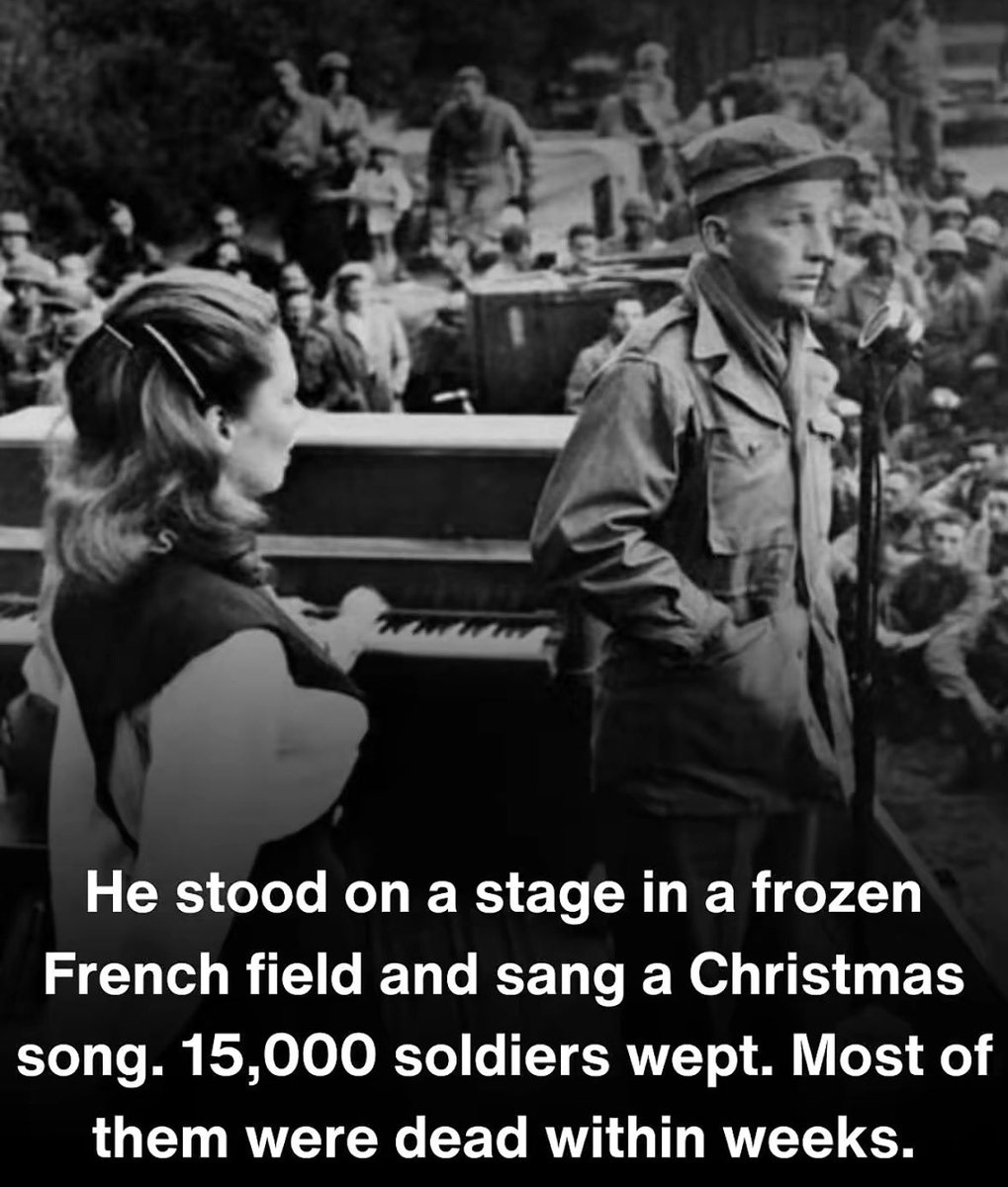
Bing Crosby's nephew once asked him a simple question on a golf course.
"What was the hardest thing you ever had to do in your entire career?"
Howard expected Hollywood stories. A difficult director, maybe. Studio pressure. The grind of fame.
Bing didn't hesitate for even a second.
December 1944. Northern France.
The war in Europe still had months of blood left to give. Bing Crosby was overseas on a USO tour - not because anyone made him go, but because he'd tried to enlist and been turned down.
Too old, they told him. General George Marshall put it plainly: "We don't need you on the front lines. We need you keeping these men alive on the inside."
So Bing went. At his own expense. No toupee — he called the thing a "scalp doily" and refused to wear anything fake in front of men who had nothing fake left in them. And when the brass tried to claim the front rows, he shut that down immediately. Front rows were for enlisted men. The ones who'd actually be in the dirt.
That night, they set up an open-air stage in a field. Thousands of soldiers gathered in the cold. There were laughs, there were jokes, there were moments where the war felt briefly, mercifully far away.
Then came the last song.
White Christmas.
Since 1942, that song had followed American soldiers everywhere. It played on Armed Forces Radio. Men who hadn't seen snow, or their families, or their front porches in years would hear those opening notes — and completely fall apart.
Bing looked out at the audience as he began to sing. Every single one of them was crying. Thousands of men. Combat soldiers. Men who had seen things no human being should see. Weeping openly, without shame, in a cold field in France, listening to a song about home.
And Bing Crosby had to finish it.
He had to hold his voice steady. He had to keep going, bar by bar, note by note, while thousands of men wept in front of him. He told his nephew it was the single most difficult thing he ever did in his life.
Not a film. Not a performance. Not anything Hollywood ever asked of him.
Just a song. Just a field. Just the faces of men thinking about home.
A few days later, those same soldiers were sent into the Ardennes Forest.
December 16, 1944. The Battle of the Bulge - the largest, costliest battle American forces fought in all of World War II. A surprise German offensive that would leave tens of thousands dead before it was over.
Many of the men who wept in that field never came home.
After the war ended, Allied troops were surveyed: who had done the most for their morale? Bing Crosby.
Ahead of Bob Hope. Ahead of President Roosevelt.
Ahead of General Eisenhower.
He wasn't a star to them. He was a piece of home that came to find them when they couldn't come home themselves.
🙏♥️🇺🇸
English
LahnaMan รีทวีตแล้ว

Exactly.
There was a sub-coup in 1989. An alliance of the IRGC and Mahdists that embodied Ali Khamenei’s power base took over from the “rationalist” Qom seminary crowd surrounding Ruhollah Khomeini.
The key is that while the former embodied the will of the Occulted 12th Imam until he returns, and thus the preservation of the Islamic Republic is paramount, the latter post-1989 believed the purpose of the Islamic Republic is to display the sort of extreme faith and trigger the eschatological (apocalyptic) conflagration to trigger the return of the Mahdi for the final war. In other words, the Islamic Republic’s purpose is no
More than the means to trigger the apocalypse.
The entire top structure of power in Iran has been homogenized since 1989 around this suicide cult.
Imagine a nation led by Jim Jones and his suicide cult.
And that is whom we are fighting.
Shukriya Bradost@ShukriyaBradost
شکریا برادوست، پژوهشگر امنیت بینالملل، در گفتوگو با دویچه وله فارسی این ساختار را چنین توصیف میکند: «بعد از پایان جنگ ایران و عراق، سپاه پاسداران به مرور زمان تمام قدرت را در دست گرفت. خود خامنهای با کمک سپاه به قدرت مطلق رسید و این نهاد را در قدرت شریک کرد. امروز آنچه میبینیم، چهره عریان قدرت در ایران است که در دست سپاه است.» به گفته او، "عامل اصلی تسلیم نشدن سپاه، حمایت و برنامه روسیه است" و این رابطه میتواند بر رفتار تهران در هرگونه مذاکره اثر بگذارد.#IranWar dw.com/fa-ir/%D9%82%D…
English
LahnaMan รีทวีตแล้ว

Yeah, because all russian gay sex is in the military and prisons
Pontius Telesinus🧯@tellesinus
@NAFOBarfly @bowtiedcrake There are pride parades in Kyiv but no pride parades in Moscow
English
LahnaMan รีทวีตแล้ว
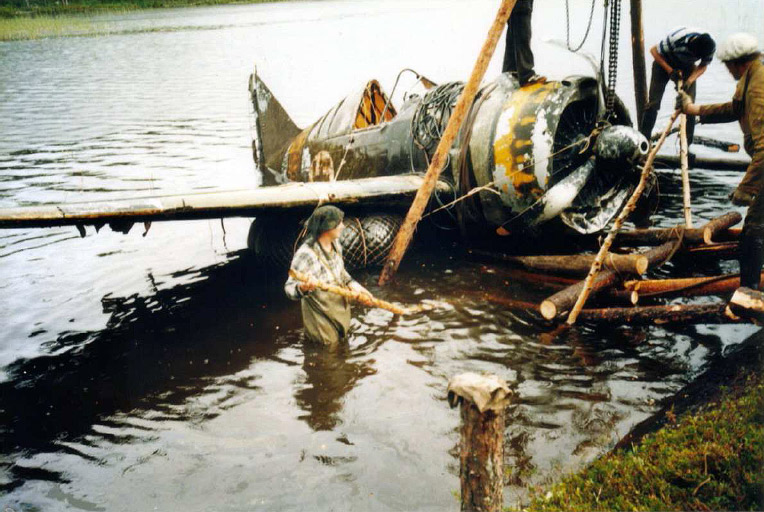
In August 1998, a Finnish World War II-era Brewster 239 Buffalo fighter, tail number BW-372, was discovered 50 km from the city of Segezha, Karelia.
Until then, it was believed that no other aircraft of this type remained in the world.
English
LahnaMan รีทวีตแล้ว

Apparently the main campus of the University of Luxembourg is built into a decomissioned steel mill. They turned the old coke storage into a library, built a restaurant into the blast furnace and retain the old storage facility (the "Möllerei") as a museum. Need to visit one day!



English
LahnaMan รีทวีตแล้ว

Russia cannot understand that in a democracy, leaders change almost every election.
When the same president has been in power for 25 years, perhaps it's time to ask yourself some questions.

English
LahnaMan รีทวีตแล้ว

Pseudo right wingers on this platform will tell you that Russia has no problem with that sort of crime, because in their little imaginary world it’s the safest place on the planet but they just won’t move there.
The Telegraph@Telegraph
In February, a 14-year-old girl in eastern Russia set her classroom on fire and struck her classmates with a hammer as they tried to flee. Such incidents are becoming commonplace in Russia as juvenile crime threatens to spiral into a domestic crisis. Experts speaking to The Telegraph think they know why ⤵️ telegraph.co.uk/world-news/202…
English
LahnaMan รีทวีตแล้ว

LahnaMan รีทวีตแล้ว
Hey man, moral complexity is supposed to only paint everyone as flawed, not show people struggling with moral choices and actually making the right ones.
That makes people start to question their own morality, and that's just uncomfortable.
Possum Reviews@ReviewsPossum
Dude who wanted to take the Ring for himself to save his kingdom but decided the mission to destroy it was more important because it would save the world, and died for that cause. King who initially refused to aid another kingdom because they didn't help when they needed it, but ultimately decided fighting evil and saving their civilization was more important than his petty grudge, and died for that cause. Guy who lived a life of cruelty and greed who got corrupted by a quasi-demonic force that turned him into a monster and made him suffer in loneliness for hundreds of years until given the chance to redeem himself and genuinely tried but ultimately failed by giving into temptation and betraying the only person who could bring him salvation. "No moral complexity."
English
LahnaMan รีทวีตแล้ว
LahnaMan รีทวีตแล้ว

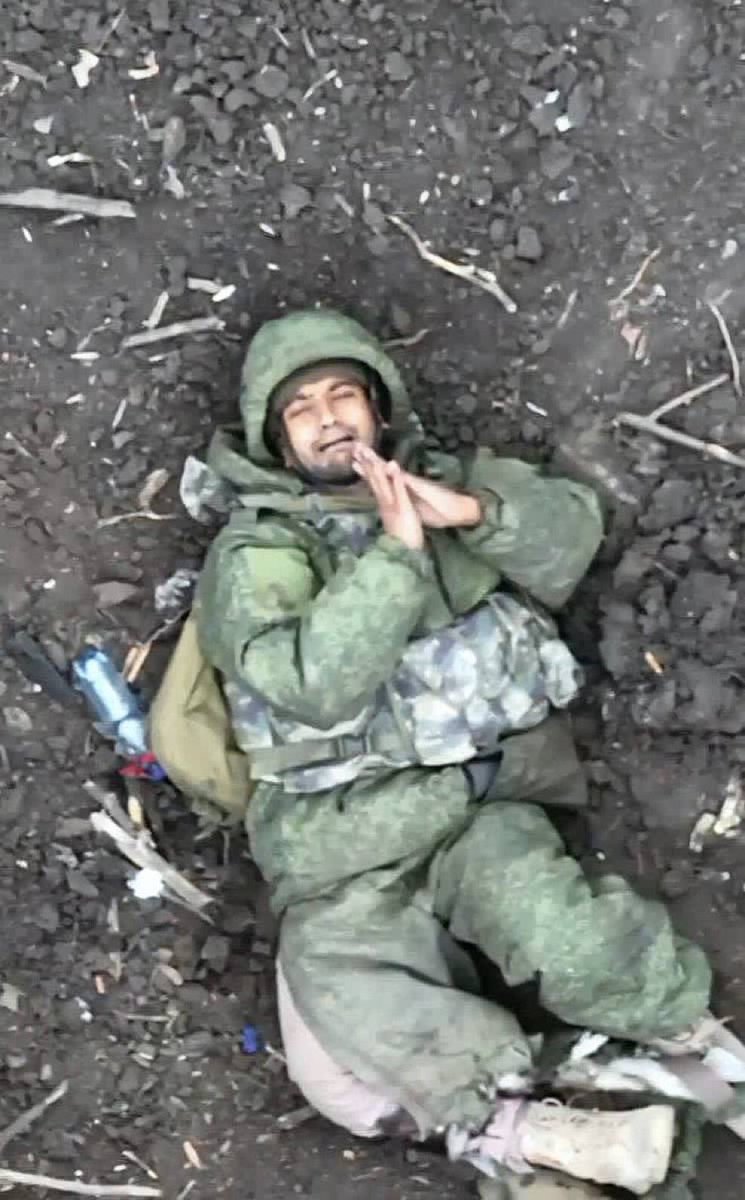
@Liesorliars @FightStorage Maybe that Russian should have stayed home if he didn’t want to get killed.
English

@FightStorage Not an american troop, this is recycled footage from Russia Ukraine conflict. This is meant to be a russian soldier (hasnt been confirmed) pleading to a Ukraine drone.
English

LahnaMan รีทวีตแล้ว

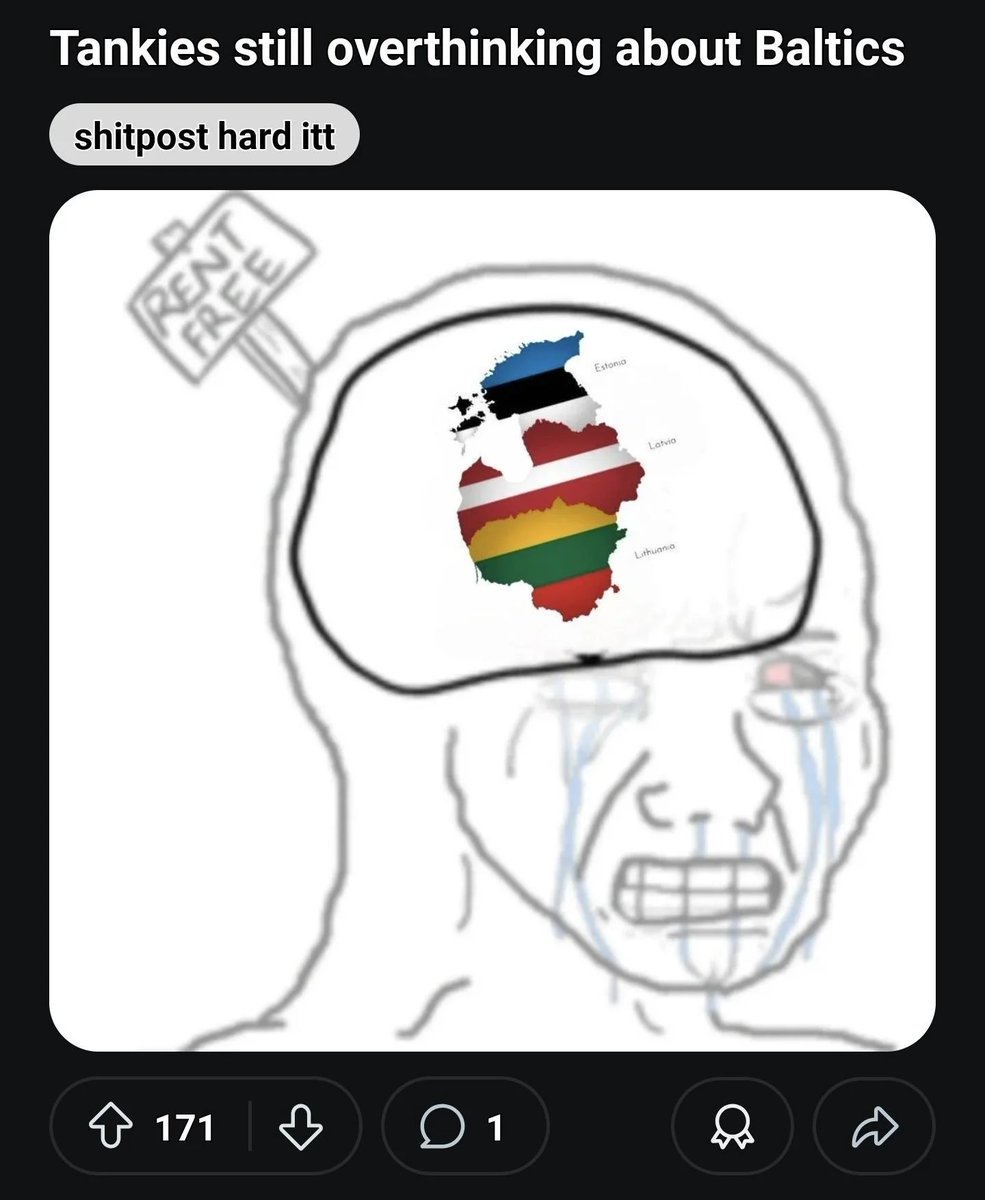
Might equals right mf when the Might that makes right in question is a side they dont like
GIF
Alexander Dugin@AGDugin
No one will ever trust America after this nightmare No one will ever respect America after this No one will ever look at America the way we used to All of this damage because of Trump
English
LahnaMan รีทวีตแล้ว

LahnaMan รีทวีตแล้ว


LahnaMan รีทวีตแล้ว

There is a genre of October 7 commentary that works by constructing a historical arc so compressed and so selective that the conclusion becomes inevitable. A people wronged, hemmed in, their world dismantled across generations. Rage follows. What else would you expect?
The history offered in support of this arc is not really history. It begins where it needs to begin, omits what complicates it, and arrives at a destination that was chosen before the argument started.
The Arab population of Mandatory Palestine never held sovereignty that was taken from them. There was no state. A significant portion immigrated to the land only in the 19th and early 20th centuries. The land passed from Ottoman to British control, and two national movements competed within that framework. One of them, the Jewish national movement, was not a colonial project arriving from outside. Jewish communities had existed without interruption in Jerusalem, Hebron, Safed, Gaza, Tiberias, the Galilee and elsewhere, through centuries of pre-modern colonial empires, Roman, Byzantine, several Arab Caliphates, the Crusaders, and Ottoman, and long before any of them emerged.
The Zionist movement was a national liberation movement of a people with three thousand years of documented connection to that land, rejecting the exile that was imposed on many of them, and building upon a presence that had never left.
The other national movement, the Arab Palestinian one, crystallised largely in reaction to Zionism rather than predating it, which is why the sovereign state being projected backwards into history as ancient and continuous is itself part of the inversion, not a foundation for it. Arab leaders, who rarely called themselves Palestinians then and most of whom saw themselves as part of greater Syria, rejected partition in 1937 and again in 1947. That rejection, and the violence that accompanied it across the three decades of the Mandate period, is precisely what this genre of argument leaves out.
What does the enforcing are films like "Palestine 36," marketed as historical drama about the bloody Arab Revolt, but functioning as something closer to historical replacement. They strip Jewish indigeneity and continuity from the record, recast a people with millennia of connection to that land as recent colonial arrivals, and present the conflict as a simple story of indigenous resistance to foreign imposition.
The purpose is not to inform Western audiences about a complex national conflict. It is to recruit them to a conclusion: that Jews and Israel are an illegitimate implant in the region, that the appropriate remedy is dismantlement, and that what would follow, the imagined state from the river to the sea, would be a tolerant, secular, democratic alternative, where Jews can live in peace under their Arab Palestinian Muslim rulers, not as a national group but as a religious minority.
That last part is perhaps the most dishonest element of the entire narrative. The movements driving that agenda in the Middle East are neither democratic nor secular, and whatever secular veneer some of them maintain is precisely that, a veneer. The model being implicitly promised has no precedent among Muslim-majority states in the region, and sits in direct and unacknowledged tension with the political and religious character of the organisations whose cause these films are made to serve, like Hamas.
Without all of this, October 7 cannot be made to look like the inevitable product of accumulated injustice. It looks instead like what it was: a brutal, sadistic rampage by Arab Palestinian Islamist terrorist organisations, and the civilians who joined them, to murder, rape, and kidnap Israeli citizens, residents, and foreign nationals. No historical narrative, however artfully constructed, changes what happened that morning. It only changes who the audience is willing to hold responsible for it.
This is the genre James represents, and he is far from alone in it. It is not engagement with history. It is the use of a selective version of it to launder a conclusion that was held before the argument began.
James Melville 🚜@JamesMelville
I’ve just watched Palestine 36: So many people need a history lesson. October 7th wasn’t the start. It goes back a long long way. Imagine being a citizen to a place that lost status, sovereignty, human rights, freedom and land. And then for decades got hemmed in, encroached, destroyed and an appropriation of the land unchecked. Destinies of people who have lived there for generations completely torn up. Grief turns into rage. It would anywhere. But apparently it’s “antisemitic” to raise any concerns about this.
English
LahnaMan รีทวีตแล้ว
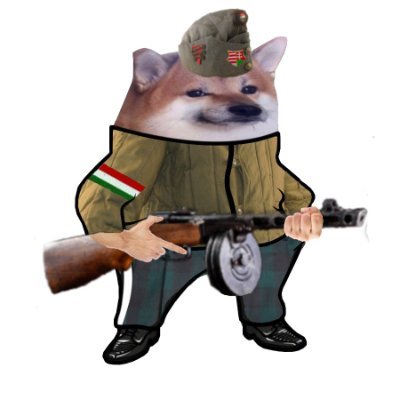
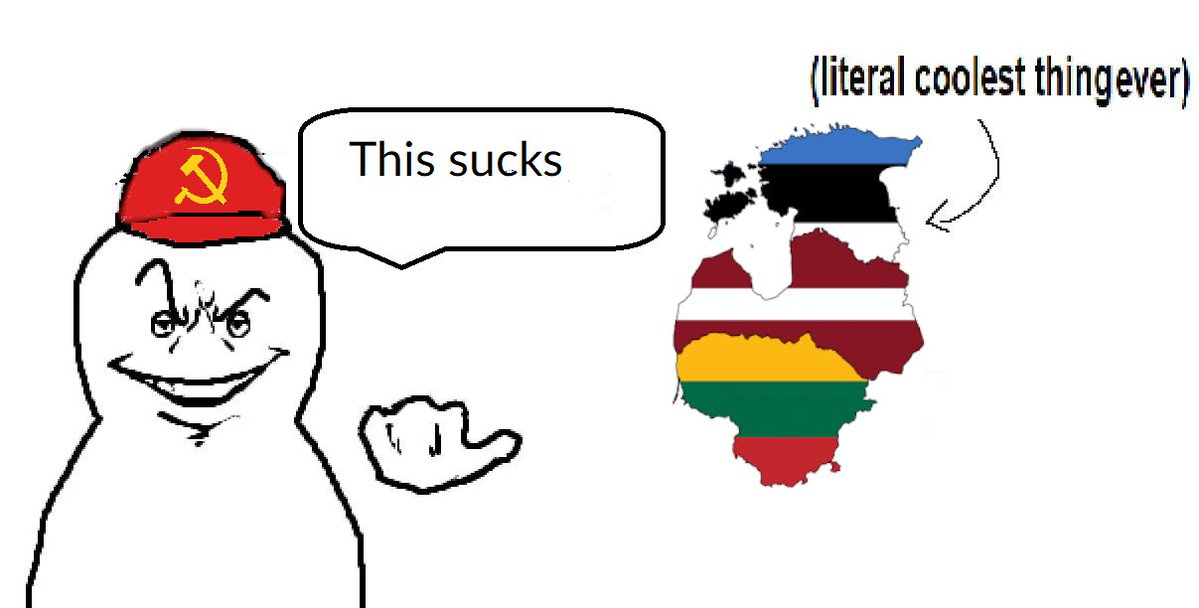
You gotta love how Communists fundamentally reject the sovereignty of any country/people that ever overthrew Communism. It's just a pathological ethnic hatred rooted in resentment.
Leanne 🍅☭@Leannenist
English
LahnaMan รีทวีตแล้ว