
Metabolic Health Summit

1.4K posts

Metabolic Health Summit banner
Metabolic Health Summit

Metabolic Health Summit

@MetabolicSummit

The world's leading medical & scientific conference on metabolic health & therapy! Learn more about Metabolic Health Initiative & listen to our podcast👇


เข้าร่วม Mayıs 2018
238 กำลังติดตาม4.5K ผู้ติดตาม
Metabolic Health Summit
Metabolic Health Summit@MetabolicSummit·
On Thursday, March 26th at 9am PT / 12pm ET, we’re hosting a live Q&A with neuroscientist Dr. Tommy Wood called Explore Brain Health Across the Lifespan. This is not a lecture. It’s your chance to ask Dr. Wood questions and learn directly from a leading researcher studying: - Metabolic responses to brain injury - Cognitive performance across the lifespan - How to measure and optimize brain health — from everyday life to elite performance Whether you’re thinking about prevention, recovery, or long-term resilience… this conversation is one you won’t want to miss. Find the link to register below
English
1
1
1
66
Metabolic Health Summit รีทวีตแล้ว
Jan Ellison Baszucki
Jan Ellison Baszucki@janellison·
1/ Today, @alicegcallahan from the New York Times @nytimes published an article on ketogenic diets and serious mental illness. It feels fitting. (link below) It was exactly ten years ago today that our son @matthewbaszucki, at age 19, was involuntarily admitted to Stanford's psychiatric hospital for manic psychosis. After a diagnosis of Bipolar I and a five year battle with debilitating symptoms, he found @ChrisPalmerMD and started ketogenic and metabolic therapies. His symptoms have been in remission since early 2021, and today, he is still in ketosis and is thriving. I just had the pleasure of watching Matthew present his story on stage at @realCSF's #CoSci26 conference in Las Vegas. His health, vitality, confidence and insight brought me to tears. He also participated on a panel about his experience with other inspiring individuals @DrEricRodgers @robynrdobbins who appear in our upcoming film from @wideeyetv @jenisenhart @realDaveFeldman, The Cholesterol Code, which premiered last Saturday and received a well-deserved standing ovation. (link below) The Times article highlighted three of our family foundation @BaszuckiGroup's funded published studies (Stanford, The Ohio State University, and U. Edinburgh) and the stories of two individuals who, like our son, found hope in ketogenic therapy and who have generously shared their stories and strategies with @Metabolic_Mind's THINK+SMART program (links below). My fifth decade started as the hardest of my life and ended as the most rewarding. I am deeply grateful to the work of metabolic psychiatry pioneers @ChrisPalmerMD @GeorgiaEdeMD @SethiSheba74345 and others who made my son's healing possible, to the researchers around the world studying the connection between metabolic and mental health, and to our entire team at Baszucki Group and Metabolic Mind for their dedication to this cause. We're on the brink of a new era in the treatment of mental illness. Godspeed to the ongoing research, clinical adoption, and sharing of personal stories that could help tens of millions of people around the world.
Jan Ellison Baszucki tweet media
English
15
93
407
25.4K
Metabolic Health Summit
Metabolic Health Summit@MetabolicSummit·
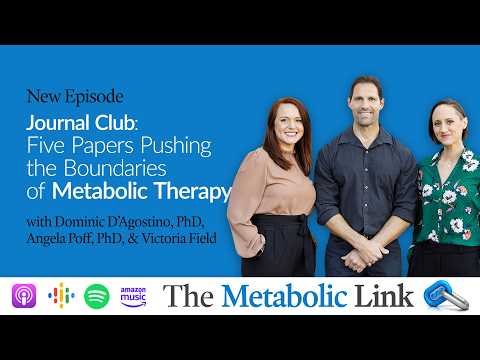
Could changing your metabolism reduce alcohol cravings, ease psychiatric symptoms, and even make cancer immunotherapy more effective? The science is pointing to yes, and the mechanisms are fascinating. In this Journal Club episode, co-hosts @victoria_field_, @DominicDAgosti2, and Dr. Angela Poff break down five peer-reviewed papers from their newly released Ketogenic Metabolic Therapy ebook (Volume 4). From a French preclinical study showing ketogenic diet enhances PD-L1 immunotherapy response in kidney cancer, to an NIH/UPenn trial using machine-learning-derived fMRI signatures to measure reduced alcohol cravings during ketosis, to Stanford's pilot trial demonstrating notable metabolic and psychiatric improvements in schizophrenia and bipolar disorder, this episode covers the cutting edge of metabolic therapy research. Find the full episode at the link below.
English
2
4
9
1.1K
Metabolic Health Summit
Metabolic Health Summit@MetabolicSummit·
Chronic migraines and bad sleep might share similar metabolic roots. Italian researchers followed 26 chronic migraine patients on a ketogenic diet or low glycemic index diet for six months. Both groups restricted carbs to about 30 grams daily. The results: sleep quality improved, daytime sleepiness dropped, and migraine frequency and intensity both came down. The most interesting part? Sleep improvements were independent of migraine improvements. This wasn't simply fewer headaches leading to better rest. The metabolic shift itself appeared to change sleep architecture. And the benefits showed up by only three months. Extending to six months didn't add further improvement, which led the researchers to question whether a three-month intervention might be enough. If you deal with chronic migraine and trouble sleeping, the metabolic connection is worth understanding. Want to learn about more studies like this? Our free ketogenic metabolic therapy ebook covers more than 150 synthesized peer-reviewed papers on findings like this. Get access at the link below.
English
2
2
7
343
Metabolic Health Summit
Metabolic Health Summit@MetabolicSummit·
Carbs enhance exercise performance, but it may not be for the reason most commonly thought. A review of 600+ studies going back over a century suggests the real limit might not be muscle glycogen, but rather brain energy. During long duration or strenuous exercise, circulating levels of glucose drops, and eventually your brain tells your body to quit. We call that "hitting the wall." Consuming carbs during exercise keeps your brain fueled, allowing athletes to go harder and longer before fatigue sets in. The thing is, athletes on high-fat, low-carb diets can still perform well despite lower glycogen and burning far fewer carbs. So the idea that large amounts of carbs are a mandatory fuel source during intense exercise doesn't necessarily hold up the way we once thought. Practically speaking, this new analysis suggests that as little as 10g of carbs per hour might be enough to keep your brain from shutting things down during long, high-intensity efforts. Check the link below to access our free Ketogenic Metabolic Therapy eBook with highlights from 150+ peer-reviewed papers on metabolic health.
English
3
3
11
369
Metabolic Health Summit
Metabolic Health Summit@MetabolicSummit·
What happens when we look at duration of metabolic therapy in cancer? A retrospective case series of 55 patients with stage IV cancer recently highlighted a compelling trend in survival outcomes. In this cohort, researchers observed a significant difference between patients based on how long they maintained a ketogenic diet: * 12+ Months on Protocol: A median overall survival of 55.1 months. * Under 12 Months: A median survival of 12 months. Among the lung cancer patients in this group, the five-year survival rate reached 33%—a notable contrast to the historical benchmark of 8% for stage IV lung adenocarcinoma in Japan, where the study was conducted. It’s important to stay grounded: this wasn’t a randomized controlled trial. Factors like "immortal time bias" and the "healthy user effect" (where healthier patients are simply more able to stick to a strict protocol) mean we can’t say the diet caused the extended survival. However, it does suggest that consistency and duration are critical variables that future clinical trials need to investigate. Want to see the science for yourself? Our Ketogenic Metabolic Therapy Ebook is now completely free. We’ve synthesized over 150 peer-reviewed studies into accessible, science-first summaries. Get access at the link below. Please note this content is for educational purposes and reflects ongoing research. If you or someone you love is struggling with a serious health condition, always consult with your physician before starting metabolic therapy.
English
1
1
5
1.2K
Metabolic Health Summit
Metabolic Health Summit@MetabolicSummit·
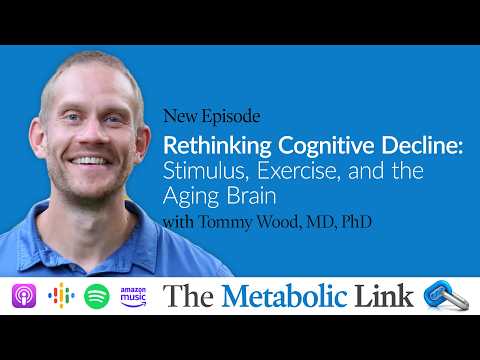
Decreased glucose uptake in the brain is often considered a hallmark of Alzheimer's disease. But Dr. Tommy Wood asks whether part of that metabolic signature may reflect how little cognitive demand we place on the brain. He sits down with Dr. @DominicDAgosti2 for a nuanced conversation on metabolic health and cognitive function.. Dr. Wood is a neuroscientist, neonatal brain injury researcher, and author of The Stimulated Mind. This episode follows the metabolic thread through every stage of brain health. Pre-diabetes and type 2 diabetes as predictors of cognitive decline. Neurovascular coupling as the reason heart disease risk factors double as brain disease risk factors. Lactate crossing the blood-brain barrier to drive BDNF production where it actually matters. Creatine as a brain energy distributor that most people still only associate with muscle. Dr. Wood lays out his Three S Model — Stimulus, Supply, Support — and makes the case that cognitive demand drives glucose uptake into the brain the same way muscular contraction drives it into skeletal muscle. Questions Answered in This Episode: • Does the brain respond to energy demand the same way skeletal muscle does? • What role does creatine play in brain energy distribution, and what do the clinical trials show? • Can heavy resistance training produce the same brain-relevant lactate response as HIIT? • How should exercise be dosed after a concussion or traumatic brain injury? • Is cognitive decline in your 50s, 60s, and 70s actually inevitable, or is that a statistical artifact? • Why are pre-diabetes and metabolic syndrome among the strongest predictors of dementia? The mechanistic throughline here is demand-driven metabolism. Dr. Wood makes the case that the same principles governing glucose uptake in skeletal muscle apply to the brain — and the conversation gets into what that means for how we interpret FDG-PET data, design lifestyle interventions, and think about neurodegeneration itself.
English
1
4
9
1.7K
Metabolic Health Summit
Metabolic Health Summit@MetabolicSummit·
A randomized controlled trial compared a ketogenic diet against a low-fat diet in 19 women of reproductive age who were overweight or obese. Both diets were carefully controlled, meals prepared in a metabolic kitchen. Both groups lost the same amount of weight, about 7kg over six weeks. In the ketogenic group, 11 out of 13 women reported changes in menstrual physiology. Increased frequency, increased intensity, or both. Some women who hadn't had a period in over a year got it back within 28 days. In the low-fat group, despite identical weight loss, nothing changed. Same weight loss, but only one group saw menstrual changes. So it's not the weight loss doing it. Something about being in ketosis is affecting reproductive pathways directly. One likely explanation: ketosis lowers insulin and improves insulin sensitivity, which can affect ovarian function and hormone signaling downstream. Researchers are now looking at whether ketogenic metabolic therapy could work clinically for women with irregular cycles or amenorrhea. We'll keep posting the data as it comes out. Click the link below to get access to our free Ketogenic Metabolic Therapy eBook with highlights from 150+ peer-reviewed papers on metabolic health.
English
1
5
19
939
Metabolic Health Summit
Metabolic Health Summit@MetabolicSummit·
24 college students with major depression.  10-12 weeks on a whole food ketogenic diet.  No medication changes. The result: a 69% drop in depression scores.  BDNF — a key protein for brain health and mood — increased 32%. This was a pilot trial, not a randomized controlled study. But a signal like that warrants deeper investigation. Metabolism and mental health may be more tightly linked than most people realize, and the science is evolving quickly. We break down this study and 150+ others in our free Ketogenic Metabolic Therapy ebook. Get access at the link below.
English
4
7
40
2.3K
Metabolic Health Summit
Metabolic Health Summit@MetabolicSummit·
We're so glad you're enjoying it! There's so much incredible research underway - we wish we could have included all of it. We'll continue to share more!
Bradley Chilmeran, PhD@BradChilmeran

@MetabolicSummit @DominicDAgosti2 This is a great resource especially for mechanistic research! And its just the tip of the iceberg. E.g., the kidney disease trials from the Weimbs lab could be included. I got overwhelmed and gave up attempting to create my own comprehensive lit review for metabolic therapies
English
0
0
2
229
Metabolic Health Summit
Metabolic Health Summit@MetabolicSummit·
Metabolic therapies are advancing across oncology, neurology, psychiatry, and several other fields simultaneously. The volume of new research makes it genuinely difficult to stay current. That's the reason we created Volume 4 of our Ketogenic Metabolic Therapy Research Review. It's a curated synthesis of over 150 peer-reviewed studies. Each paper is distilled into key findings, clinical relevance, and direct source links for further reading. The material is structured, evidence-focused, and free to download. Whether you're in clinical practice, research, or simply following the science closely, it's a practical way to keep pace with the field. Get access to the ebook at the link below.
English
3
5
19
1.5K
Metabolic Health Summit
Metabolic Health Summit@MetabolicSummit·
What happens inside the body when someone switches to a ketogenic diet? Researchers put 40 healthy people on a ketogenic diet for three weeks. No calorie targets. Just eat until full. Then they measured hundreds of metabolites in blood and urine. 95 shifted. Insulin dropped 21%. Triglycerides fell about 14%. Anti-inflammatory fatty acids like DHA went up while pro-inflammatory markers came down. The tryptophan pathway moved toward neuroprotection — kynurenic acid up, quinolinic acid down. These changes were independent of the modest weight loss that occurred. This doesn’t prove a ketogenic diet manages any particular disease, but the many pathways altered in just three weeks of the diet opens vast new avenues of research for future applications. The researchers' conclusion: a ketogenic diet may provide a safe immunometabolic tool for modern medicine. Download our free Ketogenic Metabolic Therapy ebook at the link below. Over 150 peer-reviewed papers, synthesized.
English
1
7
17
694