

New Constructs
15.6K posts

@NewConstructs
Honest alpha based on proven-superior fundamental investment research. Get a free Rating on the stock of your choice: https://t.co/Q4LZe2tBdq


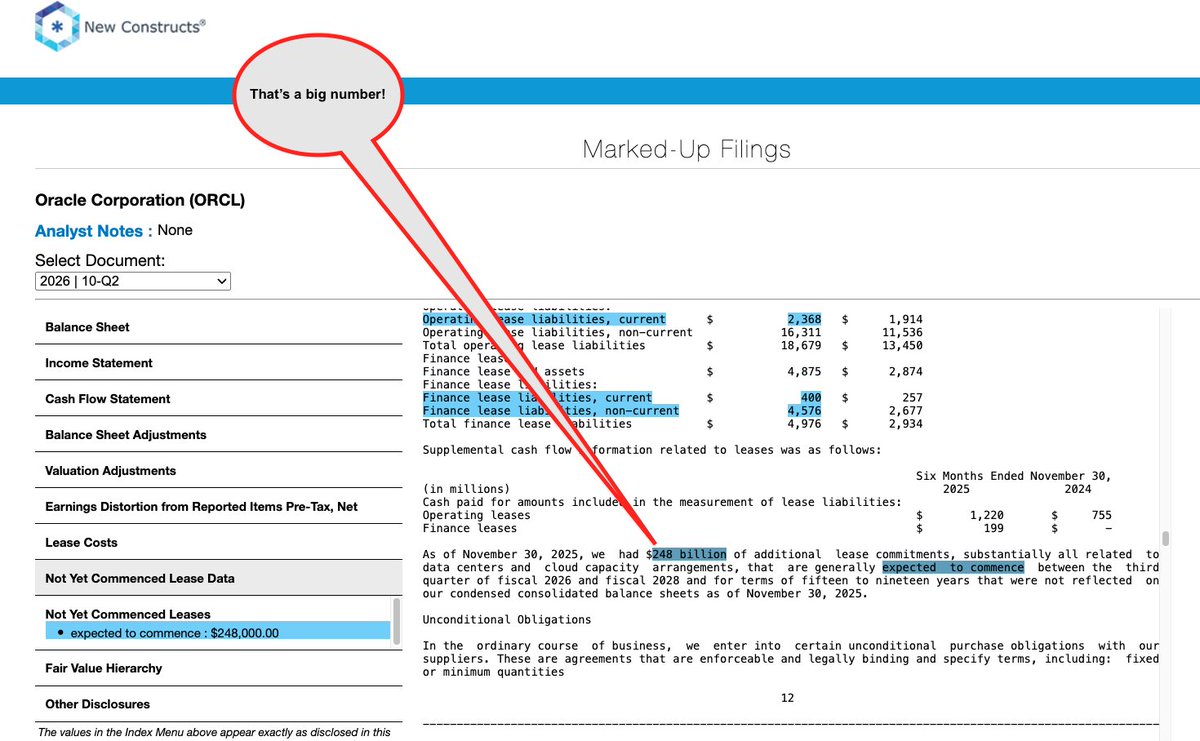
Larry Ellison $ORCL highlighted something critical: models like ChatGPT, Gemini, Grok, and Llama are all trained on largely the same public internet data. When everyone trains on the same information, models inevitably converge. That’s why AI is moving toward commoditization. The real moat isn’t the model itself. It’s the proprietary data behind it. Companies that can train on exclusive datasets gain an advantage competitors can’t replicate. Having data that no one else has will allow you to dominate your market.


Insightful observation about market efficiency. I’ve heard this sentiment expressed quite a few times by market participants and thinkers I respect, most notably @CliffordAsness. Cliff made a similar observation suggesting the wider participation of retail investors as one of the drivers and even giving the vivid example of “ask the audience” becoming less effective in “Who wants to become a millionaire” game if the audience becomes less individually independent and more uninformed and herd-like. I think this is plausible if not counterintuitive. One’s casual intuition would be that with more information readily accessible that the market would price in the “correct information” more quickly and become more “informationally efficient”. In reality, the easier access didn’t just happen to information but to the market itself by a much wider array of participants who previously didn’t know or feel comfortable but now can do previously institutional style trades on their phones. As we expand leftwards the metaphorical “bell curve” of market participants, the majority isn’t necessarily informed or even looking for information. The change in the composition of investor base changes not only the equilibrium information efficiency of the market but also the incentives of the informed investors, who you’d otherwise expect to bet against uninformed “irrational prices”. In reality, the most informed investors herd with the uninformed investors with “tight stops” so that they get out before the tide inevitably turns when even the least informed investors pile in making the market vulnerable to even a slight shock to the underlying rosy assumptions. Rinse and repeat. I’ve brought out many times before. @ProfStefanNagel and @MarkusEconomist have a nice paper about this phenomenon from studying the DotCom bubble. The question is has the phenomenon they documented become a permanent feature of the market?