ทวีตที่ปักหมุด
Marc Antoine
56.9K posts

@Oracle10271198
Proud & secular 🇫🇷/🇺🇸, Zionist supporting 🇮🇱 and Free world. Anti woke. Conservative. Do not tolerate antisemites / anti west & Islamists of all types.
"Pierre Rehov’s new film, ‘P0gr0ms’, captures what no other film has shown: the historical context of the attack rooted in a culture of Je w hatred enabled by ad hoc alliances between Isl@mists, the KGB, and the N@zis" (The Henry Jackson Society) "P0gr0m(s) stands out in a flury of 0ct0ber 7 documentaries" ( Phyllis Chesler - PJ Media ) Here it is, for you to watch and, please, share!




FACTS Warning - The post may trigger sensitivity among Western students, please share. A brief history lesson for Western students calling to "restore Palestine": 1. -Before Israel's establishment, the region was under the British Mandate, not a Palestinian state. 2. -Before that, it was part of the Ottoman Empire, not a Palestinian state. 3. -Before the Ottomans, the area was ruled by the Mamluk Sultanate, not a Palestinian state. 4-. Earlier, it was under the Ayyubid Dynasty, not a Palestinian state. 5. -Before the Ayyubids, the region was controlled by the Crusader Kingdom of Jerusalem, not a Palestinian state. 6. -Before the Crusaders, it was part of the Fatimid Caliphate, not a Palestinian state. 7. -Before the Fatimids, the area was under the Abbasid Caliphate, not a Palestinian state. 8. -Earlier, it was part of the Umayyad Caliphate, not a Palestinian state. 9. -Before the Umayyads, the region was within the Byzantine Empire, not a Palestinian state. 10. -Before Byzantine rule, it was under the Roman Empire, not a Palestinian state. 11-. Before the Romans, the area was the Hasmonean Kingdom, a Jewish state. 12. -Earlier, it was part of the Seleucid Empire, not a Palestinian state. 13. -Before the Seleucids, it was conquered by Alexander the Great, not a Palestinian state. 14. -Before Alexander, it was under the Persian Achaemenid Empire, not a Palestinian state. 15. -Before the Persians, the region was controlled by the Neo-Babylonian Empire, not a Palestinian state. 16. -Earlier, it was the Kingdom of Judah, a Jewish state. 17. -Before Judah, there was the Kingdom of Israel, a Jewish state. 18. -Before the United Monarchy, the land was inhabited by the Twelve Tribes of Israel, not a Palestinian state. 19. -Before the Israelite tribes, the region comprised various Canaanite city-states, not a Palestinian state. Throughout history, numerous empires and states have governed this region, but a sovereign Palestinian state has never existed-




This Pesach, as we retell our journey from slavery to freedom, thousands of IDF soldiers are on the front line ensuring the story of Jewish freedom continues. While we sit around the Seder table, they leave theirs to protect our people, our land and our future. Your Pesach gift can help provide vital equipment, welfare support and care for wounded soldiers and their families. As we say “Next year in Jerusalem,” let’s stand with those who make that promise possible. Please give generously this Pesach to support the IDF and its soldiers. paypal.com/ncp/payment/Y8…
Since I left Morocco in 2005, I have buried my family from a distance. My grandmother in 2008. My father in 2016. My brother in 2021. Each time, I was on the phone, sobbing, powerless, unable to stand by their graves. Not by choice, but because going back would mean arrest for my beliefs and for speaking them out loud. Today, @JJJuraid lost his mother. He can’t go to her funeral either. If he returns, he will be arrested. And yet many in the West keep lecturing the world about how Islam is tolerant and how sharia law is beautiful, they have no idea what it means to be exiled from your own family, to mourn through a screen, to choose between your freedom and your mother’s funeral. Wake up. These freedoms are not guaranteed. And there are forces that would strip them away, piece by piece, while you applaud in the name of “tolerance.



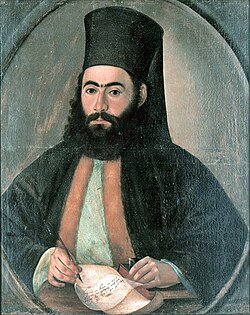

The Muslim Turks, in order to terrorize the Greeks, impaled and roasted alive Athanasios Diakos. But, they gave him a chance: “Will you become a Turk, Diakos? Will you change your faith? Will you pray in the mosque and abandon the church?” He replied to them: “Go away, you and your faith, may you perish, you renegades! I was born a Greek, and as a Greek I shall die.” According to eyewitness accounts from the time, two Turks lit a fire next to the stable and placed an iron grate and a large copper cauldron filled with oil over it. Then they lifted Diakos, still bound as he was, and made him sit on an old wooden stool. They raised his legs. The Turks began to mock him, asking him various questions. For every negative nod, they drove nails into his feet. Afterwards, they took the boiling oil and first poured it over his bare feet. When they saw that he did not react, they tore his clothing and began pouring it on his back and chest. He groaned silently in pain, and the soldiers, under orders not to kill him, used needles to burst the blisters that had formed on his skin from the boiling oil. This continued for hours, until the next morning. Exhausted as he was, they dragged him through the town to execute him. His execution was carried out in public view with the permission of Halil Bey, so that the Greeks would be warned about what would happen to anyone who dared to revolt. Testimonies state that even Diakos’s mother was present at his torture. After tying him backwards onto a saddle with his legs spread apart, the executioner began pushing the sharp tip of a wooden stake into his groin area and then slowly drove it deeper, going all the way through his body until it emerged near his right ear. The executioner moved carefully, as he had orders not to kill him quickly; with every push of the stake, Diakos’s screams confirmed he was still alive. Once the executioner had finished his work, the Turks tied the body tightly with the stake so that the skin would not tear, and they propped him up, almost upright, against a tree. As he was dying, it is said that he uttered these sorrowful verses: “Look at the time Death has chosen to take me, now, when the branches are blossoming and the earth brings forth grass.” Halil Bey gave the order to light a fire beneath him and to turn him slowly, so that he would be roasted alive like an animal. After many hours of torture, the Greek chieftain passed away on April 24, 1821. However, this had the opposite effect from what the Turks had expected. When the Greeks learned of his story and his martyrdom, they were filled with even greater rage and strength to liberate themselves from the barbarous Muslims and Islam. Athanasios Diakos is one of the most important heroes in the Greek history.