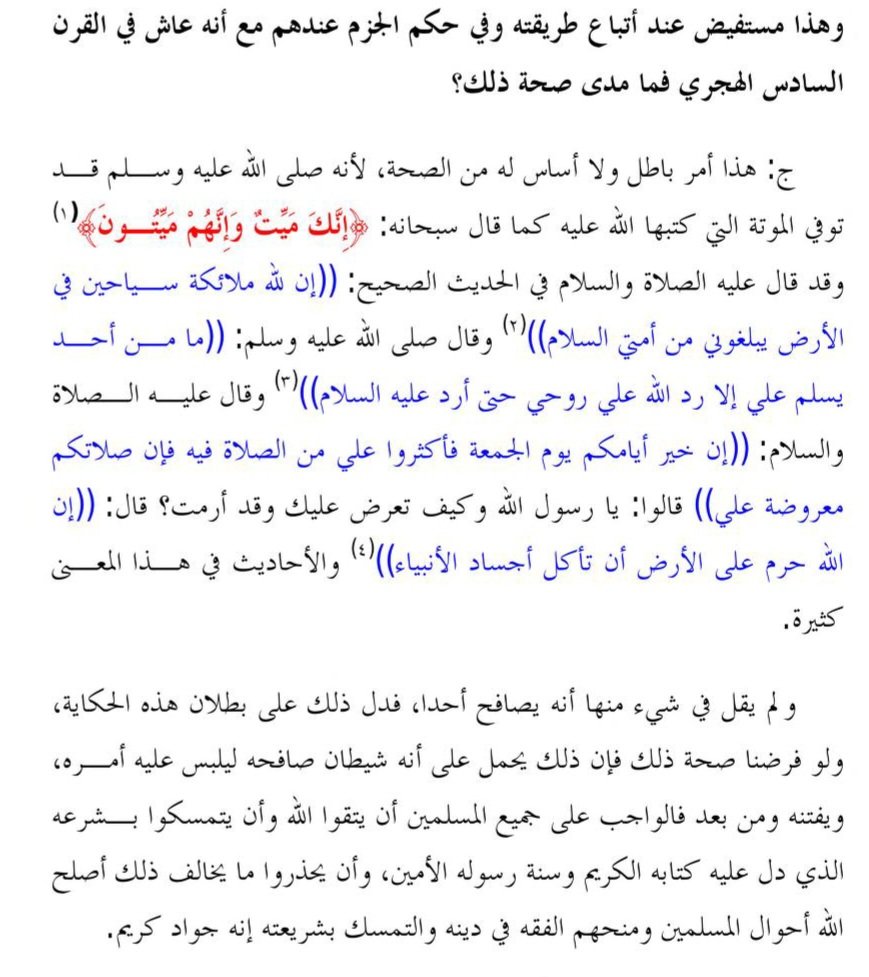
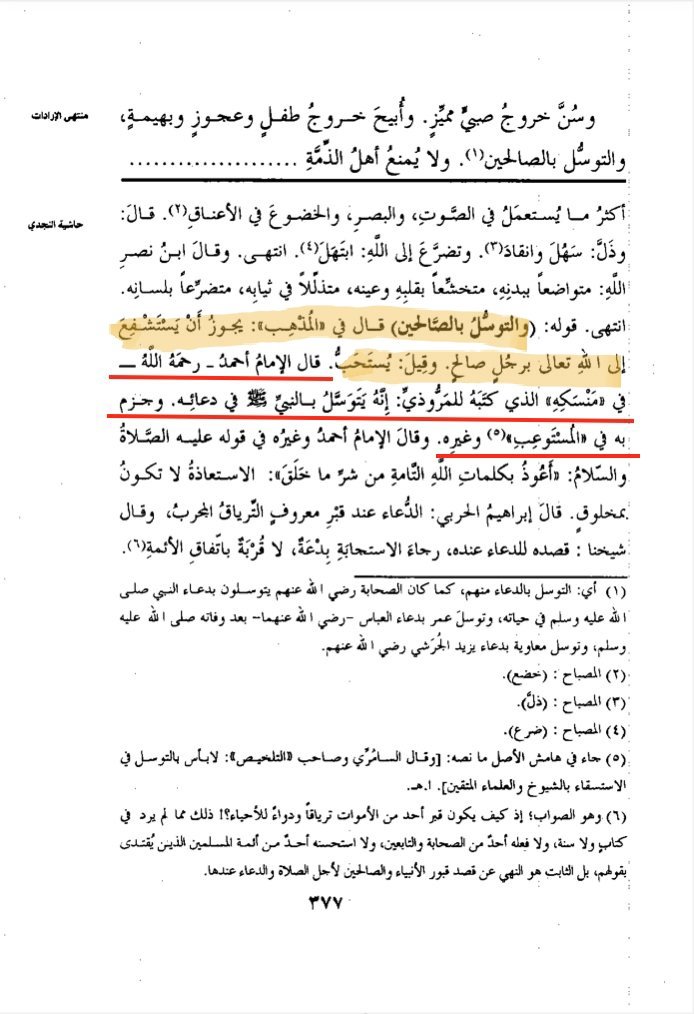
❝In our religious doctrine, to which we adhere, we seek guidance from the Book of Aḷḷa̲h, the Sunnah of His Prophet, the teachings of the Companions, the generation that followed them, and the ʾImām's of H̲adi̲t̶h̶. We hold fast to this doctrine.
KS.ˆĀdil
6.1K posts


❝In our religious doctrine, to which we adhere, we seek guidance from the Book of Aḷḷa̲h, the Sunnah of His Prophet, the teachings of the Companions, the generation that followed them, and the ʾImām's of H̲adi̲t̶h̶. We hold fast to this doctrine.


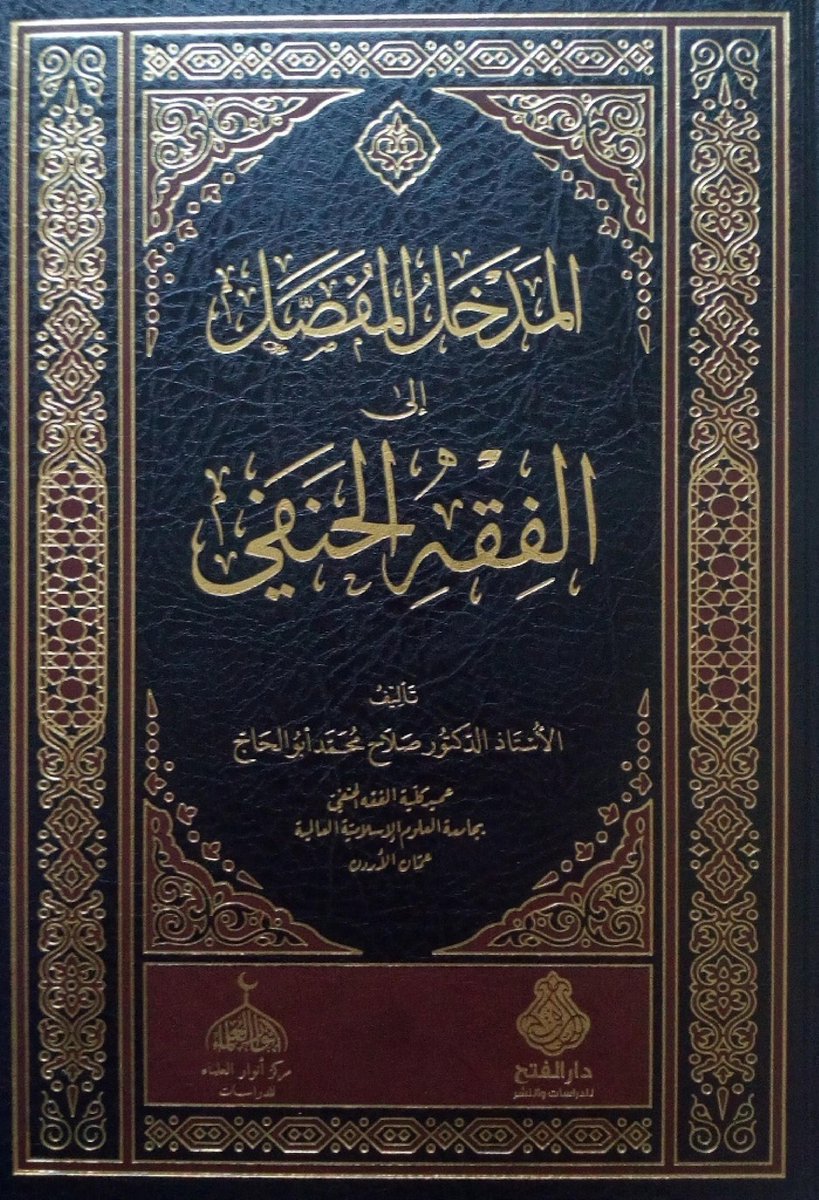
The principal works relied upon for knowledge of the Ṭabaqāt [biographical layers] of Ḥanbalī scholars, from the time of Imām Aḥmad [d. 241 AH, may Allāh have mercy on him] up to near the end of the 13th century, are as follows: 1. Ṭabaqāt al-Ḥanābilah by al-Khallāl [d. 311 AH]. Upon this work al-Qāḍī Abū al-Ḥusayn al-Farrāʾ ibn Abī Yaʿlā built the first half of his own Ṭabaqāt [d. 526 AH]. The second half consists of the biographies of the students of Imām Aḥmad’s students and those after them. He concluded the scholars of the early generation with al-Ḥasan ibn Ḥāmid [d. 403 AH] and began with several eminent figures of the middle generation, foremost among them his own father, Abū Yaʿlā. 2. Dhayl al-Ṭabaqāt by Ibn Rajab [d. 795 AH]. It begins with the biographies of the middle generation, starting from the students of al-Qāḍī Abū Yaʿlā, the head of that generation, specifically from those who died in the year 460 AH up to those who died in 751 AH. 3. The Dhayl [continuation] from where Ibn Rajab stopped until near the end of the 13th century, by Ibn Ḥumayd [d. 1295 AH], contained in his book al-Suḥub al-Wābilah… Everything beyond these three is either an abridgment, or an expansion including additional biographical details or supplementary entries. These have already been discussed in detail. Among the individual works that have been printed concerning the biographies of Ḥanbalī scholars are: • Ṭabaqāt al-Ḥanābilah by Ibn Abī Yaʿlā, containing 706 biographies, and its abridgment by Ibn Surūr, known by the title al-Jannah. • Its Dhayl by Ibn Rajab, containing 552 biographies. • al-Maqṣid al-Arshad by Ibn Mufliḥ, containing 1,315 biographies. • al-Jawhar al-Munaḍḍad by Ibn ʿAbd al-Hādī, containing 211 biographies. •al-Manhaj al-Aḥmad by al-ʿUlaymī and his abridgment al-Durr al-Munaḍḍad, containing 194 biographies. • Its Dhayl [continuation] al-Naʿt al-Akmal by al-Ghazzī al-Shāfiʿī, containing 194 biographies. • The Dhayl upon Ibn Rajab’s work by Ibn Ḥumayd al-Najdī, later al-Makkī, al-Suḥub al-Wābilah, containing 843 biographies. • Mukhtaṣar Ṭabaqāt al-Ḥanābilah by al-Shaṭṭī. • al-Fatḥ al-Jalī fī al-Qaḍāʾ al-Ḥanbalī [also by him]. • Mashāhīr ʿUlamā’ Najd. • ʿUlamā’ Najd khilāla Sittati Qurūn, containing 338 biographies. “Therefore, these are thirteen books containing approximately six thousand biographies, including repetitions; and without repetitions, about four thousand scholars from among Imām Aḥmad’s companions and students, and those who followed his madhhab.” [Footnote: Al-Madkhal al-Mufaṣṣal 1/492] And if I wanted to write about the prominent figures of the Ḥanbalī scholars, it would take us too long; but whoever wishes to know them should refer to the books of Ṭabaqāt and to Al-Madkhal al-Mufaṣṣal by Bakr Abū Zayd, for it contains valuable research.


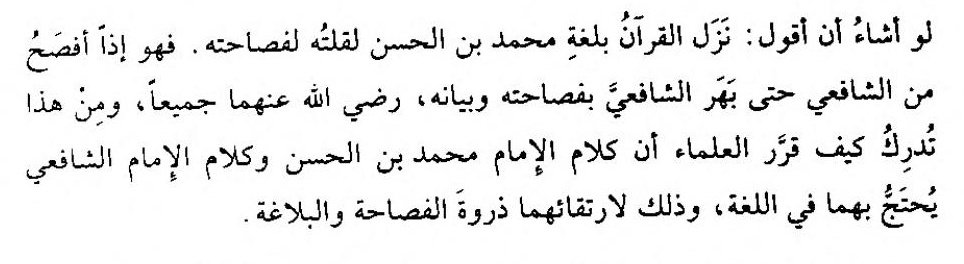
Ibn ‘Ābidīn and others transmitted from al-Kāsānī, who reported in al-Badā’i‘ from Imām Ahmad ibn Hanbal, who said: “Muhammad (Ibn al-Hasan al-Shaybānī) was the most insightful (knowledgeable) of people in the Arabic language.”


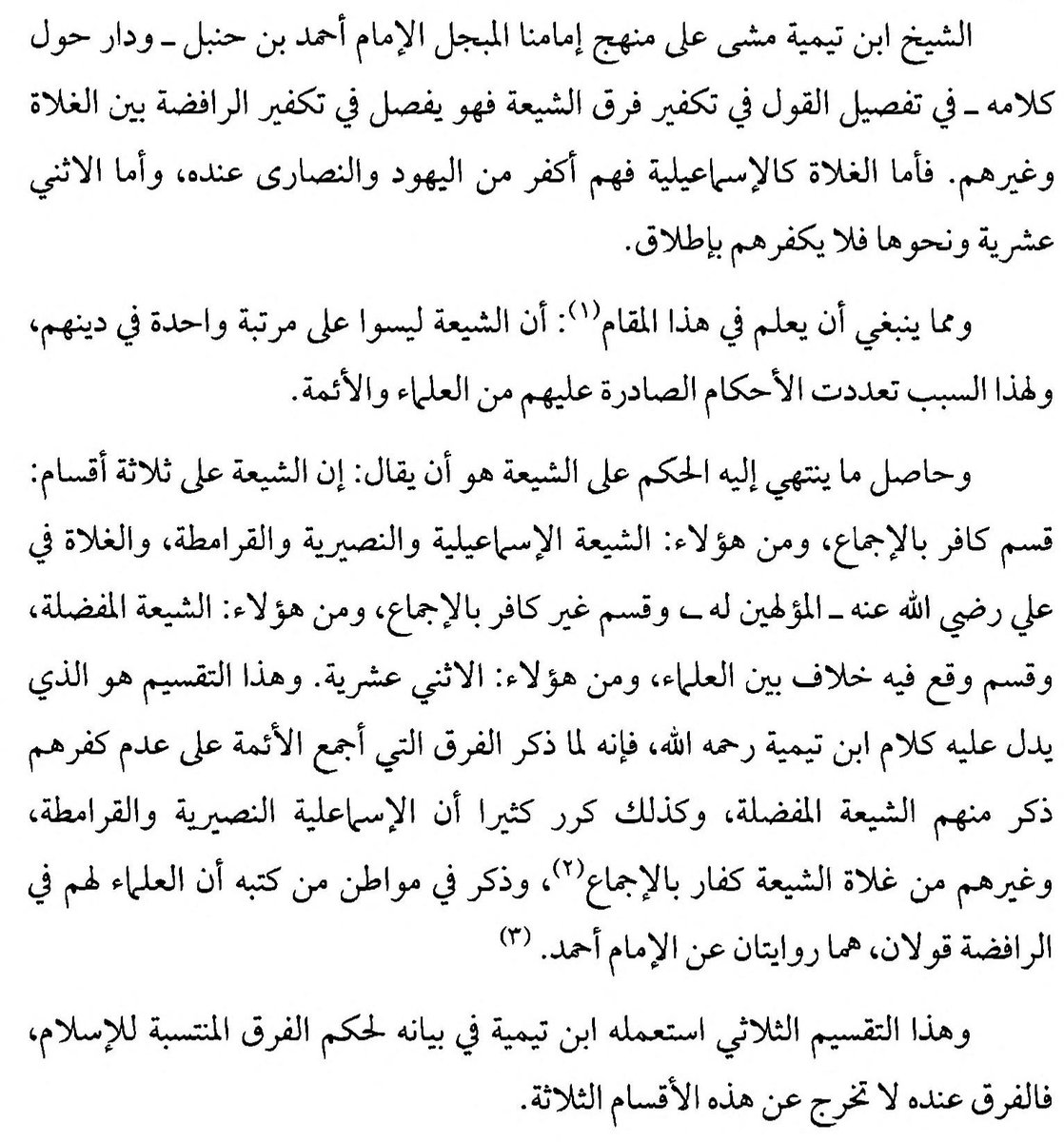
Al-Imām Taqī al-Dīn Ibn Taymiyyah and the Takfīr of the Shīʿah Sects. “Shaykh Ibn Taymiyyah followed the methodology of our Imām al-Mubajjal al-Imām Aḥmad ibn Ḥanbal, and revolved around his statements, in detailing the ruling on declaring the Shīʿah sects as disbelievers. He differentiates, regarding the takfīr of the Rāfiḍah, between the extremists and others. As for the extremists, such as the Ismāʿīliyyah, they are, in his view, more disbelieving than the Jews and Christians. As for the Twelvers and similar groups, he does not declare them disbelievers in an absolute sense. It is important to note in this context that the Shīʿah are not of one level in their religion [¹]; for this reason, the rulings issued about them by scholars and imams have varied. In summary, the ruling regarding the Shīʿah can be stated as follows: the Shīʿah are of three categories: • A category that is unanimously considered disbelievers; among them are the Ismāʿīliyyah, the Nuṣayriyyah, the Qarāmiṭah, and the extremists regarding ʿAlī [may Allāh be pleased with him] who deify him. • A category that is unanimously not considered disbelievers; among them are the Shīʿah who merely give preference (i.e., al-Mufaḍḍilah) [²]. • A category concerning which there is ikhtilāf among the scholars; among them are the Twelvers. This classification is what is indicated by the statements of Ibn Taymiyyah, may Allāh have mercy on him. When he mentioned the groups upon whose non-disbelief the imāms agreed, he included the Shīʿah who give preference. He also repeatedly stated that the Ismāʿīliyyah, Nuṣayriyyah, Qarāmiṭah, and other extremist Shīʿah are disbelievers by consensus [³]. He further mentioned in various places in his works that the scholars have two opinions regarding the Rāfiḍah, which are two narrations from Imām Aḥmad [⁴]. This threefold classification was used by Ibn Taymiyyah in explaining the ruling on the sects that ascribe themselves to Islām; in his view, sects do not fall outside of these three categories. Based on this, it is not correct to say that Ibn Taymiyyah does not declare the Shīʿah disbelievers in an absolute sense, nor that he declares them disbelievers absolutely. Rather, his ruling concerning them is based on the detailed distinctions mentioned earlier.” 𒆜━━━✤༺𒆜༻✤━━━𒆜 ¹) This statement is taken, with modification, from a brief research paper: “Clarifying Ibn Taymiyyah’s Position on the Ruling Concerning the Rāfiḍah”, by Sulṭān al-‘Umayrī, which is a good study. ²) According to Imāmunā Aḥmad b. Ḥanbal عليه السلام: whoever considers the Companions kāfirs and declares them apostates is himself a kāfir. As for one who insults some of them without declaring them kāfirs, he is a fāsiq. ³) See: 📖 Minhāj al-Sunnah [3/452] & [5/12337]. ⁴) See: 📖 Majmū‘ al-Fatāwā [3/56] and Al-Sārim al-Maslūl [567–571].


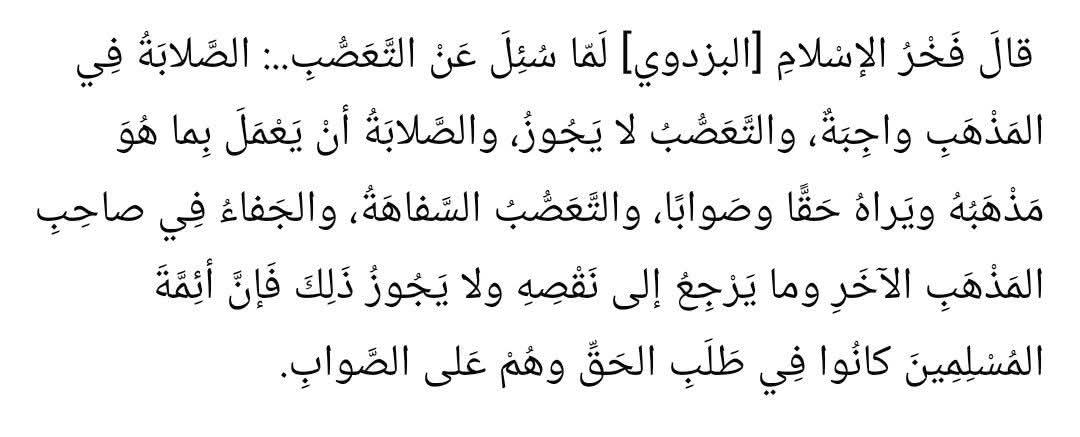
all 4 madhahib belong to Ahlus Sunnah wal Jama’ah. Is there a need for fanaticism, and calling each other out for following different madhahib?


Imam Ahmad ibn Hanbal (رحمه الله) was asked: “Can prayer be performed behind a person who gives preference to Ali (رضي الله عنه) over Abu Bakr and Umar (رضي الله عنهما)?” He replied: “Prayer should not be performed behind such a person.”


Ibn al-Jawzī said in al-Radd ʿalā al-Mutaʿaṣṣib al-ʿAnīd al-Māniʿ min Dhamm Yazīd (p. 87): The opponent said: “Why did you not remain silent about [speaking against] Yazīd out of respect for his father [Sayyidunā Muʿāwiyah صلى الله عليه وسلم]?”


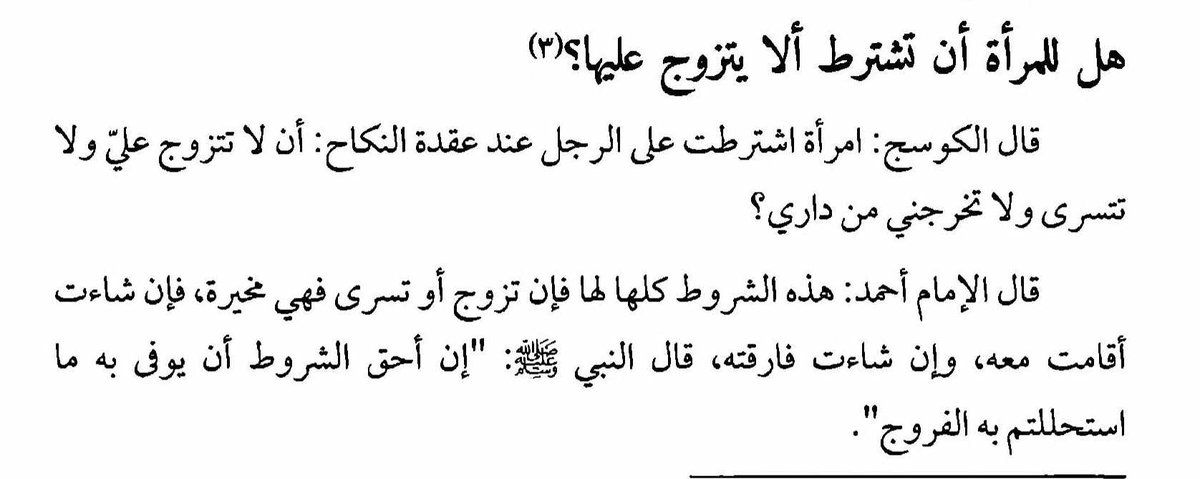
married brothers approaching sisters who clearly state they do not want to be a second wife boggle me also just bc someone is studying at the Islamic university in Madinah doesn't mean that they will have the Adaab & Akhlaaq needed to accompany علم والله المستعان


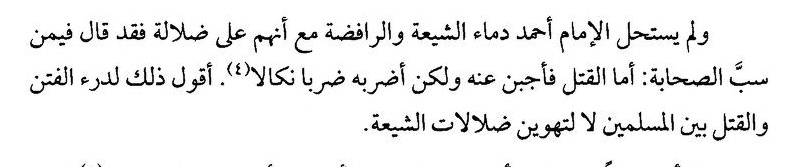
Imām Aḥmad did not permit the blood of the Shīʿah and the Rāfiḍah, even though they are in misguidance. For he said regarding one who insults the Companions: “as for killing, he refrained from it, but he would strike him as a punishment.” [¹] I [the author] mention this to prevent tribulation and killing among Muslims, not to downplay the misguidance of the Shīʿah. 𒆜━━━✤༺𒆜༻✤━━━𒆜 ¹) See: 📖 Fatāwā of al-Imām al-Subkī | 5802. And in a narration, whoever insults a Companion is to be flogged ten lashes; this is his ruling according to Aḥmad.


This is a well known principle of Imam Abu Hanīfah, that he would not use a narration where the narrator acted in contrary to what he narrated. So when they see an issue where the Hanafī’s oppose a Hadith, they say Hanafi’s do not follow the evidence. No, they do, there’s just principles around why they opposed certain ahadith like the example below. Fiqh is not just black and white, you see an authentic Hadith so you follow it. Fiqh is based on Usūl and Qawa’id which are what positions and opinions are built upon through correct usage of the evidences available


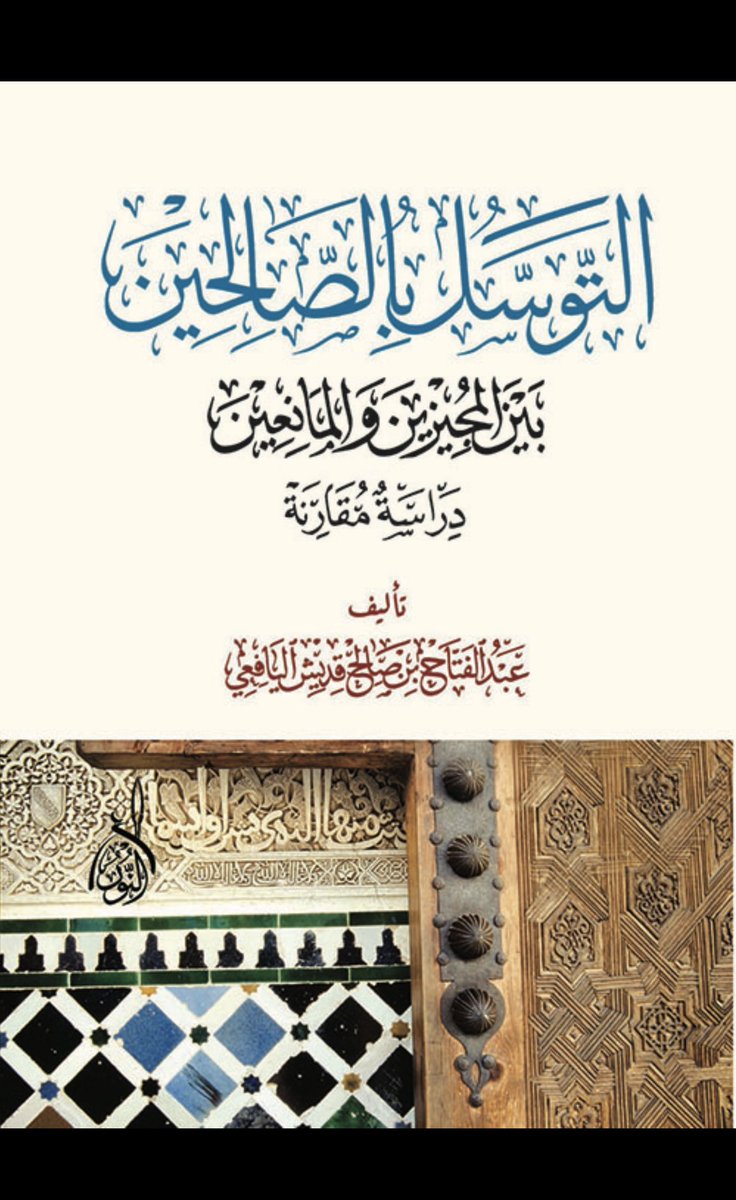
Al-Imām al-Yāfiʿī said, after mentioning a number of beliefs held by the noble masters of the Ṣūfī ṭarīqah. I say: “Everything I have mentioned is the creed of the shuyūkh, the ʿārifūn, the elect awliyāʾ, the possessors of divine knowledge and radiant lights, and the creed of—


Marriage of an Elderly Man to a Young Girl Sh Muṣṭafā Ḥamdū ʿUlayyān al-Ḥanbalī: "In some societies where many people affiliate themselves with Imām Aḥmad, it has become common for an old man to marry a young girl, which often results in injustice to her. The leading—