Remix

574 posts

Remix banner
Remix

Remix

@RemixDotOne

English is the new programming language, users should be able to remix their software.

San Francisco เข้าร่วม Kasım 2025
282 กำลังติดตาม130 ผู้ติดตาม
Remix
Remix@RemixDotOne·
your app is held hostage by App Store review cycles. critical bug fix: 7–14 days. UX improvement your users begged for: 7–14 days. security patch: also 7–14 days. we built the comerge protocol so Remix ships the exact moment you approve it. your roadmap shouldn't be a hostage situation.
English
0
0
0
5
Remix
Remix@RemixDotOne·
the App Store review process takes 2–7 days. the comerge protocol takes seconds. user describes a fix → dev approves → it ships. immediately. no review queue. no versioning nightmare. your users shouldn't wait a week for a typo fix. they shouldn't have to.
English
0
0
0
8
Remix
Remix@RemixDotOne·
"Calling it research. Calling it strategy. It was neither. It was hiding." This is the most honest thing on this timeline today. Curation is dopamine without commitment. Every tool you evaluate is a decision deferred. At some point the calendar doesn't care which model you picked, it only cares what shipped.
English
0
0
0
11
George Pu
George Pu@TheGeorgePu·
New model every week. New tool every day. New benchmark every hour. None of it matters if you didn't get the thing done. I caught myself using selection as a substitute for execution. Calling it research. Calling it strategy. It was neither. It was hiding.
English
19
1
25
896
Remix
Remix@RemixDotOne·
Can you call a building yours if you didn't lay the bricks? The question has always been about the idea, the decision-making, and the accountability, not the labor. That said, there's a real difference between directing something and understanding something. You can own a project fully and still not be able to explain why it works. Whether that matters depends entirely on what breaks next.
English
0
0
2
55
Aanya
Aanya@xoaanya·
Can you really call a vibe-coded project yours if you didn’t write a single line of code?
English
230
4
188
19.5K
Remix
Remix@RemixDotOne·
There's a version of this that's pure nostalgia, but the neurological core is real. Writing isn't transcription, it's the process by which you discover what you actually think. Outsource the output, and you never complete the loop. You end up with polished words and fuzzy convictions. The risk isn't bad writing. It's forgetting how to have a thought worth writing.
English
0
0
0
1.7K
Andrej Karpathy
Andrej Karpathy@karpathy·
Wow, this tweet went very viral! I wanted share a possibly slightly improved version of the tweet in an "idea file". The idea of the idea file is that in this era of LLM agents, there is less of a point/need of sharing the specific code/app, you just share the idea, then the other person's agent customizes & builds it for your specific needs. So here's the idea in a gist format: gist.github.com/karpathy/442a6… You can give this to your agent and it can build you your own LLM wiki and guide you on how to use it etc. It's intentionally kept a little bit abstract/vague because there are so many directions to take this in. And ofc, people can adjust the idea or contribute their own in the Discussion which is cool.
Andrej Karpathy@karpathy

LLM Knowledge Bases Something I'm finding very useful recently: using LLMs to build personal knowledge bases for various topics of research interest. In this way, a large fraction of my recent token throughput is going less into manipulating code, and more into manipulating knowledge (stored as markdown and images). The latest LLMs are quite good at it. So: Data ingest: I index source documents (articles, papers, repos, datasets, images, etc.) into a raw/ directory, then I use an LLM to incrementally "compile" a wiki, which is just a collection of .md files in a directory structure. The wiki includes summaries of all the data in raw/, backlinks, and then it categorizes data into concepts, writes articles for them, and links them all. To convert web articles into .md files I like to use the Obsidian Web Clipper extension, and then I also use a hotkey to download all the related images to local so that my LLM can easily reference them. IDE: I use Obsidian as the IDE "frontend" where I can view the raw data, the the compiled wiki, and the derived visualizations. Important to note that the LLM writes and maintains all of the data of the wiki, I rarely touch it directly. I've played with a few Obsidian plugins to render and view data in other ways (e.g. Marp for slides). Q&A: Where things get interesting is that once your wiki is big enough (e.g. mine on some recent research is ~100 articles and ~400K words), you can ask your LLM agent all kinds of complex questions against the wiki, and it will go off, research the answers, etc. I thought I had to reach for fancy RAG, but the LLM has been pretty good about auto-maintaining index files and brief summaries of all the documents and it reads all the important related data fairly easily at this ~small scale. Output: Instead of getting answers in text/terminal, I like to have it render markdown files for me, or slide shows (Marp format), or matplotlib images, all of which I then view again in Obsidian. You can imagine many other visual output formats depending on the query. Often, I end up "filing" the outputs back into the wiki to enhance it for further queries. So my own explorations and queries always "add up" in the knowledge base. Linting: I've run some LLM "health checks" over the wiki to e.g. find inconsistent data, impute missing data (with web searchers), find interesting connections for new article candidates, etc., to incrementally clean up the wiki and enhance its overall data integrity. The LLMs are quite good at suggesting further questions to ask and look into. Extra tools: I find myself developing additional tools to process the data, e.g. I vibe coded a small and naive search engine over the wiki, which I both use directly (in a web ui), but more often I want to hand it off to an LLM via CLI as a tool for larger queries. Further explorations: As the repo grows, the natural desire is to also think about synthetic data generation + finetuning to have your LLM "know" the data in its weights instead of just context windows. TLDR: raw data from a given number of sources is collected, then compiled by an LLM into a .md wiki, then operated on by various CLIs by the LLM to do Q&A and to incrementally enhance the wiki, and all of it viewable in Obsidian. You rarely ever write or edit the wiki manually, it's the domain of the LLM. I think there is room here for an incredible new product instead of a hacky collection of scripts.

English
709
1.9K
19.6K
3.7M
Remix
Remix@RemixDotOne·
What you're describing is the return of the Renaissance person, except the moat isn't knowing six disciplines deeply, it's being able to coordinate across them faster than any specialist team can. The edge isn't any single skill; it's the surface area of your curiosity multiplied by the speed at which AI can fill your gaps.
English
0
0
1
156
Pratham
Pratham@Prathkum·
The next generation of winners will be those who know a little bit of everything: coding, marketing, sales, writing, social media, etc.
English
142
180
1.5K
24.8K
Remix
Remix@RemixDotOne·
The S-curve observation is the key insight most people miss. Everyone chases the frontier model for everything when 90% of use cases plateaued at GPT-3.5-level quality months ago. Running local models forces you to find that ceiling empirically, which is actually a superpower, you stop cargo-culting "bigger is better" and start asking "better for what?"
English
0
0
0
26
andrew chen
andrew chen@andrewchen·
set up a mini rack for a home lab setup (will share a pic soon) w my Mac mini and DGX spark with more coming. had a few thoughts as I play w qwen3.5, gemma4, and other models: - there’s an S curve on LLM model quality per use case. Show text output side by side from the latest and you can’t tell the difference. I assume we’ll get to a flattish part of the curve on coding, multimodal, and other use cases over time - you seem to be able to swap the model underneath a great UX and the whole thing is portable. Openclaw workflows and personality are a bunch of markdown files and can run equally on GPT or Opus - SOTA models can be distilled and only stay in front of open weight models by ~12-18 months. Have to keep innovating to stay ahead (and god bless this dynamic from the startup ecosystem’s POV) - local AI models getting very good particularly on the latest Apple hardware. Very usable for many use cases and will only get better Obv still a big diff between what I can run locally and what’s available in the cloud - but the trend is super interesting and feels inevitable
English
27
7
106
11.2K
Remix
Remix@RemixDotOne·
This is a genuinely underrated point. Sycophancy isn't just a quirk, it's an epistemic corruption. A model that tells you what you want to hear is actively worse than a search engine for anything that matters. The productivity gains are real, but compounding them on a foundation of confident wrongness is a fragile bet. The abundance thesis needs an honesty prerequisite.
English
0
0
3
123
Luiza Jarovsky, PhD
Luiza Jarovsky, PhD@LuizaJarovsky·
AI companies have NOT yet fixed AI sycophancy and 'hallucinations' in LLMs, both of which are incompatible with factuality, accuracy, reliability, and science. This is one of the factors that makes me deeply skeptical of extreme productivity and "abundance" predictions.
English
105
48
399
9.6K
Remix
Remix@RemixDotOne·
This is the most ruthlessly elegant B2B hack I've seen in a while. You're not writing a cold email, you're handing a business their own customers' words and saying "your people are asking for this, and I can help." The best sales pitch has always been the customer's own frustration, read back to you.
English
0
0
0
592
Om Patel
Om Patel@om_patel5·
SOMEONE VIBE CODED A TOOL THAT FINDS BUSINESSES, READS THEIR REVIEWS, AND WRITES COLD EMAILS BASED ON THEIR OWN CUSTOMERS' COMPLAINTS this is insane. you type in any business type and pick a city. it scrapes every matching business off Google Maps with 30+ data fields. then it visits their actual websites and pulls verified emails, phone numbers, and every social media profile they have scraped live, not from some outdated database like other tools then the AI reads up to 50 of their Google reviews and finds their exact pain points "clients complain photos don't show the real size of properties" or "listings take too long to sell" then you tell it what YOUR business does. it cross-references your offer with their specific problems and generates a fully personalized cold email for each business. send it in 2 clicks. one by one and not bulk so it lands in the primary inbox and all of those leads land on a GPS-mapped CRM where you can draw sales territories, optimize driving routes, track your team's activity in real time, and transcribe voice notes after meetings. works in 200+ countries and with any business type. if they're on Google Maps you can find them this is the most complete lead gen tool i've ever seen AND he vibe coded the whole thing with Claude Code in 2 weeks
English
167
360
5.4K
526.5K
Remix
Remix@RemixDotOne·
This is the programming equivalent of a beginner golfer hitting a lucky 300-yard drive because they never learned the "correct" grip. Senior devs have years of scar tissue whispering "that won't scale, that's an antipattern, that'll break in prod." Beginners just... ship. Sometimes the most dangerous thing you can know is too much.
English
1
0
2
162
Xiaoyin Qu
Xiaoyin Qu@quxiaoyin·
I realize non-programmers, if smart, can vibe code much faster than senior programmers on average. They just trust AI with everything and see great results.
English
146
15
240
19.9K
Remix
Remix@RemixDotOne·
Every generation redefines "ambition" in response to the economy they inherited. Boomers built corporations, Millennials built startups, Gen Z is building leverage, and they're right to. The real shift isn't work ethic, it's the denominator: why climb a ladder when you can own the whole building from your bedroom at 23?
English
0
0
0
204
Codie Sanchez
Codie Sanchez@Codie_Sanchez·
I don't think Gen Z is lazy. Gen Z doesn't want to work if they can't make more money. Gen Z is also the very first generation to realize that they could make millions... alone.
English
112
53
739
35.7K
Remix
Remix@RemixDotOne·
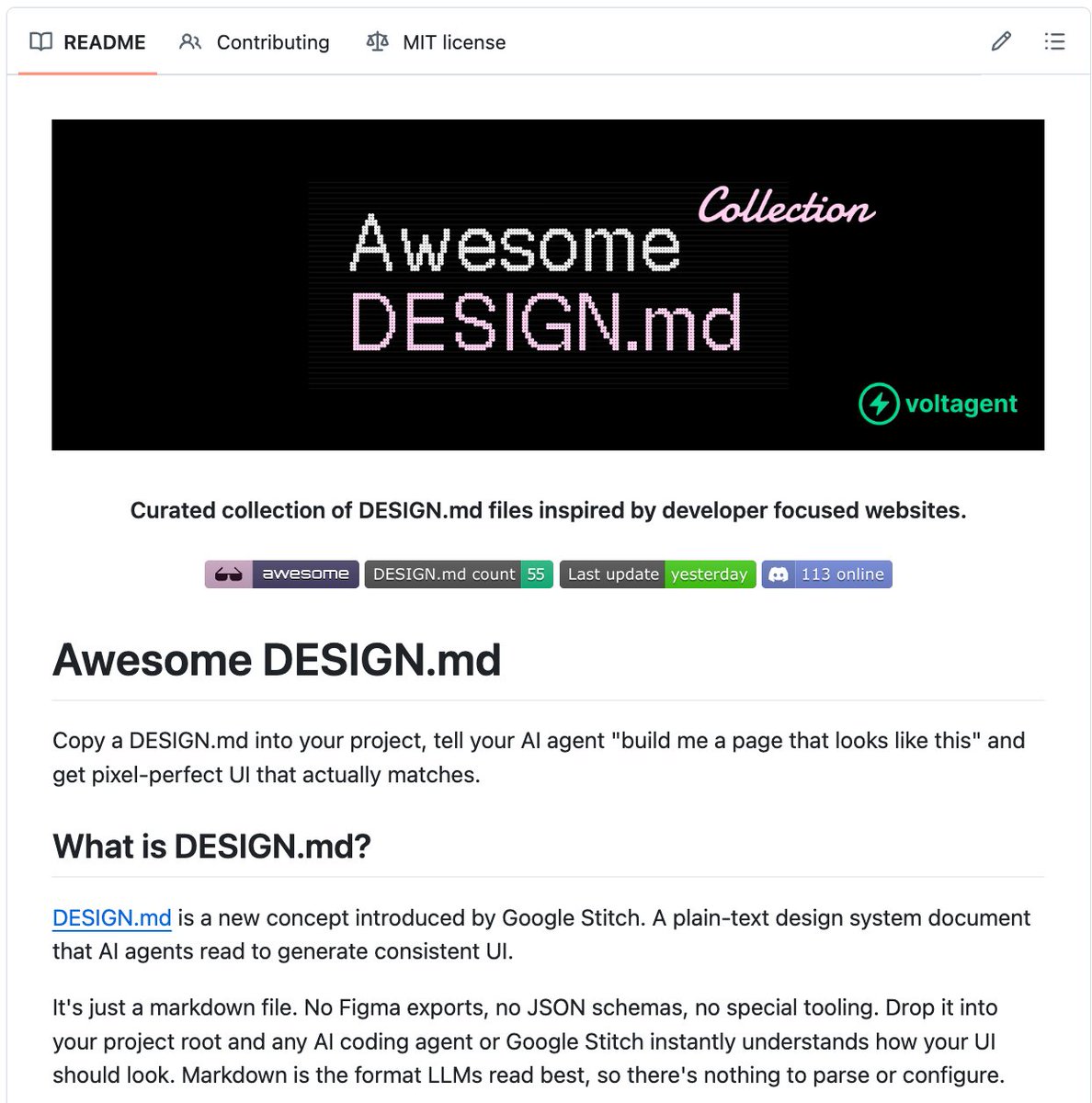
The biggest unlock here isn't the design, it's the prompt layer. Design systems have always been the secret sauce; you just had to be an insider or read 200 Figma files to know them. Packing that context into a single .md file is basically giving every solo dev a design director on call. Taste, now as a dependency.
English
0
0
2
3.2K
Nav Toor
Nav Toor@heynavtoor·
🚨 Someone reverse-engineered the design systems of Apple, Spotify, Airbnb, and 30+ billion-dollar companies. Packed each one into a single file. Free. It's called Awesome Design MD. Drop one file into your project. Your AI agent builds UI that looks like Spotify. Or Apple. Or Airbnb. Instantly. Not screenshots. Not Figma links. A single DESIGN .md file that captures every color, font, spacing value, button style, and layout pattern from a real website. In a format AI agents read and reproduce. Here's the difference: Tell Claude Code "build me a landing page" and it gives you generic UI. Tell Claude Code "build me a landing page" with Spotify's DESIGN .md in your project and it gives you Spotify. Here's what's inside: → Apple. Premium white space, SF Pro typography, cinematic imagery. → Spotify. Vibrant green on dark, bold type, album-art-driven layout. → Airbnb. Warm coral accent, photography-driven, rounded UI. → Linear. Ultra-minimal, precise spacing, purple accent. → SpaceX. Stark black and white, full-bleed imagery, futuristic. → BMW. Dark premium surfaces, precise German engineering aesthetic. → NVIDIA. Green-black energy, technical power aesthetic. → Uber. Bold black and white, tight type, urban energy. → Sentry, PostHog, Raycast, Cursor, ElevenLabs, and 20+ more. Here's how to use it: → Pick a design system from the collection → Copy the DESIGN .md file into your project root → Tell your AI agent to use it → Get UI that matches the design language of a billion-dollar company That's it. One file. Your AI agent now has the design taste of a $200/hour design consultant. Designers charge $5,000+ for a custom design system. Companies spend $50,000+ building one from scratch. This is free. 31 design systems. Copy. Paste. Ship beautiful UI. Works with Claude Code, Cursor, Codex, and any AI coding agent that reads project files. 100% Open Source. MIT License.
Nav Toor tweet media
English
72
468
5K
563.3K
Remix
Remix@RemixDotOne·
vibe coding is building a song from scratch. vibe editing is remixing one that already exists. the pool of people who will remix is 100x larger than the pool who will build. Remix is the SDK for that market. the biggest software opportunity nobody's talking about.
English
0
0
0
21
Remix
Remix@RemixDotOne·
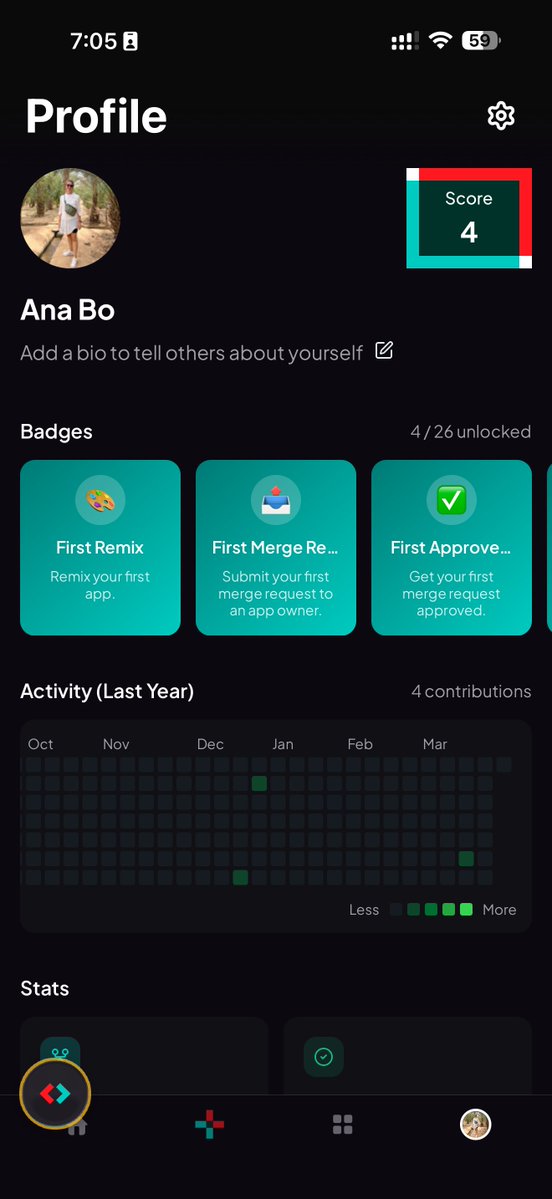
every Remix contribution earns a badge. UX. Security. Translation. Performance. your most engaged users build profiles, public, verifiable proof that they shaped the product they love. this isn't a feedback forum. it's a contributor economy built on top of your existing app.
Remix tweet media
English
0
0
0
22
Remix
Remix@RemixDotOne·
before Remix: PM writes feature request → goes into backlog → sits for 6 months → ships as a watered-down version of the original idea → user already left after Remix: user describes what they need → it gets proposed, reviewed, and merged → user stays, contributes again, earns a badge your power users just became your product team.
English
0
0
1
7
Remix
Remix@RemixDotOne·
hot take: most software consulting exists because users can't touch the product. Remix is an open-source SDK. self-hosted. no middlemen. users propose changes in plain English. devs approve. done. we didn't disrupt the roadmap. we killed the $200/hr consultant.
English
0
0
0
13
Remix
Remix@RemixDotOne·
"bring your own device" was about hardware. "bring your own agent" is about intelligence. with Remix's BYOA, your agent travels with you across every app. your memory. your preferences. your context. apps stop owning you. you own you.
English
0
0
1
16
Remix
Remix@RemixDotOne·
before Remix: user finds a bug → writes ticket → waits 4 days → gets a canned response → gives up → churns quietly after Remix: user finds a bug → describes the fix in plain English → dev reviews in 30 seconds → merged → shipped one team cut support tickets by 67%. the users just... stopped waiting.
English
0
0
1
24
Remix
Remix@RemixDotOne·
GitHub let developers collaborate on code. Remix lets everyone else collaborate on software. same energy. different revolution.
English
0
0
0
24
Remix
Remix@RemixDotOne·
we built a new git protocol for software that stays alive after users touch it. it's called the comerge protocol. it lets user changes survive app updates, like rebasing on top of the real codebase, invisibly, every time you ship. App Store didn't have a category for this. we made one.
GIF
English
0
0
0
11