Luis Alberto Rodriguez

8K posts

Luis Alberto Rodriguez

Luis Alberto Rodriguez

@RodLuisAlberto

Visiting fellow @MIT | exdirector general @DNP_colombia | exviceministro técnico @minhacienda | caribe

Bogotá เข้าร่วม Mart 2015
2.2K กำลังติดตาม26.2K ผู้ติดตาม
Luis Alberto Rodriguez รีทวีตแล้ว
Javier Mejia
Javier Mejia@JavierMejiaC·
Hace poco, El Dario del Otún me hizo una entrevista muy gentil. Me preguntaron sobre mi historia, sobre Colombia, sobre los retos comunicativos en economía, sobre la esperanza,... El video de la entrevista completa está aquí: youtu.be/ZEUDM_LRy-0?si…

YouTube video
YouTube
Javier Mejia tweet media
Español
1
7
31
1.8K
Luis Alberto Rodriguez รีทวีตแล้ว
DW Español
DW Español@dw_espanol·
La inflación obliga a Cuba a emitir billetes de alta denominación Cuba lanza nuevos billetes en honor a las mujeres y para aliviar la inflación en medio de la crisis. Los cubanos, acostumbrados a pagar con grandes fajos de efectivo por la fuerte subida de precios, reciben cierto alivio con la entrada en circulación de dos billetes de mayor denominación, 2.000 y 5.000 pesos.
Español
19
66
184
48K
Luis Alberto Rodriguez รีทวีตแล้ว
Jonathan Malagón
Jonathan Malagón@JoMalagon·
No es cierto que el aumento de la Tasa de Política Monetaria favorezca al sector financiero. Las cifras de la @SFCsupervisor muestran exactamente lo contrario: en 2023, las utilidades de los establecimientos de crédito cayeron 45% y, al cierre de 2024, 11 bancos reportaron pérdidas — la cifra más alta en décadas. Abro hilo.
Español
9
109
211
8.6K
Luis Alberto Rodriguez รีทวีตแล้ว
José Caparroso
José Caparroso@JoseCaparroso·
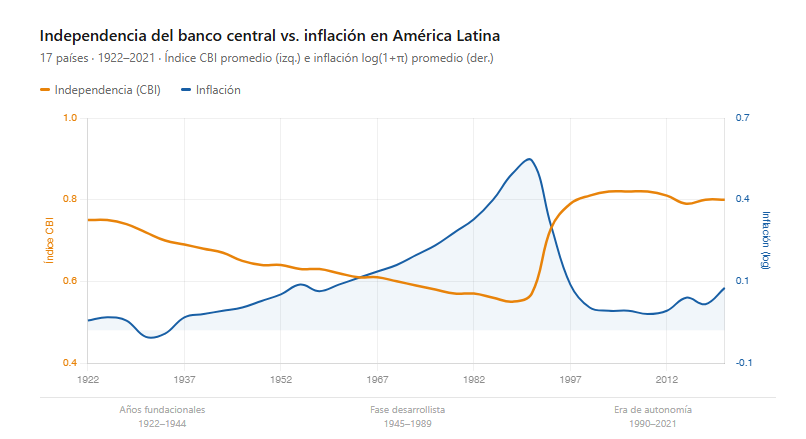
Un estudio del FMI con 100 años de datos en 17 países de América Latina demostró que cada vez que un gobierno capturó su banco central, llegó la inflación. Cuando le devolvió independencia, la inflación cedió. Quién no conoce su historia... imf.org/-/media/files/…
José Caparroso tweet media
Español
38
679
1.4K
55.9K
Luis Alberto Rodriguez รีทวีตแล้ว
María del Pilar López Uribe
María del Pilar López Uribe@marialopezuribe·
Tomás, algo así sucedió cuando se creó el Banrep. Tenía 10 miembros, varios del sector privado como Federación de Cafeteros, Camaras de comercio o representantes de algunos sectores. Qué sucedió? La inflación nunca bajo del 20%-30% anual. Quiénes fueron los más perjudicados? Los trabajadores que perdían poder de compra porque los salarios no podían ajustarse tan rápido ante cambios en precios tan bruscos. Qué más pasó? La política monetaria se concentró en políticas de fomento para favorecer a los sectores que estaban en la junta, favoreciendo a una minoría, perjudicando a la mayoría. La sugerencia es revisar lo que ha sido la historia del Banrep y ver cuándo lograron controlar y bajar la inflación. Te lo resumo: Únicamente después de la Constitución de 1991 es que se puede ver de manera clara/precisa y sin poder contradecirlo (nadie lo puede negar) que la inflación cae y se mantiene en 5% o menos.
Tomás Molina@platom___

¿Esto sucedería si los trabajadores tuviesen voz y voto en las decisiones del Banco? No lo creo.

Español
40
408
1.6K
107.4K
Luis Alberto Rodriguez รีทวีตแล้ว
El Colombiano
El Colombiano@elcolombiano·
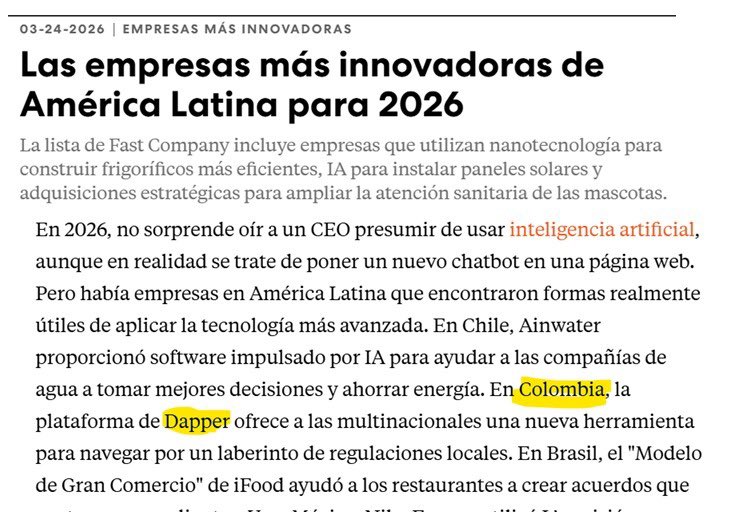
Cinco empresas colombianas están entre las más innovadoras del mundo en 2026, según Fast Company elcolombiano.com/negocios/colom…
Español
0
12
30
2.8K
Luis Alberto Rodriguez รีทวีตแล้ว
Valora Analitik
Valora Analitik@ValoraAnalitik·
La startup colombiana Dapper entra a la lista de empresas más innovadoras del mundo según Fast Company 📜 valoraanalitik.com/la-startup-col…
Español
0
5
12
1.1K
Luis Alberto Rodriguez รีทวีตแล้ว
Forbes Colombia
Forbes Colombia@forbescolombia·
Cinco compañías colombianas entraron en la lista de Fast Company de las empresas más innovadoras del mundo en 2026, un reconocimiento a organizaciones que están redefiniendo sus industrias con nuevos modelos de negocio, crecimiento e impacto: 👉 forbes.co/negocios/cinco…
Español
0
24
59
8.2K
Luis Alberto Rodriguez รีทวีตแล้ว
Tarek Mansour
Tarek Mansour@mansourtarek_·
In 1945, Friedrich Hayek outlined the Knowledge Problem that any society faces: The central economic problem is not resource allocation - it is how to use knowledge that is dispersed among millions of individuals. He argues that information is fragmented, local, dynamic, and often hidden. He explains that no government or central planner can ever fully possess it, which makes them inefficient resource allocators. He proposes markets as the solution: knowledge is decentralized and prices are how society aggregates it. This idea is the intellectual foundation of modern prediction markets. Decades later, in 1988, the University of Iowa launched the Iowa Electronic Markets (IEM), which allowed small size trades on US elections and macro events. The results: even thin, low-capital markets outperformed polls. This was the first credible empirical proof that market prices are effective aggregators of public beliefs. A variety of corporate and policy experiments followed in the 2000s. Google, HP, and Microsoft all tried their own internal versions of prediction markets to forecast product launches and sales targets. DARPA built its own to forecast geopolitical events. The results were consistent: broad participation with monetary incentives led to accurate forecasts. Then, in 2015, Philip Tetlock published Superforecasting. The book, which is the culmination of decades of research into human judgment, shows that groups of curious and humble “forecasters” dramatically outperformed intelligence analysts and domain experts at forecasting. By showing that smart amateurs can outperform experts, Tetlock put into question authority figures and whether we should trust them for predictions about the future. Today, Kalshi is sitting on one of the largest repositories of high quality market data in the world. For the first time, public beliefs across a variety of domains - from economics, to politics and culture - are aggregated at scale through market prices and updated in real-time as new information arrives. Our data contains answers to open questions held about prediction markets - why they outperform traditional belief aggregation methods, how to detect shifts in collective sentiment, and which players drive market accuracy. This proprietary data has been closed to the public. We are launching @KalshiResearch to change that. We invite academics, researchers, economists, philosophers, and interested parties to work with us to study and uncover the fundamentals underpinning belief formation and prediction markets. Like Hayek proposed 80 years ago, prediction markets have the potential to improve society's collective decision making and resource allocation. The goal for Kalshi Research is to fulfill his vision.
Kalshi@Kalshi

Introducing: @KalshiResearch Kalshi Research will provide internal Kalshi data to academics and other researchers interested in exploring topics related to prediction markets. The first research piece is live: Kalshi outperforms Wall Street at predicting inflation.

English
49
48
362
184.3K
Luis Alberto Rodriguez รีทวีตแล้ว
Diego Montañez-Herrera
Diego Montañez-Herrera@DiegomontanezH·
Hoy es de esos días que se sienten irreales 😭🇨🇴 Estar entre las empresas más innovadoras del mundo en 2026. Top 4 LATAM. Sí, CUARTA. Orgullo total del equipo. Esto apenas empieza 🚀 fastcompany.com/91497250/latin…
Diego Montañez-Herrera tweet media
Diego Montañez-Herrera@DiegomontanezH

De Colombia para el mundo 🇨🇴🚀 Dapper entra al ranking de @FastCompany 2026 🌍 como una de las empresas más innovadoras del mundo 😭😭 hoy nos dieron la noticia: Top 50 global
Top 4, siiiiiii Top 4 LATAM 🌎 Compartiendo lista con gigantes como @Google 👀 Esto apenas empieza 🙌

Español
0
2
10
1.4K
Luis Alberto Rodriguez รีทวีตแล้ว
Dapperglobal
Dapperglobal@dapperlatam·
Cuando empezamos Dapper en 2024, la apuesta era clara pero difícil: que la tecnología podía transformar la forma en que las empresas entienden su entorno regulatorio en América Latina. Hoy Fast Company nos nombra una de las empresas más innovadoras del mundo #4 en LATAM junto a Google, Nvidia, Adidas y Walmart. "Dapper le da a las empresas multinacionales una nueva herramienta para navegar el laberinto de regulaciones en América Latina." Fast Company, 2026 No lo hacemos solos. Detrás de este reconocimiento hay un equipo que creyó en esto desde el día uno, y clientes que apostaron por una forma diferente de operar. Estamos apenas comenzando. 🚀 hashtag#FCMostInnovative hashtag#FastCompany hashtag#Dapper hashtag#InnovaciónLatam
Dapperglobal tweet media
Español
0
1
2
135
Luis Alberto Rodriguez รีทวีตแล้ว
Architectural Lens
Architectural Lens@ArchitectLens·
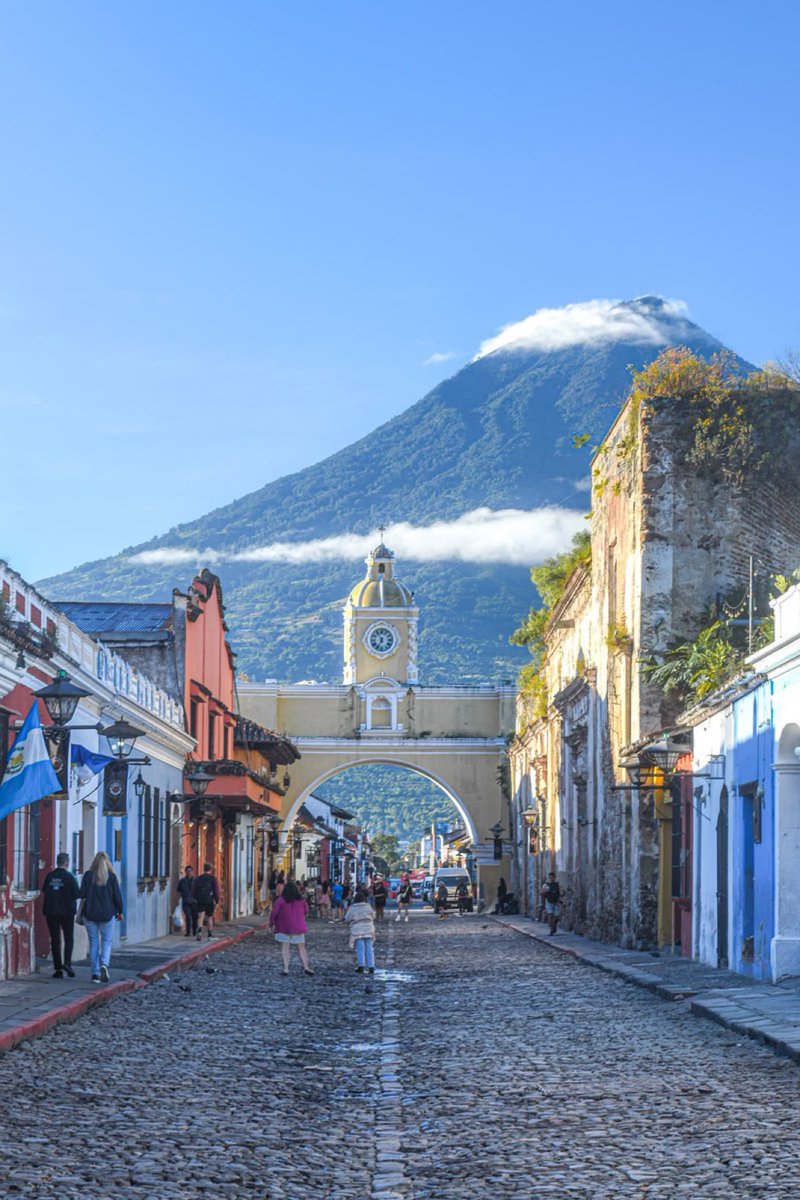
Antigua, Guatemala
Architectural Lens tweet media
Español
10
209
2.3K
23.5K
Luis Alberto Rodriguez รีทวีตแล้ว
DANE Colombia
DANE Colombia@DANE_Colombia·
La demografía de Colombia cambia y los datos de Estadísticas Vitales lo confirman: 🍼 En 2025 se registraron 433.678 nacimientos, lo que representa una reducción de 20.223 nacimientos frente a 2024. 📉 La tasa general de fecundidad para 2025pr reportó el valor más bajo de la última década. El descenso frente a 2024 fue de 1,7 nacimientos. 🪦 En 2025pr se registraron 283.378 defunciones, 7.600 más que en 2024 🫀 La principal causa de muerte en Colombia son las enfermedades isquémicas del corazón (92,7 defunciones por cada 100.000 habitantes). ℹ️ Consulta todos los resultados aquí: dane.gov.co/index.php/esta…
DANE Colombia tweet media
Español
2
46
83
4.9K
Luis Alberto Rodriguez รีทวีตแล้ว
Derek Morrison
Derek Morrison@akerloffwhite·
Exactly eight years ago I asked @R_Thaler whether his Nobel Prize-winning Transactional Utility Theory could be extended to include externalities known to the consumer. His reply: "good idea. Do it!" So I did. The article I wrote at the time was tongue-in-cheek (kittens, cookies, scenic routes) but the underlying question was serious: what happens to the utility that exists beyond what any price signal can carry? That question turned out to be much bigger than I anticipated. Every stream, every ticket sale, every download records a consumption event and pays accordingly. But creative works do something else entirely. A song shapes culture for decades. A film becomes a reference point for generations. A piece of art changes what gets made next. That value keeps compounding long after the transaction closes, and the creator's cut was settled at the moment of the click. The price signal is structurally wrong, and most wrong for the work that ends up mattering most. The result is a structurally missing market. I've spent the years since building the formal case. The working paper is now live on SSRN. papers.ssrn.com/sol3/papers.cf… Professor Thaler: I did it. 🙏🏻 #Economics #CreativeEconomy #MusicIndustry #BehaviouralEconomics
Derek Morrison tweet media
English
2
14
188
28.4K
Luis Alberto Rodriguez รีทวีตแล้ว
IMF
IMF@IMFNews·
Europe once led the world in productivity but now trails the US by about 20%. The problem is scale: too many companies remain small. More capital, labor, and consumer markets integration can help innovative companies scale up. imf.org/en/blogs/artic…
IMF tweet media
English
31
97
244
28.4K
Luis Alberto Rodriguez รีทวีตแล้ว
Ismael Sanz
Ismael Sanz@sanz_ismael·
Cada vez más graduados descubren que el viejo contrato social se ha roto: estudiar una carrera ya no garantiza empleo estable, salarios altos ni trayectorias ascendentes. The Economist: Si cae la prima salarial universitaria y empeora la inserción laboral, toca repensar qué universidad, para qué empleos y con qué habilidades economist.com/finance-and-ec… youtube.com/watch?v=kZXzZH…
YouTube video
YouTube
Ismael Sanz tweet media
Español
24
536
1.6K
85.3K
Luis Alberto Rodriguez รีทวีตแล้ว
a16z
a16z@a16z·
"Kalshi is built on people who are monitoring the situation." Kalshi co-founders @luanalopeslara and @mansourtarek_ describe the unique profile of market makers: "The guys in the garage are extremely crucial to the ecosystem because they price fast. They're monitoring the situation, all the time right. They're the original situation monitors." "One example I'll give, and I've given this in the past, is the best inflation forecaster on Kalshi over the last few years is none of the institutions or big hedge funds, it's this guy who lives in Kansas - never traded financial markets before, [he] just likes to read the news." "And just knows how to predict inflation. He can feel it, you know, and you have so many of these people, I mean, I would say a few thousand that are formally committed, but there are tens of thousands of these people that know about a bunch of different topics. And they're sort of actively pricing these things, and they do it as a full-time job, and they get rewarded for that." @collision @matthuang
English
17
16
265
51.3K