Nageeb Ali

1.7K posts

Nageeb Ali banner
Nageeb Ali

Nageeb Ali

@SNageebAli

Professor of Economics @PennStateEcon

State College, PA เข้าร่วม Temmuz 2014
891 กำลังติดตาม4.6K ผู้ติดตาม
Nageeb Ali รีทวีตแล้ว
VSET Virtual Seminars in Economic Theory
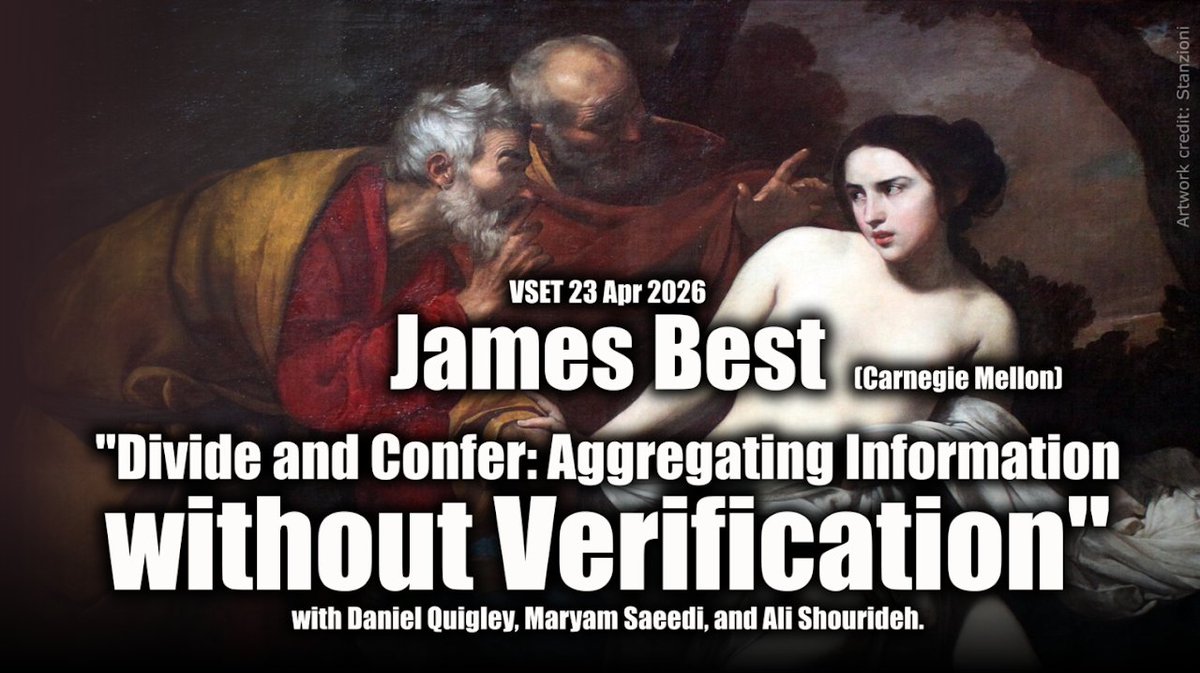
Our first seminar of the spring season is on Thursday, 23 Apr 2026. 💥James Best💥 (Carnegie Mellon) presents "Divide and Confer: Aggregating Information without Verification", with Daniel Quigley, Maryam Saeedi, and Ali Shourideh. Panellists: Nemanja Antić and Dimitri Migrow.
VSET Virtual Seminars in Economic Theory tweet media
English
0
2
2
562
Nageeb Ali รีทวีตแล้ว
VSET Virtual Seminars in Economic Theory
VSET's first seminar this spring is on Thu 23 April, but a few days earlier you can catch this 👇 #EconTheory Poleconuk Webinar by Nina Bobkova. The title feels especially fitting: the work has not yet been circulated, and “anecdote” comes from the Greek “things unpublished”.
POLECONUK Webinar@poleconuk_w

Our next seminar is coming up soon. On Monday, 20 Apr, @nina_bobkova (Rice) will present joint work w/ Arjada Bardhi, “Why Anecdotes?” This #EconTheory project is so new that there is no paper yet, so this is an early opportunity to hear the work presented online.

English
0
1
3
825
Nageeb Ali
Nageeb Ali@SNageebAli·
@Korhan_Kocak I would recommend writing an email to the editor. If the editor agrees, s/he can then desk reject saving your and the other reviewers’ efforts for another paper. As an editor, I look out for AI slop, but one can always miss things.
English
1
0
4
917
Korhan Kocak
Korhan Kocak@Korhan_Kocak·
I'm reviewing a paper that reads like AI slop. Have we decided how to approach this? Do I give it as much attention and time as I would any paper?
English
14
0
15
12.7K
Nageeb Ali รีทวีตแล้ว
Jesús Fernández-Villaverde
Jesús Fernández-Villaverde@JesusFerna7026·
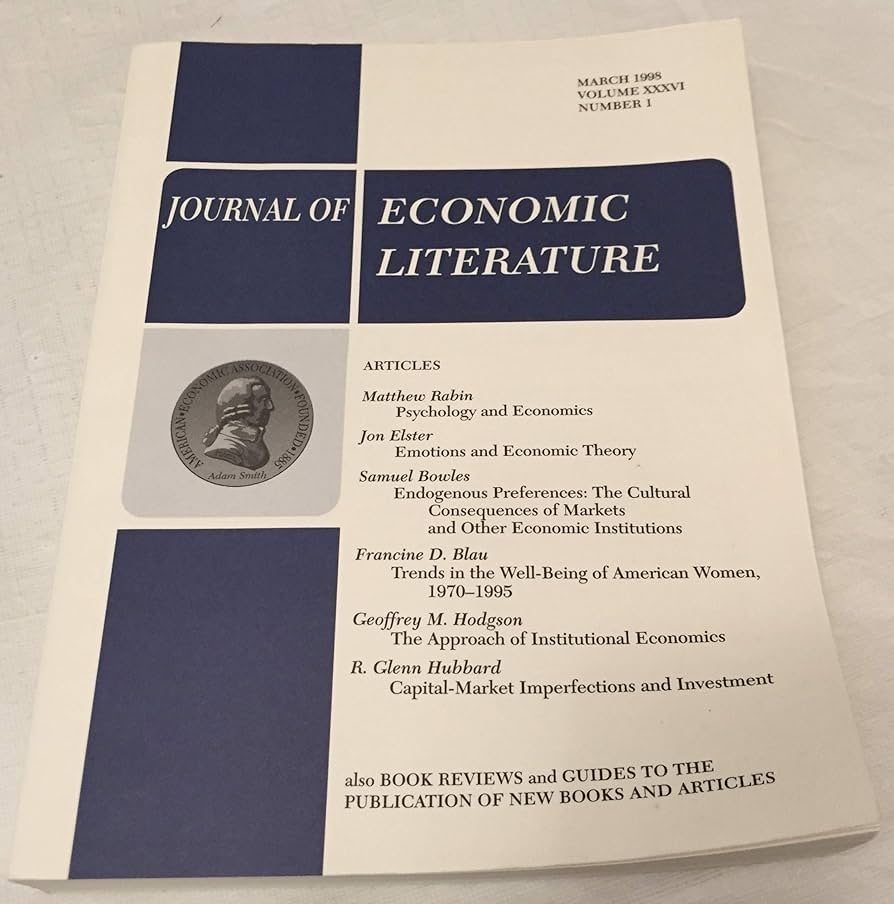
By now, I have published a fair number of papers, and one more acceptance would have close to zero marginal impact on anything that matters professionally. But getting my survey on “Deep Learning for Solving Models” accepted into the Journal of Economic Literature made me genuinely happy, for reasons that have nothing to do with my CV. I had the misfortune of studying my undergraduate degree in economics at a quite awful institution. Two professors, David Taguas and Alfredo Arahuetes, were outstanding, and I owe them a great deal. The rest were well below any reasonable professional level, and some violated the basic standards of ethical conduct. They had no business teaching economics at any level, let alone at a university that charged tuition and claimed to prepare students for professional life. I had to work out most of my education on my own. The surveys published in the Journal of Economic Literature were how I did it. I spent hours in the library’s reading room going through one survey after another on topics I had never been properly taught. Some helped more than others, but collectively they gave me a solid enough foundation that, when I arrived at Minnesota for my PhD, I discovered, to my considerable surprise, that I was ahead of nearly all the other first-year students, including some who held master’s degrees, despite the fact that I had finished my undergraduate degree just six weeks before. I owe the Journal of Economic Literature a debt I will never be able to repay. Publishing a survey there is the closest I can come to trying. So, the thought that some student somewhere, working on her own in a library or on a laptop, might find my survey useful gives me tremendous satisfaction. But there is a broader point worth making. Even in the world of AI, the profession has an important mission in making educational material widely available. Textbooks, surveys, teaching slides, these are public goods in the economist’s sense: high social value, insufficient private incentive to produce. This is also why I post all my slides and teaching material online: sas.upenn.edu/~jesusfv/deepl… We do not reward these activities nearly enough, and their supply is well below what any reasonable social planner would choose. I do not have a good proposal for changing this, and I would welcome suggestions. What I do find heartbreaking is that many of the great economists of the past couple of generations never wrote textbooks on their areas of expertise. I do not mean this as criticism. All of them maximize, and perhaps they all suffer from the same bias I suffer from: the belief that one can always do it next year. But I often think about the hours of pure intellectual pleasure I would have had reading “Time Series Econometrics: An Advanced Textbook” by Chris Sims or “Methods in Structural Estimation” by Pat Bajari. Those books do not exist. They should.
Jesús Fernández-Villaverde tweet media
English
34
200
1.3K
139.5K
Nageeb Ali รีทวีตแล้ว
Séb Krier
Séb Krier@sebkrier·
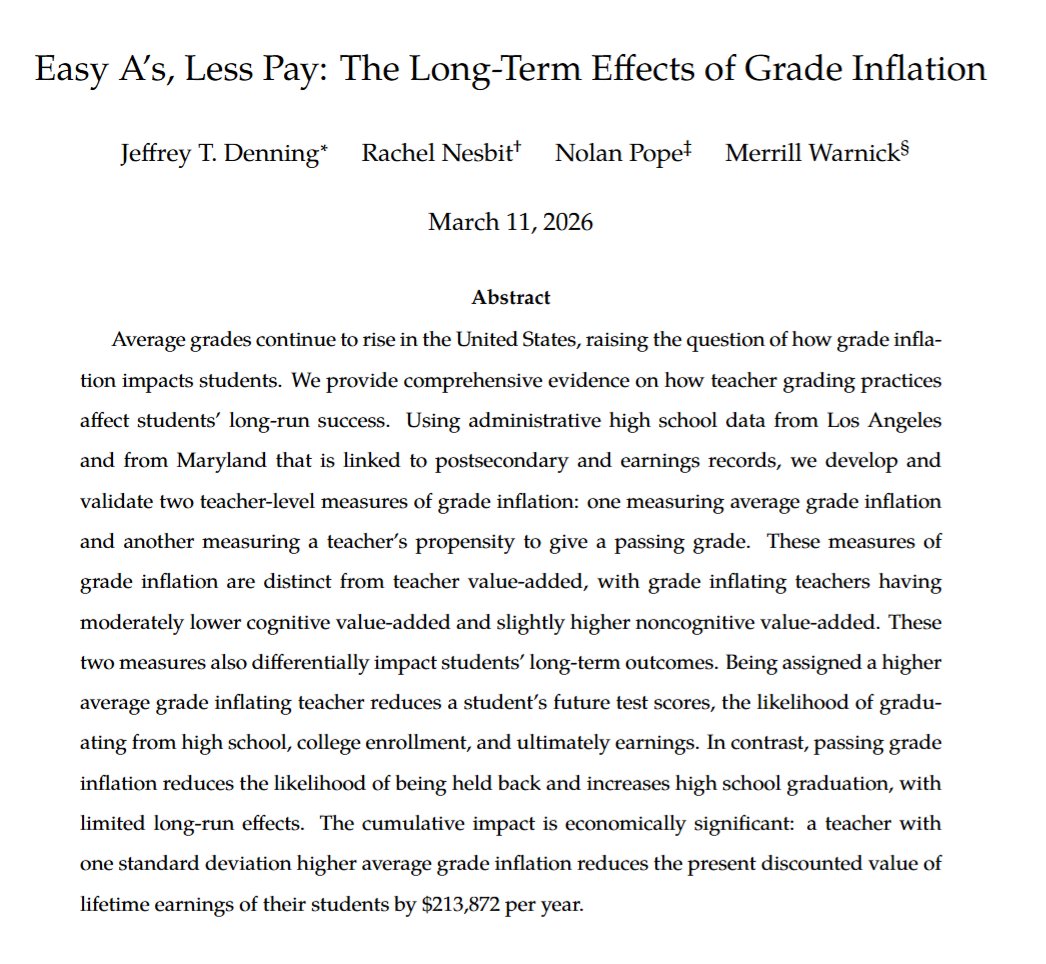
"A teacher with one standard deviation higher mean grade inflation reduces the present discounted value of lifetime earnings of their students by $213,872 per year of teaching." econweb.umd.edu/~pope/Grade_In…
Séb Krier tweet media
English
34
345
3K
215.5K
Nageeb Ali
Nageeb Ali@SNageebAli·
@JesusFerna7026 David Blackwell and David Gale are two individuals who ought to have gotten the prize, but I don’t think they would have even if the prizes began in 1959.
English
1
0
13
706
Jesús Fernández-Villaverde
Jesús Fernández-Villaverde@JesusFerna7026·
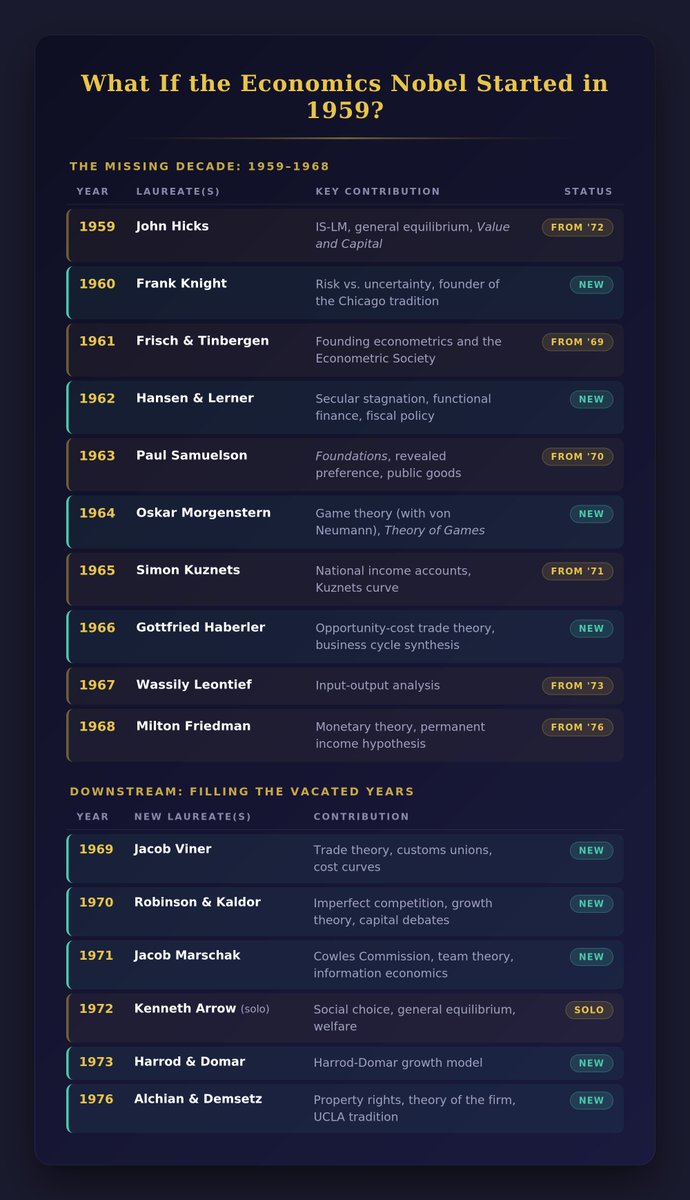
The Sveriges Riksbank established the Prize in Economic Sciences in Memory of Alfred Nobel in 1969 to celebrate its 300th anniversary. As a result, many great economists had died before that date, and the stock of potential laureates was so large that many fantastic economists never received it. On Tuesday, I visited @MITEcon. Amid many pleasures, including great conversations, I had the chance to take a pic from a wall where the department has displayed photographs of its laureates over the years, a most impressive collection of names. This morning, on the plane back from Boston, for pure amusement, I asked myself: What if the Prize had started in 1959 instead? Can I serve as the counterfactual committee? Why only 1959? Well, the flight is 70 minutes, so I did not have time to come up with a full sequence of names for many decades, and 10 years seemed manageable. My first choice was to move the real laureates earlier, when their work was already done and become influential, and then fill the vacated slots with economists who had never won. No posthumous prizes (a real-life rule). The painful constraint: even 1959 is too late for Keynes (d. 1946), Schumpeter (d. 1950), Fisher (d. 1947), and von Neumann (d. 1957). They’re gone no matter what. But there’s a surprisingly deep bench of economists who were alive, had done the work, and never got the call. I moved up Hicks (leaving Arrow as a “solo” prize in 1972; he deserved it), Frisch, Tinbergen, Samuelson, Kuznets, Leontief, and Friedman, whose work was already clearly pathbreaking by the 1960s. That opened slots for new names: Frank Knight, Oskar Morgenstern, Alvin Hansen, Abba Lerner, Gottfried Haberler, Joan Robinson, Nicholas Kaldor, Jacob Marschak, Roy Harrod, Armen Alchian, Harold Demsetz, Jacob Viner, and Evsey Domar. Among those, Robinson and Alchian are the most obvious omissions from the real prize, although Robinson might not have accepted it. Rumor has it that this was an important consideration for the committee in real life (I do not know if this is true). I have 13 names, not 10, because some natural pairings emerge: Hansen & Lerner (fiscal theory), Robinson & Kaldor (Cambridge growth), Harrod & Domar (the model is literally named after both), and Alchian & Demsetz (UCLA property rights), plus the slot I lose by splitting Hicks and Arrow’s prize into two “solos.” What do you think of the table? Suggestions for improvement? Full table below 👇
Jesús Fernández-Villaverde tweet media
English
25
16
148
44.7K
Ben Golub
Ben Golub@ben_golub·
In this post, Bryan concludes by praising Chris Rufo and encouraging him to use his patented culture-war tactics to dramatically reduce funding for higher education in the US. A scholar who does that doesn't deserve much respect, whatever his views otherwise.
Bryan Caplan@bryan_caplan

Tenure is great for me and other academic dissidents. But dissidents are vanishingly rare, so it's silly to prioritize us. It's far more important to stop wasting taxpayer money funding dream jobs for life for low-quality faculty. P.S. Most non-STEM faculty are low quality.

English
21
14
250
32K
Nageeb Ali รีทวีตแล้ว
Associate Deans
Associate Deans@ass_deans·
We trained our AI on our most distinguished professors and now it leaves work at 3pm, takes 3 days to respond to queries, and spends most of its time talking about the superiority of European culture
English
12
57
402
29.1K
Nageeb Ali รีทวีตแล้ว
Theoretical Economics Papers
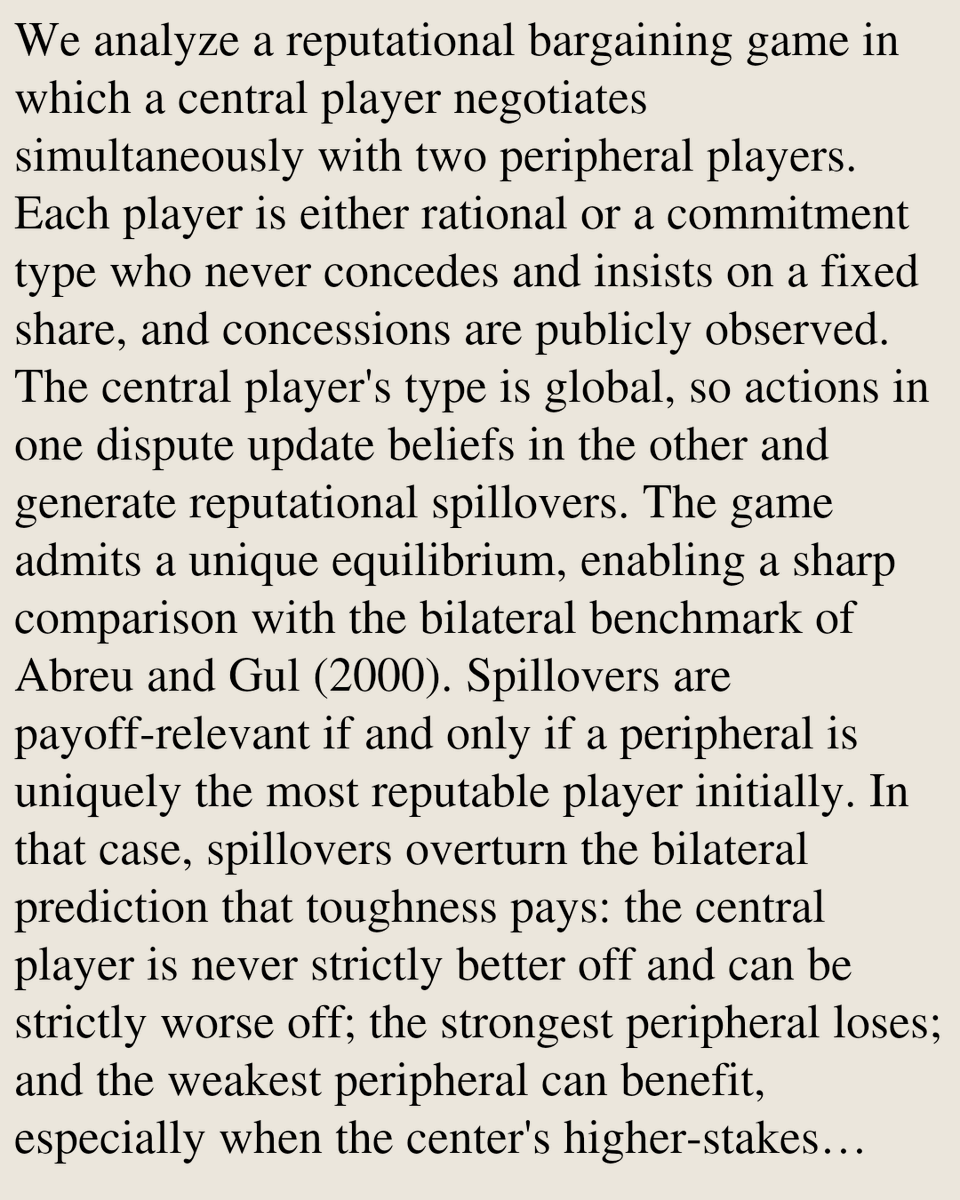
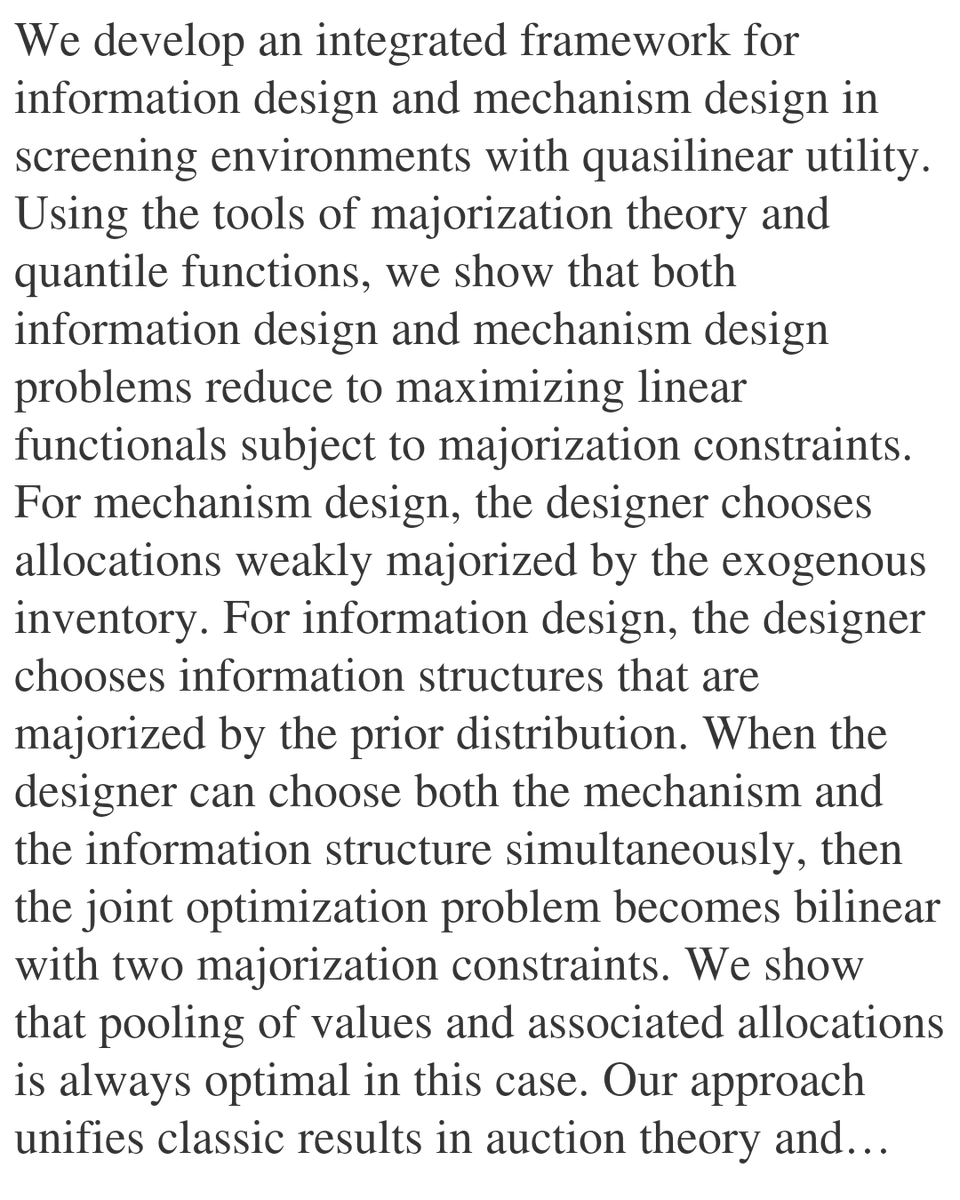
Information Design and Mechanism Design: An Integrated Framework Dirk Bergemann, Tibor Heumann, Stephen Morris arxiv.org/abs/2601.17267 [𝚎𝚌𝚘𝚗.𝚃𝙷]
Theoretical Economics Papers tweet media
English
0
9
36
3.6K