Said Ashraf MD, FACC, FSCAI

8.6K posts

Said Ashraf MD, FACC, FSCAI banner
Said Ashraf MD, FACC, FSCAI

Said Ashraf MD, FACC, FSCAI

@SaidAshrafMD

▶️Interventional & Structural Cardiologist @AtlantiCareNJ ⏮ ⚒ #RadialFirst #CHIP #IVUS #MCS #TAVR #PERT |Views My Own|🍉

Lahore🇵🇰 New Jersey🇺🇸 เข้าร่วม Ağustos 2010
980 กำลังติดตาม1.5K ผู้ติดตาม
ทวีตที่ปักหมุด
Said Ashraf MD, FACC, FSCAI
Said Ashraf MD, FACC, FSCAI@SaidAshrafMD·
Halloween Haunt: Male 60s with chest pain for 1 hour, EKG with STE in AVR & wide spread depressions. Hemodynamically stable ➡️ CCL ➡️ here’s what angio showed. After the second Left cors shot became acutely 🤢, hemodynamics collapsed hypotension + respiratory failure. What would you do next?
English
8
9
60
15.4K
Said Ashraf MD, FACC, FSCAI
@ShariqShamimMD @rajivxgulati @aymanka @agtruesdell @stefan_harb @SripalBangalore @evandrofilhobr @Hragy @DocSavageTJU @jedicath @timir_paul @SarahFairley7 @saraceciliamtz @ihtanboga @Allison_Dupont @KovacicMihajlo @NishithChandra Sobering results, but not entirely unsurprising in non-shock patients. Higher bleeding rates & vascular complications always on cards with large bore access. Will have to recalibrate our selection process and instinct to “protect pci”.
English
0
0
6
107
Shariq Shamim
Shariq Shamim@ShariqShamimMD·
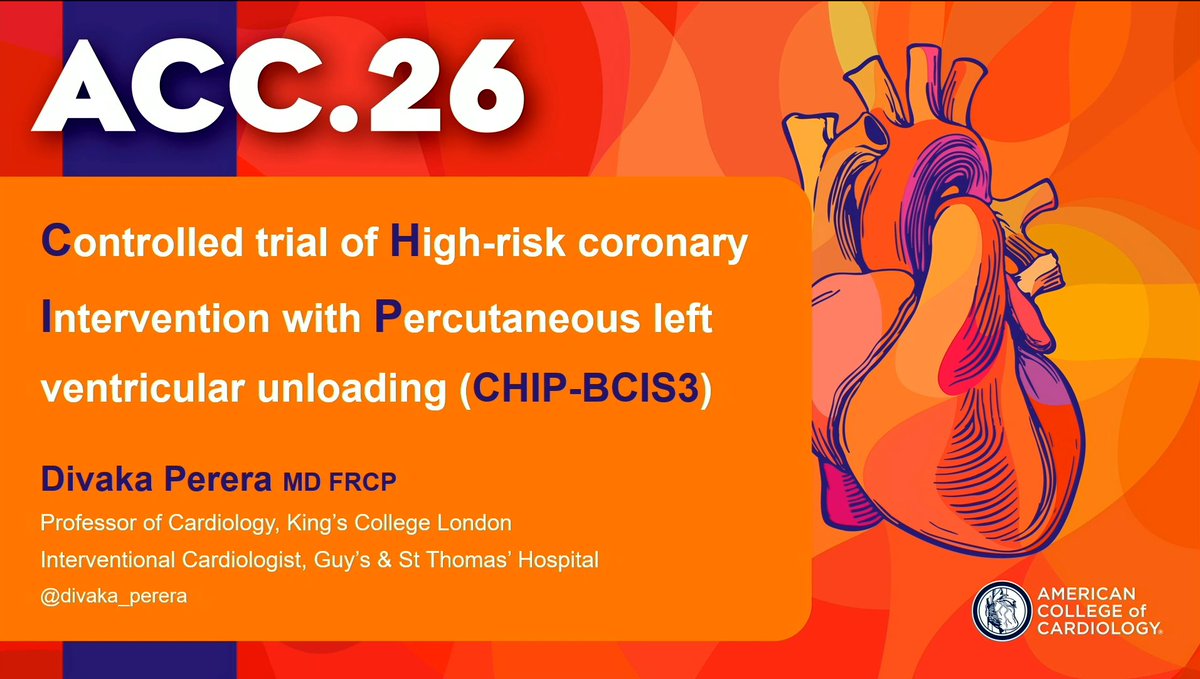
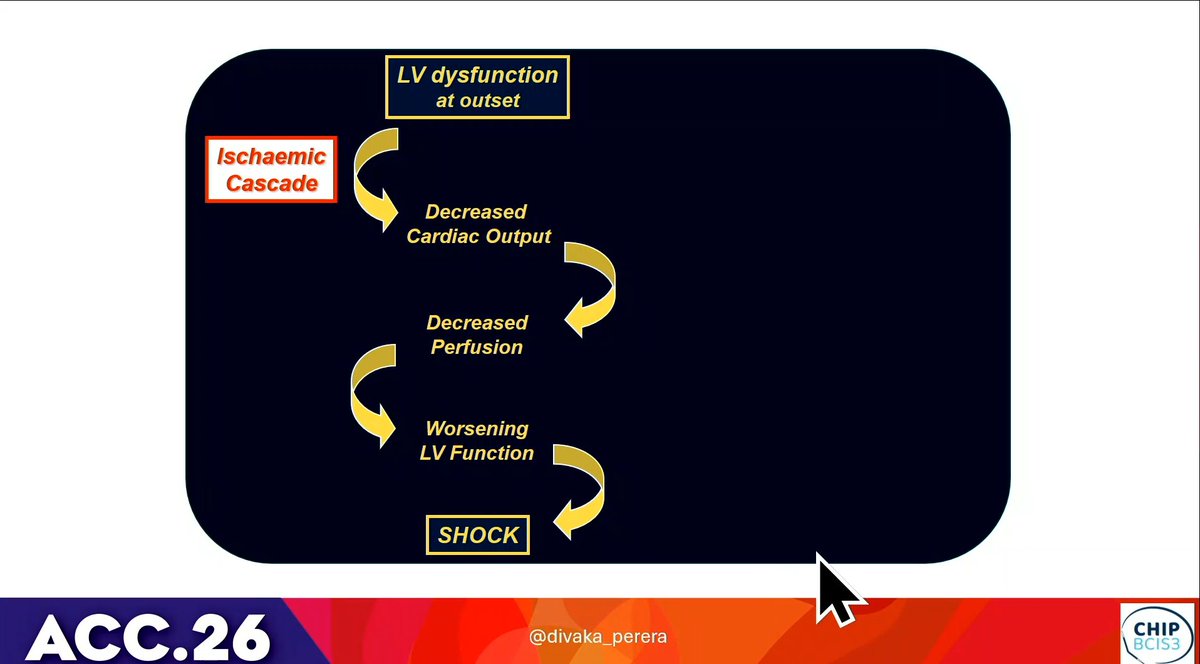
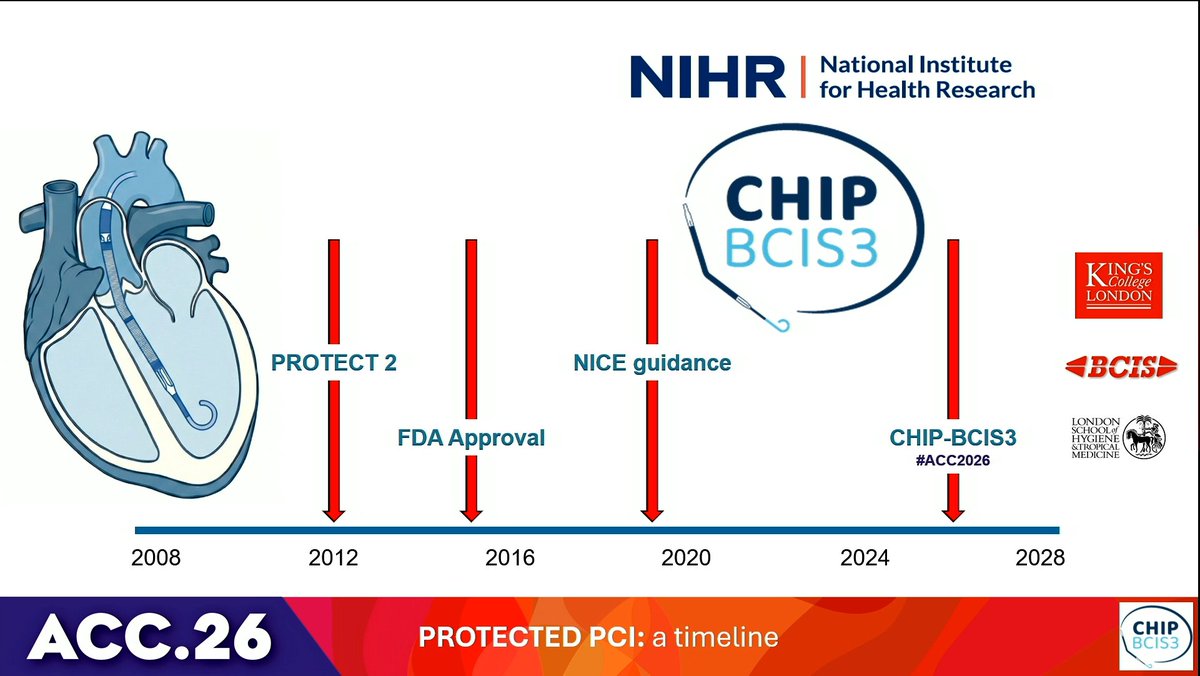
Impella support for CHiP PCI RCT CHIP-BCIS3 at #ACC26 Very high syntax score! Much lower bleeding due to CT planning and preclosure. Win Ratio 0.85 but with CI crossing 1. Higher all cause death in Impella (statistically not significant). WOW.
Shariq Shamim tweet mediaShariq Shamim tweet mediaShariq Shamim tweet mediaShariq Shamim tweet media
English
7
25
82
9.9K
Said Ashraf MD, FACC, FSCAI รีทวีตแล้ว
NEJM
NEJM@NEJM·
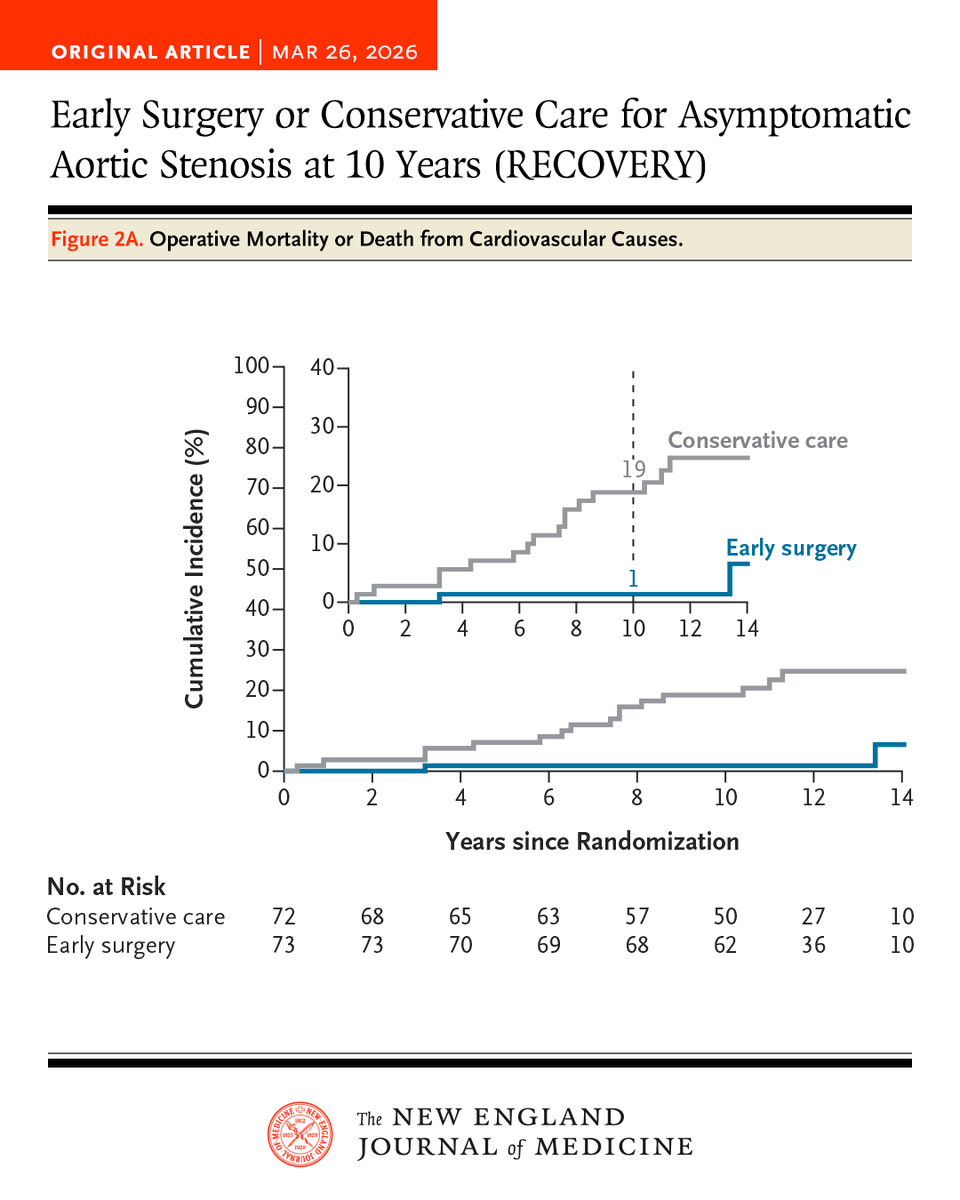
Early surgery in asymptomatic patients with very severe aortic stenosis led to a lower risk of a composite of operative mortality or death from cardiovascular causes at 10 years than conservative care. Full RECOVERY trial results: nejm.org/doi/full/10.10…
NEJM tweet media
English
6
158
486
58.4K
Salman Arain
Salman Arain@realarainmd·
A Question Inspired By A Discussion On IVI Guided PCI In Gim et al. (doi:10.1016/j.jcin.2025.11.036), the angio-only arm had a higher proportion of acute MI pts vs the IVI-guided arm. Raises a practical question: how often is IVI actually used in acute MI? Reply and repost!
English
28
6
26
11.2K
Said Ashraf MD, FACC, FSCAI
Said Ashraf MD, FACC, FSCAI@SaidAshrafMD·
The risk benefit argument is an interesting one. If patient needs cto Revasc & operator 1 performs a lot of PCIs but hardly any CTOs, does the risk benefit ratio change for the patient if @realarainmd operates on the CTO compared to operator 1? How about when compared to average US interventionalist (performing <60 PCI a year)? Data shows >90% technical success rates in expert centers. Right procedures in the right hands are usually safe. hmpgloballearningnetwork.com/site/jic/origi…
English
2
1
1
296
ash
ash@69950567ash·
@realarainmd @swissCTO @dantheman6559 @esbrilakis @DrBIqbal @AgostoniPF @BernardCortese @MauroCarlino3 @Laserrman @rajivxgulati @aymanka @agtruesdell @stefan_harb @SripalBangalore @evandrofilhobr @Hragy @mmamas1973 @DocSavageTJU @jedicath I think the issue is that you take a patient who has a chronically occluded vessel who may not feel really that bad when you do a procedure on them that is higher risk than most PCI. The risk versus benefit ratio is not favorable there. Contrast that with STEMI .
English
2
0
2
281
Said Ashraf MD, FACC, FSCAI รีทวีตแล้ว
Jay Giri
Jay Giri@jaygirimd·
🧵 1/ Many are prob confused about what all the debate is about the Keto diet & its relationship to serum lipids as well as potential CV effects of this I’ll try to break this down below (hopefully fairly) Disclaimer: I’m not a lipid expert but have great interest in the field
Nick Norwitz MD PhD@nicknorwitz

I feel like I can breathe again! Get ready for a rant I've been waiting to let loose for a year. 🔥 First, here are the core facts about the Keto-CTA study to date: 🚨PART 1: THE FACTS 👉From its inception, Dave, Adrian, and I, being associated via the funding body (the Citizen Science Foundation), were blinded to certain elements of the data. The purpose was to protect the integrity of the project. 👉The profound irony is this also meant that, prior to publication, we couldn’t perform certain ‘checks’ and had to trust others to do so. Speaking for myself, it’s now painfully clear that was a mistake. 👉However, after the April 7th paper was published, "anomalies" (if I’m being polite) were noted with the Cleerly scans. 👉 Cleerly refused to redo the scans, despite multiple requests and being offered payment. 👉Importantly, and to my dismay, the original Cleerly reads were UNBLINDED, introducing a major source of bias. 👉At additional expensive, the scans were rerun through HeartFlow in a properly blinded analysis, and via the pre-specified QAngio methodology. 👉HeartFlow and QAngio agreed with each other and were discordant with the Cleerly analysis. 🚨PART 2: THE NEW NEWS What happened next was brilliant! And, truth be told, I only found out about it yesterday. For my own legal security – and at the recommendation of my friend and colleague who was taking the worst of it on the back end – there was a lot I didn’t know until this point. This is what happened… 👉Several participants independently submitted their scans to Cleerly as a workaround to obtain a truly blinded Cleerly analysis. 👉Those results were highly discordant with the original Cleerly analysis and aligned with the HeartFlow and QAngio analyses. The difference between the original Cleerly scans and the repeated blinded scans was massive! The original unblinded analysis reported a +20.9 mm³ mean increase in non-calcified plaque volume, while the blinded repeats showed a -5.1 mm³ mean decrease. I mean, MY GOODNESS!!! I basically did a backflip when I found out (@realDaveFeldman can release the footage of the meeting at his discretion) If you’ve been following the KETO-CTA story up to this point, the consistency of the findings across HeartFlow, QAngio, and now Cleerly itself (based on the blinded reads) should bring much-needed clarity. The converging results fundamentally reshape the narrative and directly refute the claim that the study demonstrates massive, unprecedented plaque progression in LMHR and near-LMHR And, after all that, the fact remains that every single analysis found no association between ApoB levels or LDL exposure and plaque progression. LET ME REPEAT: And, after all that, the fact remains that every single analysis found no association between ApoB levels or LDL exposure and plaque progression. 🚨 PART 3: NEXT STEPS In terms of next steps, I’ll quote my colleague Dave: “we have already taken steps regarding last year’s paper that contained the original Cleerly analysis.” I’ll leave it at that for now so I don’t overstep. But let me say, that’s the highly polished and diplomatic version. I certainly have stronger words about this process, but perhaps now is not the time. Where I will speak more plainly is in regard to the behavior of some detractors over the past several months. In a few cases, I’ve reached out privately to individuals who should know better, gently suggesting that, in light of the new evidence (Heartflow and QAngio), it might be time to reassess or lighten the abuse. For anyone sincerely paying attention—and for anyone with even modest insight into how scientific bureaucracy works—I hope it is now clear why we were not more forthcoming earlier in the process. 👉And trust me when I say, it’s never been harder to keep my mouth shut about anything in my life. I've accumulated more cortisol AUC in the last 11 months then in the entirety of my life to age 29. 🚨PART 4: SPEAKING FOR MYSELF Speaking for myself, I have been beyond frustrated and disappointed. At multiple stages, it has become painfully—and increasingly—clear to me that our scientific system, which presents itself as purely meritocratic, is far more political than most would imagine. These are difficult words for me to say as someone who comes from a family of doctors and scientists and who has spent his entire career in academic institutions—multiple Ivy League universities @Harvard @dartmouth, two doctorates, and top-ranked institutions in both England @UniofOxford and the United States. I was groomed in conventional academic medicine. If I have any bias, it’s to see the best in conventional medicine and modern scientific process. Most of my loved ones have made their living within this ecosystem. But when you pull back the curtain, the reality can be sobering. To those detractors who have verbally abused or personally attacked my colleagues and me—perhaps out of naivete or ignorance—I will say this plainly: it’s time to check yourselves. Too many people have spoken out of turn, seemingly to score points rather than to engage thoughtfully with an evolving scientific story—one that has been evolving for quite some time. When the HeartFlow and QAngio analyses were released, that alone should have prompted serious reflection. At minimum, it should have raised questions. The subsequent silence from some of the loudest critics, after they believed they had “won” a round, is telling. Science deserves better than scorekeeping. It deserves intellectual honesty and the humility to update one’s position when new evidence emerges. At times over the last year, the lack of curiosity, sincerity, and intellectual honesty from people who I tried to give the benefit of the doubt has made me want to vomit. And trust me when I say, this isn’t a victory lap. This is a promise. We are now over a hurdle that I have been waiting for almost a year. And frankly, I am ready to run headfirst through brick walls with my colleagues and friends by my side — those whom I trust to pursue the hard questions and the honest answers — and do so indefinitely using the tools and resources at our disposal, even when, and especially when, the scales are improperly tilted against us. Lucky for us, the intellectual environment is expanding — the black box of academia beginning to crack open. So someone hand me a crowbar, because I’m committing myself fully and completely, over the coming years and decades, to prying it wide open. Not gently. Not quietly. But decisively. My final words of this verbose dissertation? LFG

English
5
29
89
36K
Said Ashraf MD, FACC, FSCAI
Said Ashraf MD, FACC, FSCAI@SaidAshrafMD·
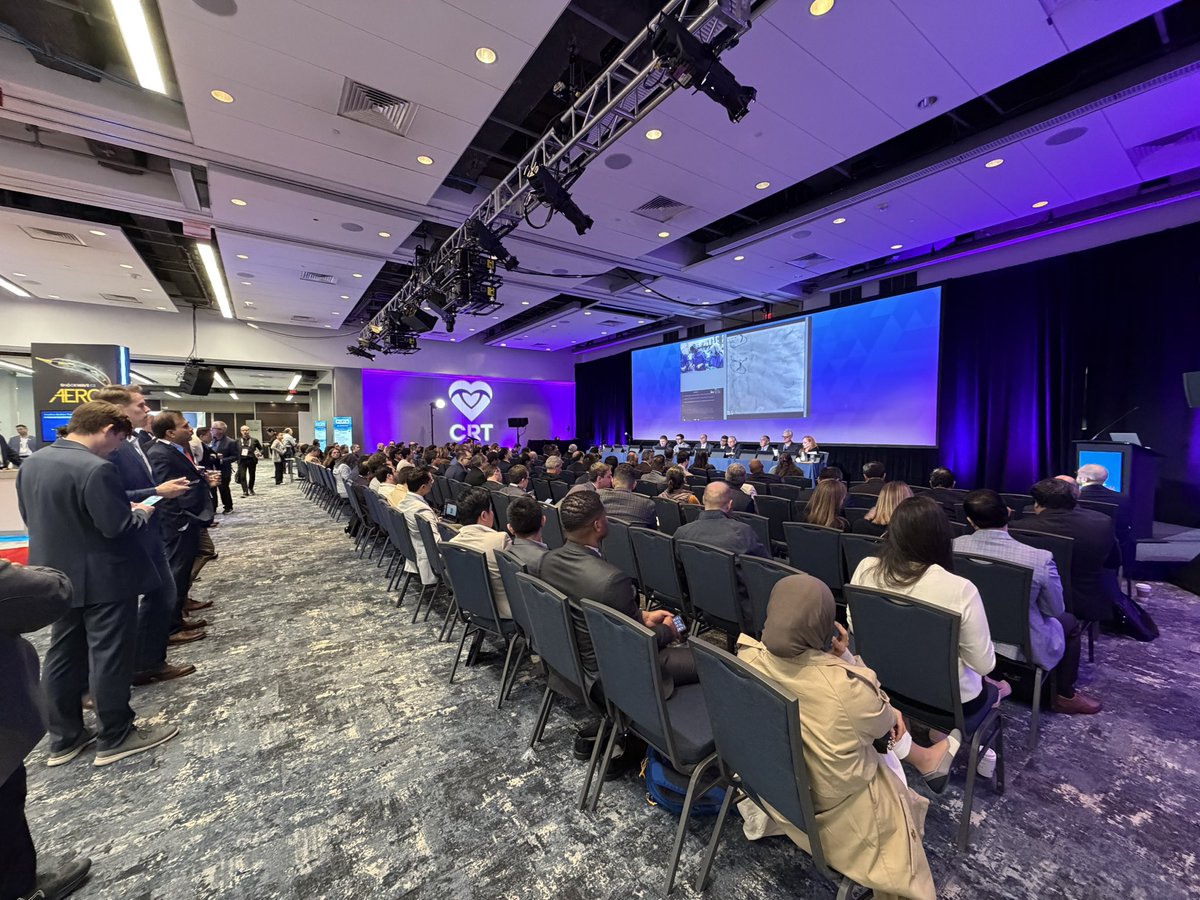
Looking forward to #CRT2026! Will be fourth year in a row attending & it gets better each year! Excellent educational content and an opportunity to reconnect with likeminded colleagues! If you are contemplating attending this year - this one’s a no brainer! See you there !!
Giorgio A. Medranda MD, FACC, FAHA, FSCAI@GiorgioMedranda

🫀🔔 🔥 1 Week until #CRT2026 🔥 🔔 🫀 Meet some of our @CRT_meeting Social Media Ambassadors — a unique group selected to define this year’s digital presence and shape the experience before it starts! Exclusive. Elevated. Intentional.

English
0
0
5
597
Said Ashraf MD, FACC, FSCAI
Said Ashraf MD, FACC, FSCAI@SaidAshrafMD·
Calling all Interventional & General Cardiology Fellows in #Philadelphia & surrounding area! @SCAI FIRST Philadelphia to discuss Complications: How to Manage (or Avoid) Potential Disaster on Feb 19! Success in high-stakes cases isn't just about the newest technology; it's about pre-procedural risk mitigation and having a solid "bailout" mindset. If you're training in the area, let's connect and discuss the technical pearls that keep patients safe when things go sideways! scai.org/education-and-…
English
0
2
7
1.3K
Said Ashraf MD, FACC, FSCAI รีทวีตแล้ว
Salman Arain
Salman Arain@realarainmd·
When PCI Does/Does Not Work for Stable CAD - 🧵 In PCI RCTs, we often use the terms severe stenosis, ischemia, and angina interchangeably. However, they are not entirely synonymous. 🤔 🔑 Each entity responds differently to OMT and PCI and has a unique impact on outcomes.
English
5
22
74
9.7K
Said Ashraf MD, FACC, FSCAI รีทวีตแล้ว
Salman Arain
Salman Arain@realarainmd·
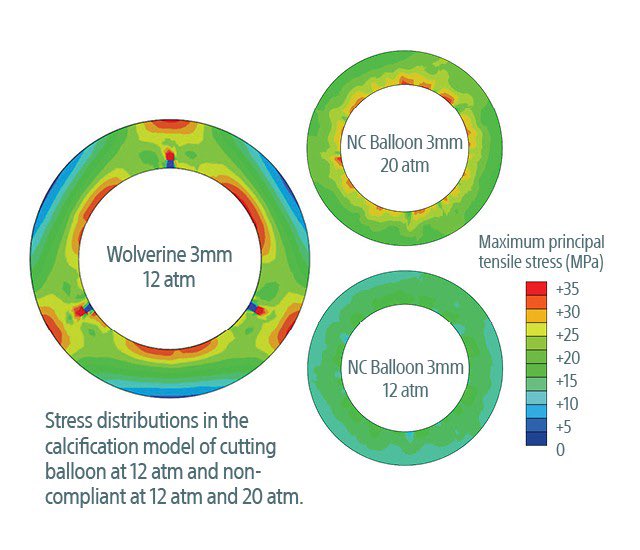
This ties nicely to a question @sbrugaletta posed earlier to @drAliyor: why not start with an NC balloon and assess by IVUS? In my experience, NC balloon dissections are unpredictable, whereas CB is more controlled 👉🏼 typically linear, longitudinal, and more likely to produce desirable 🌀 dissections on IVI. So when planning DCB, I usually favor CB first (if it crosses). This is an image often shared by folks at BSC.
Salman Arain tweet media
English
4
5
22
1.2K
Said Ashraf MD, FACC, FSCAI
Said Ashraf MD, FACC, FSCAI@SaidAshrafMD·
@realarainmd @rajivxgulati @aymanka @stefan_harb @BURZOTTA_F @SripalBangalore @jedicath @evandrofilhobr @sbrugaletta @Hragy @agtruesdell @mirvatalasnag @mmamas1973 @SarahFairley7 @Allison_Dupont @saraceciliamtz @melsharabasssy @KovacicMihajlo @swissCTO Beautiful case! Thank you for sharing. Do you routinely use OCT for PCIs involving LMCA? The low penetration depth (1-2mm) of OCT vs IVUS (5-10mm) argument is real or overblown? I have never used OCT for LM PCI but my experience is less than yours! 🙂
English
1
0
4
176
Salman Arain
Salman Arain@realarainmd·
A Complicated LM PCI - Trifurcation Edition! I would be remiss if I didn’t share a case to fit this weekend’s theme! 82 year old, Jehovah’s witness, CCS III angina for weeks, and severe scoliosis! Critical LM and severe RCA! 😳 What would you do differently?
English
5
10
73
8K
Musa A. Sharkawi
Musa A. Sharkawi@MusaSharkawiMD·
A rare angiogram - frequently fatal. Acute complete left main occlusion. Quick action, start with hemodynamic support followed by PCI. Patient extubated and MCS removed the following morning. Discharge home 3 days later. @MCGCardFellows
English
11
16
177
455K
Wail AlkashkariFSCAI,FPICSوائل القشقرى🇸🇦🇨🇦🇺🇲
30Y old ♀️ TOF post Pul valvotomy/VSD repair at childhood. SOB, severe PS/PR. Underwent successful TPVR with S3 29mm after stenting. Very crucial to inflate slowly as the valve can move backwards and needs gentle forward tension to keep it in position. Excellent result with 2 mmHg gradient and no PVL. There will be a comprehensive dedicated TPVR workshops and hands-on training at #TCTMiddleEast 2026 by the pioneers in the field. This workshops will target the beginners and helps in building programs. @mirvatalasnag @TCT_ME_ @DrAlsubei @Nasser_Ghattar @abadkhan2002 @falkindi404 @BinAbdulHak_A @AnasNomanMD @amrmohsen213 @AliSahebHusain @mmamas1973 @ahmedknhi @Dr_ibrahimHarbi @ibalsaadi @Dr_aldiri1
English
13
18
79
9.5K