
ทวีตที่ปักหมุด
Kevin🌍
3.4K posts



@vejamospecial Permanent residents and citizens can also access public hospitals. This lady did not check his documents to determine whether he was a permanent resident or a citizen even when the man handed her his documents to check, she simply denied him access after hearing his accent.
English

@SamKevin29715 I can't find a way, to make you understand. I am going to try for the last time.
Public facilities are strictly meant for South Africans, any other person must go to a private hospitals. Applying for a visa this is checked for affordability.
English
She's acting like there are no South Africans in other countries. Planes to Congo DR are full of South Africans, what are they going to do there?
Everyone is looking for opportunities in other countries, migration is as natural to humans as breathing, borders are artificial.
CDR AFRICA@cdrafrica
🇿🇦🇬🇭 “Your government is failing to create opportunities, forced you to migrate to cut nails abroad, yet you still defend them?” — South African activist Queen Vee calls out Ghanaians amid rising economic frustration.
English
@vejamospecial His documents were not checked, she didn't determine whether he was in SA on a visa, was a permanent resident or citizen. She simply heard the Nigerian accent and denied him access even when he was giving her the documents to check and verify for herself.
English
@SamKevin29715 Permanent residency is not given to anyone,
That person need to be bringing skills that are scarce in the country and they have to be legally residing in South Africa for a minimum of 5 years
English
They wanted to keep their slaves and decided, "let's have an ethno-state", crazy.
Nemets@Peter_Nimitz
Tuareg rebelled in 1963. Their stated reasons were that they didn’t like blacks, they didn’t believe in equality, they wanted to keep their slaves, taxes were too high, Mali was oppressive, & they simply didn’t like Mali.
English
@SamKevin29715 A person who have valid papers don't need a public hospital, because our visa only allows people who can afford their healthcare.
Come on this is easy to understand
English
@SamKevin29715 You don't understand, my country will not give visas to people who can't afford health care, for the fact that the person went to a public hospital clearly means they have no ability to pay for their healthcare, therefore the papers they hate were fake
English
@vejamospecial She didn't check the papers to determine whether they were genuine or not. She simply denied him access.
She didn't care what papers he had.
English
@SamKevin29715 To be granted a valid visa , comes with the ability to pay for hospital needs. This means the papers they had were fake. No government would grant a person from another country who has no ability to take care of themselves
English
@VhoMeciah @Richie_Ehdu That's fine, let the Zulu men continue kneeling down for White women
English

@SamKevin29715 @Richie_Ehdu That's how Zulu men ask out women of all races! Hence why most women black or white like or prefer Zulu men😂 Don't comment on SA without research!
English

Until it's time to go to Orania.
Hermaine M@HermaineM
Zulus are the most brave people in South Africa!! 🤞🏾🐆
English
Kevin🌍 รีทวีตแล้ว

Yes, indeed, this is lawlessness by any standard. Even by banana republic standards, this is still lawlessness. Your country has a constitution, it has a government, it has a police service, and it has a ruling party. I am sure you can see that some of the people there are actually wearing ruling party T-shirts.
It is lawless regardless of whoever does it. It is an embarrassment to South Africa as a country, what you are doing and what you are encouraging people to do. Your country has an immigration service. If people are in your country illegally, they should be arrested and deported through lawful processes. You do not go around destroying property, tearing down markets, and attacking people.
It is illegal regardless of whoever does it. It is not illegal because I have said so. It is illegal because the laws of your country make it so. This is vigilantism, pure and simple, and it is tainting the reputation of South Africa, not only across Africa but across the world.
If you have got satellite television in your home, you can see that these actions are being reported everywhere. It is not good for your country. This kind of barbarism undermines the rule of law, fuels division, and damages South Africa’s standing as a constitutional democracy.
It is the actions of a few that are tainting the reputation of many. The average South African is not mindless like this. They respect the law, and they respect the fact that among them, in their communities, there are people from other countries.
If those people are in the country illegally, you report them and the law takes its course through proper processes of arrest and deportation. You do not descend into mob justice, lawlessness, and destruction. That is not who South Africans are, and it must not be normalised.
Gaotingoe@Gao_Richo31
@daddyhope Lawless people? You yourselves are Lawless...pls go home
English

@Richie_Ehdu We don't need to,that's private property,they were born here and have ancestors here!
English
Kevin🌍 รีทวีตแล้ว

Mali 🇲🇱 – 🔞 Contenu sensible ⛔️
À Kati, des jeunes Maliens ont intercepté et maîtrisé certains terroristes, filmant la scène en s’adressant ainsi : Le courage dont a fait preuve la jeunesse Malienne est impressionnant : poursuivre des terroristes à mains nues, les capturer, et les neutraliser 🇲🇱✊🏻. Les terroristes ne sont pas humains 🫵🏻 @DirpaFa @Gouvernememali
Français
Kevin🌍 รีทวีตแล้ว

This observation from outgoing IMF Africa Director @ASelassie has serious implications:
When African economies trade with the world, they export raw commodities — but when they trade with each other, they export finished goods.
So every barrier to intra-African trade is a barrier to industrialization — on a continent where manufacturing value added remains ~10% of GDP.
But as Selassie steps down today after 32 years at the IMF, he leaves optimistic.
Should you be?
Read the post & comments here
➜ linkedin.com/posts/afridige…

English

Kevin🌍 รีทวีตแล้ว


Kevin🌍 รีทวีตแล้ว






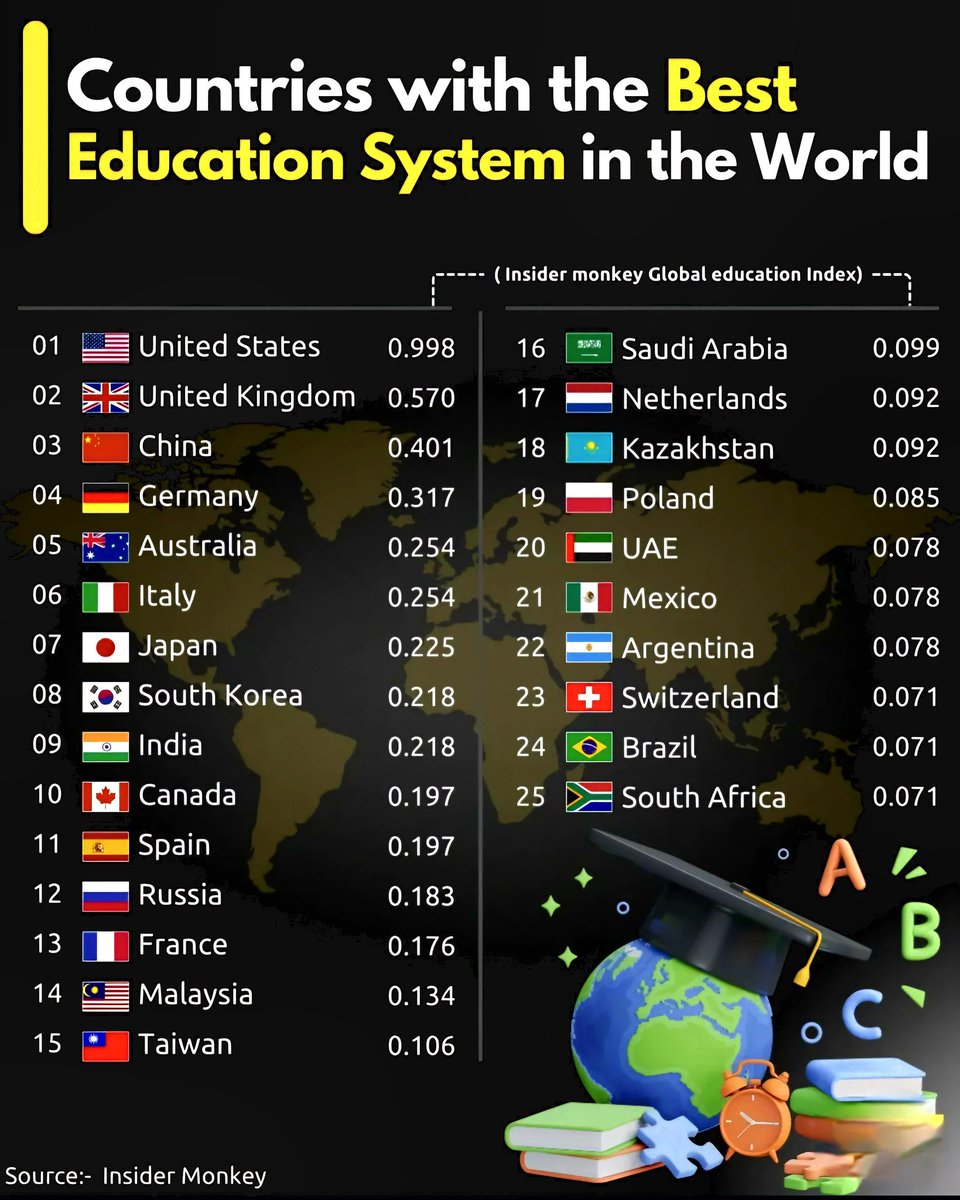
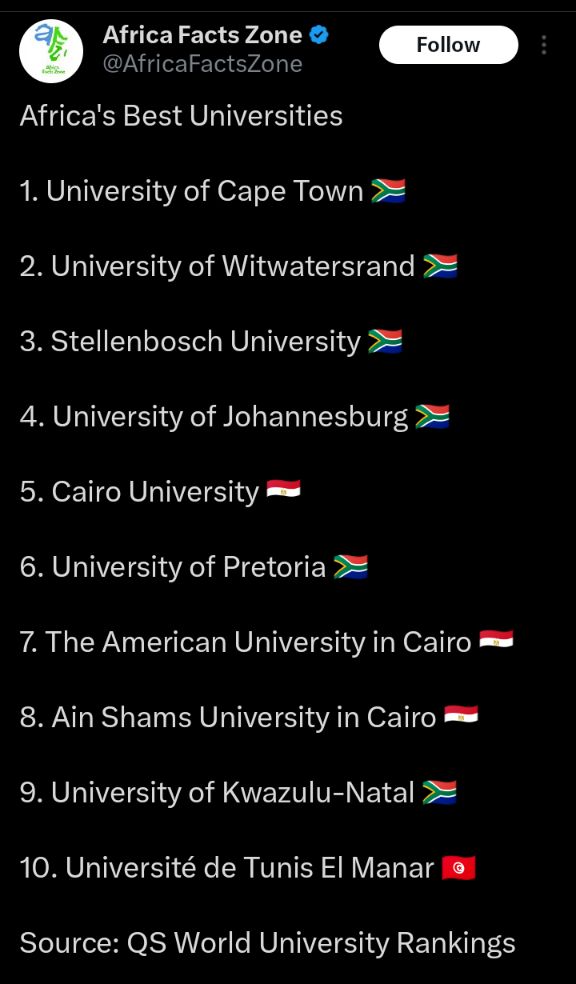
@joseph_kalimbwe Kind of agree, Zambia has known about this issue for over 30 years & have had that much time to prepare, what have they been doing all this time?
Zambia can't rely on American taxpayer money, HIV/AIDS treatment is the responsibility of the Zambian government, what is the plan?
English
Kevin🌍 รีทวีตแล้ว

Zambia's Emigration Puzzle
This is an interesting post from Dingindaba Jonah Buyoya (@BuyoyaJonah), and the conversation that followed made me dig deeper. Buyoya cites UN DESA data showing roughly 122,000 Zambians living abroad, about 0.59 per cent of the population. He also notes that Zambia has around 249,000 foreign-born residents. Emigration estimates for Zambia vary by source and methodology, and some counts are higher, but the relative picture is consistent across all of them: a thin diaspora and a low outflow rate. Buyoya attributes this to love of home. He also raises a point worth holding: Zambia's population may be too small relative to its land mass for the pressure to have built. At roughly 27 people per square kilometre, compared with Nigeria at 238 or Rwanda above 530, the domestic system has more slack. People can adjust internally before emigration becomes the rational calculation.
I want to suggest a complementary explanation.
In 2023, I conducted a study on Zambian investment behaviour. One finding cut across nearly every variable I tested: information was the binding constraint. Respondents with higher financial literacy moved toward diversified, higher-risk products. Those without it defaulted to conservative positions. They had no basis on which to evaluate alternatives, so they avoided them. The channel through which information actually travelled was personal networks. The proof point that reduced perceived risk was someone they knew who had taken the risk and come through it. The pattern presented as risk aversion. But it was better explained by information access. People who could see the terrain took risk. People who could not, avoided it.
Emigration, like investing in an unfamiliar asset class, can carry the weight of an irreversible commitment under radical uncertainty, where the cost of failure is severe and the available data cannot settle the matter. In that environment, the testimony of a trusted contact becomes the dominant decision input. I want to use the investment finding as a lens for reading Buyoya's numbers. A lens, to be clear, rather than proof.
Africa's large emigrant populations appear to be produced by two broad engines, with a third hybrid. The first I would call extinction. Ethiopians fled the Red Terror under Mengistu. Eritreans fled indefinite conscription under Isaias. Somalis fled state collapse after 1991. Sudanese have been displaced by civil wars, Darfur, and the current conflict since April 2023. Congolese and Rwandans fled war and genocide. In each case, staying was potentially lethal. People left because they had to, and those forced first waves seeded diaspora networks that lowered the information and practical cost for everyone who followed.
The second I would call choice. I am Kenyan. I know this one from the inside. Kenyans and Nigerians emigrate from functioning systems where domestic opportunity falls short of domestic need. Some go through professional and educational pipelines to London, Houston, and Toronto. Many go through labour corridors into nursing, care work, and service roles in the Gulf, the UK, and elsewhere. Colonial and post-colonial connections established early pathways, and the networks that formed made each subsequent departure easier to imagine and to execute. The routes span the full skill spectrum. The common thread is that someone went first and made the next person's calculation legible.
South Africa adds a third pattern. Successive emigration waves before and after 1994, driven by political upheaval, built dense networks in the UK, Australia, and New Zealand. An estimated 520,000 South Africans emigrated between 1989 and 2003. The post-1994 wave was driven by crime, economic policy uncertainty, and professional calculation. The trigger had changed, but the infrastructure the earlier waves built carried the movement. Prior coercion seeded the networks. Subsequent choice ran through them.
Zambia experienced none of these at sufficient scale. And the 1990s are the hardest test of this argument. Zambia entered structural adjustment in 1992, simultaneously hit by severe drought. Copper revenues had been falling for two decades. The country carried an extreme debt burden. A sweeping privatisation programme began in 1992. This was genuine economic devastation.
Yet there was no mass emigration. The crisis had been building since the mid-1970s, and two decades of gradual decline had already produced deep patterns of coping. Zambia is landlocked. Regional options were constrained, with most neighbours either unstable or offering limited absorption capacity, and long-haul destinations required networks that did not exist. For much of the long crisis, exchange controls and foreign exchange scarcity raised the cost of exit, even after major remaining restrictions were eased in 1994. And during this same period, Zambia was receiving refugees from the DRC, Angola, and Rwanda. The national identity that formed was as a host. The infrastructure of departure simply did not exist.
Buyoya's demographic point and the information thesis meet here. Lower density meant lower outward pressure. Lower pressure meant fewer people crossed the emigration threshold. Fewer crossings meant fewer diaspora pioneers. Fewer pioneers meant a thinner information environment. And thin information environments produce behaviour that looks like risk aversion but is better understood as rational response to an illegible environment. When people cannot read the risk, they do not take it. That is what I found in Zambian investment portfolios. I suspect it is what Buyoya's emigration numbers are showing. The caution is real, but it is not a national trait. It is the predictable output of a historical sequence that never built the architecture through which risk becomes calculable.
Buyoya opened a good door with this data. I think the puzzle deserves a wider conversation.
Dingindaba Jonah Buyoya@BuyoyaJonah
Zambians love home. The country has high poverty levels (economic recovery is being reported by the IMF); but it has one of Africa’s lowest emigration rates. Only around 122,000 Zambians live abroad (just 0.59% of the population) as of mid-2024; barely changed since 2020. Yet it hosts 249,000 immigrants.
English

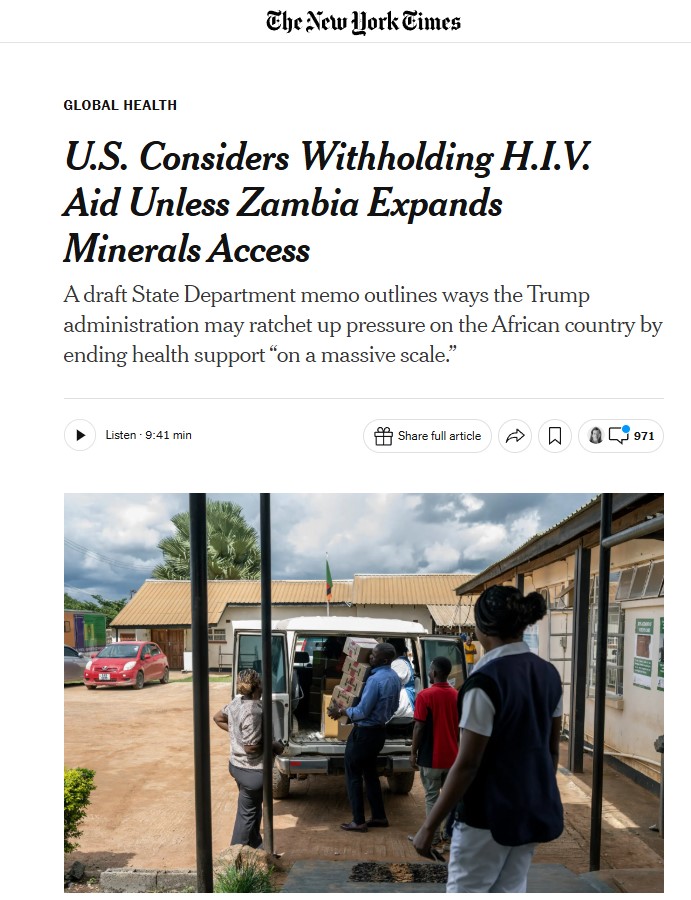
At this point, Zambians should tell the Americans to keep their money and shove it...

English