ทวีตที่ปักหมุด
Bitcoin King👑💲📈🇺🇸
16.2K posts

Bitcoin King👑💲📈🇺🇸
@Samvicck_
Profitable Trader 💵 Prop Firm Expert 🛸 Crypto🪙 NFT🖼 web3 🍃 Trading god🪞® old account suspended at 35k followers. kindly follow up for giveaway Ifb
เข้าร่วม Aralık 2024
2.9K กำลังติดตาม3K ผู้ติดตาม
Bitcoin King👑💲📈🇺🇸 รีทวีตแล้ว

@Rainmaker1973 how do we know there isn't a 3rd picture looking at us the same way?
English
Bitcoin King👑💲📈🇺🇸 รีทวีตแล้ว

When you watch Yamal, you will agree he’s better than Olise.
When you watch Olise, you will agree he’s better than Yamal.
The difference between Lamine Yamal and Olise is mainly in how they approach the game and impact it.
Yamal is a Pure winger. Direct, fearless, loves to take on defenders 1v1. Very explosive with quick touches and sharp dribbling.
Olise is More of a creator. Slower tempo, but very smooth. He picks passes, controls rhythm, and plays with composure.
Yamal attacks you. Olise studies you.
Yamal is an Aggressive dribbler. Beats players with speed and unpredictability.
Olise is an Elegant dribbler. Uses body feints, close control, and timing rather than pace.
Yamal Creates through chaos, dribbles, quick decisions, final-third actions.
Olise Creates through vision, key passes, crosses, set pieces, and through balls.
Both are currently the best RW in the world now, just how they impact games is different.
Football Factly@FootballFactly
Agree 👀👀👀
English

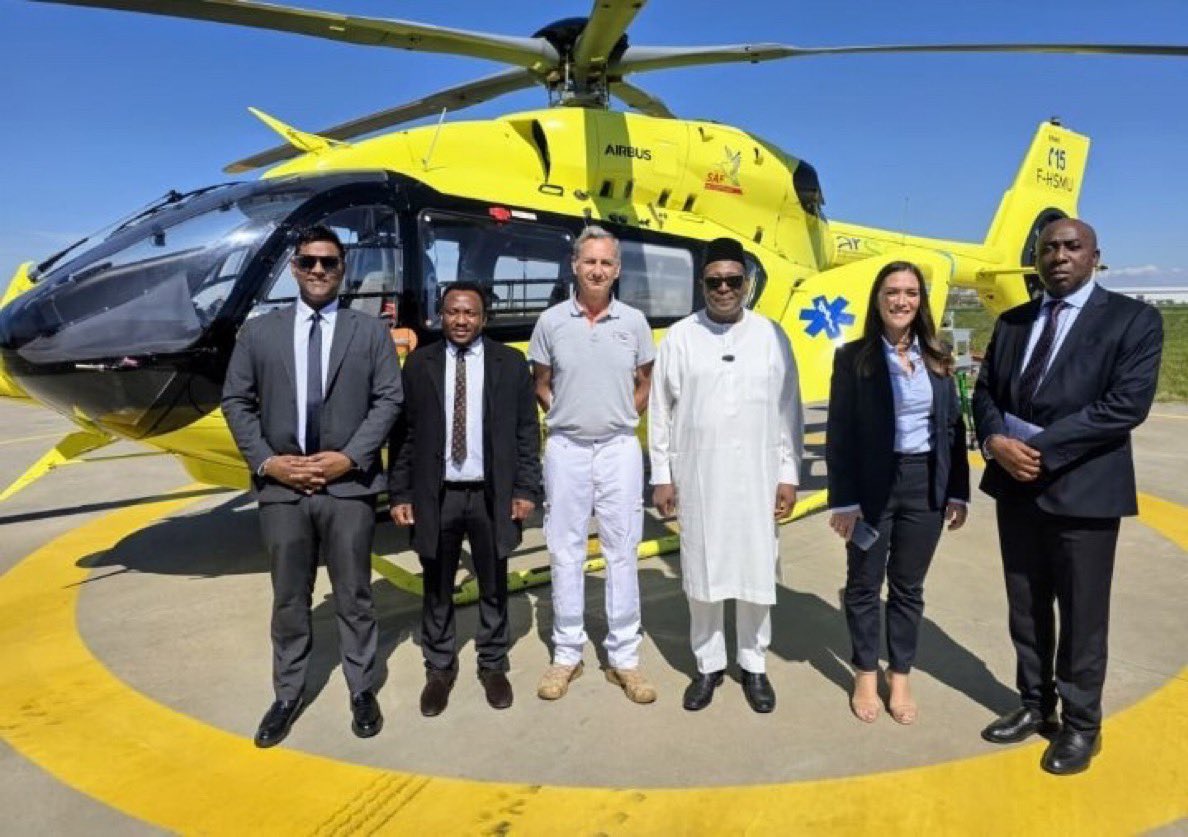
@instablog9ja Nigeria no get better Healthcare na Helicopter them wan get lol
English

Now a Disgraced Country Indeed
Today, as the world marks World Health Day, we must pause for honest reflection.
Nigeria, a nation of over 200 million people, continues to grapple with one of the weakest healthcare systems in the world. Our primary healthcare structure is almost comatose. We now record worse infant mortality outcomes than India, a country with a larger population, while health insurance coverage in Nigeria remains below 5%. These are not just statistics; they are a painful indictment of our priorities.
Recent disclosures by the Honourable Minister of Health show that out of the ₦218 billion appropriated for healthcare capital expenditure, only about ₦36 million has been released. This is deeply troubling.
At the same time, the Independent National Electoral Commission (INEC) has projected over ₦135 billion for legal expenditures.
Let us reflect on this.
The amount earmarked for election-related litigation is far higher than what has been made available for primary healthcare, the very foundation of a nation’s wellbeing. This is the same primary healthcare system expected to serve millions of Nigerians and support critical institutions such as:
1. University of Benin Teaching Hospital, Benin City
2. University of Calabar Teaching Hospital, Calabar
3. University of Abuja Teaching Hospital, Gwagwalada
4. University College Hospital, Ibadan
5. Obafemi Awolowo University Teaching Hospital, Ile-Ife
6. University of Ilorin Teaching Hospital, Ilorin
7. Irrua Specialist Teaching Hospital, Irrua
8. University of Nigeria Teaching Hospital, Ituku-Ozalla, Enugu
9. Jos University Teaching Hospital, Jos
10. Aminu Kano University Teaching Hospital, Kano
11. Lagos University Teaching Hospital, Lagos
12. University of Maiduguri Teaching Hospital, Maiduguri
13. Nnamdi Azikiwe Teaching Hospital, Nnewi
14. University of Port Harcourt Teaching Hospital, Port Harcourt
15. Usmanu Danfodiyo University Teaching Hospital, Sokoto
16. University of Uyo Teaching Hospital, Uyo
17. Ahmadu Bello University Teaching Hospital, Zaria
18. Federal Teaching Hospital, Abakaliki
19. Abubakar Tafawa Balewa University Teaching Hospital, Bauchi
20. Federal Medical Centre, Yola
These institutions represent hope for millions. Yet, they remain underfunded, overstretched, and burdened by systemic neglect.
A nation that prepares more for electoral disputes than for the health of its citizens is a nation that has lost its way.
We must begin to ask the difficult but necessary questions: What are our true priorities? What kind of nation are we building? And for whom?
Healthcare and education are not optional; they are the foundation of national development. Any country that neglects them undermines its own future.
Nigeria must urgently reorder its priorities. We must invest in the health and wellbeing of our people, strengthen our institutions, and build a system that works for all, not just a few.
A new Nigeria is POssible. -PO
English

@aakashgupta You just gained a new follower for this
I love this❤️
English
Bitcoin King👑💲📈🇺🇸 รีทวีตแล้ว

There's a physicist at Stanford named Safi Bahcall who modeled this exact principle and the math is wild.
He calls it "phase transitions in human networks." When you're stationary, your probability of a lucky event is limited to your existing surface area: the people you already know, the places you already go, the ideas you've already been exposed to. Your opportunity window is fixed.
When you move, your collision rate with new nodes in a network increases nonlinearly. Double your movement (new conversations, new cities, new projects) and your probability of a serendipitous encounter doesn't double. It roughly quadruples. Because each new node connects you to their entire network, not just to them.
Richard Wiseman ran a 10-year study at the University of Hertfordshire tracking self-described "lucky" and "unlucky" people. The single biggest differentiator wasn't IQ, education, or family money. Lucky people scored significantly higher on one trait: openness to experience. They talked to strangers more, varied their routines more, and said yes to invitations at nearly twice the rate.
The "unlucky" group followed the same routes, ate at the same restaurants, and talked to the same 5 people. Their networks were closed loops. No new inputs, no new collisions.
Luck isn't random. Luck is surface area. And surface area is a function of movement.
The lobster emoji is doing more work than most people realize. Lobsters grow by shedding their shell when it gets too tight. The growth requires a period of total vulnerability. No protection, no armor, soft body exposed to the ocean.
That's the cost of movement nobody posts about. You have to be uncomfortable first. The new shell only hardens after you've already moved.
ຸ@D9vidson
a moving man will meet his luck 🥀
English

@PeterObi @TaiAbati2021 Tunubu is a Failed President
He is a failure
English

Let us reflect, sincerely and without sentiment.
In the past few days, the President has reportedly approved ₦3.3 trillion as a “full and final” payment for debts in the power sector. Yet, this is not the first time such approvals have been made.
On May 17, 2024, ₦3.3 trillion was approved for the same purpose. On July 25, 2024, another ₦4 trillion bond was approved to settle similar debts. There have also been other approvals in between, all targeted at addressing the same power sector liabilities.
This raises a fundamental question: were the previous approvals mere announcements without execution?
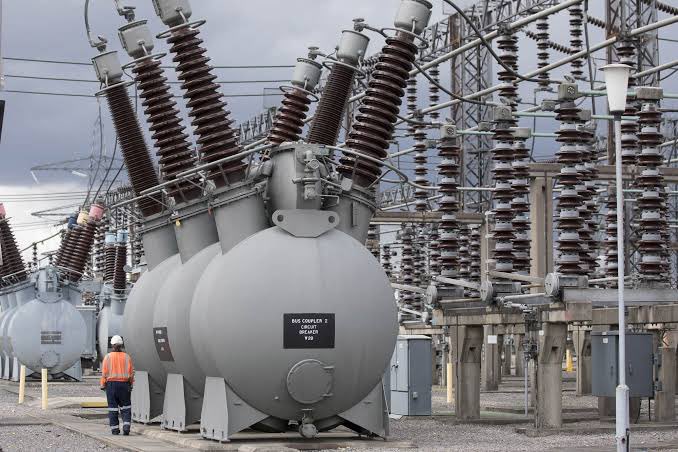
₦3.3 Trillion Again? Nigeria’s Power Crisis Without End
During the 2023 campaign, President Bola Ahmed Tinubu made a clear promise: that if he failed to deliver stable electricity, Nigerians should not re-elect him. Today, the reality is that power supply has worsened, to the extent that there are even discussions about disconnecting the Presidential Villa from the national grid.
Each time legitimate concerns are raised, what we see appears more like policy pronouncements than measurable progress.
Now, again, we are confronted with another ₦3.3 trillion approval to settle power sector debts.
These debts were largely accumulated under successive administrations of the All Progressives Congress between 2015 and 2025. This raises serious concerns about accountability, transparency, and effectiveness in public financial management.
It is important to note that government institutions and agencies, including the Presidential Villa owe a significant portion of these debts. Year after year, budgets were made and funds appropriated. Why then were these obligations not settled when due? And from what source will this new payment be made? Are we resorting once more to borrowing to service inefficiencies?
Key questions remain unanswered: How did the debt accrue? What is the actual total debt in the power sector? Which components of the debts are due to operators’ inefficiency and should be borne by them? Why have previous approvals not translated into tangible improvements? Who are the real beneficiaries of these repeated payments?
Is the ₦3.3 trillion approved on April 6, 2026, the same as the ₦3.3 trillion approved in May 2024, and how does it relate to the ₦4 trillion bond approved in July 2024?
Nigeria must move beyond recycled announcements and confront the power sector crisis with sincerity, transparency, and decisive reforms.
Until we do so, we will remain trapped in a cycle of debt and darkness.
But with discipline, accountability, and the right leadership, a new Nigeria is still possible. -PO
English

Bitcoin King👑💲📈🇺🇸 รีทวีตแล้ว

Bitcoin King👑💲📈🇺🇸 รีทวีตแล้ว

@SaharaReporters @BigDEnergy000 You leave Kwara and Jos Governor dey tackle Alex Otti
Sowor€ you can see you are a very stup!d and f00lish Man
English

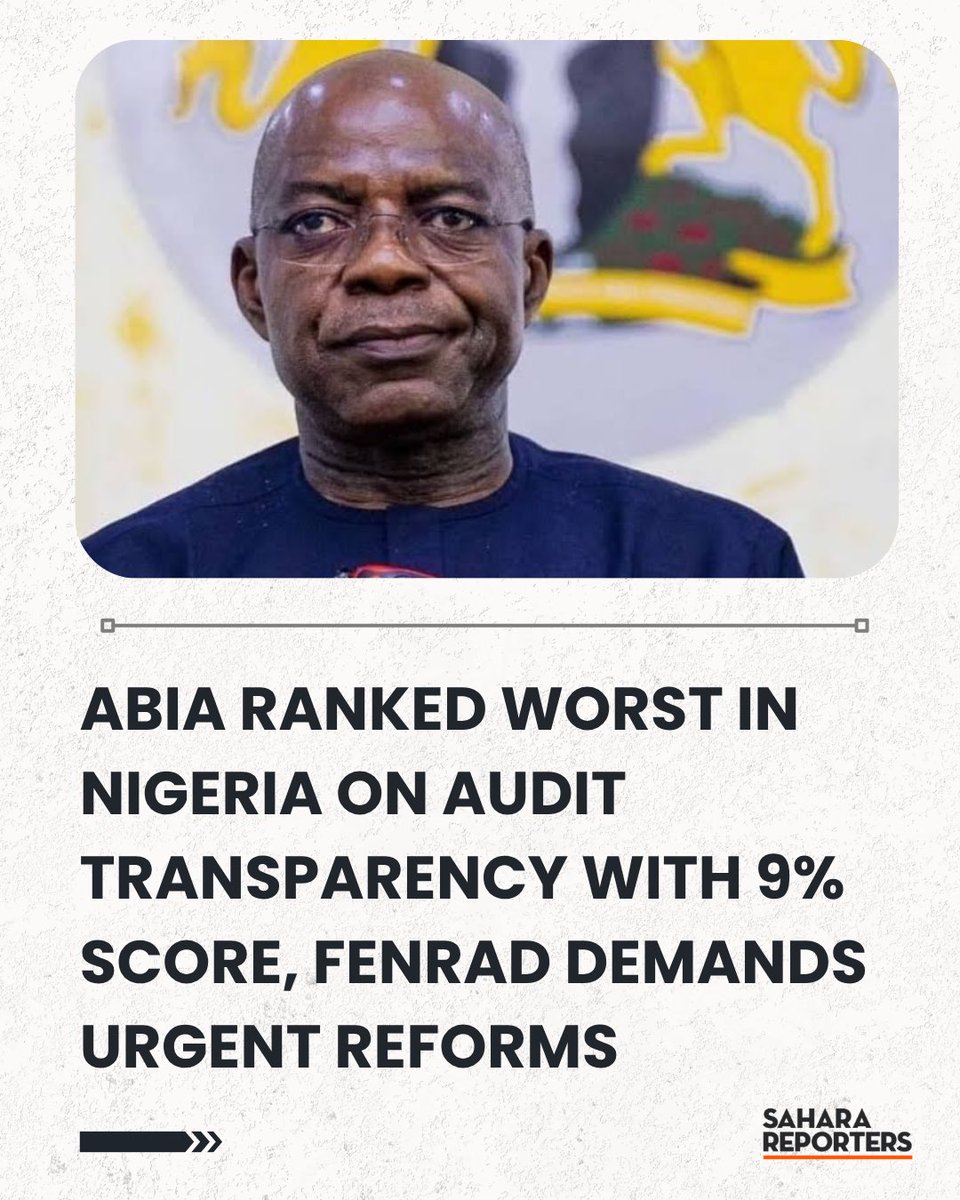
Abia Ranked Worst In Nigeria On Audit Transparency With 9% Score, FENRAD Demands Urgent Reforms | Sahara Reporters bit.ly/41USBHv

English

@Wildman477 @SaharaReporters @deanofife Omo Eru
Yoruba B@stard
You leave Kwara, Jos, Borno governor dey tackle Alex Otti
Usel£ss Yoruba f00l

@SaharaReporters @deanofife The dwarf man is a disaster,reason APC rejected his attempt to join them..
English