Manoj Rawat🇮🇳

31.5K posts

Manoj Rawat🇮🇳 banner
Manoj Rawat🇮🇳

Manoj Rawat🇮🇳

@SeaSkipper

Veteran Naval Captain. Master Mariner. Naval Warfare. Maritime Security. Defence. Geopolitics.

India เข้าร่วม Kasım 2014
2.6K กำลังติดตาม6.2K ผู้ติดตาม
ทวีตที่ปักหมุด
Manoj Rawat🇮🇳
Manoj Rawat🇮🇳@SeaSkipper·
It is not called 'rocking' but pitching. Secondly it is not 'slapping' but slamming. Thirdly the sea is not calm but there is a perceptible swell. Fourthly Indian Navy has been operating aircraft carriers for 50 years unlike Chinese Navy for 10 years But thanks for ur concern 😉
彩云香江@louischeung_hk

Sea was calm during #INSVikrant 's trial run. But it can be found rocking up and down during sea trials, its bow rising and falling and slapping against the sea. Should be the hull of the center of gravity problems, carrier-based aircraft take off and land will bring problems.

English
110
982
5.4K
0
Manoj Rawat🇮🇳
Manoj Rawat🇮🇳@SeaSkipper·
Manoj Rawat🇮🇳@SeaSkipper

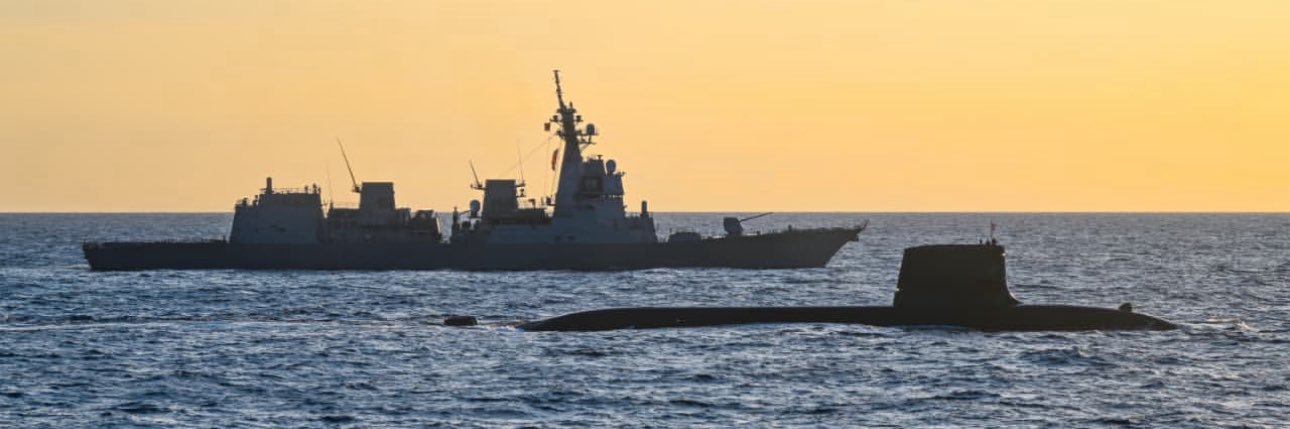
I am a Naval Veteran and Merchant Navy officer, and this is why I think @RahulGandhi is wrong on Great Nicobar. From an Indian national interest standpoint, Great Nicobar is not a “scam”; it is a strategic port located astride one of the most critical maritime chokepoints on earth, close to the Strait of Malacca, where a huge share of global trade moves every day. India cannot afford to treat Great Nicobar as a sentimental issue when it is a rare natural asset for maritime power, deterrence, and economic security. Yes, Great Nicobar is ecologically sensitive. India respects that. But national strategy is about balancing environmental safeguards with long-term security, logistics, and sovereignty. The current project is designed around an international container transshipment terminal, a dual-use airport, power infrastructure, and a planned township -all of which strengthen Indian Navy’s ability to monitor international sea lanes, improve military response times, and reduce commercial dependence on foreign transshipment hubs. To dismiss this as “destruction dressed in development’s language” is politically convenient, but strategically shallow. This kind of language suits our adversaries rather than us. India’s maritime future cannot be secured by empty slogans. It will be secured by developing ports, airfields, logistics nodes, surveillance, and persistent military presence in the Indo-Pacific. That is exactly why Great Nicobar matters. The real question is not whether development should happen, but how to execute strategic development responsibly while protecting our National interest. We can and should demand strict environmental compliance, tribal safeguards, and transparent implementation not reject a project that strengthens India’s maritime security simply because it is complex and uncomfortable. Great Nicobar is not just an island. It is a test of whether India can step up to its destined role as a great maritime power or remain trapped in slogan politics.

English
2
0
1
40
satya
satya@SThinkTnereffid·
This is the exact reason, why chinese agent @RahulGandhi doesn't want India to build a port..!!
English
314
2.1K
8.7K
354.9K
Colonel Rohit Dev (RDX) 🇮🇳
When you were learning to get into an Underwear with Blah Blah Blah, some were Underwater in Andaman and Nicobar defending National Interests in Silence Cc @dhruv_rathee
English
12
49
206
3.2K
Priyanka
Priyanka@prinstaz·
@SeaSkipper @dhruv_rathee Next, he might just publish an induction book for naval ops . I can’t wait for that entertainment 😅
English
1
0
2
31
Manoj Rawat🇮🇳
Manoj Rawat🇮🇳@SeaSkipper·
Hello @dhruv_rathee, ‘Choking’ an area at sea is not achieved by physically blocking every ship. It is not a Kabbadi match !! In naval terms, even when shipping is not “close” to Indian land, it can still be within a surveillance and interdiction envelope shaped by asset basing, sensor range, and force projection from the islands. Reducing the issue to a ‘50-km distance’ is an operationally weak argument. The Nicobar chain is valuable not because every ship passes close to Indian territory, but because it gives India persistent maritime awareness and operational reach over the approaches to Malacca Strait. Yes alternate routes exist as you point out, but they are not cost-neutral; they are longer, shallower in some cases, and more demanding for deep draft ships. The Sunda Strait is shallow in parts while the Lombok/Makassar route is deeper but longer and costlier, adding distance and transit time. In naval terms, India may not ‘close’ a chokepoint physically, but it can certainly impose strategic costs on its use. If a major route becomes risky, monitored, or politically uncertain, shipping can still divert, but it does so at higher cost and lower efficiency. That is exactly how maritime leverage works: not absolute closure in every case, but the ability to raise the operational cost and insurance premiums enough to influence behavior. Shipping industry runs on commercial considerations and risk assessment. The World Navies and Global Shipping understand India’s maritime leverage in approaches to Malacca Strait and that is what ultimately counts.
Dhruv Rathee@dhruv_rathee

Anyone who calls Great Nicobar as India's Strait of Hormuz is the biggest clown 🤡

English
13
57
238
7.9K
Manoj Rawat🇮🇳
Manoj Rawat🇮🇳@SeaSkipper·
I am a Naval Veteran and Merchant Navy officer, and this is why I think @RahulGandhi is wrong on Great Nicobar. From an Indian national interest standpoint, Great Nicobar is not a “scam”; it is a strategic port located astride one of the most critical maritime chokepoints on earth, close to the Strait of Malacca, where a huge share of global trade moves every day. India cannot afford to treat Great Nicobar as a sentimental issue when it is a rare natural asset for maritime power, deterrence, and economic security. Yes, Great Nicobar is ecologically sensitive. India respects that. But national strategy is about balancing environmental safeguards with long-term security, logistics, and sovereignty. The current project is designed around an international container transshipment terminal, a dual-use airport, power infrastructure, and a planned township -all of which strengthen Indian Navy’s ability to monitor international sea lanes, improve military response times, and reduce commercial dependence on foreign transshipment hubs. To dismiss this as “destruction dressed in development’s language” is politically convenient, but strategically shallow. This kind of language suits our adversaries rather than us. India’s maritime future cannot be secured by empty slogans. It will be secured by developing ports, airfields, logistics nodes, surveillance, and persistent military presence in the Indo-Pacific. That is exactly why Great Nicobar matters. The real question is not whether development should happen, but how to execute strategic development responsibly while protecting our National interest. We can and should demand strict environmental compliance, tribal safeguards, and transparent implementation not reject a project that strengthens India’s maritime security simply because it is complex and uncomfortable. Great Nicobar is not just an island. It is a test of whether India can step up to its destined role as a great maritime power or remain trapped in slogan politics.
Rahul Gandhi@RahulGandhi

I travelled through Great Nicobar today. These are the most extraordinary forests I have ever seen in my life. Trees older than memory. Forests that took generations to grow. The people on this island are equally beautiful - both the adivasi communities and the settlers - but they are being robbed of what is rightfully theirs. The government calls what it is doing here a “Project.” What I have seen is not a project. It is millions of trees marked for the axe. It is 160 square kilometres of rainforest condemned to die. It is communities that have been ignored while their homes have been snatched away. This is not development. This is destruction dressed in development’s language. So I will say it plainly, and I will keep saying it: what is being done in Great Nicobar is one of the biggest scams and gravest crimes against this country’s natural and tribal heritage in our lifetime. It must be stopped. And it can be stopped - if Indians choose to see what I have seen.

English
445
1.9K
4.9K
156K
Manoj Rawat🇮🇳 รีทวีตแล้ว
Priyanka
Priyanka@prinstaz·
@SeaSkipper @dhruv_rathee And the clown @dhruv_rathee thinks a maritime chokepoint is settled by whipping out a ruler and comparing widths of strategic chokepoints as if this were some primary school contest! 😅
English
4
2
16
457
Manoj Rawat🇮🇳 รีทวีตแล้ว
Priyanka
Priyanka@prinstaz·
Two good questions you asked, @LD_VillageGuy. Hope the below helps: Q1: Nicobar project is around 74 km away from Strait of Malacca, surrounded by ocean. How can India control ships movement there with such small set-up ? A1: The Great Nicobar island is roughly 40-90 nm from Strait of Malacca. The Indian objective from the islands is a combination of: strategic depth & oversight + deterrence + intelligence + force projection (without relying on distant mainland forces); the objective is not literal ‘blocking’ of vessels along Strait of Malacca. Andaman & Nicobar islands already host Indian military assets - naval bases, radars, P-81 aircraft, patrol vessels etc, but the Nicobar Project will enhance Andaman & Nicobar Command capabilities enabling: Robust sea denial capabilities, Indian Naval persistent presence and rapid-response times, strengthened Sea Lanes of Communication, improved sensor coverage, civil-military capabilities, disaster response (and more) -> all of which bolsters Indian military operational execution at a crucial and critical Indo-Pacific junction, the Strait of Malacca. Trust our military forces on their effectiveness. Q2: India’s mainland is around 1500 km away, what benefit we will get by loading/unloading ships there ? A2: So the Galathea Bay ICTT project is the economic core of the entire initiative. The benefit entails: Proximity to major shipping lanes with substantial reduction in foreign ports dependence (and extortionate costs therein); India’s strategic positioning shall capture transshipment traffic bound East Coast. Once operational, could serve as a competitive alternative as “India’s Singapore” at much lower costs and much higher strategic control (key). Overall, hugely instrumental for our blue economy strategic growth and Act East policy. While established hubs like Singapore handle ~40-45M TEUs and Colombo stands at ~9M TEUs, India’s success of the overall project will depend squarely on its effective execution, operational readiness, and attracting shipping lines that directly feed into India’s revenue stream offering competitive and strategic positions against Singapore/Colombo/Klang.
L D@LD_VillageGuy

@prinstaz @SeaSkipper Can anybody answer: 1. Nicober project is around 74 km away from Strait of Malacca, surrounded by ocean. How can India control ships movement there with such small set-up ? 2. India`s mainland is around 1500 km away, what benefit we will get by loading/unloading ships there ?

English
0
10
18
1.3K
dhananjay
dhananjay@djayorka·
@SeaSkipper @RahulGandhi How about Delhi? What is the condition of the capital? No air to breathe, no water to drink. Should we not focus on improving our understanding of the ecological consequences of our actions. Consequences can be disastrous if mother nature is taken for granted.
English
2
0
0
434
☭ avin⚓ ☭
☭ avin⚓ ☭@marineravin·
@SeaSkipper @RahulGandhi Sir, how Nicobar project will strengthen India’s Maritime field which is not now safeguarded by Andaman naval presence!
English
1
0
1
137
sohini mitra
sohini mitra@ssohinimitra·
@SeaSkipper @RahulGandhi I love modi but ain't a andheri bhakth, seeing the forests being cut it calls for a major climate change alarm... High time people understood that or breathe toxic air and die
English
1
0
2
174
ranjit kumar bhatia
@SeaSkipper @RahulGandhi Mr Manoj Rawat has given a befitting reply to Rahul Gandhi’s rhetoric. He visits a place for the first time and starts talking as if he was born there. Mr Rawat has given a very logical reply, which only a person with insight into the matter can give. I have definitely learned.
English
1
0
1
267
Congenial
Congenial@Elvaliente90·
@SeaSkipper @RahulGandhi Very Clear and Concise analysis this is something which usually a nationalist Indian will know or at least think about. I totally agree with you. Can't say this about a power hungry dynast.
English
1
0
1
102