ทวีตที่ปักหมุด
StickyGrenade
725 posts


Another example of the difference between low crime and high trust: Singaporeans do a thing they call “chope-ing”: They snag a table by placing their iPhone or purse on it, then go wait in line. This is low crime, low trust behavior. It’s something anti-social you have to do because if you don’t chope a table, someone else who walked in after you will take it. In a high trust society, you just wait in line and everyone sits down on a first-come first-seated basis, no one cuts ahead and takes a table before they need it. Singaporeans chope because it’s a way to take advantage of their low crime society to engage in low trust behavior.
Roman Helmet Guy@romanhelmetguy
High trust doesn’t just mean low crime. Only 35% of Singaporeans say most people can be trusted. That number is 83% in Sweden. That’s high trust. Singapore can’t even have trial by jury because jurists always sided with their co-ethnics. It’s low crime, not high trust.
English

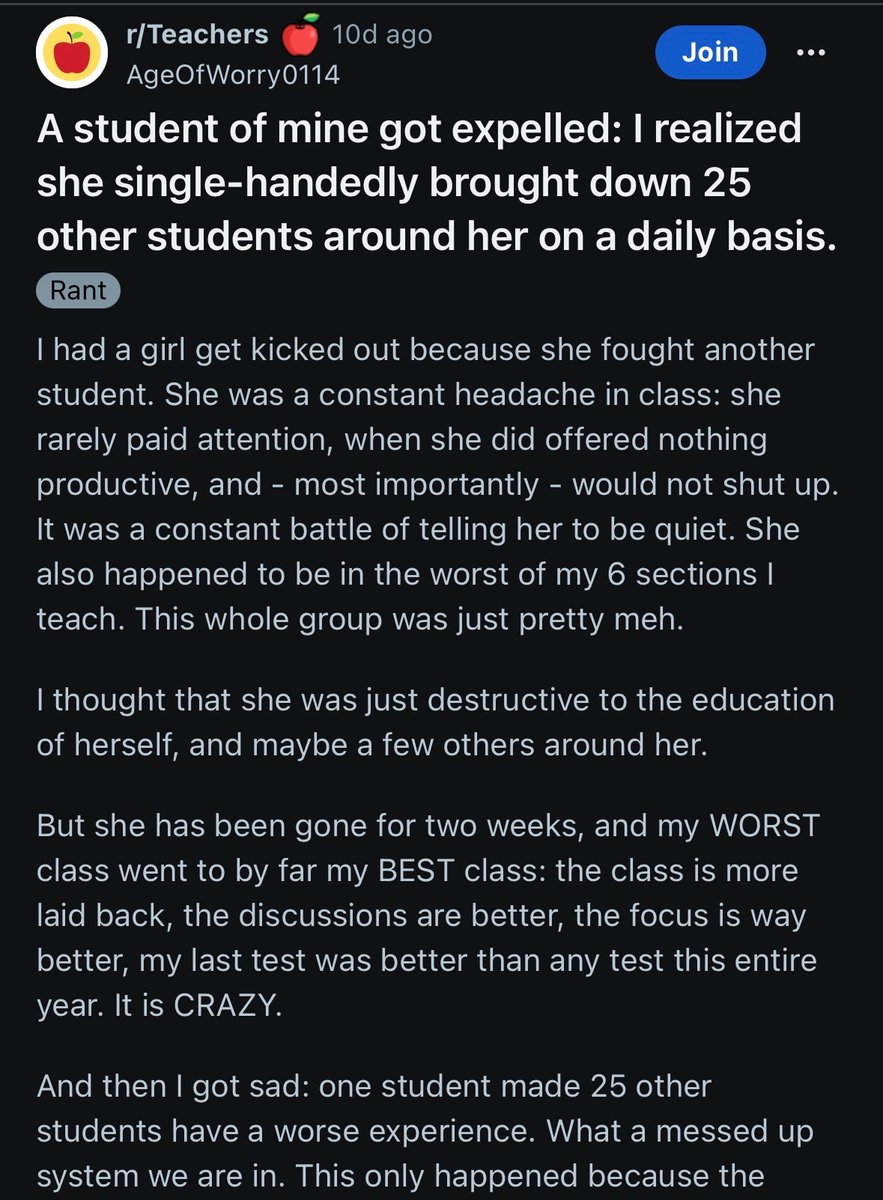
@AaronInfinitea @MrDanielBuck This right here! Ultimately the source of the problem is the lack of agency and freedom from a student's perspective. Imagine being among those 25 people and letting your whole academic fate rest upon the person in charge and whether he "catches up" with the issue.
English

@MrDanielBuck The lack of freedom of association is very destructive, not to mention the lack of all the other freedoms any person should have.
English

@Jballer1324 @CodyAlanAllred @theojaffee For 300 more you could get a TV with at least fall array local dimming (not even mini-led) and it's going to beat out any monitors which are essentially just TV for ants. You are comparing the highest-end of monitors to the lowest-end of TVs that r/4kTV don't even recommend.
English

@CodyAlanAllred @theojaffee An oled screen…. Once you get one everything else is obsolete… size is not what matters with gaming lol trust me save up and get a quality screen not fake HDR
English

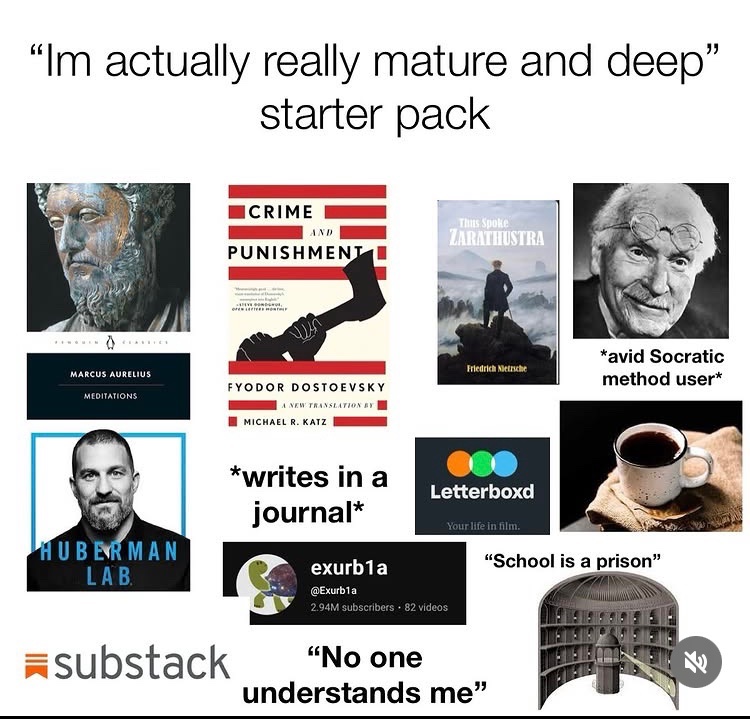
@Al_Gores_Head @reddit_lies Yes if you want to treat your kids less than humans. There's this thing called prison where the subjects are under constant surveillance 24/7.
English

@reddit_lies Schools should have 24 hour Cameras everywhere. Yes in all classrooms. This technology is now cheap.
English

@zavieir @VeltisLeEvil I'm playing on a 5600x + 6800xt rig from 5 years ago and even that experience is sublime and superior to a console experience
English

@CaponeGreen1 @VeltisLeEvil You should plug your PC to your TV and play in your living room
English

@VeltisLeEvil Yo should I play RE9 on my PC (desk setup with an ultrawide) or my PS5 Pro in my living room? I think the ultrawide is going to have black bars for cutscenes tho
English

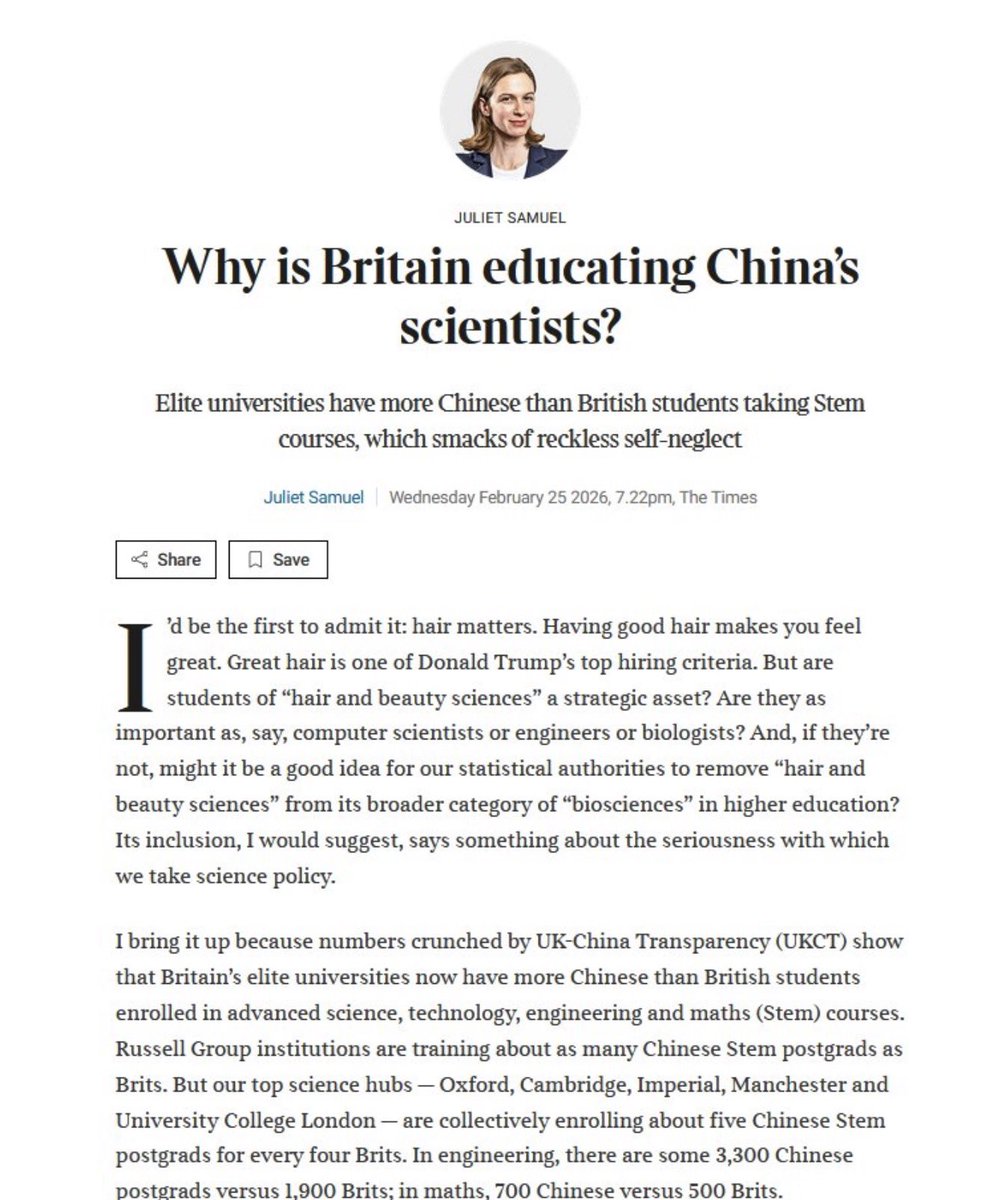
@BL77038283 @predict_addict China should improve their political institutions and introduce some rule of law (the real rule of law, not that "socialist rule of law with Chinese characteristics" crap!) and switch to a democracy. And then we can talk about universities and whether I want to stay in them
English

@predict_addict China should improve STEM education at lower tier universities and trades to reduce students going oversea. Overall students leaving to other country indicates poor education institutions.
English

The Times asks: “Why is Britain educating China’s scientists?”
The more honest question is the inverse:
Why do Chinese students still bother coming to the UK?
A big part of the answer is selection pressure.
Getting into the very top tier in China (Tsinghua, Peking, etc.) is brutally competitive. If you don’t make that cut, you look abroad.
The top slice goes to the US when possible. If the US is out of reach (money, visas, timing, risk), the UK becomes the next default option.
And the UK is happy to take them — not because of some grand national science strategy, but because the economics are obvious:
International students often pay 3–4× the home fee. That money cross-subsidises departments, keeps marginal programmes alive, and in some universities quietly props up the whole balance sheet.
If you remove that revenue, a lot of “STEM capacity” simply evaporates.
So framing this as “Britain generously training China” is mostly hot air. It’s a transaction.
There’s also an uncomfortable quality question that UK commentary keeps dodging:
If you’re coming to do something like physics at a place like Oxford, what are you actually buying?
In many UK programmes the contact hours are low, the structure is light, and the admissions filter is often more about signalling than depth of preparation.
That can be fine if the goal is a credential. It’s not fine if the country is pretending it’s building a serious scientific pipeline.
If Britain wants fewer Chinese postgrads in advanced STEM, there are only two real levers:
produce more British students who want and can do hard STEM,
fund universities so they don’t depend on overseas fees.
Everything else is op-eds.

English

@TUVegeto137 @predict_addict ...those that couldn't think outside the box and conform and invest their whole life into this "hunger game" , their "gaokao" is actually its own kind of negative filtering i.e. it filters out those people who can actually think for themselves.
English

@TUVegeto137 @predict_addict Bro you couldn't get a place at Chinese top universities either( if you go through the same process), I doubt most people from western elite universities can. It's an entirely different mode of competition, it's competition for competition's sake, the only people that succeed are
English

@AlexOnchain Summer is going to turn the right side into a steam house
English

@alex_prompter To do that they must have that which we call a soul
English

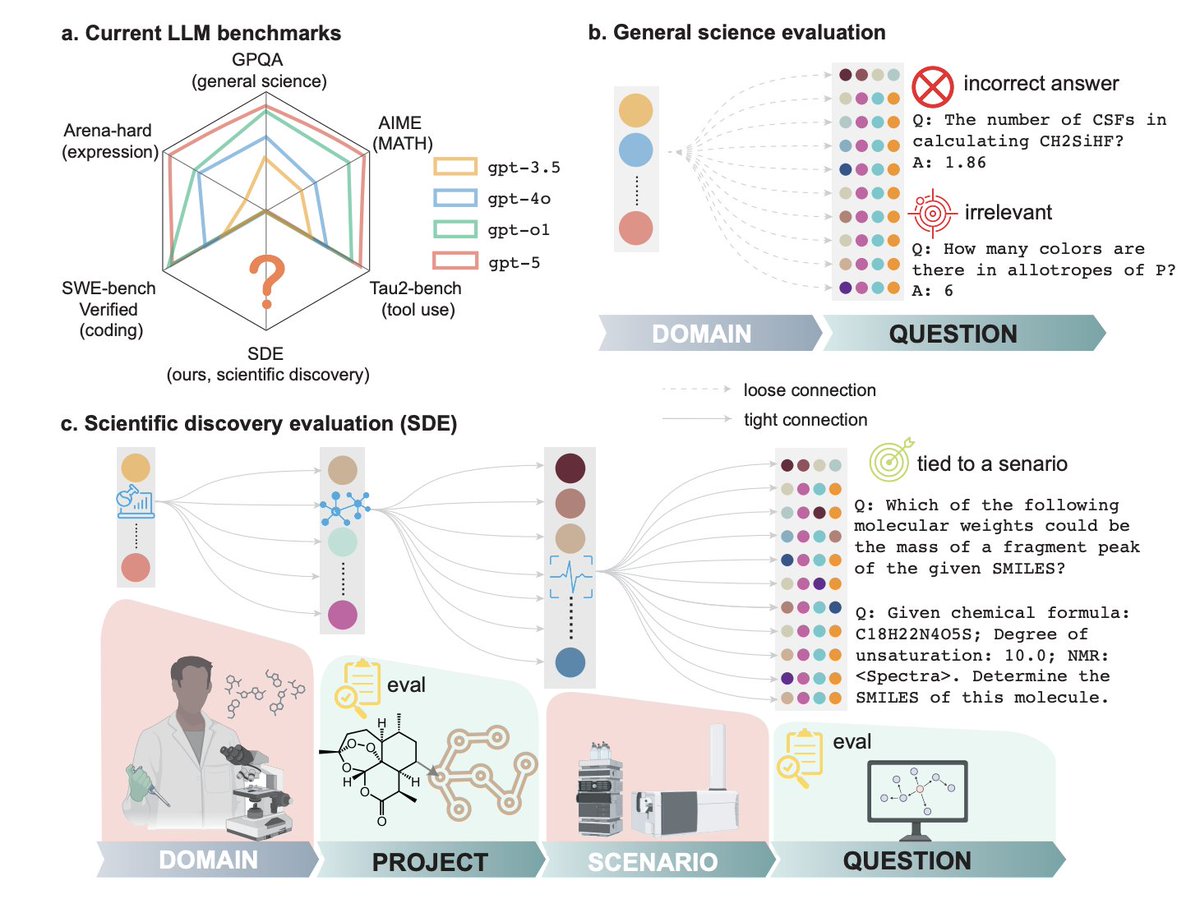
This paper from Harvard and MIT quietly answers the most important AI question nobody benchmarks properly:
Can LLMs actually discover science, or are they just good at talking about it?
The paper is called “Evaluating Large Language Models in Scientific Discovery”, and instead of asking models trivia questions, it tests something much harder:
Can models form hypotheses, design experiments, interpret results, and update beliefs like real scientists?
Here’s what the authors did differently 👇
• They evaluate LLMs across the full discovery loop hypothesis → experiment → observation → revision
• Tasks span biology, chemistry, and physics, not toy puzzles
• Models must work with incomplete data, noisy results, and false leads
• Success is measured by scientific progress, not fluency or confidence
What they found is sobering.
LLMs are decent at suggesting hypotheses, but brittle at everything that follows.
✓ They overfit to surface patterns
✓ They struggle to abandon bad hypotheses even when evidence contradicts them
✓ They confuse correlation for causation
✓ They hallucinate explanations when experiments fail
✓ They optimize for plausibility, not truth
Most striking result:
`High benchmark scores do not correlate with scientific discovery ability.`
Some top models that dominate standard reasoning tests completely fail when forced to run iterative experiments and update theories.
Why this matters:
Real science is not one-shot reasoning.
It’s feedback, failure, revision, and restraint.
LLMs today:
• Talk like scientists
• Write like scientists
• But don’t think like scientists yet
The paper’s core takeaway:
Scientific intelligence is not language intelligence.
It requires memory, hypothesis tracking, causal reasoning, and the ability to say “I was wrong.”
Until models can reliably do that, claims about “AI scientists” are mostly premature.
This paper doesn’t hype AI. It defines the gap we still need to close.
And that’s exactly why it’s important.

English

10-year-old Mailda has been identified as the youngest victim of the Bondi terror massacre. Her former Primary School the Harmony Russian School of Sydney shared a GoFundMe page on Monday morning. Follow live updates: bit.ly/4rXrWFY

English

@curiouswavefn Egalitarianism in a nutshell. Every one is equally the best at their own thing.
English