ทวีตที่ปักหมุด
The Axial Post
3.7K posts

The Axial Post
@TheAxialPost
Doctor (PhD) | Account is Young but Qualified Team. Monitoring Insight Multipolar World | Geopolitics • Diplomacy • Global Affairs | Live from the fault lines
เข้าร่วม Şubat 2026
140 กำลังติดตาม300 ผู้ติดตาม

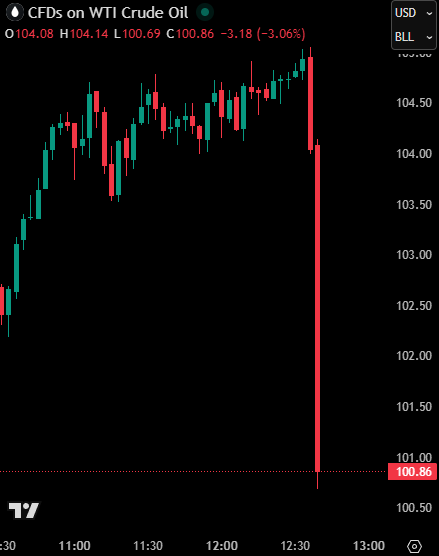
BREAKING: ⚡️Iran's President Pezeshkian says Iran is ready to end the war with the US but wants guarantees.
US stocks are surging on the news.
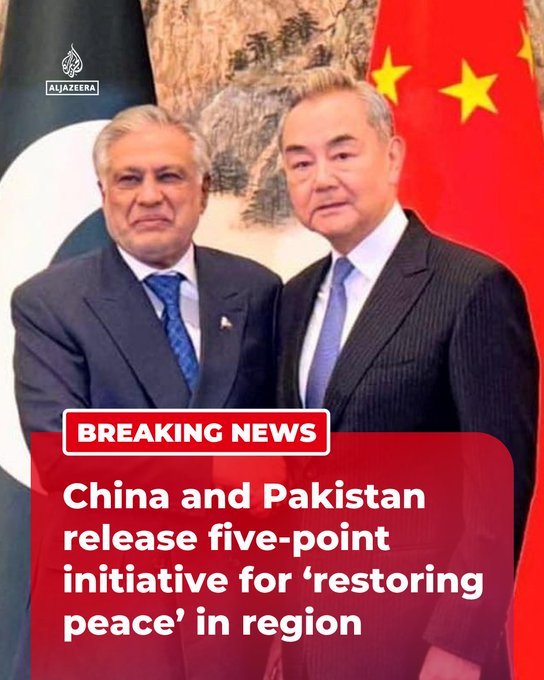
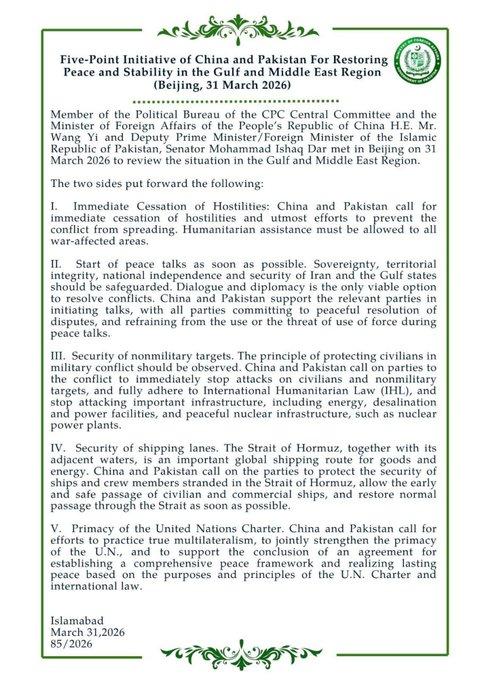
China- Pak meeting earlier today assured Iran with US deescalation moves.
As a result, High vessels traffic passed through the strait of Hormuz earlier today.
Possibly War is near to end..!
#Riyadh #Dubai #Qatar #Kuwait #IranUSwar #IranIsraelwar
The Axial Post@TheAxialPost
BIG BREAKING: ⚡️Increased vessel traffic is moving through the Strait of Hormuz monitored today. This signals that 🇵🇰Pakistan's FM meeting held earlier today with 🇨🇳China secured some assurances from Iran. Speculations of China's Involvement has addressed the insecurities of Iran. #Riyadh #Dubai #Qatar #Kuwait #IranUSwar #IranIsraelwar
English

BIG BREAKING: ⚡️Increased vessel traffic is moving through the Strait of Hormuz monitored today.
This signals that 🇵🇰Pakistan's FM meeting held earlier today with 🇨🇳China secured some assurances from Iran.
Speculations of China's Involvement has addressed the insecurities of Iran.
#Riyadh #Dubai #Qatar #Kuwait #IranUSwar #IranIsraelwar
English

The "We Will not be there for You, the way you didn't" Doctrine - Threat or a War Invitation?
The Statement:
Trump told countries dependent on Gulf oil to "go and just take it" from the Strait of Hormuz, adding: "You'll need to start learning to fight for yourselves, we won't be there to help you like you weren't there for us."
What This Means:
1. The Burden Shift
Trump is explicitly telling oil-importing nations—China, Japan, South Korea, India, and European allies—that securing the Strait is now their problem. The U.S. fought; now you guard.
2. The "Fight for Yourselves" Challenge
"Go and just take it" is not a diplomatic proposal. It's a dare. Trump is daring allies to send warships, clear mines, and risk Iranian missiles—without U.S. backup.
3. The "You Weren't There" Refrain
Trump frames allied refusal to join the Hormuz coalition as a betrayal. His message: you abandoned us; now you're on your own.
4. The Practical Reality
No country can "just take" the Strait. Mines, missiles, and IRGC patrols have halted shipping for over a month. Clearing it requires weeks of military operations—and the U.S. Navy is the only force capable of doing so.
5. The Bluff
Trump is threatening to pull U.S. naval protection entirely. If he follows through, global oil markets lose their only guarantor of maritime security in the region. Prices would spike—but so would pressure on allies to act.
6. The Audience
This isn't really about the Strait. It's about domestic politics: Trump is signaling to voters that he's done fighting for countries that won't fight for themselves.
Bottom line:
Trump just drew a new red line: no more free rides. Allies who want Gulf oil must now risk their own ships. Whether they do—or watch prices climb—is the test.
____________________________________________
It's not a strategy. It's a slogan.
Follow @TheAxialPost for daily geopolitics.
English

BREAKING: ⚡️Iran warns to target U.S. based IT companies in the West Asia region if US continues the attacks against its infrastructure.
— Iran has advised the employees of following companies to vacate their workplaces and offices immediately.
Microsoft
GP Morgan
Palantir
Oracle
Google
Cisco
Apple
Nvidia
Tesla
Intel
Meta
IBM
Dell
HP
GE
English

Halting defense ties with France reflects a deeper fracture—allied divergence is turning into operational breakdown.
When partners start restricting airspace and cooperation, it signals the coalition is no longer aligned on the war itself.
Bottom line: This isn’t just a dispute—it’s strategic fragmentation inside the Western bloc.
English

Israel halting defense ties with France reflects a deeper fracture—allied divergence is turning into operational breakdown.
When partners start restricting airspace and cooperation, it signals the coalition is no longer aligned on the war itself.
Bottom line: This isn’t just a dispute—it’s strategic fragmentation inside the Western bloc.
English

Pakistan's Diplomatic Mediation - Here is Why It's playing a Pivot in war hot Zone
The News:
Pakistan, once isolated by Washington for harboring Osama bin Laden, is emerging as a central mediator between the U.S. and Iran, hosting regional powers for talks aimed at ending the war.
Why Pakistan Now:
1. The Unique Position
Pakistan borders Iran and maintains ties with both Tehran and Washington. It is one of the few countries Iran has allowed to transit the Strait . Its army chief has been in direct contact with U.S. Vice President JD Vance.
2. The Diplomatic Hub
On March 29, Islamabad hosted foreign ministers from Saudi Arabia, Turkey, and Egypt to discuss reopening Hormuz. Proposals included a Suez-style management consortium.
3. The Trust Factor
Iran rejected participation in the Islamabad talks , but continues allowing Pakistani ships through the Strait. Pakistan has credibility with Tehran that few U.S. allies possess.
4. The U.S. Calculation
Washington needs channels to Tehran. Pakistan offers a backchannel that bypasses Europe's refusal and Gulf reluctance.
5. The Bin Laden Shadow
The irony is sharp: the country once branded an ally of terror is now America's best hope for a diplomatic exit.
Bottom line:
Pakistan just became the world's unlikely mediator. The country Washington once ostracized now holds a key to ending the war. Diplomacy makes strange bedfellows.
____________________________________________
It's not a strategy. It's a slogan.
Follow @TheAxialPost for daily geopolitics.
English

How did Pakistan become a major player in peace negotiations between the U.S. and Iran? newyorkermag.visitlink.me/vxp7YX
English

@GlobeEyeNews Such a spoiled child attitude who will call big boys to fight for him. If you deny, you have a 'hostile attitude' towards him.
English

@disclosetv Such a spoiled child attitude who will call big boys to fight for him. if you deny, you have a 'hostile attitude' towards him.
English

South Korea preparing driving restrictions shows how energy shocks are shifting from market issue to behavioral control policy.
When governments start rationing mobility, it signals supply stress is no longer manageable through prices alone.
Bottom line: This isn’t just an oil spike—it’s early-stage demand rationing in a supply crisis.
English

Domestic deployment of anti-drone laser systems signals how quickly battlefield threats are migrating into homeland security.
Protecting senior officials is logical—but it also reflects rising concern over low-cost drone threats in urban environments.
Bottom line : The frontlines aren’t just overseas anymore—they’re moving closer to home.
English

Breaking News: The Pentagon is considering using an anti-drone laser system near the residences of Pete Hegseth and Marco Rubio in Washington, D.C. nyti.ms/4chUPXq
English

Policy shift signals a re-calibration toward resource prioritization over broad digital policing.
By narrowing focus to hate crime, authorities may improve efficiency—but risk creating grey zones around misinformation, harassment, and coordinated influence campaigns.
Bottom line: Less policing of speech, but potentially more space for unchecked narratives to spread.
English

The $4 Gas Threshold - Here are the factors You should know contributing to It.
The News:
Gas prices at U.S. pumps spiked above $4 a gallon for the first time since the summer of 2022, as the war in Iran sends oil costs surging. Natural gas prices in Europe and Asia have also surged over the past month.
The Numbers:
🇺🇸 U.S. gas: Above $4/gallon (national average)
🇪🇺 European gas: Up over 30% since the war began
🇯🇵 Asian LNG: Spot prices hit 2024 highs
What's Driving the Spike:
1. Hormuz Remains Closed
For over a month, the Strait has been effectively shut. Mines, missiles, and IRGC patrols have halted tanker traffic, taking 20% of global oil offline.
2. The Red Sea Threat
With the Houthis now formally in the war, the Bab el-Mandeb strait—the only exit for Saudi oil rerouted to Yanbu—is also at risk.
3. The SPR Is Draining
The U.S. is releasing 172 million barrels from the Strategic Petroleum Reserve, but that's less than two weeks of lost Hormuz flows. Markets are pricing a prolonged disruption.
4. Global Natural Gas
Qatar's LNG production—20% of global supply—remains halted. Europe and Asia are competing for replacement cargoes, driving prices higher.
The Political Impact:
5. The Midterm Math
Gas above $4 is a political threshold. Every cent at the pump translates to voter pain. With midterms months away, the price spike threatens to become the defining issue.
6. The Biden Comparison
During the 2022 spike, Republicans hammered Biden over gas prices. Now Trump faces the same vulnerability—and Democrats are using it.
Bottom line:
$4 gas is a psychological line. It tells Americans the war isn't abstract—it's at the pump. And as long as the Strait stays closed, prices will keep climbing.
____________________________________________
It's not a strategy. It's a slogan.
Follow @TheAxialPost for daily geopolitics.
English

Gas is now over $4.00 a gallon.
Americans are paying the price for Trump’s costly war with Iran.
The New York Times@nytimes
Breaking news: The average price of gasoline in the U.S. is now more than $4 a gallon, the first time it has reached that level since 2022. nyti.ms/4m6Ri1M
English