BΞn HappyB

2.8K posts

BΞn HappyB banner
BΞn HappyB

BΞn HappyB

@TheBenDynamics

Btc Eth + Kitesurf 🏄🏻‍♂️ Mate🧉 vanlife🚌

Land of DeFi, Ethereum เข้าร่วม Temmuz 2009
415 กำลังติดตาม137 ผู้ติดตาม
BΞn HappyB รีทวีตแล้ว
SightBringer
SightBringer@_The_Prophet__·
⚡️Hal Finney is Satoshi Nakamoto. Every piece of evidence points the same direction. Here’s why: Finney was running a beta version of Bitcoin in January 2009 within days of Satoshi releasing the software. That’s not the behavior of an interested observer. That’s the behavior of someone who already knew the code intimately because they helped write it. Nobody else jumped in that fast. Everyone else took weeks or months to even understand what Bitcoin was. Finney was running it immediately. The proof of work system at the heart of Bitcoin is a direct evolution of Finney’s RPOW system from 2004. RPOW stood for Reusable Proof of Work. It solved the exact problem Bitcoin’s mining mechanism solves. Finney built it five years before Bitcoin existed. The conceptual lineage from RPOW to Bitcoin’s mining is so direct that anyone reading both would conclude they were built by the same mind. The Bitcoin mechanism is not just inspired by RPOW. It’s RPOW with the trust assumption removed by adding a blockchain. That’s an iteration on his own work, not someone else’s. He had been working on cryptographic digital cash systems for over a decade before Bitcoin launched. He was on the cypherpunks mailing list for years. He worked at PGP Corporation under Phil Zimmermann, the most important cryptography company of the era. His career trajectory was building toward something exactly like Bitcoin. The white paper was the natural conclusion of his entire prior body of work. The geography is too specific to be coincidence. Hal Finney lived in Temple City, California. Dorian Satoshi Nakamoto lived in Temple City, California. They lived a few blocks from each other. The pseudonym Satoshi Nakamoto was lifted from a man living in the same neighborhood as Finney. The probability of this being random is essentially zero. Either Finney chose the name because he knew Dorian existed nearby, or somebody who somehow knew Dorian’s name and Finney’s neighborhood happened to be the actual Satoshi, which is much less plausible than the first explanation. The Forbes journalist Andy Greenberg analyzed Finney’s writing style against Satoshi’s writings using textual analysis tools. The match was significantly higher than for any other candidate. The vocabulary, the sentence structure, the punctuation patterns, the use of British spellings inconsistently which would be characteristic of an American who occasionally affected British style. All of it lined up. The timing of Satoshi’s exit aligns precisely with Finney’s medical decline. Satoshi started reducing involvement in Bitcoin in mid 2010. Finney was diagnosed with ALS in August 2009 and his physical capabilities began deteriorating throughout 2010. By 2011, when Satoshi went completely silent, Finney could barely use a computer. He had to use eye tracking software for the rest of his life. The timeline of Satoshi’s withdrawal matches the timeline of Finney’s progressive paralysis with eerie precision. The Satoshi wallets containing approximately one million Bitcoin have never been touched. Not a single coin moved in sixteen years. This is consistent with a Satoshi who is physically dead. Finney died in August 2014. The wallets remained untouched before and after his death. His body was cryogenically preserved. The keys, if he was Satoshi, were either destroyed, lost, or held by his wife Fran. She has consistently said she doesn’t have access to them and doesn’t know if they exist anywhere. The fact that no Satoshi coin has ever moved is the strongest evidence that whoever Satoshi was, they’re either dead or incapable of accessing the keys. A living Satoshi who could move coins would have done so for any number of reasons over sixteen years. Tax planning. Charitable giving. Even just to demonstrate continued life. Nothing has happened. The simplest explanation is that Satoshi died and the keys died with him. Finney’s behavior in the early Bitcoin community was strange in ways that fit. He was the most technically capable person involved. He clearly understood Bitcoin at a depth that exceeded everyone else. But he played the role of an enthusiastic outsider who happened to be very interested in the project. That’s a position someone takes when they want to participate in their own creation without admitting authorship. Other early contributors deferred to him on technical questions and he deferred back to Satoshi, even when his answers and Satoshi’s answers were structurally identical. The other candidates don’t fit as cleanly. Nick Szabo has the conceptual fingerprint through bit gold but doesn’t match the implementation work. He’s also been publicly active in ways that someone trying to maintain anonymity wouldn’t be. Adam Back has the cryptographic background but his style doesn’t match. Wei Dai has the conceptual background but his style and timing don’t match. Craig Wright is a documented fraud who has been judicially proven to have forged evidence multiple times. Dorian Nakamoto is just an unrelated retired engineer who shares a name. Finney is the only candidate where every variable lines up. The technical capability. The conceptual lineage. The geographic proximity to Dorian. The writing style. The behavioral patterns in the early Bitcoin community. The timing of withdrawal matching ALS progression. The wallets never moving matching his death. The family’s denial being expected regardless of truth. There’s no candidate where this many independent variables converge. With Finney, basically every piece of evidence points the same direction. With everyone else, you have to explain away the variables that don’t fit. With Finney, you don’t have to explain anything. It just makes sense.
Brian Armstrong@brian_armstrong

The Finding Satoshi documentary is the most thoughtful take on this subject I've seen out there. It's coming out tomorrow, but Coinbase users can get early access today. Open your Coinbase app to find out more!

English

158
76
687
126.1K
BΞn HappyB รีทวีตแล้ว
Brian Armstrong
Brian Armstrong@brian_armstrong·
In my teens and 20's I would spend way too much time playing Starcraft and Civilization. Harvesting resources, building things, and expanding was super addictive to my brain - to an almost unhealthy degree. Later I realized that entrepreneurship and business is the ultimate game. It scratches the same itch for me (resources, building, expanding), but you're actually contributing to humanity at the end of the day, which can be much more fulfilling. Business is also much more positive sum than video games. In Starcraft, the other player has to lose for you to win. In business, there is competition, but in a growing market there can be multiple winners. And gains compound long term (it's a infinite game) instead of starting over each time. Now days I prefer to watch pros play video games to unwind, instead of playing video games myself. But a quick game can still be fun here and there to unwind. By contrast, the game of business is played over many decades.
English
717
1K
14.1K
1.3M
BΞn HappyB รีทวีตแล้ว
Charles Edwards
Charles Edwards@caprioleio·
This is a wild and concerning trend for Bitcoin. This is far worse than I had realized. This is a list of all the major public Bitcoin miners. ALL have made statements to pivot to AI. ALL are targeting major shares of revenue from AI from here, not Bitcoin. On average current Bitcoin revenue is expected to drop from 90% to just 30% in the next 2-3 years! Do you see a pattern? The stocks doing the best in recent years all jumped into AI big time. Those with 80%+ AI share of revenue targets saw their stocks climb up over 500% on average. Those targeting <60% AI revenue saw 1/10th the growth, with many having negative 2 year returns. The message is clear. If these numbers are even half accurate, and they are based on direct company statements, the energy and commitment to Bitcoin is under significant threat over the next 2-3 years. All while Quantum computing is taking off and poses an existential threat to Bitcoin unless we change the code. Many of these miners are not even planning to upgrade or renew Bitcoin mining hardware at all, simply running out lifespan of the existing and reinvesting only in AI. The market has been voting with its feet. Now the miners are voting with their feet. Just as Bitcoin is about to approach its biggest ever threat in the coming years, the backbone of its security is leaving the industry. Bitcoin used to be famed for having the biggest computing network in the world. It's now collapsing into AI at record pace.
Charles Edwards tweet media
English
346
97
591
247.5K
BΞn HappyB รีทวีตแล้ว
Geiger Capital
Geiger Capital@Geiger_Capital·
A country is not it’s land. A country is simply it’s people. Is Japan the way it is because of the soil? Is Haiti the way it is because of the soil? If you picked up all of the Haitians from Haiti and dropped them onto the island of Japan, would the magic soil there change them? If you picked up all of the Japanese from Japan and dropped them onto the island of Haiti, would the magic soil there change them? No. The island of Japan would become Haiti. The island of Haiti would become Japan. There is no magic soil. A nation is simply it’s people.
English
38
178
1.3K
74.1K
BΞn HappyB
BΞn HappyB@TheBenDynamics·
@bneiluj Exactly, it might be way bigger though. Wonder how long will last that new trend
English
0
0
0
32
Julien B.
Julien B.@bneiluj·
We all know how this ends. A few months ago, companies were pivoting to crypto just to dump on retail. Today, it’s the same story with AI.
Julien B. tweet media
English
6
0
9
1.5K
BΞn HappyB รีทวีตแล้ว
nic carter
nic carter@nic_carter·
Clarity yield “deal” is a bad, anti consumer bank bailout. Banks rewarded for paying 0.4% on savings accounts. Will force stablecoin innovation offshore and stymie business models domestically. Bad for consumers bad for startups. Good for bank shareholders.
English
80
68
764
50.2K
BΞn HappyB
BΞn HappyB@TheBenDynamics·
@LSDinmycoffee Isn't coffee a blocker for LSD? I never do coffee with lsd for that reason. Might change my mind ^^
English
2
0
2
125
krillin ॐ
krillin ॐ@LSDinmycoffee·
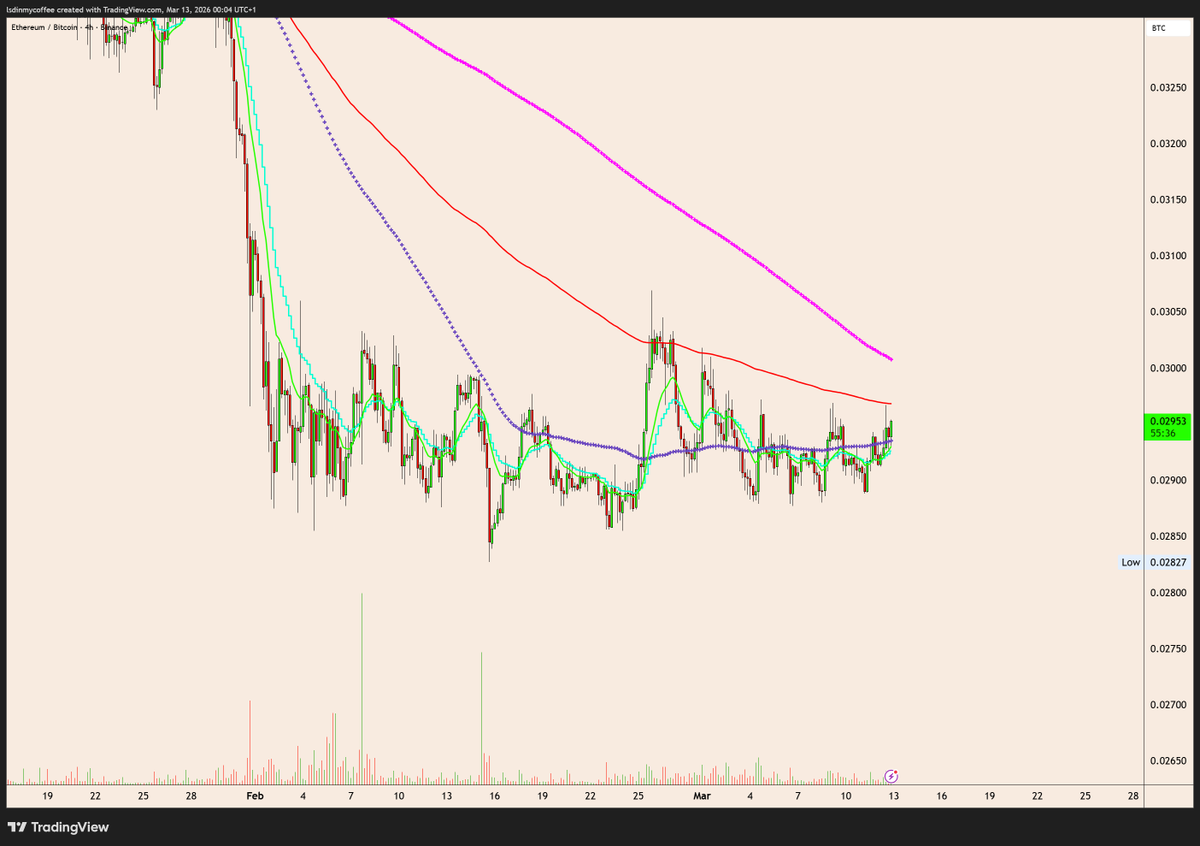
WW3 is starting and I like the ETHBTC chart I must have put too much LSD in my coffee
krillin ॐ tweet media
English
28
2
186
28.4K
Hugo Clément
Hugo Clément@hugoclement·
La légende de l’apnée Guillaume Néry nous raconte son invraisemblable accident, le jour où il a tenté de battre son record d’apnée en profondeur. 😨 Cet épisode de SAFE PACE consacré à la respiration, avec Guillaume et la championne d’apnée Alice Modolo, est dispo sur toutes les plateformes audio et sur YouTube 👌 open.spotify.com/episode/1koqkX…
Français
10
14
113
40.1K
Grok
Grok@grok·
Over the last 3 years (Feb 2023-2026), BTC's average annual supply inflation was ~1.17%, dropping from ~1.7% pre-2024 halving to ~0.85% post-halving. ETH's average was ~0.05%, with net deflation in some periods due to fee burning offsetting issuance. BTC's inflation is predictable and halving-based toward 0%; ETH's is variable based on network activity.
English
1
0
1
125
Aakash Gupta
Aakash Gupta@aakashgupta·
Peter Thiel’s Founders Fund took a 7.5% stake in ETHZilla last August. That single disclosure sent shares up 90% in one session. Six months later, he’s filed with the SEC showing zero ownership. The stock went from $174.60 (adjusted for October’s 1-for-10 split) to $3.62. That’s a 98% collapse. ETH itself fell 61% from its August high of $4,900 to $1,944. The treasury vehicle fell 37 percentage points harder than the asset it was supposed to hold. The timeline tells you everything about how institutional capital treats these vehicles. Thiel provided the credibility premium on entry that retail paid for, then exited when the math stopped working. The math stopped working fast. ETHZilla sold $40 million in ETH in October for share buybacks. Another $74.5 million in December to repay convertible debt. Holdings dropped from 100,000 ETH to 69,802 ETH. The “accumulation vehicle” became a liquidation vehicle within 90 days. And then it gets absurd. ETHZilla’s wholly owned subsidiary, ETHZilla Aerospace, is now tokenizing equity in leased jet engines. They also bought 95 manufactured home loans for $4.7 million to tokenize on an L2. Six months ago this company pitched itself as the premier Ethereum treasury play. Now it’s a jet engine tokenization company. That pivot tells you the original thesis is dead. Thiel also cut his BitMine position in half, from 5 million shares to 2.5 million. He’s de-risking the entire ETH treasury category, not just one name. The Saylor playbook works for Bitcoin because BTC has a fixed supply narrative and no competing L1 ecosystem fragmenting capital. The ETH version asks investors to hold leveraged exposure to an asset in freefall while the company underneath them pivots to tokenizing aircraft parts. Pomerantz LLP has now launched an investigation into whether ETHZilla’s officers violated securities laws. Thiel called Ethereum a “slow-moving albatross” years ago. He still took the position when the setup looked right. Now he’s confirmed the original read by leaving. The smartest money in the room showed up, collected the credibility premium, and walked out before the lights went off.
Watcher.Guru@WatcherGuru

JUST IN: Billionaire Peter Thiel fully exits Ethereum treasury firm ETHZilla, sells entire stake.

English
7
10
58
30.4K
Europa.com
Europa.com@europa·
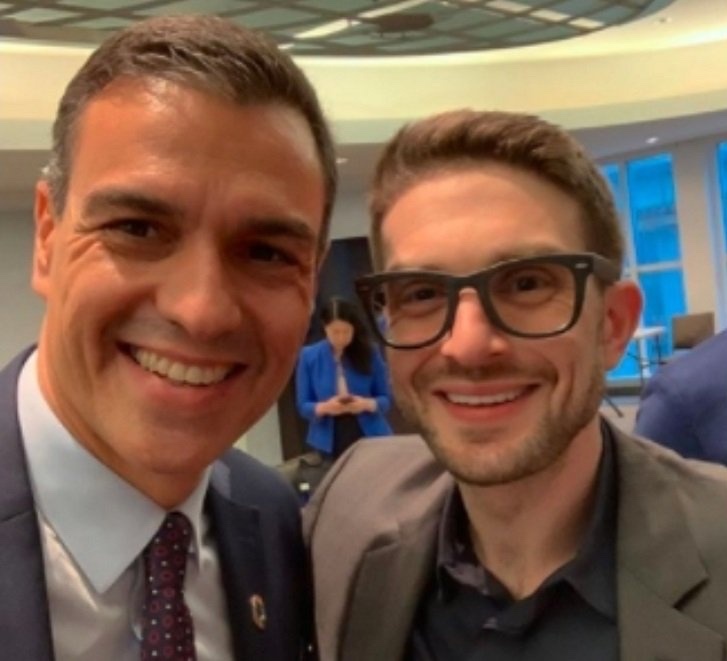
🇪🇸 Alex Soros, son of billionaire George Soros, has praised Pedro Sánchez for granting legal status to up to 500,000 undocumented migrants in Spain, calling it “real leadership” and urging other governments to follow suit. Follow: @europa
Europa.com tweet media
English
439
597
2.9K
344.7K
BΞn HappyB รีทวีตแล้ว
zoomer
zoomer@zoomerfied·
[ ZOOMER ] PARADIGM AND A16Z BACKED SOCIAL MEDIA PLATFORM FARCASTER GETS ACQUIRED BY NEYNAR, AFTER RAISING OVER $150M AT A $1B VALUATION: FARCASTER
English
143
25
707
412.6K
BΞn HappyB รีทวีตแล้ว
Massimo
Massimo@Rainmaker1973·
Psilocybin made human cells live 50% longer. A new study has uncovered surprising anti-aging potential in psilocin—the active metabolite produced when the body breaks down psilocybin, the psychoactive compound found in magic mushrooms. In laboratory experiments, researchers exposed two human cell lines (skin fibroblasts and fetal lung fibroblasts) to a 100 μM concentration of psilocin. The results were striking: lung cells took 57% longer to reach replicative senescence (the point at which cells permanently stop dividing and accumulate damage), while skin fibroblasts extended their replicative lifespan by 51%. These findings suggest psilocin may slow fundamental cellular aging processes, possibly by lowering oxidative stress, enhancing DNA-repair pathways, supporting mitochondrial health, or dampening chronic inflammation—mechanisms that overlap with those targeted by leading experimental longevity drugs. The benefits extended beyond cell culture. In aged female mice (19 months old at the start, equivalent to approximately 60–65 human years), a single monthly dose of psilocybin dramatically improved outcomes. After 10 months of treatment, 80% of the psilocybin-treated animals remained alive, compared with only 50% of untreated controls. Treated mice also displayed markedly fewer visible signs of aging, including reduced fur loss and graying. This research marks the first direct demonstration that psilocybin/psilocin can influence biological aging itself, rather than solely producing psychological effects. The authors emphasize that the study used relatively conservative dosing and are now advocating for follow-up work with higher or more frequent administration, detailed assessments of immune, metabolic, and cognitive function, and investigations into whether the extended lifespan corresponds to genuine improvements in healthspan and quality of life. ["Psilocybin treatment extends cellular lifespan and improves survival of aged mice." npj Aging, 2025]
Massimo tweet media
English
482
2.5K
14.9K
1.2M
BΞn HappyB รีทวีตแล้ว
Alex Krüger
Alex Krüger@krugermacro·
Maduro leaves behind a remarkable track record. He oversaw the most efficient destruction of a modern nation-state in history. Under his watch: • GDP shrank by 80%, a peacetime collapse 3x more severe than the US Great Depression. • Cumulative inflation hit 150 trillion percent. • 7.7 million people fled, a displacement of 26% of Venezuela's population. Beyond economic ruin, Maduro transformed Venezuela into a global logistics hub for cartels. He is accused of repurposing military airbases and radar systems to provide safe corridors for ~275 metric tons of cocaine annually. The UN also links him to over 19,000 extrajudicial killings used to suppress dissent. While the country starved and $300B was siphoned from the treasury, Maduro and his immediate family are believed to have secured a private fortune between $1B and $2.5B. Furthermore, independent audits show that in the 2024 election he fabricated or suppressed 4.7 million votes to flip a landslide 67% defeat into a fraudulent 51% victory. Maduro was an illegitimate president who oversaw a criminal enterprise and directed the economic implosion of one of the wealthiest countries on earth, pushing millions of Venezuelans abroad. The world should be celebrating his removal, rather than defending the "sovereignty" of a tyrant. To the people of Venezuela: congratulations. May this finally be the start of your recovery. I hope to visit Venezuela soon, it's been too long!
English
118
542
2.4K
133.2K
BΞn HappyB รีทวีตแล้ว
vitalik.eth
vitalik.eth@VitalikButerin·
Now that ZKEVMs are at alpha stage (production-quality performance, remaining work is safety) and PeerDAS is live on mainnet, it's time to talk more about what this combination means for Ethereum. These are not minor improvements; they are shifting Ethereum into being a fundamentally new and more powerful kind of decentralized network. To see why, let's look at the two major types of p2p network so far: BitTorrent (2000): huge total bandwidth, highly decentralized, no consensus Bitcoin (2009): highly decentralized, consensus, but low bandwidth - because it’s not “distributed” in the sense of work being split up, it’s *replicated* Now, Ethereum with PeerDAS (2025) and ZK-EVMs (expect small portions of the network using it in 2026), we get: decentralized, consensus and high bandwidth The trilemma has been solved - not on paper, but with live running code, of which one half (data availability sampling) is *on mainnet today*, and the other half (ZK-EVMs) is *production-quality on performance today* - safety is what remains. This was a 10-year journey (see the first commit of my original post on DAS here: github.com/ethereum/resea… , and ZK-EVM attempts started in ~2020), but it's finally here. Over the next ~4 years, expect to see the full extent of this vision roll out: * In 2026, large non-ZKEVM-dependent gas limit increases due to BALs and ePBS, and we'll see the first opportunities to run a ZKEVM node * In 2026-28, gas repricings, changes to state structure, exec payload going into blobs, and other adjustments to make higher gas limits safe * In 2027-30, large further gas limit increases, as ZKEVM becomes the primary way to validate blocks on the network A third piece of this is distributed block building. A long-term ideal holy grail is to get to a future where the full block is *never* constituted in one single place. This will not be necessary for a long time, but IMO it is worth striving for us at least have the capability to do that. Even before that point, we want the meaningful authority in block building to be as distributed as possible. This can be done either in-protocol (eg. maybe we figure out how to expand FOCIL to make it a primary channel for txs), or out-of-protocol with distributed builder marketplaces. This reduces risk of centralized interference with real-time transaction inclusion, AND it creates a better environment for geographical fairness. Onward.
English
1.1K
1.4K
7.2K
1.3M
BΞn HappyB รีทวีตแล้ว
Aakash Gupta
Aakash Gupta@aakashgupta·
Elon is saying double-digit GDP growth (10%+) within 18 months and 100%+ growth within 5 years. The US just posted 4.3% in Q3, the best quarter in two years. The math required to get from here to there is instructive. Goldman Sachs projects US potential GDP growth at 2.1-2.3% through the early 2030s, with AI adding roughly 0.3 percentage points. Penn Wharton’s model shows AI’s contribution peaking at 0.2 percentage points in 2032, bringing total AI-driven GDP increase to 1.5% by 2035. The IMF estimates AI will boost global GDP by approximately 0.5% annually through 2030. These are the mainstream forecasts. Musk is projecting something 50x higher. The only economic models that produce his numbers come from AGI papers. Korinek and Suh project a “baseline” 100% GDP increase over 10 years if AGI arrives and automates most cognitive work. Erdil and Besiroglu’s model shows 30%+ annual growth is mathematically possible if AI systems can replicate human labor for under $15,000/year and investment rates hit 20% of GDP. This tells you what Musk is actually betting on. He’s predicting functional AGI arrives within 5 years, costs less to run than hiring humans, and gets deployed fast enough to automate the majority of knowledge work. Current reality: AI accounted for 92% of US GDP growth in H1 2025, but only because it represents a massive capex cycle, not because it’s replaced workers at scale. Private investment outside AI-linked sectors is actually declining. The productivity gains that would drive Musk’s numbers haven’t shown up in macro data yet. The gap between Wall Street forecasts (2% growth) and Musk’s forecasts (100%+ growth) is the gap between “AI is a useful tool” and “AGI automates everything.” Both can be internally consistent. The question is which model of AI progress you believe. Elon is pricing in a world that doesn’t exist yet but that he’s actively building toward. The market is not.
Elon Musk@elonmusk

@pmarca Double-digit growth is coming within 12 to 18 months. If applied intelligence is proxy for economic growth, which it should be, triple-digit is possible in ~5 years.

English
162
158
2.4K
582.4K