Francis Ogbuka

84.8K posts

Francis Ogbuka banner
Francis Ogbuka

Francis Ogbuka

@TheEmekaa

GTM Leader Payments & Digital Assets 🌍 | Scaling @utila_io in Africa | prev: VP @zonenetworkhq | MBA @HeriotWattUni | Featured: AriseTV, BusinessDay, Techcabal
Global เข้าร่วม Ekim 2009
545 กำลังติดตาม1.5K ผู้ติดตาม
Francis Ogbuka รีทวีตแล้ว
Secretary Marco Rubio
He is Risen.
English
11.8K
43.2K
232.6K
5.5M
Moe
Moe@Mochievous·
@TheEmekaa Avenue of the Baobabs Madagascar
English
1
0
8
1K
Francis Ogbuka รีทวีตแล้ว
NASA
NASA@NASA·
@astro_reid In this image, also taken from the Orion capsule, we see the divide between night and day, known as the terminator, cutting across Earth. Whether awake or dreaming, we're all here on this planet together.
NASA tweet media
English
339
5.3K
37.9K
1.6M
Francis Ogbuka รีทวีตแล้ว
Utila
Utila@utila_io·
Join @bentzzi, Co-founder & CEO of Utila at Digital Asset Yield Summit in Miami this May. Strong lineup of institutional leaders shaping digital asset yield, staking, and onchain finance. See you there.
Staking Rewards@StakingRewards

We are excited to announce the first 30 speakers of Digital Asset Yield Summit (DAYS) Miami. This is the most institutional and influential line-up ever recorded at DAYS (formerly Staking Summit). Matthew Sheffield (@sheffieldreport) — Chief Investment Officer at @Sharplink Maredith Hannon (@MaredithH1) — Head of Business Development, Digital Assets at @WisdomTreePrime Sidney Powell (@syrupsid) — Co-Founder & CEO at @maplefinance Juan David Mendieta Villegas (@JuanDMendieta) — Co-Founder & CSO at @keyrock Duncan Moir (@Duncanmoir) — President at @21shares Vadim Khramov (@vadimthedream0) — Founder & Chief Investment Officer at @EdgeCapitalMgmt Purvi Maniar — Chief Legal Officer at @LaserDigital_ David Knox — Chief Financial Officer at @HyperionDeFi Anna Dinescu — Managing Partner at @HilbertCapital Peter Suarez Ferrara — Director, Technology Investment Banking, Financial Software at @UBS Investment Bank Bentzi Rabi (@bentzzi) — Co-Founder & CEO at @utila_io Zach Pandl (@LowBeta) — Head of Research at @Grayscale Bhavin Vaid (@RealBhavinVaid) — CEO at @BirchHill_io Jon Campagna (@thecampsishere) — Co-Founder & COO at @NexystDigital Alison Mangiero (@AMangiero) — Head of Staking Policy & Industry Affairs at @crypto_council Michael Ashby (@lonvangen) — CEO at ALGOQUANT Lorien Gabel (@lorientree) — Co-Founder & CEO at @Figment_io Jose Martinez Sanguinetti (@MartinezSang) — Founder & CEO at Sothys Capital Thierry Adant (@tadantm) — Chief Investment Officer at Battery Finance Myles Harrison (@MylesHarrison89) — Chief Product Officer at @AMINABankGlobal David Kinitsky (@Kinitsky) — Chief Corporate Development Officer at @everstake_pool Digital Asset Yield Summit is a curated forum for capital allocators to discover the latest advancements in digital asset yield. The event is invite-only and capped at 300 attendees to ensure we can speak and qualify everyone personally. Join us in Miami, 4 May ↓

English
14
1
3
188
Francis Ogbuka รีทวีตแล้ว
Utila
Utila@utila_io·
Utila is heading to @GITEXAfrica next week, Africa’s largest tech and startup event, held in Marrakech. 🇲🇦 Francis Ogbuka @TheEmekaa, our new Head of Business Development and Sales for Africa, will be there meeting with teams across payments, stablecoins, and wallet infrastructure. utila.io/request-a-demo/
Utila tweet media
English
10
1
3
240
OluGB 🦋
OluGB 🦋@TechProd_Arch·
🇳🇬 Today, @theflutterwave announces a Nigerian banking license. It is a defining step in our 10-year journey to build the financial infrastructure powering Africa’s future. A decade ago, we started with a simple belief: better infrastructure changes everything. Payments failed too often, settlement was slow, and expanding meant rebuilding from scratch. So we focused on connecting what was fragmented. With the acquisition of @mono_hq earlier this year, we deepened that connectivity. Now we are going further by building a unified platform where businesses can open accounts, accept and send payments, manage payouts, run payroll, and operate across currencies in one place, with access to lending and working capital powered by real transaction data. Businesses can now run their entire financial operations seamlessly, while developers can build new financial products directly on our infrastructure at scale. We can now build, innovate and solve customer problems faster than before because we now control the value chain of payments in Nigeria. Our destiny is now in our hands. We are reimagining banking for Africa’s future. Faster. Smarter. Built for scale. 🚀🦋 Learn more: flutterwave.com/us/blog/owning… flutterwave.com/ng/bank
OluGB 🦋 tweet media
English
182
507
1.7K
189.9K
Francis Ogbuka
Francis Ogbuka@TheEmekaa·
I need my slack notifications to be more aggressive
English
0
0
0
20
Francis Ogbuka รีทวีตแล้ว
Francis Ogbuka
Francis Ogbuka@TheEmekaa·
If the state’s tax agency website is the only way to file, then it suggests to me the process isn’t targeted at informal sector workers.
English
0
0
0
16
Francis Ogbuka รีทวีตแล้ว
Micheal D
Micheal D@micheal_ws18·
All gym goers know that working out by yourself is always better than someone tagging along.
English
156
966
8.4K
182.7K
Francis Ogbuka
Francis Ogbuka@TheEmekaa·
It would have made sense if that report also included the portfolios value. Might be a bunch of 250-300k properties in there. Saying “106” properties without context feels like rage bait to me
English
0
0
0
18
Francis Ogbuka รีทวีตแล้ว
Osaretin Victor Asemota
Osaretin Victor Asemota@asemota·
I am tired of all this meaningless speculation without facts, and of tarnishing the image of someone who worked very hard to build his assets. Since people would assume I am biased because Herbert was like my brother, I asked Claude about the likelihood of someone owning 106 houses as a beneficial owner in London. To be clear, Late Herbert Wigwe was discovered to be a "Beneficial Owner" and NOT a nominee. I know younger people who already legally own about half of that asset portfolio, and they are still working professionals. A doctor I know owns 45 assets around England, but not concentrated in London, and many Indians like him own many more properties than 100. For a banker who has worked for decades to own assets worth about 100 million pounds is not strange. The problem is that he didn't diversify the holdings for some reason. Since I know him very well, the likely reason is that he felt London was the safest place to own those assets, since his mentors and role models had already done the same. To be clear: The fact that investigators identified him as the beneficial owner suggests they traced the economic benefit to him: the money flows, the decision-making authority, the enjoyment of the assets. Here is Claude's full answer below: When a Nigerian Banker Dies and Is Discovered as the Beneficial Owner of 106 London Houses What "Beneficial Owner" Means Here In English property law, the beneficial owner is the person who truly owns the property in substance — they enjoy the rental income, the capital gains, and the proceeds on sale. The legal title may sit with someone else entirely: a nominee company, a solicitor, a family member, or a shell entity. But the beneficial owner is the real owner in the eyes of equity and, increasingly, in the eyes of enforcement agencies. If this banker was discovered to be the beneficial owner of 106 London houses, it means the properties were held in his interest by others. He was not the trustee. He was the principal. The names on the Land Registry were his proxies. Could He Still Have Been Holding Them in Trust for Others? It is theoretically possible but structurally unlikely at this scale. Here is why. A beneficial owner can, in principle, declare himself a trustee over assets he beneficially owns — creating a sub-trust where he holds his beneficial interest for yet another layer of people. But this is unusual in practice for several reasons. First, the entire point of using proxies and nominee structures is to keep the real owner hidden. Adding another trust layer beneath the beneficial owner adds complexity that serves little purpose unless there is a specific tax, succession, or concealment reason. Second, if he were merely a conduit for others, those others would typically be identified as the beneficial owners in the first place — not him. The fact that investigators identified him as the beneficial owner suggests they traced the economic benefit to him: the money flows, the decision-making authority, the enjoyment of the assets. Third, the defence of "I was just holding for someone else" is the single most common claim made by politically exposed persons when their assets are discovered. Courts and enforcement agencies treat it with deep scepticism, particularly when the claim surfaces only after death or after an investigation begins, when there is no contemporaneous written trust documentation, when the supposed beneficiaries cannot be clearly identified, or when the pattern of acquisition, management, and income collection points to a single controlling mind. The More Likely Reality A Nigerian banker who is the beneficial owner of 106 London properties, held through nominee structures, fits a pattern that UK enforcement agencies now know well. Properties were acquired over years or decades, often during periods of access to significant financial flows. Legal title was placed with nominees — sometimes UK-registered companies, sometimes family members or associates, sometimes offshore vehicles — to avoid detection by Nigerian regulators like the EFCC and the CBN, and to stay below the radar of UK authorities. The beneficial owner controlled everything: which properties to buy, how to finance them, who managed them, where the rental income went. The nominees were not independent trustees exercising discretion. They were instruments of the beneficial owner's will. At the scale of 106 properties — potentially representing £25 million to over £100 million depending on location — this is not casual wealth diversification. This is a systematic programme of asset accumulation in a jurisdiction perceived as safe, liquid, and opaque. What Happens Now That He Has Died His death creates a cascading set of problems. The estate enters probate, and the executors or administrators must account for all assets in which the deceased had a beneficial interest — not just those in his name. If investigators or HMRC have identified him as beneficial owner of 106 properties, those properties are part of his taxable estate regardless of whose name is on the title. Inheritance tax at 40% applies to the value above the nil-rate band, which could mean a tax liability running into tens of millions of pounds. HMRC will investigate whether rental income from these properties was ever declared for UK income tax. If it was not, the estate faces back taxes, interest, and penalties that could stretch back 20 years under the discovery assessment rules. The National Crime Agency may issue Unexplained Wealth Orders requiring the estate to demonstrate that the properties were acquired with legitimately obtained funds. The burden of proof is on the estate, not on the NCA. If the estate cannot provide a credible explanation for the source of funds used to acquire 106 properties, the NCA can seek civil recovery under the Proceeds of Crime Act 2002 on the balance of probabilities. Anyone who served as a nominee or legal titleholder may themselves face scrutiny for facilitating the concealment of beneficial ownership, particularly under the new Register of Overseas Entities regime and the evolving UK anti-money laundering framework. The Trusteeship Defence in Context If family members, associates, or other claimants now come forward asserting that some of these properties were actually held by the deceased in trust for them, they face a brutal dilemma. To claim, they must identify themselves and explain their own source of funds. They must produce trust documentation — ideally contemporaneous, written, and consistent with the actual pattern of property management. They must explain why the arrangement was structured to conceal their interest. And they must do all of this under the scrutiny of agencies that are specifically looking for exactly this kind of claim as evidence of a wider network of concealed wealth. The absence of clear, contemporaneous trust deeds is almost always fatal to such claims. And even if documentation exists, enforcement agencies will examine whether the trusts were genuine — meaning the trustee actually acted in the beneficiaries' interests and the beneficiaries had real control — or whether they were shams designed to create a paper trail. The Bottom Line When someone is identified as the beneficial owner of 106 London houses, the default inference is that they were genuinely his. The nominee structures existed to hide him, not to hide someone behind him. The trusteeship defence — "I was holding for others" — is available in theory but treated with heavy scepticism in practice, especially when it is raised posthumously, at scale, and in the context of a politically exposed person from a jurisdiction with well-documented patterns of illicit capital flight into London property. The real question is not whether he was holding for others. The real question is where the money came from.
English
17
40
140
24.7K
Mr Psquare
Mr Psquare@PeterPsquare·
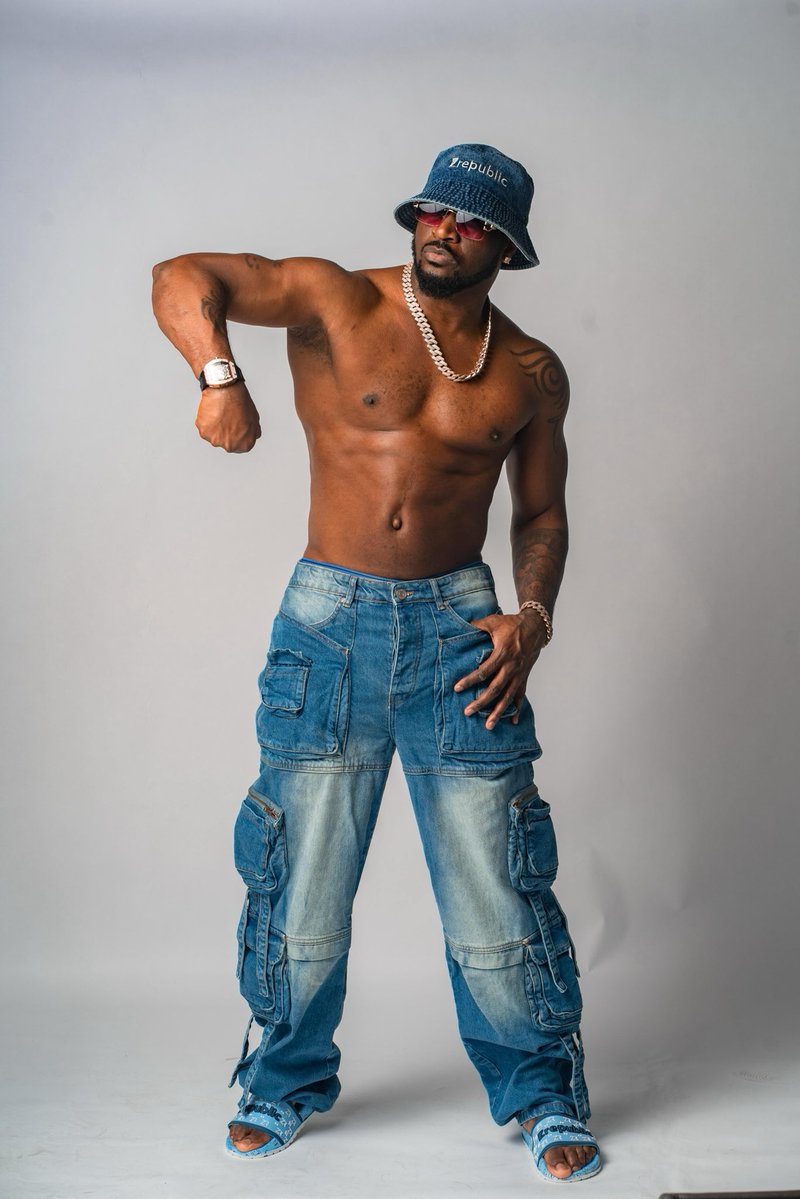
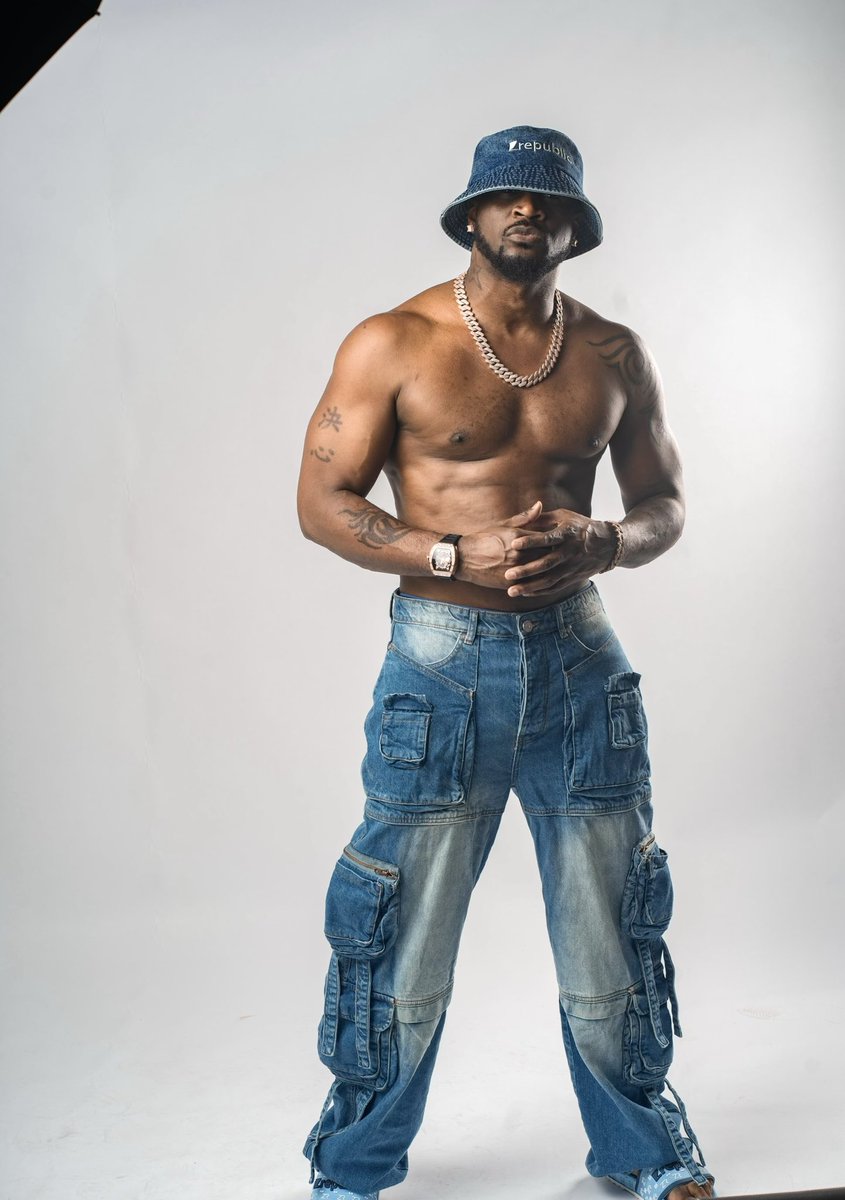
Most people don’t know this. I’ve stayed away from the gym since the pandemic, but discipline, lifestyle, and consistency kept me right. 💪🏾 #OGForever
Mr Psquare tweet mediaMr Psquare tweet media
English
559
470
8.6K
480.9K