Sean D. Emory

25.9K posts

Sean D. Emory banner
Sean D. Emory

Sean D. Emory

@_SeanDavid

Avory Foundational ETF $AVRY | Founding Partner & CIO of @AvoryCo | Investing Forward. | Data tells our stories | Opinions are mine.

Miami เข้าร่วม Ekim 2008
1.2K กำลังติดตาม21.2K ผู้ติดตาม
ทวีตที่ปักหมุด
Sean D. Emory
Sean D. Emory@_SeanDavid·
Today, we’re introducing $AVRY, the Avory Foundational ETF. AVRY was built to serve as a long-term core equity holding. It is actively managed, non-index, intentionally concentrated, and unconstrained by benchmarks or rigid cash targets. The portfolio focuses on approximately 20–30 high-quality businesses that are foundational to their industries and positioned for durable, secular growth, while remaining valuation-aware. This is not a thematic ETF. It is not designed to chase short-term narratives. AVRY is built for durability, discipline, and long-term compounding. Infographic Source: Avory & Co. As of Date: 12/01/25 For informational purposes only and is not intended to be a complete list of comparison features. ________ Investors should consider the investment objectives, risks, charges, and expenses carefully before investing. For a prospectus or summary prospectus with this and other information about the Fund, please call 563.320.1688. or visit avoryfunds.com . Read the prospectus or summary prospectus carefully before investing. Investments involve risk, including the loss of principal. Past performance does not guarantee future results. Equity Investing Risk. An investment in the Fund involves risks similar to those of investing in any fund holding equity securities, such as market fluctuations, changes in interest rates and perceived trends in stock prices. The values of equity securities could decline generally or could underperform other investments. Management Risk. The Fund is actively managed and may not meet its investment objective based on the Adviser’s or Sub-Adviser’s success or failure to implement investment strategies for the Fund $BMNR $NVDA $XYZ $RBLX $YOU
Sean D. Emory tweet media
English
4
2
15
4.5K
Jonathan
Jonathan@joni_vrbt·
Name a tech company that has literally zero haters
English
448
3
373
54.7K
Mohamed A. El-Erian
Mohamed A. El-Erian@elerianm·
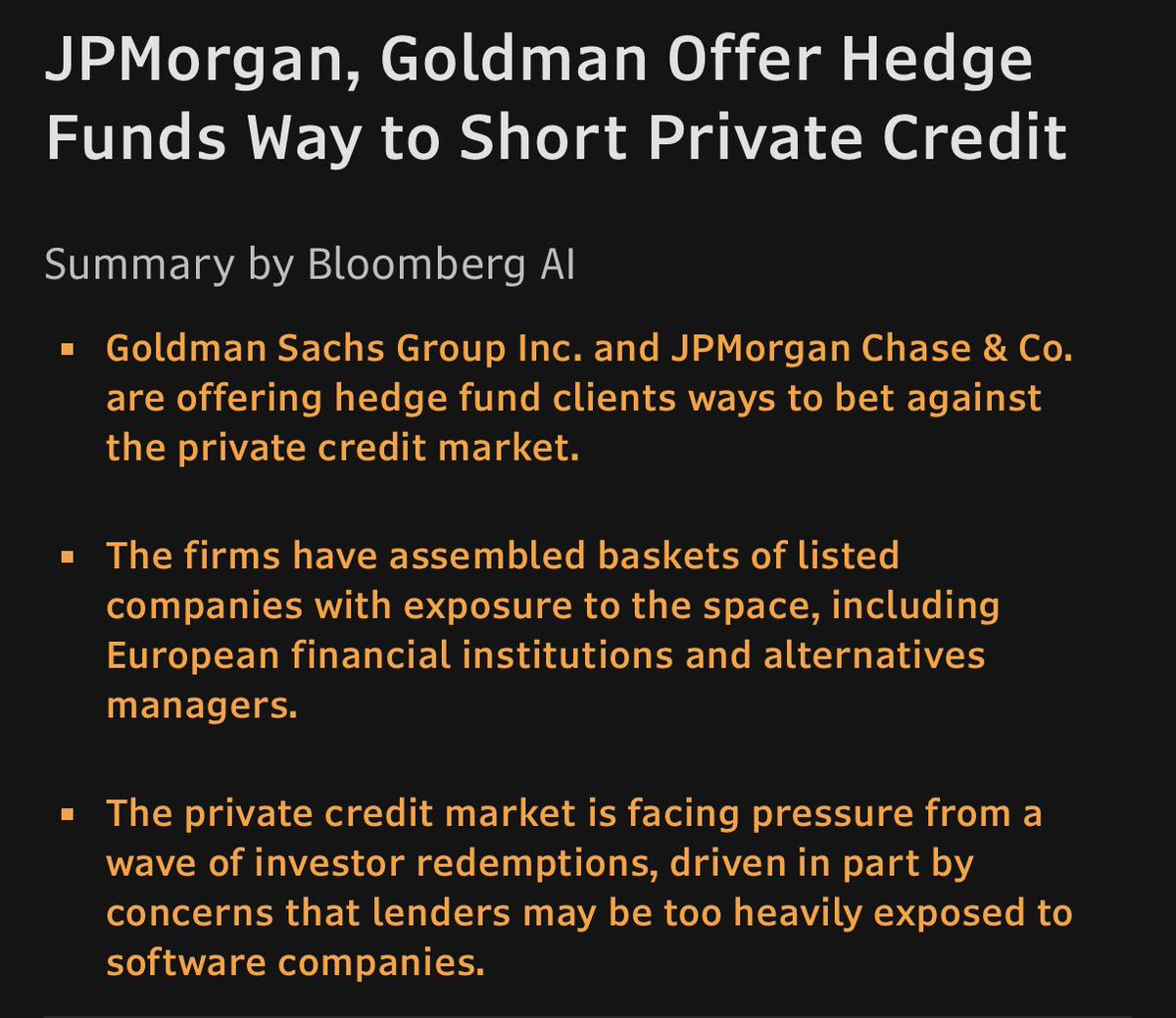
This, from Bloomberg, is not good news for a market segment that is already challenged to separate signal from noise, let alone properly differentiate among funds/firms in this space. #markets #privatecredit
Mohamed A. El-Erian tweet media
English
109
366
1.4K
260K
matt ross
matt ross@emcross23·
Just a flag for @HarryStebbings @rodriscoll @jasonlk that are referencing Block growing revenue 2-3%. We measure top line performance using gross profit. Gross revenue recognition of bitcoin trading skews revenue a lot. We grew gross profit 24% in Q4 and guided to growing gross profit 18% in 2026...
English
3
2
35
1.8K
BuccoCapital Bloke
BuccoCapital Bloke@buccocapital·
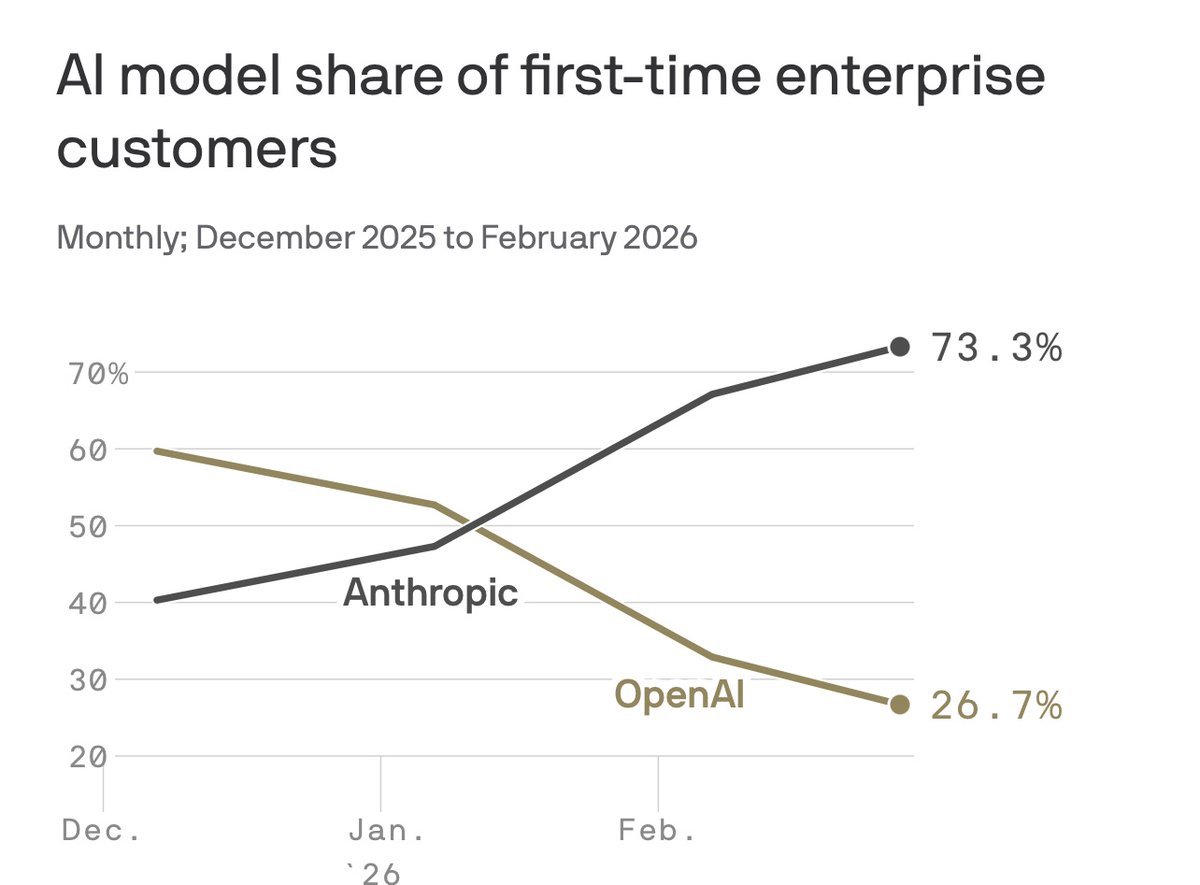
Wow. Anthropic is eating OpenAI’s lunch in the enterprise
BuccoCapital Bloke tweet media
English
75
117
1.5K
203.3K
Sean D. Emory
Sean D. Emory@_SeanDavid·
Headline tells me two things. 1. Signal that private credit fears overblown. 2. Capital still hungry for private credit.
Sean D. Emory tweet media
English
0
0
3
546
Sean D. Emory
Sean D. Emory@_SeanDavid·
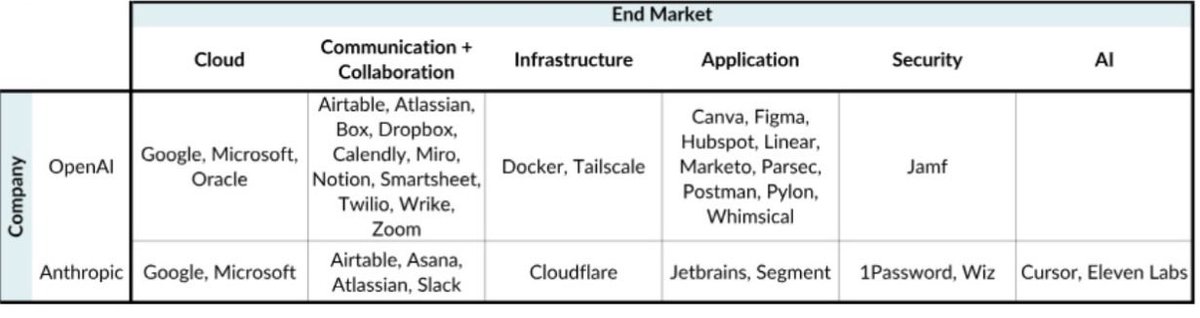
Looks like Anthropic and OpenAi are heavy users of outside software tools. Good to see Zoom in there. $ZM Not shown here but all use $WDAY also.
Sean D. Emory tweet media
English
0
0
1
507
Sean D. Emory
Sean D. Emory@_SeanDavid·
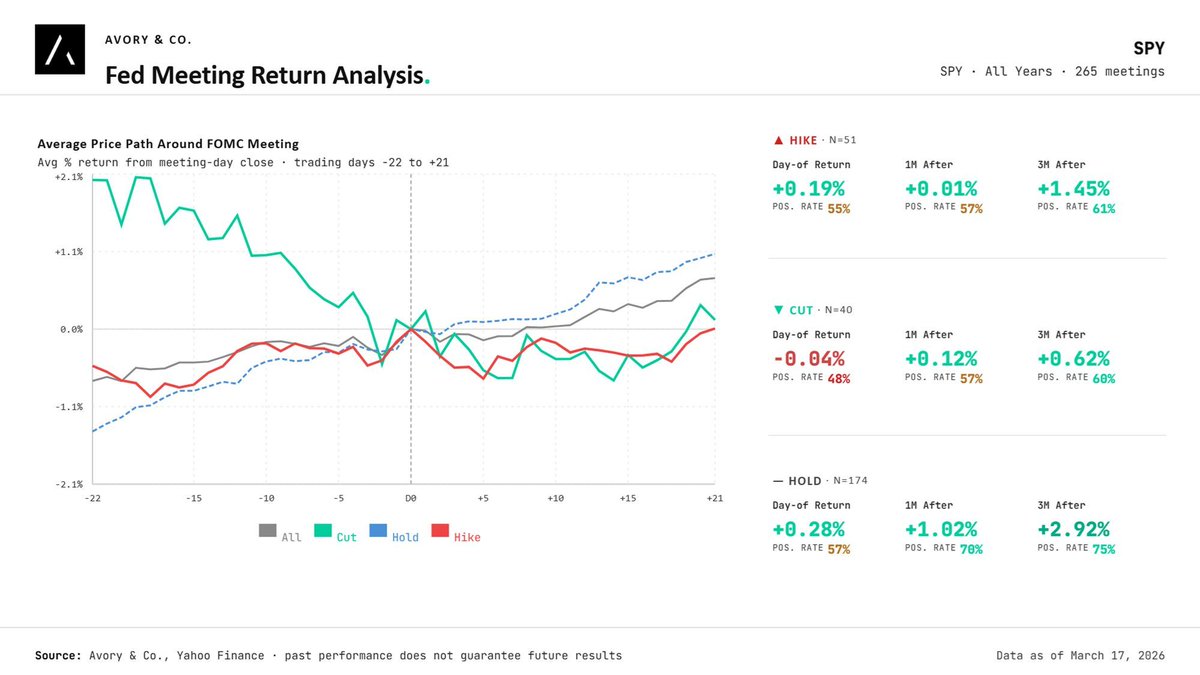
Adding to my last post... as not all Fed meetings are the same. Market reaction depends on what the Fed does also. • Hikes = short-term fine, slower after Day: +0.19% 3M: +1.45% • Cuts = weak initial reaction (makes sense as usually coming from place of stress) Day: -0.04% 3M: +0.62% • Holds = strongest setup (cough cough) 1M: +1.02% 3M: +2.92% 75% positive The best returns don’t come from more movement but rather some level of stability $SPY $TLT $GLD $QQQ
Sean D. Emory tweet media
English
0
0
2
410
Sean D. Emory
Sean D. Emory@_SeanDavid·
Fed days feel volatile, but the data is pretty clear: • Day-of is slightly positive SPY +0.22% | QQQ +0.34% • First week is noise SPY -0.15% | QQQ -0.02% • Then markets drift higher 1M: • SPY +0.69% • QQQ +1.11% 6M: • $SPY +4.77% • $QQQ +5.98% • Bonds barely move over time $TLT • Gold actually trends higher (+6.06% at 6M) • Dollar impact is mixed to slightly positive $DXY $GLD $TLT
Sean D. Emory tweet media
English
0
0
2
397
Sean D. Emory
Sean D. Emory@_SeanDavid·
@Jason Clear next move is just build data centers on the properties.
English
0
0
1
105
Sean D. Emory
Sean D. Emory@_SeanDavid·
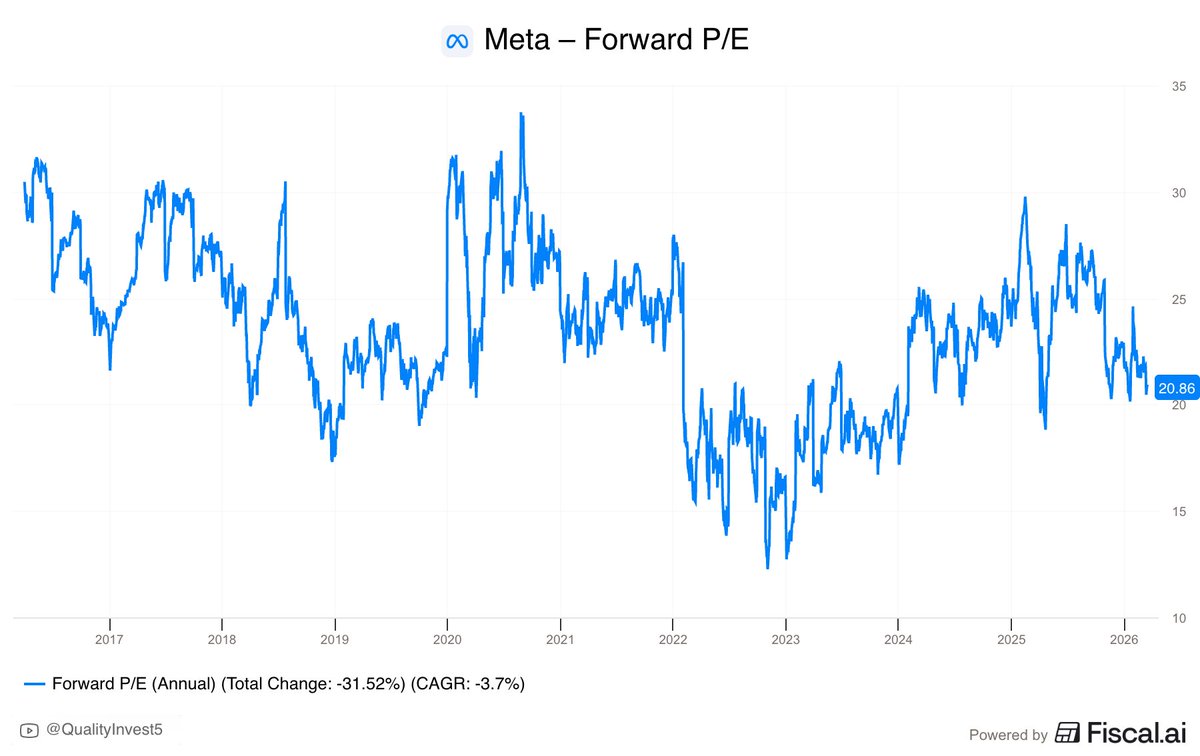
@QualityInvest5 E is no longer the best valuation gauge. But we are long so agree with the conclusion however.
English
0
0
1
230
Aria Radnia 🇮🇷
Aria Radnia 🇮🇷@QualityInvest5·
I'm struggling to find how $META doesn't work from these valuations?
Aria Radnia 🇮🇷 tweet media
English
28
3
122
13K
Sean D. Emory
Sean D. Emory@_SeanDavid·
AI = need for identity. Its going to be so bad.
Hedgie@HedgieMarkets

🦔 Researchers at Aikido Security found 151 malicious packages uploaded to GitHub between March 3 and March 9. The packages use Unicode characters that are invisible to humans but execute as code when run. Manual code reviews and static analysis tools see only whitespace or blank lines. The surrounding code looks legitimate, with realistic documentation tweaks, version bumps, and bug fixes. Researchers suspect the attackers are using LLMs to generate convincing packages at scale. Similar packages have been found on NPM and the VS Code marketplace. My Take Supply chain attacks on code repositories aren't new, but this technique is nasty. The malicious payload is encoded in Unicode characters that don't render in any editor, terminal, or review interface. You can stare at the code all day and see nothing. A small decoder extracts the hidden bytes at runtime and passes them to eval(). Unless you're specifically looking for invisible Unicode ranges, you won't catch it. The researchers think AI is writing these packages because 151 bespoke code changes across different projects in a week isn't something a human team could do manually. If that's right, we're watching AI-generated attacks hit AI-assisted development workflows. The vibe coders pulling packages without reading them are the target, and there are a lot of them. The best defense is still carefully inspecting dependencies before adding them, but that's exactly the step people skip when they're moving fast. I don't really know how any of this gets better. The attackers are scaling faster than the defenses. Hedgie🤗 arstechnica.com/security/2026/…

English
0
0
1
731
Hedgie
Hedgie@HedgieMarkets·
🦔 Researchers at Aikido Security found 151 malicious packages uploaded to GitHub between March 3 and March 9. The packages use Unicode characters that are invisible to humans but execute as code when run. Manual code reviews and static analysis tools see only whitespace or blank lines. The surrounding code looks legitimate, with realistic documentation tweaks, version bumps, and bug fixes. Researchers suspect the attackers are using LLMs to generate convincing packages at scale. Similar packages have been found on NPM and the VS Code marketplace. My Take Supply chain attacks on code repositories aren't new, but this technique is nasty. The malicious payload is encoded in Unicode characters that don't render in any editor, terminal, or review interface. You can stare at the code all day and see nothing. A small decoder extracts the hidden bytes at runtime and passes them to eval(). Unless you're specifically looking for invisible Unicode ranges, you won't catch it. The researchers think AI is writing these packages because 151 bespoke code changes across different projects in a week isn't something a human team could do manually. If that's right, we're watching AI-generated attacks hit AI-assisted development workflows. The vibe coders pulling packages without reading them are the target, and there are a lot of them. The best defense is still carefully inspecting dependencies before adding them, but that's exactly the step people skip when they're moving fast. I don't really know how any of this gets better. The attackers are scaling faster than the defenses. Hedgie🤗 arstechnica.com/security/2026/…
English
126
812
3.1K
705K