Adelaide Chiundra

527 posts

Adelaide Chiundra

Adelaide Chiundra

@addiefresh1

I support Women whether they are right or wrong.

Zimbabwe เข้าร่วม Ocak 2026
129 กำลังติดตาม78 ผู้ติดตาม
Adelaide Chiundra รีทวีตแล้ว
Shumbakadzi👑
Shumbakadzi👑@shumbakadzi_zim·
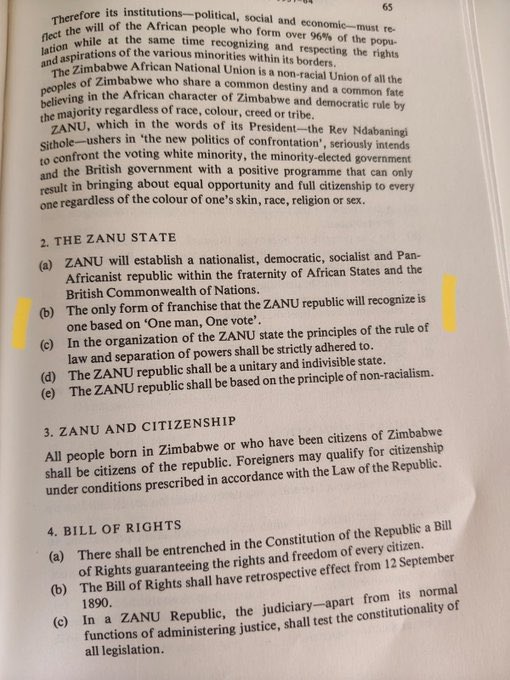
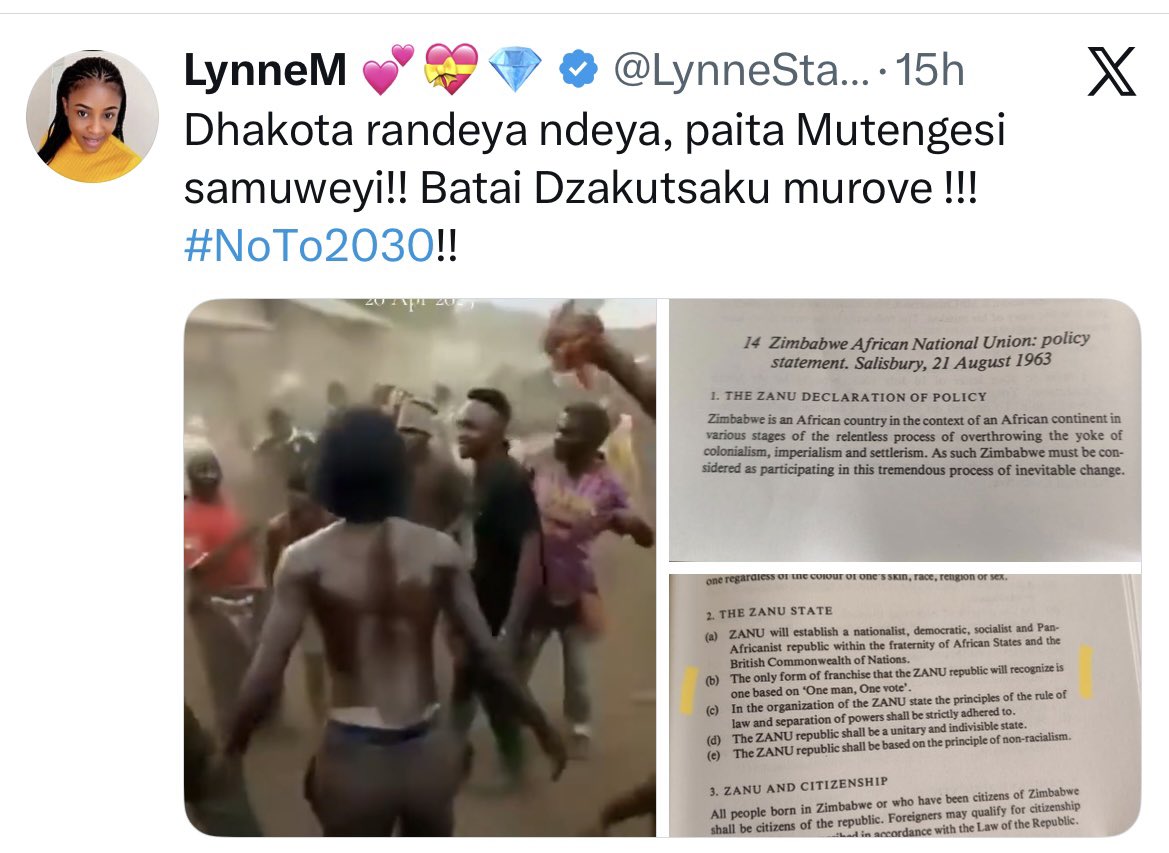
The desperation of @mawarirej na @LynneStactia to weaponize the 1963 ZANU Policy Statement only proves they’ve run out of coherent arguments against #CA3. I’ve seen them targeting Patrick Chinamasa, calling him a "sellout," yet they are the ones illiterate to their own history. This 1963 document speaks broadly about overthrowing the yoke of colonialism and says absolutely nothing about the specific mechanism by which a President is elected. If you actually bother to read Point (b) on page 65, it states the only franchise the ZANU republic would recognize is “One man, One vote.” This refers to the UNIVERSAL SUFFRAGE- the hard-won right for every African to have a ballot, ending the racist "weighted" voting of the colonial era. It is about the right to participate in the political system, NOT a constitutional mandate for a direct presidential poll. Historically, "One man, One vote" was the battle cry against a system where black skin meant zero representation. It was never a technical manual on executive selection. In fact, many of the world's most stable democracies use a parliamentary system where the head of government is chosen by elected representatives. Did the UK or South Africa abandon democracy? Of course not. Under #CA3, you still walk to the booth, you still vote for your MP and Councillor, and your vote still carries the same weight. The franchise remains untouched. Your "one man, one vote" is exercised at the parliamentary level, and those representatives then carry the mandate to the executive. The claim that changing to a parliamentary-style presidential selection is a betrayal of the struggle is a pathetic lie designed to fearmonger. The liberation struggle was fought so that the majority could govern, not so we would be locked into a specific, expensive electoral format forever. #CA3 is actually the only thing ensuring that the 1963 policy spirit of majority rule is maintained through a more sustainable and efficient framework!!!
Shumbakadzi👑 tweet mediaShumbakadzi👑 tweet mediaShumbakadzi👑 tweet media
English
1
5
6
88
Adelaide Chiundra รีทวีตแล้ว
Karabo Ngoepe
Karabo Ngoepe@karabongoepe1·
@matinyarare Interesting debate you want to open. Before we start or go anywhere, I need for you to bring a law reviser’s copy of the Zimbabwean Constitution and we dissect it section by section and you pull out the exact sections/parts that support your argument and I’ll pull out mine.
English
14
23
20
553
Adelaide Chiundra รีทวีตแล้ว
Shumbakadzi👑
Shumbakadzi👑@shumbakadzi_zim·
I hear Allan G Black aramwa church and is considering joining the Catholic Church after finding out there is an S in SDA, he now thinks it stands for Sakunda😭😭
Shumbakadzi👑 tweet mediaShumbakadzi👑 tweet mediaShumbakadzi👑 tweet media
English
3
5
9
2K
Adelaide Chiundra รีทวีตแล้ว
CA3
CA3@amendmentca3·
Zimbabwe’s constitutional debate needs legal precision, not political theatre iol.co.za/sundayindepend… #ca3
English
1
8
11
640
Adelaide Chiundra รีทวีตแล้ว
Prof Jonathan Moyo
Prof Jonathan Moyo@ProfJNMoyo·
Zimbabwe’s Constitutional Debate Needs Legal Precision, Not Political Theatre; by Karabo Ngoepe, iol.co.za "Constitutional law routinely distinguishes between rights and systems. A voting right can exist under multiple electoral models, whether direct presidential elections or parliamentary selection". iol.co.za/sundayindepend…
English
39
97
84
4.1K
Adelaide Chiundra รีทวีตแล้ว
Shumbakadzi👑
Shumbakadzi👑@shumbakadzi_zim·
Comrades, I know we have already sent Parliament more than 3 million letters supporting #CA3 but I still want you to continue sending. Let's use their platforms to send our messages as well. Tiroko kwese kwese!!! Famba #CA3 FAMBAAAAAAAAA!!
Shumbakadzi👑 tweet mediaShumbakadzi👑 tweet media
English
4
11
11
289
Adelaide Chiundra รีทวีตแล้ว
Prof Jonathan Moyo
Prof Jonathan Moyo@ProfJNMoyo·
Yesteryear imperialists occupied land; today's imperialists occupy the media!
English
29
87
75
2.7K
Adelaide Chiundra รีทวีตแล้ว
Bete 𝕏 
Bete 𝕏 @Bete263·
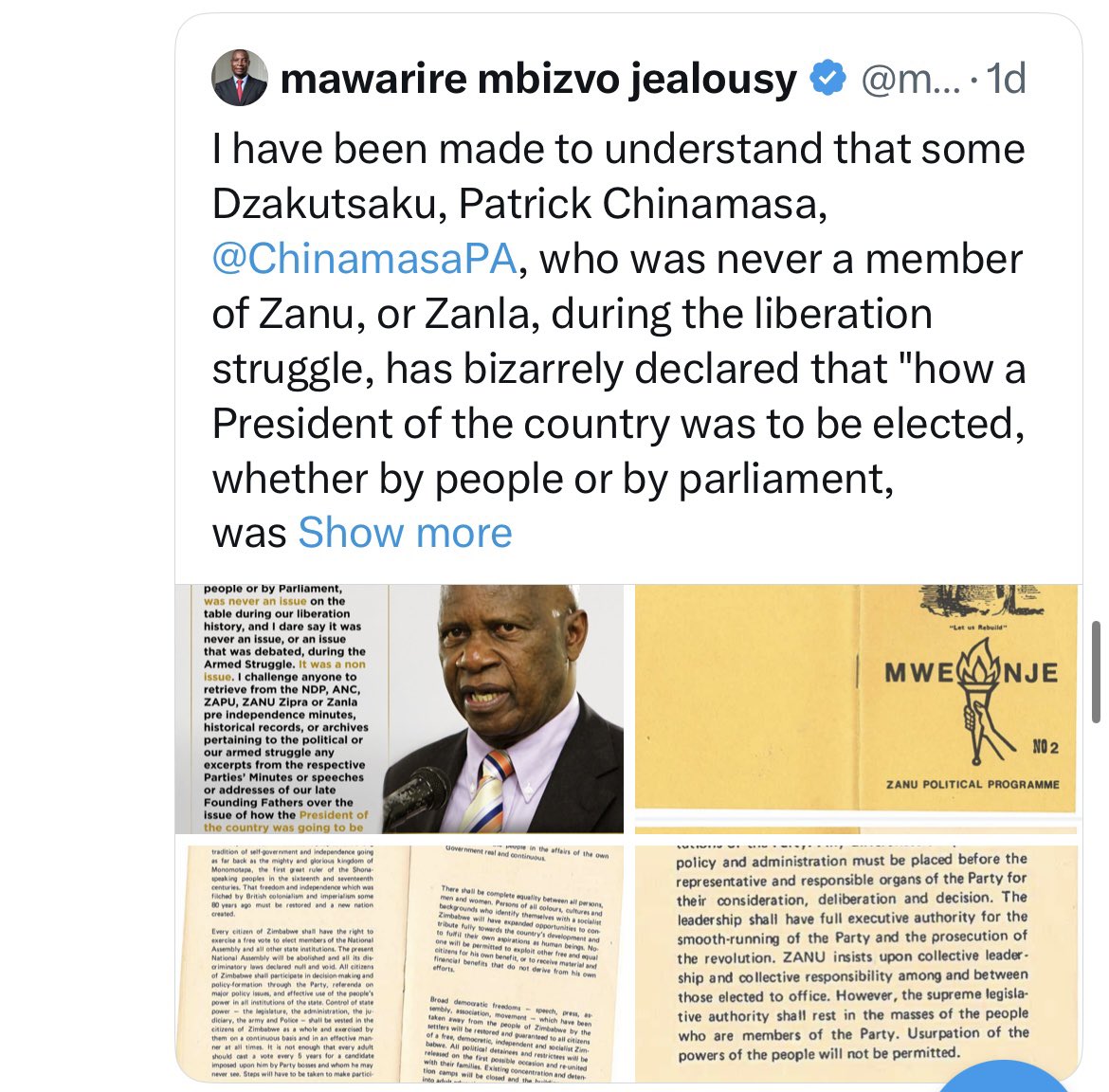
@mawarirej I read your thread twice. Once for the substance, once for the sleight of hand. Let me show you what you actually did. Cde Chinamasa asked a narrow, specific question: where in the pre-independence record of NDP, ANC, ZAPU, ZANU, ZIPRA or ZANLA did the liberation movements debate how the President was to be elected, directly by the people, or by Parliament? That is a question about mechanism. About the electoral architecture for the head of state. You answered a different question. You quoted passages about voting for the National Assembly, abolishing the colonial parliamentary system, and referenda on major policy issues. None of that is what Chinamasa asked. Voting for MPs is not voting for a President. Abolishing reserved white seats is not specifying a presidential election method. Referenda on major policy is not a mechanism for choosing a head of state. Read your own attachment. Page 22 of Mwenje No. 2 says every citizen shall have the right to vote for "members of the National Assembly and all other state institutions." That language is deliberately broad and deliberately silent on the presidency. The document does not say the President shall be elected directly. It does not say the President shall be elected by Parliament. It does not specify the mechanism at all. You had to interpolate, "surely the office of the President is one of the most important parts of... ALL OTHER STATE INSTITUTIONS." That word "surely" is doing all the work. It is you reading something into the document that the document itself does not say. Which is exactly Chinamasa's point. Here's the part of liberation history you skipped: the Lancaster House Constitution of 1980 created a President elected by Parliament. Cde Mugabe, the founding father of this Republic, ZANU's own commander, was elected by Parliament, not by the people, from 1980 until the 1987 amendments. If the liberation movements had committed to direct presidential election as a non-negotiable, settled principle, explain to us why the men and women who fought that war accepted and operated a parliamentary-elected presidency for the first seven years of independence. Either the founding cadres betrayed the liberation programme on day one, or, more honestly, Chinamasa is right that the mechanism was never a settled question. Then there is the personal anecdote. You tell us your father took you to ZANU night meetings in Mkoba as a five-year-old, that you read liberation literature as soon as you could read English, that you have kept some of the books. That is meant to manufacture credentials. Forgive us if we apply some scepticism. A man who, in March, denied owning a BMW that he physically drives, a vehicle whose provenance the family of a deceased estate has been chasing him over, now wants us to credit his memory of being five years old in 1977 as bedrock historical authority. We will read the documents. We are not obliged to take your autobiography on trust. And the closing flourish about "Party bosses" imposing candidates is the most self-incriminating line in your thread. That is precisely what your faction is attempting. The Baloyi household does not exist to defend the Constitution. It exists to defend a Party boss's path to a candidacy he has not earned through any popular test, by manufacturing a referendum demand that the Constitution itself does not require. Section 95(2)(b) is not a term-limit provision under section 328(1). The Attorney-General's list of fifteen genuine term-limit provisions does not include it. The Mupungu judgment supports that distinction. The constitutional argument is on Cde Chinamasa's side. That is why you are reaching back to 1973 for a document that does not say what you need it to say. Cde Chinamasa asked a real question. You did not answer it. Try again, and this time, find us the page in Mwenje, or in any pre-independence ZANU, ZAPU, NDP, ZIPRA or ZANLA record, that specifies how the President of independent Zimbabwe was to be elected. #CA3
TheNewsHawks@NewsHawksLive

By Jealousy Mawarire I have been made to understand that some Dzakutsaku, Patrick Chinamasa, @ChinamasaPA, who was never a member of Zanu, or Zanla, during the liberation struggle, has bizarrely declared that "how a President of the country was to be elected, whether by people or by parliament, was never an issue on the table during our liberation history." I am also made to understand that he dared "anyone to retrieve from NDP, ANC, ZAPU, ZANU, Zipra or Zanla pre-independence" literature any excerpts to the contrary Anyway, here you are Mr Dzakutsaku. I am fortunate that my father used to take me to Zanu night meetings in Mkoba in Gweru as a five year-old & I developed a keen interest in our liberation history & as soon as I learnt how to read English, I began to interact with literature on the liberation struggle which was available in the house. I have kept some of the literature. For the purposes of the discussion started by @ChinamasaPA, I am referring him to pages 11 & 22-23 of the November 27, 1973 "Mwenje No2 Zanu Political Programme." The "Zanu Political Programme" booklet makes it clear that in a free Zimbabwe, "EVERY CITIZEN of Zimbabwe shall have the right to exercise A FREE VOTE to elect members of the National Assembly and ALL OTHER STATE INSTITUTIONS." Surely, the office of the President is one of the most important parts of what the document here refers to as "ALL OTHER STATE INSTITUTIONS." In the spirit of the document, the occupant of that office should be elected by "Every citizen of Zimbabwe." The same document pledges that " the supreme legislative authority shall rest in the "MASSES OF THE PEOPLE" and that "usurpation of the POWERS OF THE PEOPLE will not be permitted." The Zanu policy document was even clear on subjecting "major policy issues" to "referenda." The document reads, "ALL CITIZENS of Zimbabwe shall participate in decision-making and policy formation through the Party, REFERENDA on major policy issues and effective use of the people's power in ALL institutions of the state." The document even mentions that terms of office were supposed to be 5 years for every office holder and that these office holders were not supposed to be imposed on the people by "Party bosses." The same document also proposed the abolishment of the colonial parliamentary system and all its discriminatory laws. So those arguing for taking us back to the colonial parliamentary election system are antithetical to the very transformation of the system that Zanu proposed in the policy programme. The document reads, " the present National Assembly will be abolished and all its discriminatory laws declared null and void". So the system of reserved seats for whites had to be abolished. The indirect election of MPs had to be abolished and the election of the Head of State by Parliament had to be abolished. Thats the transformation that Zanu promised and that's the basis on which cadres were recruited to fight the liberation struggle. So Mr Dzakutsaku, @ChinamasaPA be instructed accordingly. It's unfortunate you weren't part of the liberation forces, you were fighting to preserve the colonial system with other counter-revolutionaries like Mzorewa so you have no idea why the war was fought. Anyway, I am attaching the quoted pages for your own reading.

English
25
106
83
4K
Adelaide Chiundra รีทวีตแล้ว
TheNewsHawks
TheNewsHawks@NewsHawksLive·
By Mudiwa Mwarire Chinamasa is historically accurate. The 1973 programme, on which the post relies, proves the opposite of what is claimed: it affirms the uncontroversial demand for universal suffrage in legislative elections while remaining silent on the presidential election mechanism. The liberation struggle was fought for national sovereignty and majority rule, not for any particular post-independence constitutional clause on how a President is chosen. Attempts to retrofit a 2026 constitutional debate onto 1973 literature do not change the documented record. The struggle’s literature is available for anyone to read. Cde Chinamasa invited exactly that. The cited pages do not contradict him. The 1973 Mwenje No. 2 document demands universal adult suffrage for electing members of the National Assembly, not the President. It says nothing about the direct popular election of the Head of State. Nowhere in ZANU’s pre-independence literature, minutes, or speeches was direct presidential election by universal suffrage ever listed as a core demand or non-negotiable principle. The liberation struggle fought for majority rule through Parliament and people’s power through the Party, not a specific Western-style presidential ballot. Trying to rewrite history to claim otherwise is pure jealousy-driven revisionism. ZANU-PF signed the Lancaster House Constitution, which had a President elected by Parliament, not the people, and it happily governed under it after 1980. If the direct popular election of the President had been a sacred demand for liberation, they would never have accepted it. The record is clear, the documents are public, and no amount of selective quoting can change that. The struggle was for sovereignty and one-person-one-vote in the legislature, not for manufacturing later constitutional grievances.
TheNewsHawks tweet media
English
13
45
47
5.2K
Adelaide Chiundra รีทวีตแล้ว
Shumbakadzi👑
Shumbakadzi👑@shumbakadzi_zim·
They want us to break the law so that we make them happy!
Shumbakadzi👑 tweet media
English
7
6
9
497
Adelaide Chiundra รีทวีตแล้ว
Mhizha
Mhizha@1Mhizha·
You are trying to elevate a 1973 wartime mobilisation document into a binding constitutional blueprint, which is fundamentally flawed. The Zimbabwe African National Union did not wage a protracted armed struggle so that future governance would be dictated by pamphlets produced under guerrilla conditions. Those documents were ideological tools for mobilisation, not final governance instruments. Serious cadres understand the difference between revolutionary messaging and state architecture. Here is where your argument collapses completely. The liberation struggle was anchored on three pillars: majority rule, sovereignty, and control of state power by indigenous Zimbabweans. It was never about prescribing a rigid electoral mechanism for a future presidency. That is why, at independence, the leadership people who actually led the war, not spectators reading pamphlets decades later negotiated and implemented a Lancaster-based constitutional framework, which has since evolved into the current supreme law. Now, let’s deal with your selective quotation tactic. You are deliberately stretching “ALL OTHER STATE INSTITUTIONS” to smuggle in a modern argument about presidential electoral systems. That is not analysis, that is activism disguised as scholarship. If you truly understood liberation literature, you would know those phrases were intentionally broad, meant to communicate inclusivity and mass participation, not to lock Zimbabwe into a single electoral model forever. On referenda, Liberation movements spoke about referenda as tools, not as automatic triggers for every structural question. Today’s Constitution clearly outlines when referenda are required. You do not get to override constitutional procedure by waving a 1973 booklet. That is not how a sovereign state functions. Now let’s address your attack on Patrick Chinamasa. That line of attack is actually revealing. When the argument is weak, you attack credentials. Chinamasa is part of the leadership that has governed, negotiated, legislated, and defended Zimbabwe’s sovereignty in real time. Liberation is not a badge frozen in 1979, it is a continuous responsibility. Those entrusted with statecraft today interpret and apply liberation principles within current realities. That is what separates leaders from commentators. Here is the uncomfortable truth you are avoiding: The liberation struggle was not fought to create a fragile system that can be destabilised by every reinterpretation of historical text. It was fought to establish a durable state with institutions capable of adapting while preserving sovereignty. That is exactly what ZANU–PF has done. Your argument also contradicts itself. You claim the colonial parliamentary system was to be abolished, yet you simultaneously insist on rigid procedural prescriptions derived from that same transitional period. You cannot cherry-pick revolution and ignore evolution. So let me be very clear. Zimbabwe today is governed by its Constitution not by selective excerpts from liberation pamphlets, not by nostalgia, and certainly not by individuals trying to score political points through historical reinterpretation. The people already exercise power through constitutional mechanisms. Parliament, the Executive, and electoral processes are all products of that sovereignty. If you want to challenge the current system, then do so honestly, engage the Constitution, propose amendments, and follow legal processes. Do not hide behind liberation literature while distorting its intent. Because once you open that door once everyone starts reinterpreting fragments of the struggle to suit present agendas, you are not defending the liberation legacy. You are undermining it.
mawarire mbizvo jealousy@mawarirej

I have been made to understand that some Dzakutsaku, Patrick Chinamasa, @ChinamasaPA, who was never a member of Zanu, or Zanla, during the liberation struggle, has bizarrely declared that "how a President of the country was to be elected, whether by people or by parliament, was never an issue on the table during our liberation history." I am also made to understand that he dared "anyone to retrieve from NDP, ANC, ZAPU, ZANU, Zipra or Zanla pre-independence" literature any excerpts to the contrary Anyway, here you are Mr Dzakutsaku. I am fortunate that my father used to take me to Zanu night meetings in Mkoba in Gweru as a five year-old & I developed a keen interest in our liberation history & as soon as I learnt how to read English, I began to interact with literature on the liberation struggle which was available in the house. I have kept some of the literature. For the purposes of the discussion started by @ChinamasaPA, I am referring him to pages 11 & 22-23 of the November 27, 1973 "Mwenje No2 Zanu Political Programme." The "Zanu Political Programme" booklet makes it clear that in a free Zimbabwe, "EVERY CITIZEN of Zimbabwe shall have the right to exercise A FREE VOTE to elect members of the National Assembly and ALL OTHER STATE INSTITUTIONS." Surely, the office of the President is one of the most important parts of what the document here refers to as "ALL OTHER STATE INSTITUTIONS." In the spirit of the document, the occupant of that office should be elected by "Every citizen of Zimbabwe." The same document pledges that " the supreme legislative authority shall rest in the "MASSES OF THE PEOPLE" and that "usurpation of the POWERS OF THE PEOPLE will not be permitted." The Zanu policy document was even clear on subjecting "major policy issues" to "referenda." The document reads, "ALL CITIZENS of Zimbabwe shall participate in decision-making and policy formation through the Party, REFERENDA on major policy issues and effective use of the people's power in ALL institutions of the state." The document even mentions that terms of office were supposed to be 5 years for every office holder and that these office holders were not supposed to be imposed on the people by "Party bosses." The same document also proposed the abolishment of the colonial parliamentary system and all its discriminatory laws. So those arguing for taking us back to the colonial parliamentary election system are antithetical to the very transformation of the system that Zanu proposed in the policy programme. The document reads, " the present National Assembly will be abolished and all its discriminatory laws declared null and void" So the system of reserved seats for whites had to be abolished. The indirect election of MPs had to be abolished and the election of the Head of State by Parliament had to be abolished. Thats the transformation that Zanu promised and that's the basis on which cadres were recruited to fight the liberation struggle. So Mr Dzakutsaku, @ChinamasaPA be instructed accordingly. It's unfortunate you weren't part of the liberation forces, you were fighting to preserve the colonial system with other counter-revolutionaries like Mzorewa so you have no idea why the war was fought. Anyway, I am attaching the quoted pages for your own reading.
English
0
3
1
39
Adelaide Chiundra รีทวีตแล้ว
Nkululeko Maseko
Nkululeko Maseko@NkululekoM0124·
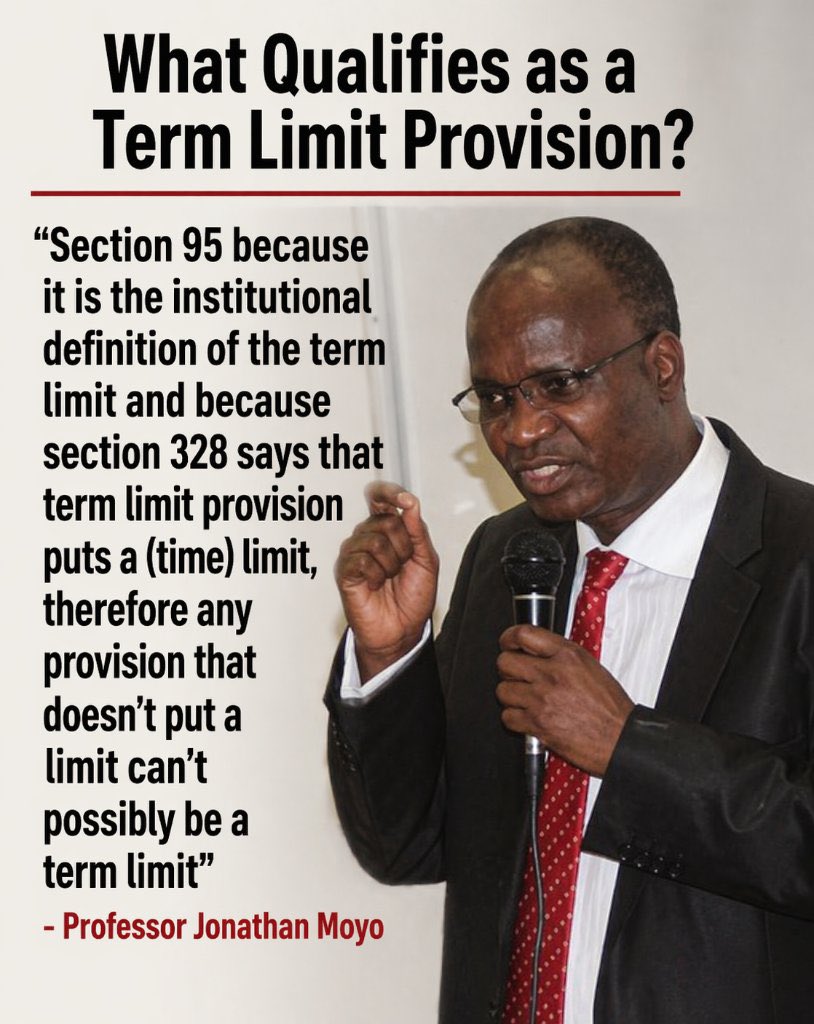
What qualifies as a term limit provision in the constitution?
Nkululeko Maseko tweet media
English
0
3
2
27
Adelaide Chiundra รีทวีตแล้ว
Shumbakadzi👑
Shumbakadzi👑@shumbakadzi_zim·
We made an experiment during ZITF and left this placard by the gate with just a sign saying "Sign to show support". No one was there but just the sign and a marker. When I tell you the long queue we found of people lining up just to show the country chinhu ichi vakuchida. #CA3 IS BY THE PEOPLE, FOR THE PEOPLE! Haiwa Bulawayo muri huchi ndabvuma zvangu 🔥🔥🙌🏿🙌🏿🙌🏿
Shumbakadzi👑 tweet media
English
16
5
9
2.4K
Adelaide Chiundra รีทวีตแล้ว
Shumbakadzi👑
Shumbakadzi👑@shumbakadzi_zim·
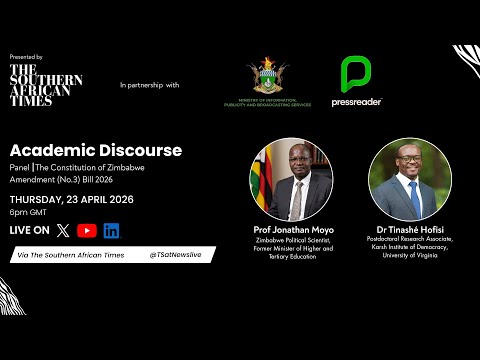
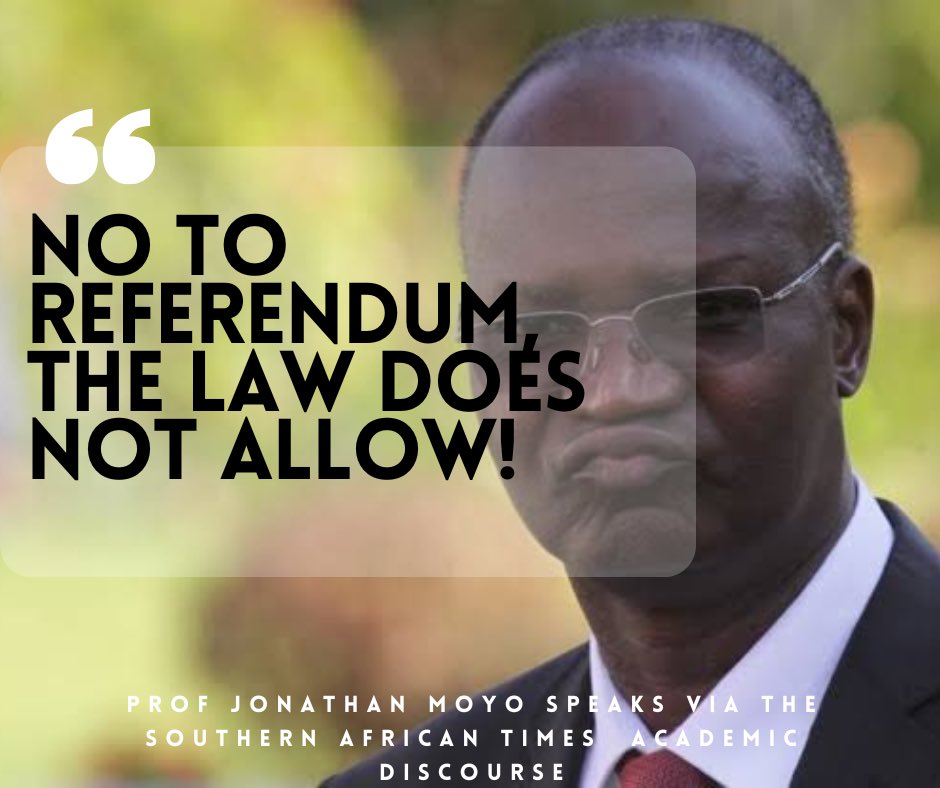
All the hate aside, Prof. Jonathan Moyo @ProfJNMoyo delivered an ABSOLUTE MASTERCLASS on the #CA3 via The Southern African Times!!! He provided a deep breakdown of our constitutional journey, systematically outlining the history of amendments and the specific reasons why these new changes are necessary. It wasn't just AN ACADEMIC DISCOURSE; he clearly mapped out how this bill will practically benefit ordinary Zimbabweans and what the nation’s future looks like once it’s adopted. His argument centered on the vital concept that power is derived from the people and PEOPLE STILL HAVE THE POWER TO VOTE FOR WHO THEY WANT, anchored by the principles of good governance. What was most impressive was how he simplified complex issues that we always debate about on this app for instance what term limit, term length and term cycles meant and how they are presented in the 2013 constitution; also showing exactly how the problems we are facing right now can be solved by this amendment. He bridged the gap between high-level law and the man on the street with incredible ease. Prof @ProfJNMoyo , that was a top-tier intellectual contribution to the national discourse. Sekuru, mabata basa apa. 👏🏿👏🏿👏🏿 youtube.com/live/0_Dpm3Ikm…
YouTube video
YouTube
English
7
16
18
3.8K
Adelaide Chiundra รีทวีตแล้ว
Prof Jonathan Moyo
Prof Jonathan Moyo@ProfJNMoyo·
CONSTITUTION OF ZIMBABWE (2013): 152 Parliamentary Legal Committee (1)....... (2)....... (3) The Parliamentary Legal Committee must examine— (a) every Bill, other than a Constitutional Bill, before it receives its final vote in the Senate or the National Assembly; (b)....... (c)....... (d)....... (e)....... COMMENT: Context and information matter. Some people have a tendency to comment - seemingly authoritive ly - on issues whose context and detail they don't know. It's the Constitution itself, which bars the Parliamentary Legal Committee from examining a "Constitutional Bill" before such a Bill receives its final vote in the Senate or the National Assembly. That's the necessary context and relevant detail. Lawyers are indeed useful but not in every instance of law making. It's trite that Members of Parliament are not by definition professional lawyers; but they're lawmakers. Understanding this distinction is very important in a constitutional democracy!
English
32
72
67
17.5K
Adelaide Chiundra รีทวีตแล้ว
The Southern African Times
Thank you for joining us last night The Southern African Times hosted a compelling academic panel discourse on the Constitution of Zimbabwe Amendment (No. 3) Bill, 2026, featuring Professor Jonathan Moyo and Dr Tinashé Hofisi in a rigorous and balanced exchange. We extend our sincere appreciation to our speakers, moderators, and everyone who joined us across platforms for contributing to a thoughtful and substantive discussion. Special thanks to our partners, the Ministry of Information and Broadcasting Services, Zimbabwe, and PressReader, for their support in making this forum possible. If you missed it, you can watch the full discussion below: YouTube: youtube.com/live/0_Dpm3Ikm… LinkedIn: linkedin.com/posts/the-sout… Twitter (X): x.com/tsatnewslive/s… We remain committed to facilitating balanced, evidence-based dialogue on issues shaping the continent.
YouTube video
YouTube
English
0
9
8
1.3K
Adelaide Chiundra รีทวีตแล้ว
Shumbakadzi👑
Shumbakadzi👑@shumbakadzi_zim·
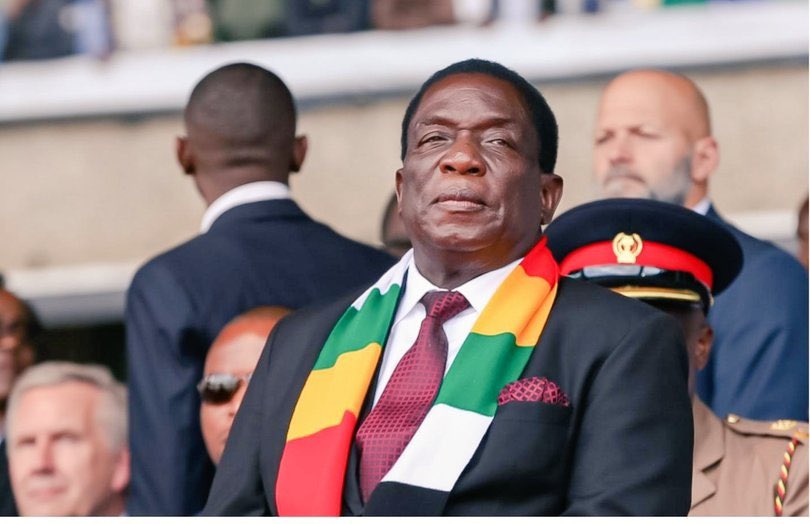
A powerful moment of regional unity and royal celebration as Emmerson Mnangagwa arrives in the Eswatini to join His Majesty Mswati III for the historic 40/58 dual celebrations at Somhlolo National Stadium. This landmark occasion marks not only the 58th birthday of King Mswati III, but also 40 years since his coronation , a rare and symbolic milestone that reflects enduring leadership, tradition, and national pride. The celebrations bring together leaders, dignitaries, and citizens in a vibrant display of culture, heritage, and unity. President Mnangagwa’s presence underscores the deep-rooted diplomatic ties and cultural kinship between Zimbabwe and Eswatini, highlighting a shared vision for peace, cooperation, and regional development. Moments like these go beyond ceremony , they strengthen bonds, celebrate African leadership, and reaffirm the importance of solidarity across the continent. 🇿🇼🤝🇸🇿👑
Shumbakadzi👑 tweet mediaShumbakadzi👑 tweet mediaShumbakadzi👑 tweet mediaShumbakadzi👑 tweet media
English
1
3
6
535