G.Jonathan
6.7K posts

G.Jonathan
@beardedtech_guy
Software Engineer | Chemical Engineer | Speaker | Technical Writer @Hashnode | Typescript 💻 | Test Driven Developement | building https://t.co/xxBYwJyzoe
Lagos, Nigeria เข้าร่วม Nisan 2020
245 กำลังติดตาม1.7K ผู้ติดตาม
ทวีตที่ปักหมุด

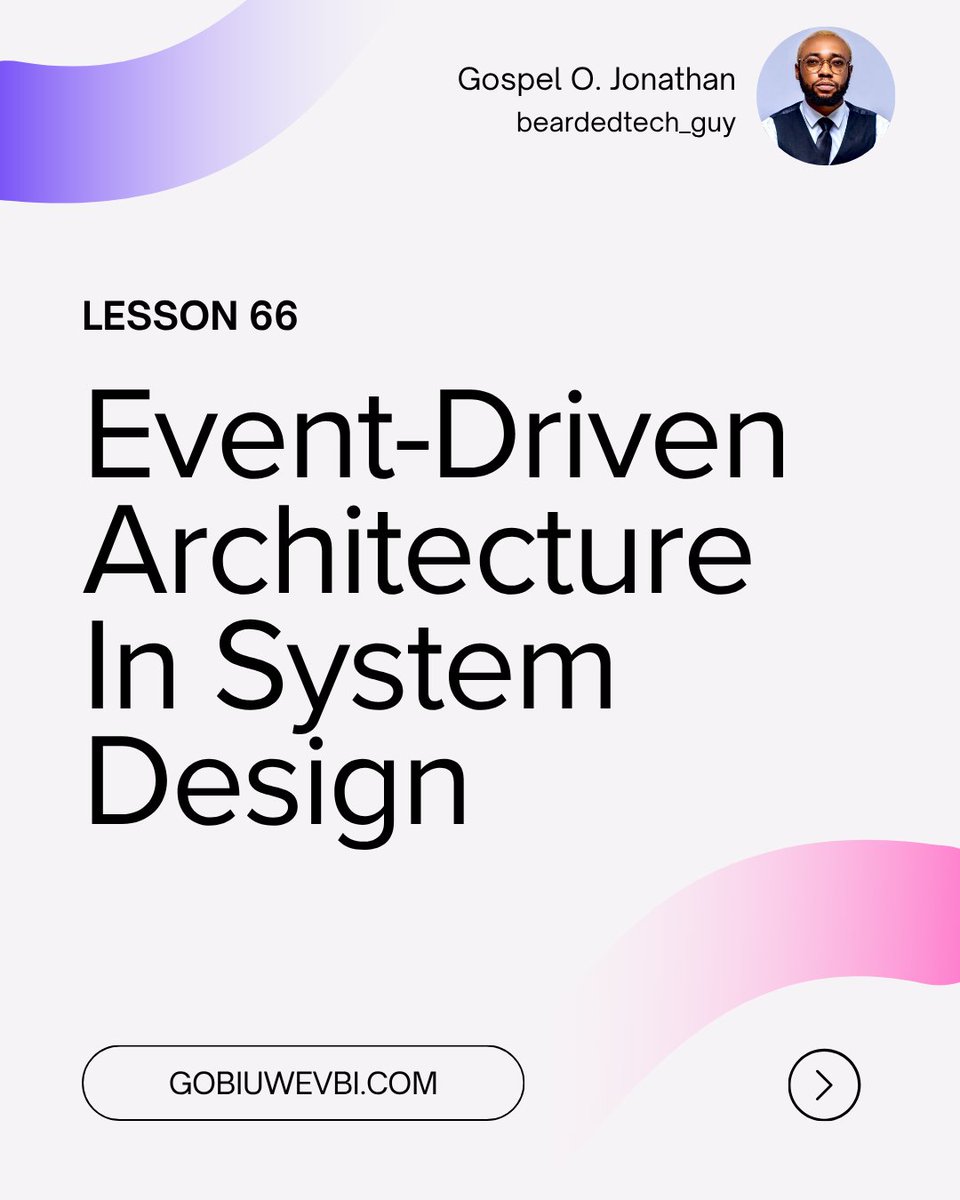
𝗗𝗮𝘆 𝟲𝟲 𝗼𝗳 #𝟭𝟬𝟬𝗗𝗮𝘆𝘀𝗢𝗳𝗦𝘆𝘀𝘁𝗲𝗺𝗗𝗲𝘀𝗶𝗴𝗻 — 𝗘𝘃𝗲𝗻𝘁-𝗗𝗿𝗶𝘃𝗲𝗻 𝗔𝗿𝗰𝗵𝗶𝘁𝗲𝗰𝘁𝘂𝗿𝗲
𝗘𝘃𝗲𝗻𝘁-𝗗𝗿𝗶𝘃𝗲𝗻 𝗔𝗿𝗰𝗵𝗶𝘁𝗲𝗰𝘁𝘂𝗿𝗲 (𝗘𝗗𝗔) is a design pattern where services communicate by producing and consuming events.
Instead of directly calling another service, a service emits an event when something happens. Other services listen for that event and react accordingly.
This creates loose coupling. Services don’t need to know about each other — they only need to know about events.
For example, when a user places an order, an Order Service can emit an “Order Created” event. A Payment Service, Notification Service, and Inventory Service can all react to that event independently.
Think of it like a restaurant.
When a waiter places an order on the board, it signals that something has happened. The kitchen starts cooking, the drinks station prepares beverages, and the cashier prepares the bill — all based on that one event.
No one needs to directly tell each station what to do.
That’s the power of event-driven systems.
They improve scalability, flexibility, and allow systems to evolve independently. But they also introduce complexity in tracking flows and debugging.
#SystemDesign #DistributedSystems #BackendEngineering #100DaysOfSystemDesign

English

Good morning,
First time testing Redis? You all can try out @upstash —
Free Redis, ready in minutes.
Here’s all you need to do:
∙ Go to upstash.com
. Create a free account
∙ Create a new Redis database
∙ Copy your connection string
∙ Connect & you’re good to go.
No server stress, no bills.


English

𝗗𝗮𝘆 𝟲𝟱 𝗼𝗳 #𝟭𝟬𝟬𝗗𝗮𝘆𝘀𝗢𝗳𝗦𝘆𝘀𝘁𝗲𝗺𝗗𝗲𝘀𝗶𝗴𝗻 — 𝗞𝗮𝗳𝗸𝗮 𝘃𝘀 𝗥𝗮𝗯𝗯𝗶𝘁𝗠𝗤 (𝗖𝗼𝗻𝗰𝗲𝗽𝘁𝘂𝗮𝗹𝗹𝘆)
Message queues are essential in distributed systems, but not all queues are the same. Two popular systems are RabbitMQ and Kafka, and they serve different needs.
𝗥𝗮𝗯𝗯𝗶𝘁𝗠𝗤 is a traditional message broker. It focuses on reliability, flexible routing, and task processing. Producers send messages, and consumers process them — messages are typically removed from the queue once consumed. It’s great for background jobs, notifications, or short-lived tasks.
𝗞𝗮𝗳𝗸𝗮 is more of a distributed event streaming platform. It keeps messages in a log for a configurable time, allowing multiple consumers to read independently at their own pace. Kafka is ideal for real-time analytics, event sourcing, and high-throughput pipelines.
Think of it like a restaurant.
RabbitMQ is like a waiter delivering orders directly to the chef. Once the dish is cooked and served, it’s done. Each order is handled individually.
Kafka is like a big order board where every station can see the order history and pick orders whenever needed. The orders stay on the board for a while, letting multiple chefs or stations process them independently.
Choosing between them depends on whether your system needs task queues or event streams.

English

@Limtech001 Hi Temi let me send you the mic, would love to hear from you
English

@beardedtech_guy Security can be done on both frontend and backend
E.g XSS scripting, frontend can also validate input same as backend.
I believe there’re work to do on the backend
English

It’s about time soon
twitter.com/i/spaces/1kKzD…
Reserve your seat!
English

If there’s a Functional requirement then it’s not exactly compulsory
What happens when the backend needs to start same time the Deisgn team is starting?
So whats more important is getting an understanding of what to deliver sha
Akintola Steve@Akintola_steve
Do you mean there are backend devs who work without Figma designs while building?
English

For some reason I still like using vite 😅
Be like I be old school
Tosin Olugbenga@TosinOlugbenga
Upgraded our app to Next.js 16; Docker production builds that used to timeout now complete without issues. Turbopack and the new build pipeline made a real difference. If your Next.js builds are slow or timing out in CI, the v16 upgrade is worth considering. nextjs.org/blog/next-16 @vercel @nextjs
English

@NayteExploits Lol yeah.
I have a job I work and I enjoy it a lot
English