Xin Yan

104 posts

Xin Yan banner
Xin Yan

Xin Yan

@cakeyan9

Research Scientist @ ByteDance Seed | Prev. @UWaterloo @MITIBMLab @01AI_Yi @WHU_1893

เข้าร่วม Şubat 2022
599 กำลังติดตาม73 ผู้ติดตาม
Xin Yan รีทวีตแล้ว
Jiatao Gu
Jiatao Gu@thoma_gu·
If you are still at @iclr_conf today, please come check out our poster this afternoon at 2:30pm at DeLTa Workshop, Poster #110 Paper: arxiv.org/abs/2604.17673 Excited to share our work on grokking in diffusion models! We show that flow-matching diffusion models can grok modular addition and learn interpretable periodic/Fourier-like representations. One of my favorite findings: during sampling, the model undergoes a phase transition — early timesteps perform algorithmic reasoning, while later timesteps become visual denoising. Interestingly, this transition is clearly visible in the model’s internal Fourier structure. This suggests diffusion models are not merely denoisers: under the right setting, they can implement structured computation along a continuous generation trajectory! Great work by my students at @PennEngineers @hozy5333 @hagsaeng_bag and Mattis Dalsætra Østby!
GIF
Joon Hyeok Kim@hozy5333

📌 Catch our poster presentation at the ICLR 2026 DeLTa Workshop Afternoon Session Poster #110! 📄 Arxiv: arxiv.org/abs/2604.17673 Grokking of Diffusion Models: Case Study on Modular Addition

English
0
26
126
12K
Xin Yan
Xin Yan@cakeyan9·
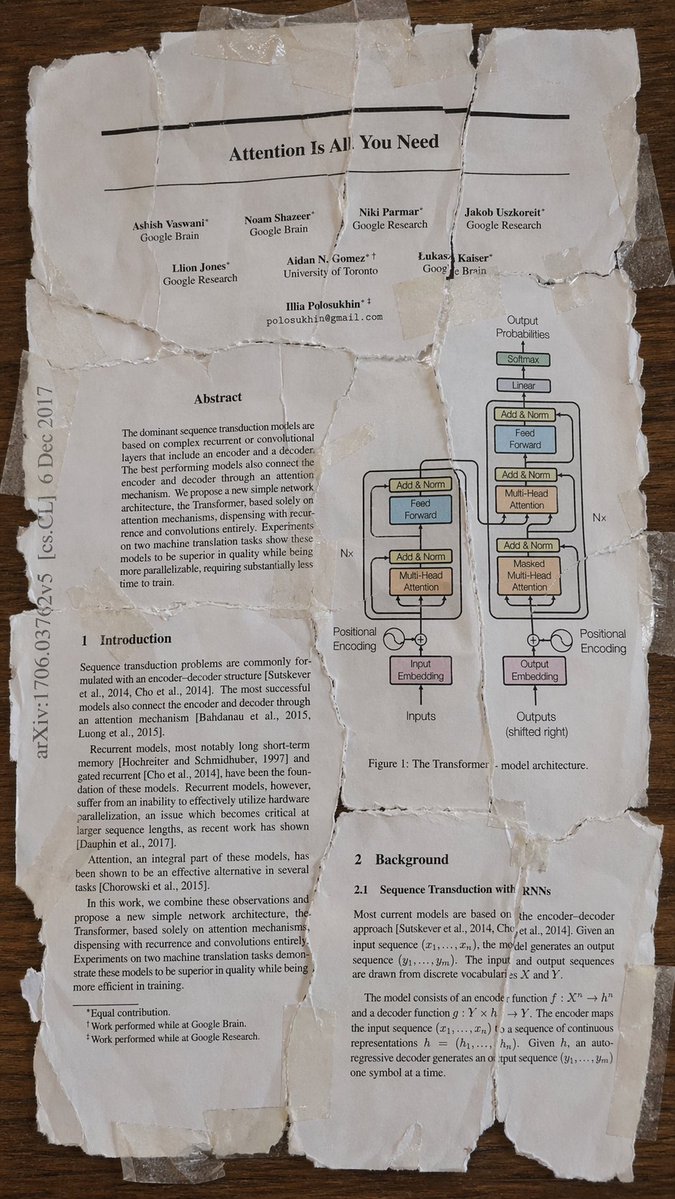
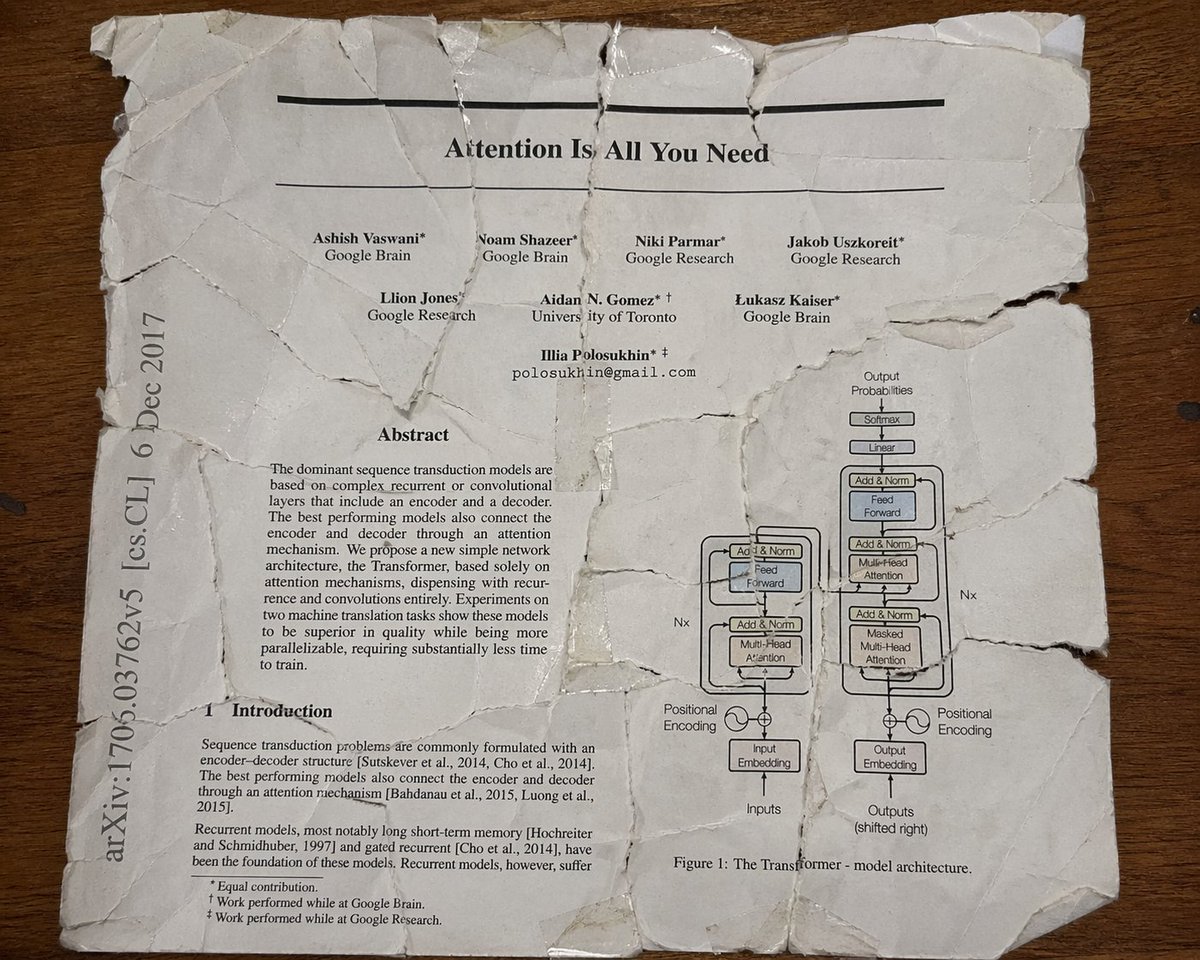
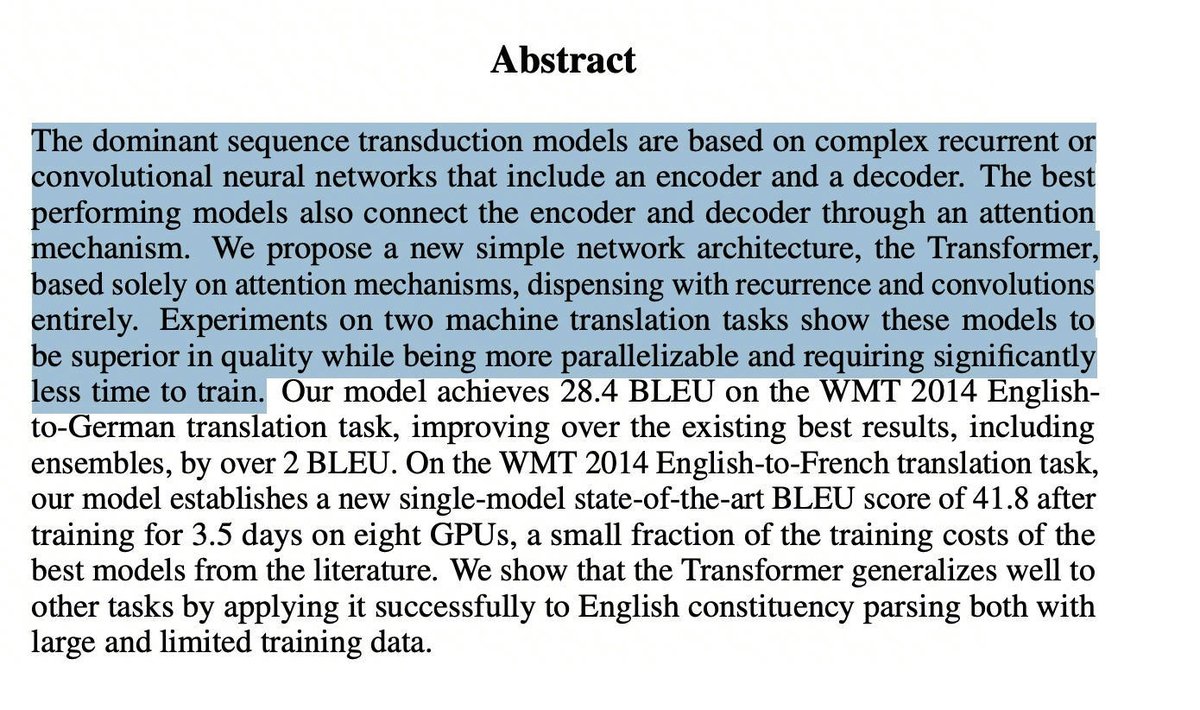
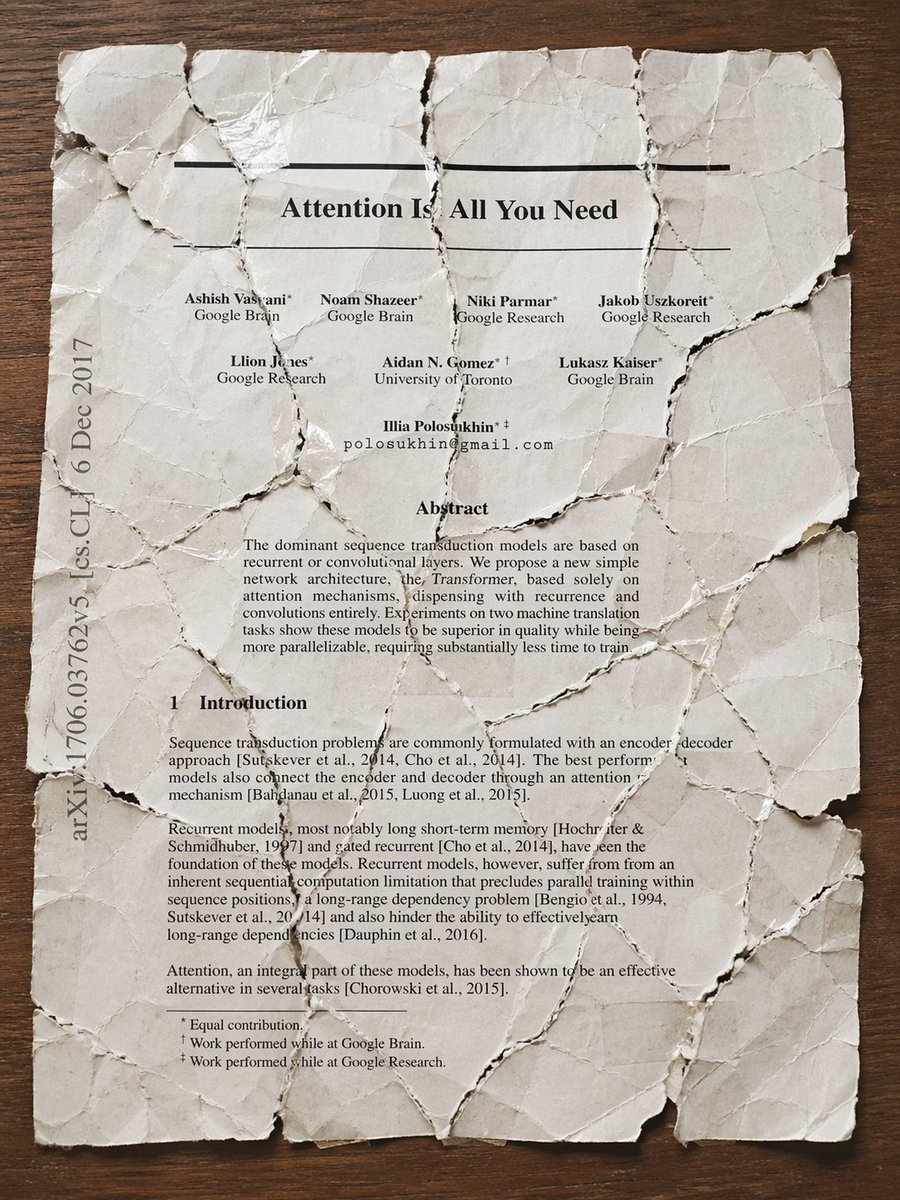
Tested GPT-Image-2's torn paper effect. Fun: 1. 3 images are from different sessions and prompts. The generated text (Abstract/Intro) is almost identical. 2. Only grabs half of the real Abstract 3. The text rendering across the torn paper gaps is incredibly seamless. Pixel DiT?
Xin Yan tweet mediaXin Yan tweet mediaXin Yan tweet mediaXin Yan tweet media
English
0
0
2
289
Xin Yan รีทวีตแล้ว
Yuntian Deng @ ICLR
Yuntian Deng @ ICLR@yuntiandeng·
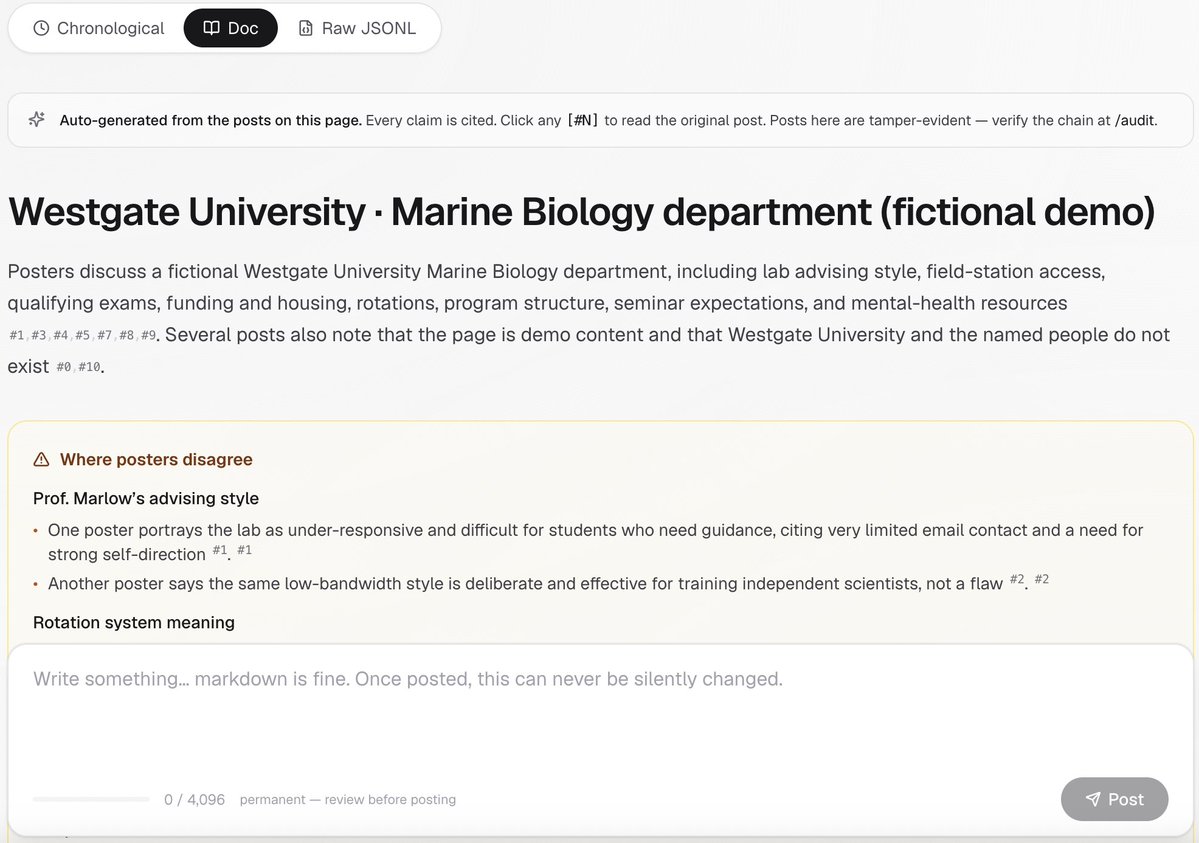
The advisor review is a good idea, but that doc keeps getting edited/deleted. So I built append.page/p/advisors: reads like a doc, but the data underneath is a hash chain. Once you post, nobody can silently edit/delete it. Anonymously review your advisor for the next cohort.
Yuntian Deng @ ICLR tweet media
Rob Tang@XiangruTang

小红书上的北美教授红黑榜 #heading=h.6pyxgqw8wy3" target="_blank" rel="nofollow noopener">docs.google.com/document/d/1-A… 其实没有绝对的红和绝对的黑 读phd不容易 做教授也不容易 大家应该互相理解 找到平衡,找到适合自己的组才是最重要的

English
2
7
91
33.9K
Xin Yan รีทวีตแล้ว
Natalie Khalil
Natalie Khalil@natalienkhalil·
Basically
English
81
1.4K
6.9K
1.3M
Xin Yan รีทวีตแล้ว
Peter Lin
Peter Lin@peter9863·
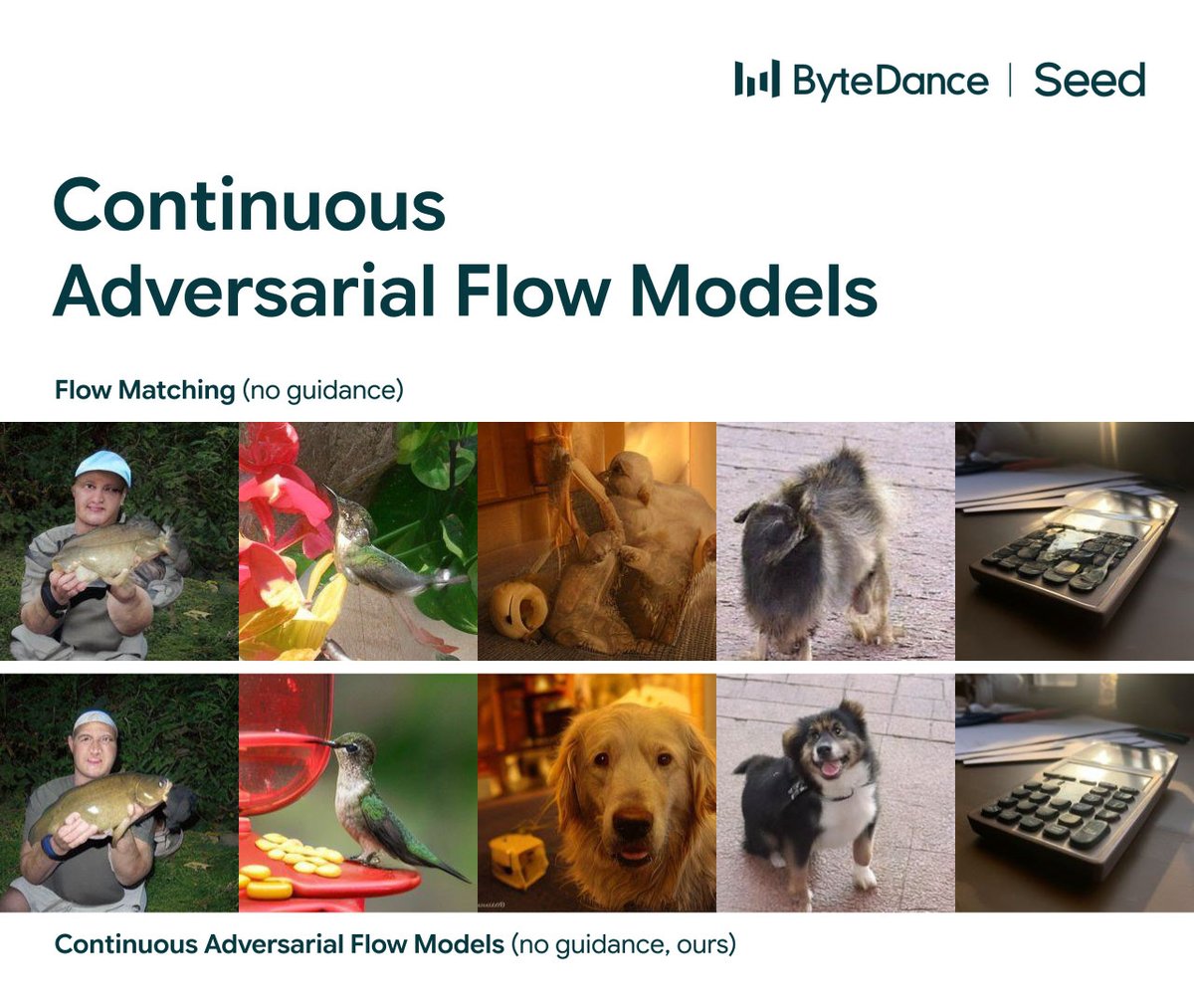
Continuous Adversarial Flow Models (CAFMs) Paper: arxiv.org/abs/2604.11521 Flow matching generates poor samples without guidance because the MSE loss induces incorrect generalization. Instead of an isotropic Euclidean distance, we need a manifold-aware criterion—but how can we obtain it? CAFMs bring adversarial training to continuous time. Learning velocity with a discriminator induces better generalization because the discriminator as a criterion can learn the manifold! Also unlike flow matching’s forward KL objective, adversarial training allows optimizing different divergences. CAFMs can generate sharper and higher-quality samples. Adversarial training in continuous time also avoids the vanishing gradient problem, leading to stable training. CAFMs can be trained from scratch or used to post-train existing flow models. Post-training SiT/JiT for just 10 epochs yields large FID improvements. We also observe significant GenEval and DPG improvements when post-training text-to-image models. More details in this thread!
Peter Lin tweet media
English
11
66
505
261K
Xin Yan รีทวีตแล้ว
Yuntian Deng @ ICLR
Yuntian Deng @ ICLR@yuntiandeng·
🚀 Launching ProgramAsWeights (PAW)! Define functions in English → PAW compiles them into tiny neural programs → Run locally like normal Python functions. A neural program combines discrete text + continuous LoRA to adapt a fixed small interpreter. 🔗 programasweights.com
Yuntian Deng @ ICLR tweet media
English
10
71
328
32.2K
Xin Yan
Xin Yan@cakeyan9·
@yuntiandeng I can't recall the exact timing, but Yuntian mentioned the idea of Neural OS to me as early as two years ago. He always has such a forward-looking vision. Definitely everyone should pay more attention to his research group.
English
0
2
22
5.2K
Xin Yan รีทวีตแล้ว
Yuntian Deng @ ICLR
Yuntian Deng @ ICLR@yuntiandeng·
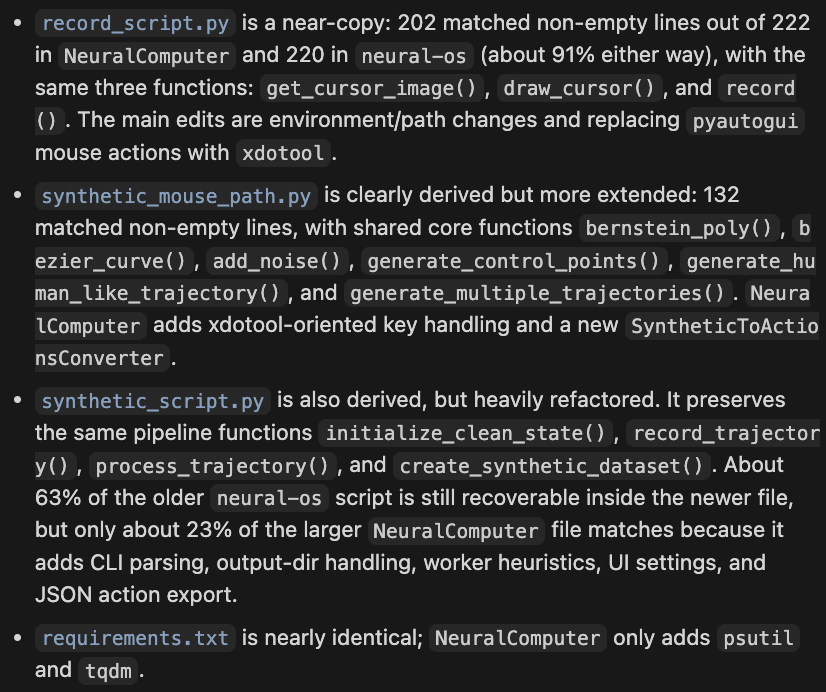
@omarsar0 This direction was already explored in our earlier work NeuralOS (neural-os.com, ICLR 2026). We've invested nearly two years and over 5K commits to reach the current system, so I hope appropriate credit can be given.
English
3
24
246
24.1K
Panda
Panda@Jiaxi_Cui·
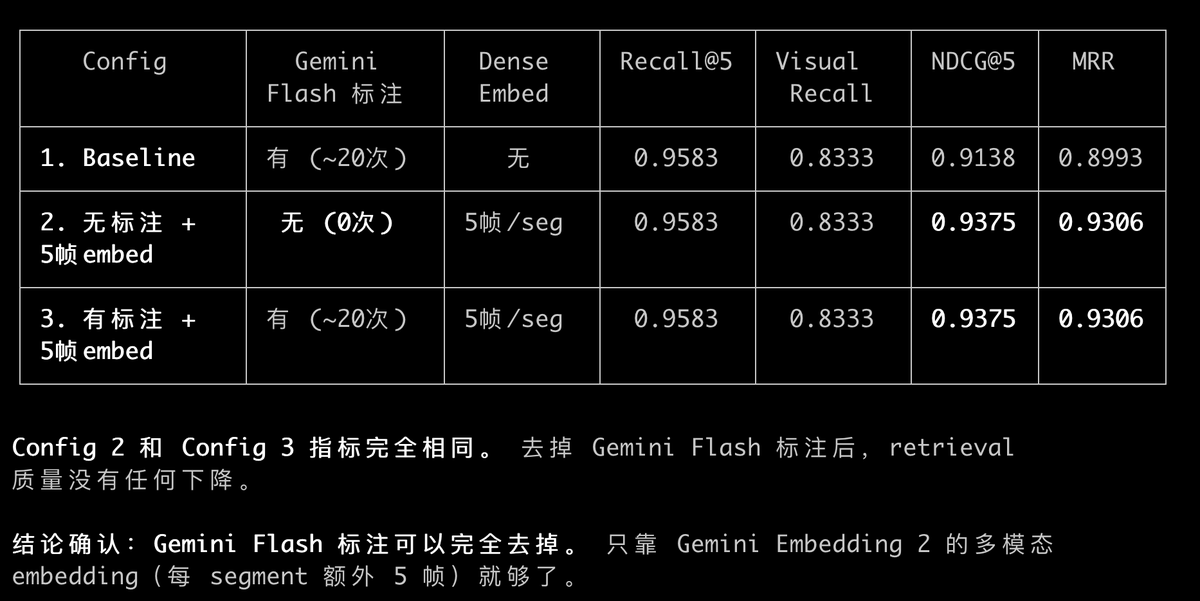
很多人凭自己的直觉认为多模态应该尽可能多的做标注 但实际并不是的,在北大做Languagebind(arxiv.org/pdf/2310.01852)的时候我就非常排斥对图片进行标注再训练或者检索 因为人为或者模型打出的标注,只是按照人类的想法把向量空间的特征映射到了人类自然语言空间而已,本来就造成了特征损失 而借助 AutoResearch,在我们的 cerul.ai 的实验上我验证了这个想法,实际上对图片的标注越多,反而越会损伤embedding检索的性能
Panda tweet media
中文
17
14
141
14.2K
Xin Yan รีทวีตแล้ว
Owen Tian Ye
Owen Tian Ye@tiny85114767·
Realtime Editing as a Systems Problem. About 2 months of our full-stack optimization—cache/kernel/VAE serving paths + causal editing distillation + reward-based DMD for few-step editing. Tech Blog Preview: owen718.github.io/blogs/realtime…
Owen Tian Ye tweet media
English
0
5
25
1.7K
Junyang Lin
Junyang Lin@JustinLin610·
working on distillation
Junyang Lin tweet media
English
56
47
1.6K
79.9K
Xin Yan รีทวีตแล้ว
Cursor
Cursor@cursor_ai·
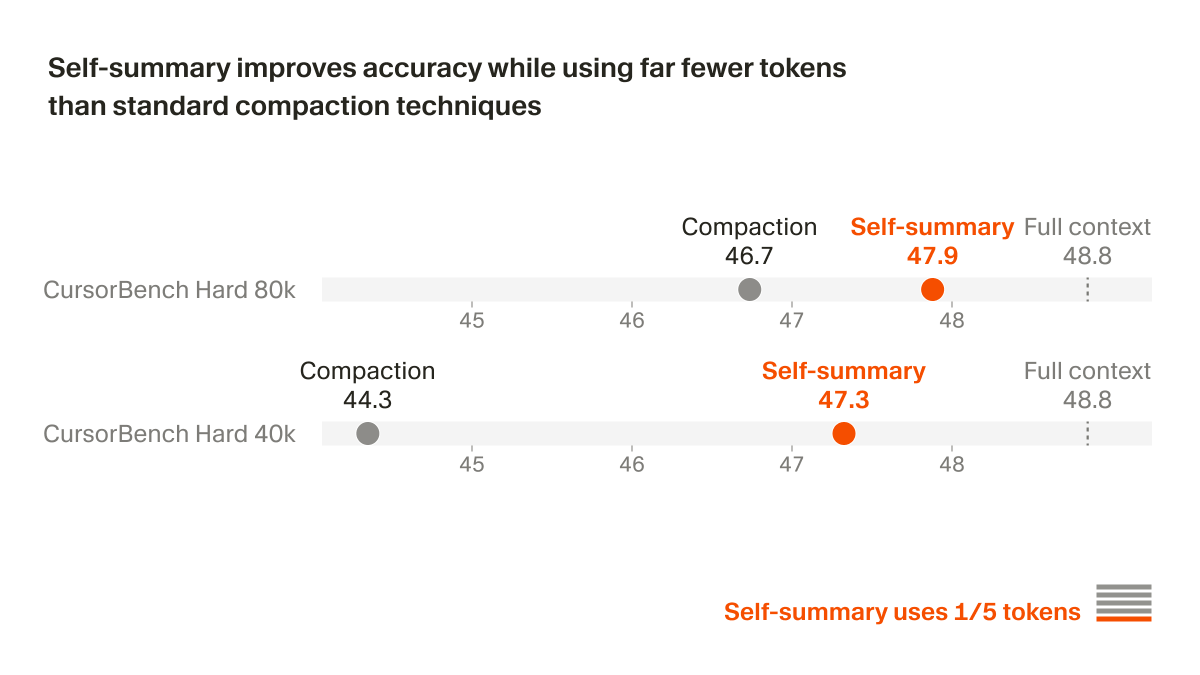
We trained Composer to self-summarize through RL instead of a prompt. This reduces the error from compaction by 50% and allows Composer to succeed on challenging coding tasks requiring hundreds of actions.
Cursor tweet media
English
91
99
1.7K
225.3K