
David Wu

6.6K posts

David Wu banner
David Wu

David Wu

@davidpwu

Business technology. Son, husband, father of 2, CIO at NAC Architecture

Seattle เข้าร่วม Ekim 2008
1.1K กำลังติดตาม986 ผู้ติดตาม
David Wu รีทวีตแล้ว
Todd Saunders
Todd Saunders@toddsaunders·
A friend gave me a good analogy for this last week. Every prior tech revolution ran this exact pattern. The printing press didn't kill scribes by turning everyone into one... it produced authors, publishers and an entire civilization that read. Power tools didn't end carpentry... they ended bad carpentry. Spreadsheets didn't replace accountants... they turned accountants into CFOs. Agents are the same pattern. The floor rises and the ceiling rises faster. Demand for judgment, taste, and context goes parabolic, because the cost of producing the thing collapses while the cost of producing the right thing stays human.
Aaron Levie@levie

For everything we’ve seen about agents so far, it’s clear that they will make it far easier for people to get into previously extremely complicated fields. That will most certainly mean far more people will build software, explore creative work, research spaces they couldn’t do before, and so on. Yet, equally, we’ve seen that people with experience in every one of those fields have a huge edge with the right judgment and historical context to leverage these tools in ways that exceed the output of the novices (if they choose to). They know when the agents are making catastrophic mistakes, can give the agents the right context to do the job better than they otherwise would have, and so on. The combination of these two facts essentially means that we will continue to get the same lift as we’ve seen in any other technological revolution. More democratization, but similarly greater output from the experts. This then makes the experts continue to be in higher demand because over time our expectation for what we can get out of any field will just go up. This is going to be true in essentially every important field. You’ll trust a lawyer using an agent for legal advice over someone who’s never had to experience how well a contract holds up. You’ll trust an engineer developing and running software over someone who’s never seen a production system. You’ll rely on the important instincts of a designer using agents over the average prompter. The quality and volume of output we expect from these functions will certainly go up meaningfully, but the person with experience will always have a leg up, which is why the jobs don’t go away.


English
9
8
60
7.8K
David Wu รีทวีตแล้ว
Andrew Ng
Andrew Ng@AndrewYNg·
AI-native software engineering teams operate very differently than traditional teams. The obvious difference is that AI-native teams use coding agents to build products much faster, but this leads to many other changes in how we operate. For example, some great engineers now play broader roles than just writing code. They are partly product managers, designers, sometimes marketers. Further, small teams who work in the same office, where they can communicate face-to-face, can move incredibly quickly. Because we can now build fast, a greater fraction of time must be spent deciding what to build. To deal with this project-management bottleneck, some teams are pushing engineer:product manager (PM) some teams are pushing engineer:product manager (PM) ratios downward from, say, 8:1 to as low as 1:1. But we can do even better: If we have one PM who decides what to build and one engineer who builds it, the communication between them becomes a bottleneck. This is why the fastest-moving teams I see tend to have engineers who know how to do some product work (and, optionally, some PMs who know how to do some engineering work). When an engineer understands users and can make decisions on what to build and build it directly, they can execute incredibly quickly. I’ve seen engineers successfully expand their roles to including making product decisions, and PMs expand their roles to building software. The tech industry has more engineers than PMs, but both are promising paths. If you are an engineer, you’ll find it useful to learn some product management skills, and if you’re a PM, please learn to build! Looking beyond the product-management bottleneck, I also see bottlenecks in design, marketing, legal compliance, and much more. When we speed up coding 10x or 100x, everything else becomes slow in comparison. For example, some of my teams have built great features so quickly that the marketing organization was left scrambling to figure out how to communicate them to users — a marketing bottleneck. Or when a team can build software in a day that the legal department needs a week to review, that’s a legal compliance bottleneck. In this way, agentic coding isn’t just changing the workflow of software engineering, it’s also changing all the teams around it. When smaller, AI-enabled teams can get more done, generalists excel. Traditional companies need to pull together people from many specialties — engineering, product management, design, marketing, legal, etc. — to execute projects and create value. This has resulted in large teams of specialists who work together. But if a team of 2 persons is to get work done that require 5 different specialities, then some of those individuals must play roles outside a single speciality. In some small teams, individuals do have deep specializations. For example, one might be a great engineer and another a great PM. But they also understand the other key functions needed to move a project forward, and can jump into thinking through other kinds of problems as needed. Of course, proficiency with AI tools is a big help, since it helps us to think through problems that involve different roles. Even in a two-person team, to move fast, communication bottlenecks also must be minimized. This is why I value teams that work in the same location. Remote teams can perform well too, but the highest speed is achieved by having everyone in the room, able to communicate instantaneously to solve problems. This post focuses on AI-native teams with around 2-10 persons, but not everything can be done by a small team. I'll address the coordination of larger teams in the future. I realize these shifts to job roles are tough to navigate for many people. At the same time, I am encouraged that individuals and small teams who are willing to learn the relevant skills are now able to get far more done than was possible before. This is the golden age of learning and building! [Original text: deeplearning.ai/the-batch/issu… ]
Andrew Ng tweet media
English
212
378
2K
349.1K
David Wu รีทวีตแล้ว
Aaron Levie
Aaron Levie@levie·
“There is a limit on human cognition. Even if you're not reviewing everything they're doing, how much you can hold in your head at one time.” There’s a reason that at a certain scale, teams of people have a manager, and then there are managers of many teams, and so on. Companies don’t inherently love being inefficient. It’s because eventually you run into the limits of how much context you can hold on to produce useful work, so you have to delegate parts to someone else who can track their sub-context. In a world where agents don’t need to be prompted or have their work reviewed, or where the agent can know perfectly when to escalate when something is going wrong, then agents can completely break free of these context limits of humans. But for now, agents are generally only as effective as the context they’re provided, the tools they have access to, the human’s ability to keep them on track or review their work, and incorporate that work into a broader system. For now, that will continue to take real (mental) work from the people managing agents. This is also generally why the jobs arguments from those who think people go away will be wrong.
Lenny Rachitsky@lennysan

"Using coding agents well is taking every inch of my 25 years of experience as a software engineer, and it is mentally exhausting. I can fire up four agents in parallel and have them work on four different problems, and by 11am I am wiped out for the day. There is a limit on human cognition. Even if you're not reviewing everything they're doing, how much you can hold in your head at one time. There's a sort of personal skill that we have to learn, which is finding our new limits. What is a responsible way for us to not burn out, and for us to use the time that we have?" @simonw

English
51
60
409
118.4K
David Wu รีทวีตแล้ว
Hunter Horsley
Hunter Horsley@HHorsley·
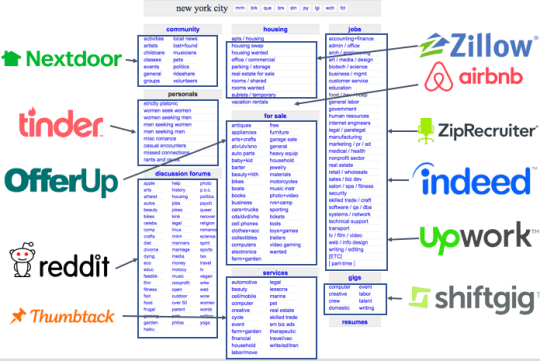
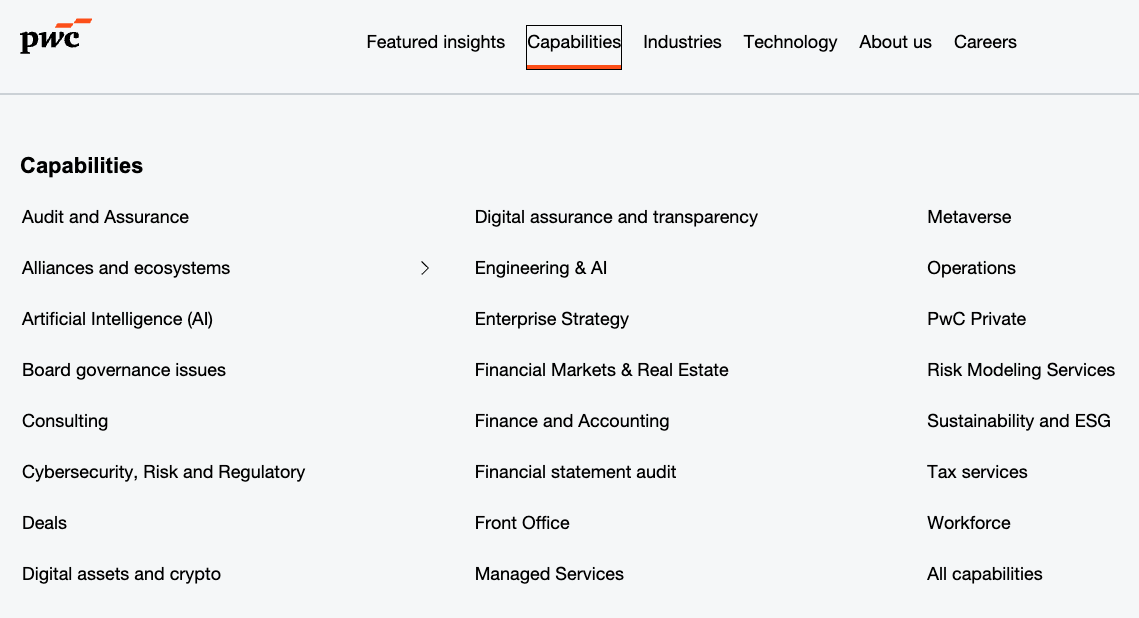
In 2006, every section of Craigslist was a $1b marketplace startup waiting to happen. In 2026, every section of PWC's website is a $10b AI startup waiting to happen.
Hunter Horsley tweet mediaHunter Horsley tweet media
English
100
374
3.8K
795.8K
David Wu รีทวีตแล้ว
Dion Hinchcliffe
Dion Hinchcliffe@dhinchcliffe·
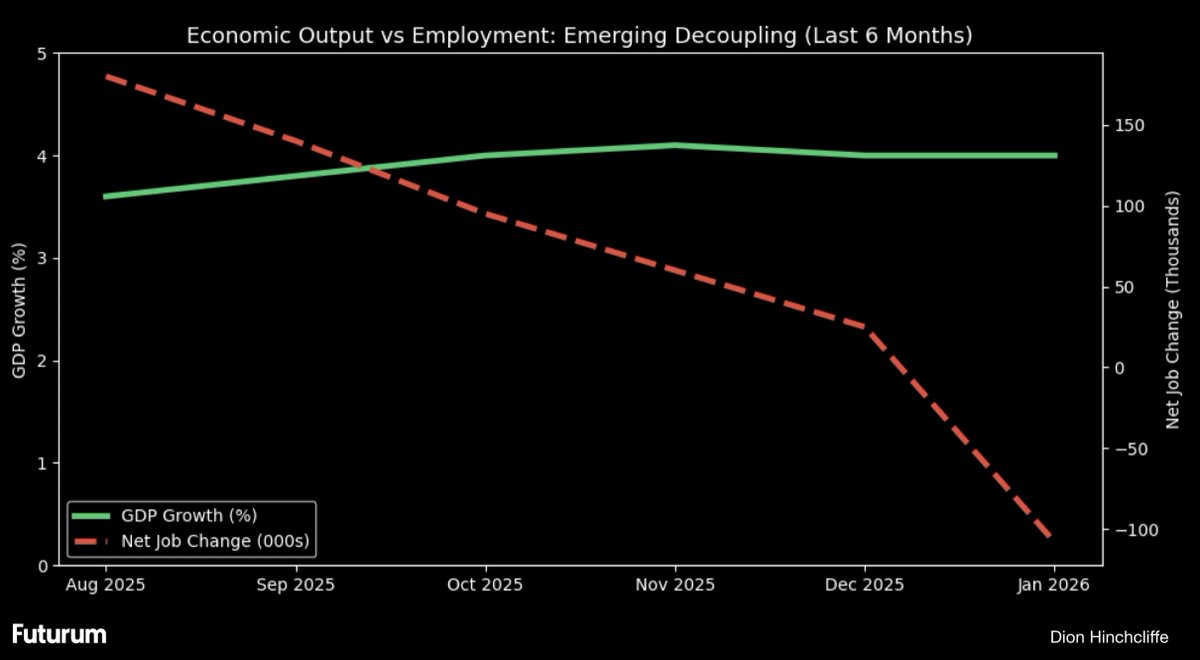
Here’s the thing that’s starting to feel “off” in the economy. And, as they say, once you see it, you can’t unsee it: Growth (GDP) is showing up. But the jobs aren’t. Not in the classic way. Not at the scale we’re used to. Not with the old “rising tide lifts all payrolls” logic. We’re now watching the early stages of a real economic uncoupling. Economic output and corporate growth have detached from employment. And January 2026 is where it became undeniable. January just recorded 108,435 layoffs. The highest January since 2009. Up 118% year over year. Up 205% from December. But here’s the number that actually matters more: New hires announced in January: 5,300. The lowest January hiring figure since tracking began in 2009. For every 1 person companies announced hiring, they announced cutting 20. That isn’t “softness.” That isn’t noise. That is structural behavior. And it’s not isolated. • UPS is cutting 30,000 jobs • Amazon is cutting 16,000 • Dow is restructuring thousands • Citi is planning to RIF up to 20K • Healthcare just logged its worst layoff month since April 2020 This is not one sector blinking. This is coordinated corporate response. Now here’s the part that should stop you short: GDP is still growing at ~4%. The economy looks fine on paper. Profits are holding up. Productivity is rising. Yet layoffs are running at post-financial-crisis levels. Macroeconomic thinker Mohamed El-Erian called it out directly: “These layoffs are occurring while GDP continues to grow at approximately 4 percent, accelerating the decoupling of employment from economic growth.” Employment is decoupling from growth. That sentence would have sounded radical ten years ago. Now it’s simply descriptive. Companies are learning how to scale output without scaling people. And AI is the prime accelerant. In January alone, 7,624 layoffs explicitly cited AI, about 7% of the total. That’s just the companies willing to say it out loud. Every earnings call mentions AI efficiency. Every board deck frames AI as margin leverage. The market rewards companies that promise “doing more with fewer people.” The real number is almost certainly multiples higher. But here’s the more revealing tell: The #1 cited reason for January layoffs may not have been cited as AI. At least not directly. It was contract loss: 30,784 jobs. In plain language: Deals aren’t being renewed. Demand expectations are being revised downward. Executives made these decisions in late 2025. Before the year even started, leadership teams looked at 2026 and said: “Cut now.” For the last year, the narrative was: “No hire, no fire.” That story just died. We’re now in: No hire. Yes fire. Hiring is frozen. Layoffs are accelerating. And output keeps growing anyway. That combination simply didn’t exist at scale before. This is what happens when three forces collide at once: • AI-driven productivity gains • Margin and cost pressure • Growing executive confidence that growth no longer requires headcount The result is a quiet but profound shift: Job non-creation becomes the default. Layoffs become strategic, not reactive. Labor stops being the primary scaling mechanism. This is how growth and employment divorce without a crash. If this continues, we are watching the birth of a new economic model, one where prosperity and employment finally decouple for good. So what does this mean for CIOs? Because this lands squarely on your desk. ➡️ You must measure AI-driven labor removal, not just AI adoption ➡️Track hours eliminated, workflows collapsed, tickets avoided, and revenue per employee. ➡️If growth no longer equals hiring, you need to know exactly why. ➡️Treat agentic AI as production infrastructure ➡️Once software can decide and act, governance is no longer optional. ➡️This is operational leverage, and operational risk. ➡️Redesign work, don’t just accelerate it ➡️The biggest gains aren’t coming from “faster.” ➡️They’re coming from deleting steps, reimagining processes, collapsing handoffs, and removing friction. Protect the bottom of the career ladder. If entry roles disappear, you are burning your future leadership pipeline. Use AI to accelerate learning. Not erase progression. Be the executive who explains the uncoupling clearly Boards will ask why growth no longer means hiring. Employees will feel the disconnect even if they can’t name it. So have the narrative ready: We are buying output with software. Productivity is replacing headcount as the scaling mechanism. And this transition must be actively managed, or it will hollow the organization. This isn’t a recession story. It’s a system change. And it’s already underway.
Dion Hinchcliffe tweet media
English
3
9
13
2.6K
David Wu รีทวีตแล้ว
Aakash Gupta
Aakash Gupta@aakashgupta·
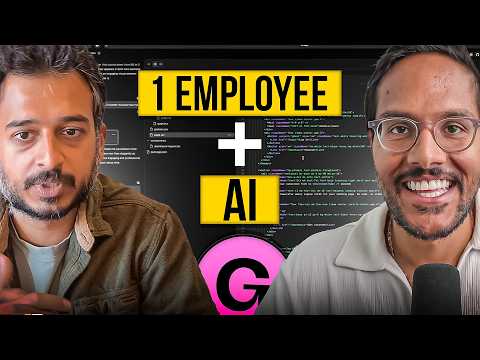
.@shl runs a $10M rev/year company with AI (1 employee) It's a preview into the future of product building. While most PMs live with rigid 2-week sprints, write long PRDs, and spend all their time coordinating people... Sahil ships ideas to production in 10 minutes. While working on 5 things at a time. Today's episode breaks down how you can: 🎬 Watch Now: youtube.com/watch?v=I_ue2v… Spotify: open.spotify.com/show/7vVEMqCSK… Apple: podcasts.apple.com/us/podcast/pro… 🏆 Thanks to our sponsors: 1. Vanta: Get $1,000 off AI security & compliance - vanta.com/aakash 2. Testkube: Leading test orchestration platform - testkube.io 3. Kameleoon: Leading AI experimentation platform - kameleoon.com 4. The AI PM Certificate: Get $550 off with ‘AAKASH550C7’- maven.com/product-facult… This isn't hype. As he said, "these models are as smart as they need to be to replace most software engineering." Today's episode is a tutorial to using Devin to ship to production. He covers three different scenarios: Small, well spec'd item → straight to Devin More complex item → discussed with team on Github Big, uncertain feature → prototyped in v0 This is really the future of product building. Junior eng will be replaced, and the PRD will not exist for simple + certain features. Of course, it will take a long time in big companies where PRDs exist for coordination, but... "I feel like the PRD is kind of dying" - Sahil What do you think? 📌 Reply + retweet + follow for a step-by-step writeup of his workflow, and I will DM you. PS1. It was such a treat to record with Sahil. I've been following him on X for years. I saw him in person in 2021 & was too shy to talk to him. It was a dream to. PS2. You don't want to miss why he doesn't own ANY public stocks.. despite making $2M/year!
YouTube video
YouTube
English
1
6
46
6.9K
David Wu รีทวีตแล้ว
Hiten Shah
Hiten Shah@hnshah·
AI is moving faster than institutions, slower than expectations, and sideways to almost everyone’s plans. Enterprises are still debating “AI strategy” while startups ship new agents every week. Researchers are sprinting ahead while regulators write think pieces. And users? They’re experimenting in silence reshaping behavior before policy or infrastructure catch up. The result is a world where no one feels in control, but everyone senses the shift. That’s what uncertainty looks like at scale.
English
19
18
105
12.1K
David Wu รีทวีตแล้ว
Evan Kirstel #B2B #TechFluencer
ChatGPT wants to be the new operating system. Here’s why that should worry us - Compute has become the new oil, and OpenAI just secured drilling rights. Fast Company apple.news/A4Wh2bTNPSN2ir…
English
3
2
4
443
David Wu รีทวีตแล้ว
Satya Nadella
Satya Nadella@satyanadella·
I just love this. The new =COPILOT() function in Excel lets you analyze, generate content, and brainstorm directly in the grid.
English
480
2.1K
20.6K
2.4M