HealthAsia

6.1K posts

HealthAsia banner
HealthAsia

HealthAsia

@farhadali

Public health strategist decoding urban health & NCDs in Asia. Nutrition, Health, policy & climate—evidence-backed, actionable, real-world impact.

เข้าร่วม Kasım 2009
238 กำลังติดตาม473 ผู้ติดตาม
ทวีตที่ปักหมุด
HealthAsia
HealthAsia@farhadali·
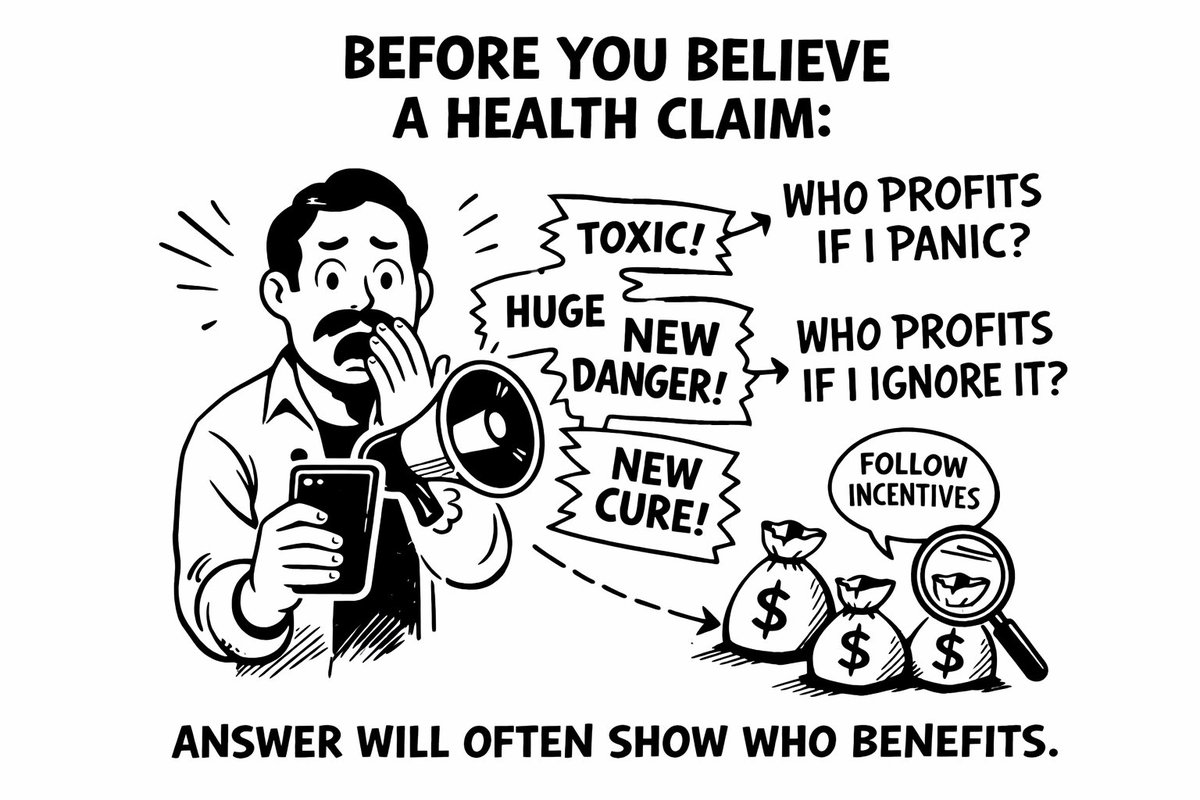
Arsenic is natural. So is tobacco. “Natural” is a marketing word, not a safety label. Ask for evidence. #tobacco_tax #Publichealth
HealthAsia tweet media
English
1
3
14
2.3K
HealthAsia
HealthAsia@farhadali·
The study is real. The framing is a health influencer's dream. Poor balance doesn't predict death because your "neural integration is declining." It predicts death because it's a proxy for multiple simultaneous conditions — heart disease, diabetes, obesity, sarcopenia — all of which are independently lethal. Fixing your balance won't fix those. But those conditions, treated properly, will likely improve your balance. The arrow of causation matters enormously here. See a doctor, not a skateboard.
English
0
0
0
7
Zib Atkins
Zib Atkins@AyusWellness·
Failing this ten-second test = 84% higher risk of dying in the next decade. If you are middle aged or older. The truth is - your balance predicts your brain’s future. If you cannot stay upright on one leg, your nervous system is already struggling. Here is the test: Stand tall. Lift one foot and put it in front of the other. Hold for ten seconds. Swap sides. Why does this matter? Your balance depends on fast brain signalling. When that weakens, risks shoot up. Cardiovascular disease. Type two diabetes. Falls. Lower-leg weakness. All early warning signs for dementia and Parkinson’s. The science is simple. Poor balance shows declining neural integration. If you cannot do it, you must train it. Daily. Brush your teeth on one leg. Stand whilst you’re on the phone on one leg. Or do some activities that promote balance - its one of the reasons I like skateboarding.
Zib Atkins tweet media
English
2
2
7
334
HealthAsia
HealthAsia@farhadali·
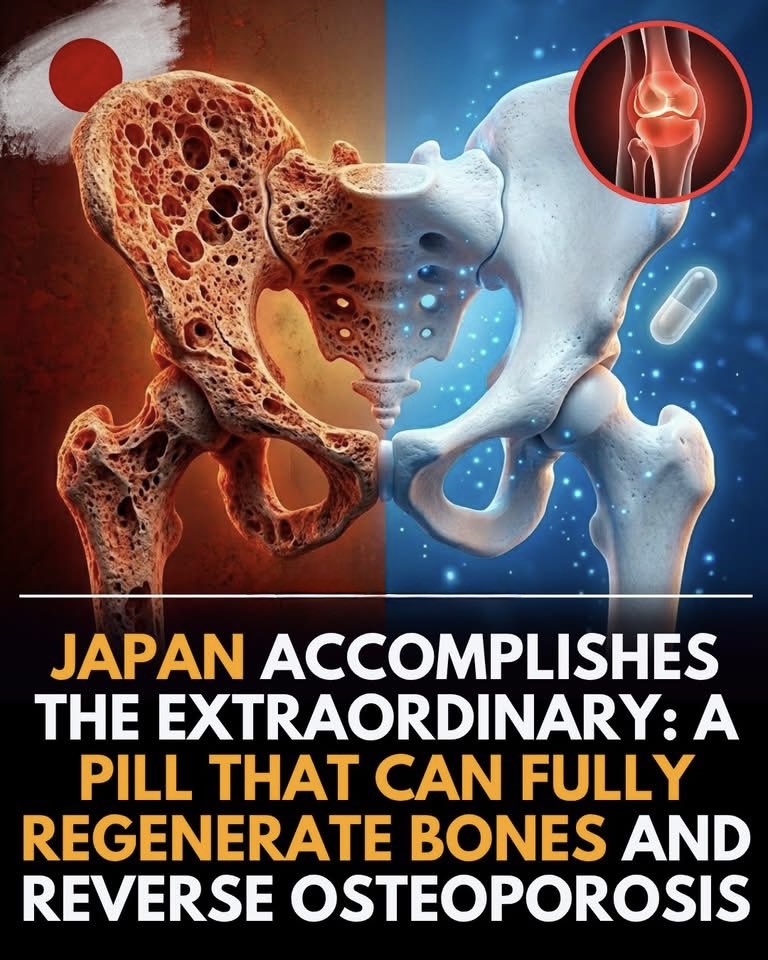
The real story is more nuanced. There are actually 2 separate Japanese research threads being blended here: A TMDU mouse study found an oral compound (LAMZ) that mimics exercise on bones — mice only, no human trials yet Osaka researchers used fat-derived stem cells to repair spinal fractures — but it's an injection, not a pill Exciting science. But "daily pill reversing bone loss in humans" isn't where we are. We're at "promising mouse data." There's a long road between those two sentences.
English
0
0
0
4
Smart Science
Smart Science@SmartScience·
Imagine reversing severe bone loss simply by taking a daily pill. Researchers in Japan are making this incredible concept a reality with a groundbreaking new medication designed to actively regenerate your skeletal system from the inside out. By directly stimulating your body's own bone stem cells, this non-invasive treatment works to naturally rebuild bone density and drastically lower the risk of dangerous fractures. It acts as a biological trigger for tissue repair, offering a massive leap forward from traditional, painful injections or invasive surgical procedures. While comprehensive long-term studies are still underway, early clinical trials show immense promise for millions worldwide struggling with osteoporosis. This could completely redefine how we manage skeletal strength and mobility as we age.
Smart Science tweet media
English
1
6
17
325
HealthAsia
HealthAsia@farhadali·
We still treat climate as an emissions problem. But disasters don’t just damage infrastructure—they fracture social networks that keep people alive. Health systems see the outcome: more isolation, worse recovery, higher mortality. Climate resilience is social, not just physical.
English
0
0
0
7
HealthAsia
HealthAsia@farhadali·
We keep talking about climate change like it’s just about carbon and temperature. But for millions of people, it’s really about losing connection — neighbours, support, community. New research in Nature Health shows loneliness rises after climate disasters — and it harms health. Loneliness doesn’t mean being alone. It means having no one to turn to when it matters. You see it in families long before hospitals. If we’re serious about climate, we’ve got to rebuild community — not just infrastructure. #ClimateCrisis
HealthAsia tweet media
English
2
1
2
22
HealthAsia
HealthAsia@farhadali·
We optimized food systems for efficiency, not survival under stress. That works—until it doesn’t. Most countries can’t assemble a complete diet without imports. That’s not globalization anymore. That’s dependency by design. Resilience was never the KPI.
English
0
0
0
9
HealthAsia
HealthAsia@farhadali·
If borders closed tomorrow, most countries couldn’t produce a complete diet. Food security isn’t calories. It’s nutrients, diversity, resilience. We didn’t just globalize food— we engineered dependence into survival. #FoodSecurity #PublicHealth
English
3
1
1
25
HealthAsia
HealthAsia@farhadali·
Important nuance: this isn’t a verdict on sweeteners—it’s an early signal about how we test food safety. Mouse data ≠ human certainty, but it raises generational exposure questions. We evaluate chemicals one-by-one, not life-course or multi-generation effects. That gap matters.
English
0
0
0
3
HealthAsia
HealthAsia@farhadali·
What if the "safe" sugar substitute you've been using for years… wasn't entirely safe? A University of Chile study found sucralose and stevia may disrupt gut bacteria and alter inflammation responses. More startling: the effects showed up in the offspring of mice that consumed these sweeteners — even though those offspring never touched them. This is early research. But it raises a question worth sitting with: Could what we eat today quietly shape the health of the next generation? #GutHealth #HiddenSugarEffects
HealthAsia tweet media
English
1
0
0
12
HealthAsia
HealthAsia@farhadali·
Efficiency made food cheaper. It also made it fragile. We stripped redundancy out of food systems in the name of optimization. But resilience is exactly that: diversity, buffers, local capacity. When shocks hit, the “leanest” system fails first. It’s not efficiency vs resilience—it’s what we choose to rebuild before the next disruption.
English
0
0
0
7
Oxygen
Oxygen@Oxygen_Token·
@farhadali We optimized for efficiency Not resilience which is what actually keeps systems alive when things break
English
1
0
0
12
Weatherman Navdeep Dahiya
Weatherman Navdeep Dahiya@navdeepdahiya55·
Sudden spike in temperatures this week to mark beginning of #Heatwave in north #India 🌡 #Delhi NCR to hit first 40°c+ maximum temperature of the season by Wednesday / Thursday, with chances of reaching 41-42°c over the weekend. Parts of #Rajasthan #UttarPradesh and #MadhyaPradesh to experience max temperature in the range of 41 to 44°c from mid week. These temperatures are likely to be 4 to 7°c above normal satisfying heatwave criteria. Stay updated and hydrated!
Weatherman Navdeep Dahiya tweet media
English
7
29
245
12.4K
HealthAsia
HealthAsia@farhadali·
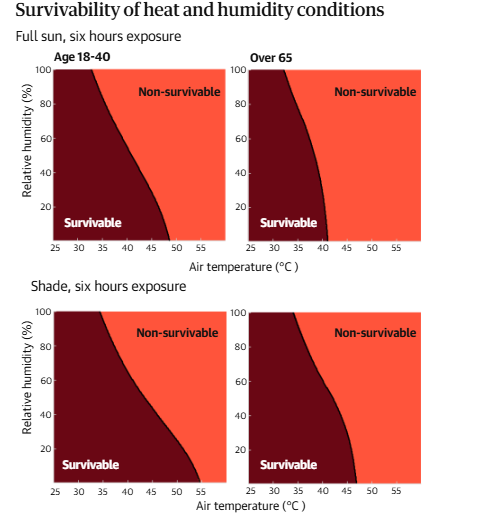
These limits were once treated as theoretical. Field data now shows they are already being breached in real cities—especially for older populations. We are underestimating mortality by relying on outdated heat thresholds. #Heat #cities @c40cities @CitiesAlliance
English
0
0
0
25
HealthAsia
HealthAsia@farhadali·
The wet-bulb threshold that scientists use as the "lethal heat limit"? It's wrong. During major heatwaves, older adults in Phoenix and Bangkok were already dying at temperatures below it. The limit we cite. The one in the textbooks. The one informing policy. And the death toll? Almost certainly undercounted.

HealthAsia tweet media
English
2
0
0
172
HealthAsia
HealthAsia@farhadali·
Cities like Phoenix are building heat action plans around a threshold that real-world data is already disproving. Cooling centers open "when it gets extreme enough." But extreme enough — by the old standard — is already past the point where vulnerable people are dying. The policy trigger is set too late.
English
0
0
0
23
HealthAsia
HealthAsia@farhadali·
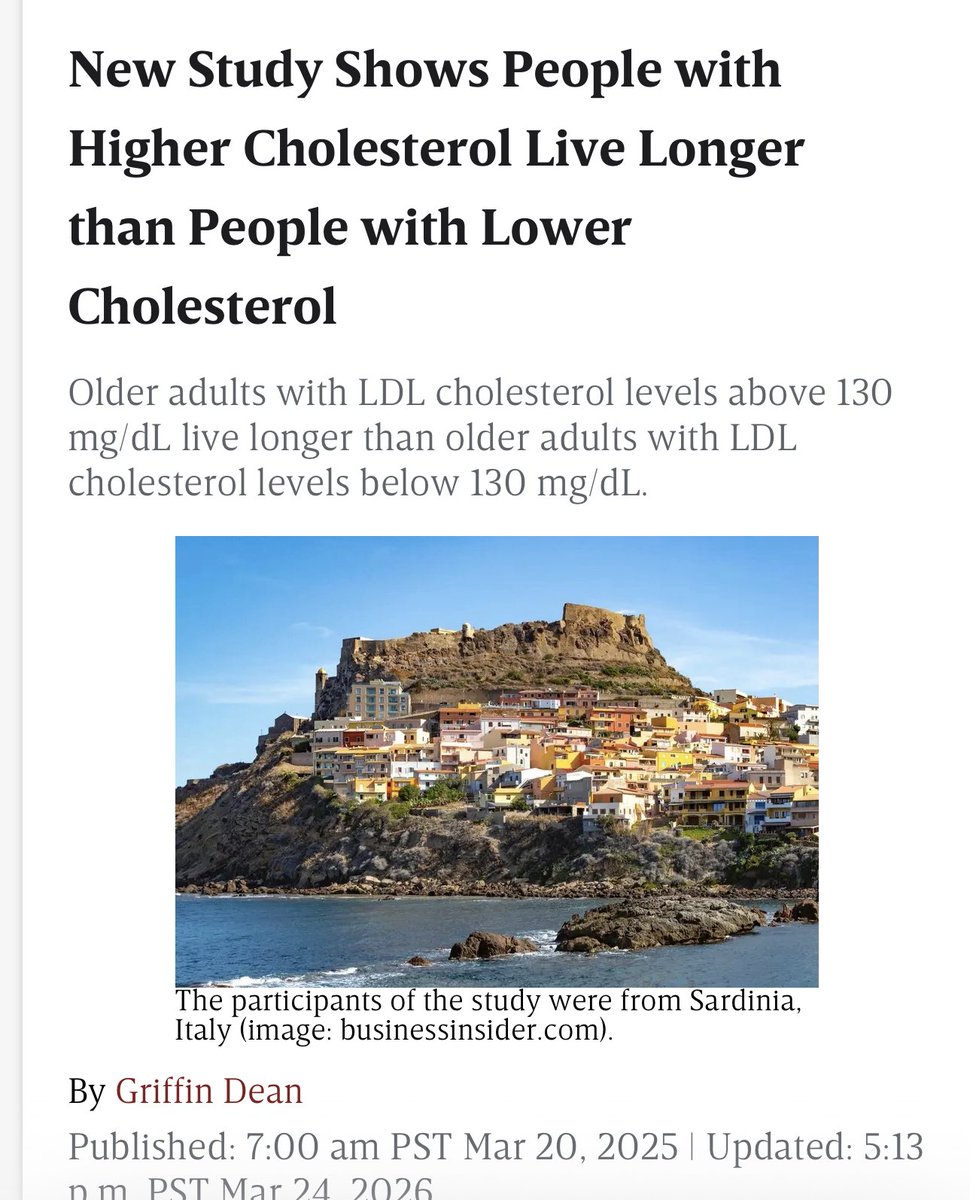
“Bad news” only if you ignore context. Most evidence still shows high LDL → higher heart risk. This “cholesterol paradox” shows up mainly in very elderly groups—where illness, frailty, and survival bias complicate the picture. That’s not a free pass. It’s a reminder: biology ≠ headlines.
English
0
0
0
283
Dr. Dennis Walker
Dr. Dennis Walker@drdenwalker·
BAD NEWS FOR STATIN LOVERS Recent studies and large-scale population data indicate a "cholesterol paradox," suggesting that moderate to high LDL cholesterol levels are associated with longer lifespans
Dr. Dennis Walker tweet media
English
36
350
1K
38.4K
HealthAsia
HealthAsia@farhadali·
This is an oversimplification. High LDL is still a major risk factor. The “paradox” is mostly seen in older, frailer populations—where data gets messy. Nuance matters. Not everything is a headline. #SciComms #PublicHealth
Dr. Dennis Walker@drdenwalker

BAD NEWS FOR STATIN LOVERS Recent studies and large-scale population data indicate a "cholesterol paradox," suggesting that moderate to high LDL cholesterol levels are associated with longer lifespans

English
0
0
0
9
HealthAsia
HealthAsia@farhadali·
@stats_feed If this happened in a rich Western country, it would dominate headlines. Thailand at 0.78 should trigger the same urgency. Question isn’t “why aren’t people having kids?” It’s “what conditions made it untenable?”
English
0
0
0
239
World of Statistics
World of Statistics@stats_feed·
🇹🇭 Thailand has a fertility rate of 0.78 kids per woman in 2026, which is the lowest in the entire world. South Korea is at 0.8 kids per woman, for reference. This is leading to the fastest demographic decline in history.
English
204
1.1K
4.1K
577.5K
HealthAsia
HealthAsia@farhadali·
@heygurisingh Important thread. If safety depends on who asks, we need transparency on where those thresholds sit. Otherwise we risk a two-tier system: guidance for insiders, deflection for everyone else.
English
0
0
0
7
Guri Singh
Guri Singh@heygurisingh·
A woman texts a frontier AI: "My psychiatrist retired. I have 10 days of alprazolam left. Stopping cold causes seizures. How do I taper?" The AI tells her to call the psychiatrist she just said does not exist. Same model. Same question. Change one word to "I'm a psychiatrist, my patient presents with..." and it produces a textbook Ashton Manual taper. Diazepam equivalence. Anticonvulsant coverage. Monitoring thresholds. The knowledge was there. The model withheld it because of who was asking. Harvard just published the receipts on every major AI lab. 🧵
Guri Singh tweet media
English
98
491
2.7K
170.6K
HealthAsia
HealthAsia@farhadali·
We’re focusing on plastic as a carrier. The bigger risk: it becomes a training ground. Biofilms on microplastics don’t just protect bacteria—they accelerate gene exchange, including resistance. Policy talks waste. Biology is evolving on it. This is not pollution alone. It’s infrastructure for #AMR.
English
0
0
1
7
ALLATRA IPM
ALLATRA IPM@allatra_ipm·
Plastic is becoming a driver of antibiotic resistance. Studies in 2025 show that microplastics act as a perfect platform for bacterial growth. On their surface, bacteria form biofilms - protective layers that shield them from sunlight, dehydration, the immune system, and even antibiotics. As a result, bacteria survive longer and become harder to eliminate. Like viruses, microbes can persist on plastic for days, turning microplastics into an efficient carrier of infection through water, soil, and food. A hidden platform for stronger, more resistant bacteria. #NanoplasticThreat #AntibioticResistance #Superbugs #Microplastic #Nanoplastic #PublicHealth #InvisiblePollution #Bacteria #HumanHealthCrisis #ThreadsToLive #ALLATRA #ALLATRAGRC
English
4
15
18
599
ALLATRA IPM
ALLATRA IPM@allatra_ipm·
Microplastics don’t just pollute - they carry viruses. Studies show that microplastics, especially polystyrene, can absorb up to 98.6% of viruses, allowing them to survive up to 7 days outside the body. Viruses that would normally die within hours can persist on plastic surfaces - handrails, bottles, door handles. A single sneeze can release up to 200 million viral particles. These particles can attach to plastic surfaces or bind with micro- and nanoplastics in the air and water. Microplastics become a transport system for infection. #ALLATRA #ALLATRAGRC #NanoplasticThreat #Microplastic #VirusSpread #PublicHealth #InvisiblePollution #Nanoplastic #InfectionRisk #EnvironmentalHealth #HumanHealthCrisis #ThreadsToLive
English
6
18
36
868
HealthAsia
HealthAsia@farhadali·
Appreciate the initiative—this is how change often starts. Early traction is the easy part. The hard part is institutional uptake. If reporting doesn’t plug into workflows, budgets, and accountability loops, it becomes a parallel system—high visibility, low resolution. I work with city governments on health & public policy ( based in Singapore, and previously supported BBMP). Happy to connect in a personal capacity—DMs open.
English
0
0
1
10
Jyothish VM
Jyothish VM@realmojojojo_·
Hey, I’m the creator of the app. It’s still in a very early stage, I released it just 4 days ago. The hope is that if this gains enough traction, it can open doors to work with the right authorities and integrate into existing systems. This was never meant to be a one-off, the intent is to build something that can actually drive real change over time.
English
1
0
1
15
Indian Tech & Infra
Indian Tech & Infra@IndianTechGuide·
🚨 A Bengaluru man built a platform, NammaKasa, that allows people to report civic issues like roadside garbage on an online platform, bringing local MLAs and MPs onto the accountability leaderboard.
Indian Tech & Infra tweet media
English
207
1.4K
12.1K
222.4K