

Bapa Rao
37.3K posts
Bapa Rao
@hydertext
RT doesn’t mean endorsement. “Like” just means “not hate.”
NOYB City เข้าร่วม Haziran 2008
3.1K กำลังติดตาม426 ผู้ติดตาม

Thames ganga tehzeeb - if only we had a better moniker.
Bapa Rao@hydertext
@AmitMajmudar @omarali50 The “small story” of “syncretism” exists even with British colonization of India. Probably big enough to give ganga-yamuna tahzeeb a run for its money. Yet, AFAIK there is negligible effort by anyone to celebrate the Thames-Ganga tehzeeb, which is still alive around us today.
English
@shiv_cybersurg @NMenonRao @abhijitmajumder Waiting for the lamenting articles in western prestige media.
English

@NMenonRao @abhijitmajumder This is an accusation, and a sullen challenge.
English

Nirupama-ji, you speak about the need to both engage the enemy and act against it.
* You are seen (pic) engaging with Pak foreign secy Salman Bashir just 13 days after Opera House and Dadar blasts killed 26 Indians.
What action did we take?
* We sent about 20 dossiers after 26/11 and had 5 major ‘Track II dialogues’ to engage with Pakistan.
What action did we take?
* After Pakistan-sponsored blast after blast in the UPA era, we engaged — shook hands, smiled, begged, cajoled, wined, dined, and whined.
What action did we take?
PS: Request you to open your replies so others can engage with you.
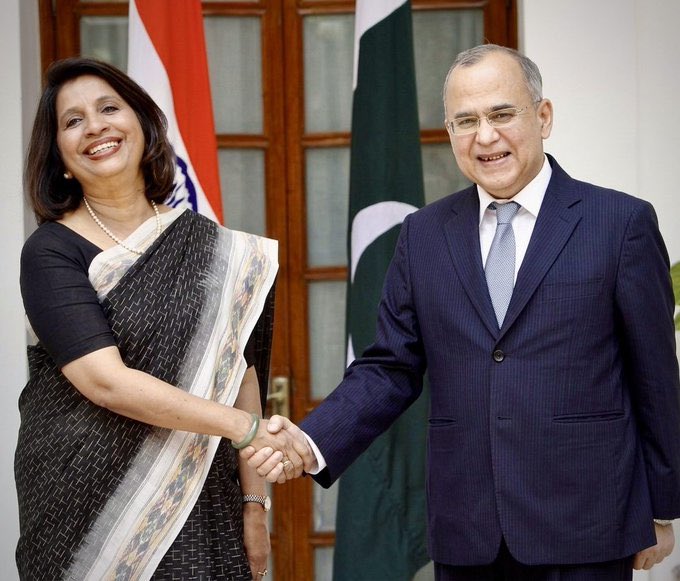
Nirupama Menon Rao 🇮🇳@NMenonRao
I am no stranger to criticism and have learnt, over time, to absorb it without losing focus. That is part of public life. What is harder to accept is the steady erosion of civility in our discourse. Disagreement is essential; derision and vituperative, personal slander is not. A confident society does not fear dialogue—it conducts it with balance, clarity, and respect. As for me, I follow the teaching of Sri Ramakrishna and his advice: “forbear, forbear, forbear.” That has guided me through my life’s journey.
English
@NMenonRao @abhijitmajumder Nobody is guillotining you. The Indian people, whom you are apparently unfamiliar with, just don’t appreciate condescending lectures from an elite failure. There is also that rather transparent “women for peace” grift, which Indians can smell from a mile away.
English
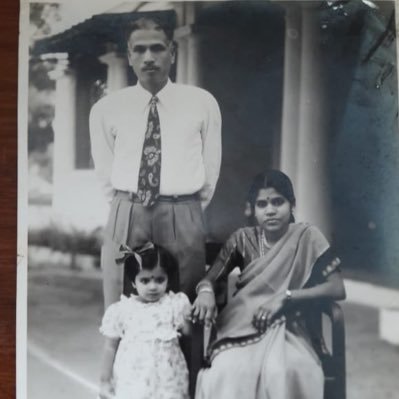
@abhijitmajumder If this is to be a guillotine, let it be said that I have stood for reason while others cheered for spectacle—history is rarely kind to the mob. Go ahead and sharpen the blade.
English
@AmitMajmudar @omarali50 The “small story” of “syncretism” exists even with British colonization of India. Probably big enough to give ganga-yamuna tahzeeb a run for its money. Yet, AFAIK there is negligible effort by anyone to celebrate the Thames-Ganga tehzeeb, which is still alive around us today.
English
@AmitMajmudar @omarali50 All that is slightly true about white-native in the US. It’s what might be called the smaller story. In the Indian context, Thapar is erasing the bigger story and replacing it with the smaller story. The real & big story is that she has the power to do that in the 21st century.
English

This is so sad.. These people probably mean well, but this storyline is so poorly thought out, it's embarrassing 😢
Sohail Ahmad@oolabmys
Two Nation Theory by Historian Romila Thapar with Karan Thapar 1
English
@KapilPudin89917 @presidentaligy Not perfect, not going to satisfy everyone, but it beats ignoring the occasion or worse, ranting about heathens.
English

@presidentaligy Of course, no image of God, as it is against religious beliefs.
English
Bapa Rao รีทวีตแล้ว

I extend warm greetings to all our Hindu brothers and sisters observing Hanuman Jayanti.May the life and teachings of Hanuman inspire strength, devotion, courage, and selfless service in all of us. Wishing you and your families peace, blessings, and happiness.

English
@PoisonOfChoice Maybe so. Just my observation: Indian sena has its own internal way of managing national ideology which seems to work fairly well all around. No ideology-enforcing commissars. Probably won’t satisfy all expectations in a democracy, but I don’t see them fixing what ain’t broke.
English

@hydertext The competitive but detached model might work for sports, it won't work for an existential threat hellbent upon your ruin. Expecting ideological clarity from the forces isn't the same as wanting them to be impassioned religious zealots.
English
It may be a bitter pill to swallow the utter lack of shatrubodh in our political class and bureaucracy, but to see it in the forces is kinda trippy. You don't get to be a peacenik when your occupation is defense through violence. Will give it to Pakis for producing pure patriots.
Lt Gen P R Shankar (R)@palepurshankar
I agree sir. There has been a lot of vilification of our former foreign Secy @NMenonRao. That is not fair. I would suggest that everyone desist from it. If you do not agree with the ideas...debate it out. What she has outlined above is a cogent broad based piano key approach. One plays a set of key as per the situation. Pakistan and its 250 million people won't vanish. We will have to deal with them in all situations whether Pakistan exists or not. Let us be objective and not subjective or emotional.
English
Fact check: true.
Maga (and not just the retards, even the smart ones believe in the eternal racial superiority of the "white" race, whose definition shifts every few years), and once you combine this with the belief that eoropoors are poor bcz they no longer understand this "fact", then you have the trump administration.. (not that Trump himself cares.. He cares for none, all shall perish)
Vincent Artman@geogvma
Just had this conversation with colleagues at Taras Shevchenko National University: Americans largely do not understand from whence their prosperity comes, and the MAGA gang is actively, and blindly, demolishing the foundations of that prosperity. But there’s no going back…
English
Bapa Rao รีทวีตแล้ว
Between her and Kishwar, they got Crazy X so magnificently repped that Moitra's gonna have to wait her turn
No one's beheading you, wannabe Anne Boleyn. Quit the theatrics and let's see some dialogue. Commoners don't make it to history books. We'll take our answers now, Majesty.
Nirupama Menon Rao 🇮🇳@NMenonRao
@abhijitmajumder If this is to be a guillotine, let it be said that I have stood for reason while others cheered for spectacle—history is rarely kind to the mob. Go ahead and sharpen the blade.
English
Bapa Rao รีทวีตแล้ว

Hey everyone,
I finally landed properly on X — right after my response to Rheinmetall’s СЕО. Perfect timing to introduce myself.
I’m Oleksandr Yakovenko, founder of TAF Industries — one of Ukraine’s largest drone manufacturers.
In 2022, right after the full-scale invasion, money was never my goal. I founded the charity foundation to deliver critical supplies to over 200 military units. It was pure volunteer work. But charity wasn’t enough. The front needed effective and affordable ways to strike the enemy. So in late 2023 I launched TAF. What started as a wartime volunteer project has grown into industrial-scale production: strike drones, reconns UAVs, EW systems, interceptors and over 30 combat-proven solutions.
We run our own R&D center, iterate weekly from real battlefield feedback, and operate a distributed network that survives under missile strikes.
The future of warfare is cost-effectiveness.
Not the most expensive platform, but the one that delivers maximum effect for minimum cost. The recent Iran conflict proved it again: cheap Shahed drones ($20k–50k) force billion-dollar air defenses to burn through multimillion-dollar interceptors. The math is merciless.
We understand the concern of traditional monopolists earning billions on ineffective legacy platforms. Change is uncomfortable — Nokia and Kodak felt the same.
Yet while they worry, we’re already moving forward: we’ve established a joint venture in Germany with local partner and are receiving the first orders, turning Ukrainian combat experience into European industrial capacity.
I’m here not for profit margins, but to strengthen Ukraine’s defense, bring more soldiers home alive, and share real-war expertise through honest partnerships.
Open to connecting with military professionals, defence experts, and serious international partners.
Let’s talk — even with those who still believe it’s 1979.

English

Stone Age?
At a time when you were still in caves searching for fire, we were inscribing human rights on the Cyrus Cylinder.
We endured the storm of Alexander and the Mongol invasions and remained; because Iran is not just a country, it is a civilization.
Pete Hegseth@PeteHegseth
Back to the Stone Age.
English
@PoisonOfChoice Indian armed forces has a kind of “cricket match” model of war with Pakistan: play hard & beat the other team, but underneath it all, we are all gentlemen-sportsmen playing the same sport. It’s not personal. In some ways it’s a good attitude to not let passion cloud pro judgment.
English
@palepurshankar @Ptr6Vb @NMenonRao “piano” approach might have made sense if we were operating in a vacuum of information: we know nothing about Pakistan & its motives, so let’s try a few different things & see what combo pans out. Are you seriously saying that in 2008 (let alone 2026) we know nothing about Pak?
English
I agree sir.
There has been a lot of vilification of our former foreign Secy @NMenonRao. That is not fair. I would suggest that everyone desist from it. If you do not agree with the ideas...debate it out.
What she has outlined above is a cogent broad based piano key approach. One plays a set of key as per the situation. Pakistan and its 250 million people won't vanish. We will have to deal with them in all situations whether Pakistan exists or not. Let us be objective and not subjective or emotional.
English
India’s aim is peace stability and economic development- well being of 1.44 bn people. A major challenge is to change Pakistan behaviour in the mid to long term. @NMenonRao defines an effective and plausible way forward
Nirupama Menon Rao 🇮🇳@NMenonRao
There is a certain genre of writing that substitutes accusation for argument. It begins by assigning motive, then arranges facts,real, distorted, or imagined, to fit that conclusion. The recent commentary on my views on India-Pakistan relations follows that familiar script. Let me state the essentials clearly. To argue that India must combine deterrence with engagement is NOT to diminish the reality of terrorism, nor to excuse it. It is to recognise how serious nations manage adversaries. India has, across governments and decades, done precisely this, responding firmly to terror while retaining channels of communication where necessary to prevent escalation and miscalculation. This is not sentimentality. It is statecraft. The suggestion that engagement grants “impunity” rests on a false binary, that one must either talk or act. In practice, states do both. To collapse that complexity into a moral accusation may make for forceful prose, but it does not make for sound policy. The caricature of a women’s caucus is equally misplaced. It is not proposed as a substitute for national policy, nor as a solution to entrenched conflict. It is a modest Track II initiative, one of many possible avenues, to widen dialogue, reduce hostility, and explore areas where cooperation may still be possible. Such efforts do not require approval from those who see every form of engagement as capitulation. Invoking the suffering of victims of terrorism to argue against any form of dialogue is particularly troubling. Their loss demands seriousness, not rhetorical deployment. Accountability is not strengthened by narrowing the space for thought. The claim that an idea is discredited because it is welcomed by a Pakistani voice is also a curious standard. If the merit of an argument is to be judged by who agrees with it, then independent judgment itself is surrendered. Ideas must stand or fall on their own logic. Beyond the rhetoric lies a more fundamental question: what is India’s end game with Pakistan? If it is to reduce Pakistan to rubble, that is fantasy dressed up as toughness. It is not going to happen, and any attempt to move in that direction would risk catastrophe for the entire region, not least for India. Nuclear geography is a stern schoolmaster. It does not indulge chest-thumping. The real end game has to be containment, deterrence, internal strengthening, and selective engagement. In plain words: India’s objective should be to make Pakistan’s use of terror too costly to sustain, while preventing the relationship from sliding into permanent uncontrolled escalation. That means four things. First, raise the cost of terrorism. Through intelligence, border management, diplomatic isolation where warranted, calibrated military response when necessary, and relentless exposure of the infrastructure of proxy violence. No illusions there. Second, deny Pakistan veto power over India’s future. We should not let our growth, our diplomacy, our regional ambitions, or our internal confidence be held hostage by a single hostile neighbour. The greatest strategic answer to Pakistan is a stronger, more cohesive, more prosperous India. Third, manage the conflict, not romanticise it. There will be no grand reconciliation in the near term. But neither can every interaction be reduced to rage. Ceasefire mechanisms, back channels, water safeguards, crisis hotlines, and limited functional engagement are not signs of softness. They are instruments of control. Fourth, keep open the possibility of a different future without betting on it. That is where dialogue belongs. Not as wishful thinking, not as “aman ki asha” balloon releases, but as disciplined statecraft. You talk not because you trust, but because you must understand, signal, warn, probe, and occasionally de-escalate. So the end game is not rubble. It is a Pakistan that is deterred, constrained, denied easy success, and unable to derail India’s future. Fury is a mood. It is not a policy.
English
Bapa Rao รีทวีตแล้ว

"Fury is a mood. It is not a policy."
I am sorry this is a caricature.
Our past policy was "we will appeal to the international community while producing copious moral lectures." We imagined ourselves to be a moral superpower but all we earned was occasional pity and never respect.
I would characterize our present policy as "speak softly and carry a big stick and don't be afraid to wield it when necessary." This has earned us respect.
Nirupama Menon Rao 🇮🇳@NMenonRao
There is a certain genre of writing that substitutes accusation for argument. It begins by assigning motive, then arranges facts,real, distorted, or imagined, to fit that conclusion. The recent commentary on my views on India-Pakistan relations follows that familiar script. Let me state the essentials clearly. To argue that India must combine deterrence with engagement is NOT to diminish the reality of terrorism, nor to excuse it. It is to recognise how serious nations manage adversaries. India has, across governments and decades, done precisely this, responding firmly to terror while retaining channels of communication where necessary to prevent escalation and miscalculation. This is not sentimentality. It is statecraft. The suggestion that engagement grants “impunity” rests on a false binary, that one must either talk or act. In practice, states do both. To collapse that complexity into a moral accusation may make for forceful prose, but it does not make for sound policy. The caricature of a women’s caucus is equally misplaced. It is not proposed as a substitute for national policy, nor as a solution to entrenched conflict. It is a modest Track II initiative, one of many possible avenues, to widen dialogue, reduce hostility, and explore areas where cooperation may still be possible. Such efforts do not require approval from those who see every form of engagement as capitulation. Invoking the suffering of victims of terrorism to argue against any form of dialogue is particularly troubling. Their loss demands seriousness, not rhetorical deployment. Accountability is not strengthened by narrowing the space for thought. The claim that an idea is discredited because it is welcomed by a Pakistani voice is also a curious standard. If the merit of an argument is to be judged by who agrees with it, then independent judgment itself is surrendered. Ideas must stand or fall on their own logic. Beyond the rhetoric lies a more fundamental question: what is India’s end game with Pakistan? If it is to reduce Pakistan to rubble, that is fantasy dressed up as toughness. It is not going to happen, and any attempt to move in that direction would risk catastrophe for the entire region, not least for India. Nuclear geography is a stern schoolmaster. It does not indulge chest-thumping. The real end game has to be containment, deterrence, internal strengthening, and selective engagement. In plain words: India’s objective should be to make Pakistan’s use of terror too costly to sustain, while preventing the relationship from sliding into permanent uncontrolled escalation. That means four things. First, raise the cost of terrorism. Through intelligence, border management, diplomatic isolation where warranted, calibrated military response when necessary, and relentless exposure of the infrastructure of proxy violence. No illusions there. Second, deny Pakistan veto power over India’s future. We should not let our growth, our diplomacy, our regional ambitions, or our internal confidence be held hostage by a single hostile neighbour. The greatest strategic answer to Pakistan is a stronger, more cohesive, more prosperous India. Third, manage the conflict, not romanticise it. There will be no grand reconciliation in the near term. But neither can every interaction be reduced to rage. Ceasefire mechanisms, back channels, water safeguards, crisis hotlines, and limited functional engagement are not signs of softness. They are instruments of control. Fourth, keep open the possibility of a different future without betting on it. That is where dialogue belongs. Not as wishful thinking, not as “aman ki asha” balloon releases, but as disciplined statecraft. You talk not because you trust, but because you must understand, signal, warn, probe, and occasionally de-escalate. So the end game is not rubble. It is a Pakistan that is deterred, constrained, denied easy success, and unable to derail India’s future. Fury is a mood. It is not a policy.
English
Bapa Rao รีทวีตแล้ว
Many officers in India’s administrative system lack empathy and connection with ordinary citizens, often viewing themselves as superior. They are overly compliant and even subservient toward Pakistani and Western elites, displaying a mindset that distances them from national interests and the everyday concerns of fellow Indians.
English
@DaiviAstra @BabonesBhai None of those things will change the mind of @BabonesBhai. His feelings will always be front & center; the experience of Indians is outside his range of vision. #TheWhiteGaze
English

@BabonesBhai I think you should have been in India when Modi won in 2014. And then for 2019 results (post demonetisation and all the "suffering").
If you had witnessed the celebrations in the streets, you would have never held his outrageous opinion that you hold now.
English
I'll copy here what I wrote to one friend. The pro-India elements of Dhurandhar were a powerful response to serious Pakistani Islamist terrorism. The pro-Modi elements of Dhurandhar were cheaply partisan and forced into the narrative. They disrespectfully mobilized the suffering of thousands of people to support a specific political party. It's not uncommon for a great work of art to take a political point of view, and even to make a political statement. It's rare for a great movie to endorse a particular political party.
English
@BabonesBhai The movie was about change in Indian national security culture; change of leadership—namely the arrival of Modi—had something to do with it. The movie isn’t going to pretend that the old leadership & the new are the same, just to please you.
English
Bapa Rao รีทวีตแล้ว

if 35% of han chinese-descended population claimed "actually we're manchus," gave themselves manchu names and practiced siberian shamanism to the exclusion of chinese ancestor-worship and claimed that the manchu emperors were much better than chinese emperors, they would care
Syed@Gypsy_heart8
China has been conquered by several foreigners from steppe lands up north. Are they as obsessed with the lingering remnants of those conquests as the modern Indians?
English