Oluseunjay(JP)

11.3K posts

Oluseunjay(JP) banner
Oluseunjay(JP)

Oluseunjay(JP)

@jay_rhymz

D'MEJI GENERAL CONTRACTORS Makers Of Compressed Earth Bricks, White & Black P.O.P & General Construction. [email protected]

Earth เข้าร่วม Ağustos 2010
1.1K กำลังติดตาม485 ผู้ติดตาม
Oluseunjay(JP) รีทวีตแล้ว
Ọlá-Bọ́lá™ ©
Ọlá-Bọ́lá™ ©@theOlaBola·
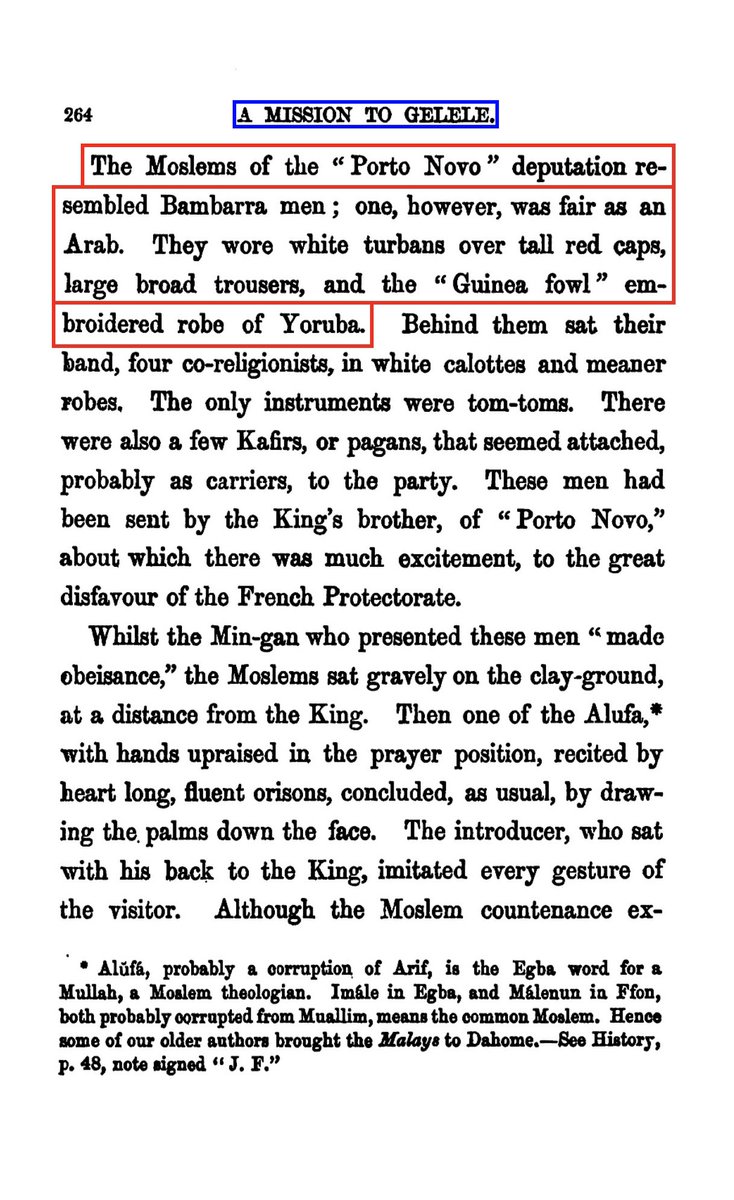
𝗧𝗛𝗘 𝗔𝗚𝗕𝗔́𝗗𝗔́-[𝗥𝗢𝗕𝗘] 𝗳𝗿𝗼𝗺 𝗰𝗮.𝟭𝟮𝟱𝟬 𝗖𝗘 𝗜𝗙𝗘̣̀ 𝗘𝗠𝗣𝗜𝗥𝗘 The popular 𝘁𝗵𝗲𝗼𝗿𝘆 (or logical explanation) for the origin of this 𝘄𝗶𝗱𝗲-𝘀𝗹𝗲𝗲𝘃𝗲𝗱 𝗿𝗼𝗯𝗲 amongst Yorubas is that it “originated in the Sudanic belt” and was introduced “into the Yorùbá world” in 𝗰𝗶𝗿𝗰𝗮 𝟭𝟳𝟬𝟬. This theory is now no longer logically sustainable in light of closer look at available evidence & logic ———— About 116 years ago, a German archaeologist Leo Frobenius visited Ifẹ̀, where he excavated several terracotta and stone artifacts dating to centuries 𝗙𝗿𝗮𝗺𝗲-𝟭 is from Frobenius’ “The Voice of Africa”, which he published 113 years ago. The terracotta highlighted (𝟮𝗔 & 𝟮𝗕) shows the front view & the side view respectively of a 𝘁𝗼𝗿𝘀𝗼 aka. upper body . . . This partly ruined piece was physically examined by Frobenius & he annotated it as “Richly 𝗿𝗼𝗯𝗲𝗱” Thus, the “𝗳𝗼𝗹𝗱 𝗼𝗳 𝗰𝗹𝗼𝘁𝗵…𝗼𝘃𝗲𝗿 𝘁𝗵𝗲 𝗱𝗲𝘅𝘁𝗲𝗿 𝘀𝗵𝗼𝘂𝗹𝗱𝗲𝗿” [F. Willett, “The Art of Ife”, 2004, T716] indicates the 𝘄𝗶𝗱𝗲 𝘀𝗹𝗲𝗲𝘃𝗲 of this “𝗿𝗼𝗯𝗲” when it is folded up The left sleeve of the piece is therefore either not folded-up as the right, or badly broken/damaged. . . . Lastly, this “𝗲𝗹𝗮𝗯𝗼𝗿𝗮𝘁𝗲𝗹𝘆 𝗰𝗹𝗼𝘁𝗵𝗲𝗱” figure [F. Willett, “The Art of Ife”, 2004, T716] wears a crotal-bells ornamented 𝗮𝗿𝗺𝗼𝗿 atop the 𝗿𝗼𝗯𝗲 around its torso This armor is worn in such a way that it does not disturb the sleeve. That is, a pair of 𝘃𝗲𝗿𝘁𝗶𝗰𝗮𝗹-𝘀𝗹𝗶𝘁 is to be found on either sides (front & back) of Ifẹ̀’s proto-agbádá, via which these armors go around. See 𝗙𝗿𝗮𝗺𝗲-𝟯 for what the slits would’ve been like . . . This teracotta therefore depicts a damaged torso of a person clothed with a rich 𝘄𝗶𝗱𝗲-𝘀𝗹𝗲𝗲𝘃𝗲𝗱 𝗿𝗼𝗯𝗲. This conclusion (bolded) is the precise definition of “𝗮𝗴𝗯𝗮́𝗱𝗮́” even according to The MET Museum: metmuseum.org/art/collection… For more than 100 years, this terracotta has been held in Germany, at the Ethnologisches Museum, Berlin which dates it to circa 𝟭𝟮𝟱𝟬 (1100 – 1400). . . . To put all this in perspective, there’s no evidence as this, to support the borrowing theory. Anyway, in the light of the hard evidence (from c.𝟭𝟮𝟱𝟬), as well as some writings from year c.𝟭𝟴𝟲𝟰 (𝗙𝗿𝗮𝗺𝗲-𝟰); agbádá was not “borrowed”. The “potent” theory which respects all the evidence taken together is given in the Ṣòkòtò & Agbádá post quoted below. Cheers!🥂 ————— PS: Indicate in the quotes or replies for a post on the literal derivation of the Yoruba term “agbádá”
Ọlá-Bọ́lá™ © tweet mediaỌlá-Bọ́lá™ © tweet mediaỌlá-Bọ́lá™ © tweet mediaỌlá-Bọ́lá™ © tweet media
Ọlá-Bọ́lá™ ©@theOlaBola

𝗢𝗻 “𝐒̣𝐎̀𝐊𝐎̀𝐓𝐎̀” 𝗮𝗻𝗱 “𝐀𝐆𝐁𝐀́𝐃𝐀́”: The attached image shows a granite sculpture of a human figure wearing 𝗮 𝗽𝗮𝗶𝗿 𝗼𝗳 ‘𝘁𝗿𝗼𝘂𝘀𝗲𝗿𝘀’, known in Yorùbá language as 𝘀̣𝗼̀𝗸𝗼̀𝘁𝗼̀. This granite image from Ìgbájọ has been dated to circa year 1400CE The survival of this Ìgbájọ granite image from the Yorùbá Classical Period at once invalidates some insinuations (from ongoing discussion on 𝕏) that the Yorùbás adopted 𝘀̣𝗼̀𝗸𝗼̀𝘁𝗼̀ recently, following a supposed shift from wraparound-garments (𝗶̀𝗿𝗼́). The reality (as it’s now obvious) is that both were in use during the Classical Period. And the baring of the upper body (as depicted in royal Ifẹ̀ works) suggests sacred/religious context — as opposed to the imagination that they could not fathom the possibility of (at least) draping their upper bodies with these fabric that they apparently possessed . . . Regarding 𝗮𝗴𝗯𝗮́𝗱𝗮́, there are suggestions from the traditions; archaeology; at least one Ifẹ̀ artifact; & from linguistics, to reach the conclusion that the popular theory that it simply came from the non-Yorùbá Sahel culture can no longer be sustained. A theory of the origin of the Yorùbás’ 𝗮𝗴𝗯𝗮́𝗱𝗮́ that appears to be better corroborated by evidence & thus more grounded in proof & reason goes thus: The Yorùbás, Hausas, Wolofs, et al. began upper body donning by simply draping extensive fabric across shoulder(s). They did this ‘independently’. This similar but independent (𝗽𝗮 𝗸𝗮́𝗷𝗮̀ style) attire slowly evolved over some centuries into Yorùbá-𝗮𝗴𝗯𝗮́𝗱𝗮́, Hausa- riga, Wolof-boubou, and others. The gradual mutual convergence (of their various 𝗸𝗮́𝗷𝗮̀ styles) into this wide sleeved robe was made possible by centuries long trade contact between the West African groups involved in such contact And the Yorùbás have been involved in the trans-sudanic trade and vice versa centuries before the period suggested by the popular theory of 𝗮𝗴𝗯𝗮́𝗱𝗮́ Cheers! 🥂 ————— Image: Suzanne P. Blier, “Art and Risk in Ancient Yoruba: Ife History, Power, and Identity, c. 1300”, Cambridge University Press, 2015. See page 163 Photograph: Nigerian National Museums, Lagos.
English
23
143
337
34.2K
BABA AJISEFA
BABA AJISEFA@ILE_AJISEFA·
Did you know? The name Àgbádá is Yoruba language but the style of clothe called Àgbádá is not indeginous to the Yorubas, it was adopted through west African trade. The Yoruba adopted, adapted, and indigenized the garment, while older indigenous Yoruba dress styles includes; 1. Ìpakájà 2. Ìsọ̀dùnkún 3. Ìṣán-bàǹtẹ́ 4. Kárósọmọ́nra
BABA AJISEFA tweet mediaBABA AJISEFA tweet media
English
40
22
172
14.5K
Isi Kote-ebu
Isi Kote-ebu@O_gbaa_ya·
@ILE_AJISEFA Who doesn’t know that where the yaribas stole it from? Only a mischievous yariba culture vultures will doubt fact and create lies to fight fact but fact is very stubborn
Isi Kote-ebu tweet media
English
3
0
1
117
Essie
Essie@EcEssie·
🤣🤣🤣some people are very creative
English
137
1.9K
7.6K
312.1K
Okesola Sunday Isola
Okesola Sunday Isola@Kingdomcome1989·
@Jokeshadollar Something is wrong with you. You tell your village people to stop making people think all the Yorubas are criminals. You guys already destroyed Yoruba image. Nobody wants to associate with you once you are a Yoruba Call out those evils leaders among us
English
36
2
72
5.9K
Oluseunjay(JP) รีทวีตแล้ว
Adunni$$
Adunni$$@Jokeshadollar·
You can dislike President Tinubu — he is your President, and you are fully within your rights to criticize him. You can dislike the APC — that is your prerogative. You can even dislike Nigerian politicians as a whole — that is entirely your business. But the line is crossed when: — You transfer that political anger toward the Yoruba people. — You disguise your dislike for certain politicians or parties as an excuse to attack Yoruba professionals, religious or traditional leaders, artists, businesspeople, or any Yoruba individual simply because of their identity. That will no longer be tolerated. And it will be firmly and confidently resisted.
English
247
658
2.2K
114.1K
Oluseunjay(JP)
Oluseunjay(JP)@jay_rhymz·
@Unreal_cloud @Jokeshadollar Stop hiding behind one finger with the VEIL of "I have friends who are Yoruba and I will always resist any tribal painted politics" and the UNVEILING "However, if we are being sincere", The intent is there and it has been unmasked while your bone of contention's been fractured.
English
1
0
2
61
Unreal
Unreal@Unreal_cloud·
@Jokeshadollar I have friends who are Yoruba and I will always resist any tribal painted politics. However, if we are being sincere, the Ronus started this when any criticism against BAT became automatically a criticism against the tribe. That’s the truth. I maintain, I love the Yorubas too
English
16
0
56
8.6K
Oluseunjay(JP) รีทวีตแล้ว
Zamani
Zamani@Zamani_WLK·
Reality was Barrister’s last gift. He walked into that studio and poured everything left in him into two tracks that somehow fit every moment of a Yoruba life. Birth. Marriage. Death. Joy. Grief. One album, every occasion. That is not music. That is prophecy.
English
129
818
2.9K
109K
Adunni$$
Adunni$$@Jokeshadollar·
To all Yoruba silent observers who stay behind the keyboard and watch all manner of rhetoric’s flying around about us. Rhetorics like lazy, dirty, ugly, too beautiful to be Yoruba, coward, betrayals, slaves, razz, loud-mouthed, and many more. I was once a silent observer and let all the rhetorics fly and do nothing. I STOPPED. Not anymore, not in my watch. These rhetorics have been internalized far too long by some young Yoruba as evident in the Yoruba-buts. My children will come and ready about Yoruba here and whatever they read will shape their opinion. I will use my pen to rewrite history on here.
English
99
553
1.9K
32.7K
Oluseunjay(JP) รีทวีตแล้ว
Asiwaju Saheed Olawale SALAMI 🇳🇬
@OgbeniDipo Peter Obi sharing money to voters was trending news but I guess the Obidients don't truly know who Peter Obi is.
Asiwaju Saheed Olawale SALAMI 🇳🇬 tweet media
English
1
3
3
250
Oluseunjay(JP) รีทวีตแล้ว
Ogbeni oluya
Ogbeni oluya@oluyanimi·
The same Peter Obi that left Anambra looking like this as Governor... how did he suddenly become Messiah overnight? This Ebuka review in 2011 exposes it all. Yoruba But, aiye yin ti baje gan 😂 Pure fraud ! .
Ogbeni oluya tweet media
English
0
2
3
91
Oluseunjay(JP) รีทวีตแล้ว
Montero - Olu Lewis
Montero - Olu Lewis@Montero1016·
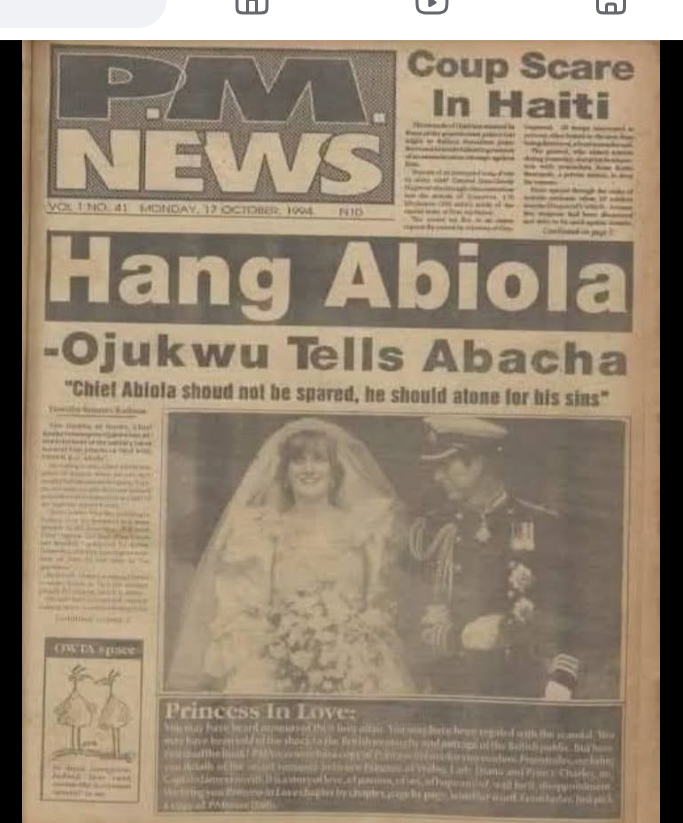
Since Ibos love history, attached is the video of Daniel Kanu mobilizing a 1 million man march for Abacha along with a few hungry akotileta Yorubas. Also attached is the image of a Newspaper headline in Oct 1994 where runaway warlord- Ojukwu asked Abacha to behead/hang MKO Abiola. I do not politicize history. NOTE- Daniel Kanu is now Obidient & a supporter of Ojukwu's protege- Peter Obi. Obi himself was part of that 1 million Man march according to the grapevine. Anywhere u see a Yoruba man been politically destroyed, an Ibo man is either at the forefront or behind it in the shadows! That is not hate, it is a fact backed by data!
Montero - Olu Lewis tweet media
Montero - Olu Lewis@Montero1016

For posterity sake, MKO won the two other Southern zones except the Southeast. Ibos voted more for Bashir Tofar despite the generosity of MKO towards them. They got scholarships, employment funds & he built Churches for them but when it came down to it, they voted for Tofar. Oore pé asiwere gbàgbé! To finish the job, Arthur Nzeribe had procured a Court Judgement for IBB in case MKO won. IBB used the Judgement bought by an Ibo man to annul MKO’S mandate. Sebi una wan hear una history? Continue! We will soon add that of Ojukwu & put on google top search!

English
18
369
800
46.8K
Bolaji Fesomade
Bolaji Fesomade@MasterBolaji·
Peter Obi has tried many routes to become President: Election—failed. Court—failed. Protests—failed. Abuja 25%—failed. Religion —failed. Bigotry—failed. Now, his latest tactic is calling on Tinubu to resign, as if the presidency will simply be handed to him. Delulu.
English
102
112
448
41.6K
Oluseunjay(JP) รีทวีตแล้ว
DaMie
DaMie@Ruby_Damie·
Yes oluko. A kìí gba àkàkà lọ́wọ́ akítì, a kìí gba’lée baba ọmọ lọ́wọ́ ọmọ Ikú tó pa òwè, ń pòwe fún ẹdun. Tí ọmọdé ò bá mọ ewẹ léwẹ, kò le mọ òwè lówè Aáyá bẹ́ sílẹ̀, ó bare. A kì í dámọ̀nràn àti tà’kìtì lágbàlá ọ̀bọ, nítorí ọ̀bọ fúnra’ra rẹ̀, ọba òkìtì ni. You no go like yoruba proverbs ke, so sweet😘😘
Tiếng Việt
8
7
49
1.4K
Oluseunjay(JP) รีทวีตแล้ว
Arojinle
Arojinle@arojinle1·
You're right. Yorùbá has different names for the monkey species found around us. Let me give you four more examples 1. Mona monkey - Òyo or Olóyo... This is the monkey that you see most in Lekki Conservation Center 2. Collared mangabey - Òwè 3. Tantalus monkey - akítì 4. Àáyá - Red colobus monkey. Our forebearers don't just know them, they have different proverbs that show the attributes of each species.
Arojinle tweet mediaArojinle tweet mediaArojinle tweet mediaArojinle tweet media
DaMie@Ruby_Damie

I was reading up on some old Yoruba idioms and realized something wild: most of us call every single monkey "ọ̀bọ". But apparently, our ancestors had specific names for different species, and we've completely lumped them together Take Ìjímèrè and Ẹdun, for example. To an English speaker, they are just two different monkeys. But in classical Yoruba culture, they aren't even treated like the same animal. Here is what I found out (and please correct me if I’m wrong!): 🔴 Ìjímèrè (The Patas Monkey) From what I gather, it is the reddish-brown monkey that spends a lot of time on the ground. There's a popular phrase "Ìjímèrè baba ọ̀bọ" (meaning it's the chief or master of monkeys). Myth tells us it used to have deep magical ties to humans. ⚫ Ẹdun (The Colobus Monkey) It is the striking black-and-white, long-haired monkey that lives high up in the tree canopy. What's crazy is that in deep folklore, Ẹdun is highly sacred and intimately connected to the spirit of Twins (Ìbejì). You'll hear old lineages praised as "Omo ẹdun arìn lórí igi." It feels like by translating everything to just "monkey" or "Ọ̀bọ," we are losing the deep history, biology, and poetry behind these animals. I'm really curious to know what the actual backstory behind why Ìjímèrè is called the "master of monkeys" is. And why did our ancestors link Ẹdun so closely to twins? 👇 Did you actually know the difference between these two, or have you just been calling every monkey "Ọ̀bọ" your whole life?

English
51
124
512
35.9K