Jeff Gallimore รีทวีตแล้ว
Jeff Gallimore
3.8K posts

Jeff Gallimore
@jeffgallimore
Give more than you take
Central Coast, New South Wales เข้าร่วม Eylül 2009
933 กำลังติดตาม229 ผู้ติดตาม
Jeff Gallimore รีทวีตแล้ว


March 11, 2011. 2:46 PM.
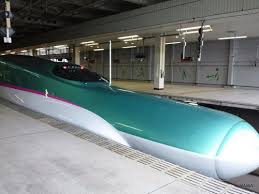
33 Shinkansen bullet trains were running through northern Japan.
Several were moving at 300 km/h.
Then the earthquake hit.
Magnitude 9.1. The 4th largest ever recorded.
Epicenter: off the Sanriku coast, 130 km ESE of the Oshika Peninsula.
Every single train stopped safely.
Zero passenger injuries.
Here's what happened.
12 to 22 seconds before the violent shaking reached the tracks,
a seismometer on Kinkazan — a small island off Japan's Pacific coast —
detected the quake and sent a signal inland.
The signal traveled faster than the earthquake itself.
Power to the tracks was cut.
Every train in the zone automatically braked.
By the time the ground started shaking violently,
the trains were already slowing down.
One empty test train derailed at Sendai Station.
Not a single train in service derailed.
The Shinkansen has been running since 1964.
In 60 years, it has killed zero passengers —
not in a collision, not in a derailment.
Zero.
Most people stop reading here.
The real story starts now.
Japan built this safety system in two layers, for two different problems.
First: UrEDAS — the Urgent Earthquake Detection and Alarm System.
Invented in the early 1980s, deployed on the Tokaido Shinkansen in 1992.
The world's first operational P-wave warning system for trains.
Its seismometers sit along the coast, listening for earthquakes out at sea.
When one hits, the system reads the first 3 seconds of P-wave motion,
estimates the magnitude and location,
and sends a warning inland to the tracks.
Second: Compact UrEDAS.
Built after the 1995 Kobe earthquake,
which struck directly beneath a city with almost no warning.
When the earthquake happens directly under the train,
there's no time to calculate anything.
So Compact UrEDAS asks one question:
"Is this shaking dangerous?"
It answers in about 1 second.
Both systems end the same way.
They cut the power.
The Shinkansen is built so that the moment it loses power,
emergency brakes engage automatically.
The driver makes no decision.
There's no time to.
A 300 km/h Shinkansen takes about 90 seconds to stop.
No warning system in the world buys you 90 seconds.
The goal isn't to stop the train before the earthquake arrives.
The goal is for the train to be slowing down when it does.
This is the part foreign coverage misses.
The goal isn't to prevent the accident.
The goal is to make the accident survivable.
In-service Shinkansen have derailed twice in 60 years.
2004. Niigata Chuetsu earthquake.
A trackside Compact UrEDAS detected the P-wave.
Power was cut one second later. Emergency brakes engaged 1.5 seconds after that.
But the earthquake was directly beneath the train,
which was moving at 204 km/h.
8 of 10 cars derailed.
The train skidded 1.6 km before stopping.
154 passengers on board.
Zero injuries.
2022. M7.4 off Fukushima.
A Shinkansen traveling at 320 km/h detected the first tremor and began braking.
As the train decelerated toward a stop,
a second, stronger quake (M7.4) hit.
16 of the 17 cars derailed.
75 passengers. 3 crew.
Zero deaths. No serious injuries.
Two other derailments involved empty trains.
2011, Sendai Station, a test train.
2016, Kumamoto earthquake, a transit train.
In every case, the warning system had already cut the power
before the shaking reached its peak.
The system does not stop earthquakes.
It does not always stop derailments.
It just makes sure the earthquake arrives after the train is already slow.
Japan's earthquakes and Japan's trains grew up in the same country,
watching the same ground.
Somewhere in Japan right now,
a Shinkansen is moving at 300 kilometers per hour.
Far away, on a quiet coast,
a sensor is listening to the rock beneath it.
It has been listening since 1992.
Every time it was needed, it worked.

English
Jeff Gallimore รีทวีตแล้ว


@DjokovicEternal @tennisabstract Sinner paying off AI now for good publicity 🤣🤡
English

@tennisabstract The shameless drug cheat spending an absolute fortune on PR
English
Jeff Gallimore รีทวีตแล้ว

@Alexper91159764 @timdennis123 Even better is the guy telling the guy who noted the guys telling the guy what he would do 😆😆😆
English

@timdennis123 I think I would lay roughly 200 k off , still about 65k of profit left Tim
English
Jeff Gallimore รีทวีตแล้ว

So he’ll stop bombing Iran in order to reopen the Strait of Hormuz…
…which was open before he started bombing Iran.
Got it.
BBC Breaking News@BBCBreaking
President Trump says he will suspend attacks on Iran for two weeks if it opens Strait of Hormuz immediately Follow live bbc.in/4ch7uZD
English

Who is this dipshit?? 🤡🤡
Australia Institute@TheAusInstitute
A 1.4% levy on the gambling industry could compensate the media for ALL revenue lost from a potential gambling advertising ban. Australians lose more money gambling than any other country. It's time for our governments to act. @AmyRemeikis #auspol
English

@wincapital_ @tennismasterr Sounds like the perfect player to bet on then…leave him alone at short odds and low risk plays when he is a dog
English

@tennismasterr Lost as big fav
Wins as big dog
Zero sense with this guy uncle
English
Jeff Gallimore รีทวีตแล้ว

@Acyn "When people don't believe the press that's a very bad thing" - says the bloke who calls everything Fake News 🤦♂️🤡
English
Jeff Gallimore รีทวีตแล้ว