NeonPanda

5.2K posts

NeonPanda banner
NeonPanda

NeonPanda

@jitppatil

Crypto | Web3 | Nodes | DePIN | Early Adopter Building & supporting crypto infrastructure 🚀

Sangli เข้าร่วม Ocak 2025
1.3K กำลังติดตาม213 ผู้ติดตาม
NeonPanda
NeonPanda@jitppatil·
@HelmTrading Looks like Helm is finally dialing in the details that actually make trading smoother and more rewarding—excited to see this go live.
English
0
0
0
2
NeonPanda รีทวีตแล้ว
Helm
Helm@HelmTrading·
Coming This Week on Helm Maintenance concludes this weekend. Our major update goes live Monday. Key enhancements: • Weekly PNL reset • Live Trading Competition with real cash prizes + Helm Points bonuses • V1 Copy Trading rollout • Enhanced profiles & UI upgrades Precision. Performance. Progress. Elevate your trading: helm.trading
Helm tweet media
English
14
11
15
48
NeonPanda
NeonPanda@jitppatil·
Most AI today stops at answers. But real productivity comes from actions. That’s why the shift toward systems like @ActionModelAI matters — AI that can move from “here’s how” to “I’ve done it.” That gap is where the future is forming.
English
0
0
0
2
NeonPanda
NeonPanda@jitppatil·
The internet taught AI to understand language. Now the next challenge is teaching it to use tools. From browsers to apps to workflows — intelligence is slowly becoming operational, not just conversational. We’re still early in that transition. @ActionModelAI
English
0
0
0
8
NeonPanda
NeonPanda@jitppatil·
Imagine an AI that doesn’t just suggest steps… But actually completes them inside your apps. No switching tabs. No copying instructions. Just outcomes. That’s the broader vision behind action-oriented AI systems like @ActionModelAI
English
0
0
0
8
NeonPanda รีทวีตแล้ว
Action Model
Action Model@ActionModelAI·
You’re already training Big Tech’s AI models. So why aren’t you getting compensated for it? With Action Model you can download our browser extension and train AI passively in the background or by completing ActionFi tasks, while earning rewards and ownership in the model itself. This is what the future of AI should look like. Ownership back in the hands of the people who help build it, not billionaire control.
English
434
489
688
7.8K
NeonPanda
NeonPanda@jitppatil·
Prompt-based AI feels powerful today… But it’s still passive. The next evolution is active systems — AI that can operate inside digital environments, not just describe them. That’s the direction Large Action Models are pointing toward. @ActionModelAI
English
0
0
0
4
NeonPanda
NeonPanda@jitppatil·
Bitcoin doesn’t need to change for stablecoins to work. The integration layer does. That’s the part most people misunderstand. For years, the narrative has been: “If Bitcoin can’t support stablecoins natively, something must be missing.” But Bitcoin isn’t broken. It’s doing exactly what it was designed to do — secure, final, censorship-resistant settlement. The real problem has always been how we try to plug into it. Most stablecoin systems today weren’t built for real-world payments: • fees fluctuate • transactions are publicly visible • settlement is unpredictable • infrastructure is fragmented That’s not a Bitcoin issue. That’s an integration issue. This is where platforms like @utexocom are quietly shifting the approach. Instead of modifying Bitcoin, they build around it: → execution happens off-chain for speed and scalability → settlement is anchored back to Bitcoin for security and finality → Lightning enables instant, low-latency payments → RGB enables stablecoins like USDT to exist natively on Bitcoin All of it abstracted into a single API layer. So developers don’t have to manage nodes, liquidity, routing, or protocol complexity — they just integrate once and everything works. That’s the key shift: From “how do we change Bitcoin?” to “how do we make Bitcoin usable at scale?” Because businesses don’t care about blockspace debates. They care about: • predictable costs • privacy • speed • reliability And traditional stablecoin rails still struggle here — especially with public transaction visibility and inconsistent execution costs. Utexo’s model flips that: • fixed, deterministic fees instead of fee volatility • private execution instead of full public exposure • instant settlement via Lightning instead of delays • Bitcoin as the final settlement anchor So stablecoins finally start behaving like actual money — not just tokens moving on a chain. That’s why this matters. The future isn’t about forcing Bitcoin to become something else… It’s about building the right layer on top of it. Because once the integration layer is right, everything else just works.
NeonPanda tweet media
English
0
0
0
9
NeonPanda
NeonPanda@jitppatil·
Blockchain networks are evolving beyond simple transfers. And honestly… they have to. Sending tokens was just the starting point. The real shift is happening in what blockchains can do — not just what they can move. That’s where @SphinxProtocol comes in. Instead of treating blockchain like a payment rail, Sphinx is building full-scale market infrastructure on-chain — the kind that traditionally only institutions could access. Think about it: • not just transactions → but complete trade execution • not just wallets → but real-time market access • not just DeFi → but commodity derivatives, futures & swaps All running 24/7. What makes this different is how deeply it removes friction from traditional finance: → instant, on-chain settlement instead of T+2 delays → cross-margining that unlocks more capital efficiency → high-speed execution that rivals centralized systems → no intermediaries slowing things down Under the hood, Sphinx isn’t trying to choose between speed and decentralization… It blends both. A modular architecture (validators + coprocessors + relayers) allows it to scale like centralized exchanges while staying transparent and self-custodial That’s the real evolution: From “send tokens” → to “run entire financial systems.” Because the future of blockchain isn’t about moving value… It’s about operating markets. And the platforms that understand this shift early will define what the next decade of finance looks like.
NeonPanda tweet media
English
0
0
0
5
NeonPanda
NeonPanda@jitppatil·
Automation removes friction. But most platforms only remove a little of it. Here’s the reality most people don’t talk about: In crypto, friction isn’t just one problem. It’s death by a thousand steps… • switching between apps • figuring out chains • bridging funds • finding the best route • understanding what you’re even doing And every extra step = lost users, lost momentum. That’s exactly the gap @QwertiAI is solving. Instead of forcing users to learn the system, Qwerti flips it: 👉 The system works for the user. With an AI-powered interface, Qwerti turns complex DeFi flows into simple, guided actions — where you can: • swap across 70+ chains in a few clicks • buy tokens directly with fiat • use or even auto-create a wallet instantly • get step-by-step guidance in plain language • analyze + execute without leaving one interface No tab hopping. No confusion. No unnecessary delays. Even onboarding changes completely. Instead of telling someone: “Go here → sign up → bridge → swap…” You just send one link. They click. They execute. Done. That’s what real automation looks like: Not just faster clicks… But fewer decisions. Less cognitive load. Zero unnecessary steps. Because friction doesn’t just slow systems down — it kills adoption. And the platforms that win won’t be the most complex… They’ll be the ones that feel effortless. Automation removes friction. Qwerti removes everything that shouldn’t have been there in the first place.
NeonPanda tweet media
English
0
0
0
4
NeonPanda
NeonPanda@jitppatil·
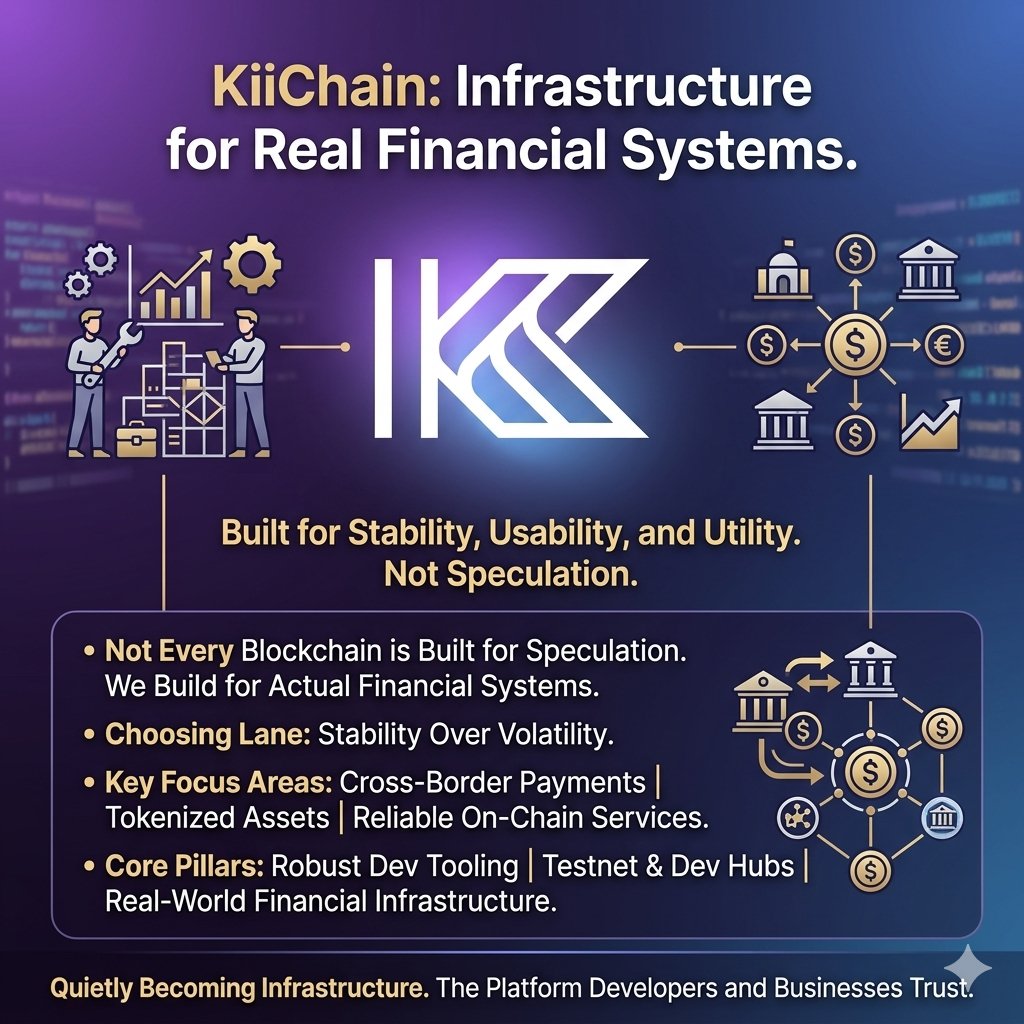
Not every blockchain is built for speculation. Some are built for real financial systems — and KiiChain is clearly aiming there 👇 While most chains chase hype, @KiiChainio focuses on infrastructure: • dev-friendly tools to actually build • structured testnet + ecosystem for fast iteration • rails designed for payments, assets, and real-world finance Because the next wave of Web3 isn’t just trading… It’s: 👉 cross-border payments 👉 real-world asset tokenization 👉 everyday financial apps people actually use And those need reliability — not noise. KiiChain isn’t trying to be the loudest. It’s trying to be useful. And historically, the biggest winners in tech aren’t the most hyped… they’re the ones that become infrastructure. That’s the lane KiiChain is playing in.
NeonPanda tweet media
English
0
0
0
4
NeonPanda
NeonPanda@jitppatil·
Builders, users, innovators — Incentiv is for all of you. And that’s not just a tagline… it’s how the system is actually designed 👇 Most blockchains split people into roles: builders build, users use, validators earn. @Incentiv_net flips that. It runs on a “Proof of Contribution” model — meaning anyone who adds value can earn from the network. So whether you: • build apps • use the platform • provide liquidity • or simply interact 👉 you’re part of the same reward loop. That’s where it gets interesting. Instead of value leaving the system as fees… Incentiv collects activity into a shared reward pool and redistributes it back to contributors based on impact. So growth isn’t extractive — it’s circular. On top of that, the experience is designed to feel simple: • no complex wallets → passkeys + smart wallets • no strict gas tokens → pay fees with multiple tokens • no friction → bundled, automated transactions Meaning even non-technical users can participate without the usual Web3 headaches. And for builders? It’s EVM-compatible, testnet-ready, and built for fast iteration — so you can ship without rebuilding the entire stack. The bigger picture: 👉 builders create value 👉 users generate activity 👉 the protocol redistributes rewards All aligned in one system. That’s what makes it feel less like a platform… and more like a shared economy.
NeonPanda tweet media
English
0
0
0
4
NeonPanda
NeonPanda@jitppatil·
AI is evolving from “what should I do?” to “let me do it for you.” That shift from guidance → action is huge. Instead of only supporting decisions, AI could soon participate directly in the work itself. We’re getting closer to that reality. @ActionModelAI
English
0
0
0
4
NeonPanda
NeonPanda@jitppatil·
“With @fermah_xyz , proof generation becomes a service.” Sounds technical… but it’s actually a big unlock for builders 👇 Zero-knowledge proofs are powerful. They let you verify computation without revealing the underlying data. But in reality? Generating those proofs is: • expensive • slow • and complex to manage at scale That’s been a bottleneck for a lot of teams trying to build with ZK. Fermah flips this model. Instead of every project handling proof generation on its own… it turns it into a shared, on-demand service layer. Think of it like this: 👉 you focus on your app 👉 Fermah handles the heavy lifting of generating proofs 👉 and everything is delivered as a service you can plug into No need to build specialized infra from scratch. What makes it interesting is how it’s structured: • a distributed network of provers → scaling compute as demand grows • efficient proof pipelines → reducing latency and cost • modular design → so different apps can integrate without friction So whether it’s rollups, AI verification, or complex computations… proof generation becomes something you call, not something you build. And that changes developer behavior. Because when infra gets abstracted: • experimentation increases • time to market drops • and smaller teams can compete with larger ones There’s also a bigger shift happening here. We’ve already seen: compute → cloud storage → cloud Now we’re seeing: proof generation → service layer That’s what Fermah is tapping into. Projects like Flashcast are already exploring what this looks like in real applications — where content, computation, and verification start blending together in real time. So the takeaway isn’t just about ZK. It’s about removing one of the hardest parts of building in this space… and turning it into something simple, scalable, and accessible.
English
1
0
0
8