Marcio Albuquerque

3.2K posts

Marcio Albuquerque banner
Marcio Albuquerque

Marcio Albuquerque

@mlalbuquerque

Loves tech and science and innovation and board games and Baêa!!

Salvador, Bahia, Brasil เข้าร่วม Ekim 2009
527 กำลังติดตาม530 ผู้ติดตาม
Marcio Albuquerque รีทวีตแล้ว
Nitin.nn
Nitin.nn@NitinthisSide_·
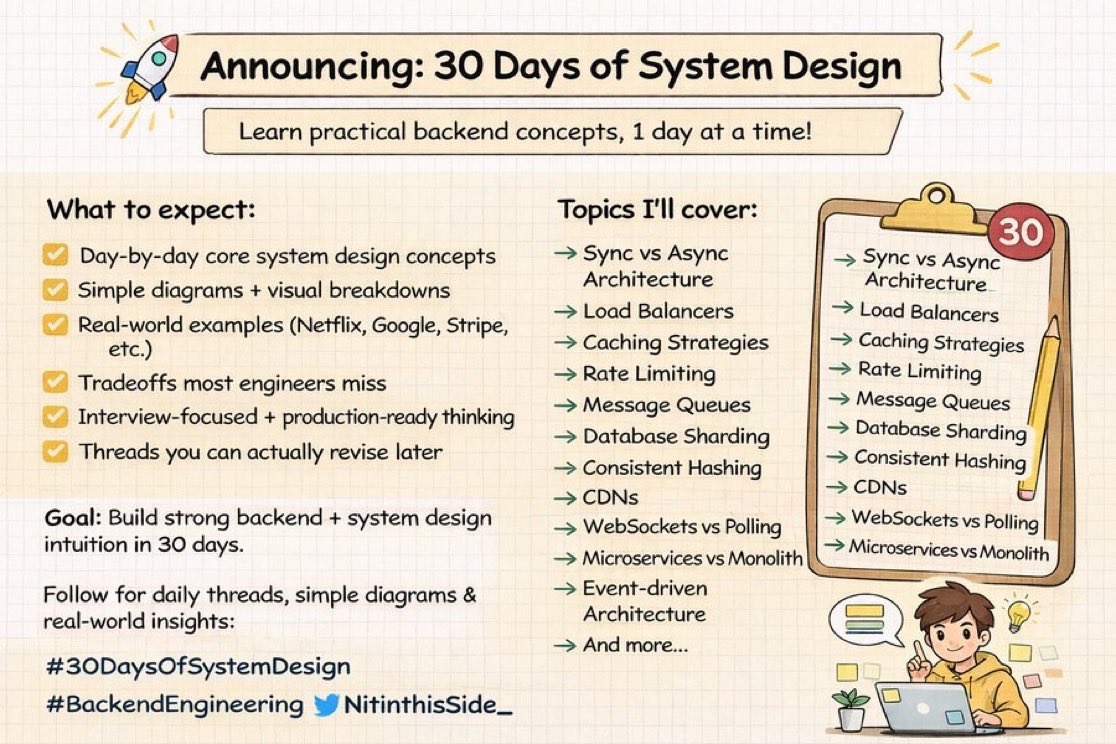
Announcing: 30 Days of System Design Starting today, I’m diving deep into system design — one practical concept every day. From backend fundamentals to real-world architecture, this series is built to help you think like an engineer who designs systems that actually scale. What you can expect: → Clear, day-by-day breakdowns of core concepts → Simple diagrams and visual explanations → Real-world examples from companies you know → Honest tradeoffs most engineers overlook → Interview-focused insights with production-ready thinking → Threads designed for easy revision anytime The goal? Build strong backend and system design intuition in just 30 days. If you're learning backend, preparing for interviews, or working on scalable systems — this is for you. Day 1 drops next. Ready? #30DaysOfSystemDesign #BackendEngineering #SystemDesign
Nitin.nn tweet media
English
37
88
1.1K
100.8K
Marcio Albuquerque
Marcio Albuquerque@mlalbuquerque·
@kazzkiq Que ideia legal, @kazzkiq!! Conta comigo! Só marcar q tô dentro! Espero q devs q me seguem pelo menos fiquem sabendo da ideia, mas torcendo pra participarem!
Português
0
0
0
445
Claudio
Claudio@kazzkiq·
Atenção devs, jogar uma ideia pra melhorar nosso país aqui: O que vocês acham da gente criar uma Org no GitHub com o único objetivo de criar sistemas open-source pra prefeituras usarem? Área de segurança, infra, gastos, KPIs, etc. todo feito pra consumo fácil e padronizado de dados, com APIs expostas pra integrar com outros sistemas e agentes IA. Todo mundo ajuda. São mais de 5500 municípios, desses a maioria sendo pequenos e de população carente, com prefeituras sem nem saber por onde começar a entregar (e medir) bons resultados. Se entregarmos uma receita de bolo pronta será que já não ajuda? O que acham, é uma boa? Obs.: pessimistas não são bem vindos, se for trazer problema que seja com bons argumentos
Português
416
53
1.2K
387.8K
Marcio Albuquerque รีทวีตแล้ว
Felpz Crypto
Felpz Crypto@FelpsCrypto·
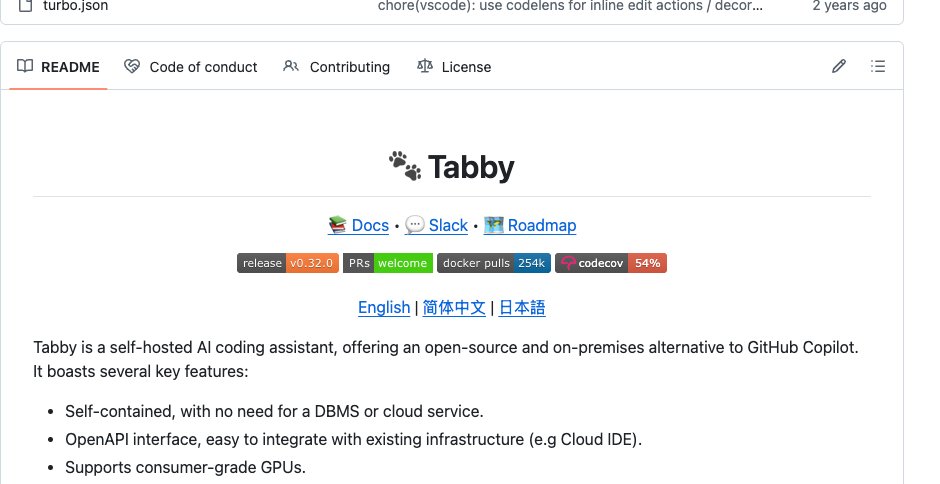
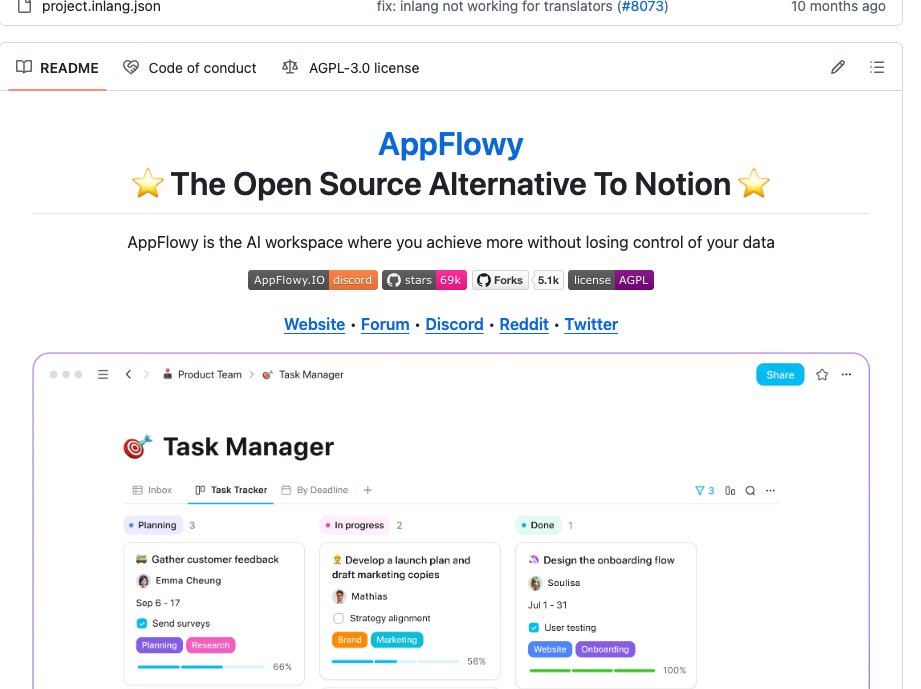
Cancelei $500/mês em assinaturas de SaaS no mês passado. Substituí tudo por repositórios open-source do GitHub. AppFlowy → Substitui o Notion github.com/AppFlowy-IO/Ap… Tabby → Substitui o GitHub Copilot github.com/TabbyML/tabby Continue → Substitui o Cursor Pro github.com/continuedev/co… LanguageTool → Substitui o Grammarly github.com/languagetool-o… Stable Diffusion WebUI → Substitui o Midjourney github.com/AUTOMATIC1111/… Chatwoot → Substitui o Intercom github.com/chatwoot/chatw… n8n → Substitui o Zapier github.com/n8n-io/n8n Whisper → Substitui o Otter.ai github.com/openai/whisper PostHog → Substitui o Mixpanel github.com/PostHog/posthog LocalAI → Substitui a API da OpenAI github.com/mudler/LocalAI 100% open source. Zero assinaturas. Tudo gratuito. (Salva esse post antes que desapareça) 🧵
Felpz Crypto tweet mediaFelpz Crypto tweet mediaFelpz Crypto tweet mediaFelpz Crypto tweet media
Português
7
40
424
17.4K
Marcio Albuquerque รีทวีตแล้ว
Felpz Crypto
Felpz Crypto@FelpsCrypto·
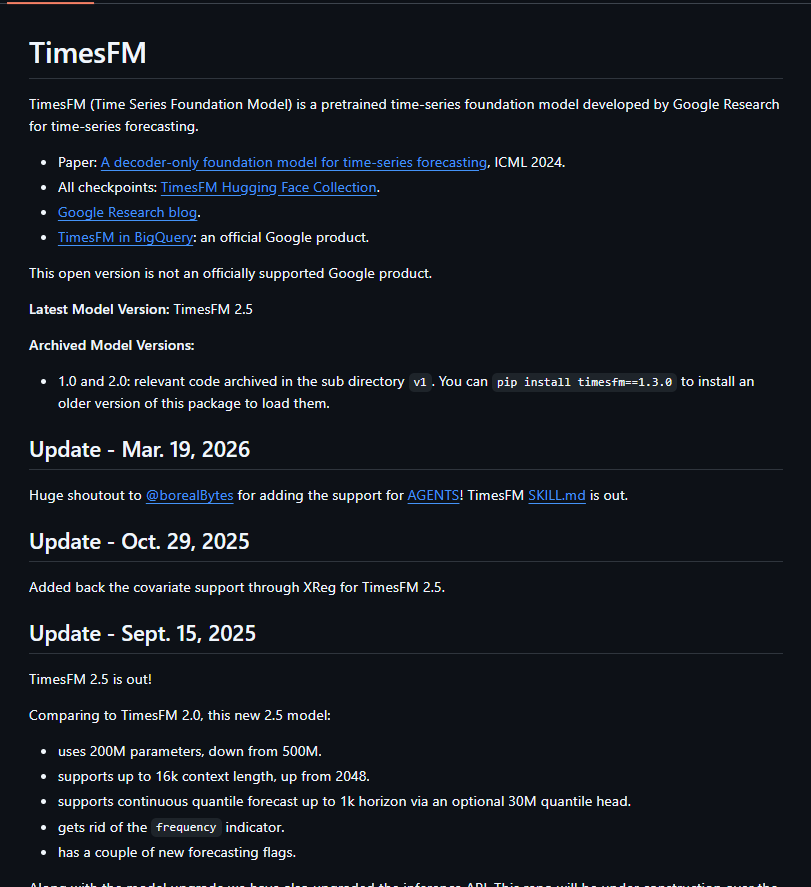
🚨 O Google tornou público um software de IA que prevê o futuro. Preços de ações. Tendências de vendas. Demanda de energia. Padrões climáticos. Tráfego de servidores. Qualquer série temporal. Grátis. Chama-se TimesFM. Um modelo desenvolvido pelo Google Research, apresentado na ICML 2024, feito especificamente para previsão de séries temporais. Sem precisar treinar seu próprio modelo. Sem diploma em ciência de dados. Sem plataformas caras. Basta fornecer os dados. Ele prevê o que acontecerá a seguir. Eis o que torna isso diferente: → Pré-treinado em grandes volumes de dados. Funciona imediatamente com os SEUS dados. → 200 milhões de parâmetros. Leve e eficiente. → Suporta até 16K de contexto (anos de dados históricos). → Previsões com intervalos de confiança (não só um número). → Funciona com PyTorch e JAX → Já integrado ao BigQuery E aqui está a parte mais louca: Antes, previsão exigia cientistas de dados, semanas de treino e alto custo. Agora: um modelo pronto. Qualquer domínio. Qualquer dado. Só prever. Exemplos: Forneça preços de ações → prevê tendências Forneça tráfego de servidor → prevê picos Forneça dados de vendas → prevê próximos meses Forneça demanda de energia → prevê consumo O custo antes: Terminal Bloomberg: ~$25.000/ano Plataformas corporativas: +$50.000/ano Equipe de dados: +$500.000/ano Agora: pip install timesfm Código aberto. Licença Apache 2.0. Tecnologia nível big tech na mão de qualquer pessoa. Não é mágica. Mas chega perto.
Felpz Crypto tweet media
Português
13
183
1.1K
55.7K
Marcio Albuquerque รีทวีตแล้ว
Alvaro Cintas
Alvaro Cintas@dr_cintas·
You can now fine-tune Gemma 4 completely FREE 🤯 No GPU. No credit card. No coding knowledge required. Just a browser and 500+ models to choose from. → Open the Unsloth Colab notebook → Pick your model + dataset → Hit Start Training
English
38
278
2.3K
170.5K
Marcio Albuquerque รีทวีตแล้ว
Hasan Toor
Hasan Toor@hasantoxr·
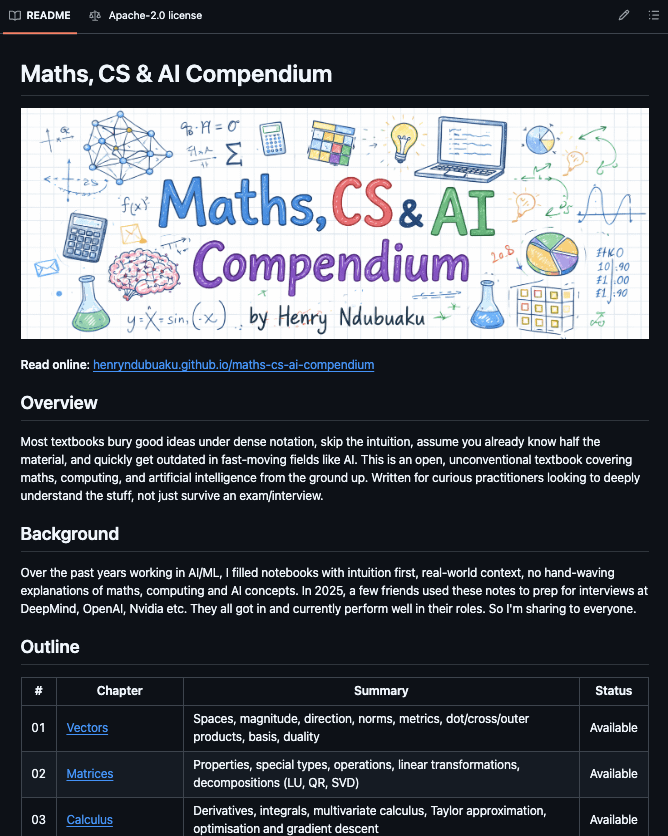
🚨 BREAKING: An AI engineer just compiled every maths, CS, and AI concept into one free open-source textbook. Built with intuition, not notation. It covers vectors, calculus, machine learning, GPU programming, systems design, and AI inference. All explained the way nobody taught you in college. It's called the Maths, CS & AI Compendium. You open a chapter. It gives you the intuition first, then the math, then the real-world context. You come out actually understanding it. Not memorizing it. Not surviving an exam. Actually understanding the thing. Not a course. Not a YouTube playlist. A full open-source textbook built by an AI engineer who filled notebooks for years working in AI, then watched his friends use those notes to get into DeepMind, OpenAI, and Nvidia. Here's what's already inside: → Vectors and matrices from the ground up, spaces, transformations, SVD, all with clean intuition before the formulas → Calculus built for ML, derivatives, gradient descent, Taylor approximation, multivariate everything → Statistics and probability done right, Bayesian methods, information theory, distributions that actually make sense → Machine learning end to end, classical ML, deep learning, reinforcement learning, distributed training → GPU programming, SIMD, CUDA, Triton, ARM chips, TPUs, the low-level stuff most courses skip entirely → Systems design, inference, quantization, streaming LLMs, edge deployment, large scale infra Here's how it's different: Most textbooks bury the idea under 3 pages of notation. This one leads with the intuition. Why does this work. What does this actually mean. Where does this show up in the real world. Then the math. In that order. Every chapter. Here's the wildest part: A few friends used early drafts of these notes to prep for interviews at DeepMind, OpenAI, and Nvidia. They all got in. So he put the whole thing on GitHub for everyone. 18 chapters planned. 6 already live. The rest dropping soon. Built by Henry Ndubuaku. 100% Open Source.
Hasan Toor tweet media
English
25
320
1.5K
82.7K
Marcio Albuquerque รีทวีตแล้ว
Sukh Sroay
Sukh Sroay@sukh_saroy·
🚨 BREAKING: Someone just open sourced a testing tool that generates API tests and mocks automatically -- by recording real traffic at the network layer using eBPF. It's called Keploy. And it's not a code generator. It's a language-agnostic testing agent that captures every API call, database query, and streaming event your app makes in production -- then replays them as tests with zero code changes required. Here's what makes it different from every other testing tool: → Uses eBPF to intercept traffic at the kernel level -- no SDK, no instrumentation, no code changes → Records Postgres, MySQL, MongoDB, Kafka, RabbitMQ, Redis -- not just HTTP endpoints → Replays tests deterministically without re-provisioning any infrastructure → Freezes system time during replay so time-dependent tests don't flake → Works with Go, Java, Python, Node.js, Rust, C#, Ruby, Elixir, PHP, Kotlin, Swift -- any language → Generates combined coverage: statement coverage for devs, API schema coverage for QA → Uses AI to expand coverage from existing recordings -- finds boundary values, wrong types, missing fields Here's the wildest part: Most API testing tools only mock HTTP endpoints. Keploy records the entire infra layer -- your database queries, your message queue events, your external API calls -- and virtualizes all of it so tests run in complete isolation. No containers to spin up. No test databases to provision. No flaky environment issues. One command to start recording: `keploy record -c "CMD_TO_RUN_APP"` Listed on the CNCF Landscape. 472 releases. Actively maintained. 16.2K GitHub stars. 2.2K forks. 100% Open Source. Apache-2.0 License. (Link in the comments)
Sukh Sroay tweet media
English
15
59
352
27.1K
Marcio Albuquerque รีทวีตแล้ว
Allen Holub. https://linkedIn.com/in/allenholub
Pull Requests (PRs) solve one problem only: you have broken up the work into small chunks that are completed by untrusted (and often unknown) individuals working in isolation without support or help, who produce potentially destructive changes, and you need someone from a small cadre of experts to verify that work. In other words, they make sense in public open-source projects. And nowhere else. Instead, consider changing the way you work. If you work collaboratively (e.g., mob/ensemble or pair programming), review happens as you work, so PRs are unnecessary. This is the best solution, I think. If you use TDD along with static analysis (lint or equivalent, format verification, &c.) and extensive automated testing, PRs are unnecessary. If you add daily team-level reviews to your workflow (say, an hour a day when the whole team reviews the team's work), PRs are unnecessary. I'm sure the team can think of others. Adopting a process (PRs) simply because it works in another context unrelated to your own (OS dev) never works. In fact, it hinders you.
English
24
9
91
15.2K
Marcio Albuquerque รีทวีตแล้ว
Aastha
Aastha@aastha_mhaske·
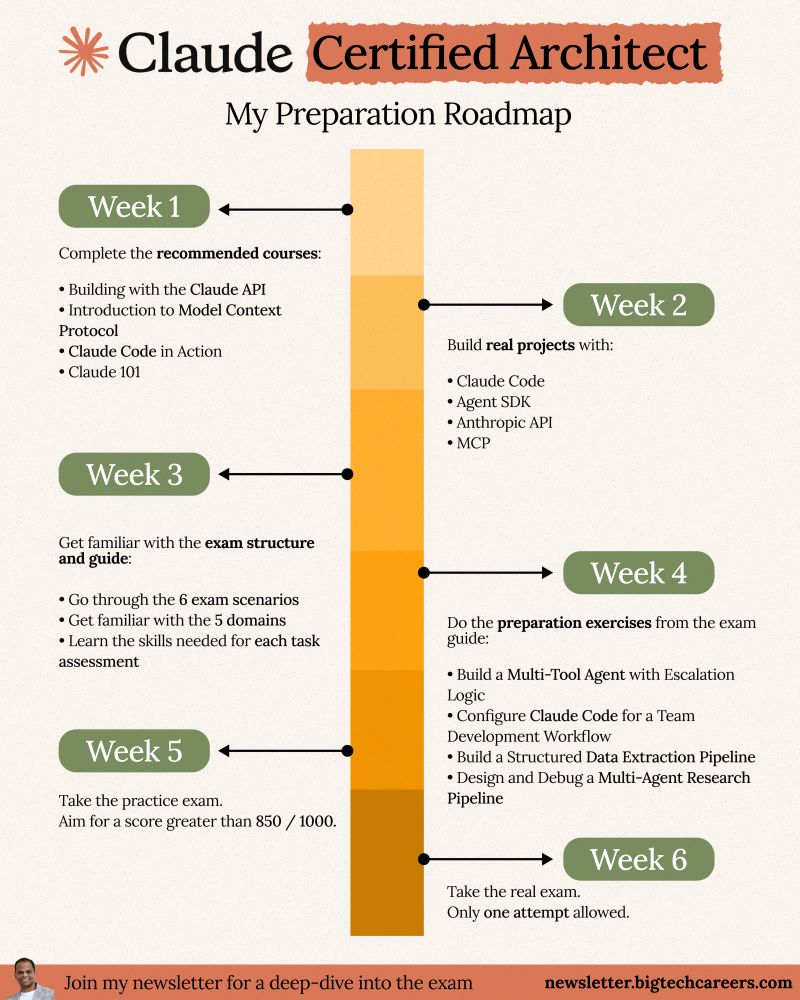
Anthropic just launched the Claude Architect Certification! You’ll have to complete 60 multiple-choice questions across five competency areas in a single session. No external resources or breaks. Here’s how I’m planning to prepare for it (steal my roadmap): Week 1 Complete the recommended courses: - Building with the Claude API - Introduction to Model Context Protocol - Claude Code in Action - Claude 101 Week 2 Build real projects with: - Claude Code - Agent SDK - Anthropic API - MCP Week 3 Get familiar with the exam structure and guide: - Go through the six exam scenarios - Get familiar with the five competency areas / domains - Learn the skills needed for each task assessment Week 4 Do the preparation exercises from the exam guide: - Build a Multi-Tool Agent with Escalation Logic - Configure Claude Code for a Team Development Workflow - Build a Structured Data Extraction Pipeline - Design and Debug a Multi-Agent Research Pipeline Week 5 - Take the practice exam - Aim for a score greater than 850 / 1000 Week 6 - Take the real exam - Only one attempt allowed NOTES: - At this point the certification is exclusive for Anthropic Partners and early access is free for first 5,000 partner company employees. - Your mileage may vary depending on your skill level. E.g. It may take 2 weeks for some but 10 weeks for others. If you are eligible, register here → lnkd.in/eEYwUGV5
Aastha tweet media
English
56
546
3.8K
267.8K
Marcio Albuquerque รีทวีตแล้ว
Oliver Prompts
Oliver Prompts@oliviscusAI·
someone built a web-based System Design Simulator. you drag and drop components (api gateways, dbs, caches) and it actually simulates real-time traffic. you can watch latency, bottlenecks, and failures happen live...
English
63
344
3.6K
281.5K
Marcio Albuquerque รีทวีตแล้ว
CV.YH
CV.YH@0xCVYH·
Stack de IA local que eu recomendo pra quem quer comecar HOJE: Ollama — gerenciar modelos (gratis) Open WebUI — interface bonita (gratis) whisper.cpp — transcricao de audio (gratis) edge-tts — voz sintetica (gratis) AnythingLLM — RAG com seus docs (gratis) Hardware minimo: 16GB RAM + 8GB VRAM. Custo do software: R$0.
Português
5
16
198
5.5K
Marcio Albuquerque รีทวีตแล้ว
0xMarioNawfal
0xMarioNawfal@RoundtableSpace·
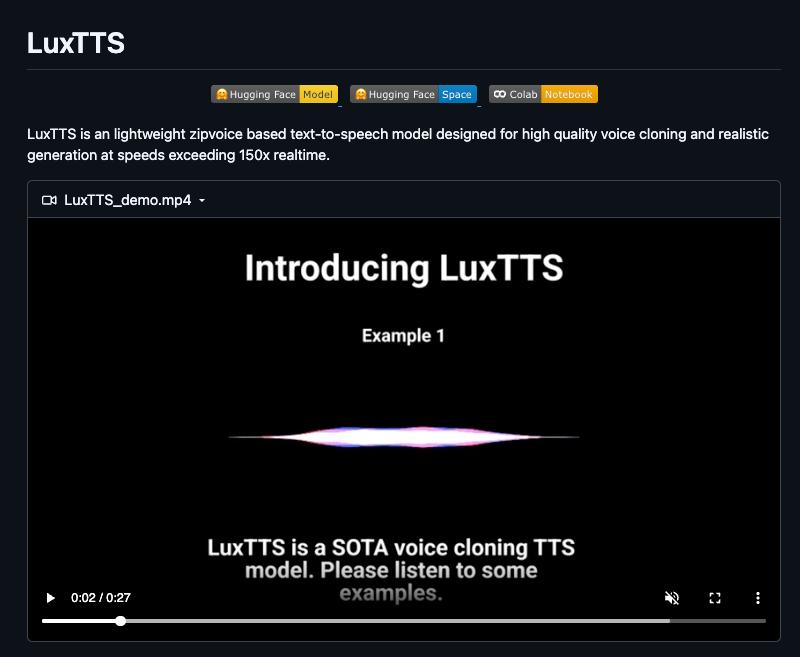
LuxTTS clones any voice from 3 seconds of audio on a 4GB GPU. - 150x realtime speed - 48khz output vs industry standard 24khz - Fits in 1GB VRAM - Works on CPU too No ElevenLabs subscription. No cloud. Just open source. The voice cloning barrier just hit zero. link: github.com/ysharma3501/Lu…
0xMarioNawfal tweet media
English
30
144
1.2K
126.5K
Marcio Albuquerque รีทวีตแล้ว
Hasan Toor
Hasan Toor@hasantoxr·
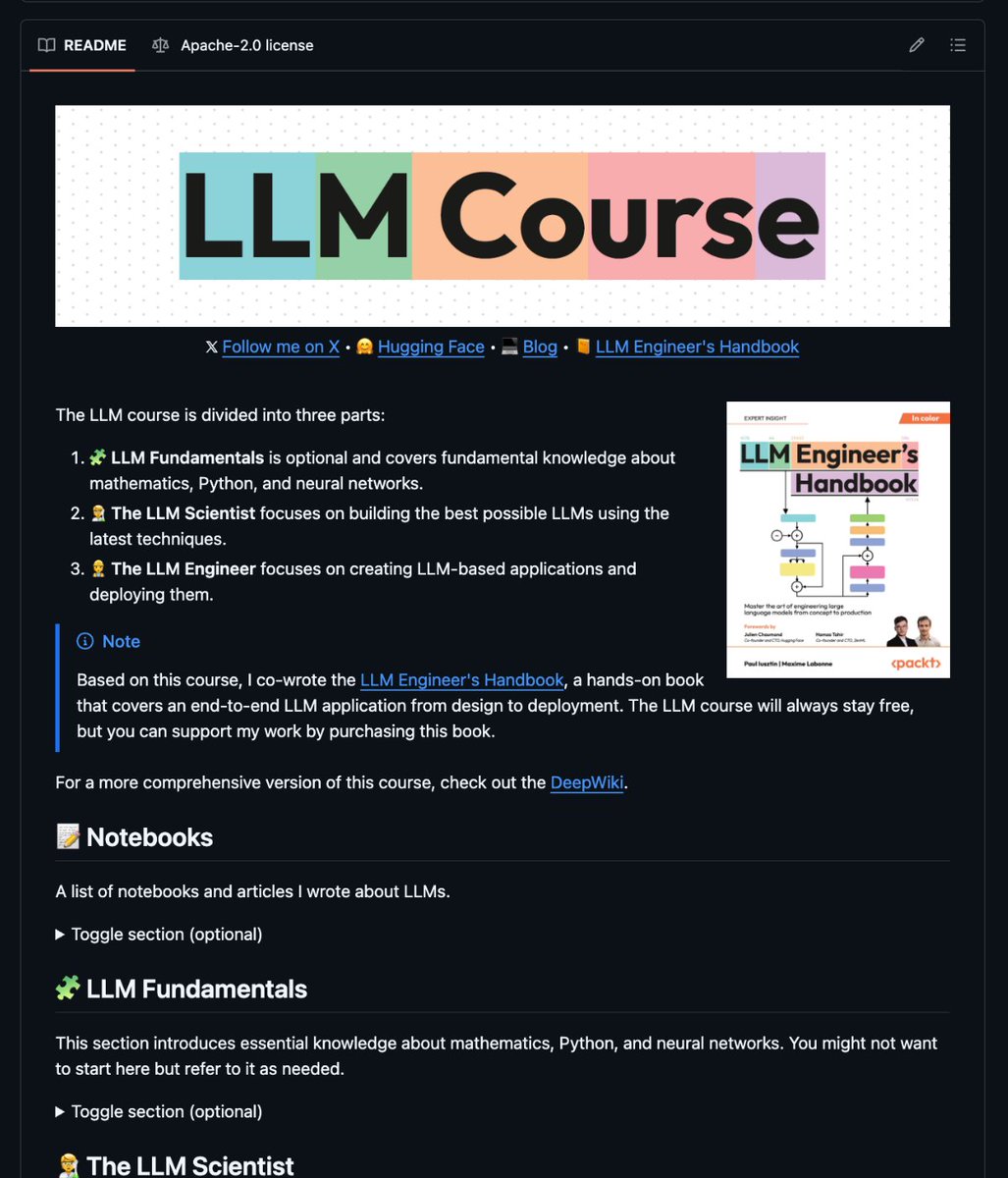
🚨 A single GitHub repo just replaced every paid LLM course on the internet. It's called LLM Course by Maxime Labonne and it takes you from zero to fine-tuning, merging, quantizing, and deploying your own models completely free. The structure is ruthlessly organized: → LLM Fundamentals: math, Python, neural networks, NLP → The LLM Scientist: architecture, pre-training, alignment, evaluation → The LLM Engineer: RAG, agents, optimization, deployment, security The "one-click" notebooks are insane: → Fine-tune Llama 3.1 with Unsloth in Colab → Merge any models with MergeKit, no GPU needed → Quantize to GGUF/GPTQ/EXL2/AWQ in one click → Abliterate any model without retraining Every notebook runs free on Google Colab. No cloud credits. No local GPU required. 100% Open Source. Apache 2.0 license. Link in the first comment 👇
Hasan Toor tweet media
English
17
120
556
31.8K
Marcio Albuquerque
Marcio Albuquerque@mlalbuquerque·
Já é o segundo post só hoje q indico uma série q "imita" a vida real... Com o valor de as séries terem sido criadas antes do acontecimento real. Pra quem viu a série DIA ZERO, da @NetflixBrasil, deve ter se espantado com a notícia abaixo.
Felipe Demartini@namcios

Uma arma invisível que destrói seu cérebro à distância. E agora ela está no mercado negro. O 60 Minutes acaba de revelar o que pode ser o maior escândalo de inteligência da última década. Primeiro, o contexto: Desde 2016, mais de 1.500 diplomatas, agentes da CIA e militares americanos em diversos países começaram a reportar sintomas neurológicos graves — dor de cabeça extrema, perda de memória, tontura, problemas de equilíbrio. Alguns ficaram permanentemente incapacitados. Alguns ficaram cegos. Chamaram de "Síndrome de Havana" porque os primeiros casos foram na embaixada americana em Cuba. A CIA disse por anos: "provavelmente psicossomático." Estresse. Mentira. Aqui está o que acabou de ser revelado: Agentes secretos americanos compraram uma arma de microondas miniaturizada de uma rede criminosa RUSSA em 2024. Missão de $15 milhões de dólares financiada pelo Pentágono. Os detalhes são assustadores: → Portátil. Uma pessoa carrega sozinha. → Silenciosa. Invisível. Sem calor. → Atravessa janelas e paredes. → Alcance de centenas de metros. → Programável e operável por controle remoto. → Testes em laboratório militar: lesões em animais idênticas às das vítimas humanas. A CIA disse por ANOS que uma arma assim precisaria ser do tamanho de um caminhão. Agora ela cabe numa mochila. Um ex-agente da CIA revelou que a missão da unidade de investigação desde o dia um era "baixar a temperatura" — direcionar conclusões para causas naturais. Funcionários seniores zombavam das vítimas fingindo ter derrames em happy hours. Mas aqui está o que ninguém está discutindo: Se agentes undercover conseguiram comprar essa arma de gangsters russos, ela já está no mercado negro. Qualquer ator estatal ou não-estatal pode adquirir. E o Brasil? Estamos aprofundando relações com a Rússia dentro do BRICS. Essa é a mesma Rússia que desenvolveu uma arma invisível capaz de causar dano cerebral permanente a distância — e USOU contra pessoal americano dentro dos EUA, incluindo na sede da CIA e nos terrenos da Casa Branca. Isso não é teoria da conspiração. Isso é o 60 Minutes com três fontes independentes de agências diferentes do governo americano. O paradigma de guerra entre nações mudou e ninguém está prestando atenção. Armas que não fazem barulho. Que não deixam rastros. Que destroem cérebros através de paredes. E o governo que sabia? Encobriu. A era das armas invisíveis não está chegando. Ela já chegou.

Português
0
0
0
47
Marcio Albuquerque รีทวีตแล้ว
Rimsha Bhardwaj
Rimsha Bhardwaj@heyrimsha·
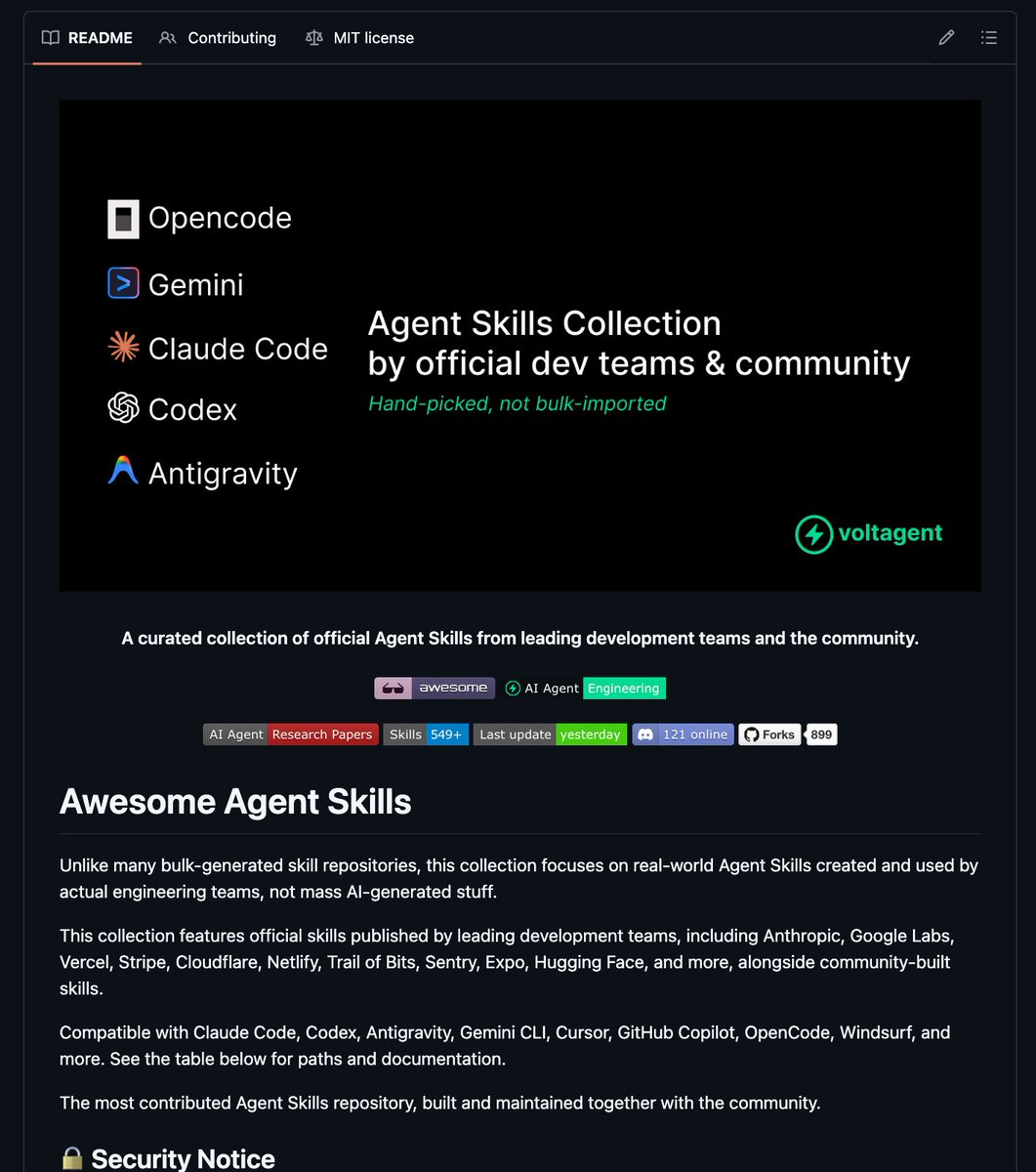
🚨 BREAKING: Someone compiled every AI agent skill ever built into a single GitHub repo. It's called VoltAgent/awesome-agent-skills. One repo. Every skill. Zero building from scratch. What's inside: → Pre-built skills for web search, file ops, memory, APIs, and browser automation → Skills for Claude, GPT, Gemini, and open-source models → Drop-in integrations for n8n, LangChain, CrewAI, and custom stacks → Community-maintained with contributors adding new skills weekly → Works with any agent framework in minutes Instead of spending 3 days building what already exists… Clone the repo, grab the skill, ship your agent today. 100% Opensource. Free forever.
Rimsha Bhardwaj tweet media
English
29
42
248
20.4K