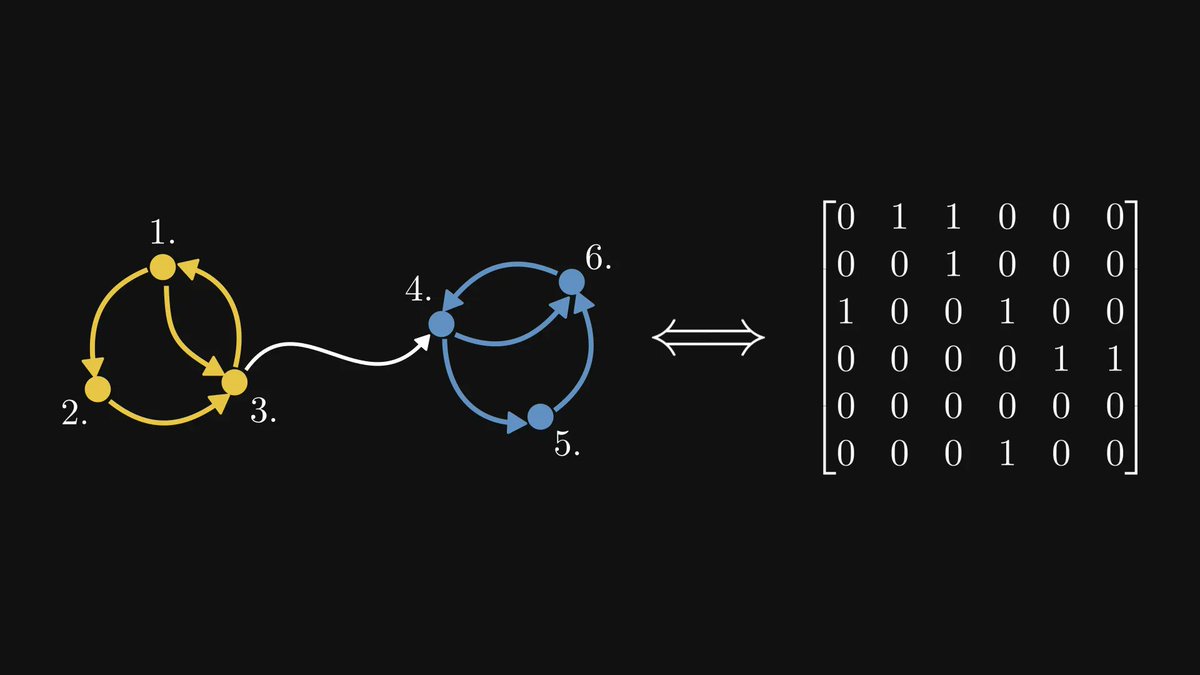
Let's label the nodes of this graph and construct the corresponding matrix!
(For simplicity, assume that all edges have unit weight.)
Do you notice a pattern?
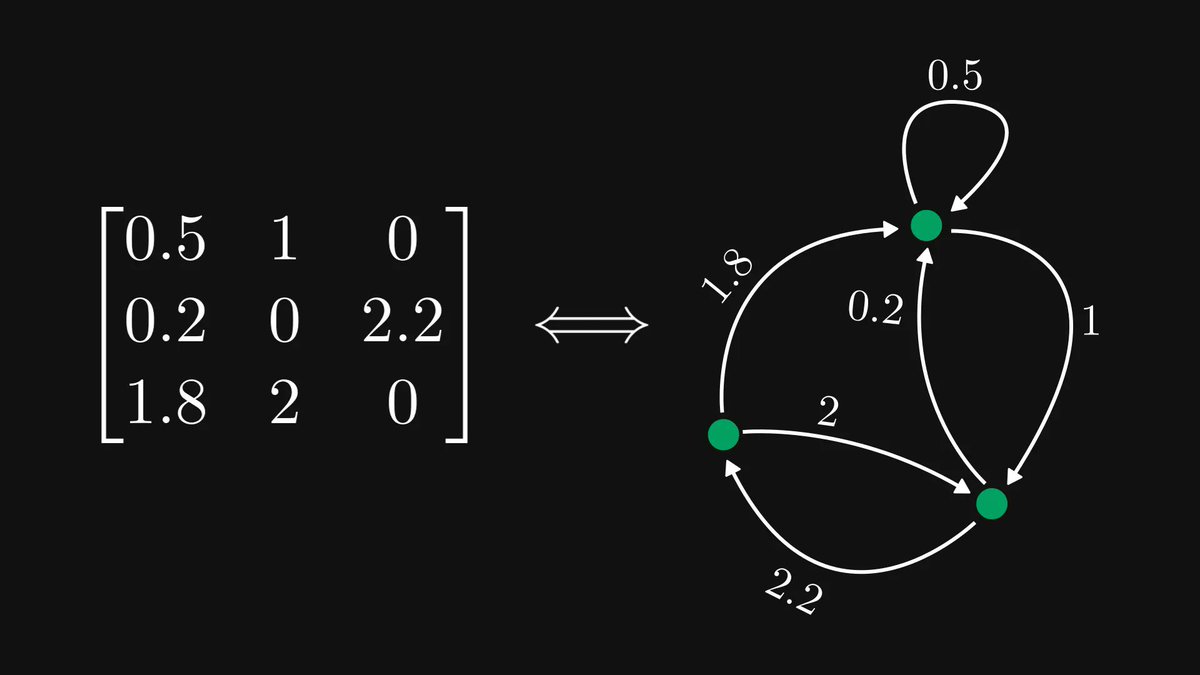
The single most undervalued fact of linear algebra: matrices are graphs, and graphs are matrices.
Encoding matrices as graphs is a cheat code, making complex behavior simple to study.
Let me show you how!
Want to make $4,000+ per month leveling up your analytics game?
Move beyond Excel master Python and R for serious data work and USD-paying gigs.
I’m sharing a FREE guide inspired by “Advancing into Analytics”
Learn how to go from spreadsheet basics → analytics expert
Perfect for career growth, freelancing, and remote jobs
No coding experience needed!
To get your guide for free:
𝐋𝐢𝐤𝐞 𝐭𝐡𝐢𝐬 𝐩𝐨𝐬𝐭
𝐑𝐞𝐩𝐨𝐬𝐭
𝐅𝐨𝐥𝐥𝐨𝐰 𝐬𝐨 𝐈 𝐜𝐚𝐧 𝐃𝐌 𝐲𝐨𝐮
Drop “𝗜𝗢” below and I’ll DM your FREE copy!
We've become obsessed with the idea that the brain is a "Prediction Machine."
The dominant theory in neuroscience says we're constantly simulating the future, calculating probabilities to guess what happens next.
A new paper argues this is a complete illusion. The reality is simpler, and strangely, much more powerful.
Here is the argument for Perceptual Control:
The "Prediction Illusion" starts with a mistake in observation.
When we see someone successfully handle a chaotic environment (like catching a flyball), it *looks* like they predicted the future trajectory of the ball.
But observing prediction isn't the same as implementing it.
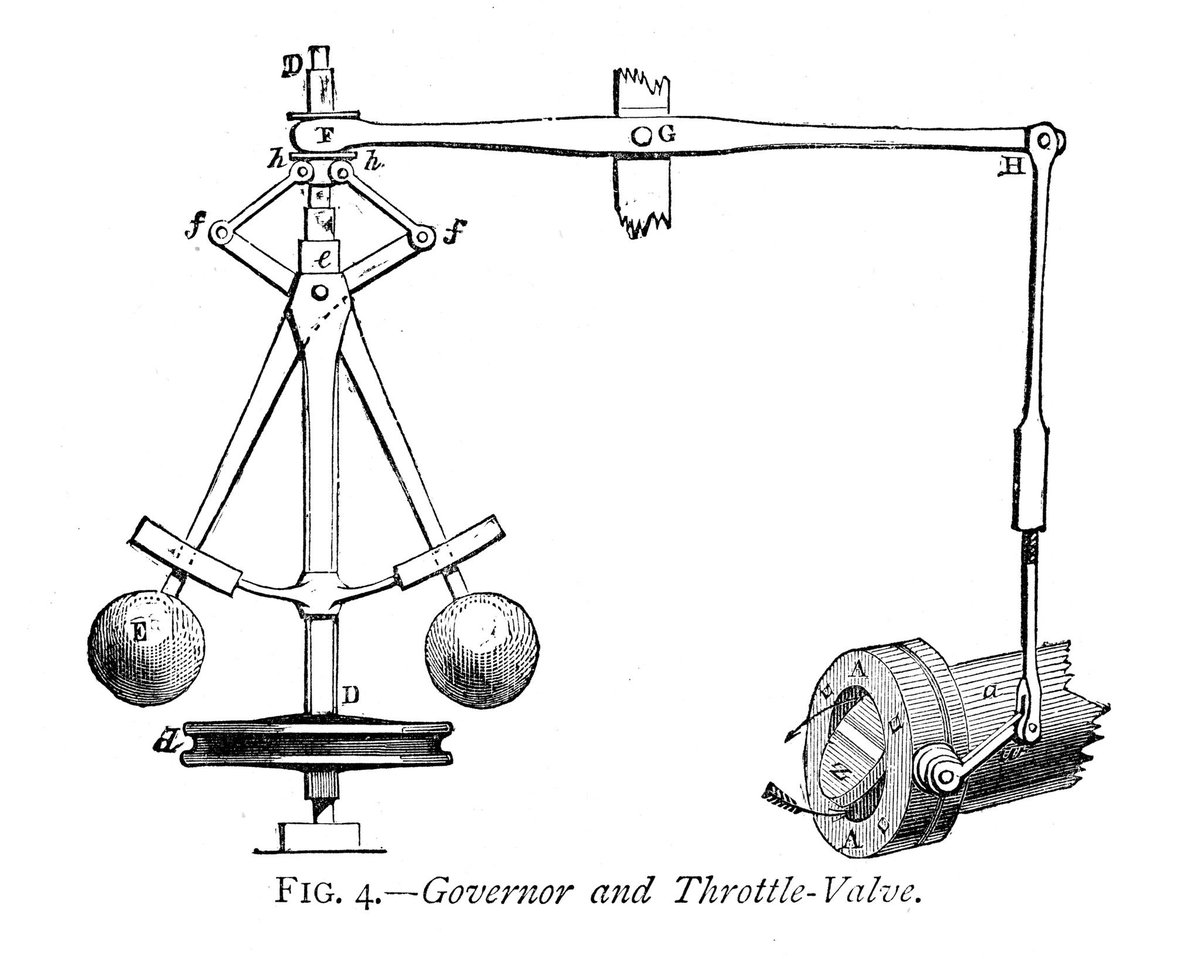
The authors use the perfect analogy: The Watt’s Steam Governor.
In the 19th century, this device kept steam engines running at a constant speed. If pressure surged, it slowed the engine. If load increased, it sped up.
To an observer, it looked like the machine was "predicting" pressure surges and pre-empting them.
But the Governor has no brain. It has no model of the future.
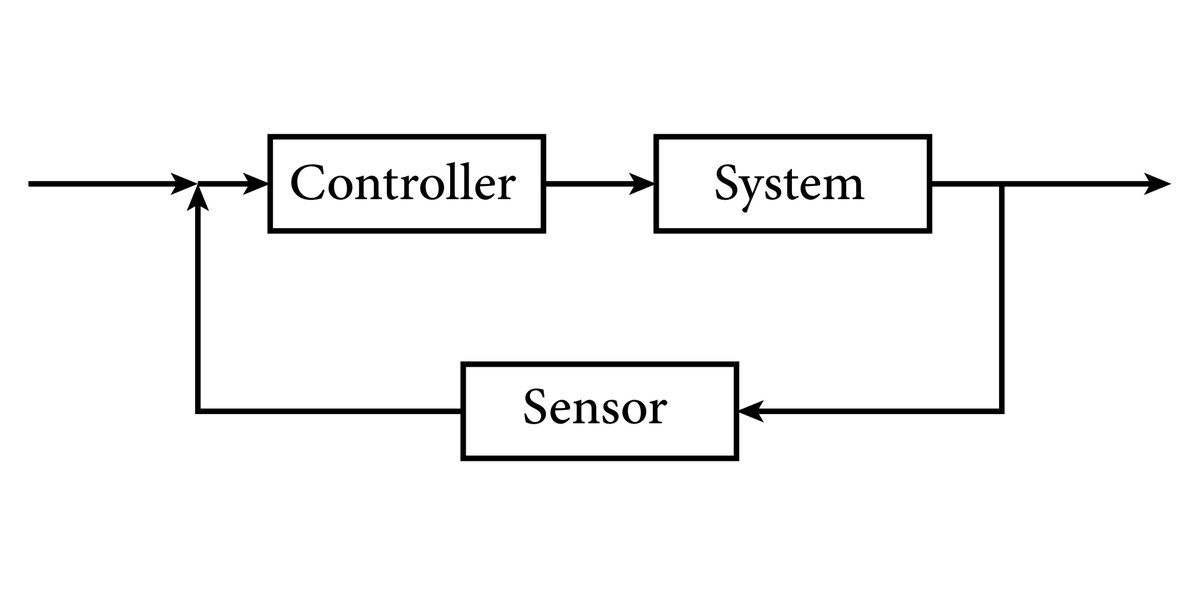
It’s a mechanical negative feedback loop. [cite_start]It measures the *current* speed, compares it to the *desired* speed, and adjusts the valve immediately[cite: 80].
It doesn't predict; it controls.
This brings us to the "Hello" experiment, which broke my brain a little.
Researchers asked people to keep a computer cursor on a target. The computer applied a "disturbance" (forces pushing the cursor away) that the person had to fight against with their mouse.
Here's the twist:
The disturbance wasn't random. [cite_start]It was an invisible force field shaped like the word "hello" (written upside down and mirrored)[cite: 166].
The participants fought the force, keeping the cursor steady.
When researchers looked at the participants' hand movements, they had perfectly written the word "hello".
Crucially, the participants had NO idea they were writing words.
If the brain were a "prediction machine," it would have needed to model the force to predict the hand movement.
But the participants wrote a legible word purely by reacting to immediate error signals—instantaneously correcting the cursor's position.
This is **Perceptual Control Theory (PCT)**.
The theory suggests the nervous system isn't a linear pipeline (Input → Compute → Output).
It’s a closed loop. We act to keep our *perception* of the world matching our internal *reference value*.
[Image of Perceptual Control Theory negative feedback loop diagram]
Think about catching a baseball.
If you were a "prediction machine," you’d calculate the ball's trajectory, wind speed, and gravity, then run to where the ball *will* be.
But that’s computationally expensive and error-prone.
In reality, fielders just run in a way that keeps the "optical velocity" of the ball constant in their vision.
If the ball looks like it's rising too fast, they move back. Dropping? They move forward.
No physics calculus required. Just maintaining a visual constant.
This solves the "Noise" problem.
In predictive models, small jitters in your movement are considered "noise" or errors to be filtered out.
It’s the system "feeling out" the environment to maintain control.
This has huge implications for AI and robotics.
We are currently building robots with massive compute power to "predict" stability.
But robots built on PCT principles—like inverted pendulums that just react to maintain verticality—are often more robust and stable than the predictive ones.
Why does this matter for you?
It changes how we view "agency."
We often think we need to predict the outcome of our actions to be effective. [cite_start]But the most efficient systems don't predict the outcome—they specify the goal and let the feedback loop handle the rest[cite: 39].
The "Prediction Illusion" suggests we aren't prophets simulating the future.
We are controllers, surfing the present.
We don't need to know what the wave will do in 10 seconds. We just need to keep the board steady right now.
If you want to dig into the paper, it’s "The prediction illusion: perceptual control mechanisms that fool the observer" by Mansell, Gulrez, and Landman (2025).
It’s a dense read, but it completely reframes the "Bayesian Brain" debate.
One final thought:
Next time you're doing something skilled—driving, typing, sports—notice the difference.
Are you calculating what comes next? Or are you just managing the gap between *what you see* and *what you want*?
You might find you're doing a lot less "thinking" than you assumed.
I've met tons of researchers who hate stats!
If you're one of these, this book is for you ⤵️
Save (with 𝘤𝘭𝘪𝘱𝘱𝘦.𝘮𝘦) & Repost
The author says it perfectly:
"The most important concepts of statistics can be explained, so that ordinary people can understand it."
— No complex formulas.
— No expensive software needed.
— Just spreadsheets & clear thinking.
The book covers:
— Sample surveys
— Data presentation
— Confidence intervals
— Statistical tests
Written for people who need to collect data.
— Analyze results.
— Present findings.
But don't want to become mathematicians.
Real examples throughout.
— Like the Fitness Club survey with 30 kids.
Shows you exactly how to spot bias.
When to use different tests.
How to avoid common mistakes.
Perfect for public health researchers.
Statistics doesn't have to be scary.
(𝘢𝘵𝘭𝘦𝘢𝘴𝘵 𝘪𝘯 𝘵𝘩𝘦 𝘣𝘦𝘨𝘪𝘯𝘯𝘪𝘯𝘨)
💬 Comment if you'd like a link to download this book!
I’m thrilled to share that the Second Edition of The Book of Why will be released at the end of this year. It will include brief discussions of recent breakthroughs in causal inference, as well as some aspects of LLMs.
Join me on this next journey into the land of causality — the very heart of scientific thinking.
osr.statisticsauthority.gov.uk/blog/demand-on… excellent blog by OSR's Ed Humpherson on the importance of looking at the variability in health metrics rather than just their average - and the tools available for doing this
I'm pleased to announce the release of scales 1.4.0 for #rstats. While scales mainly exists to serve #ggplot2, this release packs a bunch of improvements that is good to be aware of.
Read more at tidyverse.org/blog/2025/04/s…
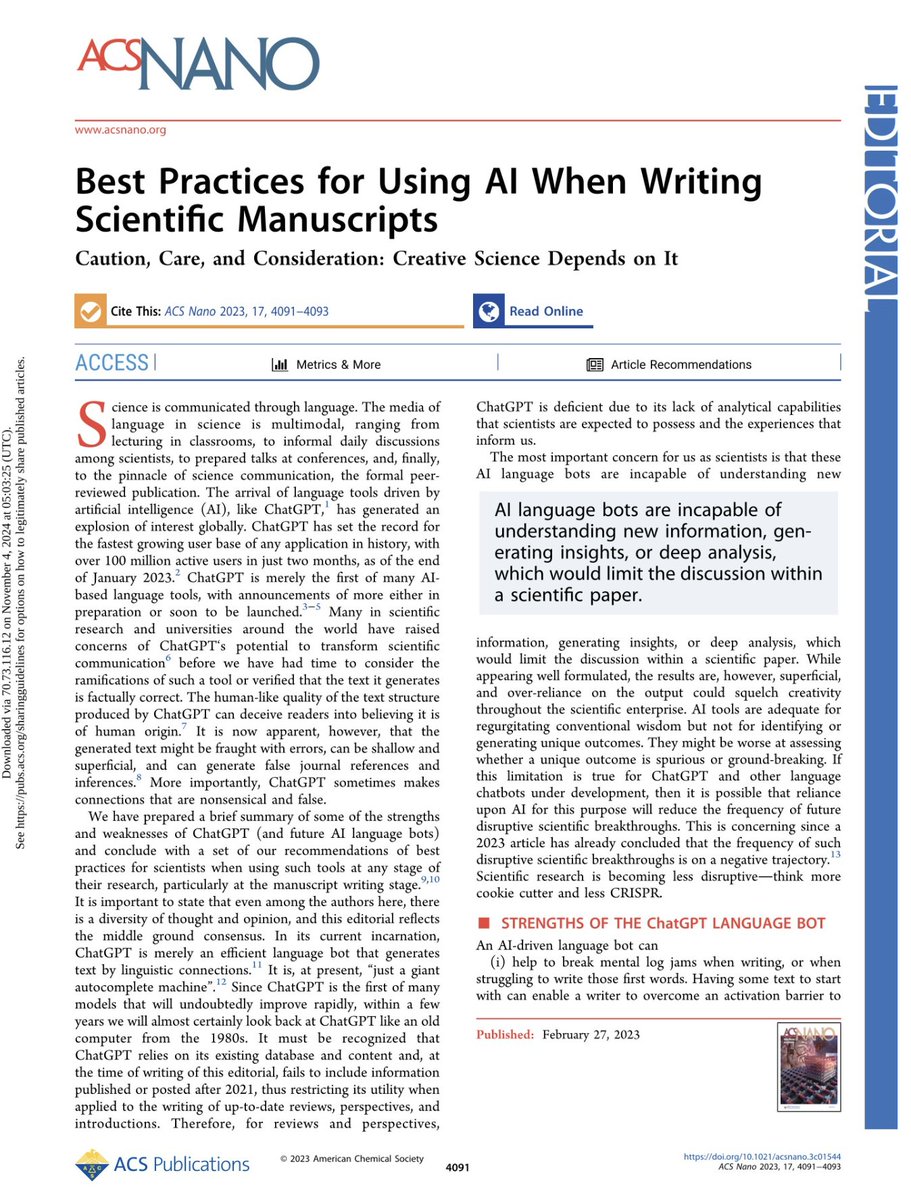
Are AI Tools Replacing Scientific Writing?
Here's what some leading scientists have to say ⤵
Repost & Save (with 𝘤𝘭𝘪𝘱𝘱𝘦.𝘮𝘦)
— Tools like ChatGPT are good helpers
(but poor creators)
— AI can speed up writing
(but it's not ready to take over scientific thinking).
— The real question isn't if we should use AI...
... but how to use it wisely!
𝐊𝐞𝐲 𝐁𝐞𝐧𝐞𝐟𝐢𝐭𝐬 𝐨𝐟 𝐀𝐈 𝐢𝐧 𝐒𝐜𝐢𝐞𝐧𝐭𝐢𝐟𝐢𝐜 𝐖𝐫𝐢𝐭𝐢𝐧𝐠 ⤵
𝗪𝗿𝗶𝘁𝗶𝗻𝗴 𝗔𝘀𝘀𝗶𝘀𝘁𝗮𝗻𝗰𝗲
— Helps break through writer's block
— Makes helpful suggestions for titles & abstracts
— Supports non-native English speakers with clear writing
𝗦𝘁𝗿𝘂𝗰𝘁𝘂𝗿𝗲 & 𝗥𝗲𝗳𝗲𝗿𝗲𝗻𝗰𝗲𝘀
— Breaks complex topics into manageable pieces
— Spots relevant papers you might have missed
— Helps organize thoughts & arguments
𝐌𝐚𝐣𝐨𝐫 𝐂𝐨𝐧𝐜𝐞𝐫𝐧𝐬
— AI can't do deep analysis or generate true insights
— Risk of shallow, cookie-cutter science writing
— Tools might generate false references or incorrect info
— Over-reliance could hurt students' learning
Page 1/3
@DrTBehrens@berlinerzeitung Tristan ich ahne deine Bedenken, aber als Arzt wäre ich endlich froh, wenn ich dann mal über alle Vorbefunde verfüge und auch sehe, wenn schon 3 MRT gelaufen sind und der Pat. ein weiteres möchte e.g.
In wenigen Tagen startet die elektronische Patientenakte in den Regelbetrieb. Was es jetzt zu beachten gibt. #Echobox=1745136250" target="_blank" rel="nofollow noopener">berliner-zeitung.de/news/karl-laut…
Wie herrlich ironisch: Die Politiker, die jahrelang jeden Großauftrag an lokale Cloud-Anbieter mit bürokratischer Finesse & Sparwahn torpediert haben, sind jetzt die lautesten Schreihälse, die im Trump-Zeitalter unsere Abhängigkeit von Big Tech beklagen.
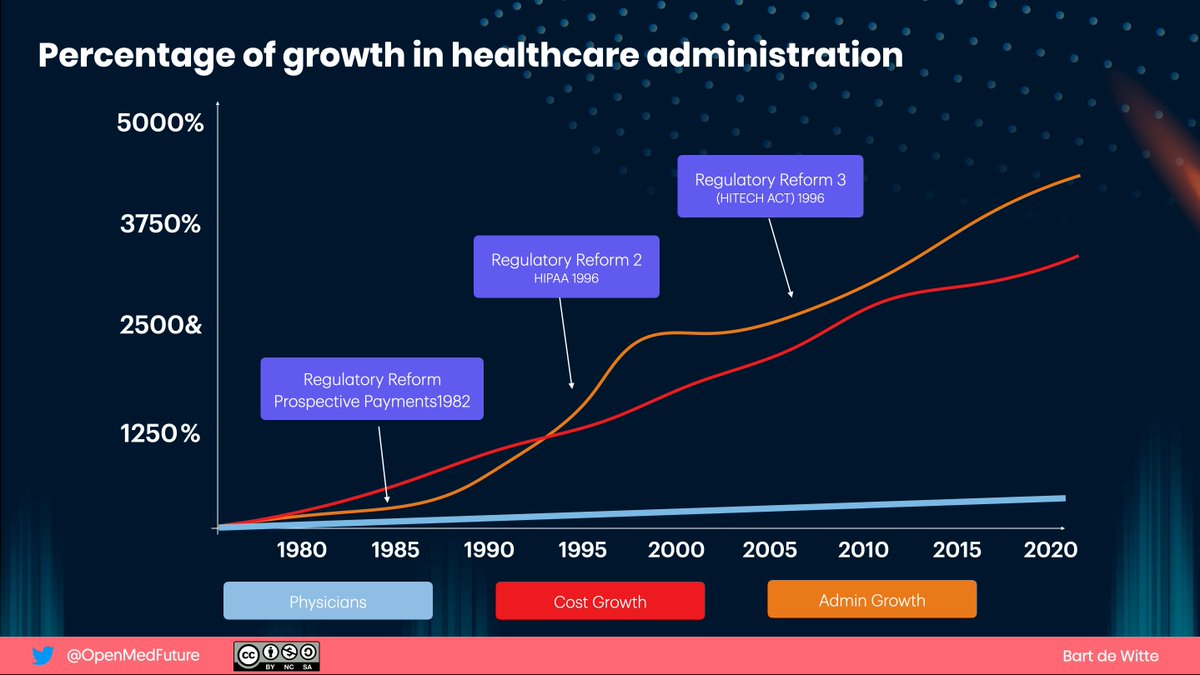
At Isaree, my new startup, my co-founder and I calculated that the ratio of physicians to admins was 1-4, 40 years ago. Today this is 1 physicians to 68 admins. Meaning we when a physician wants to treat 1 patient, we have 68 administrators working in the back.
Great work, dear policy makers.