Benny Lau

164 posts

Benny Lau banner
Benny Lau

Benny Lau

@physiosign

Vice President @ PhysioSign USA | Non-invasive Bundle of His electrogram🫀| Built on 17m recordings | 53 US & International patents |

Hong Kong เข้าร่วม Ağustos 2024
3.2K กำลังติดตาม1.3K ผู้ติดตาม
ทวีตที่ปักหมุด
Benny Lau
Benny Lau@physiosign·
Atrial Repolarization As physicians, we use the electrocardiogram (ECG) almost daily, and electrophysiologists rely on it during surgical procedures. Yet, the ECG continues to hold many mysteries. Today, we will explore the first mystery of the ECG: Where is atrial repolarization? Why is it not visible? It is not addressed in textbooks or electrophysiology literature. Does it exist? If so, why is it not displayed? As is well known, the P wave of the ECG represents atrial depolarization in each heartbeat. Where there is depolarization, there must be repolarization, yet the ECG does not display it. Some physicians suggest that repolarization occurs in the P-R segment, which appears horizontal. However, repolarization should manifest as a negative wave, given that depolarization (the P wave) is a positive wave. This mystery lies hidden within the heart: the ECG records atrial depolarization as the P wave, but why is repolarization not recorded? In 2017, electrophysiocardiograms (EpCGs) were recorded for the first time in the PhysioSign Lab. These revealed, for the first time, electrophysiological electro-structure graphs of the entire heart—a map of human life. The essence of life is the vitality of the heart, driven by its electrical activity. The EpCG unveils many of the heart’s mysteries, starting with the location of each heartbeat, which originates definitively from the sinoatrial node (SAN), the source of every heartbeat (to be continued in our next discussion). From the EpCG images, the first secret revealed is atrial repolarization. Consider the image: atrial depolarization and repolarization are both recorded, whereas the conventional ECG only shows atrial depolarization. The EpCG uncovers the secrets of the ECG. As a continuous recording system, it provides a deep understanding of electrophysiology, analyzing many cardiac mysteries for the first time. Unlike invasive techniques, which capture only local point potentials, the EpCG reveals the full scope of the heart’s electrical conduction. From the EpCG, we observe that the P wave of the traditional ECG compresses the highest atrial frequency—essentially folding all frequency signals into a simplified, string-like representation—while the atrial repolarization signal, the core of the X-axis, remains hidden at the center. The primary challenge of the ECG is its limited signal display. Unlike medical imaging techniques such as CT, X-ray, or MRI, which provide detailed visuals, the ECG relies on estimation and interpretation. It reveals far less than electrophysiological science demands. Even invasive methods fail to capture the anatomical context, positioning the ECG as one of the oldest and most empirical tools in medical science. PhysioSign USA #ekg #ecg #electrophysiology #medtech #innovation #ai #cardiology
Benny Lau tweet media
English
1
9
30
2.7K
Blue the Helldiver
Blue the Helldiver@BlueHelldiver·
How you know this is AI? POINT 1 - Why are they wearing a plate carrier? And specifically, one on the front designed for human anatomy? (LOL why not add a holding mount for a ceramic / steel rectangles? Especially steel... why not make the casing harder.) POINT 2 - What machine fires 20 bullets when it has accuracy, can count, and doesn't possess fear? Talk about expensive design if real.
Blue the Helldiver tweet media
English
14
1
72
15.2K
SANTINO
SANTINO@TheRealSantino·
BREAKING: China's autonomous "killer robots" are on track to serve its military on the battlefield within two years, setting a course for a new age of AI-powered warfare which one expert called "the greatest danger to the survival of humankind." Remote forms of warfare, from drones to cyberattacks, have played an increasingly central role in this century's theatres of war. Control of the skies with unmanned aerial vehicles has been critical issue in the ongoing war in Ukraine, and last week, the U.S. Department of Defense unveiled a fresh $1 billion investment to upgrade its drone fleet. Several major powers have taken this development a step further, and begun to develop fully autonomous, AI-powered "killer robots" to replace their soldiers on the battlefield. "I would be surprised if we don't see autonomous machines coming out of China within two years," Francis Tusa, a leading defence analyst, told National Security News. He added that China was developing new AI-powered ships, submarines, and aircraft at a "dizzying rate." "They are moving four or five times faster than the States," he warned. China and Russia are already reported to have collaborated on the development of AI-powered autonomous weaponry. Per Newsweek
English
1.8K
1.8K
6.3K
1.5M
Benny Lau
Benny Lau@physiosign·
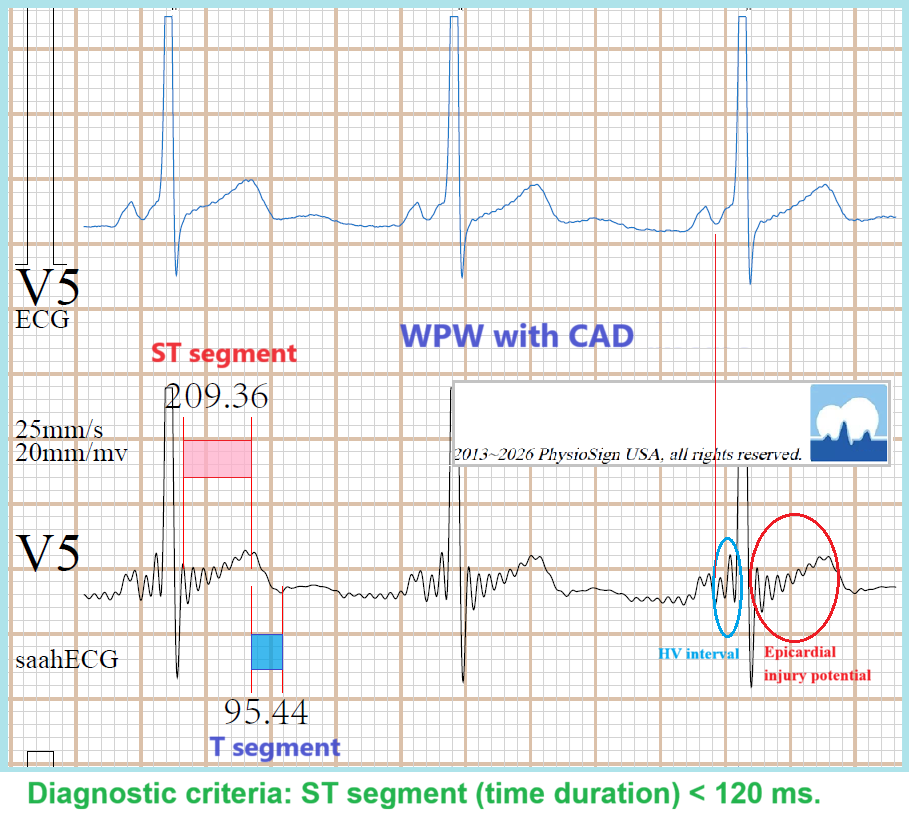
*WPW with CAD* In routine clinical practice, standard electrocardiograms (ECGs) identify common conduction and rhythm abnormalities such as premature beats, atrial fibrillation or flutter, bundle branch blocks, atrioventricular blocks, Wolff-Parkinson-White (WPW) syndrome, tachycardias, and bradycardias. These patterns frequently represent secondary electrical phenomena. Critically, they can obscure the underlying primary pathology: acute coronary syndromes, including ST-elevation myocardial infarction (STEMI), non-ST-elevation myocardial infarction (NSTEMI), and acute coronary syndrome (ACS)—encompassing myocardial infarction and unstable angina. This diagnostic limitation stems from the technical focus of conventional ECG acquisition, which primarily captures high-frequency electrical signals. Since the 1970s, a period marked by the rising prevalence of coronary artery disease, clinicians have faced the persistent challenge that these prominent high-frequency patterns can mask the more subtle, often low-voltage, electrocardiographic signs of acute, evolving, or prior myocardial ischemia and infarction. Example: A 52-year-old man undergoing two ECG synchronization tests prior to angiography. Coronary angiography (CAG) subsequently confirmed the findings, revealing a 95% blockage in the LCx and 65% stenosis with generalized plaque in the RCA. [A] Existing ECG: Only demonstrates the WPW pattern (delta wave), with no clear signs of myocardial infarction or ischemia. [B] new ECG: While this does not alter the standard (ECG) itself, it allows for the recording of detailed local electrical signals. In the atrial area (red circle), the technique clearly delineates the HV interval. A side-by-side comparison reveals that this specific signal is embedded within the Delta wave. This marks the first time in cardiac electrophysiology that the precise local signals folded into the Delta wave—and the reason for its appearance—have been clearly demonstrated. In the ventricular area (blue circle): Reveals epicardial injury currents and allows precise measurement of the ST segment duration (exact time length - ST segment 209.36ms) - ST segment < 120ms**considered the gold standard in textbooks. [C] Back in the 1980s, experts already recognized that the duration of the ST segment (i.e., its time length along the X-axis) is important for diagnosing ischemia — rather than just ST-segment elevation or depression (Y-axis amplitude). Annotation: “S-T interval = ST segment + T wave, but traditional ECGs cannot measure it accurately. PhysioSign USA #Cardiology #ECG
Benny Lau tweet media
English
1
3
18
1.2K
Benny Lau
Benny Lau@physiosign·
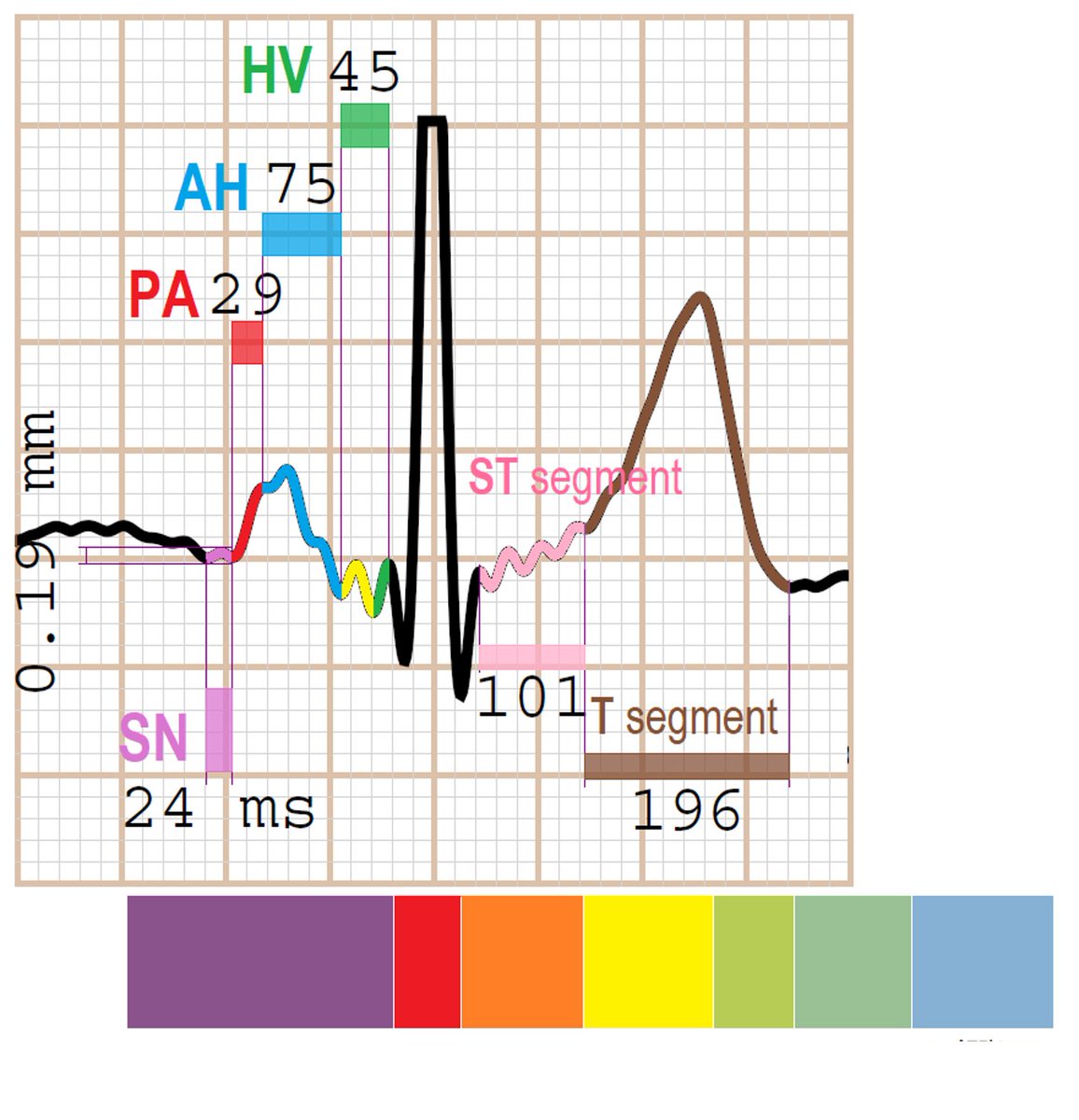
ST segment duration <120 ms (considered the gold standard in textbooks) Since coronary artery disease (CAD) was first identified and named in 1976, it has become the most common cause of heart disease worldwide. However, many cases of CAD do not present with ST-segment elevation. Even after an acute myocardial infarction (AMI), approximately half of non-ST-elevation myocardial infarctions (NSTEMIs) persist without this feature, posing significant challenges for clinicians and highlighting the limitations of conventional ECG. The new ECG technology scans the ST wavelet, enabling it to divide the S-T interval into two distinct segments and measure both the ST segment and T segment (providing precise timing data). This new ECG has undergone animal experiments and testing in MI models, revealing the great significance of this parameter. The combination of data and images allows it to record myocardial standards before a heart attack occurs. This pioneering invention represents one of the most important discoveries of the century and may prove to be the most clinically significant and valuable advancement in cardiac diagnostics. **The most critical factor is the injury current inside the heart, which changes over time. Therefore, changes in duration (timing) typically occur in the early stage, while changes in amplitude are already a sign of more severe late-stage damage.** There’s no need for an entirely new ECG technology—traditional ECG can also detect certain changes. So, which is more important: the early changes or the late-stage sudden events? Of course, the early changes are far more important, because early intervention can prevent progression. PhysioSign USA
Benny Lau tweet media
English
0
0
4
229
Benny Lau
Benny Lau@physiosign·
EpCG was invented in 2017 with the aim of visualizing heart signals. The recorded signal from the initial scan was processed using AI technology to isolate the full frequency spectrum of cardiac activity. The total amplitude and duration of the P-QRS-T waves are consistent with those of conventional ECG. The heart is a living organ that exhibits microelectronic properties. While ordinary cardiac muscle tissue performs mechanical work, specialized tissues play a crucial role in the excitation, pacing, and conduction functions of the heartbeat. Many unresolved mysteries of the heart lie within the ultra-low frequency range, both above and below the axis. Atrial and ventricular repolarization represent the resting phase, when the heart appears to be in a state of dormancy. The overall EpCG image aligns with the anatomical structure of the heart as observed post-dissection. The scientific foundation of EpCG elucidates the enigma of cardiac electrophysiological frequency distribution. Traditional ECG images are represented as line waveforms, predominantly composed of high-frequency components. For over a century, single-line waveforms have been used to diagnose diseases across different time frames. EpCG's full-frequency cardiac images unveil numerous historical mysteries of the heart, demonstrating that conventional ECG primarily displays high-frequency electrical signals. PhysioSign USA
Benny Lau tweet media
English
0
1
4
180
Benny Lau
Benny Lau@physiosign·
Traditional ECG Interpretation in CRBBB: When a complete right bundle branch block (CRBBB) is present, diagnosing an acute myocardial infarction (MI) is often challenging. This is because subtle, low-frequency ischemic changes are typically obscured by the high-amplitude, high-frequency signals associated with the conduction abnormality. new ECG Interpretation: A refined ECG analysis that reveals CRBBB with R-wave peak cracking (also described as notching or fragmentation of the R wave) provides an additional diagnostic clue. This specific finding indicates underlying ischemia or infarction and is particularly suggestive of left main coronary artery disease or a right posterior myocardial infarction. ***Observations in Lead aVR: In lead aVR, injury currents can cause fragmentation of R-wave peaks, primarily associated with proximal lesions in the left main (LM) coronary artery, right coronary artery (RCA), or left anterior descending (LAD) artery. A notched R-wave peak in lead aVR is a recognized marker of myocardial infarction (MI), though it remains undetectable on standard electrocardiograms (ECGs). Extensive research by international experts over the past century supports this finding. Unlike conventional ECGs, the innovative saahECG technology clearly visualizes this feature. Although notched R-waves are documented in medical literature, traditional ECG systems lack the resolution to capture them effectively. PhysioSign USA
Benny Lau tweet media
English
0
1
5
396
Benny Lau
Benny Lau@physiosign·
I would like to analyze the invention technology of our "Second Generation ECG". They are different. 【a】 saahECG is exactly the same as the traditional ECG in terms of high-frequency components, but it also incorporates ultra-low-frequency components, which are essentially the basic ion signal images. There was no change in the ECG itself—just more detailed images of the ionic signals. This is the first revolution since the existence of ECG. The traditional ECG is version 1.0, while the new ECG is version 2.0. 【b】 EpCG is completely different from the traditional ECG. It presents in three dimensions but is displayed in two dimensions. It has completely revolutionized the traditional ECG. It is a fully visual image, divided by frequency, dimension, and chronological layers. It will become the 3.0 version of ECG in the future. It will be particularly liked by surgeons who perform invasive procedures. In terms of reading, analysis, identification, and judgment, the new ECG (saahECG) requires the foundation of traditional ECG (deep knowledge required). PhysioSign USA
Benny Lau tweet media
English
0
0
5
158
Benny Lau
Benny Lau@physiosign·
EpCG - Electrophysiocardiogram Three types of ECGs were simultaneously recorded from healthy individuals (at 50 mm/s speed and 20 mm/mV amplitude) This illustrates the conjecture proposed by Brian Hoffman in 1964. The schematic diagram shows the hypothesized path of the heart's specialized conduction fibers during each heartbeat. Seven vertical lines are numbered: [1] Start of the beat pacing. [2] Conduction to the atrium. [3], [4], and [5] Represent the AVN (a sum of three anatomical regions) traversing the entire atrium. [6] Passage through the bundle of His. [7] The atrioventricular bundle ends and divides into left and right bundle branches. Following [7], the symbol "P" and a dashed line represent the Purkinje fibers, which go straight to the ventricle. The SAN is located in front of [1]. Bottom Section: The new ECG demonstrates that each local wavelet matches Hoffman's predictions. A critical point is that the recording accuracy reaches 99%. Whenever a traditional ECG can be recorded, the new ECG can also be recorded, showing consistent time courses and amplitudes; this aligns with the universality theorem. ***EpCG proved that Hoffman's 1964 conjecture regarding the specialized cardiac conduction system was correct. PhysioSign USA
Benny Lau tweet media
English
0
0
4
210
Benny Lau
Benny Lau@physiosign·
Revealing the Clinical Application of CLBBB Masking AMI In cardiology, the modified Sgarbossa criteria are used to diagnose acute myocardial infarction (AMI) in the presence of complete left bundle branch block (CLBBB). However, accurately identifying the J-point for measuring ST elevation is challenging for most clinicians. Observations in Lead aVR: In lead aVR, injury currents may cause fragmentation of R-wave peaks, primarily associated with proximal lesions in the left main (LM) coronary artery, right coronary artery (RCA), or left anterior descending (LAD) artery. A notched R-wave peak in lead aVR is a recognized marker of myocardial infarction (MI), though it remains undetectable on standard electrocardiograms (ECGs). Extensive research by international experts over the past century supports this finding. Unlike conventional ECGs, our innovative ECG technology clearly visualizes this feature. Although notched R-waves are documented in medical literature, traditional ECG systems lack the resolution to capture them effectively. J-Point Measurement: Traditional ECGs struggle to accurately measure the J-point because it lies on a curved arc, making precise identification difficult. new ECG technology identifies a small wave within this arc, with the peak of the first wave precisely marking the J-point. This enables accurate measurement, unlike the rough estimates used in traditional ECGs, such as those based on the modified Sgarbossa criteria for detecting MI in the presence of CLBBB. The Sgarbossa criteria rely on experience-based approximations due to the absence of a clear measurement point. new ECG addresses this limitation by providing precise J-point measurements, improving diagnostic accuracy. **the R-wave peak in traditional ECG is sharp (even with injury currents, it remains sharp because ECG captures high-frequency signals from the heart’s surface cells). However, the new ECG imaging reflects ionic signals, which can display myocardial injury currents. PhysioSign USA
Benny Lau tweet mediaBenny Lau tweet media
English
1
17
51
5.4K
Benny Lau
Benny Lau@physiosign·
EpCG - Electrophysiocardiogram Comparison Before and After Radiofrequency Ablation **Dual AVN pathways complicated by AVN reentrant tachycardia. **The pink arrow indicates the bundle of His, which normalized following radiofrequency ablation (RFA). **The white arrow shows that the retrograde potential is located near the endocardium and originates at the AVN site. The AVN reentry potential is clearly visible, with the atrial muscle potential morphology exhibiting a leftward rotation trend, characteristic of a typical reentry potential. PhysioSign USA
Benny Lau tweet media
English
1
0
2
315
Benny Lau
Benny Lau@physiosign·
**Reveal the Clinical Application of CRBBB Masking AMI** The presence of complete right bundle branch block (CRBBB) can obscure the electrocardiographic diagnosis of acute myocardial infarction (AMI). This masking effect complicates clinical evaluation, as CRBBB alters typical ECG patterns, potentially concealing critical indicators of AMI. Understanding this interaction is essential for accurate diagnosis and timely intervention. ECG: This represents a typical CRBBB (Complete Right Bundle Branch Block) recognition pattern. No additional information suggests alternative conditions. new ECG: Qualitative: The aVR lead shows an R-wave cracking duration or notch with approximately 89% correlation to left main (LM) or right posterior wall ischemia, potentially due to stenosis or blockage of the left circumflex (LCx), right coronary artery (RCA), or left main (LM) artery. A history of prior acute myocardial infarction (AMI) may also be evident. Quantitative: If the aVR lead exhibits an R-wave peak widened beyond 60 ms with cracking, it serves as a marker of coronary artery disease (CAD), acute myocardial infarction (AMI), or acute coronary syndrome (ACS). **This individual has confirmed CAD with 90% LM stenosis and 80% RCA blockage** PhysioSign USA
Benny Lau tweet media
English
2
11
55
2.8K
Benny Lau
Benny Lau@physiosign·
@greedylobster Yes, we have developed groundbreaking signal processing technology, which is protected by U.S. patents.
English
0
0
2
37
greedylobster
greedylobster@greedylobster·
@physiosign I think the ecg is recorded using a special protocol/ technique?.. Regular run of the mill recorders are not able to pick up this pattern, no?..
English
1
0
0
59
Benny Lau
Benny Lau@physiosign·
PhysioSign's Traditional ECG Green is the color of the conventional ECG. There are 4 dots in this corner, which cannot be displayed on traditional ECGs. These represent the initial and terminal ends of Purkinje fibers. They are not arcs. Image Definition: PhysioSign's Traditional ECG: 5,800–8,500 orders Others: 50–100 orders PhysioSign USA
Benny Lau tweet media
English
0
0
3
376
Benny Lau
Benny Lau@physiosign·
Observations in Lead aVR: In lead aVR, injury currents can cause fragmentation of R-wave peaks, primarily associated with proximal lesions in the left main (LM) coronary artery, right coronary artery (RCA), or left anterior descending (LAD) artery. A notched R-wave peak in lead aVR is a recognized marker of myocardial infarction (MI), though it remains undetectable on standard electrocardiograms (ECGs). Extensive research by international experts over the past century supports this finding. Unlike conventional ECGs, the innovative saahECG technology clearly visualizes this feature. Although notched R-waves are documented in medical literature, traditional ECG systems lack the resolution to capture them effectively. new ECG Insights: Qualitative: In lead aVR, an R-wave notch or fragmentation with a duration approaching 80% of the R-wave is indicative of ischemia in the left main (LM) or right posterior wall, often due to stenosis or occlusion of the left circumflex (LCx), RCA, or LM arteries. Quantitative: A widened R-wave peak exceeding 60 ms with fragmentation in lead aVR serves as a reliable marker of coronary artery disease (CAD) or acute myocardial infarction (AMI). PhysioSign USA
Benny Lau tweet media
English
2
30
159
12.3K
Benny Lau
Benny Lau@physiosign·
Clinical Value of a New Detection Method for Atrial Fibrillation (AF) Atrial fibrillation (AF) is one of the most common heart conditions, affecting approximately 25% of individuals over 65 years old and a leading cause of stroke. In 2015, the U.S. reported about 1.5 million undiagnosed AF cases, representing roughly 11% of total AF cases, leaving these patients without treatment. Globally, approximately 35 million people with covert AF remain undiagnosed. AF increases the risk of stroke, a life-threatening condition, as it causes irregular blood flow—sometimes fast, sometimes slow, and in varying volumes. This irregular flow leads to slow blood movement in vessels, which can coagulate and form plaques. Over time, these plaques may travel to cerebral blood vessels, which are narrow and have complex, winding structures, making them prone to blockages. Consequently, AF is a major cause of stroke. Beyond stroke, AF is a severe heart condition associated with hypertension, diabetes, and long-term medication side effects. It accounts for about 40% of heart diseases in the elderly and can trigger malignant arrhythmias and cardiac events. AF poses a significant threat to human life. To reduce the incidence, disability, and mortality rates of stroke, early diagnosis and treatment of AF are critical. Improving AF detection rates is thus a vital prerequisite and a key technology to save millions of lives globally. History of Diagnostic Tools The electrocardiogram (ECG), unchanged since 1903, remains the only diagnostic tool for AF, as no other device can detect it. However, AF manifests as fibrillation in the atria, and the ECG’s P-wave represents the entire atrium, including anatomical structures like the atrioventricular node, His bundle, and bundle branches. Traditional ECGs cannot independently display atrial regions, resulting in low detection rates and posing a significant challenge. A new ECG, introduced in 2016, can detect F-waves of AF, including very rapid AF, very slow AF, and pre-symptomatic AF, which traditional ECGs miss. This is achieved by recording different cardiac biomarkers. Advanced Imaging: The new ECG records the sinoatrial node (SN), atrium, atrioventricular node (AVN), and His bundle, enabling precise diagnosis and accurate localization. The principle is straightforward: AF involves atrial fibrillation, which disrupts electrical signal conduction to the AVN. PhysioSign’s non-invasive detection of the PA interval marks a historic breakthrough. Previously, only invasive methods could measure the PA interval, but they were unable to detect AF. The PA interval refers to the time from the sinoatrial node’s pacing to its traversal through the atrium—an interval invisible on traditional ECG images. Total Sample Size: Over 17 million. Imaging Scan Detection Rate: 99.99%. ChatEPS Detection Rate: 97%. AF Correlation: 99%. False Positive Rate: 3%. False Negative Rate: 0.5%. PhysioSign USA
Benny Lau tweet media
English
0
0
0
202
Benny Lau
Benny Lau@physiosign·
In 1964, Brian Hoffman, often referred to as the "father of invasive electrophysiology," proposed a conjecture. Hoffman’s hypothesis identified the anatomical locations of the EKG’s PR interval in canines. He conducted his experiments on the specialized cardiac tissues (SCT) of various animals. Hoffman is recognized as a pioneer of invasive heart technologies. Source: Columbia University library
Benny Lau tweet media
English
0
2
9
507
Benny Lau
Benny Lau@physiosign·
In 1967, Anthony Damato, the founder of invasive clinical practice, presented a related conjecture. Damato’s updated revision of Hoffman’s hypothesis focused on the elongation of the atrial wave, which overlaps with the AV node wave. He was a pioneer in the clinical application of invasive electrophysiology.
Benny Lau tweet media
English
0
1
14
588