Pietro Vitiello
160 posts

Pietro Vitiello
@pitvit_
PhD student in the Robot Learning Lab at @imperialcollege


Generalist robots need a generalist evaluator. But how do you test safety without breaking things? 💥 🌎 Introducing our new work from @GoogleDeepMind: Evaluating Gemini Robotics Policies in a Veo World Simulator veo-robotics.github.io 🧵👇

Generalist robots need a generalist evaluator. But how do you test safety without breaking things? 💥 🌎 Introducing our new work from @GoogleDeepMind: Evaluating Gemini Robotics Policies in a Veo World Simulator veo-robotics.github.io 🧵👇


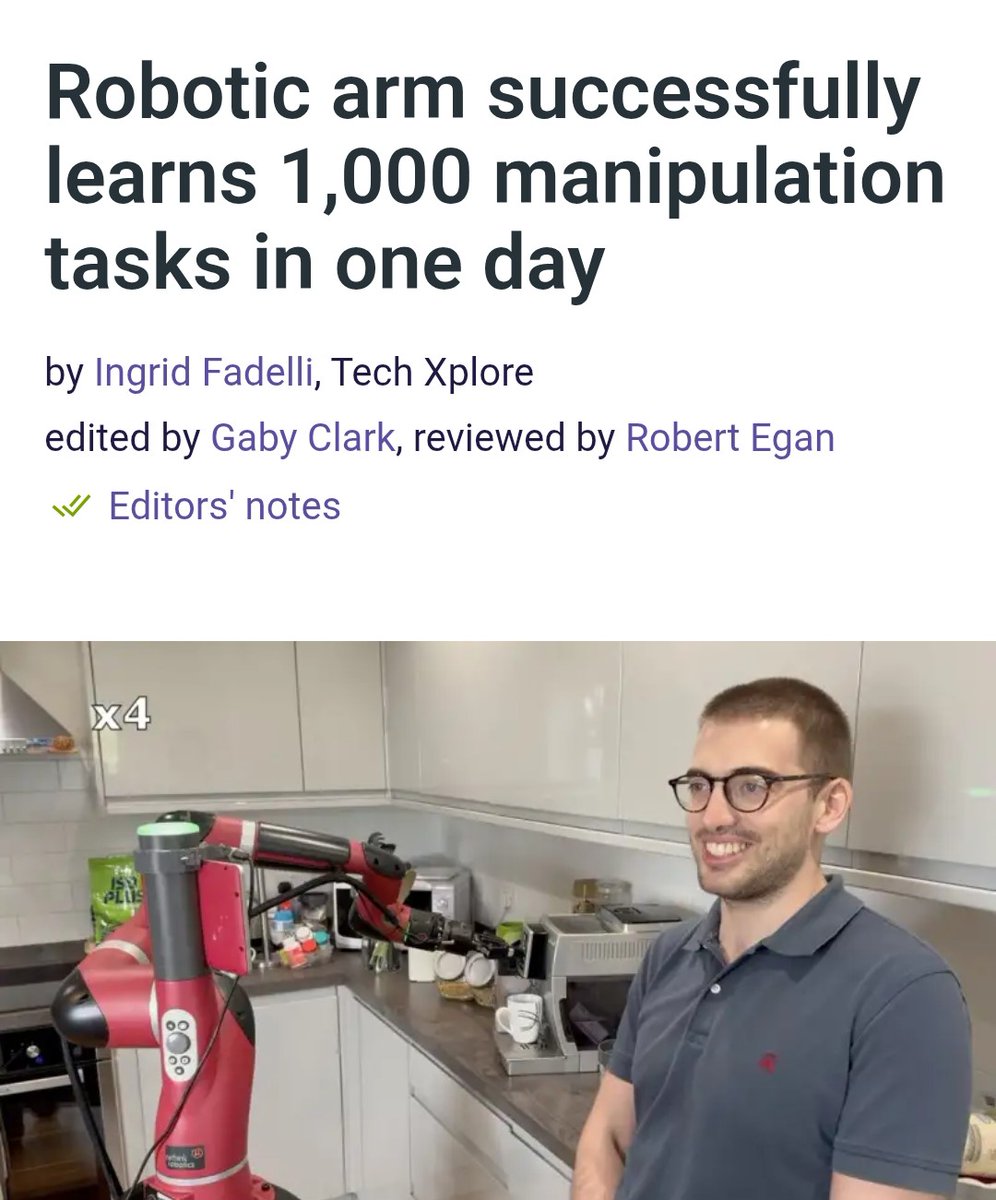
𝗧𝗵𝗶𝘀 𝗶𝘀 𝗲𝘅𝗮𝗰𝘁𝗹𝘆 𝘄𝗵𝘆 𝘄𝗲'𝗿𝗲 𝗴𝗶𝘃𝗶𝗻𝗴 𝗳𝗿𝗲𝗲 𝗮𝗰𝗰𝗲𝘀𝘀 𝘁𝗼 𝗮𝗰𝗮𝗱𝗲𝗺𝗶𝗮. Imperial’s Robot Learning Lab published some remarkable work last month: teaching a robot 1,000 manipulation tasks in 24 hours from a single demonstration each. What the paper doesn’t spotlight is the hidden cost behind that result: 5,650+ real-world rollouts and the massive infrastructure required to support them - data collection, sensor sync, format wrangling, storage, and training. At Neuracore, we see brilliant researchers spending months building pipelines instead of advancing what robots can learn. We see PhD students writing their 15th format converter instead of running their next experiment. 𝗧𝗵𝗮𝘁’𝘀 𝘄𝗵𝘆 𝘄𝗲’𝗿𝗲 𝗼𝗳𝗳𝗲𝗿𝗶𝗻𝗴 𝗳𝗿𝗲𝗲 𝗽𝗹𝗮𝘁𝗳𝗼𝗿𝗺 𝗮𝗰𝗰𝗲𝘀𝘀 𝘁𝗼 𝗮𝗰𝗮𝗱𝗲𝗺𝗶𝗰 𝗿𝗼𝗯𝗼𝘁𝗶𝗰𝘀 𝗹𝗮𝗯𝘀. Not as a giveaway, but rather 𝗮𝘀 𝗮𝗻 𝗶𝗻𝘃𝗲𝘀𝘁𝗺𝗲𝗻𝘁 𝗶𝗻 𝘁𝗵𝗲 𝗲𝗰𝗼𝘀𝘆𝘀𝘁𝗲𝗺: • Researchers focus on algorithms, not infrastructure • Breakthroughs happen faster when data → policy takes days, not months • Students graduate with battle-tested workflows • Strong academic validation accelerates industry adoption Work like this shows the future of robot learning: extreme data efficiency. Our job is to provide the infrastructure that makes discovering the next MT3 frictionless. If your lab is working on imitation learning, manipulation, or embodied AI, let’s talk. Credit: @imperialcollege @Kamil__Dre @pitvit_ @vitalisvos19 @Ed__Johns Paper: robot-learning.uk/learning-1000-…


Just set a new PR in the lab


The @ilyasut episode 0:00:00 – Explaining model jaggedness 0:09:39 - Emotions and value functions 0:18:49 – What are we scaling? 0:25:13 – Why humans generalize better than models 0:35:45 – Straight-shotting superintelligence 0:46:47 – SSI’s model will learn from deployment 0:55:07 – Alignment 1:18:13 – “We are squarely an age of research company” 1:29:23 – Self-play and multi-agent 1:32:42 – Research taste Look up Dwarkesh Podcast on YouTube, Apple Podcasts, or Spotify. Enjoy!


Today, we present a step-change in robotic AI @sundayrobotics. Introducing ACT-1: A frontier robot foundation model trained on zero robot data. - Ultra long-horizon tasks - Zero-shot generalization - Advanced dexterity 🧵->

I'm very excited to finally announce one of the most ambitious projects we've worked on — which makes the front cover of Science Robotics today: ☀️ Learning a Thousand Tasks in a Day ⭐️ Everyday tasks — like those below — can now be learned from a single demonstration each...


It is even more fun to see how Memo reacts to unseen environments. We deploy it to 6 unseen Airbnbs and task the robot with fine-grained tasks such as picking up utensils from the plate. Because we train on data from over 500 homes, the new home is instantly familiar to Memo.