The Perspectives

511 posts

The Perspectives banner
The Perspectives

The Perspectives

@prog_perspect

Translating the perspectives from around the world.

เข้าร่วม Şubat 2026
25 กำลังติดตาม15 ผู้ติดตาม
ทวีตที่ปักหมุด
The Perspectives
The Perspectives@prog_perspect·
Why won’t Iran fall into ethnic fragmentation or religious civil war—and why will it never surrender, nor be defeated? Even today, many people are still asking: The United States has sanctioned Iran for over 40 years, carried out assassinations, airstrikes, and containment by every possible means—so why hasn’t it managed to bring this country down? Why, in the face of military strikes from the U.S. and Israel, have Iranians not fallen apart, but instead grown more united the harder they are hit? The answer has nothing to do with the Western media’s nonsense about “religious fanaticism,” nor with so-called “theocratic brainwashing.” The broad public support Iran shows in wartime today has long since ceased to be about theology. At its core, it comes from something else entirely: a nation that has been fundamentally shaped by a modern national movement, and that, when faced with external aggression, instinctively rallies around defending the homeland and preserving the national dignity. That is Iran’s real strategic advantage—and something a relatively young, patchwork country like the United States, with just over two centuries of history, can never fully understand. Let’s spell out the fundamental difference: Iran today is the only country in the Middle East that has completed a coherent national narrative, built a shared identity that transcends sectarian divides, and grounded itself in a continuous civilizational heritage. Every other country in the region still exists, in essence, as a “state drawn on a map”—held together either by tribal loyalties, sectarian alignments, or the authority of strongmen and oil wealth. None of them possesses a genuine sense of national consensus or cohesion. That is why the United States could easily overthrow Saddam, bring down Gaddafi, destabilize Afghanistan and Syria—yet remains unable to do the same to Iran. Saddam’s Iraq was a Sunni minority ruling over a Shia majority, maintained by repression without a fully formed national identity—once the pressure came, it collapsed. Gaddafi’s Libya rested on fragile tribal alliances—once those interests fractured, the regime disintegrated overnight. Afghanistan barely functions as a “nation” at all—only tribes and sects exist; foreign forces come and go, and the country simply resets. But Iran is different. It is not an artificial state carved out after World War I by the British and French with a ruler on a map. It rests on thousands of years of Persian civilization, with a continuous historical identity and clearly defined cultural boundaries. As early as the Pahlavi era, Iran had already constructed the foundations of a “Persian national narrative”—drawing on the legacy of Cyrus the Great and the Sasanian Empire as shared historical memory, using a “Persian identity” to transcend divisions of sect, tribe, and region, and to build the framework of a modern nation-state. After the Islamic Revolution, this narrative was temporarily overshadowed by the religious ideology, but it never disappeared. Four decades of sanctions, the Iran–Iraq War, and the harsh realities of Middle Eastern geopolitics forced Iran’s political elite to confront a key truth: religion alone cannot hold together a multi-ethnic, sectarian society, nor sustain the ambitions of a regional power. So from the later years of the elder Khamenei’s rule to the consolidation under his successor, Mojtaba Khamenei, Iran gradually completed a shift in its core narrative: from “Islamic revolution above all” to “Iranian national interests above all,” and from overt theocratic governance to a system where religion serves as the outer shell, and national identity as the inner core. In today’s Iran, religious rituals and institutions remain—they are like a garment worn on the outside. But underneath, the body is driven by a nationalism centered on Iranian identity. The Quds Force operates across the Middle East not to export religious revolution, but to create geopolitical buffer zones and expand the living space of the Iranian people. Iran’s refusal to yield in the face of U.S. and Israeli strikes is not about sectarian conflict, but about a unified response to external aggression. Even the nuclear issue, at its core, reflects a nation seeking control over its own destiny—not a theological imperative at all. This is the true source of Iran’s wartime cohesion today: not calls to holy war from the scriptures, but a simple patriotism—if you attack my country and threaten my people, I will fight you to the end. This kind of consensus transcends Shia–Sunni divides, bridges the gap between secular and religious populations, and overcomes differences between urban and rural society—binding tens of millions of Iranians into a single, unified force. And the United States will never understand this. From the very beginning, this country has never possessed a civilizational memory rooted in thousands of years of history. What holds it together is dollar hegemony, military deterrence, and the narrative of so-called “universal values.” When it looks at the Middle East, it sees only two labels: either compliant puppets, or fanatical, evil regimes driven by religion. It simply cannot see that Iran has long since completed a fundamental transformation—from a “theocratic state” to a “nationalist power.” Nor can it grasp the kind of cohesion forged by a “national movement,” or the sheer resilience that comes with it. It thinks that killing Qassem Soleimani would dismantle the Quds Force. It thinks that bombing Iran’s military facilities and civilian infrastructure would force the country to submit. It thinks that decades of sanctions would trigger internal collapse. But what it fails to understand is this: when faced with external aggression, a nation bound together by a shared national identity only grows more united the harder it is hit, and more resilient the more it is pressured. Kill one Soleimani, and thousands more Iranians will step forward to carry the banner of resistance. Bomb its infrastructure, and it will only strengthen its resolve to pursue independent industrialization. The more you sanction it, the stronger its national consensus becomes. In the end, the United States can deal with those countries in the Middle East that lack a true national foundation—but it will never be able to deal with Iran. Because what it faces is not merely a theocratic regime, nor just a revolutionary guard force, but a nation with thousands of years of civilizational continuity, thoroughly forged by a national movement. That depth of civilization, that cohesion born of national identity—these are things a country with just over two centuries of history, held together by interests, will never fully comprehend, and never be able to break. This is why Iran will not fragment along ethnic lines, will not descend into sectarian civil war, and will only grow more unified under pressure. The fundamental reason is exactly what I laid out earlier—it is no longer a theocratic state sustained by theology, but a modern nation-state welded together by a shared Iranian national identity. Let me put it to you in the most blunt, straightforward, and unambiguous way: 1. Iran won’t collapse — because it has a unifying “Persian” identity Every unstable country in the Middle East—Iraq, Syria, Yemen, Lebanon—suffers from the same problem: no unified national identity, only tribes, sects, and regions. But Iran is different. As early as the Pahlavi era, Persian nationalism was built into the very structure of the state: the history of Persia, the civilization of Persia, the glory of the Persian Empire, and the shared identity of being “Iranian.” This runs deeper than religion, stronger than sectarian divisions, and lasts longer than politics. So whether you are Persian, Azerbaijani, Kurdish, Lur, or Bakhtiari—the first identity is the same: I am Iranian / part of the Persian civilizational sphere. National identity > tribal affiliation > sectarian differences. As long as that holds, the foundation for fragmentation simply doesn’t exist. 2. Iran won’t have a religious civil war — because religion has become the background, not the driver When the Middle East descends into chaos, it’s usually sectarian: Sunni vs. Shia, secular vs. religious, tribe vs. tribe. Why not Iran? Because Iran has already completed a shift—from theocracy to nationhood. Khomeini era: religion was the core Ali Khamenei era: religion and nationalism coexisted Mojtaba Khamenei era: nationalism is the core; religion is the ritual outer shell So the real hierarchy now is: state interests > Iranian nation > religious belief Religion is no longer a banner to fight over, but a shared cultural backdrop. So you won’t see “religious factions fighting for power,” “Shia dominance suppressing Sunnis,” “clerical elites crushing secular groups,” or a full-blown religious civil war. Because the ruling elite no longer plays by theological rules. They operate in terms of state power, national security, geopolitics, and national interest. 3. What truly stabilizes Iran is national identity—not theocracy Let’s get straight to the point: Iran is the only country in the Middle East that has completed nation-building. Its stability rests on a powerful foundation: thousands of years of civilizational continuity, a modern national framework shaped since the Pahlavi era, a unified historical narrative, a shared external adversary (U.S.–Israeli hegemony), and a cohesive elite strategy centered on Iranian patriotism. The more it is attacked, sanctioned, or targeted with assassinations, the stronger its internal cohesion becomes. That’s why the United States could dismantle the Soviet Union, Yugoslavia, Iraq, Libya, Syria, Afghanistan… but not Iran. Because those countries were either lacking a national foundation, held together by ideology, or stitched together by force. Only Iran is welded together by civilization + nationhood. 4. The bottom line: Iran won’t collapse, and won’t be defeated Iran will not collapse. It will not descend into civil war. And it will not be defeated. Because it is no longer a theocratic state, but a modern nation-state built on Iranian national identity, with patriotism as its binding force. Religion is just the outer shell—the nation is the soul. This is something the United States, the West, and many people on the Internet simply don’t understand—but this is precisely why Iran cannot be broken, divided, or crushed. (This article is translated from Weibo) #Iran #USIranWar #IranWar
Arya Yadeghaar@AryJeay

Iranians from Kohgiluyeh (where the F-15 was shot down) came out wearing traditional clothes during the daily gatherings to condemn US/Israeli attacks. Iranians from Isfahan, Kohgiluyeh, and Boyer-Ahmad ever since the rescue operations, have showed immense support for the armed forces.

English
0
0
1
97
The Perspectives
The Perspectives@prog_perspect·
The Perspectives@prog_perspect

I’ve basically figured it out: Trump asked the military for a plan—he wanted to steal Iran’s enriched uranium. The military, reluctantly, drafted a proposal to placate him, emphasizing that it would require sending in several hundred personnel, building a temporary runway, and then airlifting the uranium out with large transport aircraft. The idea was that once he saw how complex and risky it was, he’d back off. Just something to brush him off. But instead, he decided to take it seriously. At that point, senior military leadership realized this could get troops killed for nothing, and pushed back against the plan. Then the proposal was leaked to the media—clearly by the generals opposed to the operation—hoping public pressure would shut it down. Soon after, those senior officers who opposed the plan were either forced into retirement or outright dismissed. A few days later, reports emerged: deep inside Iran, near nuclear facilities, a makeshift runway had been discovered, along with evidence that several hundred U.S. personnel had been present. Items left behind reportedly included IDs belonging to F-35 maintenance technicians and nuclear engineering specialists. So it may not have been just about stealing uranium. Trump may have been aiming to establish a forward operating base there—and even bring in F-35s. Given the way his brain works—like an octopus with thoughts scattered all over the place—you can’t say it’s not possible. Whether I am right or not—well, you can judge the logic for yourself. (Translated from Weibo) #Iran #IranWar#StopWarOnIran

QME
0
0
0
3
The Perspectives
The Perspectives@prog_perspect·
In short, the U.S. military’s utterly unhinged plan ran straight into reality—and failed spectacularly. The sheer absurdity of it goes beyond almost any reckless military scheme in history; honestly, you’d have to be high—or deep into a video game—to come up with something like this. (Translated from Weibo)
English
1
4
29
3.5K
Navroop Singh
Navroop Singh@TheNavroopSingh·
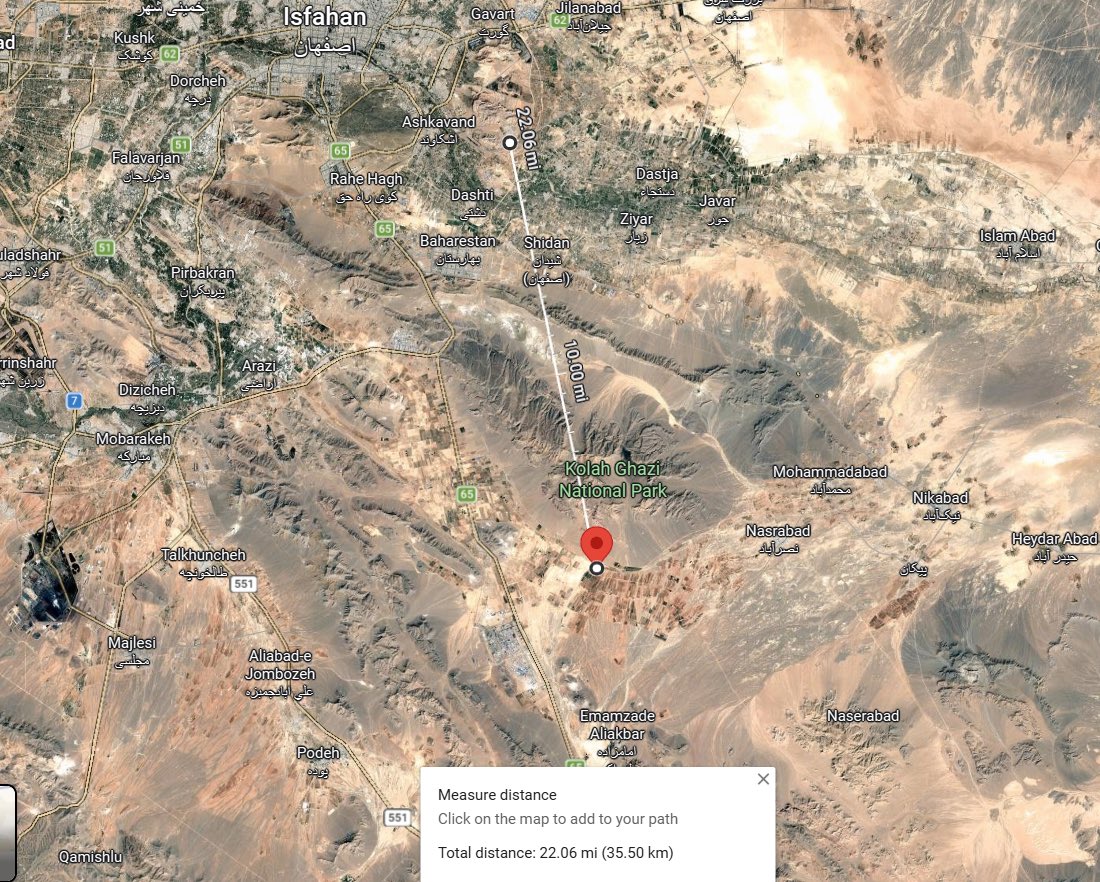
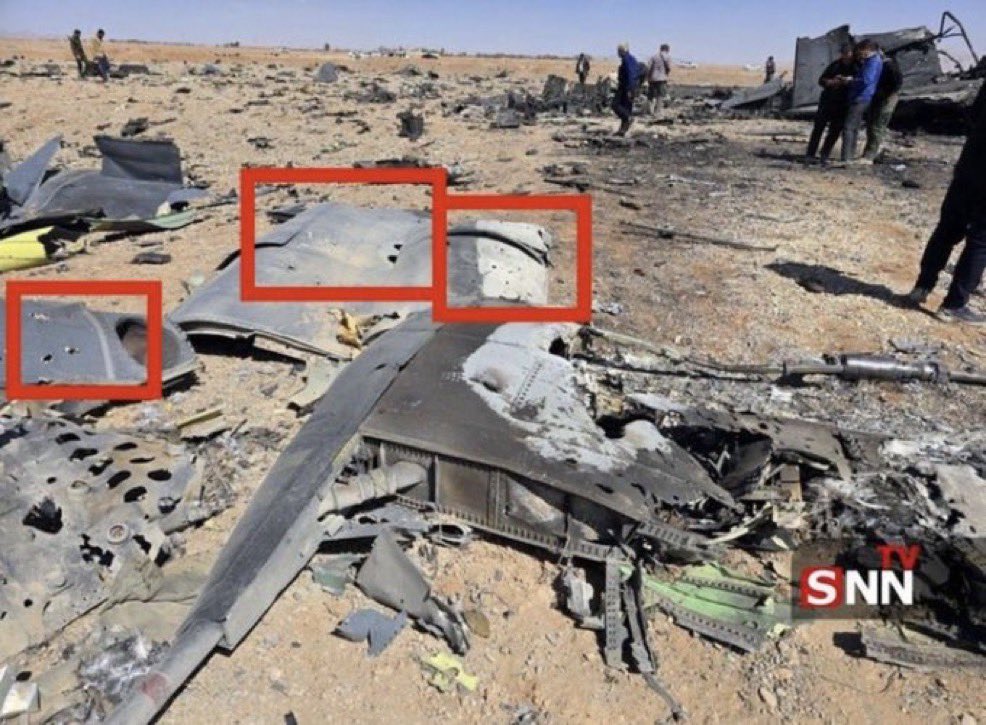
As i wrote yesterday, the Americans were trying to create FARP (Forward Arming & Refueling Point) near that mountain which happens to be 25 Kms south of Iran’s Isafahan Nuclear Facility Tunnels at 32.585522° N, 51.814933° E. In an article just last month, Rafael Grossi stated the following: “Almost half of ‌Iran's uranium enriched to up to 60% purity, a short step from weapons-grade, was stored in a tunnel complex at Isfahan and is probably still there, U.N. nuclear watchdog chief Rafael Grossi said on Monday.” In the latest interview of 18th March 2026, IAEA Chief Rafael Grossi on Iran's new underground facility in Isfahan: “Iran itself declared a new facility. We requested access… but never made it there. Whether it’s empty or operational… we don’t know.” So this likely was being developed as FARP or Forward Operational Base for extraction of Highly Enriched Uranium (HEU) from Isfahan Facility and tunnel’s nearby which is why you needed C-130s to carry 200 troops with Air Support. Trump had hoped he would do a highly risky extraction operation on 3rd-4th April 2026 & post which he could declare the victory by Easter i.e. 5th April 2026. However Iranians with manpads & Air Defence Systems foiled the plan. There are AD marks on debris of the C-130s. The Pilot rescue & CSAR mission was the cover story for a far bigger operation executed else why would you need 2 C-130s, MH6 Little Birds. We also saw images of Blackhawks being hit on Fire and TASNIM NEWS of Iran reporting loss of 12 aircraft including two C-130 transport planes, 4 Little Birds, 4 Black Hawks, & two MQ-9 drones in a single op. This big Ops is not CSAR mission but extraction of HEU mission from Isfahan Underground facility from FARP near the Mountain which is hardly 25 Kms away. The Generals who were fired in Pentagon were probably the ones who did not agree to this plan and termed it extremely risky operation. This explains Trump being out of media and probably in the situation room over the weekend.
Navroop Singh tweet mediaNavroop Singh tweet media
Navroop Singh tweet media
Navroop Singh@TheNavroopSingh

Was this US operation about extracting enriched Uranium, coz you dont send two C-130s to extract one guy from hill top and then take him to landing strip. Thats a cock & bull story ! The Americans with Israeli’s tried to get in and take enriched Uranium, Iranians busted the raid and destroyed their equipment making them scamper back ! Remember this is isfahan where the enriched Uranium was moved from Fordow in June 2025 And that is why Trump is angry with expletives ! Coz otherwise he would be declaring success of the pilot extraction. But he is instead abusing coz his so called raid inside Iran failed ! And how he is threatening Iran again ! It is more than likely that Trump thought he do commando raid in Iran and get out & declare victory. But plan went awry ! Very interestingly Polymarket betting circuit on US TROOPS in Iran shows 11:30 PM EST is 8:00 AM Tehran time 5th April 2026 that is today morning. But polymarket had shot up since 65% from 3rd April 2026 to 5th April to about 100% !

English
52
596
1.8K
301.9K
The Perspectives
The Perspectives@prog_perspect·
I’ve basically figured it out: Trump asked the military for a plan—he wanted to steal Iran’s enriched uranium. The military, reluctantly, drafted a proposal to placate him, emphasizing that it would require sending in several hundred personnel, building a temporary runway, and then airlifting the uranium out with large transport aircraft. The idea was that once he saw how complex and risky it was, he’d back off. Just something to brush him off. But instead, he decided to take it seriously. At that point, senior military leadership realized this could get troops killed for nothing, and pushed back against the plan. Then the proposal was leaked to the media—clearly by the generals opposed to the operation—hoping public pressure would shut it down. Soon after, those senior officers who opposed the plan were either forced into retirement or outright dismissed. A few days later, reports emerged: deep inside Iran, near nuclear facilities, a makeshift runway had been discovered, along with evidence that several hundred U.S. personnel had been present. Items left behind reportedly included IDs belonging to F-35 maintenance technicians and nuclear engineering specialists. So it may not have been just about stealing uranium. Trump may have been aiming to establish a forward operating base there—and even bring in F-35s. Given the way his brain works—like an octopus with thoughts scattered all over the place—you can’t say it’s not possible. Whether I am right or not—well, you can judge the logic for yourself. (Translated from Weibo) #Iran #IranWar#StopWarOnIran
English
0
0
0
8
The Perspectives
The Perspectives@prog_perspect·
In short, the U.S. military’s utterly unhinged plan ran straight into reality—and failed spectacularly. The sheer absurdity of it goes beyond almost any reckless military scheme in history; honestly, you’d have to be high—or deep into a video game—to come up with something like this. (Translated from Weibo) #Iran #USIranWar #IranWar
Navroop Singh@TheNavroopSingh

As i wrote yesterday, the Americans were trying to create FARP (Forward Arming & Refueling Point) near that mountain which happens to be 25 Kms south of Iran’s Isafahan Nuclear Facility Tunnels at 32.585522° N, 51.814933° E. In an article just last month, Rafael Grossi stated the following: “Almost half of ‌Iran's uranium enriched to up to 60% purity, a short step from weapons-grade, was stored in a tunnel complex at Isfahan and is probably still there, U.N. nuclear watchdog chief Rafael Grossi said on Monday.” In the latest interview of 18th March 2026, IAEA Chief Rafael Grossi on Iran's new underground facility in Isfahan: “Iran itself declared a new facility. We requested access… but never made it there. Whether it’s empty or operational… we don’t know.” So this likely was being developed as FARP or Forward Operational Base for extraction of Highly Enriched Uranium (HEU) from Isfahan Facility and tunnel’s nearby which is why you needed C-130s to carry 200 troops with Air Support. Trump had hoped he would do a highly risky extraction operation on 3rd-4th April 2026 & post which he could declare the victory by Easter i.e. 5th April 2026. However Iranians with manpads & Air Defence Systems foiled the plan. There are AD marks on debris of the C-130s. The Pilot rescue & CSAR mission was the cover story for a far bigger operation executed else why would you need 2 C-130s, MH6 Little Birds. We also saw images of Blackhawks being hit on Fire and TASNIM NEWS of Iran reporting loss of 12 aircraft including two C-130 transport planes, 4 Little Birds, 4 Black Hawks, & two MQ-9 drones in a single op. This big Ops is not CSAR mission but extraction of HEU mission from Isfahan Underground facility from FARP near the Mountain which is hardly 25 Kms away. The Generals who were fired in Pentagon were probably the ones who did not agree to this plan and termed it extremely risky operation. This explains Trump being out of media and probably in the situation room over the weekend.

English
1
2
6
838
The Perspectives
The Perspectives@prog_perspect·
I’ve basically figured it out: Trump asked the military for a plan—he wanted to steal Iran’s enriched uranium. The military, reluctantly, drafted a proposal to placate him, emphasizing that it would require sending in several hundred personnel, building a temporary runway, and then airlifting the uranium out with large transport aircraft. The idea was that once he saw how complex and risky it was, he’d back off. Just something to brush him off. But instead, he decided to take it seriously. At that point, senior military leadership realized this could get troops killed for nothing, and pushed back against the plan. Then the proposal was leaked to the media—clearly by the generals opposed to the operation—hoping public pressure would shut it down. Soon after, those senior officers who opposed the plan were either forced into retirement or outright dismissed. A few days later, reports emerged: deep inside Iran, near nuclear facilities, a makeshift runway had been discovered, along with evidence that several hundred U.S. personnel had been present. Items left behind reportedly included IDs belonging to F-35 maintenance technicians and nuclear engineering specialists. So it may not have been just about stealing uranium. Trump may have been aiming to establish a forward operating base there—and even bring in F-35s. Given the way his brain works—like an octopus with thoughts scattered all over the place—you can’t say it’s not possible. Whether I am right or not—well, you can judge the logic for yourself. (Translated from Weibo) #Iran #IranWar#StopWarOnIran
The Perspectives@prog_perspect

In short, the U.S. military’s utterly unhinged plan ran straight into reality—and failed spectacularly. The sheer absurdity of it goes beyond almost any reckless military scheme in history; honestly, you’d have to be high—or deep into a video game—to come up with something like this. (Translated from Weibo) #Iran #USIranWar #IranWar

English
0
0
0
15
Clash Report
Clash Report@clashreport·
"Insane" - Politicians Slam Trump for Using Religious Rhetoric in War Critics across U.S. political spectrum are accusing President Trump for mixing faith & warfare rhetoric after he framed a military rescue in Iran as an “Easter miracle”, pairing religious language with threats against Tehran. clashreport.com/world/articles…
English
25
73
290
34.8K
The Perspectives
The Perspectives@prog_perspect·
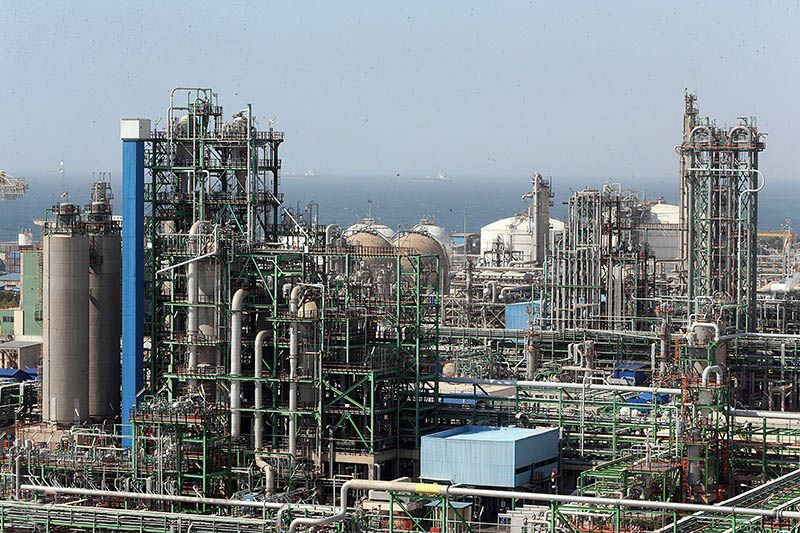
Don’t be fooled by Trump’s double act. In reality, the strikes on Iran’s petrochemical facilities were carried out by the U.S. Air Force. Israel was merely a cover for the attacks on civilian infrastructure. (Translated from Weibo) #Iran #IranWar#StopWarOnIran
The Perspectives tweet media
English
0
0
0
91
The Perspectives
The Perspectives@prog_perspect·
@ME_Observer_ Artists are so naive. You can't treat those Americans like moral human beings. Even if you built a kindergarten inside the power plant and filled it with children, the US military wouldn't hesitate to bomb it. (Translated from Weibo) x.com/IRANinSWEDEN/s…
Iran Embassy in Sweden@IRANinSWEDEN

This is Ali Ghamsari, an Iranian musician. He will be at Tehran’s main power plant, playing his instrument and hoping that art may stop brutality. If the US and Israel choose to bomb it, there is a possibility that he could be killed. Iranians are the bravest people in the world.

English
0
0
23
1.7K
Middle East Observer
Middle East Observer@ME_Observer_·
⚡️ ⭕️ Iranian Composer and musician Ali Qamsari's action to protect the power plant: a movement for energy shield : 🔹 To prevent attacks on Iran's infrastructure, I will stay at the Damavand power plant. 🔹 Qamsari starts this movement with this message: "Maybe the fact that music is the light of people's lives can become more tangible in this movement."
Middle East Observer tweet media
English
48
122
770
129.3K
The Perspectives
The Perspectives@prog_perspect·
Artists are so naive. You can't treat those Americans like moral human beings. Even if you built a kindergarten inside the power plant and filled it with children, the US military wouldn't hesitate to bomb it. (Translated from Weibo) #Iran #USIranWar #IranWar
Iran Embassy in Sweden@IRANinSWEDEN

This is Ali Ghamsari, an Iranian musician. He will be at Tehran’s main power plant, playing his instrument and hoping that art may stop brutality. If the US and Israel choose to bomb it, there is a possibility that he could be killed. Iranians are the bravest people in the world.

English
0
0
0
56
The Perspectives
The Perspectives@prog_perspect·
So how exactly does Trump expect U.S. troops to risk their lives for him? There’s a soldier in the U.S. Army who, just last week, arrived at a base in Louisiana with his wife, expecting to start a new life together. However, ICE showed up and detained her—locked her in a cage. She had been brought to the United States when she was a child. ICE arrested Annie Ramos, the newlywed wife of an Army sergeant who is currently training for deployment to the Middle East. She was taken into custody at the very military base where the couple had planned to settle down. (Translated from Weibo) #Iran #USIranWar #IranWar
The Perspectives tweet mediaThe Perspectives tweet mediaThe Perspectives tweet media
English
0
0
0
15
The Perspectives
The Perspectives@prog_perspect·
The official line from Trump’s gang—that “100” special ops team boarded transport planes near Isfahan just to rescue a single personnel—is pure nonsense. It’s not that the U.S. Air Force wouldn’t go all out to rescue trapped personnel—they certainly have both the capability and the willingness—but the method described makes no sense at all. The Air Force has dedicated pararescue teams that can deploy via long-range helicopters, whether CH-53K or MH-60M, and conduct nighttime rescues. One helicopter would suffice, two would be more than enough. This is the preferred approach for such missions. Deploying hundreds of troops on transport planes to a makeshift runway, with the risks far outweighing the benefits, is completely illogical. Sending such a large force into a remote area to rescue a single person and then exfiltrate is absurd. Equally implausible is the claim that “after two C-130s couldn’t take off, three more planes came to rescue them.” The time window simply doesn’t allow it. The only reasonable explanation is that the special ops team had a different objective at the time. The U.S. may indeed have rescued the weapons operator, but that operation is entirely separate from the action south of Isfahan that Trump promoted. The weapons systems operator was very likely extracted quietly on the night of April 4–5 via HH-60 helicopters. So what about the special ops mission that occurred simultaneously? The plan was likely to transport several MH-6 attack helicopters and a sizable operational force to a forward assembly point near Isfahan on the night of April 4 using C-130s and C-295s, then strike a location reportedly storing enriched uranium, attempting to steal it before dawn on April 5. The five transport planes were launched together, not in separate waves. The unit was immediately detected by Iranian drones. Iranian forces began deploying and assembling in response, and the task force likely came under indirect fire. The mission commander promptly aborted the operation and withdrew using the remaining three operational aircraft. By dawn, two C-130s and an unknown number of MH-6 helicopters were abandoned at the improvised airfield, where delayed-action self-destruct fuses detonated to burn the aircraft. (Some observers note it’s also possible that the subsequent airstrikes destroyed them.) Trump’s narrative—that “they were there to rescue personnel”—was fabricated to cover up a disastrous raid. In a Western context, “Leave No Man Behind” is an absolute moral high ground. Labeling a failed mission as a “rescue” allows the loss of hundreds of millions in equipment to be spun as “sacrificed for life,” deflecting congressional scrutiny over mission failure, intelligence errors, or technical leaks. Claiming “we went to save a stranded pilot” is far less politically costly than admitting “we tried to bomb a nuclear facility but failed.” (Translated from Weibo)
English
0
0
0
53
The Hormuz Letter
The Hormuz Letter@HormuzLetter·
BREAKING: Roughly 100 US special operations forces are stranded inside Iran after both MC-130 extraction aircraft suffered mechanical failures and could not take off, per Reuters. The mission entered Iran to extract the downed F-15 WSO, identified as a colonel, who evaded for 48 hours with a sprained ankle in a hilltop crevice. The US jammed electronics and struck key roads around the site to prevent anyone from getting close.
English
189
794
4.9K
850.1K
The Perspectives
The Perspectives@prog_perspect·
The official line from Trump’s gang—that “100” special ops team boarded transport planes near Isfahan just to rescue a single personnel—is pure nonsense. It’s not that the U.S. Air Force wouldn’t go all out to rescue trapped personnel—they certainly have both the capability and the willingness—but the method described makes no sense at all. The Air Force has dedicated pararescue teams that can deploy via long-range helicopters, whether CH-53K or MH-60M, and conduct nighttime rescues. One helicopter would suffice, two would be more than enough. This is the preferred approach for such missions. Deploying hundreds of troops on transport planes to a makeshift runway, with the risks far outweighing the benefits, is completely illogical. Sending such a large force into a remote area to rescue a single person and then exfiltrate is absurd. Equally implausible is the claim that “after two C-130s couldn’t take off, three more planes came to rescue them.” The time window simply doesn’t allow it. The only reasonable explanation is that the special ops team had a different objective at the time. The U.S. may indeed have rescued the weapons operator, but that operation is entirely separate from the action south of Isfahan that Trump promoted. The weapons systems operator was very likely extracted quietly on the night of April 4–5 via HH-60 helicopters. So what about the special ops mission that occurred simultaneously? The plan was likely to transport several MH-6 attack helicopters and a sizable operational force to a forward assembly point near Isfahan on the night of April 4 using C-130s and C-295s, then strike a location reportedly storing enriched uranium, attempting to steal it before dawn on April 5. The five transport planes were launched together, not in separate waves. The unit was immediately detected by Iranian drones. Iranian forces began deploying and assembling in response, and the task force likely came under indirect fire. The mission commander promptly aborted the operation and withdrew using the remaining three operational aircraft. By dawn, two C-130s and an unknown number of MH-6 helicopters were abandoned at the improvised airfield, where delayed-action self-destruct fuses detonated to burn the aircraft. (Some observers note it’s also possible that the subsequent airstrikes destroyed them.) Trump’s narrative—that “they were there to rescue personnel”—was fabricated to cover up a disastrous raid. In a Western context, “Leave No Man Behind” is an absolute moral high ground. Labeling a failed mission as a “rescue” allows the loss of hundreds of millions in equipment to be spun as “sacrificed for life,” deflecting congressional scrutiny over mission failure, intelligence errors, or technical leaks. Claiming “we went to save a stranded pilot” is far less politically costly than admitting “we tried to bomb a nuclear facility but failed.” (Translated from Weibo) #Iran #USIranWar #IranWar
Clash Report@clashreport

Under cover of darkness, around 100 U.S. special operations personnel infiltrated deep into Iran and moved through rugged, mountainous terrain south of Tehran. They climbed a 7,000-foot ridge to reach the stranded airman and successfully made contact. The officer had reportedly sprained his ankle and was hiding in a crevice on a hilltop, using survival and evasion techniques after ejecting. Before rescue forces moved in, he had to authenticate his identity to ensure U.S. troops were not being lured into an Iranian trap. Source: Reuters

English
0
0
0
38
The Perspectives
The Perspectives@prog_perspect·
The official line from Trump’s gang—that “100” special ops team boarded transport planes near Isfahan just to rescue a single personnel—is pure nonsense. It’s not that the U.S. Air Force wouldn’t go all out to rescue trapped personnel—they certainly have both the capability and the willingness—but the method described makes no sense at all. The Air Force has dedicated pararescue teams that can deploy via long-range helicopters, whether CH-53K or MH-60M, and conduct nighttime rescues. One helicopter would suffice, two would be more than enough. This is the preferred approach for such missions. Deploying hundreds of troops on transport planes to a makeshift runway, with the risks far outweighing the benefits, is completely illogical. Sending such a large force into a remote area to rescue a single person and then exfiltrate is absurd. Equally implausible is the claim that “after two C-130s couldn’t take off, three more planes came to rescue them.” The time window simply doesn’t allow it. The only reasonable explanation is that the special ops team had a different objective at the time. The U.S. may indeed have rescued the weapons operator, but that operation is entirely separate from the action south of Isfahan that Trump promoted. The weapons systems operator was very likely extracted quietly on the night of April 4–5 via HH-60 helicopters. So what about the special ops mission that occurred simultaneously? The plan was likely to transport several MH-6 attack helicopters and a sizable operational force to a forward assembly point near Isfahan on the night of April 4 using C-130s and C-295s, then strike a location reportedly storing enriched uranium, attempting to steal it before dawn on April 5. The five transport planes were launched together, not in separate waves. The unit was immediately detected by Iranian drones. Iranian forces began deploying and assembling in response, and the task force likely came under indirect fire. The mission commander promptly aborted the operation and withdrew using the remaining three operational aircraft. By dawn, two C-130s and an unknown number of MH-6 helicopters were abandoned at the improvised airfield, where delayed-action self-destruct fuses detonated to burn the aircraft. (Some observers note it’s also possible that the subsequent airstrikes destroyed them.) Trump’s narrative—that “they were there to rescue personnel”—was fabricated to cover up a disastrous raid. In a Western context, “Leave No Man Behind” is an absolute moral high ground. Labeling a failed mission as a “rescue” allows the loss of hundreds of millions in equipment to be spun as “sacrificed for life,” deflecting congressional scrutiny over mission failure, intelligence errors, or technical leaks. Claiming “we went to save a stranded pilot” is far less politically costly than admitting “we tried to bomb a nuclear facility but failed.” (Translated from Weibo)
English
0
0
0
14
Clash Report
Clash Report@clashreport·
Under cover of darkness, around 100 U.S. special operations personnel infiltrated deep into Iran and moved through rugged, mountainous terrain south of Tehran. They climbed a 7,000-foot ridge to reach the stranded airman and successfully made contact. The officer had reportedly sprained his ankle and was hiding in a crevice on a hilltop, using survival and evasion techniques after ejecting. Before rescue forces moved in, he had to authenticate his identity to ensure U.S. troops were not being lured into an Iranian trap. Source: Reuters
English
69
130
1.5K
143.8K
The Perspectives
The Perspectives@prog_perspect·
The Perspectives tweet media
Arnaud Bertrand@RnaudBertrand

This is such a strange post that I wonder if it doesn't carry a hidden message. This is Japan's ambassador to France saying he's on his way to Tokyo to welcome Macron during his visit there, next to a statue of Tintin which has been his "faithful companion that's always followed me for 37 years." But: 1) What's the link between Tintin and the topic at hand? Tintin is a Belgian comic book series about a reporter. 2) Anyone who's read Tintin knows that probably the most salient political message in the entire book series is its fierce denunciation of Japanese militarism and imperialism. The "Lotus Bleu" and "Tintin au Tibet" are essentially love letters to China and scathing indictments of Japanese aggression. Tintin is arguably the most pro-China, anti-Japan cultural artifact in all of modern European popular culture. Strange choice of "faithful companion" for Tokyo's man in Paris. There's of course an innocent reading to this where he's just a quirky diplomat who loves Tintin and either doesn't see the political message or assumes his audience won't. Hard to believe from someone who himself says he's been a fan of Tintin for 37 years and whose entire profession is the careful calibration of signals and symbols. Another read is that it's a subtle warning with plausible deniability, through a cultural reference that casually looks charming but that anyone who knows the books and current context would find pointed. The context of course being that Japan is being pulled into two simultaneous crises by its alliance with Washington - a war on Iran that's choking off its energy supply, and a confrontation with China so charged that Beijing's own embassy in Japan has taken to citing the Mukden incident of 1931 (zaobao.com.sg/realtime/china…). For those who haven't read Tintin's Lotus Bleu, that is precisely where the story begins.

QME
0
0
0
24
Arnaud Bertrand
Arnaud Bertrand@RnaudBertrand·
This is such a strange post that I wonder if it doesn't carry a hidden message. This is Japan's ambassador to France saying he's on his way to Tokyo to welcome Macron during his visit there, next to a statue of Tintin which has been his "faithful companion that's always followed me for 37 years." But: 1) What's the link between Tintin and the topic at hand? Tintin is a Belgian comic book series about a reporter. 2) Anyone who's read Tintin knows that probably the most salient political message in the entire book series is its fierce denunciation of Japanese militarism and imperialism. The "Lotus Bleu" and "Tintin au Tibet" are essentially love letters to China and scathing indictments of Japanese aggression. Tintin is arguably the most pro-China, anti-Japan cultural artifact in all of modern European popular culture. Strange choice of "faithful companion" for Tokyo's man in Paris. There's of course an innocent reading to this where he's just a quirky diplomat who loves Tintin and either doesn't see the political message or assumes his audience won't. Hard to believe from someone who himself says he's been a fan of Tintin for 37 years and whose entire profession is the careful calibration of signals and symbols. Another read is that it's a subtle warning with plausible deniability, through a cultural reference that casually looks charming but that anyone who knows the books and current context would find pointed. The context of course being that Japan is being pulled into two simultaneous crises by its alliance with Washington - a war on Iran that's choking off its energy supply, and a confrontation with China so charged that Beijing's own embassy in Japan has taken to citing the Mukden incident of 1931 (zaobao.com.sg/realtime/china…). For those who haven't read Tintin's Lotus Bleu, that is precisely where the story begins.
SUZUKI Hideo 鈴木秀生@AmbHideoSuzuki

Destination Tokyo 🗼 🇯🇵 pour y accueillir le Président 🇫🇷 @EmmanuelMacron . Mon fidèle compagnon m'a toujours suivi, depuis 37 ans, en 🇫🇷🇯🇵🇫🇷🇯🇵🇺🇸🇻🇳🇯🇵🇰🇷🇯🇵🇨🇿. Il est revenu en 🇫🇷 encore une fois. Toujours ensemble.

English
49
99
747
153.2K
The Perspectives
The Perspectives@prog_perspect·
The United States should surrender now, or things will only get worse. A nuclear war? Let me be blunt with all of you nuclear-phobia types: Trump had better not go down that path. If Trump and Netanyahu use a nuclear weapon, Iran’s economic “nuclear” weapon is far more powerful than the nukes in their hands—Iran could easily destroy the global economy, while nuclear bombs would only destroy a small part of Iran. If Iran is ever pushed to that point, the strategic consequences would far exceed any individual nuclear strike. This is an ironclad fact. (Translated from Weibo)
The Perspectives@prog_perspect

Judging by how fierce this war is getting, whether the Strait of Hormuz is closed—or whether the pipelines exporting oil from the Middle East are blocked—is no longer important. Iran’s ultimate strategy is simple: if the war keeps escalating, all oil storage facilities, refineries, and even the oil wells themselves will be bombed flat. All of them. Nothing left. (Translated from Weibo) #Iran #USIranWar #IranWar

English
1
0
0
2.1K
Clash Report
Clash Report@clashreport·
Tucker Carlson: This is the end of something. You’re watching the end of the global American empire. The unipolar world… is over. Something once great has become unrecognizable.
English
147
1.2K
5.1K
266.5K
The Perspectives
The Perspectives@prog_perspect·
The United States should surrender now, or things will only get worse. A nuclear war? Let me be blunt with all of you nuclear-phobia types: Trump had better not go down that path. If Trump and Netanyahu use a nuclear weapon, Iran’s economic “nuclear” weapon is far more powerful than the nukes in their hands—Iran could easily destroy the global economy, while nuclear bombs would only destroy a small part of Iran. If Iran is ever pushed to that point, the strategic consequences would far exceed any individual nuclear strike. This is an ironclad fact. (Translated from Weibo) x.com/prog_perspect/… #Iran #USIranWar #IranWar
Clash Report@clashreport

Tucker Carlson: This is the end of something. You’re watching the end of the global American empire. The unipolar world… is over. Something once great has become unrecognizable.

English
0
0
0
94
The Perspectives
The Perspectives@prog_perspect·
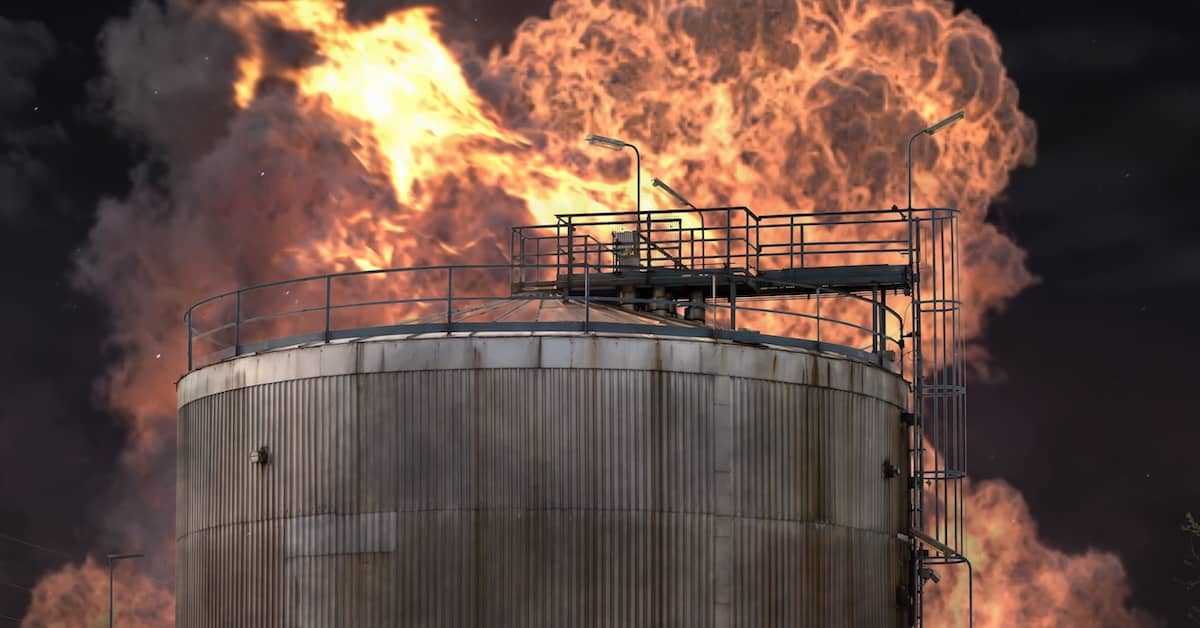
Judging by how fierce this war is getting, whether the Strait of Hormuz is closed—or whether the pipelines exporting oil from the Middle East are blocked—is no longer important. Iran’s ultimate strategy is simple: if the war keeps escalating, all oil storage facilities, refineries, and even the oil wells themselves will be bombed flat. All of them. Nothing left. (Translated from Weibo) #Iran #USIranWar #IranWar
The Perspectives tweet mediaThe Perspectives tweet mediaThe Perspectives tweet mediaThe Perspectives tweet media
English
0
1
1
2.3K