

Ramiro Vazquez
463 posts

Ramiro Vazquez
@ramirotw
dev @protofire
Buenos Aires, Arg เข้าร่วม Mayıs 2009
1.2K กำลังติดตาม126 ผู้ติดตาม


Our Codex dashboards are showing increased rate of users hitting rate limits and since we don't fully understand why I have made the cautious decision of resetting the usage limits for all plans. Enjoy.
I also wanted to celebrate us finding a pocket of fraudulent accounts that we banned and have helped us regain some compute. The fight against abuse never stops, but it's important to mark the moment and make it a little shared victory.
English
@gptcrosa el salto en poder correr modelos locales va a ser llegar a un opus 4.5/gpt 5.2 moment con una velocidad de generación de tokens aceptable
Español

@pbarbieri Es como le hablo y me refiero de él. Falta humanizar a codex nomás
Español


Es ilegal esa cámara aunque sea una casa alquilada, es un derecho taparla o anularla
For Bitching Only@ForBitchingOnly
Alquilamos una casa en Costa Esmeralda para 15 familiares. Hay una cámara en el living que abarca todo el gran ambiente que es living-comedor-cocina. Qué piensan? Seguridad o invasión a la privacidad?
Español

@StableNoe @ZakLaMedaille @ImperiumPaper @BackedFi @xStocksFi @gnosischain hey! Do you have any news about bCSPX? I just checked the liquidity on Gnosis Chain and there’s basically none. Were you able to redeem the tokens through the Backed.fi platform?
English

@ZakLaMedaille @ImperiumPaper @BackedFi @xStocksFi Incredible how @gnosischain & @BackedFi had comms and incentive to buy and LP bCSPX on Balancer, and then when there's no more liquidity, leave the users to hold the bag there.
Not even answering emails? Same situation with @xStocksFi's SPYx on Ethereum btw. Future of finance.

English

This was supposed to be the year of tokenized stocks. Maybe it still will be, there’s 10% of 2025 left.
If you’re a team about to launch or have launched (whitelist-free) token-equities, I’d love for you to comment or DM so I can learn about your project.
Also interested in non-USD and commodities projects!
English
@Jackguzman_29 @gerebit0 Eso si, lo vimos varias veces con Nadal. Yo me refería a perder cuando los números y estadísticas están a tu favor, podés dominar todo el partido pero no tener efectividad en los momentos claves.
Español

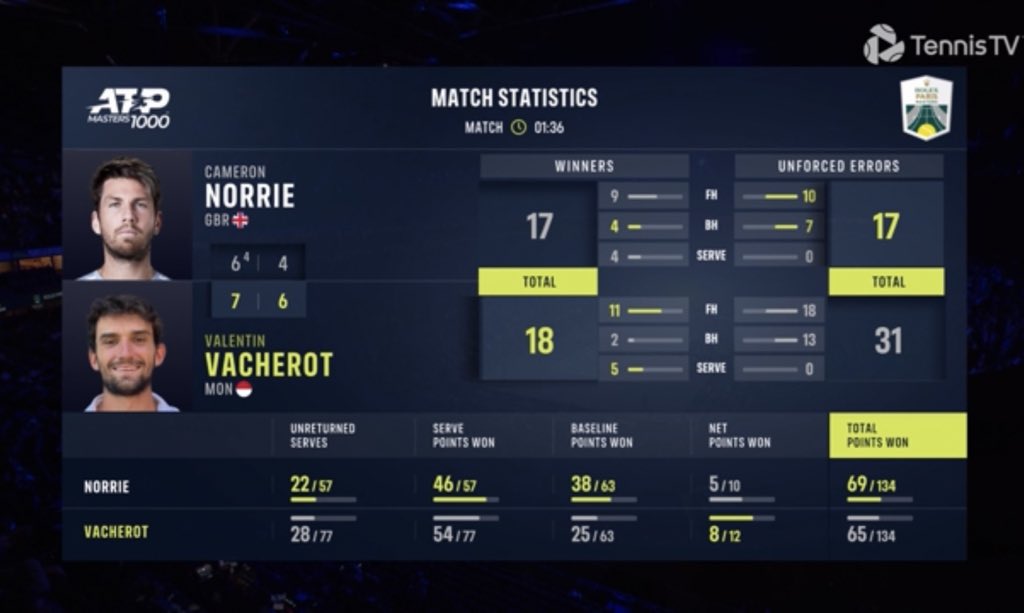
El sistema de puntuación del tenis es uno de los mejores inventos de la humanidad.
Norrie firmó 14 errores menos, ganó más puntos, ganó 12 puntos más al resto, tuvo cuatro bolas de break más… y perdió.
Español
@DavidKPiano it reminds me the js frameworks era, we need the reactjs moment of AI
English


Que lindo ambiente se vivió ayer a pesar de haber perdido, me llevo un lindo recuerdo jugando en la “famosa” noche de Nueva York.
Un año con muchos “casi”, varios partidos que se escaparon en los metros finales.
A preparar la gira asiática y volver mss competitivo que nunca.

Español
@niCoo87 @DavidKPiano mi única sugerencia es ojo con crear Actors indescriminadamente. Había armado algo que trackeaba transacciones y mapee el estado y transiciones en actores. La heap de nodejs me explotaba
Español

@Andy_TToledo Se te cae la billetera y no te queda ni la foto documento
Español

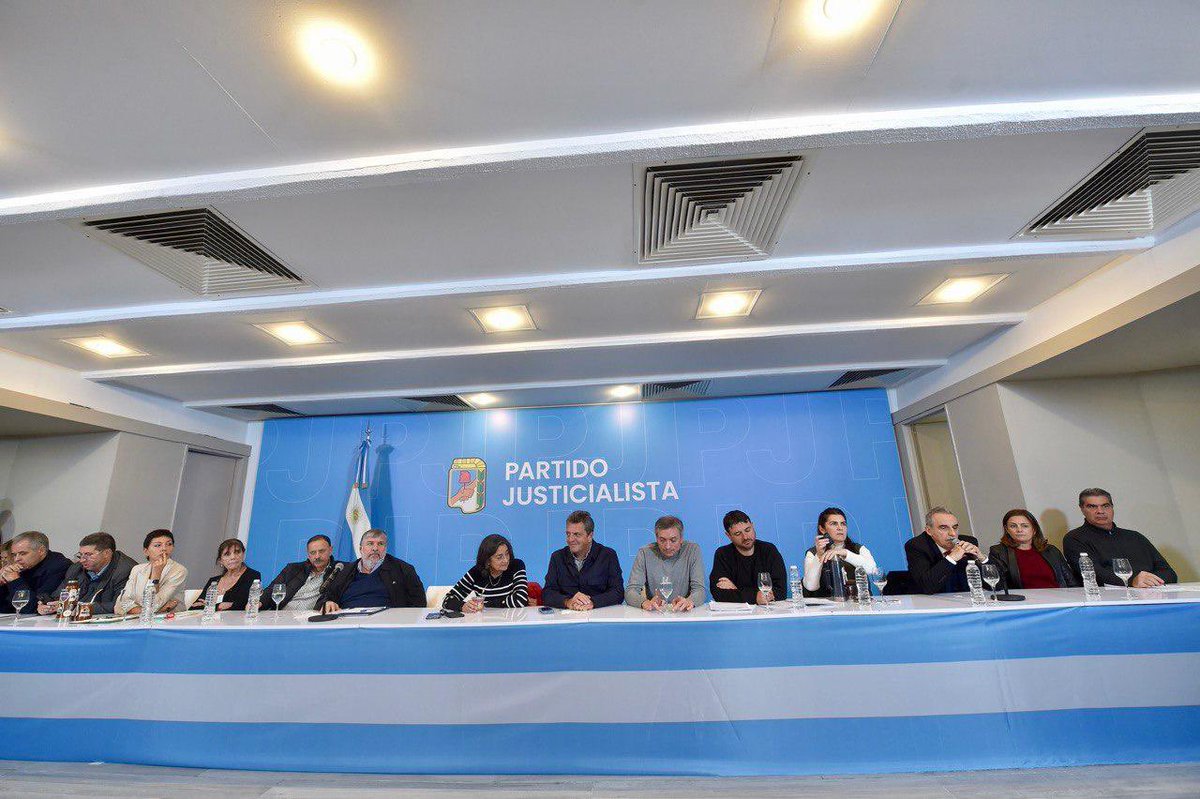
Ahora en el PJ:
Grabois.
Máximo.
Massa.
Guillermo.
Mayra.
Y la lista sigue.
Es con todos.
Español


The complete story behind the groundbreaking funds recovery teamed up with @safe, must read 👇
lukasschor.eth@SchorLukas
100 ETH were assumed lost but could eventually be recovered. Here's what happened, how it became a happy ending and what's needed to prevent this from happening again. Context A user of Safe{Wallet} wanted to bridge 100 ETH from Mainnet to Base. But then they realized that they can't actually access the funds on the Base. The Safe on Base had a different set of signers than their original Safe, meaning they had no control over it. How can this happen? Unlike EOAs (Externally Owned Accounts), smart accounts like Safe are governed by deployed smart contract code. It's technically possible to deploy a smart account with the same deployment config (same signers) on different chains at the same address (using counterfactual deployment). So normally bridging to a chain where the smart account is not deployed yet is merely an annoyance as the user first has to deploy the smart account before they can access the bridged funds. But this case was different. The user used their @Safe smart account since 2020. The smart account version from back then (v1.1.1.) was not yet written with multichain in mind, so it was possible for anyone to deploy a smart account on a different chain with completely a different config at the same address. Something that has been changed since the v.1.2.0. version. Rescue Once the Safe team became aware of the incident, @tschubotz took immediate ownership. He examined the Safe on Base and noticed that the address had been deployed by an account that had preemptively deployed many other v1.1.1 Safes on Base. Through further onchain analysis, the trail led to @protofire. As it turns out, the Protofire team was aware of this edge case for older Safes and white-hat deployed Safes to frontrun a malicious hacker taking advantage of it. So just two hours after the incident was reported, there was hope that the funds could indeed be recovered. And few minutes later, a first test transaction and then a full transfer of the 100 ETH back to the user could be done. This is commendable anticipation of @protofire, strong leadership from @tschubotz and fantastic support by the wider @Safe team to get the funds safely back to the user. 💪 Learnings The root cause was the use of an older Safe version (v1.1.1), which didn’t account for multichain deployments. Since version v1.2.0, Safe includes protections that prevent conflicting deployments across chains by modifying how the CREATE2 salt is constructed. To bridge, the user chose the native bridge integration which is essentially a @lifiprotocol widget but with some optimizations for smart accounts. For example, the bridging feature warns users explicitly if there is NO code at the destination chain, meaning that no smart contract was deployed there. However, there was no warning in place for there being different code deployed on the destination chain. This additional layer of protection has now been introduced to cover the edge-case for old v.1.1.1. accounts. The deeper fix lies in improved keystore infrastructure (like keystore rollups) that can guarantee a consistent account config across chains. Until then, deployment behavior will remain difficult to reason about for developers and end-users. Finally, we are still at a point where users are expected to do test transactions before moving bigger funds. This is not scalable and shouldn't be expected from users. There needs to be more innovation around hooks, guards, and other safety mechanisms that allow strong protections for users. I'm glad this case could be resolved with a happy end and there is important learnings for wallet developers, especially ones using smart accounts. But it also clearly showed once again that a lot more work is ahead of us to truly make self-custody easy and secure for everyone.
English
@TourCinefilo La vi el otro día. La tenía en la lista hace mucho. Maravillosa, emociona, y la fotografía es de otro planeta.
Español

Una de las escenas más inspiradoras de la historia del cine.
🎬 The Secret Life of Walter Mitty (2013)
Español


Esta es una de las cosas más importantes de la vida: nadie, básicamente, está pensando en vos. Si hay tres que te dijeron que tu remera era medio fea, ya lo dejaron de pensar, ocupó un segundo en sus cabezas. Lo mismo si das una presentación, o escribís un libro... vos estás nervioso pero NOBODY CARES

Sahil Bloom@SahilBloom
Two words changed my life (and may change yours): Nobody cares. Here's a harsh truth: You aren't afraid of failure (at least not really). You're afraid of what other people will think of you if you fail. The fear is in the judgment. The fear is in the embarrassment. The fear is in the whispers. This type of fear has a damning impact on your life: • You don't hit send on the post • You shy away from sharing your ideas • You wait to start until you have the perfect plan • You do things to try to impress others But there is an antidote... Two words: Nobody cares. What does it mean to say nobody cares? The Spotlight Effect describes the psychological phenomenon whereby we overestimate the degree to which other people are noticing or observing our appearance, actions, behaviors, or results. Basically, we think everyone else is noticing and judging us, but they aren't. Even if they are, they quickly forget about it. Nobody cares. It doesn't mean nobody loves you. It just means nobody cares about your life as much as you do. It just means that you are in control. It's on you. It's not depressing. It's liberating. It's empowering. It's energizing. There are two big mistakes in life: 1. Worrying about what other people think about you 2. Believing that other people think about you in the first place That thing you've always wanted to do: • That story you've always wanted to tell • That idea you've always wanted to pursue • That person you've always wanted to talk to • That weird hobby you've always wanted to try • That leap of faith you've always wanted to take Nobody cares. So, go do the damn thing. My 7x NYT Bestselling book is a guide to doing just that. Build your life around the things that you truly care about. You can order it now to take advantage of a limited time sale offer. Get your copy here: amazon.com/Types-Wealth-T… P.S. Email your receipt to sahil@sahilbloom.com and I'll send you a 50+ page companion workbook to go deeper on the most important exercises.
Español