Rahul

2.1K posts

Rahul banner
Rahul

Rahul

@selfawareatom

Founding member and leading the foundation models team @sarvamai.

เข้าร่วม Ağustos 2009
325 กำลังติดตาม4.6K ผู้ติดตาม
Rahul รีทวีตแล้ว
Sarvam
Sarvam@SarvamAI·
We're thrilled to announce that we have raised $234M in the first close of our $300M Series B at a $1.5B valuation. @HCLTech and @BessemerVP have joined us in this round, alongside continued support from @khoslaventures and @peakxvpartners For countries and companies, sovereign control on the AI stack is no longer an optionality. Sarvam will be the partner of choice for this aspiration. The capital allows us to accelerate our momentum towards this full stack of models, compute, and deployments. A huge thank you to our customers, partners, investors, and the Sarvam team for your trust and belief in what we are building. We’re just getting started. Read more: sarvam.ai/announcing-ser…
Sarvam tweet media
English
516
1.2K
7.9K
589.8K
Rahul รีทวีตแล้ว
SemiAnalysis
SemiAnalysis@SemiAnalysis_·
HISTORY LESSON: In 1968 the US, USSR, UK, France, and China signed the Nuclear Non-Proliferation Treaty, declaring nuclear weapons too dangerous for any more countries to build. All five already had them. Everyone else had to submit to inspections while the cohort pinky-promised to disarm eventually (they didn't lol). India refused to sign, pointing out the NPT didn't decide nukes were too dangerous to exist, just too dangerous for anyone who didn't have them by 1967. Anthropic sabotaging Claude for anyone building what they deem a "frontier model" is the same hypocrisy. The danger started, conveniently, the day after they finished. Perhaps @dwarkesh_sp was more on point when he compared GPUs to nuclear bombs.
NomoreID@Hangsiin

When Fable 5 is used for frontier LLM development, it does not notify the user and instead limits the model’s capabilities through methods such as prompt modification, steering vectors, and PEFT. Anthropic estimated that this would affect approximately 0.03% of traffic.

English
34
123
886
198K
Rahul รีทวีตแล้ว
clem 🤗
clem 🤗@ClementDelangue·
The HF science team just made async RL weight sync ~100x cheaper on bandwidth, and you don't need a shared cluster anymore. The problem: every RL step, the trainer typically has to sync fresh weights to the inference engine. for a 7B in bf16 that's ~14GB. for a frontier 1T fp8 checkpoint, that's ~1TB; in bf16 it would be ~2TB. per sync. The insight: between two RL steps, ~99% of bf16 weights are bit-identical. at RL learning rates, the optimizer is whispering and bf16 literally cannot hear most of it. the stored bf16 bits don't change. What they shipped in TRL: only the changed elements get encoded as a sparse safetensors file, dropped into a Hugging Face Bucket, and fetched by vLLM. on Qwen3-0.6B, per-step payload goes from 1.2 GB to 20 to 35 MB. This is exactly what we built Buckets for: S3-like object storage on the Hub, Xet-backed (so even full snapshots only transfer the changed chunks). The cherry on top: we ran a FULL disaggregated training where: - the trainer lived on one box - vLLM ran inside a Hugging Face Space - the Wordle environment ran in another Space - weights flowed through one Hub bucket no shared cluster. no RDMA. no VPN. no NCCL across clouds. just HTTPS and a bucket. one GPU + a Hugging Face account is now enough to do real disaggregated RL. multi-replica inference fleets across regions become a small devops exercise, not a research project. Full write-up: huggingface.co/blog/delta-wei… Open source RL keeps eating the moat!
clem 🤗 tweet media
English
29
70
596
63.5K
Indian Athletics
Indian Athletics@IndiaathleticsT·
@selfawareatom On the Sarvam AI chat bot, could you have an option where I can upload a pdf? I am not able to upload the pddf on Sarvam AI app
English
1
0
0
29
Awais Ahmed
Awais Ahmed@awaisahmedna·
Boom! 💥 Time to accelerate. Glad to partner with @pratykumar @vivekrag and the @SarvamAI team to demonstrate orbital data center capabilities. Kardashev 2 here we come.
Pixxel@PixxelSpace

Today, we’re taking a step toward truly galactic-scale capabilities. 🚀 We’re partnering with @SarvamAI to bring sovereign AI into orbit aboard India’s first orbital data centre satellite, a pathfinder mission bringing datacenter-class GPUs and high-performance remote sensing together in space. Built and operated by Pixxel, with Sarvam providing the AI backbone, the demonstrator marks a step toward making orbital data centres real, operational, and scalable from India. May the 4th be with us all! ✨

English
14
49
471
12.5K
Rahul
Rahul@selfawareatom·
First step towards a Dyson sphere 😉
Sarvam@SarvamAI

We are excited to announce that Sarvam is partnering with @PixxelSpace to power the AI backbone of India's first orbital data centre satellite. This is a first for the country, with India-built AI models running on an India-built satellite and both training and inference happening directly in orbit, without any dependence on foreign cloud or ground infrastructure.

English
8
2
217
7.8K
Rahul รีทวีตแล้ว
Lianghui Zhu
Lianghui Zhu@lianghui_zhu·
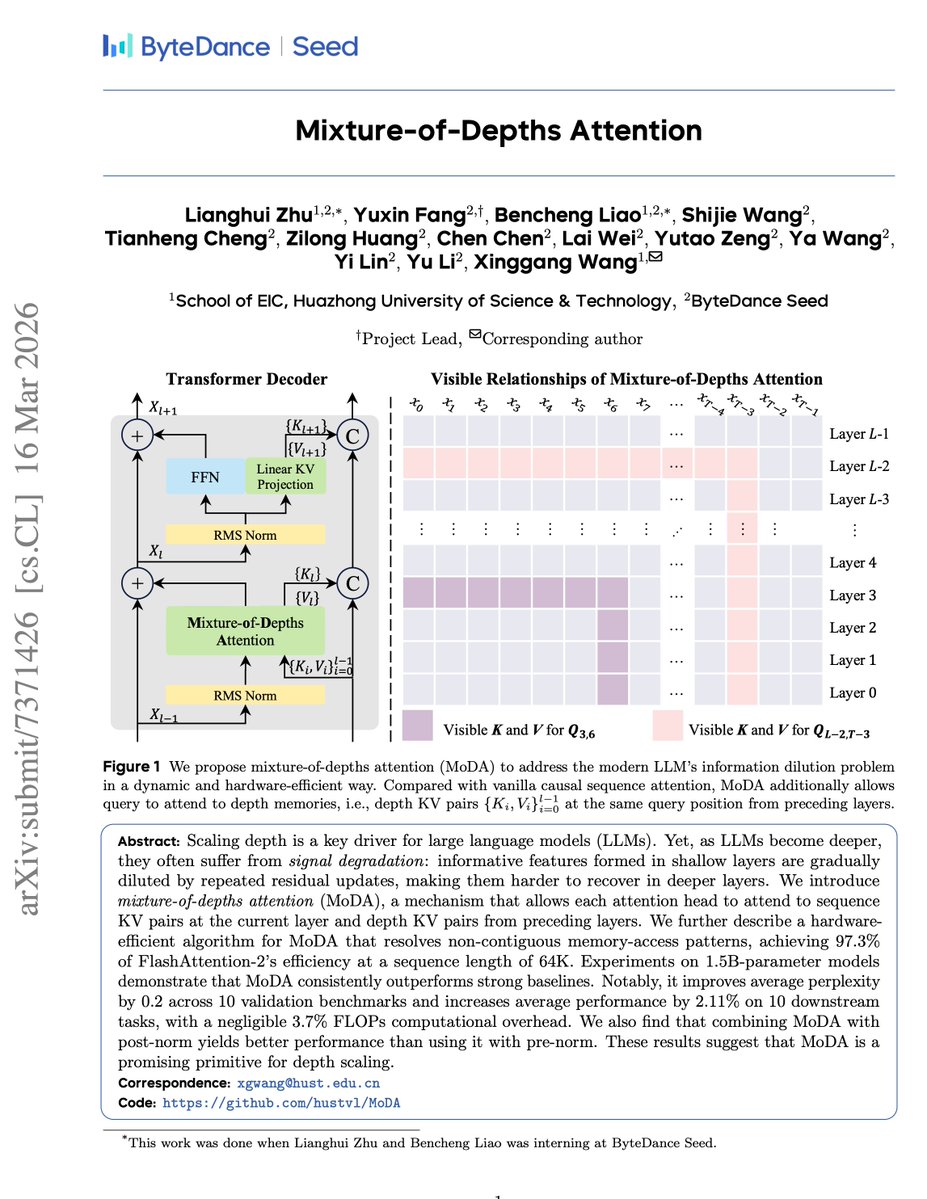
For a decade, we've made models wider and deeper—but we've barely changed how layers *talk* to each other. Since ResNet's `x + F(x)` in 2015, the depth residual has been the only highway for inter-layer communication. It's time to upgrade the staircase. 🧵
Lianghui Zhu tweet media
English
18
238
1.9K
188.5K
Rahul
Rahul@selfawareatom·
@Kekius_Sage I recently wrote about this x.com/selfawareatom/…
Rahul@selfawareatom

This is true. Modern religion absolutely uses gods as a gap-filler. But in Hinduism, there has always been deeper philosophical thought. And the gap-filling has been done in an amazing way, where our philosophers arrived at remarkably abstract conclusions through pure philosophical reasoning. And we can easily retrofit concepts of modern science into it. Stage 1: We questioned our own Gods The Rigveda's Nasadiya Sukta (Rigveda 10.129) is arguably the world's first agnostic cosmological text. It doesn't say "Indra created everything." It says: नासदासीन्नो सदासीत्तदानीं नासीद्रजो नो व्योमा परो यत्। किमावरीवः कुह कस्य शर्मन्नम्भः किमासीद्गहनं गभीरम्॥ "Neither non-existence nor existence was there then. Neither the realm of space nor the sky beyond. What stirred? Where? In whose protection? Was there water, unfathomably deep?" को अद्धा वेद क इह प्र वोचत् कुत आजाता कुत इयं विसृष्टिः। अर्वाग्देवा अस्य विसर्जनेनाथा को वेद यत आबभूव॥ "Who really knows? Who will here proclaim it? Whence was it produced? Whence is this creation? The gods came afterwards, with the creation of this universe. Who then knows whence it has arisen?" This is the Rigveda itself saying: the gods don't know either, and an acknowledgment that the origin of existence exceeds all gods and all human comprehension. Stage 2: We replaced gods with an abstract entity By the time the Upanishads came around, we had an answer. Uddalaka Aruni teaches his son Svetaketu about an impersonal, all-pervasive being: सदेव सोम्येदमग्र आसीदेकमेवाद्वितीयम्। "In the beginning, my dear, this was Being alone, one only, without a second." (Chandogya Upanishad 6.2.1) No Vishnu. No Brahma. Just Sat, pure existence, undifferentiated. Then comes the famous: तत्त्वमसि श्वेतकेतो। "That thou art, Svetaketu." (Chandogya Upanishad 6.8.7) The substance that constitutes the cosmos is the same substance that constitutes you. Note that this is millennia before we knew about the big bang. We are getting glimpses of what will eventually become Advaita philosophy. Everything is one, but acting as the observer and the observed. Stage 3: We made the entity into something more pervasive The Mundaka Upanishad describes Brahman in terms that sound eerily similar to various fields of the Standard Model. ब्रह्मैवेदममृतं पुरस्तात् ब्रह्म पश्चात् ब्रह्म उत्तरतो दक्षिणतश्चोत्तरेण। अधश्चोर्ध्वं च प्रसृतं ब्रह्मैवेदं विश्वमिदं वरिष्ठम्॥ "Brahman alone is all this immortal being, in front, behind, to the right and the left, below and above. Brahman alone is all this universe, the supreme." (Mundaka Upanishad 2.2.11) We move from a person-god / entity to a kind of field: omnidirectional, all-pervasive, constituting everything. The Mandukya Upanishad actually opens with: ॐ इत्येतदक्षरमिदं सर्वं तस्योपव्याख्यानं भूतं भवद् भविष्यदिति सर्वमोंकार एव। यच्चान्यत् त्रिकालातीतं तदप्योंकार एव॥ "OM; this syllable is all this. All that is past, present, and future, all of it is OM. And whatever transcends the three times, that too is OM." (Mandukya Upanishad 1.1) Stage 4: We finally described how multiplicity arises from unity The Upanishads talk about the actual act of creation in a very interesting way. Not as a god making things, but as a single consciousness differentiating itself. Though the Aitareya says: आत्मा वा इदमेक एवाग्र आसीत्। नान्यत्किञ्च मिषत्। स ईक्षत लोकान्नु सृजा इति॥ "In the beginning, this was the Self alone. Nothing else existed. It thought: 'Let me now create the worlds.'" (Aitareya Upanishad 1.1.1) The act of creation itself is the Self splitting into Prakriti, which fills up the universe. But this splitting does not deplete the Self. As the Isavasya Upanishad says पूर्णमदः पूर्णमिदं पूर्णात्पूर्णमुदच्यते। पूर्णस्य पूर्णमादाय पूर्णमेवावशिष्यते॥ "That is whole. This is whole. From wholeness, wholeness proceeds. Taking wholeness from wholeness, wholeness alone remains." The Mundaka puts it very nicely: यथोर्णनाभिः सृजते गृह्णते च यथा पृथिव्यामोषधयः सम्भवन्ति। यथा सतः पुरुषात्केशलोमानि तथाऽक्षरात्सम्भवतीह विश्वम्॥ "As a spider spins and withdraws its thread, as plants grow from the earth, as hair grows from a living person, so from the Imperishable, this universe arises." (Mundaka Upanishad 1.1.7) It is basically saying the universe emerges from Brahman the way a web emerges from a spider. The substance of creation is not separate from the creator. The spider doesn't use external material; it produces the web from itself. You can draw parallels to the quantum field theory: Purusha is the field. Prakriti is the field in excitation. The particles, forces, and structures of the universe are not separate from the field; they are the field, vibrating. And when those excitations cease, the field remains; whole, unchanged, exactly as it was. To conclude, it is fascinating to me that modern science and these ancient dharmic thinkers were asking the same question: what is the fundamental nature of reality? Science uses mathematics and experiment. Our philosophers used pure reason and introspection. They arrived at surprisingly similar answers. Make of that what you will.

English
0
0
9
790
Kekius Maximus
Kekius Maximus@Kekius_Sage·
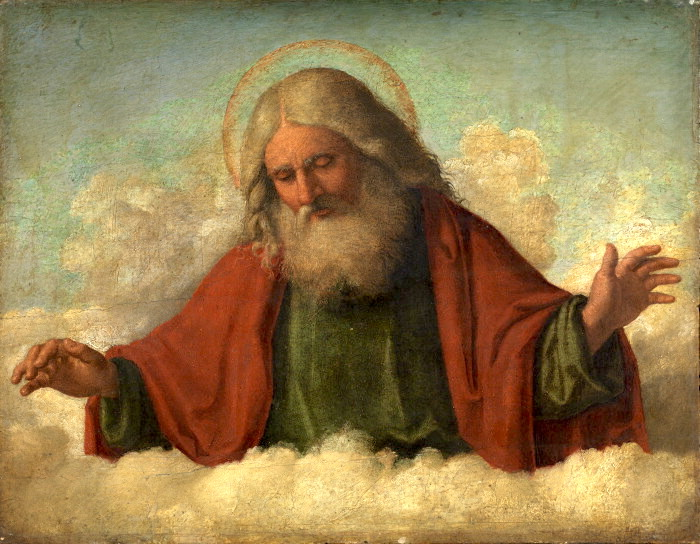
🚨 Scientists are seriously revisiting the idea that God is the universe itself This suggests every pebble, atom, and you are divine
Kekius Maximus tweet mediaKekius Maximus tweet media
English
1.7K
894
9.7K
1.2M
prathosh ap
prathosh ap@prathoshap·
Namaste X! This is my first post here - I'm humbled to release my app: VedaVaaNi. It is an interactive learning platform designed to help you practice Rig Veda and Krishna Yajur Veda chanting with absolute phonetic and prosodic (Chandas) precision.
prathosh ap tweet mediaprathosh ap tweet mediaprathosh ap tweet mediaprathosh ap tweet media
English
174
1.2K
4.4K
101.3K
Rahul รีทวีตแล้ว
Carlos Miguel Patiño
Carlos Miguel Patiño@cmpatino_·
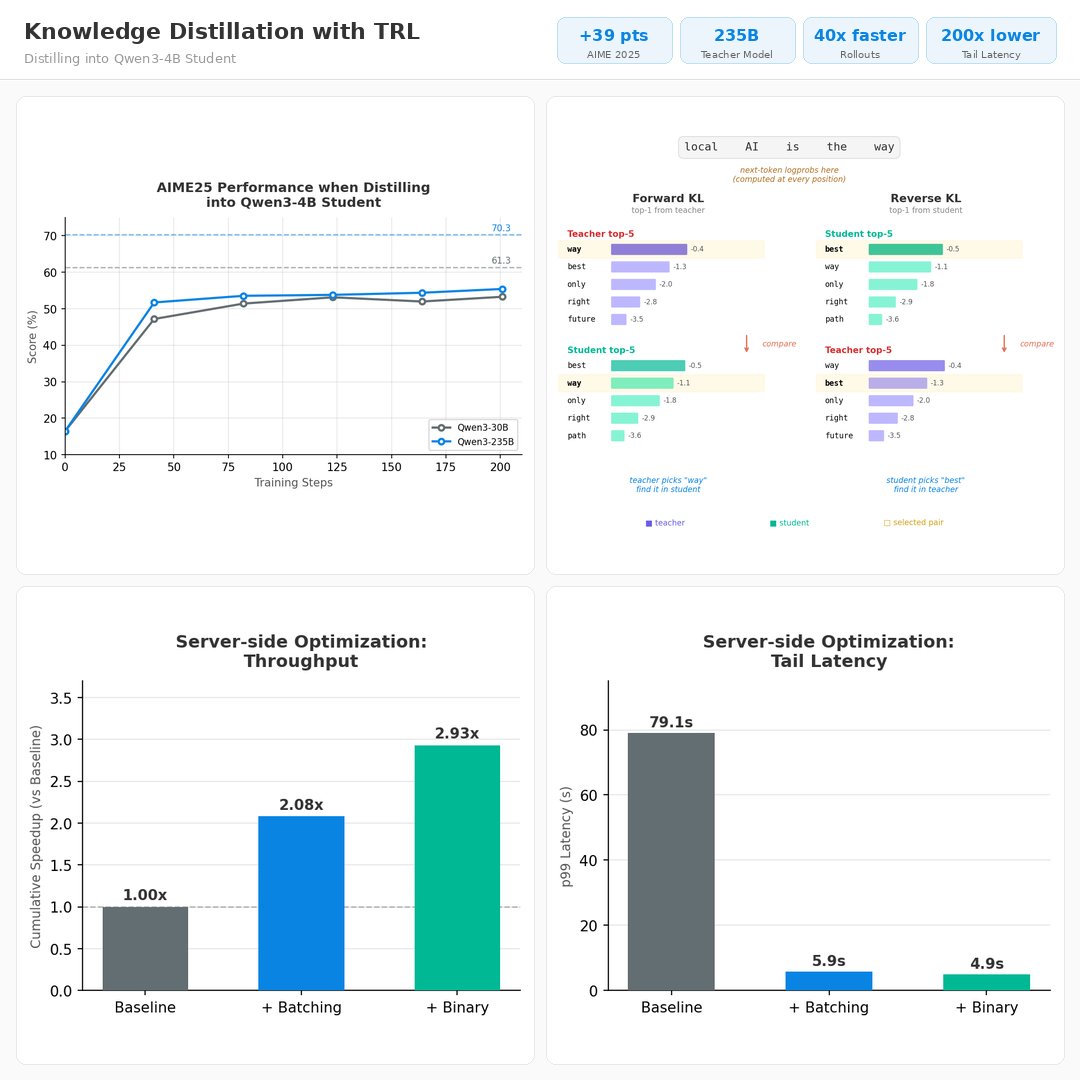
On-policy distillation with 100B+ teacher models is now possible in TRL, and up to 40x faster than naive implementations! We distilled Qwen3-235B into a 4B student and gained 39+ points on AIME25. Two engineering optimizations made it work. Blogpost: huggingface.co/spaces/Hugging…
Carlos Miguel Patiño tweet media
English
4
64
350
28K
Rahul
Rahul@selfawareatom·
This is true. Modern religion absolutely uses gods as a gap-filler. But in Hinduism, there has always been deeper philosophical thought. And the gap-filling has been done in an amazing way, where our philosophers arrived at remarkably abstract conclusions through pure philosophical reasoning. And we can easily retrofit concepts of modern science into it. Stage 1: We questioned our own Gods The Rigveda's Nasadiya Sukta (Rigveda 10.129) is arguably the world's first agnostic cosmological text. It doesn't say "Indra created everything." It says: नासदासीन्नो सदासीत्तदानीं नासीद्रजो नो व्योमा परो यत्। किमावरीवः कुह कस्य शर्मन्नम्भः किमासीद्गहनं गभीरम्॥ "Neither non-existence nor existence was there then. Neither the realm of space nor the sky beyond. What stirred? Where? In whose protection? Was there water, unfathomably deep?" को अद्धा वेद क इह प्र वोचत् कुत आजाता कुत इयं विसृष्टिः। अर्वाग्देवा अस्य विसर्जनेनाथा को वेद यत आबभूव॥ "Who really knows? Who will here proclaim it? Whence was it produced? Whence is this creation? The gods came afterwards, with the creation of this universe. Who then knows whence it has arisen?" This is the Rigveda itself saying: the gods don't know either, and an acknowledgment that the origin of existence exceeds all gods and all human comprehension. Stage 2: We replaced gods with an abstract entity By the time the Upanishads came around, we had an answer. Uddalaka Aruni teaches his son Svetaketu about an impersonal, all-pervasive being: सदेव सोम्येदमग्र आसीदेकमेवाद्वितीयम्। "In the beginning, my dear, this was Being alone, one only, without a second." (Chandogya Upanishad 6.2.1) No Vishnu. No Brahma. Just Sat, pure existence, undifferentiated. Then comes the famous: तत्त्वमसि श्वेतकेतो। "That thou art, Svetaketu." (Chandogya Upanishad 6.8.7) The substance that constitutes the cosmos is the same substance that constitutes you. Note that this is millennia before we knew about the big bang. We are getting glimpses of what will eventually become Advaita philosophy. Everything is one, but acting as the observer and the observed. Stage 3: We made the entity into something more pervasive The Mundaka Upanishad describes Brahman in terms that sound eerily similar to various fields of the Standard Model. ब्रह्मैवेदममृतं पुरस्तात् ब्रह्म पश्चात् ब्रह्म उत्तरतो दक्षिणतश्चोत्तरेण। अधश्चोर्ध्वं च प्रसृतं ब्रह्मैवेदं विश्वमिदं वरिष्ठम्॥ "Brahman alone is all this immortal being, in front, behind, to the right and the left, below and above. Brahman alone is all this universe, the supreme." (Mundaka Upanishad 2.2.11) We move from a person-god / entity to a kind of field: omnidirectional, all-pervasive, constituting everything. The Mandukya Upanishad actually opens with: ॐ इत्येतदक्षरमिदं सर्वं तस्योपव्याख्यानं भूतं भवद् भविष्यदिति सर्वमोंकार एव। यच्चान्यत् त्रिकालातीतं तदप्योंकार एव॥ "OM; this syllable is all this. All that is past, present, and future, all of it is OM. And whatever transcends the three times, that too is OM." (Mandukya Upanishad 1.1) Stage 4: We finally described how multiplicity arises from unity The Upanishads talk about the actual act of creation in a very interesting way. Not as a god making things, but as a single consciousness differentiating itself. Though the Aitareya says: आत्मा वा इदमेक एवाग्र आसीत्। नान्यत्किञ्च मिषत्। स ईक्षत लोकान्नु सृजा इति॥ "In the beginning, this was the Self alone. Nothing else existed. It thought: 'Let me now create the worlds.'" (Aitareya Upanishad 1.1.1) The act of creation itself is the Self splitting into Prakriti, which fills up the universe. But this splitting does not deplete the Self. As the Isavasya Upanishad says पूर्णमदः पूर्णमिदं पूर्णात्पूर्णमुदच्यते। पूर्णस्य पूर्णमादाय पूर्णमेवावशिष्यते॥ "That is whole. This is whole. From wholeness, wholeness proceeds. Taking wholeness from wholeness, wholeness alone remains." The Mundaka puts it very nicely: यथोर्णनाभिः सृजते गृह्णते च यथा पृथिव्यामोषधयः सम्भवन्ति। यथा सतः पुरुषात्केशलोमानि तथाऽक्षरात्सम्भवतीह विश्वम्॥ "As a spider spins and withdraws its thread, as plants grow from the earth, as hair grows from a living person, so from the Imperishable, this universe arises." (Mundaka Upanishad 1.1.7) It is basically saying the universe emerges from Brahman the way a web emerges from a spider. The substance of creation is not separate from the creator. The spider doesn't use external material; it produces the web from itself. You can draw parallels to the quantum field theory: Purusha is the field. Prakriti is the field in excitation. The particles, forces, and structures of the universe are not separate from the field; they are the field, vibrating. And when those excitations cease, the field remains; whole, unchanged, exactly as it was. To conclude, it is fascinating to me that modern science and these ancient dharmic thinkers were asking the same question: what is the fundamental nature of reality? Science uses mathematics and experiment. Our philosophers used pure reason and introspection. They arrived at surprisingly similar answers. Make of that what you will.
-10xdev@min_maxxer

@Dank_jetha Humanity creates GOD whenever science can't explain. Sun God,Rain God etc were created because anchestors didn't know how they worked . Now some people believe Vishnu or Allah created Big Bang because Science can't explain how big bang happened.

English
2
11
87
5.7K