Shulem Deen 🎗️

8.2K posts

Shulem Deen 🎗️ banner
Shulem Deen 🎗️

Shulem Deen 🎗️

@shdeen

Writer, editor, translator. Won some fancy awards for a book way back when. Scribbles in @nytimes @newrepublic @salon @jdforward

Brooklyn, N.Y. เข้าร่วม Ağustos 2008
1.2K กำลังติดตาม5.4K ผู้ติดตาม
ทวีตที่ปักหมุด
Shulem Deen 🎗️
Shulem Deen 🎗️@shdeen·
There's a critical point here to understanding American and Israeli Jews—especially in the generational shifts we're seeing. The majority of non-Orthodox Ashkenazi American Jews are rooted in pre-1924 immigration (German Jews in 1st half to mid 19th century, and Eastern European Jews beginning ~1880). So for a full century, American Jews have experienced comfort and privilege unprecedented in Jewish history, with little living memory of antisemitic persecution. Ancestors who came through Ellis Island are known only from photos and family lore. OTOH: Israeli Jews live with the memories of the hellfires that came later. For Ashkenazim: the apex of European antisemitism, including pogroms across Russia/Poland followed by Nazi Germany and the Holocaust; for Sephardim/Mizrahim, the mass displacement after 1948. Many who have borne witness are still alive. This means Israeli Jews are generationally far closer to the lived experience of real anti-Jewish persecution. Then consider that Israeli Jews have never known a day of peace, with an ongoing existential threat that's as unrelenting as ever, visceral and immediate. Try forgetting it, and you're reminded in global news headlines. Tune out the news, and you're reminded with rocket attacks. Try a music festival in the desert, and that's no safe bet either. To be sure, American Jews always felt deeply distraught over anti-Jewish persecution elsewhere, and felt (and largely continue to feel) a strong affinity for Israel. But from a distance. Kinship and allyship. Advocacy. Fundraisers. Donations. FIDF. AIPAC. Birthright trips, and pride over Israel's accomplishments. But with a home in America, far removed from the threats that brought Jews here in the first place, and without the ongoing literal threats of annihilation. Add in assimilation, an attenuating Jewish identity that's a mix of Larry David and Jon Stewart, and Jewish culture as a punchline; then add 2-3 generations, a tablespoon of progressive politics, stir vigorously and pour onto an American college campus and garnish with Judith Butler. That's the Jewish generation coming up in America. It's not even the pressure to conform—it's never having even known that pressure. And now their friends tell them that their people are committing genocide. "Not in my name." Of course that's the best some can muster, while Israeli kids go off to train and serve, bc one day 'kill or be killed' might be the only two options they have. This isn't a criticism of American Jews. (And of course, many brave and principled young American Jews are standing up to the bullying of the anti-Israel left; I don't mean to discount that.) But the historical context is key to understanding American Jews vis a vis Israelis. Every "As a Jew" take is colored by it, as are the TikTok clips of Jewish kids crying because they "feel so alone" in their pro-Palestine activism. I don't know the remedy, nor am I suggesting there need be one—it's not for me to say. But it is to argue that how young American Jews react to events in Israel is strongly connected to how proximate their lives have been to real episodes of anti-Jewish persecution. At the very least, if it were up to me, I sure as hell would like for young Jews to know how they ended up here; how they were spared the anti-Jewish ravages of the 20th century, how a world of Jews weren't nearly so fortunate—and not just the Holocaust but also what came before and after—and to properly place their own Jewishness as everyday news headlines add new chapters to Jewish history.
Haviv Rettig Gur@havivrettiggur

I’m sorry, but the Holocaust does not belong in the same sentence or paragraph or library as the Nakba. This isn’t meant as a criticism of this person, who seems entirely well meaning. It’s about the implicit comparison, which is common among Palestinians and western liberals. The Holocaust’s death toll was 6,000,000, the Nakba’s somewhere between 9,000 and 13,000. The importance of the Nakba wasn’t mass death but mass displacement. Here’s the thing: Understood that way, the Jews suffered half a dozen major nakbas in the 20th century, alongside waves of mass murder that reached into six figures (for example, in the Russian civil war) and then ultimately the Holocaust. Most Israeli Jews are descendants of such displacements and survivors of those great campaigns of mass murder. Maybe the reason this difference isn’t obvious to some diaspora Jewish discourse (I have books on my shelf that talk about Nakba and Holocaust in the same breath) is that most western Jewish communities are the products of a Nakba-style mass flight from Eastern Europe in 1881-1921. They then largely sat out the twentieth century’s great evils from their perch in the West, saved by Anglophone liberalism from wars and killings and Holocaust. Maybe it makes a kind of intuitive sense to these Jews to think of Jewish history in terms comparable to Nakba, and not the unimaginably larger tragedy that produced the other half of the Jewish world. We need to learn about the Nakba, we need to understand our neighbors, we need to respect their history and identity. But we also need to acknowledge that the Jews were emphatically and brutally told to “get over” their own many nakbas. Iraq and Poland and Yemen and Lithuania and Hungary and Algeria do not pretend that there’s any chance in hell that the Jews will ever be allowed to contemplate mass return to their lost homes and decimated ancient communities. And the world agrees with them. People who compare displacement to Holocaust mean well. Most of them are not trying to diminish the Holocaust but only to reach across today’s divides. I get that. It’s still historically unjustifiable and in my view morally wrong.

English
64
117
762
115.9K
Shulem Deen 🎗️
Shulem Deen 🎗️@shdeen·
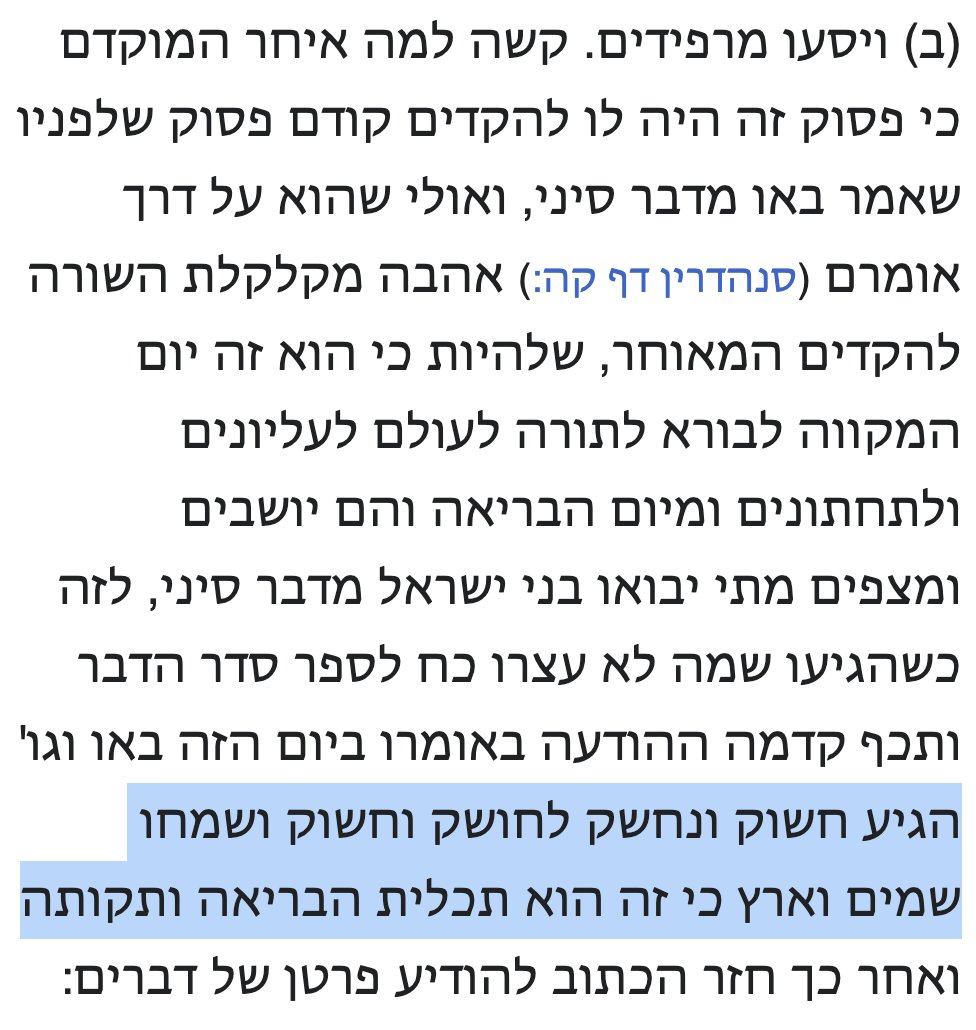
I first learned Ohr Hachaim on Parshat Yitro 37 years ago, but these words remained indelible: הגיע חשוק ונחשק לחושק וחשוק... All kinds of theological knots to unpack, but the raw power of the passage encapsulates the 3000-year-old story of one people.
Shulem Deen 🎗️ tweet media
4
1
14
2.6K
Shulem Deen 🎗️
Shulem Deen 🎗️@shdeen·
Herodotus mentions it as a much broader region called Syria Palestina. Not a land of a specific people. What IS notable about Herodotus’s description is that that *among its inhabitants* are the Phoenicians, who practice the “odd custom of circumcision,” which they got from the Egyptians(!) Modern scholars generally believe the ancient Israelites largely originated among the Canaanites (with some possible admixture of Egyptian). And the Phoenicians, of course, referred to themselves as the “kanaani.” As is clear from the sarcophagi of the kings of Sidon, Phoenician and Biblical Hebrew were virtually the same language. Ultimately, history is complicated and fascinating and makes mincemeat of *everyone’s* sacred cows. Whatever your dogma, it doesn’t survive first contact with the enemy: those who bring primary sources not as a Twitter gotcha but as genuinely interesting insights into the past, even if many end up confirming no one’s favorite narratives.
English
1
0
1
309
Marianne Williamson
Marianne Williamson@marwilliamson·
I can't believe I have to remind anyone of this, but here goes: Jesus was a Jew. He was born in a land called Judea. The word Palestine was coined by the Romans 135 years later. Muhammad was born in 571 AD. Both peoples should be considered indigenous to the region. Both peoples belong there. Both peoples deserve a state of their own.
English
1.2K
56
736
576.1K
Shulem Deen 🎗️
Shulem Deen 🎗️@shdeen·
Not saying it’s chiefly religious. There were prominent Muslims who were suspicious of Zionism but took a “wait and see” attitude (e.g. Emir Faisal ibn Hussein, though that’s it’s own story…) And plenty of Arab Palestinian nationalists were Christians (e.g. founders/editors of “Falastin” فلسطين—the El-Issa family). But the greatest animating force against the Jewish state, in the 100+ years of opposition, was always rooted in a strong Islamist component. The religious rhetoric was always there, ready to be exploited. A distorted version of Islam perhaps, but still claiming to be in its name. It’s true that a countervailing religious extremism exists among Zionists, but it was historically a fringe component. And the ascendancy of right-wing religious Zionism to real power is largely post-Intifada 2. On the whole, Zionism isn’t and wasn’t a religious movement. But religious factors can’t be discounted, is my point. (Not an opinion about Islam at all.)
English
0
0
1
86
Palestinian Girl
Palestinian Girl@Palestinia12961·
@shdeen You are right, but this connection is artificial, it has nothing to do with religion. Haj Amin was looking for a way to drag the uninterested Palestinians to his cause.
English
1
0
1
117
Palestinian Girl
Palestinian Girl@Palestinia12961·
We are a religious culture, but our struggle for independence is not a religious one. If Israel tells me that after the holocaust the Jews need a refuge I will accept it and welcome them as neighbours, but if they say this land was promised to them by god, this i can not accept.
English
99
21
183
9.2K
Shulem Deen 🎗️
Shulem Deen 🎗️@shdeen·
Arab Palestinian leaders like Hajj Amin al-Husseini, who led Arab Palestinian nationalist movement, explicitly framed it as a religious issue. It was definitely NEVER about “freedom,” because Arab and Muslim Palestinians would’ve had their own state under the UN plan. It was the Arab world rather than Israel that prevented the establishment of such an Arab Palestinian state post-1948 (despite Husseini’s pleas). Jordan explicitly disallowed it in the West Bank, annexing the territory immediately for themselves. Even Egypt, which allowed Husseini a nominal “All-Palestine government” as an Egyptian protectorate in the Gaza Strip, insisted its government be located in Cairo(!)—and the whole thing lasted effectively all of three months. It was simply NEVER about Palestinian “freedom.” Never, ever. Not once, not for a moment. Not in 1948, not in 1967, not in 1973, not during Intifada 1 or 2, and it still isn’t now. Palestinians could have had a state today, right now, and many times in the past, if that was all they ever wanted. Except it simply isn’t and wasn’t ever the goal.
English
1
1
2
135
Goldie Ghamari | گلسا قمری 🇮🇷
Muslim woman blows out the candles on a Menorah. Why do we import 7th century savages into modern, westernized Judeo-Christian countries? These people are not compatible with Western Civilization. They bring nothing but hatred, Jihad and terrorism wherever they go.
English
894
5.4K
21.2K
110K
Shulem Deen 🎗️
Shulem Deen 🎗️@shdeen·
This is an astute take, although it’s likely a miss on predicting a split vote between Satmar and other Hasidic groups. (Although the Haredi non-Hasidic vote is a different story.) It is rare for a NYC mayor to win without the Satmar vote, and it’s usually a strong leading indicator. These are odds you can bet on. This isn’t because Satmar itself is all-powerful. But Hasidic “voting blocs” are nearly always aligned among subgroups, whose political calculus is nearly identical and 100% pragmatic. (Rare exceptions exist, eg Clinton/Lazio 2000, but they’re super anomalous.) What’s key is that Hasidic leadership endorsements reflect neither conventional left/right politics, nor where they stand on Israel, nor even nominal internal ideologies (eg LGBT views). They turn on one single question only: “will this candidate deliver for our communities’ particular needs and strengthen the survival of our chosen way of life.” Very little else matters. And elected officials in NYC-metro know and understand this.
Arash Azizi آرش عزیزی@arash_tehran

It is not a great surprise but it it's not about anti-Zionism at all. Satmar anti-Zionism is nominal and theological and not of the same kind of Mamdani's leftist anti-Zionism. Many other anti-Zionist Hasids sects won't back Mamdani. I don't think Israel is the main reason for their decision-making in either case

English
1
0
13
4K
Shulem Deen 🎗️
Shulem Deen 🎗️@shdeen·
Rock solid argument: why is she so condescending to people spreading lies instead of understanding their scornful disregard for boomer concepts like history/reality/truth/facts.
English
0
0
1
579
Shulem Deen 🎗️ รีทวีตแล้ว
sivan klingbail סיון קלינגבייל
יזכור קהילת ניר עוז / ליאת אצילי נזכור את קהילת ניר עוז בימי תפארתה, את הבתים, את הדשאים, העצים והשבילים. את הבריכה ואת הכלבו, מקומות בהם נפגשנו באקראי וניהלנו את שיחות החולין שהיו חלק כה מרכזי ברקמת החיים המשותפת שלנו. ואת הפאב עם הערקיטו, והגולדסטאר מהחבית. את בית הילדים על גלגוליו, מטפלות אהובות, מדריכים בברוש ובנעורים, את הסטודנטים והש"שינים את ארוחות ההקמה והמשחקים על הדשא בבילוי. את חדר האוכל! צ'יפס לנפש בחמישי ופלאפל בשישי. את השדות, הפרדסים והמטעים שכל אחד בעונתו סיפק לנו את הירקות והפירות הכי טעימים בעולם. את השקיעות המרהיבות. את הנווה, שמי ייתן ועוד נשוב לשמוח בו ושתהיה בו חתונה! את הדוג' ראם של הגד"ש, עם כל הכלבים בארגז מאחורה. את החגים שחגגנו יחד, את הריבים והוויכוחים שחלקם בוודאות נראים עכשיו חסרי חשיבות. את הפרח של ניר עוז. את היצירה והעשייה שהפכו את ניר עוז לפנינת תרבות בנגב, את התערוכות בבית הלבן ואת ליין ההופעות הכי שווה ever נזכור את השער הצהוב שהגן על המקום המיוחד שלנו, אך ביום פקודה, כרע תחת המתקפה הרצחנית ולא הצליח לשמור עלינו. נזכור שכולנו גיבורות וגיבורים, מהתינוקות ועד הוותיקים. כולנו! נזכור שאנחנו חזקים באלף דרכים ושכעוף החול, מתוך האפר נבנה חיים חדשים. נזכור את היום. את היום בצהריו. את השמש שעלתה על מוקד הדמים את השמים שעמדו גבוהים ומחרישים נזכור את תלי האפר אשר מתחת לגנים הפורחים. יזכור החי את מתיו יזכור בן החורין את אסוריו כי הנה הם מנגד לנו הנה ניבטות עיניים סביב סביב ואל דומי, אל דומי לנו עדי יהיו חיינו ראויים לזכרם. יזכור בית ניר עוז את לוחמי כיתת הכוננות שחרפו נפשם בקרב על ביתנו: תמיר אדר אביב אצילי דולב יהוד רביד אריה כץ יזכור בית ניר עוז את:   יצחק (איציק) אלגרט  רונן (טומי) אנגל  רבקה בן חורין  אמיתי בן צבי מיה גורן אבנר גורן יוסף (יוסיניו) גרוס  כרמלה דן  נויה דן  אלכסנדר (אלכס) דנציג  דניאל דרלינגטון  קרולין בוהל  יוסף (יוסי) והב  אריה (זלמן) זלמנוביץ'  ג'ודי ויינשטיין חגי  גדי חגי  ויטלי טרופנוב  אוהד יהלומי  יאיר יעקב  אפרת כץ    ברכה לוינסון  עודד ליפשיץ  אברהם מונדר רועי מונדר  יורם מצגר  אליהו (צ'רצ'יל) מרגלית  סעיד (דוד) משה  שפרה נוי    קרול סימן טוב  יהונתן (ג'וני) סימן טוב  תמר שרה קדם סימן טוב  ארבל סימן טוב  שחר סימן טוב  עומר פרדי סימן טוב  שירי סילברמן ביבס אריאל ביבס כפיר ביבס מרגיט סילברמן יוסף (יוסי) סילברמן גדעון פאוקר חיים פרי עמירם קופר אברהם (רמי) קציר אלעד קציר חנה קציר דוד שלו  טל שלו ירמיהו (ירמי) שפיר  נזכור את עובדינו המסורים: קְלֵמֶנְס פֶלִיקְס מַטַנְגָה פּוֹנְגְטֵפּ קוֹסְרָם טוּ סָא־לִי סַקְדָה סוּרַאקַאי גוֹסְרָאם אֲפִּיצ׳ָאר סָארִיטַט קוּאָוּ פִּיצ׳ִיט נָאג׳ָאן פִירוֹן תָּאנוֹנְפִים תַּנְקְרִיט פְּרַקְטְוַנְג פַּפּוֹנְטָאנִי פּוֹנְגְקְרוּ וּוֹטִיפַאט וִיסְטְדְּנָאוִי נַאטְפוֹנְג פִּינְטָה בֶּנְצ׳ָה דַּצ׳ְטָאוַואט יהי זכרם ברוך.
עברית
28
134
655
24.3K
Shulem Deen 🎗️
Shulem Deen 🎗️@shdeen·
Absolutely. I’d add re the haredi world: even though formally anti-Zionist, when it comes to Israel’s security issues, the overwhelming majority are somewhere between right and far right—in the Israeli sense, ie from a Likud-like mindset to admiration for hilltop settlers to… perhaps best left unsaid. The point re Orthodox demographics is also strong. It applies to orthodox broadly but there’s a demographic fact about haredim that few are fully aware of and even fewer realize the ramifications. Haredi world doubles roughly every 14 years. Demographic projection done a few years ago showed that sometime between 2030 and 2040 one out of three children in New York City will be a haredi child. People don’t have an intuitive understanding of exponential growth, and even haredim probably don’t realize this. But the nature of such things is to arrive “gradually, then suddenly.” You don’t see it coming even when you think you see it coming. The ramifications of this can’t be overstated. (Obviously, they go well beyond Israel. It’ll have a massive impact on NY public life generally.)
English
0
0
4
180
David Bernstein
David Bernstein@ProfDBernstein·
Add one point: Around half of self-identified college-age Jews on campus have one non-Jewish parent. This further dilutes memories of persecution etc. But also note: Around 25% of American Jews under 30 are Orthodox, and that percentage is growing. Among those who are actively Jewish, the percentage is much higher. Ramifications for American Jewish life will be immense, including far *stronger* identification with Israel. (Even "non-zionist" Haredi sects have close ties to kin and institutions in Israel and travel there a lot).
Shulem Deen 🎗️@shdeen

There's a critical point here to understanding American and Israeli Jews—especially in the generational shifts we're seeing. The majority of non-Orthodox Ashkenazi American Jews are rooted in pre-1924 immigration (German Jews in 1st half to mid 19th century, and Eastern European Jews beginning ~1880). So for a full century, American Jews have experienced comfort and privilege unprecedented in Jewish history, with little living memory of antisemitic persecution. Ancestors who came through Ellis Island are known only from photos and family lore. OTOH: Israeli Jews live with the memories of the hellfires that came later. For Ashkenazim: the apex of European antisemitism, including pogroms across Russia/Poland followed by Nazi Germany and the Holocaust; for Sephardim/Mizrahim, the mass displacement after 1948. Many who have borne witness are still alive. This means Israeli Jews are generationally far closer to the lived experience of real anti-Jewish persecution. Then consider that Israeli Jews have never known a day of peace, with an ongoing existential threat that's as unrelenting as ever, visceral and immediate. Try forgetting it, and you're reminded in global news headlines. Tune out the news, and you're reminded with rocket attacks. Try a music festival in the desert, and that's no safe bet either. To be sure, American Jews always felt deeply distraught over anti-Jewish persecution elsewhere, and felt (and largely continue to feel) a strong affinity for Israel. But from a distance. Kinship and allyship. Advocacy. Fundraisers. Donations. FIDF. AIPAC. Birthright trips, and pride over Israel's accomplishments. But with a home in America, far removed from the threats that brought Jews here in the first place, and without the ongoing literal threats of annihilation. Add in assimilation, an attenuating Jewish identity that's a mix of Larry David and Jon Stewart, and Jewish culture as a punchline; then add 2-3 generations, a tablespoon of progressive politics, stir vigorously and pour onto an American college campus and garnish with Judith Butler. That's the Jewish generation coming up in America. It's not even the pressure to conform—it's never having even known that pressure. And now their friends tell them that their people are committing genocide. "Not in my name." Of course that's the best some can muster, while Israeli kids go off to train and serve, bc one day 'kill or be killed' might be the only two options they have. This isn't a criticism of American Jews. (And of course, many brave and principled young American Jews are standing up to the bullying of the anti-Israel left; I don't mean to discount that.) But the historical context is key to understanding American Jews vis a vis Israelis. Every "As a Jew" take is colored by it, as are the TikTok clips of Jewish kids crying because they "feel so alone" in their pro-Palestine activism. I don't know the remedy, nor am I suggesting there need be one—it's not for me to say. But it is to argue that how young American Jews react to events in Israel is strongly connected to how proximate their lives have been to real episodes of anti-Jewish persecution. At the very least, if it were up to me, I sure as hell would like for young Jews to know how they ended up here; how they were spared the anti-Jewish ravages of the 20th century, how a world of Jews weren't nearly so fortunate—and not just the Holocaust but also what came before and after—and to properly place their own Jewishness as everyday news headlines add new chapters to Jewish history.

English
8
11
75
8.5K
Shulem Deen 🎗️
Shulem Deen 🎗️@shdeen·
Hard truth: @JGreenblattADL took a once widely respected organization and turned it into a transparent organ of propaganda, a laughingstock, an embarrassment to everyone who once trusted it to be a real voice against bigotry. It absolutely does NOT speak for Jewish New Yorkers.
Jonathan Greenblatt@JGreenblattADL

1/ I'm absolutely blown away by the sheer brazen audacity of @ZohranKMamdani, telling all of us in the Jewish community who does and doesn’t represent us. forward.com/fast-forward/7…

English
0
0
14
1.3K
Shulem Deen 🎗️ รีทวีตแล้ว
Avi Kaner ابراهيم אבי
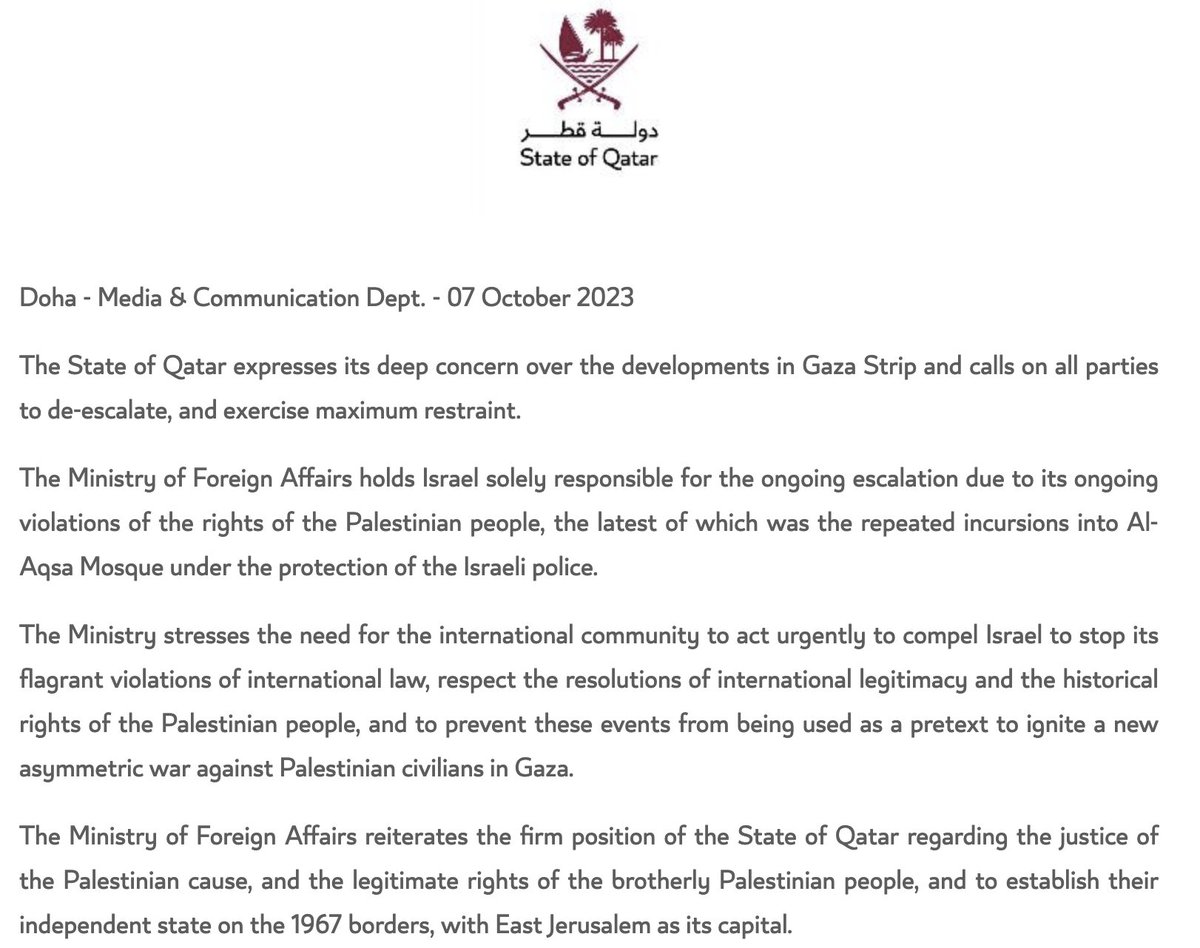
Qatar never condemned Hamas Muslim Brotherhood's October 7 massacre. On that very day, its Foreign Ministry blamed Israel instead.
Avi Kaner ابراهيم אבי tweet media
English
37
284
979
18.6K
Shulem Deen 🎗️ รีทวีตแล้ว
Ursula von der Leyen
Ursula von der Leyen@vonderleyen·
What is happening in Gaza has shaken the conscience of the world. Man-made famine can never be a weapon of war. This must stop. EU aid to Gaza far outweighs that of any other partner. But of course, Europe needs to do more. Here are measures for a way forward ↓
Ursula von der Leyen tweet media
English
7K
1.9K
7.3K
2.5M
Shulem Deen 🎗️ รีทวีตแล้ว
Captain Allen
Captain Allen@CptAllenHistory·
That time in June 1960 when the UN Security Council condemned Israel for arresting notorious N*zi and Holocaust architect Adolf Eichmann in Argentina. History vindicated Israel, and yet the world still complains when Jews bring their tormentors/mass murderers to justice.
Captain Allen tweet media
English
22
173
599
17.6K