

Simón Betancourt-Escobar, MD
18 posts
Simón Betancourt-Escobar, MD
@simonbetamd
He/Him | Postdoc at UT Health Houston Anesthesiology | Incoming PGY-1 @UTHealthHouston | Aspiring Anesthesiologist | 🇲🇽🏳️🌈
Houston, TX เข้าร่วม Kasım 2023
243 กำลังติดตาม154 ผู้ติดตาม
@simonbetamd @PIMGlatino Dr. un amigo está interesado, donde podría enviar su aplicación?
Español
👏👏👏
AMA@AmerMedicalAssn
The AMA applauds bipartisan legislation to exempt international medical graduate physicians from the $100,000 H-1B visa fee - a critical step to ensure patients, especially in underserved areas, have access to care. Thank you to @RepMikeLawler, @SanfordBishop, @MaElviraSalazar, and @RepYvetteClarke for introducing the bill, and we call on Congress to act quickly to protect patients’ access to care. spr.ly/6010B6r31q
ART
I’m screaming! No words can explain how I feel right now! 🥹😭

English
“Healthy mentorship is not an opportunistic or transactional relationship, but a mutually beneficial and fulfilling experience for the mentee and the mentor”
- Thomas R. Vetter, MD, MPH, MFA
@ASAMonitor @ASALifeline
English
Simón Betancourt-Escobar, MD รีทวีตแล้ว

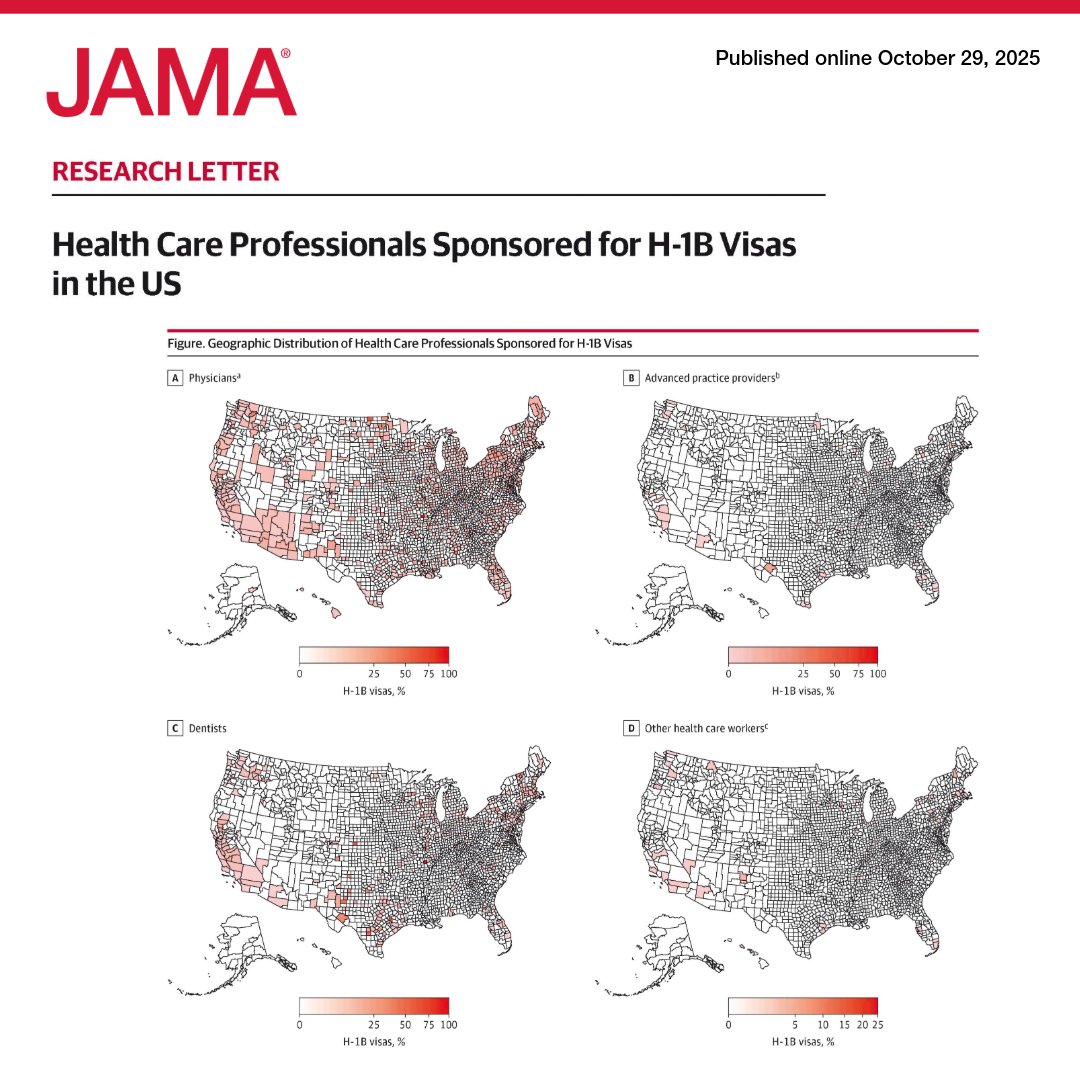
H-1B visa–sponsored physicians are twice as prevalent in rural counties and nearly 4 times as common in high-poverty areas, highlighting the potential harm of rising visa costs to health care access.
ja.ma/47xKm6F
English
Finally!
ECFMG CERTIFIED! 🥳
#Match2026 #ECFMGCertified #ECFMG #USMLE #Anesthesiology #IMG #IMGJourney


Português
Simón Betancourt-Escobar, MD รีทวีตแล้ว
2025-2026 Residency Interview Strategy Session
Date: October 16, 2025
Host: Dr. Christopher Bray
Experience: Interviewed ~2,000 residency applicants
LinkedIn: linkedin.com/in/docbray/
Target Audience: Residency program candidates
Key Reality Check
• 50-60% of IMGs will match, meaning 40-50% won't match
• If you get an interview, there's a 90% chance you'll be on their rank list—the interview determines WHERE on that list
• Goal: Make people want to have another conversation with you after the interview ends
• Programs interview 16-40 applicants per day—you need to stand out without being weird
Essential Pre-Interview Preparation
• Complete 2-3 practice interviews with someone who's been on both sides of the process
• Get honest, critical feedback—not just supportive comments
• Don't go into important interviews without having practiced first
• Study the program's mission, curriculum, community, and unique tracks BEFORE the interview
• Use Residency Explorer and Doximity to research programs—compare match rates, demographics, fellowship placement
• Know specific details you can't easily find on their website
"Tell Me About Yourself" - The Critical Opening
• Structure your answer around 3 main points: (1) Where you're from / your heritage, (2) How you got to the US / your unique journey, (3) Why internal medicine and why THIS program
• Keep it to these core points—each will be naturally unique to you
• Optional: Add 2 standout accomplishments from your application OR one memorable non-medical achievement (must be appropriate, not weird)
• Example of good unique detail: "I won the world championship Lego building competition"
• Example of weird detail: "Yesterday I climbed the tallest tree in my neighborhood"
• Keep answers between 30 seconds and 3 minutes—never longer
• The goal: be memorable but appropriate in a sea of similar applications
Avoiding Robotic Answers While Being Prepared
• Spontaneity gets you bonus points; robotic answers lose you points
• Think of it like a grandmother cooking—she's spontaneous because she has 40 years of practice, not because she took a "spontaneity course"
• Sticky notes on your computer are OK to remind you of key points
• BUT: Your eyes are laser-visible on camera—residents watch where you look
• Practice looking DIRECTLY at the camera, not at notes or the screen image
• The camera may not be where the image is—requires lots of practice
The STAR Method for Behavioral Questions
• S - Situation: What was the background? (Patient upset with care, team conflict, etc.)
• T - Task: What conflict needed resolving? What was your job?
• A - Action: What specifically did YOU do? How did you approach it?
• R - Result: What happened? (Patient sent thank you note, accepted treatment, etc.)
• MOST IMPORTANT: Add the lesson learned—what did you take away that prevents repeating mistakes or makes hard things easier?
• Spend MORE time on the lesson learned than on describing the situation
6 Situational Stories You MUST Prepare
• Story #1: Teamwork—describe working in a high-functioning team OR overcoming team breakdown, what you learned about collaboration
• Story #2: Handling Conflict—with a peer, supervisor, attending, or patient; how you resolved it and grew from it
• Story #3: Demonstrating Leadership—volunteer work, school, home situation where you stepped into leadership and handled challenges
• Story #4: Overcoming a Challenge—family illness, failed step exam, difficult publication, major obstacle you conquered
• Story #5: Making a Mistake—critical for residency readiness; show you can learn from imperfection and accept feedback
• Story #6: Impactful Patient Experience—a moment that reminded you why you're in medicine, when you made a real difference
• Have these 6 stories as note cards or sticky notes near your computer during interviews
• Programs need residents who can learn from feedback and grow from imperfections
"Why Should We Choose You?" Strategy
• Don't rely on scores, publications, or grades—most applicants are similar on paper
• A 270 isn't more competitive than a 250 for most programs
• Most applicants have 3-5 publications, decent clerkship grades—that's baseline, not differentiating
• INSTEAD: Focus on values, passions, and drive that align with THEIR specific program
• Research the program's mission, special tracks (primary care, procedures, international medicine), community, curriculum
• Find genuine synergy between your values and their program characteristics
• Example: "I'm passionate about primary care in rural communities, and your program's track places 50% of residents in high-need Pennsylvania communities—that aligns perfectly with my goals"
• Do this homework for EVERY program, even ones you don't think you match with—find something you genuinely connect with
Questions to Ask Programs
• Ask questions that show you've done research—not things easily found on their website
• Use questions to probe areas of concern you found while researching
• Examples of good probing questions: Fellowship match rates (if low), resident wellness initiatives (if burnout seems high), specific curriculum details
• Never ask questions you could answer by looking at Residency Explorer or their website
Handling Poker-Faced Interviewers
• Some interviewers maintain neutral expressions—don't let it throw you off
• They may be testing how you handle pressure or difficult interactions
• Stay confident, maintain your energy, keep engaging
• Don't interpret neutral faces as disinterest—it might be their interview style
Eye Contact and Virtual Interview Tips
• Residents are LASER-FOCUSED on watching your eyeballs during interviews
• Common resident complaint: "This person never looked at us"
• On virtual interviews, look directly at the camera, not the screen
• Practice extensively—looking at the camera when the image is elsewhere takes significant practice
• This is critical for connecting with resident groups during virtual interviews
Post-Interview Process (Within 24 Hours)
• Write down your gut feelings immediately—both narrative and objective scores
• Create a criteria matrix with factors important to YOU (location, prestige, resident happiness, fellowship match rate, curriculum, etc.)
• Score each program objectively on your criteria
• Keep narrative notes about how you felt walking out—you'll forget details later
• Don't rank based on prestige alone—burned out, zombified residents matter more than rankings
Creating Your Rank List
• DO NOT try to "game" the system by ranking programs you're "more likely to match at" higher
• Rank programs strictly based on YOUR criteria—where you'd actually want to go
• Use objective scores to create initial ranking, then manually adjust 1-3 slots based on narrative gut feelings
• Aim for at least 7 programs on your rank list for decent match odds
• It's OK not to rank 10% of programs (1-2 out of 10) if they were truly bad fits
• Include "reach" programs AND programs that consistently accept applicants like you (scores, background, medical school)
• Don't remove programs just because of prestige concerns—good applicants often don't match because they overreach
Step Score Reality
• Average Step 2 CK: ~251
• Most programs accept down to 240; some go to 230-235
• Scores in the 230s may exclude you from certain programs automatically
• People posting 272, 275, 280+ scores on social media don't have a huge advantage over 250-252
• Programs care that you'll pass boards and can learn medical material—beyond that threshold, FIT matters more
• Once you get the interview, scores no longer matter—it's all about interactions
Every Interaction Matters
• NEVER underestimate the program administrator (coordinator)—program directors ask their opinion
• Being rude to a program administrator is "the kiss of death" and will likely remove you from the rank list
• Even automated systems (Thalamus) sometimes require direct communication—use it as an opportunity to connect
• Be respectful, helpful, and caring in EVERY email and interaction
• How you interact with residents, faculty, program director, AND administrators determines your ranking
Thank You Letters
• Send within 24-48 hours after interview unless program explicitly forbids it
• Don't worry if you get no response—programs face strict match violation rules
• Programs can't make promises or give false hope, so many have policies against responding
• Generic responses like "Thank you, good luck" are typical if they reply at all
• Silence doesn't mean disinterest—it means they're following NRMP rules
Letters of Interest
• Send ONE program a "you're my #1" letter—can only help, won't hurt
• ONLY send this to ONE program (programs talk to each other—you'll get caught)
• Initial thank you: 24-48 hours post-interview
• Strategic follow-up: Consider sending in February when programs finalize rank lists
• Only if programs don't explicitly forbid follow-up communication
Virtual vs In-Person
• Virtual interviews are fairer and less expensive
• However, visiting your top 3 programs is valuable if you have resources
• Seeing the hospital, area, and environment matters for a 3-year commitment
• New policy: Programs can lock rank lists early, then offer second looks
• This allows for post-ranking visits without ethical concerns
Selection Process Insights
• Resident opinions count for 25-50% of final ranking decisions
• Residents tend to favor extroverts in group settings—introverts must practice "extrovert mode"
• Program directors undergo bias training to recognize their preferences
• Medical school quality unfortunately still matters for getting applications reviewed
• Gender of letter writers may be noticed (all male writers to female program director, etc.)
• Once you're interviewed, none of that matters—only your interactions count
Bottom Line
Your goal is simple: Make every person you interact with think "I'd really like to have another conversation with that person." Be authentic, prepared, respectful, and strategic. Research programs deeply, prepare 6 situational stories, practice looking at the camera, and remember that fit matters more than scores once you're in the interview room.
English

Hello #MedTwitter! I’m Simon from Mexico 🇲🇽! (AAMC ID: 15913043)
Postdoctoral Research Fellow at @UTHealthHouston, applying to #Anesthesiology for the #Match2026.
Besides the hospital and lab, I enjoy hiking and a good movie/TV series.
Happy to meet peers and programs!

English

That feeling of getting your first interview… 🎆🎇✨✨
#Match2026 #IMG
English

@simonbetamd @UTHealthHouston Mucha suerte! La familia de PIMG Latino te apoya y estamos contigo en todo el camino! Tú puedes
Español
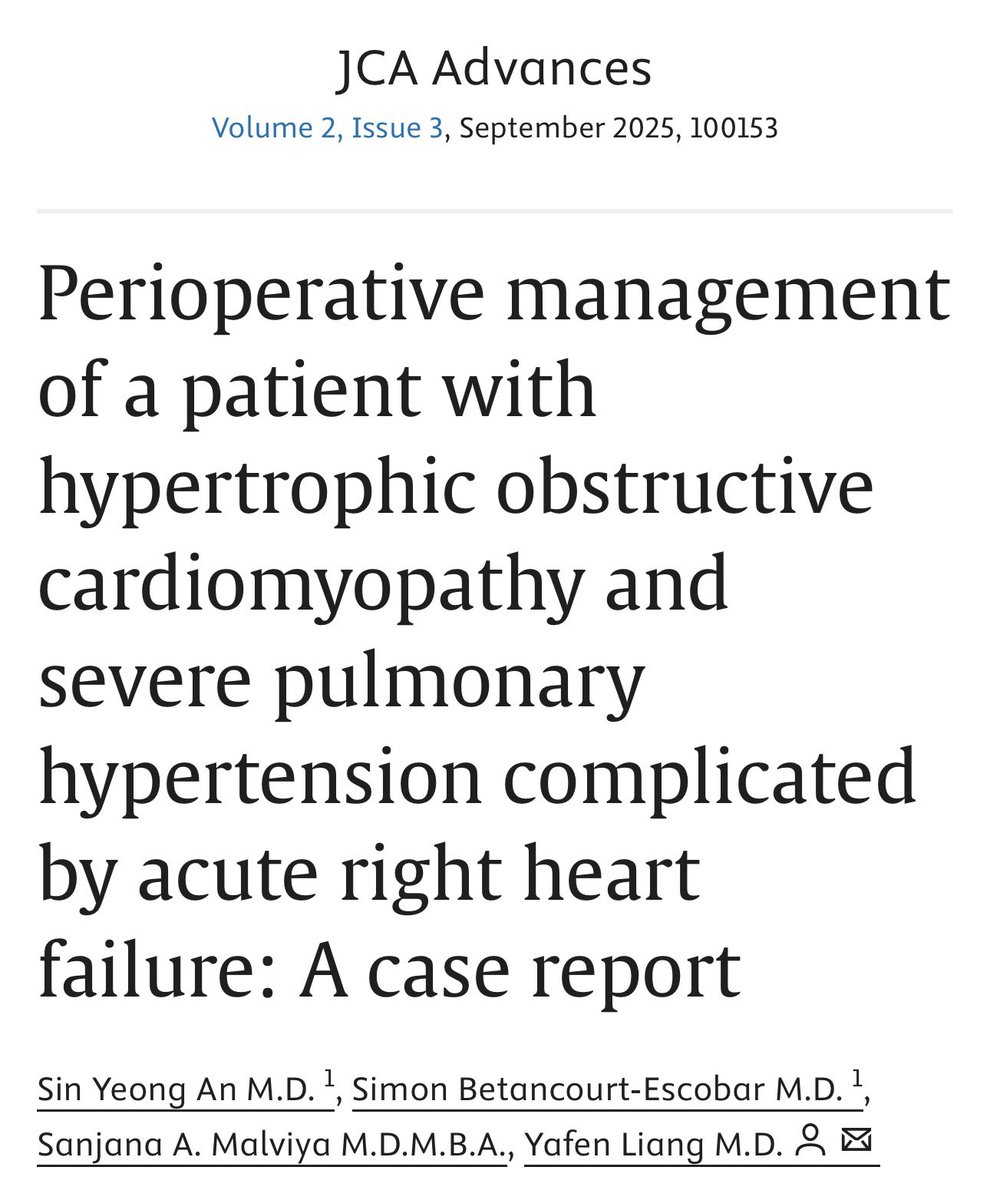
We highlight the complex interdisciplinary management and share our experience navigating conflicting strategies in these high-risk patients, offering practical considerations for perioperative care.
English
Our latest in JCA Advances (@JournalofClinAn @ELS_Anesthes) discusses a case of HOCM with right heart failure and severe pulmonary hypertension. Link ⬇️
#Anesthesia #HOCM #CVAnesthesia #PH
English
Simón Betancourt-Escobar, MD รีทวีตแล้ว

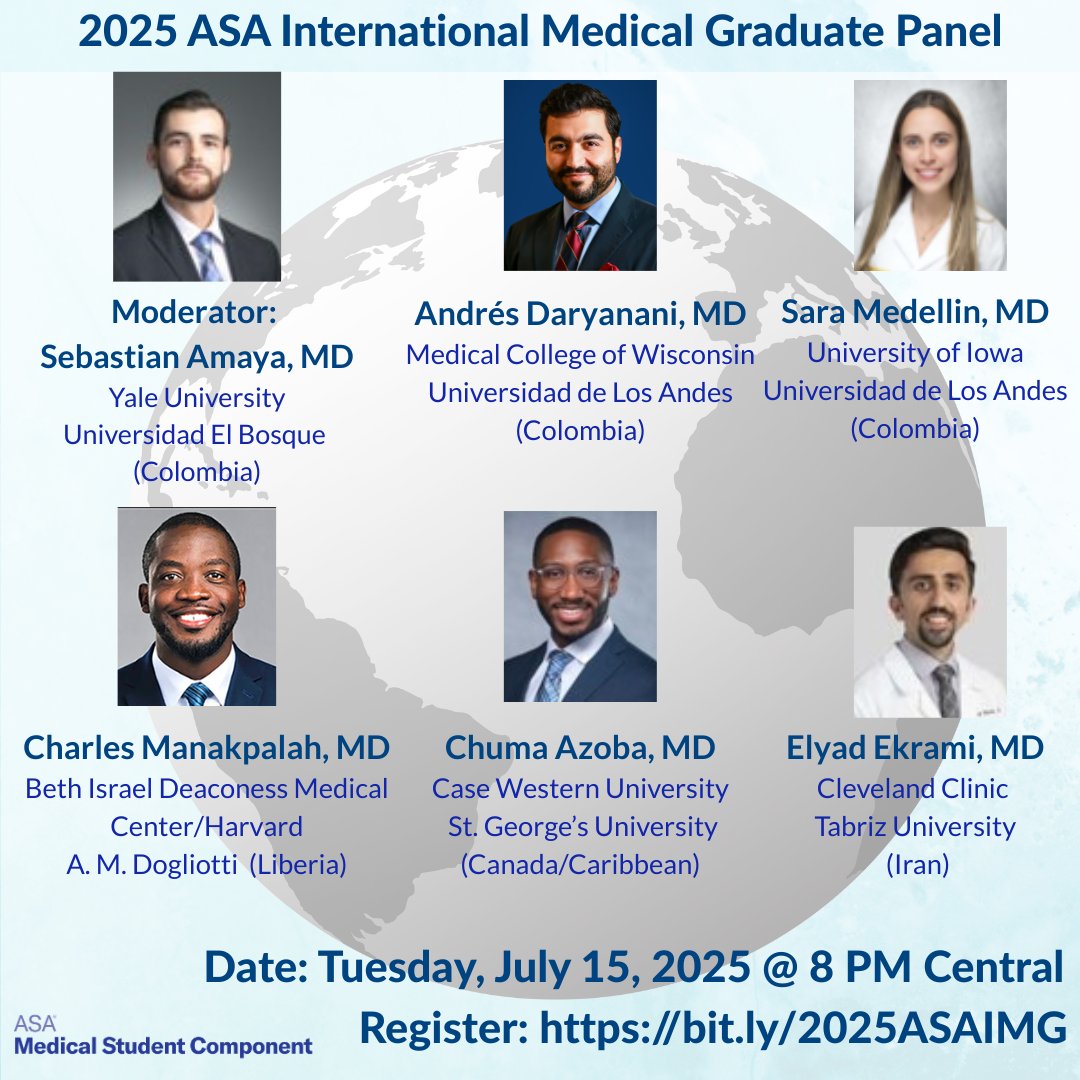
Calling all international medical graduates: Registration is now open for the ASA Medical Student Component 2025 IMG Panel! Reserve your spot by July 15. ow.ly/fAAW50WkmK9
#MSCGC #anesthesiology
English