Samuel Chong

991 posts

Samuel Chong banner
Samuel Chong

Samuel Chong

@stakesaurus

Institutional Relations APAC & MENA @LidoFinance Community Builder for Ethereum Home Stakers

stakesaurus.com เข้าร่วม Ağustos 2020
651 กำลังติดตาม1.5K ผู้ติดตาม
ทวีตที่ปักหมุด
Samuel Chong
Samuel Chong@stakesaurus·
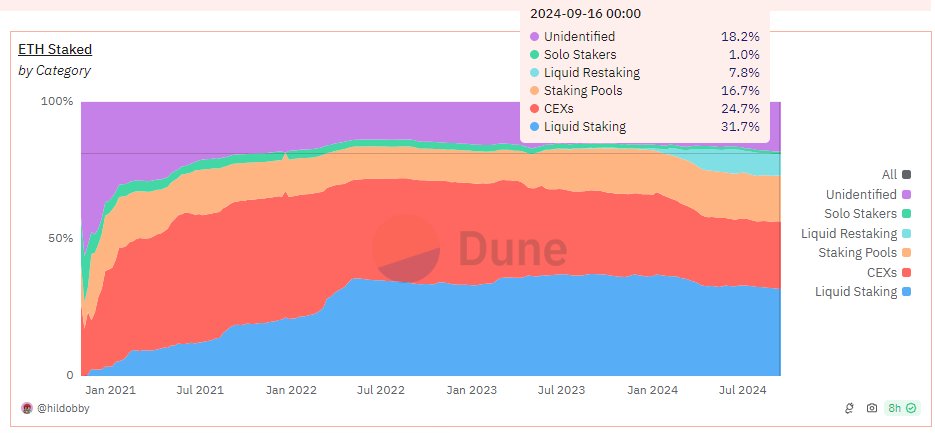
A summary of my fireside chat with @VitalikButerin at the Home Staking Summit in Singapore last week if you weren't able to attend. *Disclaimer: This also includes some of my prior understanding and interpretation. Part 1 of 3: The importance of solo stakers Solo stakers serve as both the first and last line of defence for the Ethereum network. First line = Providing censorship resistance. Last line = Quorum-blocking set by preventing 67% finalisation of the wrong chain As a censorship resistant set, solo stakers are typically uncorrelated and unaligned with any organisations, making them a difficult target for regulatory capture or coercion. What this means is that, certain organisations can try to impose censorship on Ethereum but will likely only go as far as delaying these transactions. Full censorship will be extremely difficult because solo stakers exist on Ethereum (amongst other mechanisms). IMO this is a huge part on why ETH is the credibly neutral block space that serious money wants to settle on!😎 As a quorum-blocking set: Ethereum's social layer can organise a recovery from a 51% capture where the chain splits in 2 but finalising the wrong thing (i.e., 67% capture) will be very bad as the blockchain's past & future can be changed without direct slashing risks. One way to prevent finalisation capture is to increase the quorum threshold - e.g., from 67% to 75% or even 85%. At 85%, current numbers of identified solo stakers + unidentified stakers from @hildobby_ 's dashboard will be sufficient. But on the other hand, will this decrease the cost of attack to prevent finalisation? - e.g., from >33% to just >15% of staked ETH? Not necessarily, as there are cheaper backdoor ways to mount this attack even today. Eg. Bribing core devs or key employees of large node operators, or even outrightly buying out the large node operators Hence, the 33% of staked ETH here represents the highest cost of attack to hold the chain hostage. If so, then we are currently overpaying to prevent >33% front door attack today, which means there is room to decrease the budget in favour of better security against ">66%" attacks. The analogy Vitalik uses is that if we imagine a house with 10cm thick bulletproof glass as windows but has a crappy wooden door, then we should reallocate resources to strengthening the weakest link. The other more ambitious but realistic method is to increase the number of solo stakers such that we become the quorum-blocking set of the current finalisation threshold. How do we achieve this? Stay tuned for Parts 2 and 3 for my discussion with Vitalik on Orbit SSF and Rainbow Staking!
Samuel Chong tweet media
English
41
58
345
560.1K
Samuel Chong
Samuel Chong@stakesaurus·
@d_gusakov not if they stake through decentralised middleware that flows down to more home stakers!
English
0
0
1
38
Dima Gusakov
Dima Gusakov@d_gusakov·
Just make sure that insti does not kill decentralization. Cause rn it looks like it will
dannyryan@dannyryan

you go deep, we'll go broad I respect and appreciate the EF clarifying its focus and mandate so that others know what gaps to fill and which alternative threads to follow so we make maximal impact as a collective At @Etherealize_io we'll stay the course and focus on rearchitecting institutional finance from the inside out We are one piece of the diverse machine that will make the deepest and broadest impact possible

English
3
0
8
662
Samuel Chong
Samuel Chong@stakesaurus·
Samuel Chong (Stakesaurus) is looking to join the Lido DAO Community Lifeguards Committee with address 0x0fb6215099f48d723cfb89434c2cb887357bc871
English
1
0
0
92
Samuel Chong
Samuel Chong@stakesaurus·
Thanks @rohikiminoo for inviting me to be on a panel for the Yield Summit! Looking forward to catching up with the Japanese institutional ecosystem this week!
株式会社 Next Finance Tech@nxt_fintech

⚡Yield Summit 2026 開催のお知らせ⚡ グローバルのDeFiトッププレイヤーが集結するJFWのサイドイベント「Yield Summit 2026」を開催します。 📍日時:2026年2月26日(木)14:00~19:00 📍場所:HOOPSLINK Produced by SMBC 📍Host:Next Finance Tech × SMBC日興証券 @smbcnikko_jp Solana最大のDeFiプラットフォームJupiter(@JupiterExchange )、 グローバル最大級のステーキングサービスプロバイダーKiln(@Kiln_finance )、P2P(@P2Pvalidator)、Solana最大のステーキングプロトコルJito(@jito_sol)など、 世界を代表するキープレイヤーが登壇予定です。 TradFi×DeFiの融合に加え、AIエージェント×DeFiといった新たなユースケースの可能性も見え始めています。 本イベントでは、こうした最先端の事例を共有し、次世代の可能性を議論します。 さらに、メディアパートナーとしてDeFiらじお(@MakiCrypto0330)にもご支援いただいております。 詳細・登録はこちら👇 luma.com/gysagtzd

English
0
0
3
321
Samuel Chong รีทวีตแล้ว
Northstake
Northstake@Northstake_dk·
Northstake just set a first. We are the first node operator to prove a validator to the Predeposit Guarantee (PDG) contract on @LidoFinance V3 mainnet. What is the PDG? It's Lido V3's on-chain verification layer for validator deposits. By cryptographically proving (via EIP-4788) that a validator's withdrawal credentials correctly point to the intended stVault, the validator becomes fully registered in PDG — unlocking trustless top-ups and eliminating custodial assumptions for future deposits. This is the type of infrastructure institutional staking requires and we're proud to be the first to verify a validator on-chain through PDG on mainnet 🟢
GIF
English
4
12
32
3.9K
Samuel Chong
Samuel Chong@stakesaurus·
Catch the stacked institutional lineup at Hashkey’s event at Consensus HK 9th Feb
HashKey Cloud@HashKeyCloud

🔔 Join us at Institutional Strategies in Digital Assets! Panel 2: The New Yield Stack: ETH, BTC, and Institutional Capital 🎙️Moderator: Dovile Silenskyte @DSilenskyteWT | Director of WisdomTree Digital Assets Research @WisdomTreeEU 👥Panelists: ✨ Rok Kopp @koppknows | Co-founder of Ether.fi @ether_fi ✨ Samuel Chong @stakesaurus | CFA. Institutional Relations Lead of Lido @LidoFinance ✨ Fisher Yu @baby_fisherman | Co-founder of Babylon @babylonlabs_io ✨ Steven TUNG | Director of Quantum Solutions @Quantum_SKK2338 📍 14th Floor, The Three Exchange Square, Central, Hong Kong ⏰ Feb 9, 2026 | 2:00 PM – 5:00 PM (HKT) 🎟 Register: luma.com/txc0m7o8 #HashKey #HashKeyCloud #HashKeyCaaS #OnChainFinance

English
0
0
5
225
jseam
jseam@henlojseam·
Lots of people in crypto have the reading ability of a toddler Vitalik isn’t saying that L2s are no longer needed, but they can do more than being just *branded shards* with limited security inherited from mainnet CT is genuinely clinically retarded
vitalik.eth@VitalikButerin

There have recently been some discussions on the ongoing role of L2s in the Ethereum ecosystem, especially in the face of two facts: * L2s' progress to stage 2 (and, secondarily, on interop) has been far slower and more difficult than originally expected * L1 itself is scaling, fees are very low, and gaslimits are projected to increase greatly in 2026 Both of these facts, for their own separate reasons, mean that the original vision of L2s and their role in Ethereum no longer makes sense, and we need a new path. First, let us recap the original vision. Ethereum needs to scale. The definition of "Ethereum scaling" is the existence of large quantities of block space that is backed by the full faith and credit of Ethereum - that is, block space where, if you do things (including with ETH) inside that block space, your activities are guaranteed to be valid, uncensored, unreverted, untouched, as long as Ethereum itself functions. If you create a 10000 TPS EVM where its connection to L1 is mediated by a multisig bridge, then you are not scaling Ethereum. This vision no longer makes sense. L1 does not need L2s to be "branded shards", because L1 is itself scaling. And L2s are not able or willing to satisfy the properties that a true "branded shard" would require. I've even seen at least one explicitly saying that they may never want to go beyond stage 1, not just for technical reasons around ZK-EVM safety, but also because their customers' regulatory needs require them to have ultimate control. This may be doing the right thing for your customers. But it should be obvious that if you are doing this, then you are not "scaling Ethereum" in the sense meant by the rollup-centric roadmap. But that's fine! it's fine because Ethereum itself is now scaling directly on L1, with large planned increases to its gas limit this year and the years ahead. We should stop thinking about L2s as literally being "branded shards" of Ethereum, with the social status and responsibilities that this entails. Instead, we can think of L2s as being a full spectrum, which includes both chains backed by the full faith and credit of Ethereum with various unique properties (eg. not just EVM), as well as a whole array of options at different levels of connection to Ethereum, that each person (or bot) is free to care about or not care about depending on their needs. What would I do today if I were an L2? * Identify a value add other than "scaling". Examples: (i) non-EVM specialized features/VMs around privacy, (ii) efficiency specialized around a particular application, (iii) truly extreme levels of scaling that even a greatly expanded L1 will not do, (iv) a totally different design for non-financial applications, eg. social, identity, AI, (v) ultra-low-latency and other sequencing properties, (vi) maybe built-in oracles or decentralized dispute resolution or other "non-computationally-verifiable" features * Be stage 1 at the minimum (otherwise you really are just a separate L1 with a bridge, and you should just call yourself that) if you're doing things with ETH or other ethereum-issued assets * Support maximum interoperability with Ethereum, though this will differ for each one (eg. what if you're not EVM, or even not financial?) From Ethereum's side, over the past few months I've become more convinced of the value of the native rollup precompile, particuarly once we have enshrined ZK-EVM proofs that we need anyway to scale L1. This is a precompile that verifies a ZK-EVM proof, and it's "part of Ethereum", so (i) it auto-upgrades along with Ethereum, and (ii) if the precompile has a bug, Ethereum will hard-fork to fix the bug. The native rollup precompile would make full, security-council-free, EVM verification accessible. We should spend much more time working out how to design it in such a way that if your L2 is "EVM plus other stuff", then the native rollup precompile would verify the EVM, and you only have to bring your own prover for the "other stuff" (eg. Stylus). This might involve a canonical way of exposing a lookup table between contract call inputs and outputs, and letting you provide your own values to the lookup table (that you would prove separately). This would make it easy to have safe, strong, trustless interoperability with Ethereum. It also enables synchronous composability (see: ethresear.ch/t/combining-pr… and ethresear.ch/t/synchronous-… ). And from there, it's each L2's choice exactly what they want to build. Don't just "extend L1", figure out something new to add. This of course means that some will add things that are trust-dependent, or backdoored, or otherwise insecure; this is unavoidable in a permissionless ecosystem where developers have freedom. Our job should make to make it clear to users what guarantees they have, and to build up the strongest Ethereum that we can.

English
10
3
77
3.8K
Samuel Chong
Samuel Chong@stakesaurus·
@VitalikButerin 100%. 1. Not all L2s are made equal. Chains cant leverage on the “ETH L2” brand without delivering the associated promises 2. If you actually want to be your own L1, then go be your own L1 3. If the L1 can also scale, L2s need to differentiate themselves outside of scaling
English
0
0
3
421
vitalik.eth
vitalik.eth@VitalikButerin·
There have recently been some discussions on the ongoing role of L2s in the Ethereum ecosystem, especially in the face of two facts: * L2s' progress to stage 2 (and, secondarily, on interop) has been far slower and more difficult than originally expected * L1 itself is scaling, fees are very low, and gaslimits are projected to increase greatly in 2026 Both of these facts, for their own separate reasons, mean that the original vision of L2s and their role in Ethereum no longer makes sense, and we need a new path. First, let us recap the original vision. Ethereum needs to scale. The definition of "Ethereum scaling" is the existence of large quantities of block space that is backed by the full faith and credit of Ethereum - that is, block space where, if you do things (including with ETH) inside that block space, your activities are guaranteed to be valid, uncensored, unreverted, untouched, as long as Ethereum itself functions. If you create a 10000 TPS EVM where its connection to L1 is mediated by a multisig bridge, then you are not scaling Ethereum. This vision no longer makes sense. L1 does not need L2s to be "branded shards", because L1 is itself scaling. And L2s are not able or willing to satisfy the properties that a true "branded shard" would require. I've even seen at least one explicitly saying that they may never want to go beyond stage 1, not just for technical reasons around ZK-EVM safety, but also because their customers' regulatory needs require them to have ultimate control. This may be doing the right thing for your customers. But it should be obvious that if you are doing this, then you are not "scaling Ethereum" in the sense meant by the rollup-centric roadmap. But that's fine! it's fine because Ethereum itself is now scaling directly on L1, with large planned increases to its gas limit this year and the years ahead. We should stop thinking about L2s as literally being "branded shards" of Ethereum, with the social status and responsibilities that this entails. Instead, we can think of L2s as being a full spectrum, which includes both chains backed by the full faith and credit of Ethereum with various unique properties (eg. not just EVM), as well as a whole array of options at different levels of connection to Ethereum, that each person (or bot) is free to care about or not care about depending on their needs. What would I do today if I were an L2? * Identify a value add other than "scaling". Examples: (i) non-EVM specialized features/VMs around privacy, (ii) efficiency specialized around a particular application, (iii) truly extreme levels of scaling that even a greatly expanded L1 will not do, (iv) a totally different design for non-financial applications, eg. social, identity, AI, (v) ultra-low-latency and other sequencing properties, (vi) maybe built-in oracles or decentralized dispute resolution or other "non-computationally-verifiable" features * Be stage 1 at the minimum (otherwise you really are just a separate L1 with a bridge, and you should just call yourself that) if you're doing things with ETH or other ethereum-issued assets * Support maximum interoperability with Ethereum, though this will differ for each one (eg. what if you're not EVM, or even not financial?) From Ethereum's side, over the past few months I've become more convinced of the value of the native rollup precompile, particuarly once we have enshrined ZK-EVM proofs that we need anyway to scale L1. This is a precompile that verifies a ZK-EVM proof, and it's "part of Ethereum", so (i) it auto-upgrades along with Ethereum, and (ii) if the precompile has a bug, Ethereum will hard-fork to fix the bug. The native rollup precompile would make full, security-council-free, EVM verification accessible. We should spend much more time working out how to design it in such a way that if your L2 is "EVM plus other stuff", then the native rollup precompile would verify the EVM, and you only have to bring your own prover for the "other stuff" (eg. Stylus). This might involve a canonical way of exposing a lookup table between contract call inputs and outputs, and letting you provide your own values to the lookup table (that you would prove separately). This would make it easy to have safe, strong, trustless interoperability with Ethereum. It also enables synchronous composability (see: ethresear.ch/t/combining-pr… and ethresear.ch/t/synchronous-… ). And from there, it's each L2's choice exactly what they want to build. Don't just "extend L1", figure out something new to add. This of course means that some will add things that are trust-dependent, or backdoored, or otherwise insecure; this is unavoidable in a permissionless ecosystem where developers have freedom. Our job should make to make it clear to users what guarantees they have, and to build up the strongest Ethereum that we can.
English
2.6K
1.7K
10K
6.3M
Samuel Chong
Samuel Chong@stakesaurus·
Ethereum insti-fi just became even more capital efficient. On Deribit, stETH can be used as trading collateral while accruing staking rewards. And now stETH can hedge ETH risk directly in portfolio margin mode. Plus stETH’s margin haircut halved from 15% to 7.5%.
Lido@LidoFinance

x.com/i/article/2013…

English
0
1
1
157
Samuel Chong
Samuel Chong@stakesaurus·
I buy more ETH and BTC every time I try to send/receive money overseas through fiat rails and get reminded of its stone age tech and UX
English
0
0
3
157
Samuel Chong
Samuel Chong@stakesaurus·
100% staked ETH ETP = yield that mitigates the classic “cash drag” problem Backed by stETH = deep liquidity optionality for ETP holders Now that the precedent has been set, this should be the gold standard for institutional staking 🥇
Lido@LidoFinance

Say hello to the WisdomTree Physical Lido Staked Ether ETP (LIST) 🧠🌳 A 100% staked ETH ETP for simplified institutional access to Ethereum staking rewards. Fully backed by stETH. @WisdomTreeEU

English
1
0
13
523
Lido
Lido@LidoFinance·
🇪🇺 + 💧 + 💼 December 4th
English
42
35
420
44.3K
Samuel Chong
Samuel Chong@stakesaurus·
@hantengri Yet its listed on insti-level CEXs as one of the “safer” coins 🤷‍♂️
English
0
0
0
51
hantengri
hantengri@hantengri·
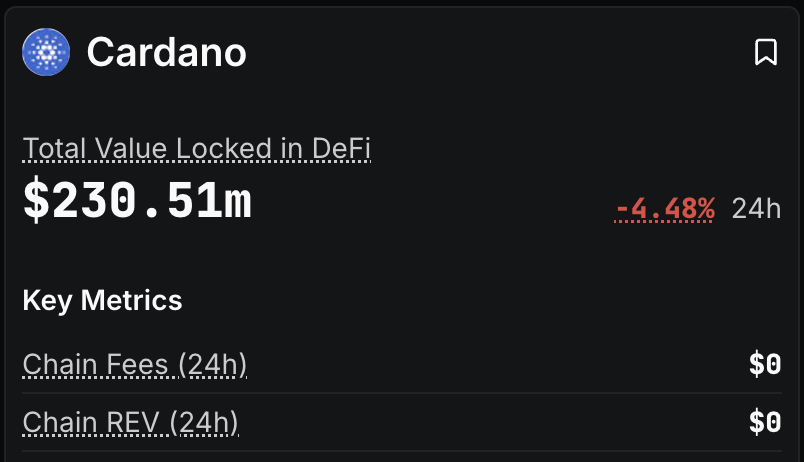
cardano raised $62m 0 revenue 1 tps entire “ecosystem” is basically one dex and one lending protocol that maybe 7 people use per day literally a ghost chain, just guarded by an illiterate cult at the gates it sits at a $21b fdv 'fixed supply' yet 18% is still not in circulation. staking rewards and governance treasury emissions keep getting dumped nonstop. no burn mechanism either not that it matters because nobody uses the chain anyway similar to xrp, joining the ada cult apparently requires being an active member of the flat earth groups on facebook charles is busy running a farm funded with the tokens he dumped from the treasury zero
hantengri tweet media
hantengri@hantengri

internet computer raised $167m another ghost chain its first binance candle opened at a $1.3t fdv highest tvl ($6m) on the network comes from a place called “icpswap” 99% of all activity on the chain comes from spam bot voting txs from that sns dao nonsense only remaining holders are the retail buyers and their relatives who bought it between $50b - $300b fdv in the 2021 bull run the only reason it’s somehow still sitting at a $3b fdv is because the mysterious “internet computer” branding gives people the illusion of some universe cracking technology zero

English
311
148
2K
425.1K