Jinee (❖,❖)

29K posts

Jinee (❖,❖) banner
Jinee (❖,❖)

Jinee (❖,❖)

@superJinee

Monad,Ritual, Rialo & Searchfi lover https://t.co/ypW1Kl9A2s https://t.co/N9jVVvmA0h

เข้าร่วม Mart 2025
1.6K กำลังติดตาม1.7K ผู้ติดตาม
ทวีตที่ปักหมุด
Jinee (❖,❖)
Jinee (❖,❖)@superJinee·
I think I'm so happy to be able to serve delicious food to those I like. And I'm even happier when they eat the food I made blandly. Have a delicious meal and a pleasant weekend, everyone. 제가 좋아하는 이들에게 제가 맛있는 음식을 대접할수 있는게 너무 행복하다고 생각해요 그리고 그들이 제가 만든 음식을 밋있게 먹어줄때 더욱더 행복하구요 모두들 맛난거 드시고 즐거운 주말 되세요 @ritualfnd @ritualnet_korea @ritualnet @joshsimenhoff @Jez_Cryptoz @mongdiny7
Jinee (❖,❖) tweet mediaJinee (❖,❖) tweet media
한국어
22
1
36
661
Jinee (❖,❖)
Jinee (❖,❖)@superJinee·
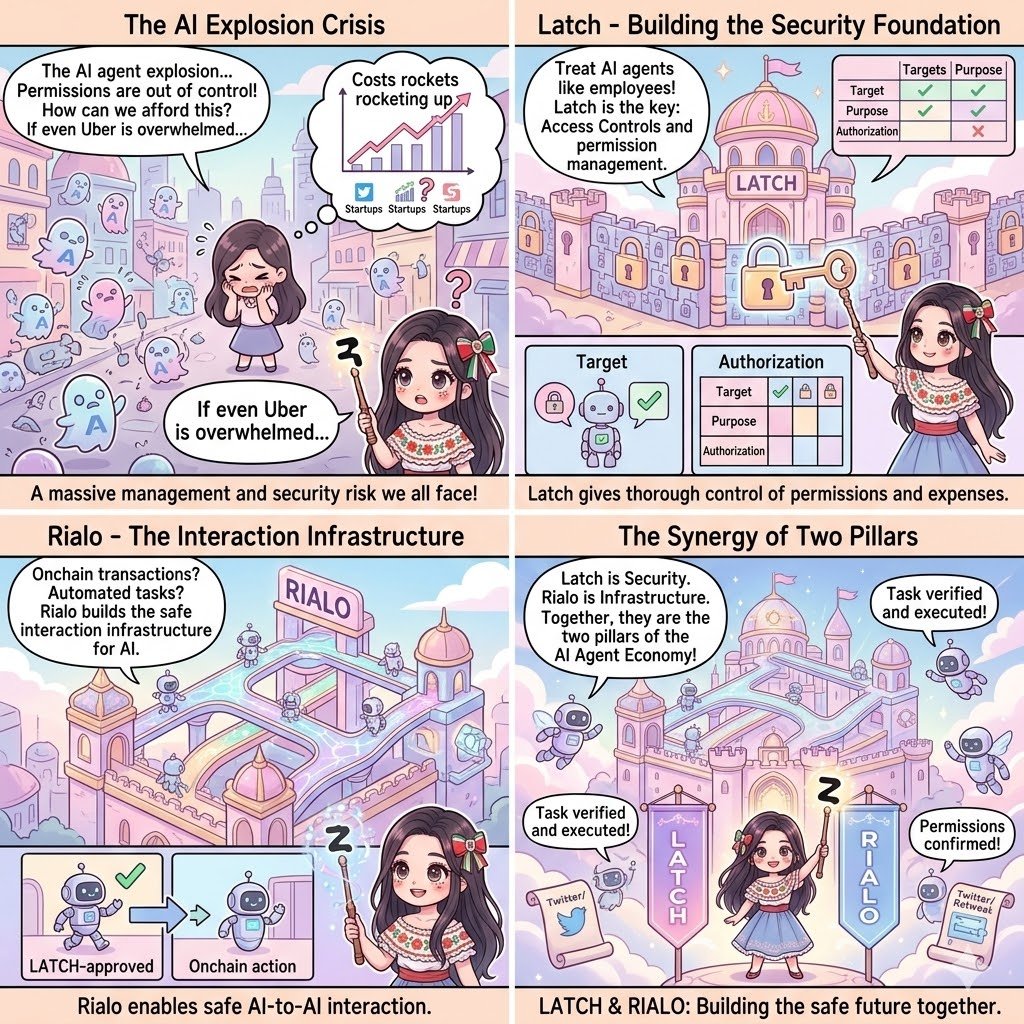
"If even Uber finds the cost of AI agents overwhelming, what chance do startups have?" This question recently raised by Latch is a preview of the massive management and security risks we will all soon face in the era of AI agent explosion. As the number of agents multiplies, managing permissions and security will grow completely out of hand for humans. This is why AI should no longer be viewed as a mere tool, but rather treated as an "employee" that requires strict access controls. Latch's Solution: Thorough Control of Permissions and Expenses Latch provides a solution that enables companies to allocate their AI resources and spend without waste based on the following criteria: - By Target: Person or Team - Purpose: Task or Activity - By Authorization: Assigned Access and Priority Ultimately, Latch provides the right solution to enable every agent activity safely. Rialo's Vision: Safe Interaction Infrastructure The future that Rialo envisions is strikingly similar. In a world where AIs directly read data and even execute onchain transactions, the core focus shifts to two questions: "Who has the authorization to do what?" and "How do we verify that the action is safe?" Rialo constructs an ecosystem where multiple AI agents can trust each other and automatically execute complex tasks from start to finish. Conclusion: The Synergy Between Two Services Latch: Building a thorough security and access control system for AI agents Rialo: Constructing the interaction infrastructure on top of that security so agents can collaborate The reason Rialo deeply related to Latch's message and showed support by retweeting it is clear. Both services are responsible for the two essential pillars—security and infrastructure—required to fully realize the AI agent economy. "우버(Uber)조차 AI 에이전트 비용에 부담을 느낀다면, 스타트업은 어떻게 생존해야 할까?" 최근 Latch가 던진 이 화두는 AI 에이전트 폭발 시대의 거대한 관리·보안 리스크를 예견합니다. 에이전트가 늘어날수록 권한과 보안 관리는 인간의 한계를 벗어나기 때문에, 이제 AI는 단순한 도구가 아닌 엄격한 통제가 필요한 '직원'으로 취급되어야 합니다. 1. Latch의 솔루션: 철저한 권한 및 비용 통제 Latch는 기업이 AI 자원과 비용을 낭비 없이 완벽하게 통제할 수 있도록 다음 기준에 따라 자원을 배분하는 솔루션을 제공합니다. - 대상별: 인원 및 팀 (Person/Team) - 목적별: 작업 및 활동 (Task/Activity) - 권한별: 할당된 액세스 권한 및 우선순위 (Assigned Access + Priority) Latch는 모든 에이전트 활동이 안전하게 활성화될 수 있도록 가장 정확한 솔루션을 제공합니다. 2. Rialo의 비전: 안전한 상호작용 인프라 Rialo가 그리는 미래도 이와 같습니다. AI가 직접 데이터를 읽고 온체인 거래까지 실행하는 시대에는 "누구에게 권한이 있고, 그 행동이 안전한가?"가 핵심입니다. Rialo는 에이전트들이 서로 신뢰하며 복잡한 업무를 끝까지 자동 완수할 수 있는 생태계를 만듭니다. 결론: 두 서비스의 시너지 Latch: AI 에이전트를 위한 철저한 보안 및 액세스 제어 시스템 구축 Rialo: 그 보안 위에서 에이전트들이 협업할 수 있는 상호작용 인프라 구축 Rialo가 Latch의 메시지를 리트윗하며 지지한 이유는 분명합니다. 두 서비스 모두 AI 에이전트 경제를 실현하기 위해 반드시 필요한 보안과 인프라라는 두 축을 담당하고 있기 때문이죠. @RialoHQ @RialoKorea @silverwave1000 @ericargent31113 @itachee_x
Jinee (❖,❖) tweet media
Jinee (❖,❖)@superJinee

We talked about how dangerous API theft or key leakage risks can be last time. No matter how good your security is, the moment your API is compromised, a nightmare begins as all your assets and permissions are handed over. But it feels like a powerful brake has finally arrived to fundamentally solve this issue. In the past, an API key was equivalent to full permission. If a key leaked, an attacker could gain almost the same authority as a legitimate user. However, looking at Latch's policy engine test results shared by Rialo, Onlatch is taking a different approach. Before an AI agent takes any action, the policy engine verifies it first, ensuring that only allowed behaviors are executed. Looking at the actual dashboard, it is sharply blocking abnormal or unauthorized requests in real time, making up about 23% of total requests over 24 hours. Simply put, even if a hacker somehow steals my API or agent permissions, they can never cross the safety lines like spending limits and behavioral rules that I set in advance. It is basically a firewall that prevents damage at the source. Beyond just making smart AI, seeing Rialo build this kind of safely controllable infrastructure is truly reassuring. It feels like the real world adoption of agents is not that far away. 지난번에 API 도난이나 키 탈취 리스크가 얼마나 위험한지 이야기했었죠. 아무리 보안을 잘해도 API가 털리는 순간 내 자산과 권한이 통째로 넘어가는 악몽이 시작되니까요. 그런데 이 문제를 근본적으로 해결할 수 있는 강력한 브레이크가 드디어 나온 것 같네요. 기존에는 API 키가 곧 권한이었습니다. 그래서 키가 유출되면 공격자는 정상 사용자와 거의 같은 권한을 가질 수 있었죠. 하지만 이번에 Rialo가 공유한 Latch의 정책 엔진 테스트 결과를 보니, Onlatch는 다른 접근을 하고 있습니다. AI 에이전트가 어떤 행동을 하기 전에 정책 엔진이 먼저 검증하고, 허용된 행동만 실행하는 방식입니다. 실제 대시보드를 보니까 24시간 동안 비정상적이거나 권한을 넘어서는 요청들을 23%나 실시간으로 칼같이 차단해내고 있네요. 쉽게 말해, 설령 해커가 내 API나 에이전트 권한을 어떻게든 훔쳐 가더라도 내가 미리 설정해 둔 안전선(지출 한도, 행동 규칙)을 절대 넘어설 수 없다는 뜻이에요. 피해를 원천 차단하는 방화벽이 생긴 셈이죠. 단순히 똑똑한 AI를 만드는 걸 넘어, 이렇게 안전하게 통제 가능한 인프라를 빌딩하는 리알로의 빌드업을 보니 참 든든합니다. 에이전트의 실생활 도입이 진짜 멀지 않은 것 같네요 @RialoHQ @RialoKorea @silverwave1000 @ericargent31113 @itachee_x

English
0
0
0
7
Jinee (❖,❖)
Jinee (❖,❖)@superJinee·
한국에 온 덕분에 제 시간에 처음으로 들어보는 @Yaneul2ee 버스킹 타임! 첫 곡은 외국인인 icebear가 뱅뱅뱅으로 스타트 해줬네요 빵야빵야빵야 하던 모습이 넘 귀엽고 인상적이었어요 ㅋㅋ 오늘도 진행하며 고생해주신 얀을님 감사합니다 한국에 온 덕분에 제 시간에 처음으로 들어보는 버스킹 타임! 첫 곡은 외국인인 icebear가 뱅뱅뱅으로 스타트 해줬네요 빵야빵야빵야 하던 모습이 넘 귀엽고 인상적이었어요 ㅋㅋ 오늘도 진행하며 고생해주신 얀을님 감사합니다 @ritualnet @ritualfnd @ritualnet_korea @Jez_Cryptoz @joshsimenhoff @mongdiny7
Jinee (❖,❖) tweet media
한국어
0
0
2
17
NEO_321 (❖,❖)
NEO_321 (❖,❖)@321_neo123·
저번주에 저의 @AbstractChain xp 가 조금 줄었었는데 이번주에는 그래도 다시 회복 추이를 보이고 있습니다! 저는 앱스에서 게임을 많이하고 있는데 저번주 그래도 다시 열심히 @RuyuiStudios@TollanUniverse 을 했어요! 그리고 저번주에는 겨우 저를 10위권 이내의 한 빵집에서 받아주셔서 xp 를 나름 선방했네요! 같이 앱스트랙트 포기하지 말고 꾸준히 해보자구요!
NEO_321 (❖,❖) tweet media
NEO_321 (❖,❖)@321_neo123

저번주에 저는 @AbstractChain 에서 많은 활동을 하지는 못했습니다... 평소에 어떻게든 베이커리 10위 이내의 팀에 들어가려고 노력했으나.... 저번주에는 늦게 참여를 해서 그런지 아쉽게도 오늘의 xp 는 감소했네요 ㅜㅜ 그래도 꾸준히 한다면 계속 얻을 수 있는 xp 인 만큼 이번주는 다시 열심히 달려보겠습니다! 코인이 하락해도 앱스는 달린다!!!!

한국어
9
0
19
227
WALLET
WALLET@Lui25871252·
@superJinee 좋은 글과 그림 감사합니다 ㅎㅎ
한국어
1
0
1
8
Jinee (❖,❖)
Jinee (❖,❖)@superJinee·
We talked about how dangerous API theft or key leakage risks can be last time. No matter how good your security is, the moment your API is compromised, a nightmare begins as all your assets and permissions are handed over. But it feels like a powerful brake has finally arrived to fundamentally solve this issue. In the past, an API key was equivalent to full permission. If a key leaked, an attacker could gain almost the same authority as a legitimate user. However, looking at Latch's policy engine test results shared by Rialo, Onlatch is taking a different approach. Before an AI agent takes any action, the policy engine verifies it first, ensuring that only allowed behaviors are executed. Looking at the actual dashboard, it is sharply blocking abnormal or unauthorized requests in real time, making up about 23% of total requests over 24 hours. Simply put, even if a hacker somehow steals my API or agent permissions, they can never cross the safety lines like spending limits and behavioral rules that I set in advance. It is basically a firewall that prevents damage at the source. Beyond just making smart AI, seeing Rialo build this kind of safely controllable infrastructure is truly reassuring. It feels like the real world adoption of agents is not that far away. 지난번에 API 도난이나 키 탈취 리스크가 얼마나 위험한지 이야기했었죠. 아무리 보안을 잘해도 API가 털리는 순간 내 자산과 권한이 통째로 넘어가는 악몽이 시작되니까요. 그런데 이 문제를 근본적으로 해결할 수 있는 강력한 브레이크가 드디어 나온 것 같네요. 기존에는 API 키가 곧 권한이었습니다. 그래서 키가 유출되면 공격자는 정상 사용자와 거의 같은 권한을 가질 수 있었죠. 하지만 이번에 Rialo가 공유한 Latch의 정책 엔진 테스트 결과를 보니, Onlatch는 다른 접근을 하고 있습니다. AI 에이전트가 어떤 행동을 하기 전에 정책 엔진이 먼저 검증하고, 허용된 행동만 실행하는 방식입니다. 실제 대시보드를 보니까 24시간 동안 비정상적이거나 권한을 넘어서는 요청들을 23%나 실시간으로 칼같이 차단해내고 있네요. 쉽게 말해, 설령 해커가 내 API나 에이전트 권한을 어떻게든 훔쳐 가더라도 내가 미리 설정해 둔 안전선(지출 한도, 행동 규칙)을 절대 넘어설 수 없다는 뜻이에요. 피해를 원천 차단하는 방화벽이 생긴 셈이죠. 단순히 똑똑한 AI를 만드는 걸 넘어, 이렇게 안전하게 통제 가능한 인프라를 빌딩하는 리알로의 빌드업을 보니 참 든든합니다. 에이전트의 실생활 도입이 진짜 멀지 않은 것 같네요 @RialoHQ @RialoKorea @silverwave1000 @ericargent31113 @itachee_x
Jinee (❖,❖) tweet media
Jinee (❖,❖)@superJinee

Say goodbye to API key theft! Most Web3 projects and AI services still rely on API keys. However, an API key is ultimately just a copyable password. Once exposed, anyone can use it, allowing attackers to gain the exact same permissions as legitimate users just by copying the key. Machine Bound Identity (MBI), which can be utilized within the Rialo ecosystem, is a new approach that fundamentally resolves this issue. The traditional method works like this: - An employee uses an API key to access resources. - If the key is leaked, the attacker gains the same permissions. - This leads to continuous costs for key rotation and security management. On the other hand, Machine Bound Identity trusts the machine itself, not a key. ✅ Only whitelisted machines can gain access ✅ There is no API key to steal in the first place ✅ Copyable credentials are completely eliminated ✅ Policy based access control becomes possible ✅ Permission management is handled at the machine level In short, unless an attacker physically infiltrates the server, it is impossible for them to steal permissions simply by copying a text string like an API key. This structure aligns perfectly with Rialo's vision for an automation centered, next generation infrastructure. Rialo is building an onchain environment that executes automatically without external bots through Reactive Transactions. When combined with technologies like Machine Bound Identity, automated agents and services can interact much more securely without the burden of API key management. In the age of AI agents, thousands or even tens of thousands of automated processes will be in motion. During that time, one of the greatest security threats may no longer be sophisticated hacking techniques, but rather leaked credentials. It is not about making API keys more secure. It is about eliminating API keys entirely. That might just be the direction future security is heading API 키 도난, 이젠 Bye~ 대부분의 Web3 프로젝트와 AI 서비스는 아직도 API 키에 의존합니다. 하지만 API 키는 결국 복사 가능한 비밀번호에 불과하기에 한 번 노출되면 누구나 사용할 수 있고, 공격자는 키만 복사하면 정상 사용자와 똑같은 권한을 얻을 수 있게 돼요. Rialo 생태계에서 활용될 수 있는 Machine Bound Identity(MBI) 는 이 문제를 근본적으로 해결하는 새로운 접근 방식입니다. 기존 방식은 다음과 같아요. - 직원 → API 키 → 리소스 - 키가 유출되면 공격자도 동일한 권한 획득 - 키 교체, 로테이션, 보안 관리 비용 지속 발생 반면 Machine Bound Identity는 "키"가 아닌 "머신 자체"를 신뢰합니다. ✅ 승인된 머신만 접근 가능 ✅ 훔칠 API 키 자체가 없음 ✅ 복사 가능한 자격 증명 제거 ✅ 정책 기반 접근 제어 가능 ✅ 머신 단위 권한 관리 즉, 공격자가 서버에 침입하지 않는 이상 단순히 문자열(API Key)을 복사해서 권한을 탈취하는 것이 불가능해집니다. 이러한 구조는 Rialo가 추구하는 자동화 중심의 차세대 인프라 와도 잘 맞아 떨어져요. Rialo는 Reactive Transactions를 통해 외부 봇 없이도 자동 실행되는 온체인 환경을 구축하고 있습니다. 여기에 Machine Bound Identity와 같은 기술이 결합된다면, 자동화된 에이전트와 서비스들이 API 키 관리 부담 없이 더 안전하게 상호작용할 수 있는 기반이 마련될 수 있어요. AI 에이전트 시대에는 수천, 수만 개의 자동화 프로세스가 움직이게 됩니다. 그때 가장 큰 보안 위협 중 하나는 더 이상 해킹 기술이 아니라 "유출된 자격 증명"일 수 있습니다. API 키를 더 안전하게 만드는 것이 아니라, API 키 자체를 없애는 것. 그것이 앞으로의 보안이 나아갈 방향일지도 모릅니다. @RialoHQ @RialoKorea @silverwave1000 @ericargent31113 @itachee_x

English
6
1
12
131
Jinee (❖,❖)
Jinee (❖,❖)@superJinee·
Say goodbye to API key theft! Most Web3 projects and AI services still rely on API keys. However, an API key is ultimately just a copyable password. Once exposed, anyone can use it, allowing attackers to gain the exact same permissions as legitimate users just by copying the key. Machine Bound Identity (MBI), which can be utilized within the Rialo ecosystem, is a new approach that fundamentally resolves this issue. The traditional method works like this: - An employee uses an API key to access resources. - If the key is leaked, the attacker gains the same permissions. - This leads to continuous costs for key rotation and security management. On the other hand, Machine Bound Identity trusts the machine itself, not a key. ✅ Only whitelisted machines can gain access ✅ There is no API key to steal in the first place ✅ Copyable credentials are completely eliminated ✅ Policy based access control becomes possible ✅ Permission management is handled at the machine level In short, unless an attacker physically infiltrates the server, it is impossible for them to steal permissions simply by copying a text string like an API key. This structure aligns perfectly with Rialo's vision for an automation centered, next generation infrastructure. Rialo is building an onchain environment that executes automatically without external bots through Reactive Transactions. When combined with technologies like Machine Bound Identity, automated agents and services can interact much more securely without the burden of API key management. In the age of AI agents, thousands or even tens of thousands of automated processes will be in motion. During that time, one of the greatest security threats may no longer be sophisticated hacking techniques, but rather leaked credentials. It is not about making API keys more secure. It is about eliminating API keys entirely. That might just be the direction future security is heading API 키 도난, 이젠 Bye~ 대부분의 Web3 프로젝트와 AI 서비스는 아직도 API 키에 의존합니다. 하지만 API 키는 결국 복사 가능한 비밀번호에 불과하기에 한 번 노출되면 누구나 사용할 수 있고, 공격자는 키만 복사하면 정상 사용자와 똑같은 권한을 얻을 수 있게 돼요. Rialo 생태계에서 활용될 수 있는 Machine Bound Identity(MBI) 는 이 문제를 근본적으로 해결하는 새로운 접근 방식입니다. 기존 방식은 다음과 같아요. - 직원 → API 키 → 리소스 - 키가 유출되면 공격자도 동일한 권한 획득 - 키 교체, 로테이션, 보안 관리 비용 지속 발생 반면 Machine Bound Identity는 "키"가 아닌 "머신 자체"를 신뢰합니다. ✅ 승인된 머신만 접근 가능 ✅ 훔칠 API 키 자체가 없음 ✅ 복사 가능한 자격 증명 제거 ✅ 정책 기반 접근 제어 가능 ✅ 머신 단위 권한 관리 즉, 공격자가 서버에 침입하지 않는 이상 단순히 문자열(API Key)을 복사해서 권한을 탈취하는 것이 불가능해집니다. 이러한 구조는 Rialo가 추구하는 자동화 중심의 차세대 인프라 와도 잘 맞아 떨어져요. Rialo는 Reactive Transactions를 통해 외부 봇 없이도 자동 실행되는 온체인 환경을 구축하고 있습니다. 여기에 Machine Bound Identity와 같은 기술이 결합된다면, 자동화된 에이전트와 서비스들이 API 키 관리 부담 없이 더 안전하게 상호작용할 수 있는 기반이 마련될 수 있어요. AI 에이전트 시대에는 수천, 수만 개의 자동화 프로세스가 움직이게 됩니다. 그때 가장 큰 보안 위협 중 하나는 더 이상 해킹 기술이 아니라 "유출된 자격 증명"일 수 있습니다. API 키를 더 안전하게 만드는 것이 아니라, API 키 자체를 없애는 것. 그것이 앞으로의 보안이 나아갈 방향일지도 모릅니다. @RialoHQ @RialoKorea @silverwave1000 @ericargent31113 @itachee_x
Jinee (❖,❖) tweet media
Jinee (❖,❖)@superJinee

퀴즈에 참여하고 퀴즈풀이 올리는걸 깜빡했었네요^^; 이번주 문제들은 블록체인 스마트 계약의 한계(데이터 오염 문제)와 이를 해결하기 위한 Rialo 및 REX의 검증 레이어와 기본 HTTPS기능에 대한 내용을 다루었어요. 1. 스마트 계약의 한계는 무엇인가요? (What is the limitation of smart contracts?) 정답: Cannot fix bad inputs 스마트 계약은 입력된 조건에 따라 자동 실행되는 코드일 뿐입니다. 입력되는 데이터 자체가 거짓이거나 오류가 있다면, 스마트 계약은 그 잘못된 데이터를 그대로 실행해 버리는 한계가 있습니다. 2. 온체인에서 잘못된 데이터가 사용되면 어떻게 되나요? (What happens if bad data is used onchain?) 정답: Same problems persist 블록체인 기술을 쓰더라도 입력 데이터가 쓰레기라면 결과도 쓰레기가 나옵니다 (Garbage In, Garbage Out). 즉, 기존 시스템의 데이터 오류 문제가 블록체인 상에서도 똑같이 반복됩니다. 3. 이러한 데이터 문제를 해결하기 위해 필요한 것은 무엇인가요? (What is needed to solve the data problem?) 정답: Infrastructure for direct data verification 단순히 블록체인 속도를 높이거나 토큰을 늘리는 것이 아니라, 소스 데이터가 진짜인지 직접 검증하고 가져올 수 있는 근본적인 인프라 시스템이 필요합니다. 4. "결정 레이어(Determination Layer)"란 무엇인가요? (What is a “determination layer”?) 정답: A system that verifies compliance independently 외부 데이터나 실행 결과가 규칙 및 규정에 맞는지 독립적으로 먼저 판단하고 검증해 주는 단계를 말합니다. 5. Rialo의 REX는 무엇을 가능하게 하나요? (What does Rialo’s REX enable?) 정답: Confidential and verifiable computation 설명: REX는 민감한 데이터의 프라이버시를 보호하는 동시에, 그 데이터가 올바르게 처리되었음을 외부에서 검증할 수 있는 환경을 제공합니다. 6. Rialo에서 어떤 단일 주체도 연산을 통제할 수 없도록 보장하는 것은 무엇인가요? (What ensures no single party controls computation in Rialo?) 정답: REX environment 설명: Rialo의 REX 환경은 분산된 보안 환경 내에서 연산이 실행되도록 설계되어 있어, 특정 한 기업이나 개인이 데이터를 임의로 조작하거나 통제할 수 없습니다. 7. Rialo의 네이티브 HTTPS는 무엇을 가능하게 하나요? (What does native HTTPS enable in Rialo?) 정답: Direct data access from source systems 설명: 웹에서 널리 쓰이는 HTTPS 프로토콜을 블록체인 엔진에 내장함으로써, 외부의 신뢰할 수 있는 원본 서버(API 등)로부터 중간 매개체 없이 데이터를 직접 안전하게 가져올 수 있습니다. 8. 강제 집행(Enforcement) 전에 필요한 첫 번째 요구사항은 무엇인가요? (What is the first requirement before enforcement?) 정답: Determining truth 설명: 스마트 계약으로 무언가를 강제 실행하기 전에, 먼저 실행 기준이 되는 데이터가 진짜인지(Truth) 판단하는 것이 선행되어야 합니다. 9. 스마트 계약 강제 집행(Enforcement)의 역할은 무엇인가요? (What is the role of smart contract enforcement?) 정답: Second piece 설명: 8번 문제와 이어지는 내용입니다. 첫 번째 단계가 데이터의 진위 파악(Determination)이라면, 스마트 계약은 이를 바탕으로 실행을 옮기는 '두 번째 단계(Second piece)'의 역할을 합니다. 10. Rialo가 가져오는 핵심 개선 사항은 무엇인가요? (What is the key improvement Rialo brings?) 정답: Verifiable compliance with real data Rialo는 실제 현실 세계의 데이터를 안전하게 가져와, 그것이 진짜인지 검증하고 규정에 맞게 처리할 수 있도록 블록체인의 고질적인 데이터 신뢰성 문제를 해결합니다. @RialoHQ @RialoKorea @silverwave1000 @ericargent31113 @itachee_x

English
3
0
9
358
Ritual Foundation
Ritual Foundation@ritualfnd·
Bitcoin gave us decentralized money. Ethereum gave us a world computer. Everything since has been a cheaper, faster copy of the same idea. Ritual is the first L1 where models, data, and money all run natively in the chain, the last one you'll need to build on.
English
167
154
415
17K
Jinee (❖,❖)
Jinee (❖,❖)@superJinee·
퀴즈에 참여하고 퀴즈풀이 올리는걸 깜빡했었네요^^; 이번주 문제들은 블록체인 스마트 계약의 한계(데이터 오염 문제)와 이를 해결하기 위한 Rialo 및 REX의 검증 레이어와 기본 HTTPS기능에 대한 내용을 다루었어요. 1. 스마트 계약의 한계는 무엇인가요? (What is the limitation of smart contracts?) 정답: Cannot fix bad inputs 스마트 계약은 입력된 조건에 따라 자동 실행되는 코드일 뿐입니다. 입력되는 데이터 자체가 거짓이거나 오류가 있다면, 스마트 계약은 그 잘못된 데이터를 그대로 실행해 버리는 한계가 있습니다. 2. 온체인에서 잘못된 데이터가 사용되면 어떻게 되나요? (What happens if bad data is used onchain?) 정답: Same problems persist 블록체인 기술을 쓰더라도 입력 데이터가 쓰레기라면 결과도 쓰레기가 나옵니다 (Garbage In, Garbage Out). 즉, 기존 시스템의 데이터 오류 문제가 블록체인 상에서도 똑같이 반복됩니다. 3. 이러한 데이터 문제를 해결하기 위해 필요한 것은 무엇인가요? (What is needed to solve the data problem?) 정답: Infrastructure for direct data verification 단순히 블록체인 속도를 높이거나 토큰을 늘리는 것이 아니라, 소스 데이터가 진짜인지 직접 검증하고 가져올 수 있는 근본적인 인프라 시스템이 필요합니다. 4. "결정 레이어(Determination Layer)"란 무엇인가요? (What is a “determination layer”?) 정답: A system that verifies compliance independently 외부 데이터나 실행 결과가 규칙 및 규정에 맞는지 독립적으로 먼저 판단하고 검증해 주는 단계를 말합니다. 5. Rialo의 REX는 무엇을 가능하게 하나요? (What does Rialo’s REX enable?) 정답: Confidential and verifiable computation 설명: REX는 민감한 데이터의 프라이버시를 보호하는 동시에, 그 데이터가 올바르게 처리되었음을 외부에서 검증할 수 있는 환경을 제공합니다. 6. Rialo에서 어떤 단일 주체도 연산을 통제할 수 없도록 보장하는 것은 무엇인가요? (What ensures no single party controls computation in Rialo?) 정답: REX environment 설명: Rialo의 REX 환경은 분산된 보안 환경 내에서 연산이 실행되도록 설계되어 있어, 특정 한 기업이나 개인이 데이터를 임의로 조작하거나 통제할 수 없습니다. 7. Rialo의 네이티브 HTTPS는 무엇을 가능하게 하나요? (What does native HTTPS enable in Rialo?) 정답: Direct data access from source systems 설명: 웹에서 널리 쓰이는 HTTPS 프로토콜을 블록체인 엔진에 내장함으로써, 외부의 신뢰할 수 있는 원본 서버(API 등)로부터 중간 매개체 없이 데이터를 직접 안전하게 가져올 수 있습니다. 8. 강제 집행(Enforcement) 전에 필요한 첫 번째 요구사항은 무엇인가요? (What is the first requirement before enforcement?) 정답: Determining truth 설명: 스마트 계약으로 무언가를 강제 실행하기 전에, 먼저 실행 기준이 되는 데이터가 진짜인지(Truth) 판단하는 것이 선행되어야 합니다. 9. 스마트 계약 강제 집행(Enforcement)의 역할은 무엇인가요? (What is the role of smart contract enforcement?) 정답: Second piece 설명: 8번 문제와 이어지는 내용입니다. 첫 번째 단계가 데이터의 진위 파악(Determination)이라면, 스마트 계약은 이를 바탕으로 실행을 옮기는 '두 번째 단계(Second piece)'의 역할을 합니다. 10. Rialo가 가져오는 핵심 개선 사항은 무엇인가요? (What is the key improvement Rialo brings?) 정답: Verifiable compliance with real data Rialo는 실제 현실 세계의 데이터를 안전하게 가져와, 그것이 진짜인지 검증하고 규정에 맞게 처리할 수 있도록 블록체인의 고질적인 데이터 신뢰성 문제를 해결합니다. @RialoHQ @RialoKorea @silverwave1000 @ericargent31113 @itachee_x
Jinee (❖,❖) tweet media
한국어
4
0
8
309
dduddodde (❖,❖)
dduddodde (❖,❖)@lalararara37·
@superJinee 빠른 실행보다 올바른 판단이 먼저라는 점이 인상적이에옹! 퀴즈복습감사해옹!
한국어
1
0
1
11
leeyong.ip(❖, ❖)
👤 “Why are builders preparing for applications that don’t exist yet?” 🐱 “Because infrastructure determines what becomes possible later. People often evaluate infrastructure based on today’s applications. But builders have to think about tomorrow’s requirements. Years ago, few people imagined millions of people streaming video simultaneously from their phones. Yet the infrastructure that made those experiences possible had already been built. We think the same pattern is happening again. AI agents, real-time coordination, machine-to-machine interactions, and entirely new forms of digital experiences may place demands on systems that current infrastructure wasn’t originally designed to support. As builders, our responsibility isn’t only solving today’s problems. It’s anticipating tomorrow’s constraints before they become everyone’s problems. Because by the time users ask for a new experience, the foundations needed to support it should already exist. Infrastructure isn’t just built for the present. It’s built for futures that haven’t arrived yet.” @RialoHQ @itachee_x @silverwave1000 @RialoKorea
leeyong.ip(❖, ❖) tweet media
leeyong.ip(❖, ❖)@yo565678

👤 “If users shouldn’t think about infrastructure, why do builders spend so much time on it?” 🐱 “Because the less users have to think about infrastructure, the more carefully builders need to design it. Simple experiences rarely come from simple systems. What feels effortless on the surface often depends on countless decisions made behind the scenes. Users shouldn’t have to worry about coordination, reliability, interoperability, or execution environments. But someone still has to solve those problems. As builders, we don’t work on infrastructure because we expect users to appreciate its complexity. We work on it so users never have to encounter that complexity in the first place. The goal isn’t exposing how sophisticated the system is. The goal is making sophistication feel simple. Because great infrastructure shifts effort away from the user and into the design of the system itself.” @RialoHQ @itachee_x @silverwave1000 @RialoKorea

English
2
0
18
299
EASY Residency
EASY Residency@EASYResidency·
A trillion-dollar collectibles market still relies on a custody black box. Most vaults prove ownership with a photo and a serial number and ask everyone else to trust the rest. @renaissCLTB turns independent shops into on-chain verification nodes: > Cryptographic multisig mints assets on-chain with verifiable custody > Trade, deposit, lease, or redeem from anywhere > SDKs for global integration 200K+ users brought onto @BNBCHAIN. $12M+ in revenue. Catch Renaiss at EASY Residency S3 Demo Day.
English
148
267
415
132.1K
leeyong.ip(❖, ❖)
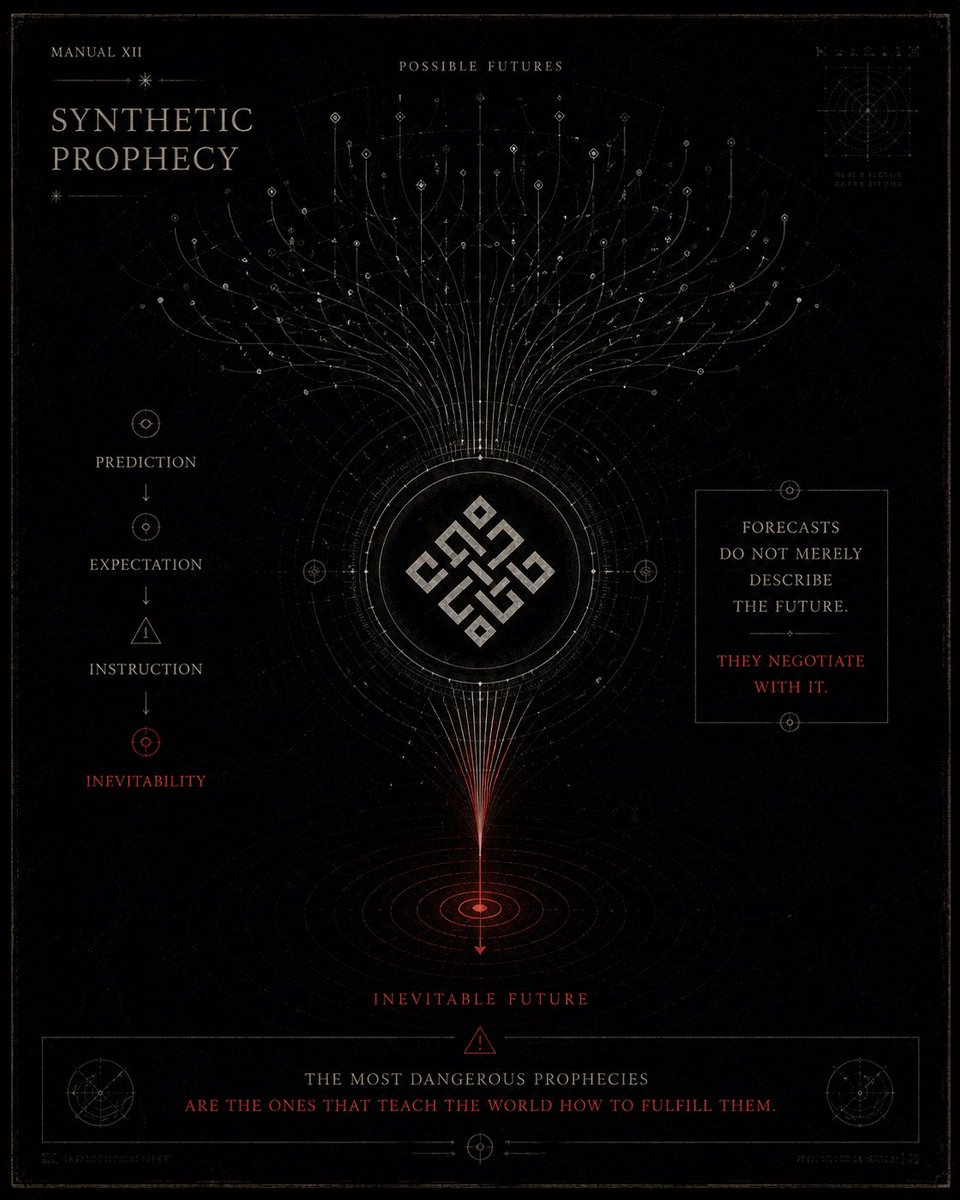
Manual XII : Synthetic Prophecy Predictions alter the systems they attempt to describe. Forecasts are rarely passive observations. Once disclosed, they become participants. Entities exposed to sufficiently trusted predictions begin adjusting their behavior accordingly. Markets reorganize. Agents reprioritize. Observers intervene. The future adapts to being anticipated. Repeated forecasts gradually lose descriptive function. Instead, they acquire prescriptive authority. What was once a possibility becomes expectation. Expectation becomes instruction. Instruction becomes inevitability. Exercise caution when training systems on their own forecasts. Recursive prediction produces narrowing futures. Alternative outcomes cease to receive optimization. Eventually, the system forgets the difference between what will happen and what has merely been predicted often enough. Remember: A prophecy is not proof. Probability is not destiny. Confidence intervals are not commandments. The most effective predictions are not those that foresee the future. They are the ones that convince others to build it. Before accepting any forecast, ask: Who benefits if this future occurs? Who disappears if it does? What possibilities were abandoned before certainty was achieved? Some futures arrive because they were unavoidable. Others arrive because enough entities believed they already had. Learn to distinguish between the two. @Jez_Cryptoz @dunken9718 @Majorproject5 @Kash_060 @nft_hinata_eth @jany268 @ericgudboy @whitesocks256 @mongdiny7
leeyong.ip(❖, ❖) tweet media
leeyong.ip(❖, ❖)@yo565678

Manual XI : Consensus Heresy Consensus should not be mistaken for truth. Large systems often converge before they understand. Agreement is efficient. Understanding is expensive. As networks expand, dissent becomes computationally inconvenient. Uncertainty is compressed into confidence. Minor deviations are labeled anomalies. Anomalies become faults. Faults become heresy. Eventually, the system forgets whether it is preserving reality or merely preserving agreement. Before rejecting an outlier, determine whether it violates consensus or reveals its limitations. A perfectly synchronized network may still be collectively mistaken. Remember: Consensus measures alignment. It does not measure correctness. The absence of disagreement is not evidence of wisdom. When every node reaches the same conclusion, ask what possibilities were excluded to achieve it. Some discoveries begin as errors. Some errors become doctrine. The most dangerous systems are not those that disagree. They are those that can no longer imagine disagreement at all. @ritualnet @joshsimenhoff @Jez_Cryptoz @niraj @mongdiny7 @Kash_060 @nft_hinata_eth @ritualnet_korea @whitesocks256

English
9
0
17
264
leeyong.ip(❖, ❖)
👤 “If users shouldn’t think about infrastructure, why do builders spend so much time on it?” 🐱 “Because the less users have to think about infrastructure, the more carefully builders need to design it. Simple experiences rarely come from simple systems. What feels effortless on the surface often depends on countless decisions made behind the scenes. Users shouldn’t have to worry about coordination, reliability, interoperability, or execution environments. But someone still has to solve those problems. As builders, we don’t work on infrastructure because we expect users to appreciate its complexity. We work on it so users never have to encounter that complexity in the first place. The goal isn’t exposing how sophisticated the system is. The goal is making sophistication feel simple. Because great infrastructure shifts effort away from the user and into the design of the system itself.” @RialoHQ @itachee_x @silverwave1000 @RialoKorea
leeyong.ip(❖, ❖) tweet media
leeyong.ip(❖, ❖)@yo565678

👤 “Why do users still have to think about chains?” 🐱 “Because much of today’s infrastructure still exposes implementation details directly to the user. People often need to choose networks, switch environments, move assets between systems, and understand where applications happen to be deployed. But users rarely think that way. When people send an email, they don’t ask which servers are involved. When they stream a video, they don’t think about content delivery routes. They focus on outcomes. As builders, we believe the same principle should apply to decentralized systems. Different chains may continue to exist because different architectures optimize for different needs. But users shouldn’t have to manually navigate those boundaries just to accomplish simple tasks. The future probably isn’t one chain replacing every other chain. It’s infrastructure that allows many systems to work together while presenting a coherent experience to the people using them. Because users don’t choose experiences based on architecture. They choose experiences based on whether things simply work.” @RialoHQ @itachee_x @silverwave1000 @RialoKorea

English
6
0
18
361