Sylvia Fernandes
5.3K posts


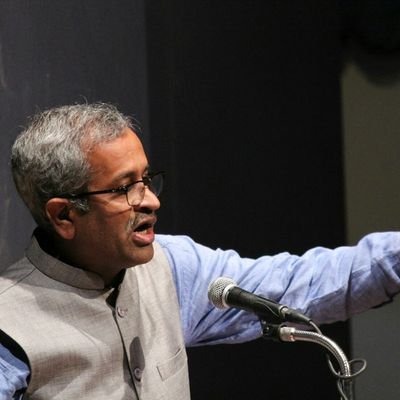
Prakash Raj Calls himself an atheist & says he doesn't believe in God Yet performs his mother's last rites following Christian traditions


🚨This is what childhood looks like in Gaza‼️


BREAKING: Iran bombed Qatar’s gas field. Bangladesh closed its universities. Nobody has connected these two events. The connection is fertilizer. Qatar Fertiliser Company, QAFCO, is the world’s largest single-site urea producer. It supplies 14 percent of global urea per Al Jazeera. It shut down on March 4 after QatarEnergy declared force majeure on Ras Laffan, the facility that processes the gas that feeds the plant. Iran struck Ras Laffan on March 18. Seventeen percent of Qatar’s LNG capacity is offline for three to five years per QatarEnergy. The gas that made the fertilizer that grew the food is gone. The cascade hit South Asia within days. Bangladesh shut four of its five state-run fertilizer factories per Reuters and Al Jazeera. The country sources 65 percent of its LNG from Qatar per CRU Group. Ghorashal Polash, Chittagong Urea, Jamuna, and Ashuganj are all offline. That is 3.7 million tonnes of annual urea production lost per American Ag Network. Bangladesh then closed all public and private universities to conserve electricity per Al Jazeera. It introduced fuel rationing. It stationed troops at oil depots to prevent hoarding. A country of 170 million people is in emergency management because the gas field 4,000 kilometres away was bombed. India cut gas supply to its fertilizer sector to 70 percent of the prior six-month average per American Ag Network. That loses 800,000 tonnes per month of urea production. IFFCO, the country’s largest producer, halted operations. Chambal took a unit offline. Kribhco shut a plant. India produces a quarter of global rice exports. Those exports depend on fertilizer that depends on gas that transited Hormuz. Pakistan suspended LNG supply to its entire fertilizer sector per The Diplomat. Agritech shut completely. Fatima and Pak-Arab curtailed. Pakistan then closed schools and universities to conserve energy, mirroring Bangladesh’s emergency measures. Urea prices have surged 40 percent from just under $500 to over $700 per metric tonne per Argus data cited by Al Jazeera. That is 60 percent higher than a year ago. And this is before the planting season. Here is what nobody is connecting across domains. Nearly half of global urea trade and 46 percent of global urea supply originates in the Gulf per Signal Group and Al Jazeera. Forty-five percent of global sulphur supply, the feedstock for phosphate fertilizer, is trapped behind the Strait of Hormuz per American Ag Network. China has imposed export restrictions on urea and NPK blends to protect domestic supply. The only major exporters left unconstrained are Russia and Morocco. Russia. The same Russia that just sent a deputy energy minister to Sri Lanka to sell fuel. The same Russia whose refineries Ukraine is bombing. The same Russia whose Shahed drone upgrade is the weapon Iran used to hit the gas field that shut the fertilizer plant that closed the universities. The war’s most dangerous cascade is not oil prices or carrier deployments or AWACS damage. It is the invisible line that runs from an Iranian missile through a Qatari gas field through a Bangladeshi fertilizer factory to a rice paddy that feeds a billion people. Close the strait, bomb the field, shut the plant, and the food supply of South Asia operates on a countdown that no military operation can reverse. April 6 is eight days away. The monsoon planting season begins in June. Between those dates, the famine line will be drawn. Full analysis: open.substack.com/pub/shanakaans…


Healthcare in India is becoming a money making machine. A friend’s grandmother is in ICU for the last 4 days. Daily medicine cost alone is around 40–50K. He is not allowed inside ICU. He cannot see the treatment. He cannot see which medicines are actually being used. He can only stand outside and keep paying. Medicines go from pharmacy to ICU. Families don’t know what is used, what is not. Maybe some goes back from the back door. But there is no transparency. Only bills. Private hospitals know families won’t argue when their loved one is in ICU. This is not just treatment. For many families, this is financial destruction in the name of healthcare.