Steven.N

360 posts

Steven.N banner
Steven.N

Steven.N

@StevenMacroView

Real economy macro Energy, cost & supply constraints Mapping flows → pressure → system impact. BTC through macro lens

Asia Sumali Eylül 2020
109 Sinusundan74 Mga Tagasunod
Naka-pin na Tweet
Steven.N
Steven.N@StevenMacroView·
Most people consider food inflation an issue of pricing. It is not. It begins as an issue of input constraint. As fertilizer prices increase ➡️ farmer profit margins are compressed Farmers do not stop producing right away. The next crop cycle will show a weakening of production This is when actual supply tightening occurs. In headlines - not in delayed responses. Market participants typically miss this. I monitor cost, energy & supply chain indicators in order to determine where pressures build prior to their appearance in inflation. Follow if you want to see…
English
1
0
1
486
Steven.N
Steven.N@StevenMacroView·
Markets are capable of managing oil at price levels as high as $90. However, markets have trouble with oil priced above $110; currently rates are ~ 4-5% range. It is that point where this no longer will be an inflationary issue but rather some "thing breaks" (i.e., credit, housing, jobs). The FED's true problem is which type of pain comes first. If unemployment increases before headline inflation has decreased, will the FED continue to be hawkish? That is the pressure point that we fail to consider when evaluating market risks.
English
0
0
0
45
Mohamed A. El-Erian
Mohamed A. El-Erian@elerianm·
As illustrated by this Bloomberg chart, the price shock emanating from the Middle East War has shifted market expectations toward a "higher-for-longer" rate environment across nearly all systemically important central banks. (The outlier remains the Bank of Japan, which continues to inhabit its own paradigm—though less so recently. However, identifying the changed rate trajectory is merely the opening act of the analysis.) The current situation represents more than a simple price shock; it also involves a "second-round" adverse demand shock. Beyond these immediate economic effects, there is the lingering risk of spillovers into financial instability. All of this underscores the uncertain outlook: central banks will be navigating a series of judgments which, I suspect, will likely (or should) be adjudicated by a single, sobering question: "Which is the least unrecoverable mistake we can make?" The answer to this question is less complicated for single mandate central banks, such as the BoE and ECB, than it is for the dual-mandate Fed. #economy #markets #centralbanks
Mohamed A. El-Erian tweet media
English
14
15
60
10.7K
Steven.N
Steven.N@StevenMacroView·
Yep. But we are leaving out the larger issue of how incentives work rather than just the educational system itself. Colleges make money regardless of their success or failure in preparing graduates. Students pay for perceived status, not return on investment. College degrees are used by employers to screen applicants. First fix the price/price transparency/hiring signal issues before determining if any particular degree really leads anywhere.
English
0
0
4
446
Wall Street Mav
Wall Street Mav@WallStreetMav·
The value of most college degrees is rapidly approaching $0.00. 80% of the degrees are completely useless. It doesn’t provide job training. It is barely educational. There are a few exceptions such as medicine, engineering, etc. It seems like 80% of universities should close. We have too many people who are wasting years of their life going into debt for worthless degrees.
English
120
195
1.3K
30.6K
Steven.N
Steven.N@StevenMacroView·
@Backshorewealth @SantiagoAuFund Yep. Sound money imposes discipline politicians hate: balanced budgets, honest interest rates & visible taxation. Fiat lets them spend first & send the bill later through inflation.
English
0
0
0
12
Santiago Capital
Santiago Capital@SantiagoAuFund·
If Govs prefer fiat currency bc it is designed to help them steal purchasing power from citizens…then why on earth do you believe they would they be looking to change to a currency that doesn’t allow them to steal purchasing power from citizens…?
English
49
28
329
20K
Steven.N
Steven.N@StevenMacroView·
Neutral money makes sense in concept; however, people do not pay for their grocery shopping based upon concepts. The price of BTC dropped ~70% in 2022. If your rent is due in 30 days, then which aspect (volatility or ideology) matters to you more? To serve all 8 billion of us, a successful currency has to be able to provide 3 elements. These are stability, inexpensive fees & simple accessibility. BTC will certainly beat out other currencies when it comes to being neutral. However, does it still lose in the realm of everyday living? What percentage of your average monthly spending budget would you actually invest into holding in BTC today
English
0
0
0
64
Cory 🦢 Real Bitcoin @ Swan.com
I don't want to accept yuan. My buddy doesn't want to accept dollars. We're both fine with bitcoin. This ⬆️ for 8 billion people.
English
39
63
882
23.8K
Steven.N
Steven.N@StevenMacroView·
Although the dollar is the dominant currency, it has become less absolute as compared to previous yrs. One of the key points that we may overlook: A currency can earn market share without having to be perfect. A currency simply has to be useful. Although global investors do not consider the RMB to be as reliable as the dollar, for countries wishing to limit their reliance on Washington; for countries seeking increased trade with China; for countries wishing to create a geopolitical buffer against possible U.S. actions; and for countries wishing to use the RMB as a tool for economic and/or political purposes, there is no question that the RMB has become increasingly useful. As it relates to markets, some important implications were identified: - Increased demand for neutral Reserves will benefit Gold; - The dollar will remain relatively strong but will likely experience erosion of what economists refer to as its "monopoly premium," and - Investors could potentially begin to pay more attention to non-U.S. assets as capital becomes more diverse. In my opinion: The next decade will not be focused on which currency replaces the dollar. The next decade will focus on learning how the world operates without becoming dependent solely on the dollar. And, I believe this represents a larger paradigmatic shift than most realize.
Steven.N tweet media
English
0
0
1
16
Steven.N
Steven.N@StevenMacroView·
The EU's recent sanctions will target more than simply restricting trade with Russia; they also intend to restrict the maritime & digital infrastructure that fuels the "shadow"/ "black" market economy. By identifying 46 shadow tankers as being blacklisted & removing Russian entities' ability to utilize cryptocurrency exchange providers, the EU is increasing the transaction cost for "gray-market" transactions. Increasingly shrinking the compliant tanker pool & making it increasingly difficult for parties involved in international commerce to settle collateral obligations at no additional expense, the increased costs associated with moving energy are creating an ongoing and systemic form of inflation in all global supply chains.
English
0
0
0
13
Steven.N
Steven.N@StevenMacroView·
The difference between 66.33 Yen per dollar versus ~75 Yen per dollar in 1970 speaks volumes about "progress" over the past 56 years. In that time the real U.S. Dollar / Japanese Yen exchange rate has declined to an all-time low. This isn't just FX noise; this impacts everything we purchase for our families on a daily basis (food, energy, travel & wage). Exporters may benefit from weak currency but how are households benefiting from their continued loss of purchasing power? Is it the consumers or business owners that are receiving assistance from this policy?
English
0
2
2
2.1K
World of Statistics
World of Statistics@stats_feed·
🇯🇵 Japanese Yen’s Real Value Falls Below Levels from 56 Years Ago… Purchasing Power Continues to Collapse 😓 According to data from the Bank for International Settlements (BIS), the yen’s real effective exchange rate (base year 2020 = 100) dropped to 66.33 in March. This is now below the level seen around the start of the data series in 1970 (near 75).
English
38
173
530
77.1K
Steven.N
Steven.N@StevenMacroView·
@Blockstradamus_ @steve_hanke Yep. Gold moves on real rates + liquidity. But if both are already partially priced, does $6k need fresh easing or fresh panic?
English
0
0
0
28
Daniel Tschinkel
Daniel Tschinkel@Blockstradamus_·
@steve_hanke If real rates stay contained and liquidity keeps expanding, gold can overshoot any forecast, the path matters more than the number.
English
1
0
5
991
Steve Hanke
Steve Hanke@steve_hanke·
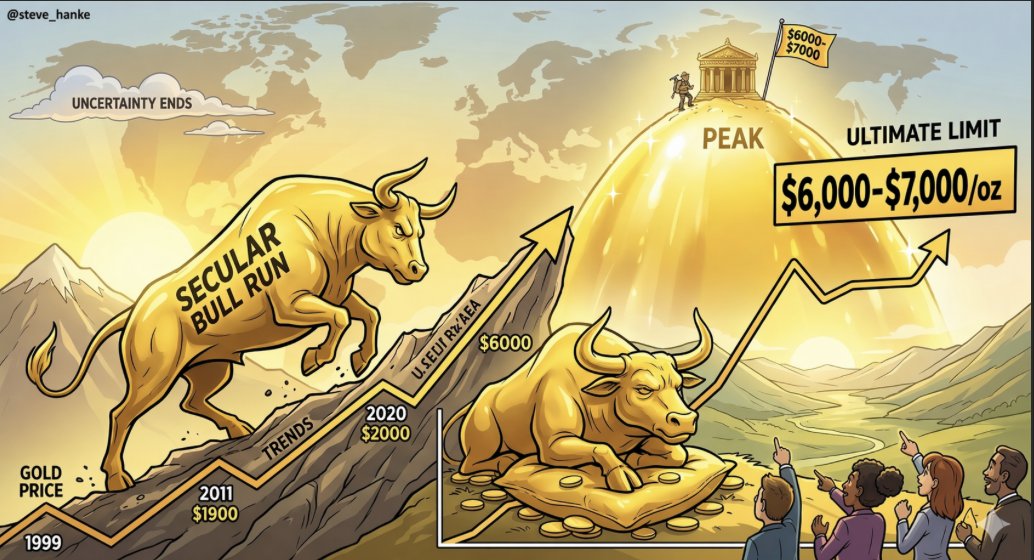
Morgan Stanley just cut its gold price forecast for the rest of 2026 from $5,700/oz to $5,200/oz. I DISAGREE. I stand with my prediction that gold's secular bull run will peak out at $6,000-$7,000/oz. BUY GOLD, WEAR DIAMONDS.
Steve Hanke tweet media
English
52
104
772
95K
Opium Witness
Opium Witness@MarketOpium·
@steve_hanke buy gold sure, but april 2026 gold is already up more than the entire move from 2018 to the 2020 breakout. when a 2-year sprint starts matching a multi-year base, the next leg usually needs a macro accident, not just conviction.
English
1
0
3
506
Steven.N
Steven.N@StevenMacroView·
@angelszanotty @PeterMallouk That’s fair. I think we’re discussing 2 layers: America’s durability vs investors’ entry price. Both can be true at once.
English
0
0
1
10
Peter Mallouk
Peter Mallouk@PeterMallouk·
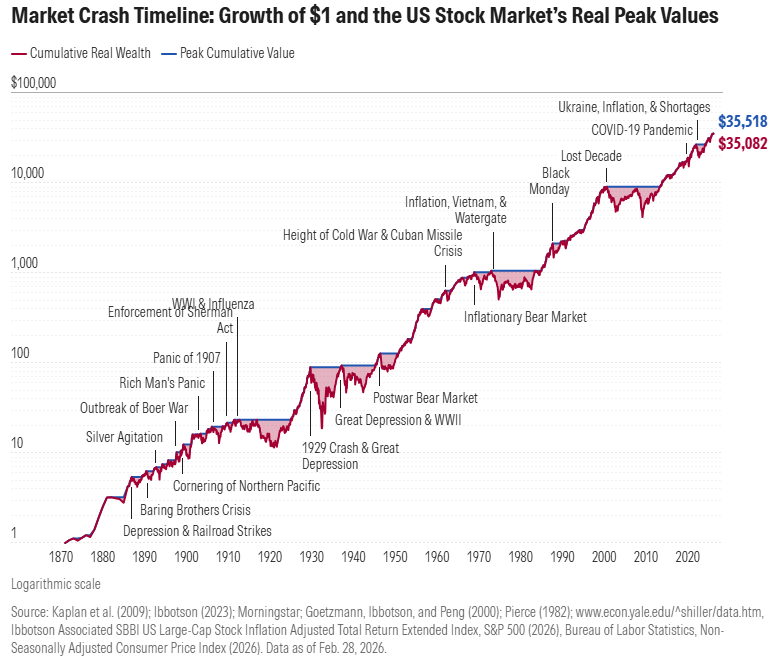
"No one has ever been a success betting against America since 1776 — and they're not going to be a success in the future doing it, either." – Warren Buffett
Peter Mallouk tweet media
English
126
295
1.6K
141.8K
Steven.N
Steven.N@StevenMacroView·
@jhains2 @PeterMallouk Correct. But a company competes on margins. A country competes on institutions, talent & capital allocation.
English
0
0
0
8
Steven.N
Steven.N@StevenMacroView·
Good upside to gold if it peaks at $6k-$7k; that's only ~15-35% higher than $5.2k. That is still relatively decent for a "secular bull run". The real issue is whether we get to see the FED cut interest rates again, an economic downturn (recession), or do central banks continue with their current trend of buying gold? Until we have a clear catalyst of how the price will reach this level, then price targets become nothing more than headlines. I believe gold will be strong long term, but timing is far more important than buzz words. What is the most significant factor from here?
English
0
0
8
2K
Steven.N
Steven.N@StevenMacroView·
@angelszanotty @PeterMallouk Right. America’s edge is institutional compounding. The only caveat: wonderful assets can still produce poor returns when bought too expensively.
English
1
0
0
14
Steven.N
Steven.N@StevenMacroView·
Yep. Cost of living affects most people (housing, childcare etc.), but demographic changes take long time to come into effect. This will affect labor force many yrs from now; for business, however, it may be important that productivity grows over the first 5-10 yrs after today's decisions rather than how many children are being born."
English
0
0
0
5
Kadayak
Kadayak@theyak21·
@jhains2 @StevenMacroView @PeterMallouk Slow demographic growth is not due to “unfettered inmigration” rather bad living standard for local populations. If people don’t feel there is good future for their children then they won’t thave any independently of immigrants :)
English
2
0
0
30
Steven.N
Steven.N@StevenMacroView·
@jhains2 @PeterMallouk For investors, demographics matter - but so do productivity & innovation. A slower population can still produce strong returns if output per worker rises.
English
1
0
0
7
Steven.N
Steven.N@StevenMacroView·
@RPudhucode @PeterMallouk Yep. Debt ratios across countries are useful. A country can be stronger than peers & still deliver weak returns if bought at expensive valuations. Relative strength & entry price are 2 different debates.
English
0
0
0
7
RamP
RamP@RPudhucode·
@StevenMacroView @PeterMallouk China has 130% debt to gdp. Japan has 230%, UK 110%, Canada 112%, France 120%. Basic knowledge is needed before one comes on American platform before displaying jealousy and ignorance.
English
1
0
2
19
Steven.N
Steven.N@StevenMacroView·
The real question for me is...if about 3-5 % of the worlds population own's BTC, what will happen when 10 % do? My view is: the next large increases in value will likely occur at a slower pace however larger in dollar amount. Am I early to the party....or am I late getting into something that was already in its "early stages"?
English
0
0
1
319
Richard Teng
Richard Teng@_RichardTeng·
Bitcoin's journey from whitepaper to sovereign reserves in under 16 years is one of the most remarkable financial stories of our generation. And we're still early.
English
60
24
236
22.8K
Steven.N
Steven.N@StevenMacroView·
@zombieputin @RBReich Right. People aren’t imagining this. Older generations compare one paycheck buying a home & raising kids. Younger gen compare one paycheck to rent & groceries.
English
0
1
1
43
Zombie Putin
Zombie Putin@zombieputin·
It’s crazy something went wrong somewhere , my grandfather and his dad especially worked one job and were able to take care of a whole family. Stuff was cheaper back then.. houses and cars included. Nowadays, one job is just not enough especially if you don’t have the ability to save, you may be able to pay enough bills for yourself but not a family
English
1
0
0
12
Robert Reich
Robert Reich@RBReich·
The richest Americans saw their net worth soar 120% from 2017 to 2025. The top 1% now control $55.8 trillion in assets — more than the G.D.P. of the United States and China combined. Meanwhile, millions of Americans live paycheck to paycheck. Still wondering if inequality is out of control?
English
105
439
1K
22.9K