Naka-pin na Tweet
Christian Lovrecich ๐
7.5K posts

Christian Lovrecich ๐
@clovrecich
Scaling DTC Brands to 9-figure powerhouses ๐๐
Fort Lauderdale Sumali Mart 2009
1.5K Sinusundan2K Mga Tagasunod

A lot of brands can see membership signups but if they're running more than 10 funnels to the same offer for example go ahead and ask them which funnel actually drove them and it gets real quiet.
We run a ton of funnels to the same offer, and since the membership is an order bump, UTM parameters only tell us how someone entered the funnel, not which funnel drove the signup.
We fixed it by passing the funnel ID through the order bump into our backend reporting.
Now we can see which funnels actually drive membership opt-ins instead of guessing.
English

@dannybuck Chasing every trend is how you turn a brand into a mood swing. One week youโre premium, next week youโre doing TikTok shop clearance like a yard sale with a logo.
English

@benradack At high spend, separating products by campaigns to scale is a must. At least for now...
English

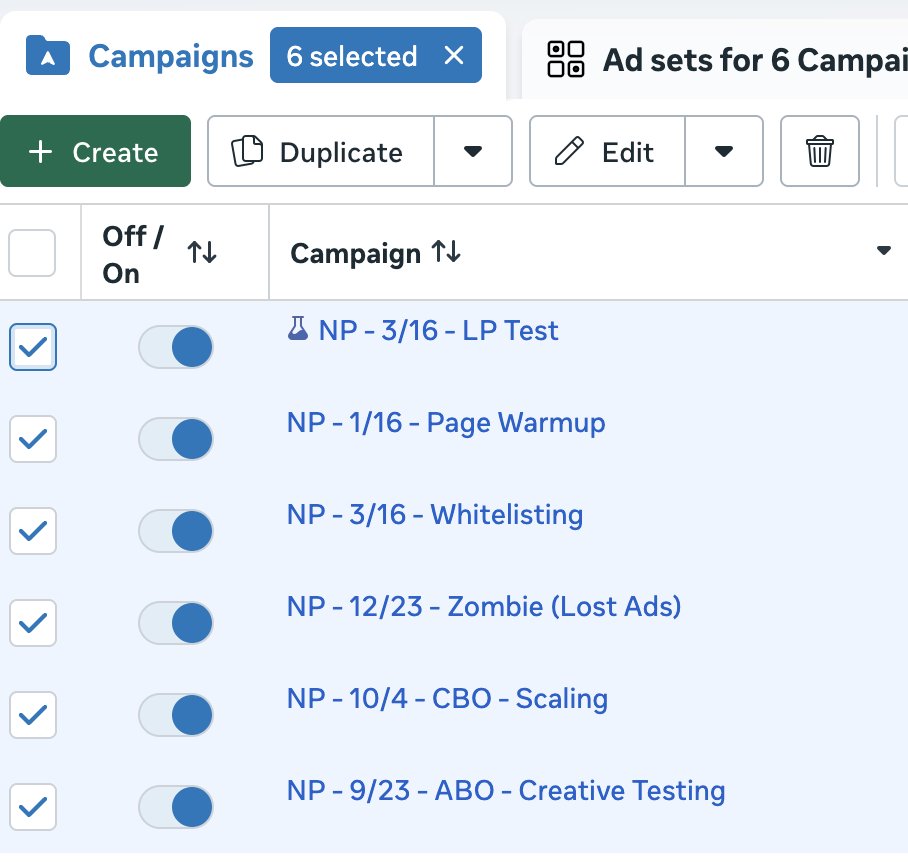
I'm running 6 campaigns for one client. Not 1 CBO. And it crushes.
โ Scaling CBO (whitelisting)
โ Scaling CBO (branded pages)
โ ABO (creative testing)
โ Landing page testing
โ Zombie campaign
โ Page warmup
Every time we've tried to consolidate the scaling campaigns or testing, CPA spikes by at least 50%. So we stopped trying.
For smaller spend accounts I still prefer consolidating down to one CBO. Fewer campaigns, less fragmentation, more data per ad set.
But at higher spend levels, separating things out gives each campaign a clear job. Testing tests. Scaling scales. Whitelisting does its thing. Nothing competes with anything else.
Goes to show there isn't one way to do this. What works in one account doesn't always work in another. The best structure is the one that performs for your specific account.

English

Meta knows what you clicked. This knows what you confessed. Thatโs the difference between guessing intent and being handed it on a silver platter, but hereโs the catch nobodyโs talking about, if ads ever live inside that layer, they canโt feel like ads.
If it breaks trust even a little, the whole thing collapses. So the winners wonโt be the loudest marketers, theyโll be the ones who can sell without sounding like theyโre selling at all.
English

ChatGPT is going to be the biggest advertising platform on earth
Yet every fucking ecom operator and their partner sleeps on it
Meta knows your interests
just bc you liked a post about protein powder in 2019
ChatGPT knows you told it about your knee pain
Or the supplement you've been thinking about buying for three weeks
which one do you think knows where to show your ad
Meta is powerful.
i've built multiple brands on Meta and it will stay relevant.
but think about what Meta actually has on you.
what you like, what you post, even who your friends are
surface level behavioral data from a platform you use to argue with strangers and watch reels of cats falling off tables
ChatGPT has your fucking SOUL
people are telling this thing things they wouldn't tell their therapist
their doctor, or closest friend
they're asking it about symptoms they're embarrassed about
insecurities they've never said out loud to another human being
that is the most valuable advertising data that has ever existed in the HISTORY of commerce
and they have it on basically every person with a smartphone
when ChatGPT figures out how to monetize that properly
and they WILL btw
subscriptions alone will never be enough
the targeting is going to make Meta look like a fucking billboard on a highway
English

@DtcMamun We have manual bidding campaigns that have been running the same ad for over a year...
English

Meta Ads Bid Cap and Cost Cap results:
Total spend = $739,195.53,
Total sales =$2,051,162.70.
These kinds of results donโt come within just 7 or 30 days in a single ad account.
To get the real value from advanced bidding, you need time and patience. Within 7โ30 days, you typically wonโt see results at this scaleโespecially not from high-volume campaigns.Over time, advanced bidding delivers the best results.
And once you find winning ad sets, it becomes even easier to scale.


English

@antonioventre_ Most luxury brands try to look expensive before theyโve earned it, so you get ads that feel like perfume commercials but convert like a screensaver.
English

Luxury brands face a specific creative problem that most performance agencies don't know how to solve.
The brand owner wants luxury aesthetics.
The media buyer wants direct-response mechanics.
They conflict.
Here's how we think about it:
FIRST: luxury brands can sustain lower ROAS than mass market brands.
A 2x ROAS on a $300 product with 80% margins is more profitable than 4x on a $30 product with 30% margins.
Know your number before setting ROAS targets.
SECOND: trust is the purchase mechanism.
People don't buy the most effective product. T
hey buy from the brand they trust most.
Five trust signals that convert for luxury:
> customer reviews explaining why they chose this over cheaper alternatives
> celebrity endorsements whitelisted as creator content
> magazine and editorial logos shown in the ad
> awards and certifications shown in context
> retail availability at premium stockist
THIRD: don't copy what La Mer or Chanel do.
They have decades of brand equity doing half the conversion work.
A brand doing $1M/year cannot run the same type of ads.
Study brands at your own size. Not aspirational giants.
The creative earns trust before the landing page earns the sale.

English

@maxwobst Nothing dies faster than a secret once Twitter finds it. By the time it hits your feed, itโs already been strip mined and turned into background noise.
English

kinda learned to love those twitter creative trends
as soon as someoneโs launching some secret ad sauce into the void - everyoneโs trying to hop on the rocket
and they all completely forget about the rest that works way better while focussing on some new, fancy strat instead
guess what if everyone does it, itโs not as effective anymore
just keep your head down & do the opposite
English

@wearetheselect Most brands find one winner and immediately abandon it because theyโre addicted to novelty. Meanwhile the real money is in treating a winning concept like an oil field, not a lottery ticket. They need the discipline to keep drilling the one that already proved it can print.
English

One winning ad concept, remade aggressively, drove over $2M in revenue for one of my brands in a single year.
Not multiple concepts. One.
Just executed consistently across dozens of versions, tested one by one, with the best ones always live in the account.
People overcomplicate creative strategy.
Find the concept that works. Make 30 versions of it.
Test them. Keep the winners running. Make 30 more.
The brands losing aren't losing because they can't find winning ideas.
They're losing because they don't know how to mine an idea once they have it.
English

Just obsess over retention is advice from people who already spent $10M figuring out acquisition. Itโs like a billionaire telling you money doesnโt matter.
The real game is acquiring customers worth keeping and then actually keeping them. Most brands do neither. They acquire discount addicts with 40% off then wonder why retention is a dumpster fire.
English

Every founder tells me the same thing.
"Every time we try to scale, ROAS tanks."
So they spend less to protect the number. Which is fair enough.
But the ROAS didn't tank because you scaled. It tanked because you had one angle that worked for one audience, and you ran it into the ground.
You can't spend your way out of a messaging problem.
English

@max_rosewater Hopefully, it'll work because even with audience exclusions, we were still retargeting people left and right.
English

So... I guess Meta just nuked all of our accounts.
Check the campaign or ad set level of your ad account and see if you have this new section.
Meta changed active campaigns to include this new setting which changes the way you add exclusions (and inclusions as well) to campaigns for new and existing customers.
It automatically set my campaigns to "Reach new and existing customers," and started bleeding existing customer spend into my prospecting campaigns and didn't even notify me... gotta love it.

English

โI tested it. Pulled every ad that didnโt earn spend and forced budget on them. 100% burned money.โ
This is the part that should end every ABO vs CBO debate permanently, but wonโt because people have trust issues with algorithms.
Everyone wants to be the hero who proved Facebook wrong. โThe algorithm missed this gem, I knew better.โ No you didnโt. You just lit money on fire to protect your ego.
The engagement hierarchy is the real unlock here. Facebook isnโt guessing. Itโs watching people screenshot your ad. Stare at it. Read the comments. Stuff you canโt even track.
Youโre playing checkers with the metrics you can see. Facebookโs playing chess with 47 signals youโll never access.
The purple cow framework is right but hereโs the uncomfortable part, most brands donโt have purple cows. They have beige cows with slightly different fonts. Then they blame the algorithm. CBO works. Your ads are just boring.
English

We used to run ABO for testing with a separate CBO for scaling.
Ran that setup for about a year, then went exclusively CBO for the last 4 years.
Saw results improve almost immediately because we stopped wasting ad spend on tests that went nowhere.
What changed:
1. Speed to scale got way faster: If we launched a new ad in the CBO and it worked, it would steal budget from the losers almost immediately and we could start scaling the campaign next day. With ABO, we'd have to run tests for 3-4 days, then manually move winners to the scaling campaign, that delay killed momentum.
2. We could launch way more tests without burning money: If I'm running ABO with $100/day per ad set and I launch 10 tests, I just committed $1,000/day to things I'm not sure will even work. With CBO, I can launch 20 tests in one campaign and Facebook only spends on the ones that are actually engaging people. The rest get $5-$20/day and die naturally without eating my budget.
We just switched 2 clients from ABO to CBO last year and their profits increased because we stopped hemorrhaging money on forced spend to ads that weren't working.
And yeah, one of our new ads just beat a 3-month winner with massive engagement for one of those clients too, happened in a CBO within 48 hours of launch.
Now the biggest objection I always get: "If an ad gets little spend in CBO, how do I know Facebook isn't making a mistake and killing a potential winner?"
I used to have that exact same thought.
So I tested it.
Pulled every ad that didn't earn significant spend in CBO and threw them into a separate campaign with forced budget to "prove Facebook wrong."
100% of those ads burned money. Not one of them converted profitably.
That's what gave me the confidence I have today to trust the algorithm.
If you're just starting with CBO and you need training wheels, add $5-$10/day minimum spend to new ad sets so they get a chance to prove themselves.
But I'm telling you, if an ad can't earn spend organically in a CBO, it's probably not going to work with forced budget either.
So what determines which ads "earn spend" in a CBO?
One thing: engagement.
Every ad in your campaign has an engagement ratio.
Number of engagements รท Number of impressions = Engagement rate
Example: Ad gets 50 engagements with 1,000 impressions = 5% engagement rate.
Let's say all your ads average 5% engagement.
Then you launch a new ad that hits 6%, it's above average, and that signals to Facebook that people WANT TO SEE this ad.
Facebook has to keep users on the platform.
If you create ads that everyone scrolls past, Facebook penalizes you with higher CPMs.
If you create ads people actually want to see and engage with, Facebook rewards you with more reach and lower costs, and in a CBO, that ad steals budget from everything else because it's helping Facebook achieve their goal of keeping users engaged.
(This isn't official Facebook logicโฆthis is my own observation after running this structure for nearly 5 years and analyzing hundreds of ads that earned spend vs. ads that died with $10 total.)
So what makes an ad "engaging" to Facebook?
It's not just comments and likes.
Engagement includes:
โฆ Scroll stop %
โฆ Shares
โฆ % of video watched
โฆ Length of time someone stares at your ad
โฆ Screenshots
โฆ Reading through comments
Facebook uses the collective average of ALL of these signals to decide what to spend more on.
How do you create ads that are engaging?
After analyzing hundreds of winning ads and viral posts, it always comes back to the purple cow effect.
If you drive past a pasture full of cows, the purple cow catches your attention.
Your ad needs to be the purple cow.
How to reverse-engineer purple cows:
1. Call out a desire no one else is marketing to Everyone's saying "scale your Facebook ads", you say "empty your warehouse so fast your manufacturer begs you to slow down production."
2. Call out a group of people no one else is marketing to Black Rifle Coffee didn't create better coffee, they created coffee FOR MILITARY. Gym Shark didn't create better activewear, they created activewear FOR GYM CULTURE. Find the subset of your market that's being ignored and own them.
3. One-up your competitors in an obvious visual way Your competitor drops an iPhone from a desk to show their case is indestructible? You drop it from a roof. They show a before/after photo? You show a time-lapse video. They use a talking head? You use a split-screen comparison.
The ad that's different in an obvious way gets the engagement, earns the spend, and scales.
The ad that looks like everything else dies with $66 total spend and you're on Twitter asking why CBO doesn't work.
CBO works. Your ads just aren't purple cows.
David Herrmann@herrmanndigital
It's 2026 and we're still debating CBO vs ABO. Guys
English

We can settle this debate
If your hit rate is high enough, use ABO, as you'll be able to scale faster with multiple ads at the same time
If your hit rate is lower or budget is low compared to creatives you want to test, use CBO
David Herrmann@herrmanndigital
It's 2026 and we're still debating CBO vs ABO. Guys

English

@garyvee One bad outcome turns into a whole identity crisis instead of just data. Take the lesson, drop the drama, and move on.
English

@TaylorHoliday Call me crazy but I run my terminal on the white background ๐
English

@official_Gegeh Neither does her personal trainer.
English

@AlexHormozi Youโre pitching steak to people shopping for ramen and wondering why theyโre offended. Different wallet, different conversation.
English

Your MER can look fine while your business is getting punched in the face.
That usually means one of two things:
Youโre measuring efficiency too high in the funnel or your cost inputs are incomplete.
Once storage, fulfillment creep and real contribution costs hit the model, a good ROAS can turn into we forgot math had receipts really, really fast.
English