Jonathan Hale

126 posts

Jonathan Hale banner
Jonathan Hale

Jonathan Hale

@jonathan2hale

Veterinary surgeon (orthopedics & neurosurgery) Director, veterinary distribution MA (Philosophy) Markets, technology, geopolitics

UAE Sumali Haziran 2016
463 Sinusundan38 Mga Tagasunod
Jonathan Hale
Jonathan Hale@jonathan2hale·
The disruption to global oil flows may be a feature, not a flaw, despite what many commentators claim. How Trump wins by closing the Strait of Hormuz youtu.be/fZorjJr4DpA?si… via @YouTube
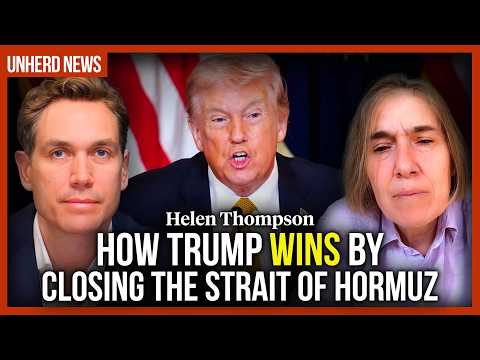
YouTube video
YouTube
English
0
0
0
21
Jonathan Hale
Jonathan Hale@jonathan2hale·
You don’t speak for current U.S. foreign policy. You’re arguing for a particular left-leaning, non-current version of it. On Iran, that approach narrowed the problem to the nuclear file. The JCPOA left missiles and proxy networks largely untouched. That wasn’t an oversight, it was the trade-off. Sanctions relief flowed while the capabilities used across the region remained in place. From the Gulf, that didn’t read as diplomacy. It read as Washington cutting a deal that ignored the threats on their doorstep
English
0
0
0
121
Arnaud Bertrand
Arnaud Bertrand@RnaudBertrand·
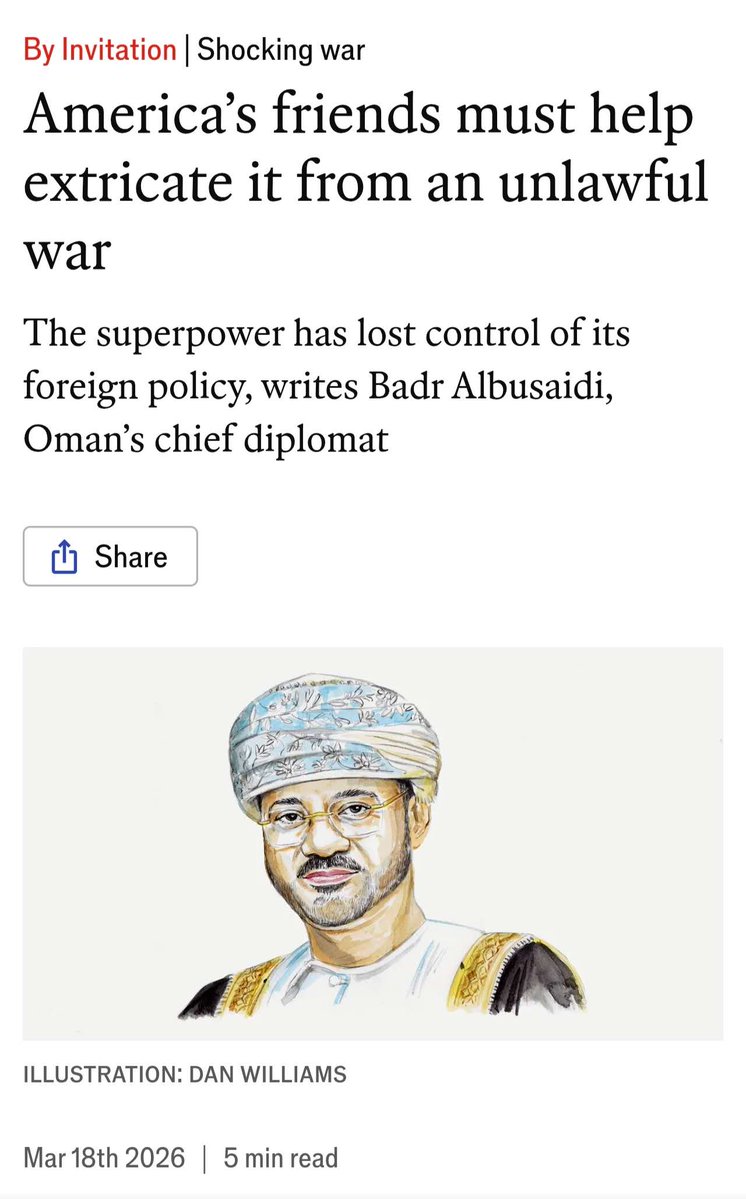
This is probably the most important article of the month: an op-ed by Oman's Foreign Minister, who mediated the talks between the U.S. and Iran, in which he writes that the U.S. "has lost control of its foreign policy" to Israel. He repeats that a deal was possible as an outcome of the talks (something confirmed by the UK's National Security Advisor, who also attended: x.com/i/status/20341…) and that the military strike by the U.S. and Israel was "a shock." Interestingly, given he is one of Iran's neighbors and given that Oman has been struck multiple times by Iran since the war began (en.wikipedia.org/wiki/2026_Iran…), he writes that "Iran’s retaliation against what it claims are American targets on the territory of its neighbours was an inevitable result" of the U.S.-Israeli attack. He describes it as "probably the only rational option available to the Iranian leadership." He says the war "endangers" the region's entire "economic model in which global sport, tourism, aviation and technology were to play an important role." He adds that "if this had not been anticipated by the architects of this war, that was surely a grave miscalculation." But, he adds, the "greatest miscalculation" of all for the U.S. "was allowing itself to be drawn into this war in the first place." In his view this was the doing of "Israel’s leadership" who "persuaded America that Iran had been so weakened by sanctions, internal divisions and the American-Israeli bombings of its nuclear sites last June, that an unconditional surrender would swiftly follow the initial assault and the assassination of the supreme leader." Obviously, this proved completely wrong, and the U.S. is now in a quagmire. He says that, given this, "America’s friends have a responsibility to tell the truth," which is that "there are two parties to this war who have nothing to gain from it," namely "Iran and America." He says that all of the U.S. interests in the region (end to nuclear proliferation, secure energy supply chains, investment opportunities) are "best achieved with Iran at peace." As he writes, "this is an uncomfortable truth to tell, because it involves indicating the extent to which America has lost control of its own foreign policy. But it must be told." He then proposes a couple of paths to get back to the negotiating table, although he recognizes how difficult it would be for Iran "to return to dialogue with an administration that twice switched abruptly from talks to bombing and assassination." That's perhaps the most profound damage Trump did during this entire episode: the complete discrediting of diplomacy. If Iran was taught anything, it is: don't negotiate with the U.S., it's a trap that will literally kill you. The great irony of the man who sold himself as a dealmaker is that he taught the world one thing: don't make deals with my country. Link to the article: economist.com/by-invitation/…
Arnaud Bertrand tweet media
English
295
8K
18.3K
1.1M
Jonathan Hale
Jonathan Hale@jonathan2hale·
@AdHaque110 What if this reads, in parts of the Gulf, as Spain distancing itself from its trading partners while missiles are flying? That may not be the intent, but if so, it risks long-term reputational damage to Spain, doesn’t it?
English
0
0
0
371
Adil Haque
Adil Haque@AdHaque110·
“They say that Spain is alone. They said the same when we recognized the State of Palestine, and then others followed. We are not alone. We are the first. Those defending the indefensible will be the ones left alone.” (Sánchez, March 9)
POLITICOEurope@POLITICOEurope

Spanish Prime Minister Pedro Sánchez’s condemnation of the U.S. and Israel’s attack on Iran initially made him an outlier in Europe. Now everyone wants in. politico.eu/article/spain-…

English
69
3K
17.9K
589.6K
Jonathan Hale
Jonathan Hale@jonathan2hale·
@MeidasTouch @HeliosRunner The number of people who can’t recognize strategic ambiguity is remarkable. Not every statement is meant to be internally consistent. Some are designed to shape behaviour under uncertainty.
English
0
0
1
30
MeidasTouch
MeidasTouch@MeidasTouch·
Trump just threw Israel under the bus—claiming the U.S. “knew nothing” about the strike on Iran’s South Pars gas field—despite earlier Axios reporting it was coordinated with and approved by his own administration. Trump is now trying to distance himself after the fact, as the consequences of that strike are unfolding in real time.
MeidasTouch tweet media
English
420
2.7K
8.3K
516K
Jonathan Hale
Jonathan Hale@jonathan2hale·
@ForeignAffairs @ProfessorPape Stick to observable facts rather than introspection. If the strategic objective is fixed, it isn’t a dilemma. It’s sequencing and cost allocation. In line with what CENTCOM is actually signaling.
English
0
0
1
28
Jonathan Hale
Jonathan Hale@jonathan2hale·
You’re tone-deaf in two ways. First, to how this looks from the Gulf right now, taking missile fire on energy infrastructure and shipping lanes. Second, to how this will be remembered. From here, it looks like betrayal twice over, by Iran through direct attacks, and by European trading partners through inaction and hesitation. Factor that in and your conclusions change completely.
English
0
0
1
145
Danny (Dennis) Citrinowicz ,داني سيترينوفيتش
A brief summary of last night’s events: A. Iran emerged with the upper hand. It demonstrated once again that it will not hesitate to raise the level of escalation to defend its strategic assets — without any retreat on the issue of the Strait of Hormuz. This was entirely predictable. B. Yet another indication that this war lacks a coherent, pre-planned strategy. Once the regime did not collapse early on, it is no longer clear what the overarching strategy actually is. C. Trump was aware of the strike, but chose to look the other way once tensions escalated. This reflects an ongoing gap between Washington which may still be interested in preserving a future-facing Iran and Israel, whose approach appears aimed at systematically degrading the country’s entire infrastructure. D. The strike itself seems to have been driven by frustration: Iran is not yielding, and there is a desire to force outcomes (such as opening the Strait of Hormuz) without committing ground forces — and before external pressure brings the campaign to a halt. E. The strategic failure so far leaves Trump facing a difficult choice: escalate dramatically, potentially including boots on the ground, or move to stop the campaign now. F. At this stage, the fundamental questions remain unanswered: What is the ultimate objective? What are the exit ramps? What does success even look like? G. Instead, the conflict is drifting into a war of attrition — with no clear signs of regime collapse in Iran. Meanwhile, the president, having committed to the idea that Iran has effectively capitulated, may find it difficult to disengage while facing a visible disadvantage in the maritime arena and no resolution to the nuclear issue. Bottom line, last night’s events underscored just how unstructured this campaign has become — lacking strategic clarity, long-term planning, and a defined end state. At the same time, they exposed growing gaps between Israel and the United States, gaps that may widen further if similar outcomes repeat. And as always..just because something is operationally feasible does not mean it is strategically wise. One more point that must be stated clearly — Iran is not close to capitulating. #IranWar
Barak Ravid@BarakRavid

🚨After the first Iranian missile strike, Qatari officials contacted White House envoy Steve Witkoff, CENTCOM commanders and other senior Trump administration officials and demanded to know whether the U.S. had prior knowledge of the Israeli strike, per source with knowledge

English
54
568
1.9K
618.3K
Jonathan Hale
Jonathan Hale@jonathan2hale·
@davidfrum @yarotrof From the Gulf, this won’t be forgotten. When missiles were flying, European partners largely sat on their hands, clutching their pearls. That’s not neutrality. It will be seen, over time, as a betrayal.
English
4
0
2
472
David Frum
David Frum@davidfrum·
If you wonder why Europeans flinch from helping US in Gulf - in January, NATO allies were seriously preparing for a US sneak attack on Greenland, planning to blow up runways to prevent a Trump re-enactment of Putin's failed strike on Kyiv.
Orla Joelsen@OJoelsen

Denmark prepared for a possible U.S. attack: Flew blood supplies to Greenland and planned to blow up runways Key sources in Denmark and Europe are now revealing for the first time what happened during the most critical days, when Donald Trump threatened to take Greenland “the hard way.” When Danish soldiers were rapidly deployed to Greenland in January this year, they brought explosives with them. The plan was to destroy runways in Nuuk and Kangerlussuaq to prevent American military aircraft from landing troops on the island, should the U.S. president ultimately decide to seize Greenland by force. They also transported blood supplies from Danish blood banks so wounded personnel could be treated in case of combat. This is reported by DR, which over the past year has spoken with central sources in the Danish government, top military officers, and high-ranking officials and intelligence sources in Denmark, France, and Germany. All sources have played—and continue to play—key roles in the international crisis triggered by the United States’ demand for control over Greenland. Together, the sources describe an unprecedented year marked by sleepless nights. None of them had concrete intelligence of specific American attack plans against Greenland. Still, many feared in January that the historically important ally, the United States, could attack at any moment. At the same time, Denmark reached out to its European allies, leading to closer cooperation. “With the Greenland crisis, Europe realized once and for all that we must be able to handle our own security,” said a French senior official involved in the intense period. A rapid-response force consisting of Danish, French, German, Norwegian, and Swedish soldiers was first deployed to Nuuk and Kangerlussuaq. Shortly after, a main force followed, including: -Soldiers from the Danish Dragoon Regiment in Holstebro -Elite troops from the Jaeger Corps -French alpine troops trained for cold and mountainous warfare At the same time, Danish fighter jets and a French naval vessel were sent to the North Atlantic. According to several sources, the goal of having multinational troops on the ground was to ensure that any U.S. attempt to take Greenland would require a large-scale hostile action—thereby deterring such an attempt. “We have not been in such a situation since April 1940,” said a Danish defense source, referring to the days before Denmark’s occupation during World War II. Unlike in 1940, when Denmark chose not to resist militarily, the government and defense leadership this time decided—after extensive confidential discussions—to take the opposite approach: If the U.S. attempted an attack, Danish forces would be armed and ready to fight. Danish F-35 fighter jets deployed north were also fully armed. All this despite the understanding that Denmark could not realistically withstand a U.S. military attack. “The cost for the U.S. had to be raised. The U.S. would have to carry out a hostile act to take Greenland,” said a senior Danish defense source. Source: DR

English
527
2K
8.1K
509.8K
Jonathan Hale nag-retweet
Middle East Eye
Middle East Eye@MiddleEastEye·
Saudi foreign minister Prince Faisal bin Farhan al Saud said the kingdom reserves the right to take military action against Iran if necessary, accusing Tehran of pressuring its neighbours rather than engaging in dialogue
English
217
22
77
71.7K
Jonathan Hale nag-retweet
Nawaf Al-Thani نواف بن مبارك آل ثاني
NOW: Qatar’s Interior Ministry says Civil Defense has fully extinguished all fires in the Ras Laffan industrial area, with no injuries reported. Cooling and safety operations are ongoing, while the Internal Security Force explosives unit is handling any hazardous debris.
English
34
190
1.3K
89.6K
Jonathan Hale
Jonathan Hale@jonathan2hale·
@glcarlstrom You’re right, islands matter. But losing territory is a credibility shock. Regimes can absorb economic pain; visible loss of territorial control is harder to contain.
English
1
0
0
236
Gregg Carlstrom
Gregg Carlstrom@glcarlstrom·
There's not really a plausible scenario in which you can secure Hormuz by seizing the Iranian coastline (just look at a map) But an attempt to seize either Kharg island or perhaps the three islands disputed with the UAE is looking increasingly likely reuters.com/world/middle-e…
English
19
51
158
21.8K
Jonathan Hale
Jonathan Hale@jonathan2hale·
@zerohedge This may not be “the billionaires’ decade” at all, but an interbellum - a temporary phase between shocks where capital concentrates before the next reset.
English
0
0
0
21
Jonathan Hale
Jonathan Hale@jonathan2hale·
I’m noticing many people struggle with strategic ambiguity. There’s a rush to force every event into a fixed narrative. That doesn’t clarify the situation, it distorts it. Some signals are meant to stay unclear. Restraint matters.
English
0
0
0
16
Jonathan Hale
Jonathan Hale@jonathan2hale·
@shashj I’m surprised you’re not accounting for strategic ambiguity. This is deliberate signal uncertainty, not a clean deterrence message, and it will persist throughout the conflict.
English
0
0
2
998
Jonathan Hale
Jonathan Hale@jonathan2hale·
@defense_civil25 NATO is built for collective defence under defined conditions. This situation requires proactive threat shaping outside that framework. That’s a structural mismatch, not something rhetoric can resolve.
English
0
0
0
8
US Homeland Security News
US Homeland Security News@defense_civil25·
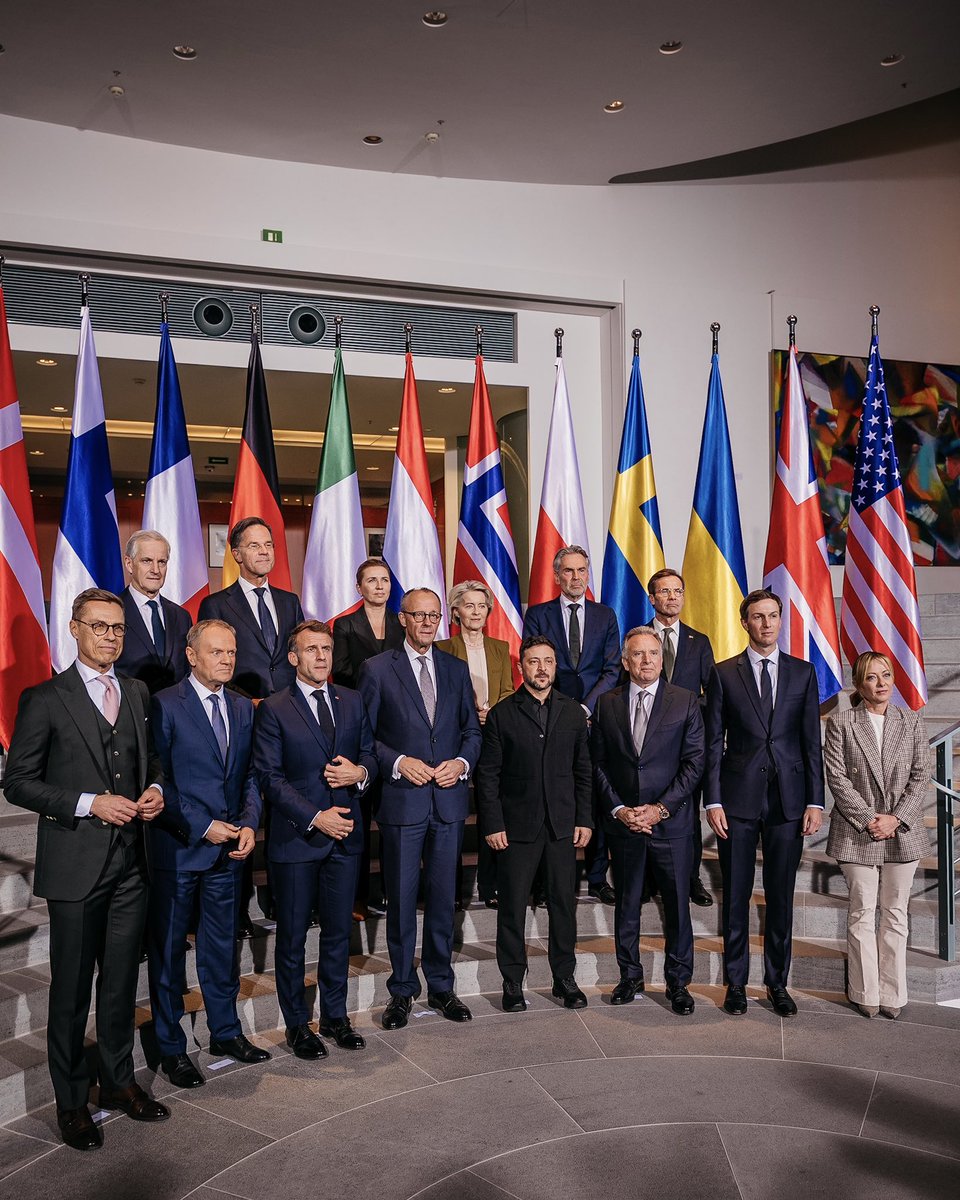
Every member of NATO refused the call to help the United States to restore freedom of navigation in the Strait of Hormuz. All of Them!!
US Homeland Security News tweet media
English
12.8K
5.8K
13.8K
611.1K
Jonathan Hale
Jonathan Hale@jonathan2hale·
The Iranian strategy is somewhat unhinged: “We will bomb you into trusting us as a reliable regional partner.” Coercion and credibility are mutually exclusive. #RogueRegime
English
0
0
1
13