

kyle murphy
247 posts
kyle murphy
@kylemurphy_4
MSc Graduate, Motorsport and Aviation enthusiast
Ireland Sumali Şubat 2019
283 Sinusundan25 Mga Tagasunod


@kylemurphy_4 @bieg_david @kzsaint gotta turn on upload in high qhality in settings and upload again @kylemurphy_4
English

24 hours later and no one dropped the 4K version + video of the team running to the fence
ivanna@44knightsky
something about this photo feels so vintage idk i love it
English
@bieg_david @kzsaint This version here should be high quality, just load in 4k before you save
Agenzia ANSA@Agenzia_Ansa
F1 | Hamilton urla: 'Forza Ferrari, mi avete aiutato a ricordare chi sono'. Era dal 2024 che la Scuderia non vinceva un Gran Premio mentre per il britannico quella odierna a Barcellona è la 106/a vittoria in carriera. #ANSA
English

@kylemurphy_4 @kzsaint Atleast for me after the download its 2048 x 1366
English



@journeymanstev1 Marina market is cork was busy all weekend, lots of money being spent there
English




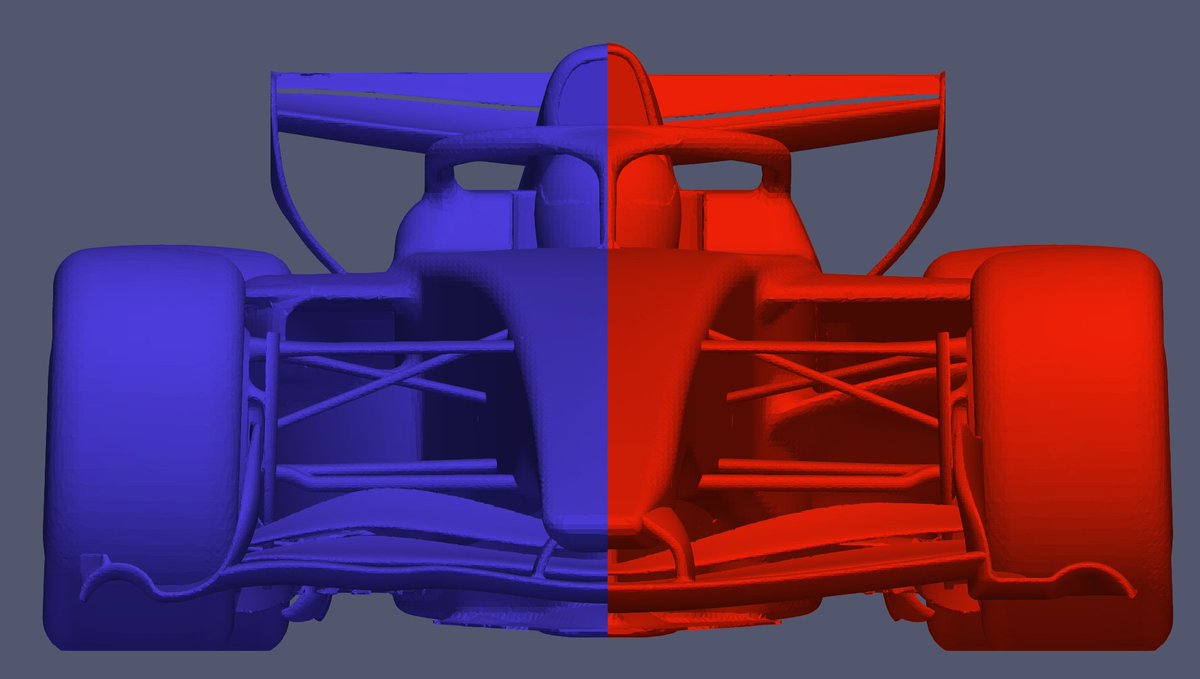
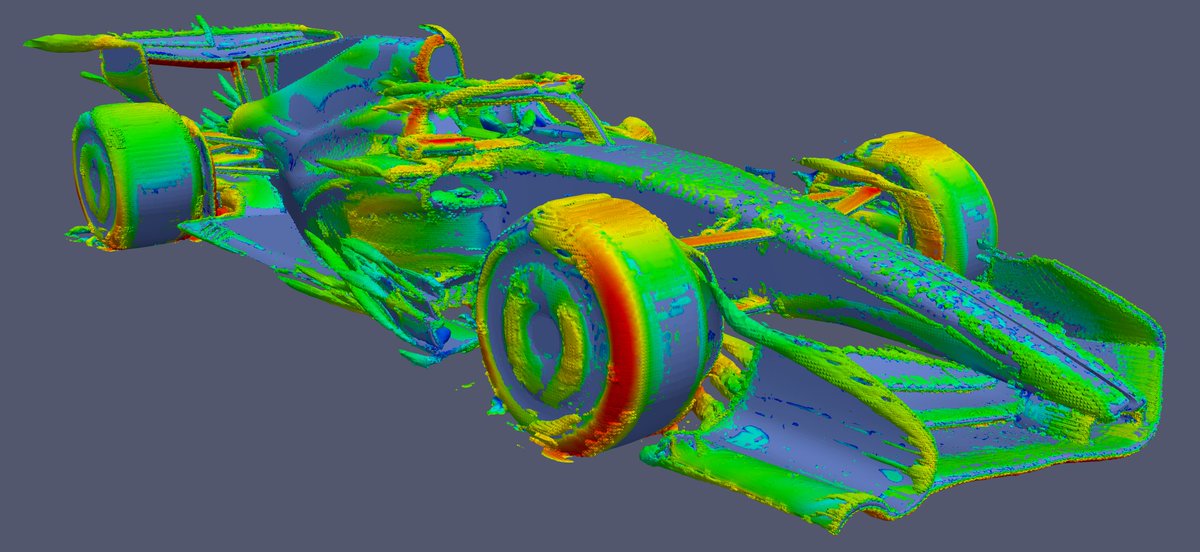
@jancikapral Would love to see the flow field generated by the McLaren or Aston Martin front wing
English

I will post a comparison of Ferrari vs Red Bull CFDs soon!

English
@PopulistPenguin @cytrusf1 Mercedes optimised for clean air with aggressive front wing outwash, tiny cooling inlets, tight packaging and a peak downforce floor. Super efficient and fast when leading. In dirty air, airflow breaks down, leading to overheating, downforce loss and instability
English

@cytrusf1 how would this happen though? like what parts of the car can you develop so they’re more effected by dirty air than other teams
English

@dr_obbs Used some of that in my thesis from last year 🥱. It’s good stuff.
English

If you are a budding tech head and want to understand front wing aerodynamics of this regulation set then you MUST download (link below) the PhD dissertation by Jonathan Pegrum. It's readily cited and read by aerodynamicists currently in F1.
And guess where Dr. Pegrum works? @McLarenF1 as Principal Aerodynamicist (front) for the 2026 car.
You need to read this dissertation.
spiral.imperial.ac.uk/entities/publi…
English
@brakeboosted The upper EP vortex does indeed change rotation between the two active aero modes on a basic two element wing I used for some research recently


English

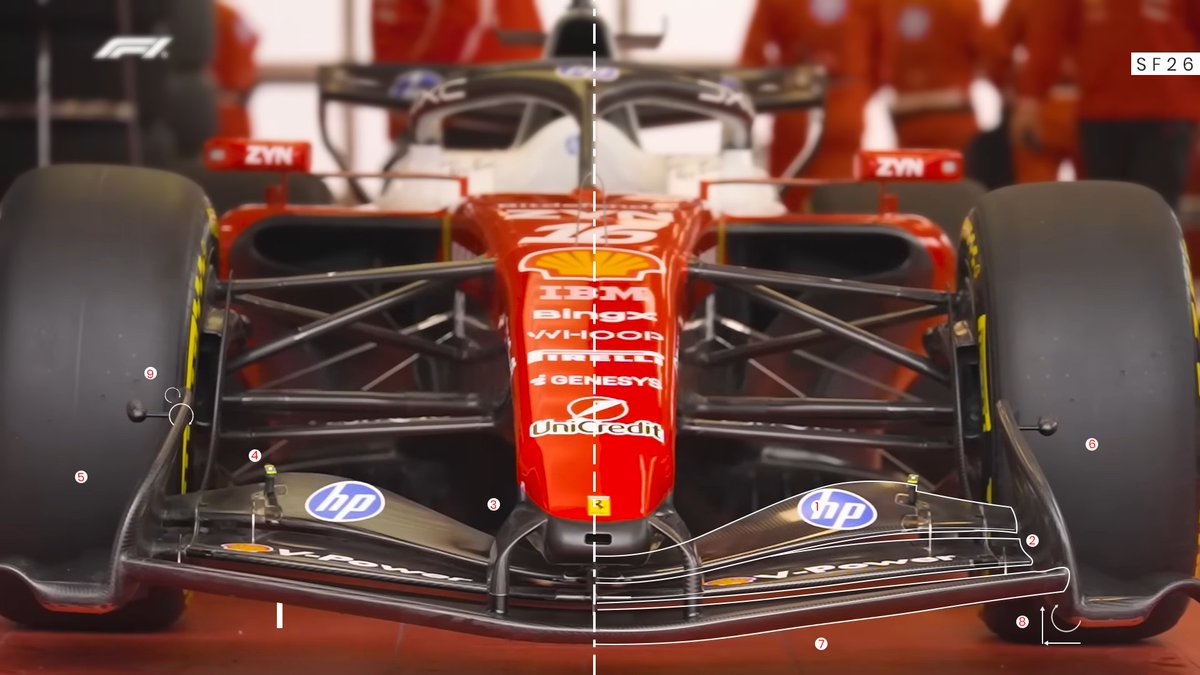
SF-26 shakedown spec analysis
Front wing front view -
Admittedly, the wing seems quite primitive compared to other front wings we've seen up to now. My opinion is that this isn't the version we'll see in Bahrain.
1. Locates the point of maximum spanwise loading. Combined chord length and AoA is greatest at this point. The wing is backed off through center span and at the EP junctions.
2. Shows the backing off of the wing profiles at the EP junction. Backing off the WP's at the EP junction reduces losses by weakening the interaction between the elements and EP flow fields. Reduced static pressure at the EP.
3. The pylon's meet the nose unilaterally. Again I believe the goal is to keep any losses that are generated at the junction between the two surfaces away from the underside of the nose. You will also be able to see that pylons meet the main plane, which means both the 2nd and 3rd elements (or flaps as per the official wording) rotate about the same pivot axis. Confirmed by the hangers joining the upper two elements.
4. Locates the static wing incidence adjuster. Completely unrelated to the active aero actuator which is located underneath the nose. Simply used to tune aero balance as we've become accustomed to over the years.
5. Highlights the lack of outboard end plate aero devices. No diveplane or strake.
6. Shows the very thick leading edge geometry of the EP devices. I believe this is done to reduce yaw sensitivity, as thinner airfoil are more prone to LE separation than thicker ones. I also believe it is to de-power the upper EP vortex by creating a gradual pressure gradient along the edge of the EP. Sharper edges creates stronger vortices.
7. We can also see the lack of the front wing strake. The box model I reference is a few iterations old, but referencing issue 15 of the technical regs I believe it is still worded in. So far, yet to see it feature on any car.
8. Shows the in and upwashing flow vector of the lower EP corner vortex. This is also something Kyle.engineers highlighted in his CFD analysis at the end of last year. The induced upwash would suppress the junction losses forming between the EP and WP's given the vortex itself stays healthy. However, as it travels downstream, the inwashing nature drag in and blows up the inner tyre squirt. As he mentioned, some downstream devices such as the inner wheel drum deflector may help to keep the flow here tidier. As I mentioned earlier, I believe the use of very large LE radii is to reduce vortex strength in this region.
9. Shows the clockwise rotation of the upper EP vortex due to the highly cambered, and outwashing EP topology. High static pressure in front of the tyre + the outward curving EP + the backed off WP's at the EP junction could potentially produce a high-pressure region outboard of the EP, causing the vortex to rotate clockwise. This would especially be true if the wing is opened. There is a likelihood that the direction of rotation may change between two aero states. The trailing edge step in my opinion is used to discretize this upper EP vortex into two smaller vortices. Where these are positioned transversely I don't know.
English


@pmosligo @drbambrick Graduates in engineering earn between 32-37k
English

What do other NEWLY qualified people earn? And who, as a newly qualified person, expects to be able to afford to buy a home? If you’re going to make a point, make a sensible one. €42,500 for a 23 year old, starting out, is a decent wage. The problem is, most 23 year olds don’t earn close to that.
English

The average employee in Dublin earns €49,500. A newly qualified teacher earns under €42,500. A nurse just over €37,000 and a garda less than €39,000, if not doing shift work. None of them meet the (€56,000) minimum salary requirement
for a one-bedroom ‘affordable’ apartment.
TheJournal.ie@thejournal_ie
Applications for 99 affordable purchase homes in Dublin will open later this month. One-bed apartments will cost between €248k and €332k; two-bed apartments will cost between €320k and €414k and three-bed houses will cost between €378k and €473k. jrnl.ie/6870044
English
@Qvist_Designs @Air_Shaper I need to see the legend for the Cp contours but it appears the rear wing top flap isn’t generating much downforce.
English

1/3
New F1 2026 (issue 13 V2) simulation made in @Air_Shaper
It have some big improvements compared to last version now with much stronger floor and more attached and clean flow around the car.
Drag
0.722 (−0.28%)
Lift
−1.853 (+18%)
Lift to Drag
−2.568 (+19%)


English
@BoziTatarevic @RFKracing @Air_Shaper Storm is at 200mph vs 50 kph for McQueen, not exactly a fair comparrison
English

Maybe @RFKracing can get Seth to do a follow up video? Full model at @Air_Shaper here: app.airshaper.com/simulations/si…
English

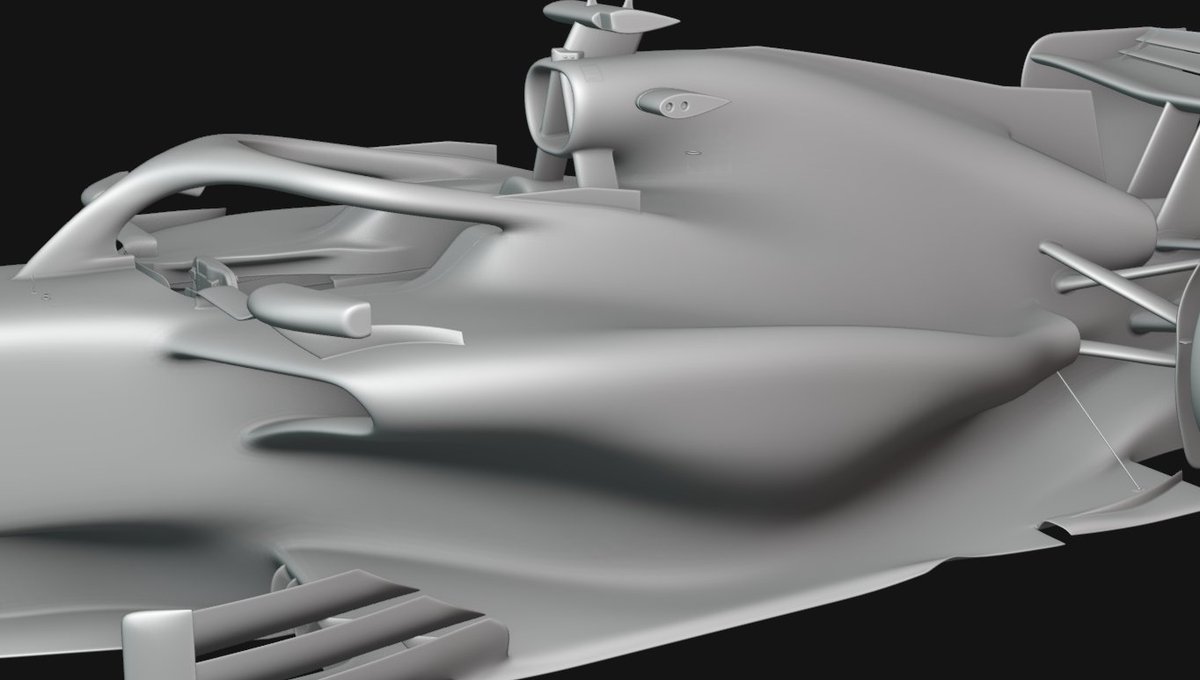
(1/2) Some updates on the 2026 car,
Have improved my sidepod to direct air better and have less separation.
I changed the floor corner to a more simple to feed the underfloor with more clean air.
The diffuser have a big update too with a better shape for expansion.
#fiahireme



English

Bringing in professional analysis ⚡️😤
Seth Dillard - Aerodynamics/CFD Engineer for RFK Racing - gave us a full breakdown from this CFD of Lightning McQueen.
Bozi Tatarevic@BoziTatarevic
CFD of Lightning McQueen.
English
@GuitarGraham71 @ScarbsTech Teams would prefer 100% scale cars even if it means there’s a high blockage ratio during testing. Scaling the Reynolds number and the results can lead to differences
English

@ScarbsTech Do you think the 60% rule slows down car development and actually leads to more tunnel time ?
English



If you only follow the main stream, you'd assume absolutely nothing happening in the GC group, which isn't true.
Horrible TV production. #TDF2025
English