
Mathew Tizard

19K posts

Mathew Tizard banner
Mathew Tizard

Mathew Tizard

@mtizard

Girl Dad. Head of Innovation at Janison. Ex-Google Senior Product Manager. Scuba Diver, Drummer, Edison Bottle Inventor, Irony Connoisseur.

Sydney, Australia Sumali Eylül 2008
7.4K Sinusundan2.4K Mga Tagasunod
Mathew Tizard nag-retweet
Anish Moonka
Anish Moonka@AnishA_Moonka·
Went down the rabbit hole on this. The dancing is the tamest part of the story. Marine biologist Amanda Vincent has spent decades studying seahorses, and what’s underneath that morning ritual goes way deeper than a cute video. The morning ritual lasts about 6 minutes. Both seahorses brighten their skin, link tails, and pirouette around a shared piece of coral or seagrass. Researchers call it “the carousel dance.” But it has a specific biological function: it synchronizes their reproductive cycles so the female’s eggs are ready the exact moment the male’s brood pouch is empty. That timing matters because the male can’t accept new eggs while he’s already pregnant. The male gets pregnant. The female transfers her eggs into his pouch through an organ called an ovipositor (a tube for depositing eggs). The whole transfer takes about 6 seconds. His pouch seals shut immediately. Inside, he grows a network of blood vessels that works almost exactly like a human placenta, delivering oxygen and nutrients to up to 1,000 developing embryos. Research from the University of Sydney, published in the journal Placenta, found the pouch wall thins and builds new blood vessels during pregnancy in ways that closely mirror what happens in a mammalian uterus. He gives birth using skeletal muscles, not smooth muscles like in mammalian labor. That means he has conscious control over the process. Labor can take hours. And within hours of delivering up to 1,000 fully formed babies, he’s ready to mate again. The female already has her next batch of eggs prepared, sometimes the same day. Less than 0.5% of those babies survive to adulthood. Fewer than 5 out of every 1,000. No parental care after birth. They get swept into ocean currents, eaten by crabs, or starve before they find food. That survival rate is why the morning dance matters so much. Every lost mating cycle is hundreds of offspring that never existed. The monogamy is extraordinary for a fish. Only about 3% of mammals form lasting partnerships. For fish, it’s rarer still. But in species like the Australian H. whitei, pairs are genetically monogamous across multiple breeding seasons. They greet each other every morning and ignore other seahorses entirely. The bond only breaks when one partner disappears. Amanda Vincent once watched a female keep visiting a male whose brood pouch had been punctured by a predator, making pregnancy impossible. She showed up every morning for weeks until his pouch healed. Then they remated. About 150 million seahorses are pulled from the ocean every year for traditional medicine and the pet trade. Most pet seahorses don’t last six weeks. 14 of the 47 known species were only identified in this century, meaning we’re losing populations of animals we barely knew existed.
Science girl@sciencegirl

Seahorses dance with their partners every morning to strengthen the bond between them

English
24
853
4.8K
306.8K
Mathew Tizard nag-retweet
Gregory Wieber
Gregory Wieber@dreamwieber·
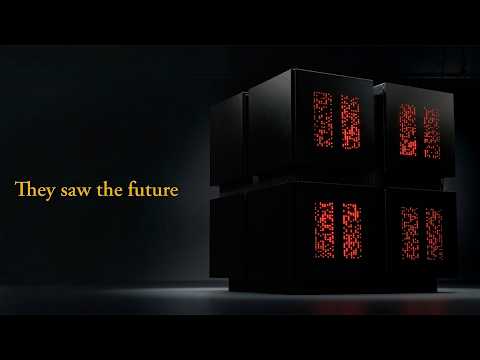
Alright friends, my new video is up! It’s a synth wave fueled tale of The Connection Machine – the 80’s AI supercomputer that saw thirty years into the future. This one was so much work 🤯 Go watch, subscribe, share! youtube.com/watch?v=GaNuVR…
YouTube video
YouTube
English
2
3
13
1.1K
Mathew Tizard nag-retweet
Hugues Bruyère
Hugues Bruyère@smallfly·
The Ring (Montreal) — Dormant Memories series New alternate scene, and an iteration on the UX and flow. Starting from a volumetric capture of a real location in Montreal, reconstructed as 3D Gaussian Splats, I then used @theworldlabs' Marble to generate alternate versions of that same space. Running in real time using @sparkjsdev. #GaussianSplatting #3DGS #pointcloud #sparkjs #threejs
English
8
51
356
27.6K
Mathew Tizard nag-retweet
Grant Sanderson
Grant Sanderson@3blue1brown·
This video was a complete joy to make. Here's a short preview, but next time you're looking to sit down for 45 minutes of math and art, take a look at the full version on YouTube.
English
33
173
2K
88.6K
Mathew Tizard
Mathew Tizard@mtizard·
@TSoS_ Yes this is a pity. The Mentats and the Spacing Guild deserve more time.
English
0
0
0
218
The Sietch of Sci-Fi |
One of the few things I'm still slightly bitter about in Villeneuve's Dune is how little of a space the mentats occupy. Thufir is barely in Part One & completely absent from Part Two. I get compromises had to be made, but I LOVE the mentats and wish we had seen more of them.
Jacob King 🏴󠁧󠁢󠁷󠁬󠁳󠁿 (Comms Open)@jacobpking

just read a chapter where the Baron flexes to Feyd “I have the power to make you emperor” and the next scene Hawat demolishes him, says how the Fremen are rag-dolling the Harkonnens, and the Baron just stutters excuses like a child Even captured Hawat is such a fucking king

English
65
129
3.8K
368.9K
Mathew Tizard
Mathew Tizard@mtizard·
@RenaudFoucart @MLStreetTalk She was my favourite professor when doing my MSc at Sussex, and was as lovely as a person as she was fierce as an intellectual and academic.
English
0
0
3
71
Renaud Foucart
Renaud Foucart@RenaudFoucart·
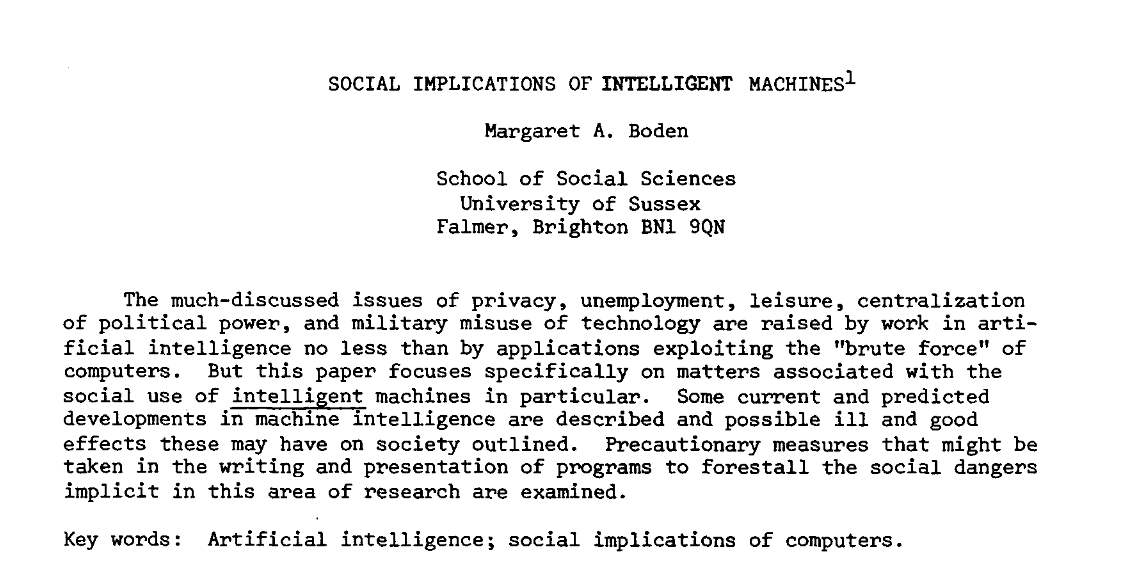
New rule: if your insightful comment on AI was already in this super cool 1977 paper about "AI is becoming so powerful it will change the world as we know it," you lose. (1/10)
Renaud Foucart tweet media
English
12
62
363
38.6K
Mathew Tizard nag-retweet
Massimo
Massimo@Rainmaker1973·
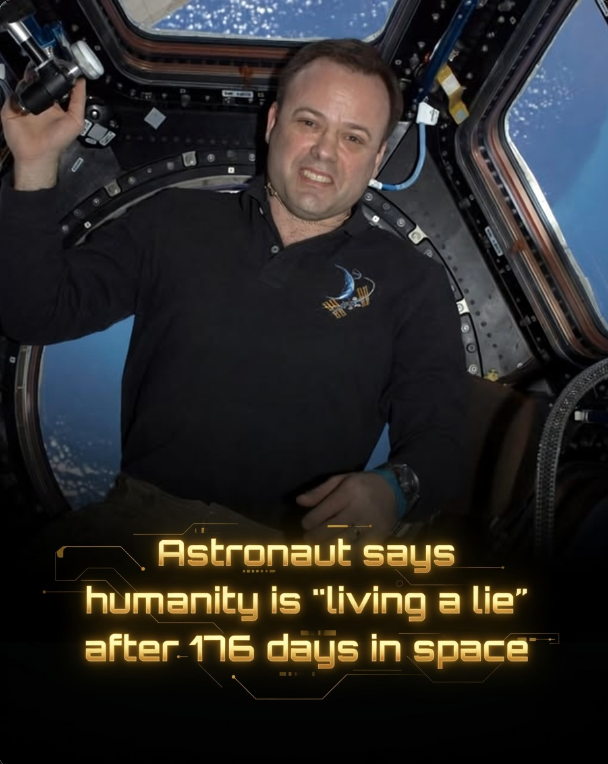
Former astronaut Ron Garan returned from space convinced that humanity is “living an enormous lie.” During his 178-day mission aboard the International Space Station in 2011—spending nearly six months in orbit and covering over 71 million miles—Garan experienced the transformative “Overview Effect.” From 250 miles above Earth, the planet appeared as a single, delicate blue marble suspended in the void, with no visible borders, nations, or divisions. Political lines vanished; instead, he saw a fragile, interconnected biosphere wrapped in an astonishingly thin atmosphere—the sole protective layer sustaining all life against the deadly vacuum of space. This perspective shattered his prior worldview. He observed an iridescent, teeming world of life but no trace of the global economy that humans prioritize. Garan realized the “enormous lie” we perpetuate: the illusion that we are separate from one another, from nature, and from the planet itself. Our systems treat the Earth’s life-support mechanisms—air, water, ecosystems—as mere subsidiaries of the economy, when the orbital view reveals the opposite truth: the planet comes first, then society, then economy. In his words, this realization highlighted how crises like climate change, deforestation, and biodiversity loss stem from this fundamental misperception of separation. Garan argues that embracing this unified, fragile reality—seeing ourselves as crew members on “Spaceship Earth”—is essential for collective survival and effective global stewardship. The view from space didn’t just change his outlook; it underscored an urgent call for humanity to realign priorities with the undeniable interconnectedness of our shared home.
Massimo tweet media
English
79
337
1.2K
99.1K
Mathew Tizard nag-retweet
VisionaryVoid
VisionaryVoid@VisionaryVoid·
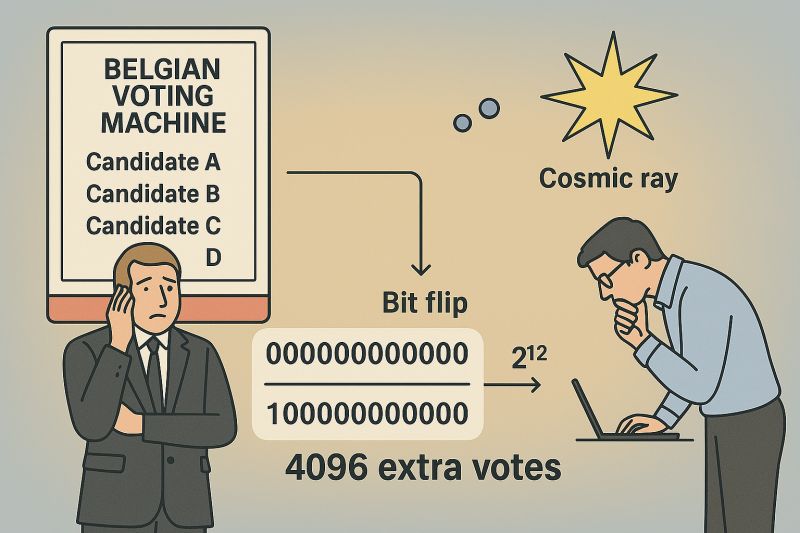
The Election Decided by a Dying Star. In 2003, a small local election in Schaerbeek, Belgium, was thrown into total chaos. A relatively obscure candidate named Maria Vindevoghel suddenly received an impossible surge of support at the polls. Officials quickly realized something was mathematically broken. Vindevoghel had somehow secured exactly 4,096 more votes than there were actual registered voters in her entire precinct. Investigators immediately assumed it was a sophisticated cyberattack or rampant voter fraud. But when computer scientists painstakingly analyzed the voting machine's internal memory, they found the culprit wasn't human at all. A single, high-energy cosmic ray, likely born from an exploding star deep in the universe, had struck the machine's microchip at the exact wrong microsecond. This microscopic impact flipped a single binary bit from a zero to a one. Because binary code scales exponentially, that specific flipped bit in the 13th position instantly generated precisely 4,096 phantom votes. It remains the only verified instance in history of a deep-space cosmic event directly altering a democratic election.
VisionaryVoid tweet media
English
40
105
1K
95.3K
Mathew Tizard nag-retweet
Karoline Georges
Karoline Georges@KarolineGeorges·
Post-Brocart Bestiary VI. The Pearl Court.
English
13
51
352
9.1K
Mathew Tizard
Mathew Tizard@mtizard·
@FR3NKD Yes, why is it taking so long to reprocess their data into a 3DGS format and bring it to market? @googlemaps
English
0
0
1
738
Mathew Tizard nag-retweet
Cosmos Archive
Cosmos Archive@cosmosarcive·
Carl Sagan in 1987 exposing the media’s shocking neglect of science: “Every newspaper in America has a daily astrology column… How many have even a weekly science column?” Nearly 40 years later in 2026, platforms have changed, but the problem remains.
English
4
10
39
1.8K
Black Hole
Black Hole@konstructivizm·
Former NASA engineer Mark Rober launched a selfie satellite so anyone could take a photo with Earth. Its development took three years and $5 million. It works simply: the device receives images from a ground station, displays them on a built-in screen, and takes the photo with the planet in the background.
English
5
17
80
9.7K
Mathew Tizard nag-retweet
Nav Toor
Nav Toor@heynavtoor·
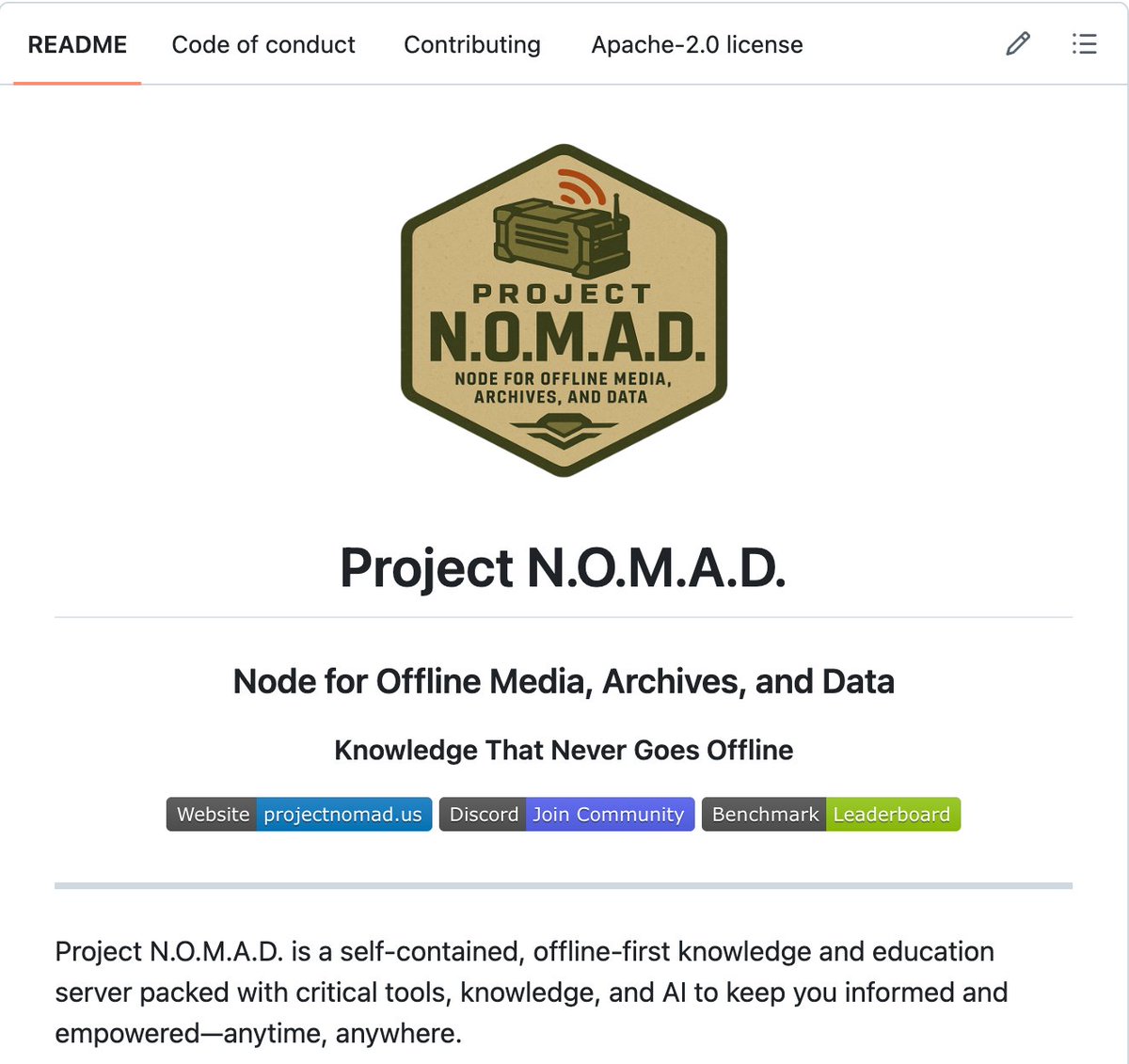
🚨Someone just open sourced a computer that works when the entire internet goes down. It's called Project N.O.M.A.D. A self-contained offline survival server with AI, Wikipedia, maps, medical references, and full education courses. No internet. No cloud. No subscription. It just works. Here's what's packed inside: → A local AI assistant powered by Ollama (works fully offline) → All of Wikipedia, downloadable and searchable → Offline maps of any region you choose → Medical references and survival guides → Full Khan Academy courses with progress tracking → Encryption and data analysis tools via CyberChef → Document upload with semantic search (local RAG) Here's the wildest part: A solar panel, a battery, a mini PC, and a WiFi access point. That's it. That's your entire off-grid knowledge station. 15 to 65 watts of power. Works from a cabin, an RV, a sailboat, or a bunker. Companies sell "prepper drives" with static PDFs for $185. This gives you a full AI brain, an entire encyclopedia, and real courses for free. One command to install. 100% Open Source. Apache 2.0 License.
Nav Toor tweet media
English
600
4K
24.2K
1.1M
Carl Zha
Carl Zha@CarlZha·
I can't get over the fact that Dune is about an oppressed people fighting for their homeland, waging a jihad to bring down a hegemonic empire by threatening to cut off the flow of their most precious commodity after the empire had assassinated their religious leader's father.
Carl Zha tweet media
English
714
6.5K
44.4K
1.7M
Mathew Tizard nag-retweet
Mike Constantine
Mike Constantine@Moonpans·
Apollo 15 Lunar Rover Footage Upscaled and Interpolated to 60 FPS Incredible upscaled footage from onboard the Apollo 15 Lunar Rover captured by Jim Irwin using the 16mm DAC camera. This footage has been upscaled and Interpolated to 60 FPS and synchronised to the mission audio by Moonpans Original footage source: Apollo Flight Journal Full video in comments
English
63
532
2.9K
157K
Mathew Tizard nag-retweet
m_11
m_11@instance_11·
forms & the code that produced them
m_11 tweet media
English
15
109
1.3K
32.5K
Mathew Tizard nag-retweet
Allen Institute
Allen Institute@AllenInstitute·
The brain as it's never been seen before. Last year, scientists created the largest wiring diagram and functional map of a mammal brain to date. #BrainAwarenessWeek @dana_fdn
English
10
171
696
39.8K
Mathew Tizard nag-retweet
Gandalv
Gandalv@Microinteracti1·
🇯🇵 A brainless blob reproduced the Tokyo rail network in 26 hours. It was not trying to solve a transport problem. It was trying to eat oat flakes. Physarum polycephalum is, to be generous, a blob. Pale, damp, the size of a thumbnail, it has no brain, no nervous system, and no cells that could reasonably be accused of thinking. Scientists had studied it for years without feeling particularly threatened by it. Then someone put it in a maze. Within hours, Physarum had found the shortest route between entrance and exit. Not by wandering randomly. Not by luck. By something that had no name, because everyone had assumed it required a brain. This was interesting enough. What happened next was embarrassing. In 2010, a researcher named Toshiyuki Nakagaki and his team placed a piece of slime mold at the centre of a damp map of greater Tokyo. Around it, at the locations of 36 surrounding cities, they put small piles of oat flakes. Then they left the room. The organism did what it always does. It explored. Thin tendrils pushed outward in every direction, feeling for food. When a tendril found an oat flake, that connection strengthened. When a path led nowhere useful, it was quietly dismantled. The slime mold was not planning. It was simply following local chemistry, the same way it had been doing for 500 million years. After 26 hours, the exploration was over. What remained was a sparse, elegant network of tubes connecting all 36 cities to each other. Not a tangle. Not a web covering everything. A clean, efficient system with strong main corridors between the busiest points and lighter connections branching where they were needed. The team held it up next to the actual Tokyo rail map. The corridors matched. The branch lines matched. Even the redundant connections, the backup routes engineers had added so the system could survive a single failure, appeared in nearly the same places. The slime mold had not just found the cities. It had independently arrived at the same logic that Japanese railway engineers had spent decades refining. By some measures, its network was more robust than the one humans had built. There is no headquarters inside Physarum, no moment where anyone decides anything. The intelligence, if that is even the right word, lives entirely in one simple rule repeated across millions of connections: strengthen what works, abandon what doesn’t. That rule, applied blindly and without awareness, produces something that looks unnervingly like wisdom. The slime mold was not trying to redesign the Tokyo rail network. It was trying to eat breakfast. It just turns out that the most efficient way to eat breakfast, when your breakfast is scattered across a map of greater Tokyo, looks a great deal like good urban planning 😅 Gandalv / @Microinteracti1
English
24
112
599
204.7K