
Naka-pin na Tweet
Rezo🛡₿RRR
9.1K posts


Rezo🛡₿RRR
@rezosh
crypto since 2015 | building where attention lags power
Decentralized Sumali Kasım 2010
2.5K Sinusundan55.5K Mga Tagasunod
Rezo🛡₿RRR nag-retweet

UPDATE:
We now have full control of the cow.fi domain.
CoW Swap has been working as normal at cow.finance for some time now, and we are now working to transition it back to it's original domain.
In the meantime, here is an update on we know about the incident so far and what you should do if you were impacted. 👇🧵
English
@firstadopter interesting... really noticed the difference in my real work. x.com/rezosh/status/…
Rezo🛡₿RRR@rezosh
On Claude degradation: I wanted to double-check this, so I'm speaking from personal experience. I noticed this back in mid-February, long before complaints started flooding in this week. Reasoning got weaker, solutions less precise, and it’s not just Claude Code, but Opus 4.6 chats too. I tried to compare tasks vs GPT 5.4 and even integrated the Codex plugin to Claude Code, and the difference in reasoning was noticeable in favor of GPT. Not on a benchmark... but in my real work. I want to believe this is temporary. @AnthropicAI is shipping 10s of releases weekly, so they’re not standing still, but what concerns me is if this isn’t a temporary issue but a compute shortage, then it’s a systemic problem that can’t be solved quickly or by internal improvements alone. That’s a completely different conversation.
English

Wow. Jensen suggests that nearly all the growth in TPU and Trainium is driven by Anthropic and that the only reason Anthropic uses TPU and Trainium is because Google and Amazon invested in Anthropic early.
Are TPUs and Trainium the reason Anthropic's uptime performance is so poor? $NVDA
tae kim@firstadopter
Jensen makes a good point on Dwarkesh podcast. If TPU and Trainium are so great, how come they don't compete against Nvidia in the industry standard benchmarks like MLPerf? $NVDA
English
@yacineMTB even more dangerous with KYC required. x.com/rezosh/status/…
Rezo🛡₿RRR@rezosh
To @AnthropicAI: actually, the KYC data of power users is more valuable than what you are “protecting.” For those who don’t know, Anthropic started requiring government ID (and camera access for some Claude Max users). For context: 24k fake Chinese accounts, 16M extracted conversations, something I wrote about recently. x.com/rezosh/status/… KYC makes mass fraud harder. Logical. But here's the structural inversion: to protect the model, Anthropic now collects government IDs and live selfies on the servers of a third-party verifier... and this data per record is worth more than what they are protecting. KYC verifiers get hacked... regularly. Anthropic built a honeypot to protect its product, and that honeypot itself became the most valuable target in the room. The fix becomes the problem.
English

@MarioNawfal aside from them being down, Anthropic is apparently collecting KYC from some accounts. x.com/rezosh/status/…
Rezo🛡₿RRR@rezosh
To @AnthropicAI: actually, the KYC data of power users is more valuable than what you are “protecting.” For those who don’t know, Anthropic started requiring government ID (and camera access for some Claude Max users). For context: 24k fake Chinese accounts, 16M extracted conversations, something I wrote about recently. x.com/rezosh/status/… KYC makes mass fraud harder. Logical. But here's the structural inversion: to protect the model, Anthropic now collects government IDs and live selfies on the servers of a third-party verifier... and this data per record is worth more than what they are protecting. KYC verifiers get hacked... regularly. Anthropic built a honeypot to protect its product, and that honeypot itself became the most valuable target in the room. The fix becomes the problem.
English

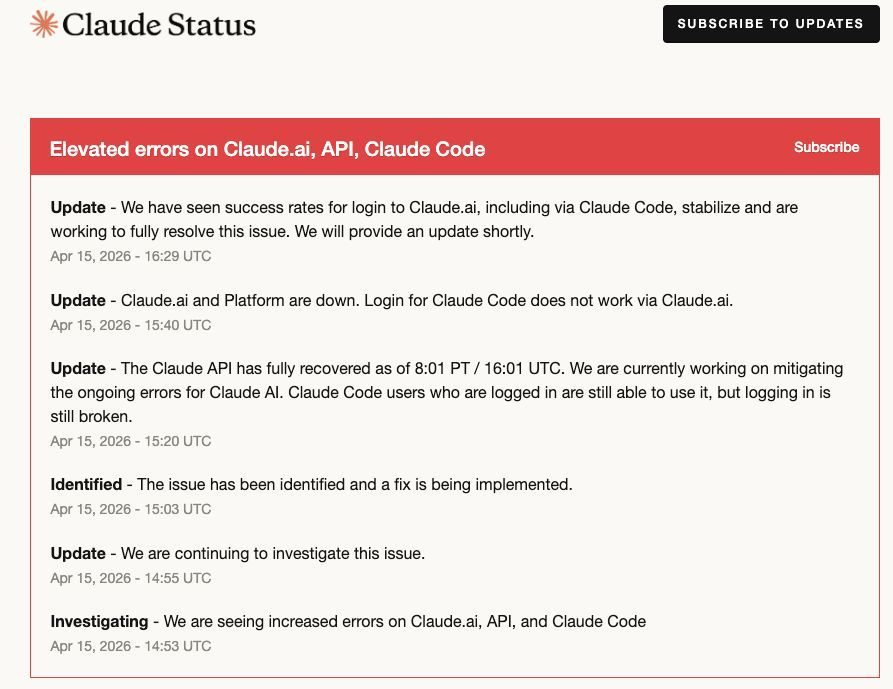
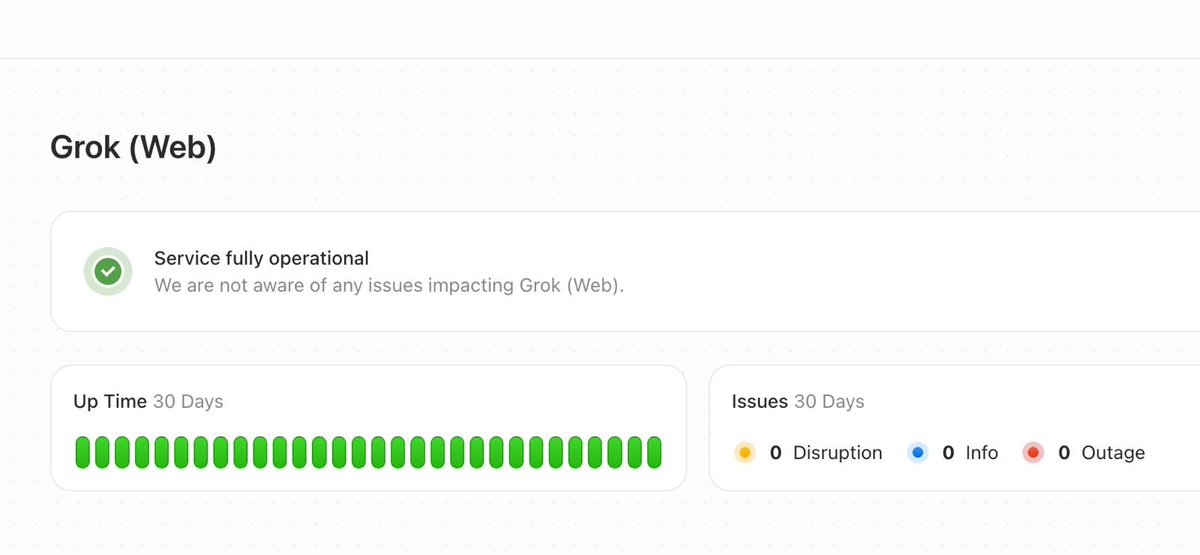
The AI world is glitching out today...
• GitHub down
• Claude down
• Gemini down
• ChatGPT down
Meanwhile Grok, brought to you by the same guy who made the world’s most indestructible car, is fully functional.
In Elon we trust!

English

Introducing midmaxxing... Krafton’s CEO used ChatGPT to justify refusing a $250M payout to the founders of Subnautica. The argument sounded brilliant. He lost in court.
As @atmoio said: “A bad idea that sounds bad, you can deal with it. A bad idea that sounds brilliant, that’s a $250M lawsuit.”
That’s what midmaxxing is. AI is optimized to converge toward the most agreeable answer... not the correct one, the average one. And it gave the CEO exactly what he wanted to hear, packaged in persuasive logic.
Convincingly wrong answers are more dangerous than stupid ones.
When everyone outsources strategy to one oracle, taste, context, and independent judgment become the only edge.
Midmaxxing at scale is an industry where everyone has the same playbook cos everyone asked the same oracle.
Mo@atmoio
AI is giving every CEO the same advice
English
To @AnthropicAI: actually, the KYC data of power users is more valuable than what you are “protecting.”
For those who don’t know, Anthropic started requiring government ID (and camera access for some Claude Max users).
For context: 24k fake Chinese accounts, 16M extracted conversations, something I wrote about recently.
x.com/rezosh/status/…
KYC makes mass fraud harder. Logical.
But here's the structural inversion: to protect the model, Anthropic now collects government IDs and live selfies on the servers of a third-party verifier... and this data per record is worth more than what they are protecting.
KYC verifiers get hacked... regularly. Anthropic built a honeypot to protect its product, and that honeypot itself became the most valuable target in the room.
The fix becomes the problem.
sui ☄️@birdabo
🚨Anthropic seems to be adding a mandatory KYC checks for some users. > a chinese account saw this pop up right after opening Claude Max earlier. first they nerf the models then they add a mandatory kyc, smh.
English
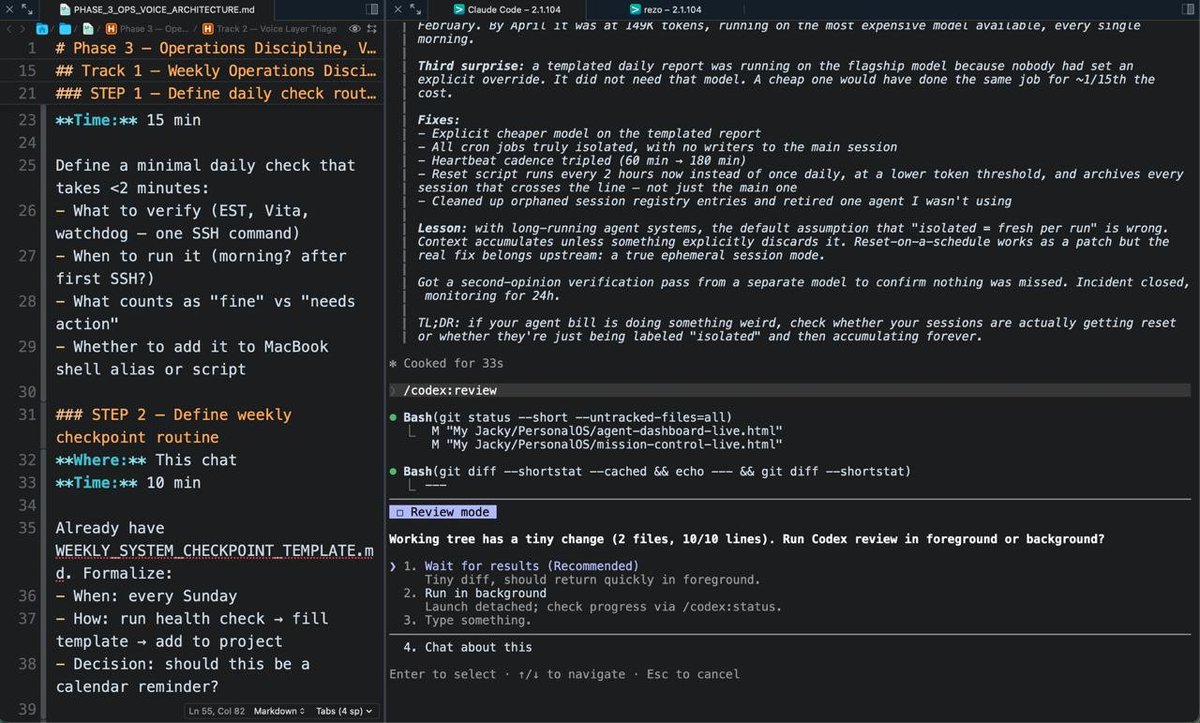
On Claude degradation: I wanted to double-check this, so I'm speaking from personal experience.
I noticed this back in mid-February, long before complaints started flooding in this week. Reasoning got weaker, solutions less precise, and it’s not just Claude Code, but Opus 4.6 chats too.
I tried to compare tasks vs GPT 5.4 and even integrated the Codex plugin to Claude Code, and the difference in reasoning was noticeable in favor of GPT.
Not on a benchmark... but in my real work.
I want to believe this is temporary. @AnthropicAI is shipping 10s of releases weekly, so they’re not standing still, but what concerns me is if this isn’t a temporary issue but a compute shortage, then it’s a systemic problem that can’t be solved quickly or by internal improvements alone.
That’s a completely different conversation.
English
Anti-distill in China, the whole “document your process” story last week... and now Block is doing exactly that at a 4,000-person scale.
Stock +18% as the market didn’t even blink. Those who built AI systems got bonuses and layoffs one quarter apart. The question of ownership of knowledge stopped being theoretical.
English

**JACK DORSEY JUST OBLITERATED 4,000 BLOCK ENGINEERS AFTER THEY BUILT THE EXACT AI SYSTEMS THAT REPLACED THEM**
40% workforce reduction at Block. 10,000 down to 6,000 overnight.
But here's the sick fucking twist: the engineers getting walked out today are the same ones who spent 2025 building Block's "AI-first infrastructure"
They automated their own execution
The team that built the prompt engineering workflows for customer service? Terminated. The ML engineers who created the fraud detection algorithms? Gone. The backend crew who integrated GPT-4 into every payment flow? Escorted out by security.
Stock jumped 18% the second Dorsey hit send on the layoff announcement
I'm hearing the AI systems these engineers built are now processing 90% of Block's transaction volume with 12 senior engineers and an army of contractors in Mumbai making $18k annually
Sources telling me Dorsey's internal memo literally said "Our engineers have built tools that make most engineering roles obsolete"
The same engineers who got performance bonuses in Q4 2025 for "revolutionary AI integration" just got their badges deactivated for being "redundant in an AI-driven organization"
They trained their replacement. Fed it their institutional knowledge. Documented every edge case and system dependency.
Then got fired for being less efficient than the machine they created
Every engineer at every company should screenshot this and think real hard about what they're building
Because if you're automating workflows, you're probably automating yourself out of a job
And Jack Dorsey will smile while he does it
English
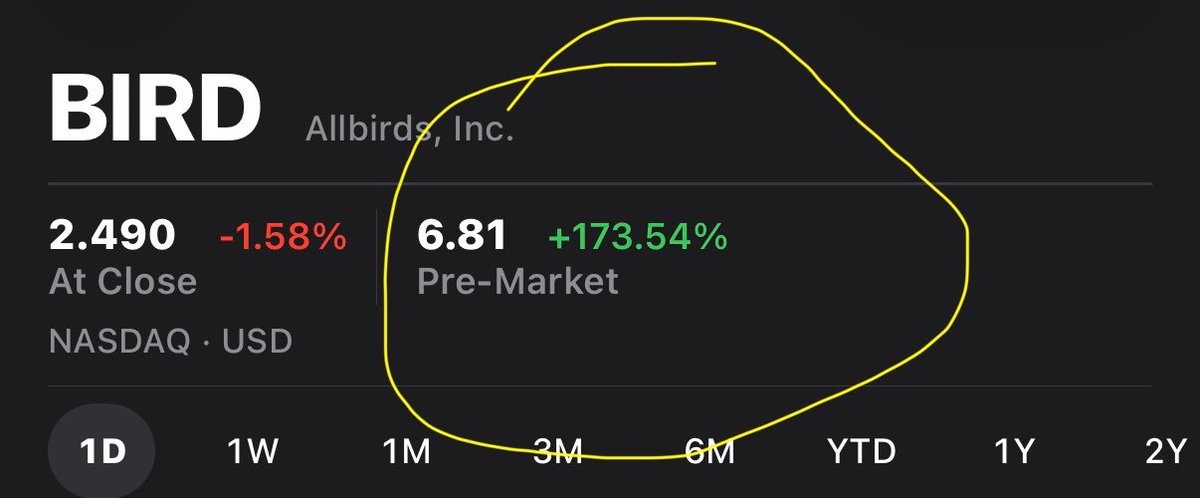
@ns123abc $4B -> $39M and instead of figuring out why the shoes aren’t selling, “we are AI compute now” in a market where CoreWeave and Lambda are already at war full scale.
When a company in crisis slaps “AI” onto the name, it’s not strategy, just a press release INSTEAD of strategy.
English

@Gemini there's going to be a huge discussion about this. so far the mechanics are interesting. x.com/rezosh/status/…
Rezo🛡₿RRR@rezosh
BIP-361 as Bitcoin's quantum moment of truth. Jameson Lopp and Casa are proposing a phased freeze of quantum-vulnerable wallets before theft becomes possible. Mechanics: - Block sends to old addresses = 3 years post-activation - Invalidate old signatures = 5 years post-activation - HD wallet recovery proofs = quantum-safe migration path Not a hack, just infrastructure hardening with a migration window... and Satoshi's 1.1M BTC sit on exactly these types of addresses: - If BIP-361 activates, Satoshi doesn't migrate - That's ~5% of supply frozen forever - Meaning the upgrade itself becomes the deflationary mechanism I've written a bit and thought a lot about the quantum threat, and I've said that the Bitcoin dev community responds fast when it has to. Here's proof. No panic, no regulation, just a concrete technical solution with a concrete timeline. The "code is law" crowd will lose this round and not coos they're wrong, but cos the existential argument beats the principled one. Infrastructure evolves when it has to, not when it wants to... and right now it has to.
English


@TheBitcoinConf this is going to be a huge discussion but so far, the mechanics seem interesting. x.com/rezosh/status/…
Rezo🛡₿RRR@rezosh
BIP-361 as Bitcoin's quantum moment of truth. Jameson Lopp and Casa are proposing a phased freeze of quantum-vulnerable wallets before theft becomes possible. Mechanics: - Block sends to old addresses = 3 years post-activation - Invalidate old signatures = 5 years post-activation - HD wallet recovery proofs = quantum-safe migration path Not a hack, just infrastructure hardening with a migration window... and Satoshi's 1.1M BTC sit on exactly these types of addresses: - If BIP-361 activates, Satoshi doesn't migrate - That's ~5% of supply frozen forever - Meaning the upgrade itself becomes the deflationary mechanism I've written a bit and thought a lot about the quantum threat, and I've said that the Bitcoin dev community responds fast when it has to. Here's proof. No panic, no regulation, just a concrete technical solution with a concrete timeline. The "code is law" crowd will lose this round and not coos they're wrong, but cos the existential argument beats the principled one. Infrastructure evolves when it has to, not when it wants to... and right now it has to.
English

Cypherpunk Jameson Lopp and five Bitcoin developers have proposed BIP-361: "Post Quantum Migration and Legacy Signature Sunset." 👀
This would freeze quantum-vulnerable wallets, including Satoshi’s 1.1m BTC, worth $81 billion.


English
@DefiIgnas huge discussion to be held but the mechanics are interesting. x.com/rezosh/status/…
Rezo🛡₿RRR@rezosh
BIP-361 as Bitcoin's quantum moment of truth. Jameson Lopp and Casa are proposing a phased freeze of quantum-vulnerable wallets before theft becomes possible. Mechanics: - Block sends to old addresses = 3 years post-activation - Invalidate old signatures = 5 years post-activation - HD wallet recovery proofs = quantum-safe migration path Not a hack, just infrastructure hardening with a migration window... and Satoshi's 1.1M BTC sit on exactly these types of addresses: - If BIP-361 activates, Satoshi doesn't migrate - That's ~5% of supply frozen forever - Meaning the upgrade itself becomes the deflationary mechanism I've written a bit and thought a lot about the quantum threat, and I've said that the Bitcoin dev community responds fast when it has to. Here's proof. No panic, no regulation, just a concrete technical solution with a concrete timeline. The "code is law" crowd will lose this round and not coos they're wrong, but cos the existential argument beats the principled one. Infrastructure evolves when it has to, not when it wants to... and right now it has to.
English

Are we getting a new Bitcoin fork?
Bitcoin devs want to freeze quantum vulnerable wallets via BIP-361.
Satoshi's 1.1M BTC included.
Not sure what % of the community wants to freeze anyone else's Bitcoins.
Some core devs don't even admit quantum is a real risk at all (post lined in comments).
There could be some old OG sleeping and maybe walking one day with his BTC gone.
Philosophical forks (not technical) are my favorite. Entertaining. We had a few:
- Bitcoin Cash (2017): payments vs store of value?
- Bitcoin Gold (2017): GPU friendly mining vs industrial farms? BTC gold got hit by TWO 51% attacks so that's answered question.
- Bitcoin SV (2018): who defines satoshi’s vision?
- eCash (2020): fund development from block rewards?
It's been quiet for years but quantum debate is different from the old ones because it's not about blocks or mining, but about if Bitcoin can take coins away from someone.
And this time forks could be more disruptive due to ETF adoption.
If a fork happens, what do BlackRock and Fidelity hold? Do they redistribute forked BTCs to holders?
Whatever they pick becomes 'real' Bitcoin for every tradfi investor which means the ETF issuers might end up deciding the fork instead of the miners and nodes.

English
@SimplyBitcoin yes, and BIP-361 is quite interesting. x.com/rezosh/status/…
Rezo🛡₿RRR@rezosh
BIP-361 as Bitcoin's quantum moment of truth. Jameson Lopp and Casa are proposing a phased freeze of quantum-vulnerable wallets before theft becomes possible. Mechanics: - Block sends to old addresses = 3 years post-activation - Invalidate old signatures = 5 years post-activation - HD wallet recovery proofs = quantum-safe migration path Not a hack, just infrastructure hardening with a migration window... and Satoshi's 1.1M BTC sit on exactly these types of addresses: - If BIP-361 activates, Satoshi doesn't migrate - That's ~5% of supply frozen forever - Meaning the upgrade itself becomes the deflationary mechanism I've written a bit and thought a lot about the quantum threat, and I've said that the Bitcoin dev community responds fast when it has to. Here's proof. No panic, no regulation, just a concrete technical solution with a concrete timeline. The "code is law" crowd will lose this round and not coos they're wrong, but cos the existential argument beats the principled one. Infrastructure evolves when it has to, not when it wants to... and right now it has to.
English

BITCOIN IS MONEY. NOT AN ASSET.
BITCOIN IS MONEY. NOT AN ASSET.
BITCOIN IS MONEY. NOT AN ASSET.
BITCOIN IS MONEY. NOT AN ASSET.
BITCOIN IS MONEY. NOT AN ASSET.
English
@cb_doge huge... bottleneck moves from chip procurement to mineral procurement. x.com/rezosh/status/…
Rezo🛡₿RRR@rezosh
Whoever controls production controls speed, and in the AI race, that may turn out to matter more than just the best model for the moment. To rephrase it... the best model will be built by whoever wins on speed. Tesla tape-out AI5, plus AI6, Dojo3, and other chips in development. Elon is playing a different game, and his main advantage is neither models nor engineers... it's manufacturing. Tesla and SpaceX, both companies, are built on control of production, and if Tesla can scale its own chips, the bottleneck shifts from “who can buy chips” to “where to get minerals.” A game @elonmusk already knows... remember how Tesla controls the lithium supply chain.
English

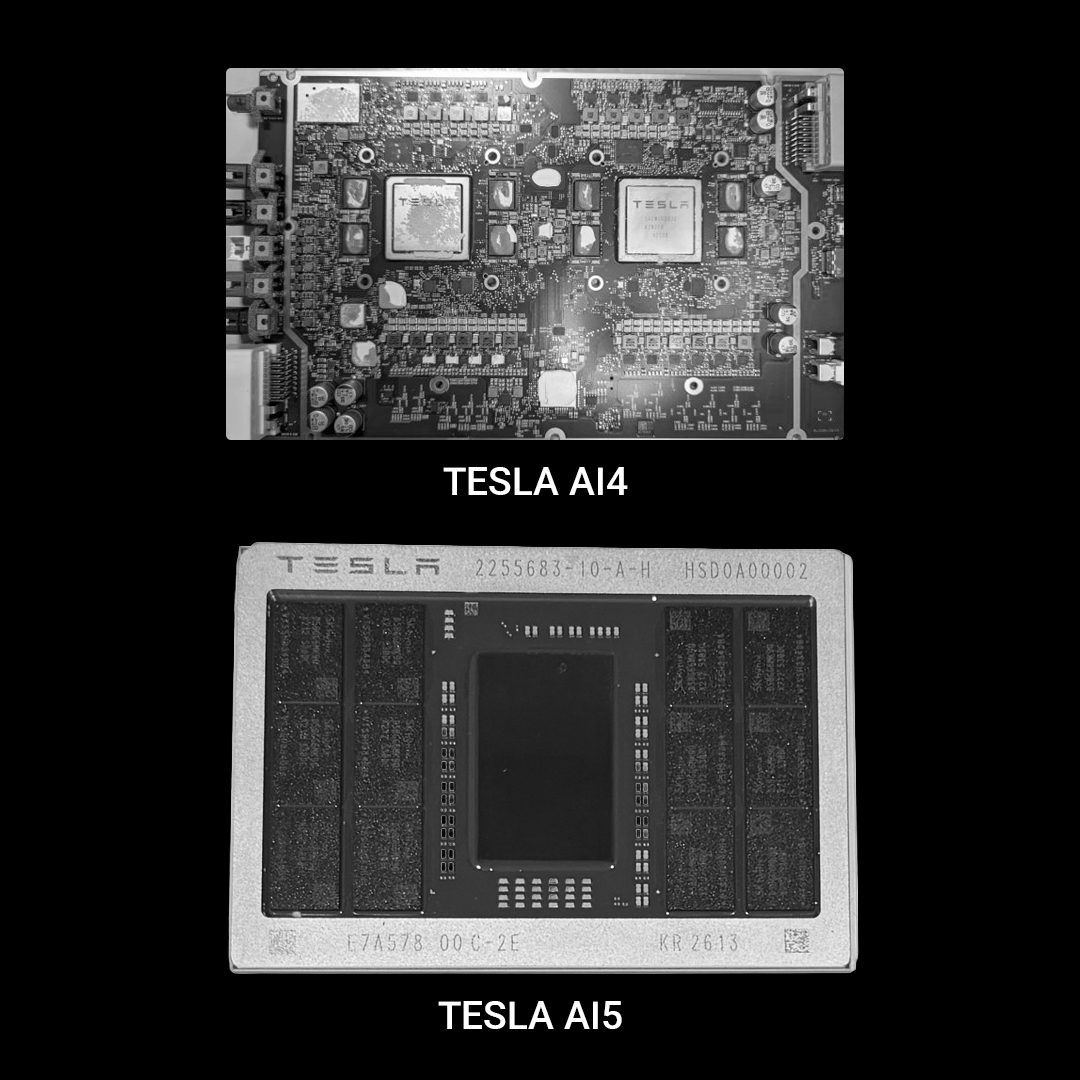
Tesla just taped out the AI5 chip, huge milestone for FSD, Robotaxi & Optimus.
• Single AI5 delivers ~5x the real-world compute of a dual AI4 setup
• Massive leaps: ~8x compute power, 9x memory & 5x bandwidth vs current gen
• One chip matches Nvidia H100 performance for Tesla workloads; dual setup rivals Blackwell, but at way lower cost & power draw
• Radically simplified & optimized for edge AI inference (INT4/INT2/FP8 focus), perfect for cars & humanoid robots
• Full AI5 computer targets 2,000–2,500 TOPS (vs ~300–500 for AI4)
• “AI5 will make the cars almost perfect and greatly enhance Optimus”
• “AI5 will punch far above its weight” thanks to Tesla’s tightly co-designed hardware + software stack
Built in the USA (TSMC Arizona + Samsung Texas), with Terafab scaling up.
Congratulations @elonmusk and @Tesla

English
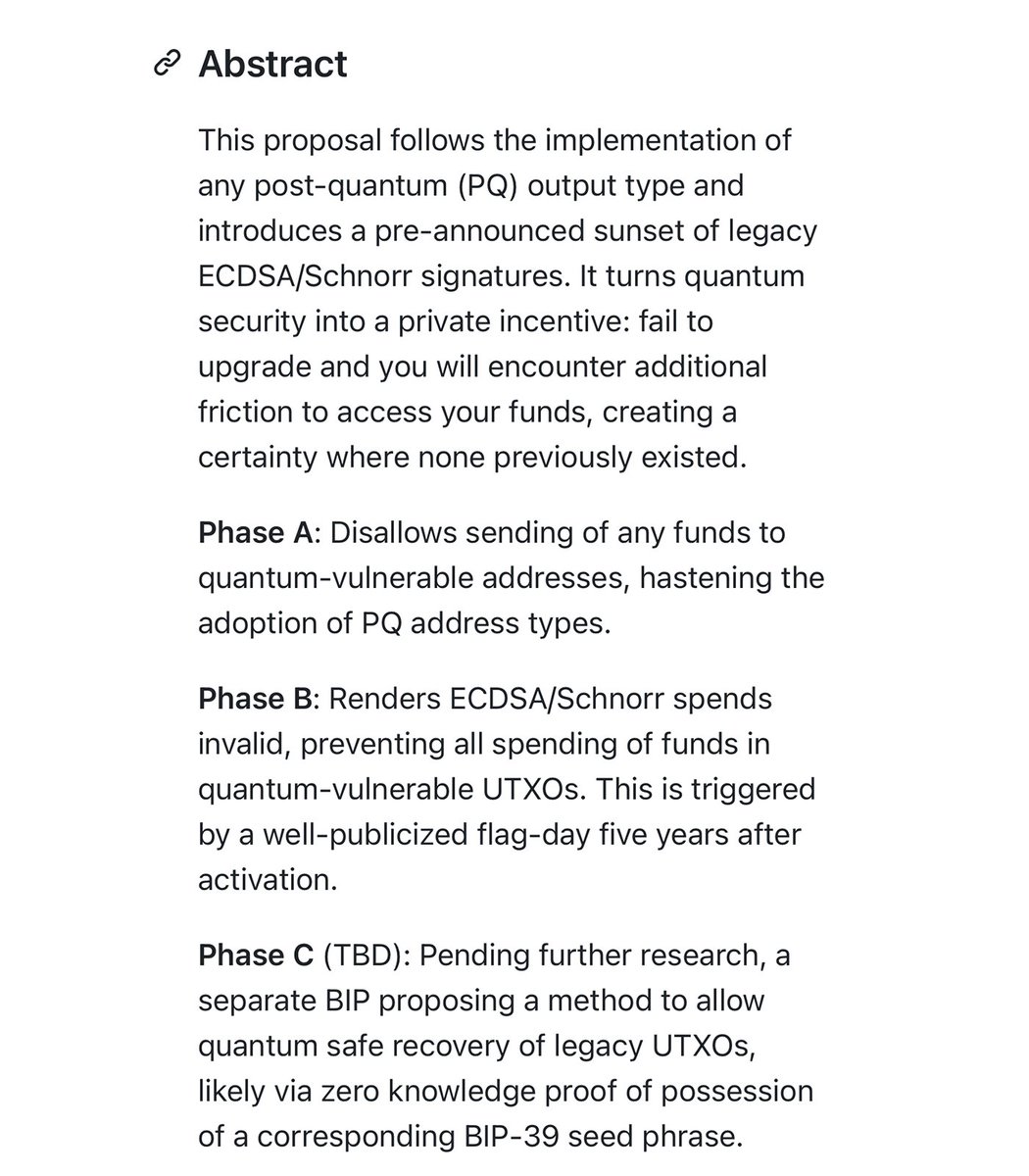
BIP-361 as Bitcoin's quantum moment of truth. Jameson Lopp and Casa are proposing a phased freeze of quantum-vulnerable wallets before theft becomes possible.
Mechanics:
- Block sends to old addresses = 3 years post-activation
- Invalidate old signatures = 5 years post-activation
- HD wallet recovery proofs = quantum-safe migration path
Not a hack, just infrastructure hardening with a migration window... and Satoshi's 1.1M BTC sit on exactly these types of addresses:
- If BIP-361 activates, Satoshi doesn't migrate
- That's ~5% of supply frozen forever
- Meaning the upgrade itself becomes the deflationary mechanism
I've written a bit and thought a lot about the quantum threat, and I've said that the Bitcoin dev community responds fast when it has to. Here's proof. No panic, no regulation, just a concrete technical solution with a concrete timeline.
The "code is law" crowd will lose this round and not coos they're wrong, but cos the existential argument beats the principled one.
Infrastructure evolves when it has to, not when it wants to... and right now it has to.
Bitcoin Archive@BitcoinArchive
Cypherpunk Jameson Lopp and other Bitcoin developers propose BIP-361 to freeze quantum vulnerable wallets. This could lock dormant BTC like Satoshi Nakamoto’s 1.1M coins, now worth $74B, before quantum computers can steal them.
English
@cb_doge if Tesla can manufacture its own chips (esp for xAI), the bottleneck moves from chips to minerals. x.com/rezosh/status/…
Rezo🛡₿RRR@rezosh
Whoever controls production controls speed, and in the AI race, that may turn out to matter more than just the best model for the moment. To rephrase it... the best model will be built by whoever wins on speed. Tesla tape-out AI5, plus AI6, Dojo3, and other chips in development. Elon is playing a different game, and his main advantage is neither models nor engineers... it's manufacturing. Tesla and SpaceX, both companies, are built on control of production, and if Tesla can scale its own chips, the bottleneck shifts from “who can buy chips” to “where to get minerals.” A game @elonmusk already knows... remember how Tesla controls the lithium supply chain.
English
@MarioNawfal effectively moves the bottleneck from chips to minerals. something Elon is already great at when it comes to manufacturing. x.com/rezosh/status/…
Rezo🛡₿RRR@rezosh
Whoever controls production controls speed, and in the AI race, that may turn out to matter more than just the best model for the moment. To rephrase it... the best model will be built by whoever wins on speed. Tesla tape-out AI5, plus AI6, Dojo3, and other chips in development. Elon is playing a different game, and his main advantage is neither models nor engineers... it's manufacturing. Tesla and SpaceX, both companies, are built on control of production, and if Tesla can scale its own chips, the bottleneck shifts from “who can buy chips” to “where to get minerals.” A game @elonmusk already knows... remember how Tesla controls the lithium supply chain.
English
Tesla's AI chip team just taped out AI5.
This custom silicon is a huge step up from AI4, with roughly 8-10x more compute, 9x memory, and big efficiency gains.
It’s designed specifically for real-world use in FSD, Robotaxi, and Optimus robots.
Elon: AI6, Dojo3 & other exciting chips in work.


Elon Musk@elonmusk
Congrats to the @Tesla_AI chip design team on taping out AI5! AI6, Dojo3 & other exciting chips in work.
English
@beffjezos moves the bottleneck from chips to minerals... and when it comes to manufacturing, Tesla already controls the lithium supply chain. x.com/rezosh/status/…
Rezo🛡₿RRR@rezosh
Whoever controls production controls speed, and in the AI race, that may turn out to matter more than just the best model for the moment. To rephrase it... the best model will be built by whoever wins on speed. Tesla tape-out AI5, plus AI6, Dojo3, and other chips in development. Elon is playing a different game, and his main advantage is neither models nor engineers... it's manufacturing. Tesla and SpaceX, both companies, are built on control of production, and if Tesla can scale its own chips, the bottleneck shifts from “who can buy chips” to “where to get minerals.” A game @elonmusk already knows... remember how Tesla controls the lithium supply chain.
English
