SimWorld

68 posts

SimWorld banner
SimWorld

SimWorld

@simworld_ai

Open-source initiative for open-ended realistic simulation of autonomous agents in physical and social worlds

Sumali Ocak 2026
397 Sinusundan391 Mga Tagasunod
Naka-pin na Tweet
SimWorld
SimWorld@simworld_ai·
A SimWorld coding agent can now create its own tools and skills on the fly. We challenged it with BaGuaZhen (八卦阵 Eight Trigrams), an ancient Chinese formation that is difficult to build from scratch because of its precise spatial structure and multi-step coordination. Instead of failing with brute force, the agent wrote reusable components for itself: Tools: Bagua Wall Segment, Bagua Trigram Line Skills: Bagua Wall Segment Skill, Bagua Trigram Line Skill Each tool is paired with a skill that teaches the model how to use it. Without skills: it fails. With self-built skills: it organizes the full structure. The exciting shift is this: agents are starting to generate capabilities, not just outputs.
English
1
8
32
12.7K
SimWorld nag-retweet
Shibo Hao
Shibo Hao@Ber18791531·
🍫 CocoaBench v1.0 is out! CocoaBench is a benchmark for unified digital agents, built around open-world tasks that require composing 💻 coding, 👀 vision, 🌐 search. Since our first research preview last December, we have expanded the benchmark substantially with community contributed tasks, and spent months testing and refining the tasks, evaluations, and agent runs. Some takeaways: • Even the best agent system reaches only 45.1% on CocoaBench v1.0. • Coding agents like Codex are already surprisingly strong on general tasks beyond software engineering. • Stronger agents tend to push more of the work into code. • Open source models still lag behind leading frontier models on these general tasks. 👇More on the website and in the paper #AI #Agents #LLM #Benchmark #CocoaBench
Shibo Hao@Ber18791531

🍫 CocoaBench is calling for contributions from the community! Join us and help shape how next-generation agents are evaluated and built🚀✨ #LLM #AI #Agent #CocoaBench More details in the threads 👇

English
2
34
76
9K
SimWorld nag-retweet
Jingtian Wu
Jingtian Wu@JingtianWu·
It is an exciting moment to see an agent improve itself by decomposing tasks, recognizing patterns, constructing new skills and tools to capture and generalize those patterns in complex scene construction, and then automatically selecting those skills to close the loop for self-evolution. Baguazhen (八卦阵, Eight Trigrams Formation) is a great stress test for this: it demands high spatial precision, symmetry, and multi-step coordination. Without learned skills and tools, the agent tried to construct the entire Baguazhen by spawning hundreds of trees programmatically with primitive operations, which was brittle and prone to drift. But through self-evolution, the agent built reusable skills and tools for the identifiable sub-patterns of Baguazhen. When reused, those abstractions made it possible to construct a much more robust and compelling Baguazhen formation for scene construction. What stands out most is that the agent is not just completing a task, but is learning how to build its own abstractions based on primitive tools to complete the task well.
Jingtian Wu tweet mediaJingtian Wu tweet mediaJingtian Wu tweet media
SimWorld@simworld_ai

A SimWorld coding agent can now create its own tools and skills on the fly. We challenged it with BaGuaZhen (八卦阵 Eight Trigrams), an ancient Chinese formation that is difficult to build from scratch because of its precise spatial structure and multi-step coordination. Instead of failing with brute force, the agent wrote reusable components for itself: Tools: Bagua Wall Segment, Bagua Trigram Line Skills: Bagua Wall Segment Skill, Bagua Trigram Line Skill Each tool is paired with a skill that teaches the model how to use it. Without skills: it fails. With self-built skills: it organizes the full structure. The exciting shift is this: agents are starting to generate capabilities, not just outputs.

English
1
1
4
498
SimWorld nag-retweet
Murray Kang
Murray Kang@haoqik322·
Today’s coding agents are still weak at spatial reasoning. They can generate code, but struggle with layouts that require global consistency — symmetry, alignment, multi-step coordination. BaGuaZhen (八卦阵) exposes this gap perfectly. What’s exciting here is not that the agent solved it — but that it changed how it solves. - It created new tools. - It created new skills. - It built a layer of reusable structure on top of primitive actions. In doing so, it turned a hard spatial reasoning problem into a sequence of composable operations. This hints at a different scaling path: agents that don’t just get better models, but continuously expand their capabilities by their own! When that happens, “hard problems” start to look very different.
SimWorld@simworld_ai

A SimWorld coding agent can now create its own tools and skills on the fly. We challenged it with BaGuaZhen (八卦阵 Eight Trigrams), an ancient Chinese formation that is difficult to build from scratch because of its precise spatial structure and multi-step coordination. Instead of failing with brute force, the agent wrote reusable components for itself: Tools: Bagua Wall Segment, Bagua Trigram Line Skills: Bagua Wall Segment Skill, Bagua Trigram Line Skill Each tool is paired with a skill that teaches the model how to use it. Without skills: it fails. With self-built skills: it organizes the full structure. The exciting shift is this: agents are starting to generate capabilities, not just outputs.

English
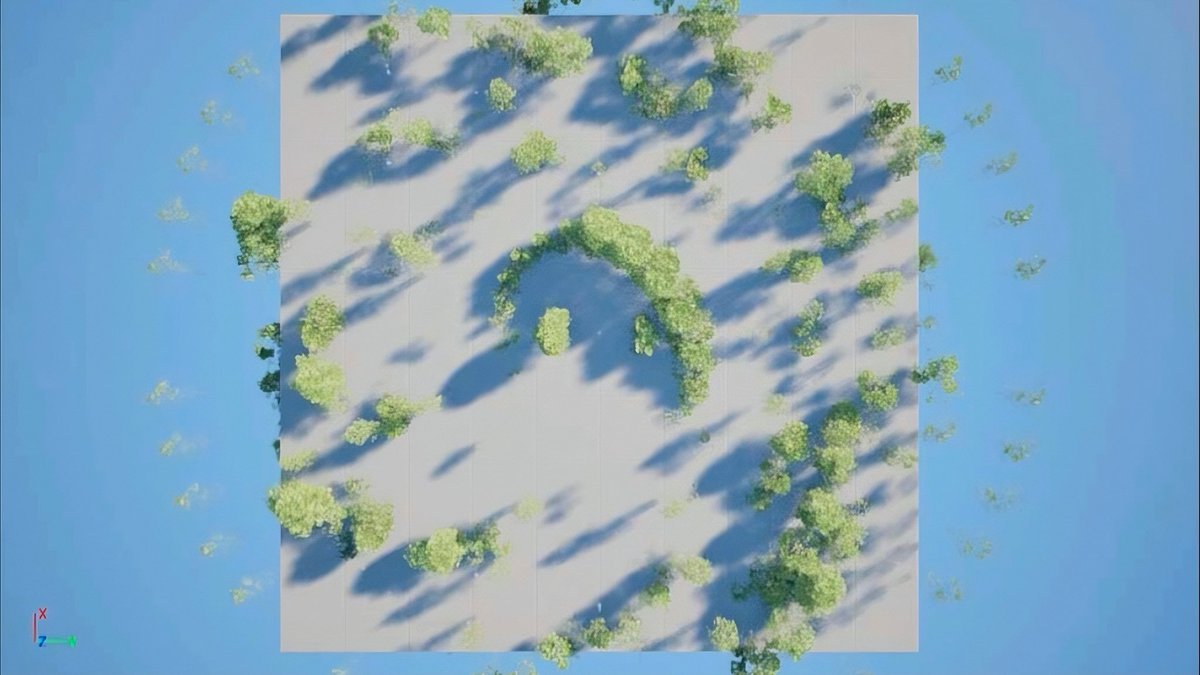
0
4
11
1.9K
SimWorld nag-retweet
SimWorld
SimWorld@simworld_ai·
A SimWorld coding agent can now create its own tools and skills on the fly. We challenged it with BaGuaZhen (八卦阵 Eight Trigrams), an ancient Chinese formation that is difficult to build from scratch because of its precise spatial structure and multi-step coordination. Instead of failing with brute force, the agent wrote reusable components for itself: Tools: Bagua Wall Segment, Bagua Trigram Line Skills: Bagua Wall Segment Skill, Bagua Trigram Line Skill Each tool is paired with a skill that teaches the model how to use it. Without skills: it fails. With self-built skills: it organizes the full structure. The exciting shift is this: agents are starting to generate capabilities, not just outputs.
English
1
8
32
12.7K
AI Degen
AI Degen@PromptCentralX·
@simworld_ai @Lingjun_Mao Does it generate just outer model or inside view as well. For example: home with interior inside .
English
1
0
0
29
SimWorld nag-retweet
Lingjun Mao
Lingjun Mao@Lingjun_Mao·
🚀 With 𝗦𝗶𝗺𝗪𝗼𝗿𝗹𝗱 𝗦𝘁𝘂𝗱𝗶𝗼, you can now vibe code an entire interactive physical world! 💬 Just describe what you want, and the coding agent will build the environment, place assets, and make it physically interactive. 🛠️ In this demo, we directly integrated 𝗖𝗹𝗮𝘂𝗱𝗲 𝗖𝗼𝗱𝗲, equipped it with a diverse set of skills and tools, and used it to quickly build a city scene. ✨ Excited to see everyone build their own worlds with SimWorld Studio!
SimWorld@simworld_ai

🚨New Release: SimWorld Studio — Vibe Code the Physical World Today we open source SimWorld Studio, a coding-agent platform for building interactive physical worlds. Just chat with Claude Code to create environments, place assets, test physics, and edit everything live. Build worlds as easily as just writing prompt.

English
1
2
8
1.3K
SimWorld
SimWorld@simworld_ai·
@loocaslu It's Claude Code. But any coding agents supporting MCP can be plugged in
English
0
0
0
55
Lucas Lu
Lucas Lu@loocaslu·
@simworld_ai very cool demo! what is the underlying ai model powering the spacial reasoning?
English
1
0
1
93
SimWorld
SimWorld@simworld_ai·
🌊🏝️🌉Coding agent performing spatial reasoning to construct complex scenes Powered by SimWorld Studio (link in the thread)
English
2
10
26
9.2K
SimWorld nag-retweet
Lingjun Mao
Lingjun Mao@Lingjun_Mao·
🌍 Coding agents can now automatically build interactive 3D worlds! 🛠️ What’s especially exciting is not just the final result, but the process itself: 🧠 Agents reason about spatial layouts, notice what looks off, replace unsuitable assets, adjust placements, and refine the scene step by step through iterative feedback. 🚀 With SimWorld Studio, agents are no longer just understanding the world, they’re starting to actively create it.
SimWorld@simworld_ai

🌊🏝️🌉Coding agent performing spatial reasoning to construct complex scenes Powered by SimWorld Studio (link in the thread)

English
0
6
10
1.4K
SimWorld nag-retweet
Lianhui Qin
Lianhui Qin@Lianhuiq·
It’s fun to watch a coding agent reason through spatial construction, iterating through trying, failing, revising, and trying again. Really promising, though still a long way to go. It reminds me of a kid playing with LEGO for the first time, gradually turning trial and error into something creative, like a piece of art. Try SimWorld Studio to build your own physical world.
SimWorld@simworld_ai

🌊🏝️🌉Coding agent performing spatial reasoning to construct complex scenes Powered by SimWorld Studio (link in the thread)

English
0
15
51
6.4K
SimWorld nag-retweet
Martin S.
Martin S.@martoshiai·
@simworld_ai Vibe code the physical world is a scary tagline, but chatting w Claude Code to edit physics live sounds actually fun.
English
0
1
4
300
SimWorld nag-retweet
Lianhui Qin
Lianhui Qin@Lianhuiq·
Fully agree. Most recent AI breakthroughs happen in well defined environments like games, math, and coding, where actions and rewards are clear. But the real world is messy, full of compositional constraints and complex physical and social interactions. Future agents will need to learn from experience, exploring, failing, and improving over time. But we cannot safely run those experiments in reality. So we need simulation. SimWorld Studio is our open source step toward programmable physical worlds.
Percy Liang@percyliang

I think it’s pretty clear that simulation is the next frontier for AI. The most impressive feats of AI to date are when we have a clear environment + reward, whether it be beating Le Sedol at Go, winning an IMO gold medal, or writing entire apps from scratch. In these cases, the RL algorithm can try different actions, and observe the well-defined consequences in the safety of a docker container. But what about messy real-world situations involving people? The rewards are unclear, the stakes are high, and you can’t experiment in the real world. But these situations are precisely where the next big opportunity in AI is. To crack this, we need to *simulate* society (“put society into a docker container”). Concretely, this means building a model that can predict what will happen in any given situation (real or hypothetical). If we can do this, we are only limited by our imagination: predict the future, optimize for better outcomes, answer hypothetical (“what if”) questions. Ultimately, this goes beyond making better decisions, but it’s about giving us a better understanding of ourselves and the world. Simulation is the whole enchilada. And this is exactly the research that @simile_ai is working on. Read more here: simile.ai/blog/simulatio…

English
2
10
44
8.3K
SimWorld nag-retweet
Murray Kang
Murray Kang@haoqik322·
🚀 Ready to vibe code physical worlds? Meet SimWorld Studio — an open-source platform for using coding agents to build interactive simulated worlds for embodied agents. 🌍 💡Our goal is to make building interactive physical worlds much more accessible with UE5. You can chat to create environments, place assets, test physics, simulate traffic systems, and edit everything live. 🏙️ This is just the beginning. ✨ We’ll keep updating and expanding the platform, and we’d love for more people to try it out, build with it, and share feedback. 🙌
SimWorld@simworld_ai

🚨New Release: SimWorld Studio — Vibe Code the Physical World Today we open source SimWorld Studio, a coding-agent platform for building interactive physical worlds. Just chat with Claude Code to create environments, place assets, test physics, and edit everything live. Build worlds as easily as just writing prompt.

English
0
7
18
4.8K
SimWorld
SimWorld@simworld_ai·
Thanks to the SimWorld coding agent team! Special credit to Murray Kang @haoqik322 for the demo.
English
1
0
3
377
SimWorld
SimWorld@simworld_ai·
🚨New Release: SimWorld Studio — Vibe Code the Physical World Today we open source SimWorld Studio, a coding-agent platform for building interactive physical worlds. Just chat with Claude Code to create environments, place assets, test physics, and edit everything live. Build worlds as easily as just writing prompt.
English
5
23
86
24.4K