Nikhil sinha

1K posts

Nikhil sinha banner
Nikhil sinha

Nikhil sinha

@sinhaniik

SDE-1 @claimzippy → DevOps | Learning DevOps in Public | Docker • AWS • Linux • CI/CD | Real journey + mistakes | Open to DevOps roles (Remote/BLR)

Bengaluru , India Sumali Şubat 2020
12 Sinusundan42 Mga Tagasunod
Naka-pin na Tweet
Nikhil sinha
Nikhil sinha@sinhaniik·
This month is chaotic. • Resigned from my job • Started creating content on X (late, but better late than never • Moving from SDE → DevOps/SRE officially • Leaving Bangalore after 2 years Funny how life works. Sometimes many things have to go wrong before the right thing starts taking shape. People know me as an SDE. But behind the scenes, for ~1.5 years, I’ve been doing deployments, fixing VA points, handling infra-related work, and slowly moving closer to DevOps without realizing it. Looking for opportunities in DevOps / SRE. If you're in DevOps, SRE, Cloud, or Backend — let’s connect. New journey starts today.
Nikhil sinha tweet media
English
1
0
2
358
Nikhil sinha
Nikhil sinha@sinhaniik·
i have tried to understand roles but i am unable to understand it fully not even partially. will try again tomorrow #AWS #IAM
Nikhil sinha@sinhaniik

Most people think AWS starts with EC2, S3, or Kubernetes. It actually starts with IAM. Because before anyone can launch a server, access a database, or upload a file, AWS needs to answer two questions: 1. Who are you? 2. What are you allowed to do? That's exactly what IAM solves. • Users → identities for humans • Policies → permissions written in JSON • Groups → permission management at scale Imagine a company with 100 developers. Without IAM: Everyone gets root access. One mistake can delete production databases, S3 buckets, or critical infrastructure. With IAM: You create individual Users for each employee. Then attach Policies that define exactly what actions they can perform. Example: Allow: * Read S3 buckets * Launch EC2 instances Deny: * Delete production databases But managing permissions user-by-user doesn't scale. That's where Groups come in. Create a "Developers" group. Attach S3 and EC2 policies once. Now every developer added to that group automatically inherits those permissions. Need to give all developers EC2 access tomorrow? Update the group once. 100 users get the new permissions instantly. No manual updates. No permission drift. No chaos. The mental model: User = Who you are Policy = What you can do Group = How permissions scale IAM isn't just another AWS service. It's the security foundation that sits underneath every AWS service you will ever use. If you're learning AWS, understanding IAM early will save you from countless security mistakes later. What's the most confusing IAM concept for you right now: Users, Policies, Groups, or Roles? #AWS #IAM

English
0
0
1
1
Nikhil sinha
Nikhil sinha@sinhaniik·
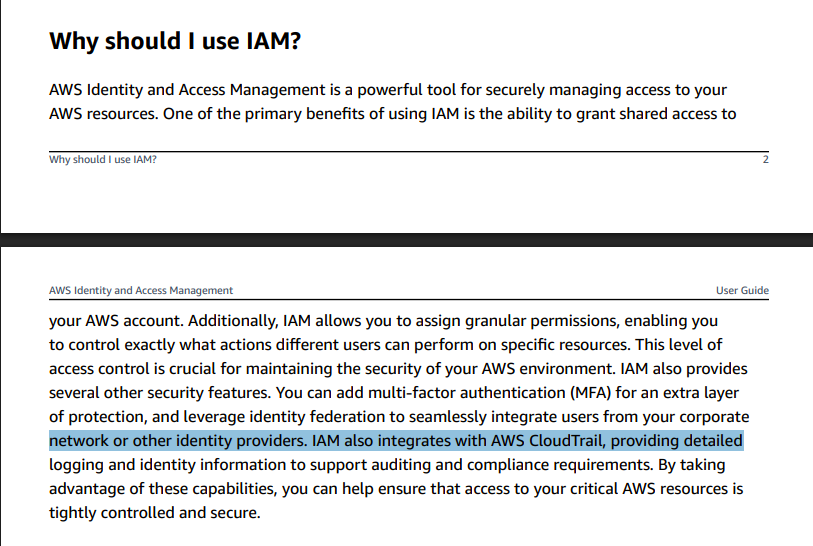
Most people think AWS starts with EC2, S3, or Kubernetes. It actually starts with IAM. Because before anyone can launch a server, access a database, or upload a file, AWS needs to answer two questions: 1. Who are you? 2. What are you allowed to do? That's exactly what IAM solves. • Users → identities for humans • Policies → permissions written in JSON • Groups → permission management at scale Imagine a company with 100 developers. Without IAM: Everyone gets root access. One mistake can delete production databases, S3 buckets, or critical infrastructure. With IAM: You create individual Users for each employee. Then attach Policies that define exactly what actions they can perform. Example: Allow: * Read S3 buckets * Launch EC2 instances Deny: * Delete production databases But managing permissions user-by-user doesn't scale. That's where Groups come in. Create a "Developers" group. Attach S3 and EC2 policies once. Now every developer added to that group automatically inherits those permissions. Need to give all developers EC2 access tomorrow? Update the group once. 100 users get the new permissions instantly. No manual updates. No permission drift. No chaos. The mental model: User = Who you are Policy = What you can do Group = How permissions scale IAM isn't just another AWS service. It's the security foundation that sits underneath every AWS service you will ever use. If you're learning AWS, understanding IAM early will save you from countless security mistakes later. What's the most confusing IAM concept for you right now: Users, Policies, Groups, or Roles? #AWS #IAM
Nikhil sinha tweet media
English
0
0
1
4
Nikhil sinha
Nikhil sinha@sinhaniik·
Great observation. The part that stands out is Microsoft passing while SpaceX rushed into a $60B stock deal days after IPO. That alone raises questions about who saw what. Also, isn’t Composer 2.5 Cursor’s product? If the workflow layer is this valuable, maybe the moat is bigger than just model access?
English
0
0
1
2
Hedgie
Hedgie@HedgieMarkets·
🦔SpaceX signed a deal to acquire Cursor for $60 billion in all-stock on Tuesday, four days after its Nasdaq IPO at over $2 trillion. Cursor makes roughly $4 billion a year in revenue. Microsoft looked at the deal. OpenAI tried to buy Cursor twice and got turned down. My Take SpaceX went public on Friday and signed a $60 billion acquisition by Tuesday. A company that converts its stock into a deal that size before the first full trading week ends knows the price won't hold. Cursor is a good product but it doesn't own the AI it runs on. It works because it plugs into Claude and GPT. If those companies change their pricing or build a direct competitor, the $60 billion product has a dependency it can't control. Microsoft already owns GitHub Copilot and could have absorbed Cursor into VS Code tomorrow. Microsoft passed. When the company with the most to gain walks away from a deal, the price was probably wrong. SpaceX paid it anyway, in stock that Morningstar valued at less than half the IPO price. Go public and spend the stock before the market figures out what it's worth. Hedgie🤗
Hedgie tweet media
English
23
48
242
13.2K
Nikhil sinha
Nikhil sinha@sinhaniik·
I swear every company I use has announced an iOS app in the last 30 days. At this rate, my toaster is two updates away from shipping on the App Store. 🚀
Nikhil sinha tweet media
English
0
0
1
5
Nikhil sinha
Nikhil sinha@sinhaniik·
@ThierryBorgeat Retail investors: "I'm funding humanity's future." The balance sheet: "You're funding accounts payable."
English
0
0
0
1
Thierry from arvy 🇨🇭
Thierry from arvy 🇨🇭@ThierryBorgeat·
Oh, I forgot the best part. Months before the IPO, SpaceX took $17.5 billion of old junk debt from xAI and X and parked it on its own balance sheet through a $20 billion bridge loan. The terms? Repaid within six months of listing. So part of the $75 billion that retail and index funds just handed over is already spoken for. Not for Mars. Not for rockets. To clear debts piling up at Elon's other companies. You bought the rocket ship. You're on the hook for the loans. BEST. ENGINEERING. EVER.
Thierry from arvy 🇨🇭@ThierryBorgeat

🚨 SpaceX just pulled off the greatest financial engineering feat of the century. In about a week. Here's everything that happened, in order: – Folded xAI into a rocket company, turning "space logistics" into an "AI infrastructure" story overnight – Priced the IPO at a flat $135. No book-building, no range. Take it or leave it – Floated just 4% of the company. 556 million shares against 13 billion – Raised $75 billion at a $1.77 trillion valuation, near 100x revenue – Lobbied to get into major indices in ~15 trading days. Amazon took years. Forced buying, by law – Handed an unusually large slice of the float to retail. Tiny supply, an army of buyers – Watched the stock rocket past $200, up nearly 20% in a single session – Saw ~46% of the entire float trade hands in one day – Then announced a $60 billion all-stock buyout of Cursor, the AI coding tool – Structured it so the higher the stock trades, the fewer shares it has to print to pay A company losing $4 billion a quarter is now buying AI startups with paper it manufactured out of a 4% float. The scarcity that pumped the stock now makes its shopping spree cheaper. This isn't aerospace. It isn't even AI. It's the finest financial engineering of the century, and it's only week one.

English
214
1K
7.5K
1.2M
Nikhil sinha
Nikhil sinha@sinhaniik·
@Hesamation almost 28% people used. WHHHAAATTTT oh they have G-Suit, make sense
English
0
0
0
2
ℏεsam
ℏεsam@Hesamation·
ChatGPT has lost >50% of AI market share for the first time: ChatGPT: 46.4% Gemini: 27.7% Claude: 10.3%. the reality is way different outside the X bubble. consumers care most about what's accessible rather than which model is best. DISTRIBUTION IS EVERYTHING.
ℏεsam tweet media
English
23
8
108
11.2K
Nikhil sinha
Nikhil sinha@sinhaniik·
@thaiscbranco_ @CRV @AmplifyPartners AI solved the cost of creation. Now it's running into the cost of curation. The gap between "technically correct" and "actually good" is where most AI products still fail. If Taste Labs can make judgement measurable, that's a much bigger unlock than another model benchmark.
English
0
0
1
2
Thais Castello Branco
Thais Castello Branco@thaiscbranco_·
We’re excited to introduce Taste Labs. Our mission is to end AI slop. We’re building the data and infrastructure layer to give AI models and agents taste. And today we’re coming out of stealth, announcing our $18.5M seed funding, co-led by @CRV and @AmplifyPartners AI has nailed objective domains and made it easy to generate anything. But it still feels off. Now, the challenge is judgement. What fits, what feels like you, what’s GREAT. This requires turning a fuzzy, subjective domain into something we can measure and codify. We’re starting with design. There are two sides to cracking this, the foundation model layer and the agent layer: - We’ve already been working with the top frontier labs to evaluate and improve their models, crafting the right post-training data and RL environments. - We’ve also been working with app-layer companies to build the context and verification tools for their agents to produce better, more on-brand, more creative outputs. We want a future where AI feels right. If you’re passionate about this mission, join us!
English
469
180
3.1K
1.4M
Kunal Mishra
Kunal Mishra@knlmsh·
macOS should ban all electron apps and allow only apps built in Rust.
English
5
1
14
1.6K
Nikhil sinha
Nikhil sinha@sinhaniik·
@noahhhlzl i want to mine but there are people who just grow their x far better than mine
English
0
0
0
4
Noah Liu
Noah Liu@noahhhlzl·
hiring: someone to run our X account. part-time. $10K/month. I don't care about hours. I care about results. you need to: → actually live on the internet, not just post on it → be deep in AI news (not newsletter-deep, actually-there-deep) → have taken an account from 0→10 before, and can prove it if that's you → comment, I'll reach out. know a virality magician? tag them below. if we hire them, you get a $10K referral fee, minimum.
Noah Liu tweet media
English
351
11
528
68.1K
Nikhil sinha
Nikhil sinha@sinhaniik·
DeepSeek is proving that AI leadership isn’t reserved for Silicon Valley. While many chased closed ecosystems, DeepSeek bet on open-source research, long-term AGI work, and domestic innovation. A $50B valuation, a founder who kept control, and models that push the frontier despite chip restrictions. China isn’t just catching up in AI anymore. It’s building its own path.
English
0
0
1
3
Rohan Paul
Rohan Paul@rohanpaul_ai·
DeepSeek takes the crown as China’s most valuable AI startup after a massive $7.4B raise at a $50B valuation. The unusual part is control: Liang Wenfeng, DeepSeek’s founder, held almost 90% of the company before the financing and invested around $3 B as the biggest contributor. DeepSeek’s bet is to keep pushing open-source models and AGI research, while also helping domestic chipmakers such as Huawei run powerful models despite U.S. chip limits. Other top disclosed investors : Tencent: about $1.5B CATL: about $740M China’s National Artificial Intelligence Industry Investment Fund: about $150M
Rohan Paul tweet mediaRohan Paul tweet media
English
7
17
125
10.2K
Nikhil sinha
Nikhil sinha@sinhaniik·
First time using Composer 2.5, and I'm impressed. I've been using Codex 5.5 for a while, but surprisingly, Composer feels better for planning, architecture, and keeping context across larger tasks.
Nikhil sinha tweet media
English
0
0
1
11
Nikhil sinha
Nikhil sinha@sinhaniik·
@T3chFalcon First we wrote code. Then we reviewed code. Soon we'll mostly supervise code. Origin isn't competing with GitHub. It's competing with the assumption that humans are the primary producers of software.
English
0
0
1
3
IT Guy
IT Guy@T3chFalcon·
2023: Cursor launches. a VS Code fork with AI autocomplete. 2025: Cursor acquires Graphite. a code review startup. 2026: Cursor launches Origin. git hosting. a direct GitHub competitor. also 2026: SpaceX acquires Cursor through xAI. three years. VS Code plugin to GitHub competitor owned by Elon Musk. the pitch for Origin is genuinely interesting: GitHub was built for humans. Origin is built for agents. the demo showed 22.6 commits per second inside one repo. hundreds of thousands of clones and pushes per hour. because the assumption is that soon it won't be one developer committing code. it'll be hundreds of AI agents committing in parallel, branching, merging, and fixing failures simultaneously. Someone online said: "Cursor needs your code to train their models." You write code in Cursor. Cursor hosts it on Origin. Cursor owns a frontier AI model trained on code. Your code is now the training data for the AI that is replacing you. Microsoft owns GitHub. Microsoft owns the code of hundreds of millions of developers. SpaceX now owns Cursor. SpaceX now wants the code of hundreds of millions of developers.
Polymarket@Polymarket

JUST IN: Cursor unveils “Origin,” a new code storage & git hosting platform built to take on GitHub.

English
5
11
129
13.5K
Nikhil sinha
Nikhil sinha@sinhaniik·
started my day with a good read
Nikhil sinha tweet media
English
0
0
1
33
Nikhil sinha
Nikhil sinha@sinhaniik·
June 16 - 26 Done for the day kinda good day i would say started AWS, i have already worked with AWS but i never got the chance to deep dive into concepts and “why” and behind the code what is happening and all services and all if you are also on the same journey consider follow you will not regrets this i promise good night
English
0
0
1
19
Nikhil sinha
Nikhil sinha@sinhaniik·
@ns123abc The AI problem is no longer intelligence. It's economics.
English
0
0
1
3
NIK
NIK@ns123abc·
BREAKING: Microsoft exploring DeepSeek over OpenAI and Anthropic as Copilot Cowork moves to usage-based pricing “We have users who do hundreds of tasks a week… the consequence is the costs can go very high...” Jevons paradox
NIK tweet mediaNIK tweet mediaNIK tweet media
English
177
278
2.8K
585K
Nikhil sinha
Nikhil sinha@sinhaniik·
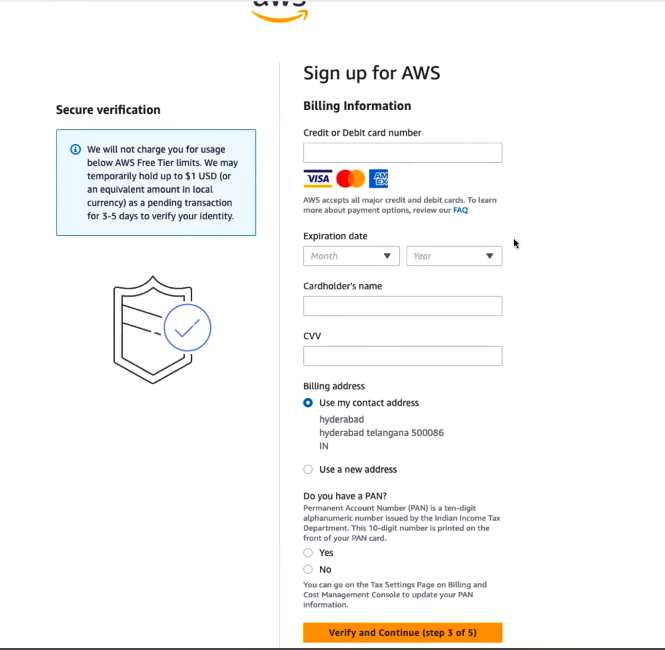
Many beginners who are trying to learn AWS, this page either does not make sense to them or they are way too scared to fill in their billing details. Because somewhere they heard: *"AWS charged me $100."* But that's usually not how it works. When creating an AWS account, AWS asks for a debit/credit card mainly for identity verification and to prevent abuse (people creating hundreds of accounts). A few things to keep in mind: • AWS may place a small temporary verification charge (often around $1 or local currency equivalent) and later reverse it. • AWS does not instantly start draining money from your card the moment you add it. • The card is there to verify you're a legitimate user. • If you stay within the Free Tier limits, you typically won't be charged for eligible services. • The real danger isn't adding the card — it's launching resources and forgetting to monitor them. The lesson: Don't fear the billing page. Understand the billing model. Cloud is expensive when you're careless, not when you're learning. #AWS
Nikhil sinha tweet media
English
0
0
1
22