Jason
3.7K posts

Jason
@webmaster
Software & machine interfaces https://t.co/O1A3SabFcQ
Austin, TX Sumali Ocak 2009
1.3K Sinusundan3.2K Mga Tagasunod

@kmelve @sanity_io Use case is setting up agent integrations that require api tokens. I want to be able to make edits to content, but it seems too risky. I don't want an agent potentially wiping data or writing to published state
English

@webmaster @sanity_io It’s either by the token you give it or it’s following the access of the user if it’s evoked through an oauth session.
Tell me more though, what is your use case?
English

you might have missed it, but @sanity_io now has:
→ graph-based json backend
→ cdn for content queries and assets
→ fully customizable editing interface
→ open-source battle-tested rich text editor
→ groq: a query language purpose-built for content
→ portable text: rich text as structured data, not HTML
→ image pipeline with on-the-fly transforms via URL params
→ media library with centralized asset management
→ sanity live: real-time content updates without polling or webhooks
→ visual editing: click-to-edit on your live site
→ multiplayer real-time editing (no locking, no merge conflicts)
→ schema-as-code (version-controlled, AI tools can generate it)
→ app sdk for building custom studio experiences
→ functions that trigger on any content change
→ content releases: bundle changes across documents, publish on schedule
→ scheduled publishing for individual documents
→ out-of-the-box vector search for your content
→ ai actions that generate, translate, and transform content in place
→ content agent for bulk edits and audits via slack or API
→ mcp server for both dev tools and end-user agent experiences
→ agent toolkit: installable skills for claude, cursor, copilot, and more
→ typegen for type-safe content queries
→ framework starters for next.js, astro, nuxt, remix, svelte
→ generous free tier (10K docs, 100 AI credits, 500K function calls)
→ i probably forgot more stuff
and it all works together.
English

These are the type of agent workflows that get me excited about the future
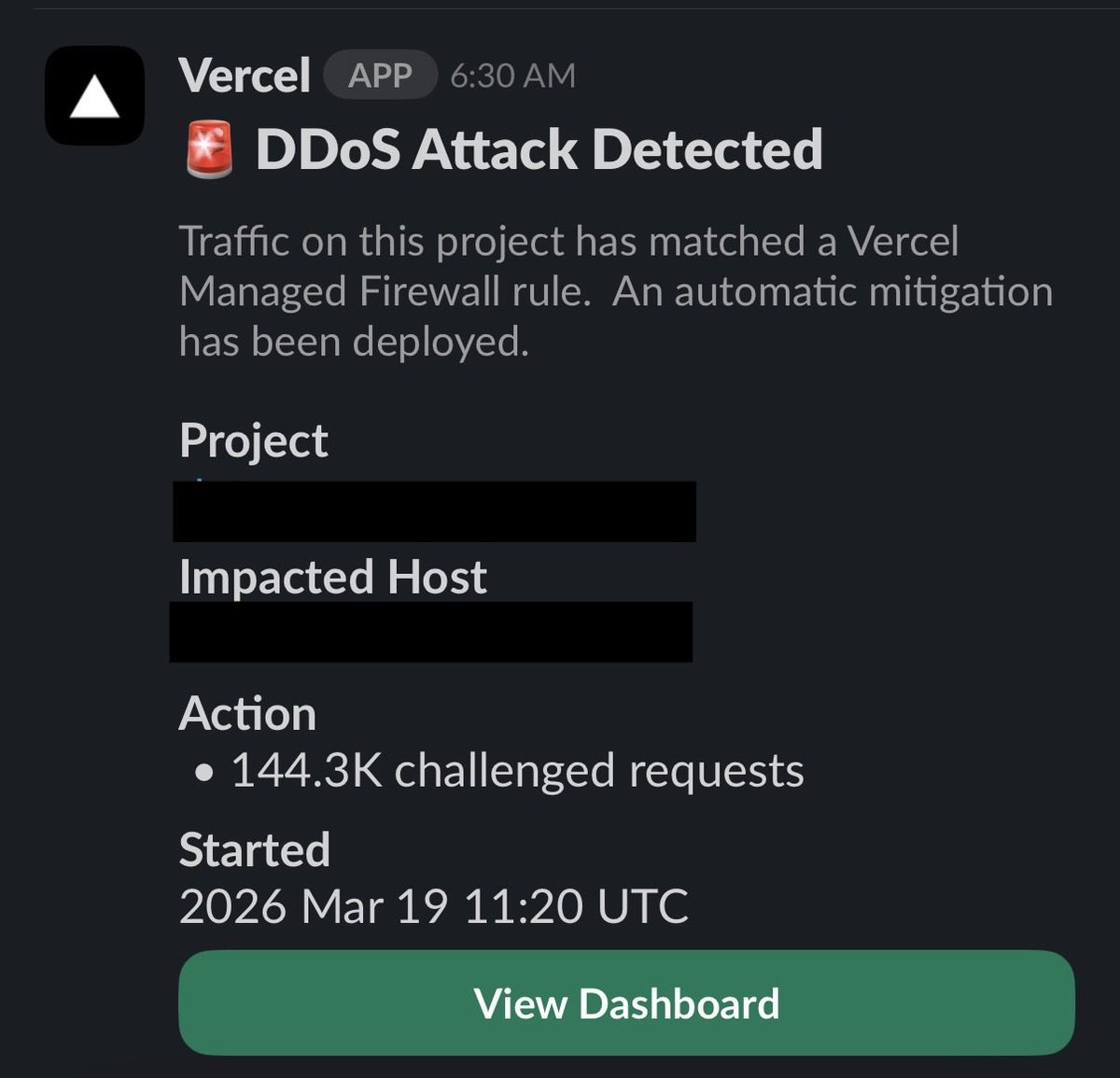
When Vercel's firewall feature was released years ago, I manually configured rules and triaged everything myself
Then they launched presets to make it easier to create rules
Then they updated the dashboard design to make it easier to triage issues
Then they launched alerts to make it faster to triage issues
Then they added AI to mitigate the issue for you before humans are ever notified
Great example of layering AI on top of years of foundational work

English

@nikitabier Grok Listen is one of best features in X now, and this is the one thing that was missing
Can you put the Listen button on the summary too?
English

@tobiaslins @vercel Have you guys been having issues with observability? I keep hitting timeouts on multiple teams and projects
English

I love building observability pipelines
At @vercel scale completely new problems arise compared to our 1B events/month at Splitbee
→ A single customer can have billions of datapoints week
→ Data streams are at GB/s scale
→ Achieve e2e latency of <5s
→ Durability is key. We should never loose data when the database is down
English

Situation rooms will replace living rooms. Every tech enthusiast's home will look like this within the next few years
Assume the following:
- primary user input for computing is voice
- additional inputs are passively collected context like motion/video capture, integrations, public data sources, or other services already connected to your operating system
Anyone working with AI will tell you the current problem space is in monitoring and orchestration
The ideal output interfaces for monitoring are data visualizations, high density UI, renders, and projections that adapt to inputs in real time to give humans maximum context as quickly as possible
Polymarket@Polymarket
We're excited to announce 'The Situation Room' by Polymarket is coming to Washington, D.C. The world's first bar dedicated to monitoring the situation. 🧵
English

@RhysSullivan yea, and it doesn't help that the majority of skills have turned into marketing
seems we're just reinventing everything
English

Watch the whole thing, not just the clips
TK mentions one insight from Uber that is just so relevant for every AI founder trying to win the race and accelerate at scale right now --
"You must be able to empower teams. The fewest number of rules while staying out of chaos. Once you have the systems in place, your imagination is only constrained by management capacity."
Sounds simple but hard to execute. It's an edge
TBPN@tbpn
FULL INTERVIEW: @travisk joins TBPN to discuss his new company Atoms, physical AI, Uber, and more: 01:18 - Why he's been building in stealth for 8 years 04:32 - Atoms and the future of physical AI 08:10 - Creating a culture of builders 12:05 - Lessons from Uber 24:30 - The vision for physical AI and robotics 31:15 - Why humans will be the main beneficiaries of AI 38:20 - Mining, autonomous robots, automation 47:05 - Why Travis moved to Texas

English
Jason nag-retweet

@kmelve @sanity_io Really cool, I've been meaning to check this out. This is content agent right?
English

i think @sanity_io is the first true headless CMS where you can make an agent go through your blog posts, find syntax errs in your blog posts and fix them without you leaving the chat or getting into a dashboard at all.
English

Introducing Void, the Vite-native deployment platform:
🚀 Full-stack SDK
⚙️ Auto-provisioned infra (db, kv, storage, AI, crons, queues...)
🔒 End-to-end type safety
🧩 React/Vue/Svelte/Solid + Vite meta-frameworks
🌐 SSR, SSG, ISR, islands + Markdown
🤖 AI-native tooling
☁️ One-command deploys
void.cloud

English

oxlint plugins are how i discipline my agents
Oxc@OxcProject
Announcing Oxlint JS Plugins Alpha oxc.rs/blog/2026-03-1…
English

@Benioff @salesforce This is cool, but stuff like this would be infinitely more useful if we could reduce the unwanted noise. Indicators, promos, popups, and options are just too much
English

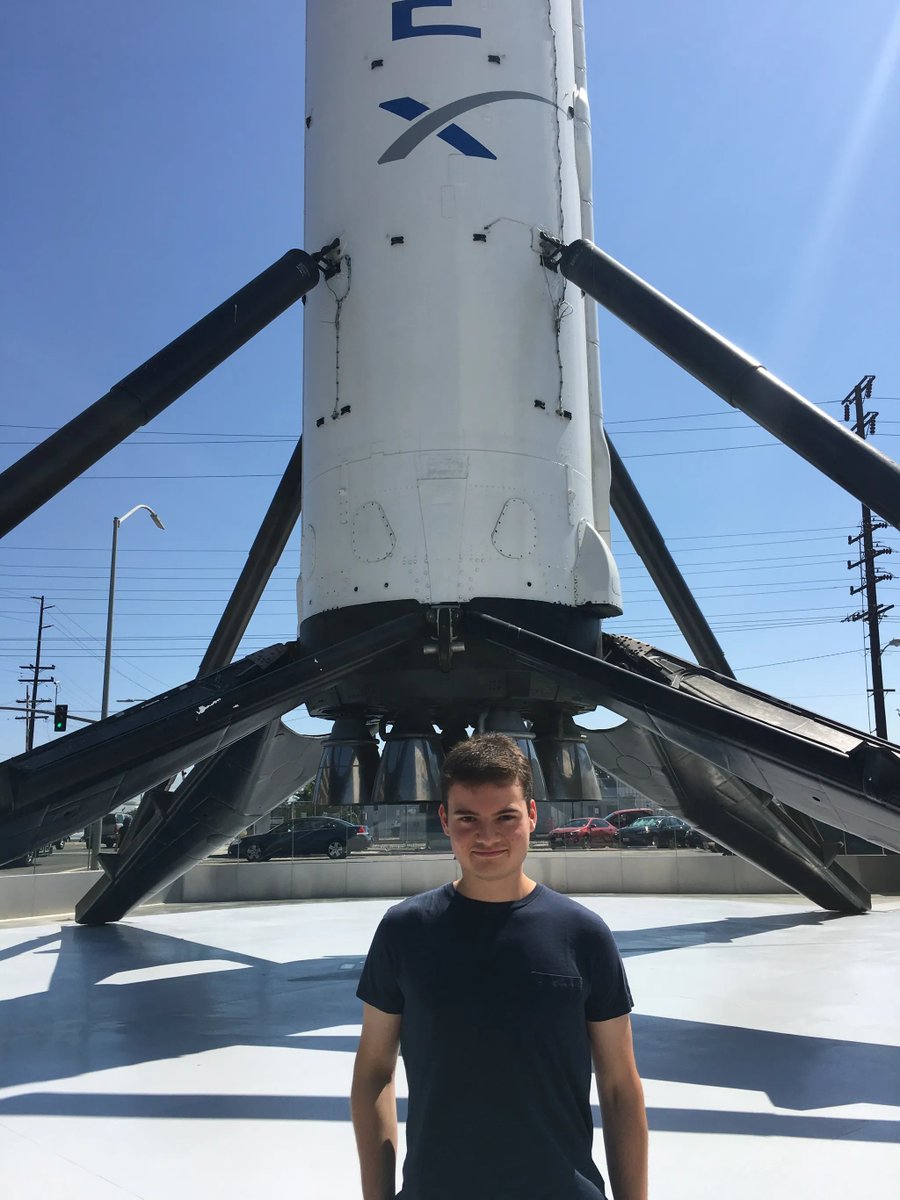
I’m joining @SpaceX and @xai with @JasonBud.
X is the company realizing science fiction - reusable rockets, humanoid robots, data centers in space, and more. Almost 10 years ago, I joined SpaceX as an intern on Dragon 2 crew displays. This was in the era of the first rocket landings on barges, long before the Dragon 2 restored human spaceflight to America or Starlink delivered internet from space.
Every day since then, I’ve thought about the next steps to land on the Moon - and to build a city on Mars, data centers in space, the brains behind robots, and beyond. There is no better place to build teams and products from the ground up with planetary scale resources.
If you’re looking to work on the hardest problems that lay a foundation for humanity’s future to the Moon, Mars, and beyond - DM me.

English