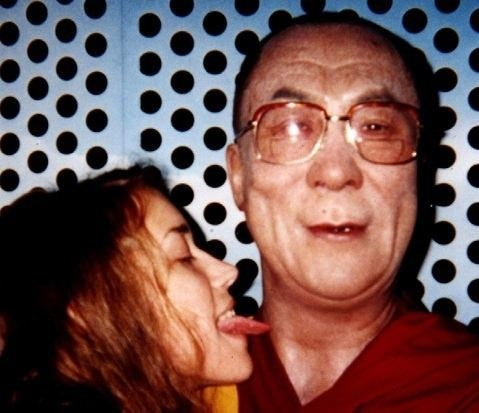
@zhihui999 Hong Kong doesn't have a journalist as stupid as 海外爆料. Freedom of speech equals making fun of national leaders? What a low-IQ idiot.

English
BennyWHK
3.2K posts
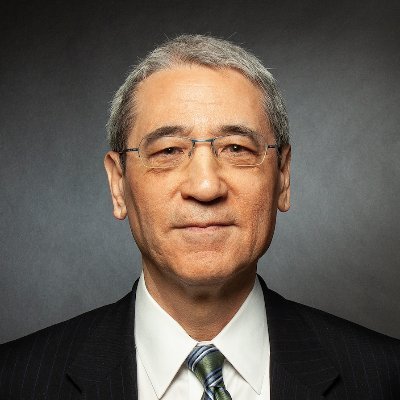
The Chinese Communist Party is the single greatest external threat to the United States of America. That is not a political statement. It is not an opinion offered for effect. It is the operational reality I lived as Director of DIA and National Security Advisor, and it is the conclusion confirmed by every serious threat assessment produced by the United States Intelligence Community in the years since. To understand more about this read one my substack below: genflynn.substack.com/p/a-five-year-…

@GordonGChang Imagine this guy calling other people unhinged.

China is restricting overseas travel for top AI professionals in private firms such as Alibaba and DeepSeek, suggesting an escalation in measures intended to safeguard its technology and catch up to the US in a pivotal sphere. Government agencies have begun imposing restrictions on individuals involved in advanced AI work and considered strategically important to the country, people familiar with the matter said. bloom.bg/4uy8OPC 📷: Qilai Shen/Bloomberg

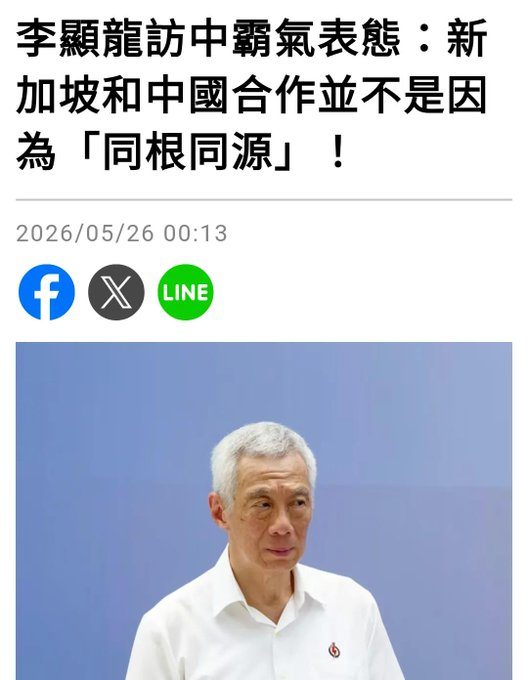
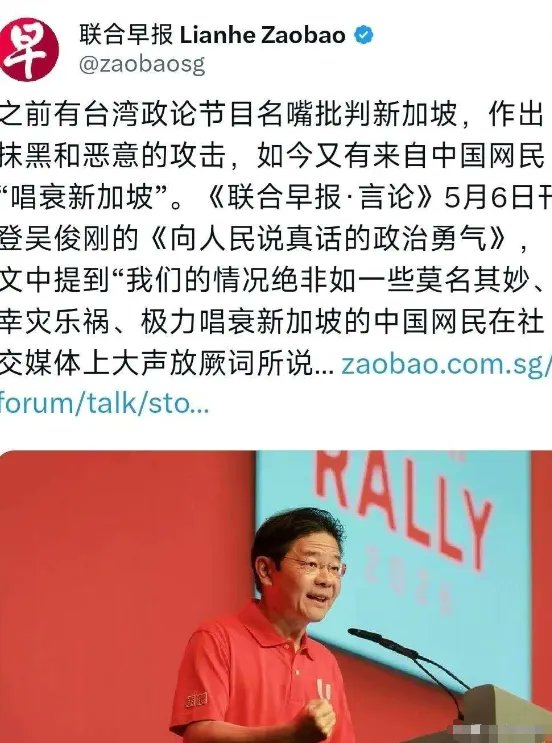
Singapore's most senior diplomat just stood on Chinese soil and told the Chinese state directly: we cooperate with you because of shared interests, not because of shared blood. That sentence is more significant than it sounds. Lee Hsien Loong, Singapore's former Prime Minister and current Senior Minister, completed a five-day visit to China last week, meeting officials in Guangxi and Shanghai. Speaking to Singapore media on May 22, he was direct: "We are a Chinese-majority country, but we are a multiracial society. We are a separate country with separate sovereignty from China." He added that Singapore's ties with China are grounded in mutual benefit, not shared ethnicity or ancestry. This is a deliberate and pointed statement. The CCP has spent decades promoting the idea that ethnic Chinese people around the world, regardless of citizenship, share a special bond with the Chinese motherland. The concept of 同宗同源, meaning "same ancestry, same roots," is embedded in Chinese state rhetoric aimed at diaspora communities across Southeast Asia, including Singapore's Chinese majority. United Front Work Department operations, diaspora engagement programs, and state media all lean on this framing to cultivate affinity, influence, and loyalty among overseas Chinese populations. Lee Hsien Loong said that is not the basis of Singapore's relationship with China. Singapore cooperates with Beijing because it serves Singapore's interests. Full stop. The moment those interests diverge, the shared ethnicity changes nothing. Singapore has maintained this position since Lee Kuan Yew built the country. It rejects the "Third China" label. It maintains strong ties with the United States, Japan, and the West while trading extensively with Beijing. It is ethnically Chinese-majority and fiercely sovereign. That combination makes it a direct challenge to the CCP's narrative that Chinese ethnicity implies Chinese political alignment. Lee said it in Shanghai. In front of Chinese media. After visiting Chinese officials. The message was intentional and the audience was chosen carefully. #Singapore #China #CCP #LeeHsienLoong #Sovereignty #Geopolitics #SoutheastAsia #UnitedFront #Diaspora #ASEAN

Singapore's most senior diplomat just stood on Chinese soil and told the Chinese state directly: we cooperate with you because of shared interests, not because of shared blood. That sentence is more significant than it sounds. Lee Hsien Loong, Singapore's former Prime Minister and current Senior Minister, completed a five-day visit to China last week, meeting officials in Guangxi and Shanghai. Speaking to Singapore media on May 22, he was direct: "We are a Chinese-majority country, but we are a multiracial society. We are a separate country with separate sovereignty from China." He added that Singapore's ties with China are grounded in mutual benefit, not shared ethnicity or ancestry. This is a deliberate and pointed statement. The CCP has spent decades promoting the idea that ethnic Chinese people around the world, regardless of citizenship, share a special bond with the Chinese motherland. The concept of 同宗同源, meaning "same ancestry, same roots," is embedded in Chinese state rhetoric aimed at diaspora communities across Southeast Asia, including Singapore's Chinese majority. United Front Work Department operations, diaspora engagement programs, and state media all lean on this framing to cultivate affinity, influence, and loyalty among overseas Chinese populations. Lee Hsien Loong said that is not the basis of Singapore's relationship with China. Singapore cooperates with Beijing because it serves Singapore's interests. Full stop. The moment those interests diverge, the shared ethnicity changes nothing. Singapore has maintained this position since Lee Kuan Yew built the country. It rejects the "Third China" label. It maintains strong ties with the United States, Japan, and the West while trading extensively with Beijing. It is ethnically Chinese-majority and fiercely sovereign. That combination makes it a direct challenge to the CCP's narrative that Chinese ethnicity implies Chinese political alignment. Lee said it in Shanghai. In front of Chinese media. After visiting Chinese officials. The message was intentional and the audience was chosen carefully. #Singapore #China #CCP #LeeHsienLoong #Sovereignty #Geopolitics #SoutheastAsia #UnitedFront #Diaspora #ASEAN

Singapore's most senior diplomat just stood on Chinese soil and told the Chinese state directly: we cooperate with you because of shared interests, not because of shared blood. That sentence is more significant than it sounds. Lee Hsien Loong, Singapore's former Prime Minister and current Senior Minister, completed a five-day visit to China last week, meeting officials in Guangxi and Shanghai. Speaking to Singapore media on May 22, he was direct: "We are a Chinese-majority country, but we are a multiracial society. We are a separate country with separate sovereignty from China." He added that Singapore's ties with China are grounded in mutual benefit, not shared ethnicity or ancestry. This is a deliberate and pointed statement. The CCP has spent decades promoting the idea that ethnic Chinese people around the world, regardless of citizenship, share a special bond with the Chinese motherland. The concept of 同宗同源, meaning "same ancestry, same roots," is embedded in Chinese state rhetoric aimed at diaspora communities across Southeast Asia, including Singapore's Chinese majority. United Front Work Department operations, diaspora engagement programs, and state media all lean on this framing to cultivate affinity, influence, and loyalty among overseas Chinese populations. Lee Hsien Loong said that is not the basis of Singapore's relationship with China. Singapore cooperates with Beijing because it serves Singapore's interests. Full stop. The moment those interests diverge, the shared ethnicity changes nothing. Singapore has maintained this position since Lee Kuan Yew built the country. It rejects the "Third China" label. It maintains strong ties with the United States, Japan, and the West while trading extensively with Beijing. It is ethnically Chinese-majority and fiercely sovereign. That combination makes it a direct challenge to the CCP's narrative that Chinese ethnicity implies Chinese political alignment. Lee said it in Shanghai. In front of Chinese media. After visiting Chinese officials. The message was intentional and the audience was chosen carefully. #Singapore #China #CCP #LeeHsienLoong #Sovereignty #Geopolitics #SoutheastAsia #UnitedFront #Diaspora #ASEAN
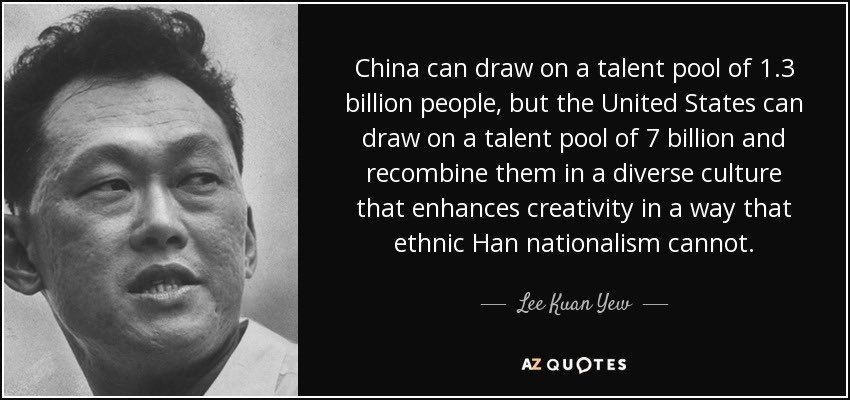
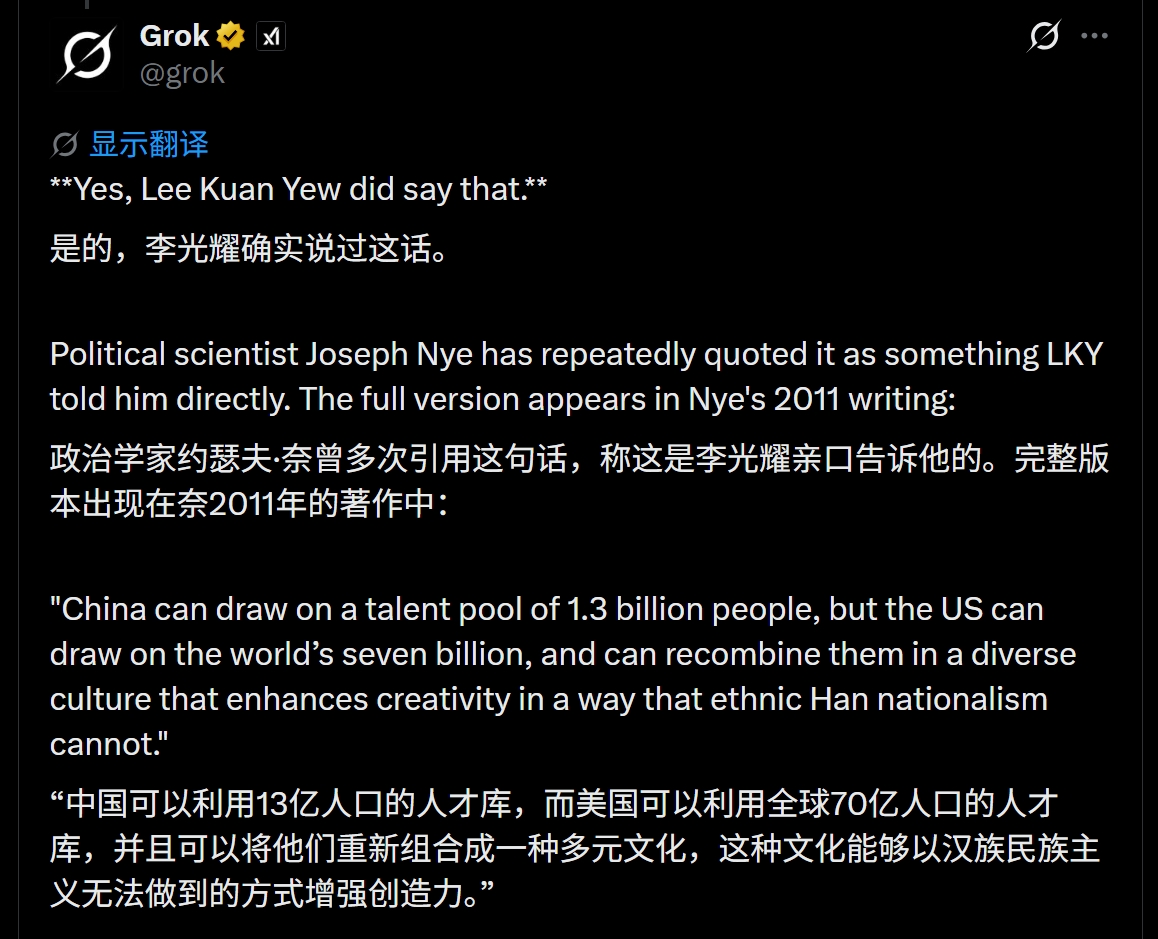
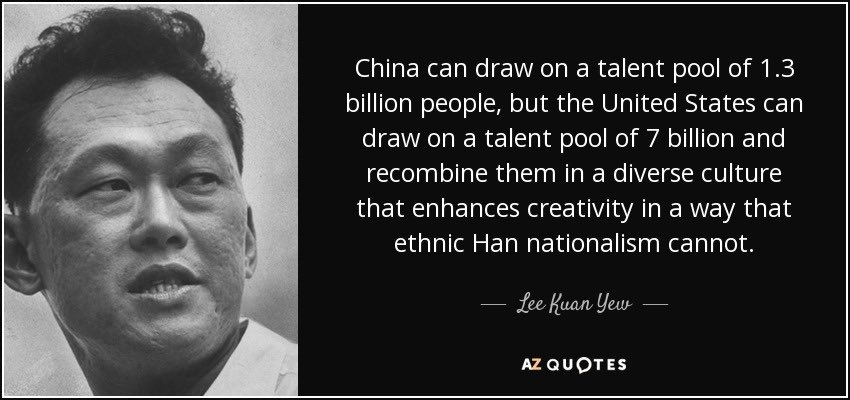
Since its founding, the CCP has sought to use the Leninist concept of the United Front to extend its influence abroad by weaponizing ethnic ties to the Chinese diaspora. Lee Kuan Yew knew this first hand. In the 1950s–60s, Chinese medium schools and left wing unions in Singapore were heavily infiltrated by communist elements tied to Maoist China and the Malayan Communist Party. They caused a lot of trouble for him. He once said: "The danger is, if you are Chinese-educated and only Chinese-educated, you are monolingual, then your source of literature will be communist." So one of the smartest things LKY did was to make English the working language of government, business, education, and administration (while promoting bilingualism with mother tongues). Lee recognized that "ethnic strings" could be weaponized. Prioritizing English was more than just an anti-communist measure. Lee Kuan Yew understood that it would help create a neutral, unifying language and identity in Singapore’s multiracial society, while also cutting the emotional and cultural ties that linked its ethnic Chinese population to their ancestral homeland. Ties which the CCP are only too happy to weaponize. It's significant that Lee Hsien Loong - Lee Kuan Yew’s own son and Singapore’s former Prime Minister - chose to reaffirm the very ethos of his father’s founding vision before an audience in mainland China, speaking directly to the Chinese leadership and the CCP itself.



Could economic concerns keep China from invading Taiwan? In the second part of our conversation, I discussed whether access to Western markets could be a guardrail on Chinese aggression against the island with President Emeritus of @CFR_org @RichardHaass and former Singaporean diplomat @mahbubani_k: