Harris Rothaermel

21.5K posts

Harris Rothaermel banner
Harris Rothaermel

Harris Rothaermel

@DeveloperHarris

co-founder @americanhousing

Austin, TX شامل ہوئے Eylül 2015
1K فالونگ12.8K فالوورز
پن کیا گیا ٹویٹ
Harris Rothaermel
Harris Rothaermel@DeveloperHarris·
a man without a mission is no man at all
English
10
8
127
31.6K
Harris Rothaermel
Harris Rothaermel@DeveloperHarris·
@ctjlewis choosing comfort electric over uberx at least improves those odds to 50/50 50% chance of a waymo, 50% of getting sick in a tesla
English
0
0
9
663
Lewis 🇺🇸
Lewis 🇺🇸@ctjlewis·
Not sure if San Franciscans know about this but over a year ago, Waymo signed a deal with Uber, and here in Austin, the Uber app is the only way to call one. So they make us play this game of Russian Roulette where you either get the Waymo you wanted, OR you get an illegal Mexican who does not speak English and drives like he wants to kill you both. There is no way to choose.
English
15
1
197
20.6K
Jason Carman
Jason Carman@jasonjoyride·
Laurence (@laurence1allen) & his father's hometown has been flooding for years... so they started Terranova to save their city. Their novel technology pumps waste wood 60 ft below the ground, to raise it. On episode 72 of S3 we visit their factory and 2nd ever field deployment.
English
10
22
221
19.2K
eigenrobot
eigenrobot@eigenrobot·
@Telegraph reminder that its bad on purpose to make u click
English
11
0
203
1.8K
The Telegraph
The Telegraph@Telegraph·
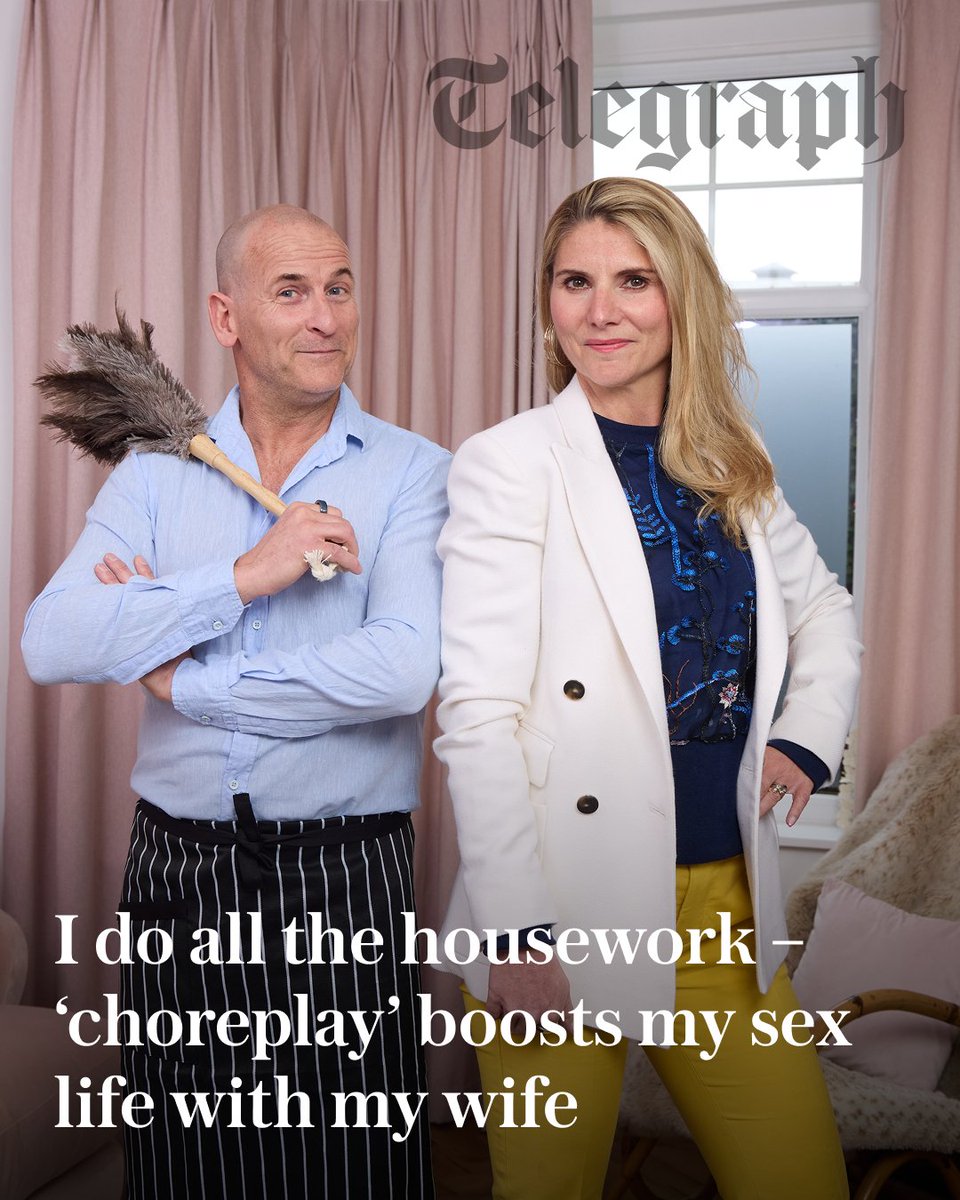
'Ironically, when I iron, my life becomes steamier' As new research finds that men who clean have a higher desire for their partners, one man about the house explains why the dynamic works 👇 telegraph.co.uk/health-fitness…
The Telegraph tweet media
English
48
3
12
43K
Harris Rothaermel
Harris Rothaermel@DeveloperHarris·
@npceo_ only those who try really understand that gaming is a hell very few success stories escape from impressed by you and the team for surviving as long as you did. excited for you to have some time to yourself again, and if you’re ever in austin, swing by!
English
2
0
7
556
Harvey Michael Pratt
Three weeks ago, I made the difficult decision to shut down Simcluster (AKA The Promenade Studios). It's popularly said that startups don't die when they run out of money, but when the founders give up. Let me be the first to tell you that's bullshit. I want to start this note by acknowledging our amazing investors. You took a bet on a small team trying to tackle an incredibly tough, incredibly new space - AI Gaming - and my biggest regret is that I couldn't get this over the line for you. Thank you, and I'm sorry. To existing Simcluster players: thank you for the memories, simulants. It was an honor building for you. Please check Discord for more information about the shut down process. Cause of death At a high level, our death was boring. Despite having a working game with excellent retention and surprisingly sound unit economics, my inability to raise a seed round was - in mortician's terms - the primary cause of death. If you were wondering, it takes about 3 years to live a failure, and then about 3 weeks to write it up. What do you even write about? But somehow this post is ~2800 words and still somehow doesn't feel long enough. At least to me. So I'm going to dedicate the rest of this post to talking about "what went wrong" - a sort of postmortem in the vague hopes that this will be helpful to consumer AI founders insane enough to follow in our footsteps. Things I wish I'd known. Building games is gigahard The first thing to understand is that building games is incredibly tough and incredibly expensive. Don't take my word for it - John Carmack, legend that he is, touched on the brutal reality of founding a games studio recently, noting that the odds of success were about as dismally low as you can find in startups. By way of analogy, imagine building a plane as you're flying it, as you're deriving aerodynamics from scratch, all the while under fire in an active warzone. This is roughly how difficult it is to bring a new game, in a new genre, to market. For 3 years, our brilliant team showed up every day with one mission - to build a successful video game that wasn't possible before modern AI. From day 1, we knew what we wanted to build. Not a chat app, not a games creation platform, but an honest-to-god video game that we ourselves would want to play. On that front, we were successful twice over. Over those 3 years - and the requisite 6 month interstitial period of pivot hell - we built and shipped two games: The Promenade and Simcluster. Both were variations on a theme: video games about social networks, a genre of game was impossible to execute prior to modern AI. To this day I'm incredibly proud of the products and communities we built. Simcluster specifically is the highlight of my career so far. Unfortunately, we quickly learned some harsh truths about building a VC-backed games studio. Games VCs don't really exist The first and most essential thing that you must understand is that "Games VCs" don't really exist. In my experience, firms with "Gaming Ventures" or similar in the name are either functionally dormant - but very happy to jump on a call! - or mid-pivot, with lagging website copy and talking points. In so far as these firms DO exist, they are artifacts of a brief period in the late 2010s where excitement around 3 specific gaming verticals allowed savvy operators to raise massive amounts quickly: "hypercasual" studios like Zynga or Machine Zone; "metaverse" platforms like Roblox or Fortnite; and "play-to-earn" efforts like Axie Infinity or Gala. The Promenade was founded at the tail-end of this bubble - it seems hard to believe now, but when we did Speedrun (Batch 2, W24) it was still a games accelerator. I thought it curious at the time that less than a quarter of the companies in the batch were actually building games. In hindsight, this should have been the writing on the wall. Ultimately, the brief dalliance of institutional VCs with core gaming only served to reaffirm why the publisher-studio model has been the dominant financing model for the games industry since inception. In a nutshell, it's about returns: games are a notoriously hits-driven business, and most successful games do not generate recurring revenue. It is quite likely that your favorite video game or studio would be write-off on the average VC's balance sheet. What I would have done differently None of this is to say that games studios don't get funded; but in so far as they do, the most successful seed raises I have seen have to a one been a function of narrative over product. My first, and biggest, regret mistake in the fundraising process was having any form of live product at all. As soon as you have metrics, even good ones, they will be used to hang you - especially in an unpopular space like games. My second mistake, candidly, was not lying more. I've been doing startups for about 6 years now and have never seen the valley so susceptible to - frankly - bullshit. YC batchflation, naked astroturfing, fake metrics, barely-functional products. A new generation of rather shifty-looking bullshit artists; founding as an incredibly legible, high-status, and lucrative career path. Fake founders launch fake products with fake users and fake traction. To be clear, this sort of founder has always existed - but what is new is the quantity of them, the brazenness of the strategy and the tacit endorsement of VCs. Funnily enough, this is one of the few areas that I think crypto VC slightly edges out trad VC - after early 2020s crypto mania, crypto VCs tend to have a much stronger immune response to this sort of founder. Of course, all this whining reeks of sore loserdom. I am a founder, and I played, and I lost. It happens all the time. Why is this relevant? What does it mean for you? While the needle will undoubtedly swing back, the adage that "the market can remain irrational longer than you can remain solvent" true now as ever. If you want to raise VC in a space as unpopular as games, my advice is basically to get entirely stuck in - either grift hard or forego VC altogether. There is no middle path, and if you are not on-narrative traction will not save you - merely prolong your death. Never do crypto The TLDR here is that if you are a consumer AI founder, stay far away from crypto - and from Arbitrum specifically. Some of you may have noticed that Simcluster dabbled in crypto. I say "dabbled" because while we made no secret of our crypto aspirations, we never did the 'easy' thing: launching a token and extracting as much liquid cash as possible. Of course, the distinction is easily lost on "trad" VC - so know that if you choose a path like this you are necessarily foreclosing other options out of the gate. Our basic idea was to address a common failure mode in consumer crypto - and games specifically - where teams would wreck their own incentives early on by launching tokens prior to actual PMF. The goal was to avoid this at all possible costs by validating retention in web2, and then launching a strictly optional set of crypto features which were disabled by default. Believe it or not, this is a relatively new idea in crypto consumer. VCs were actually quite excited by our existing traction and thesis. So what went wrong? Firstly, macro. Being in crypto means you are subject to rapidly shifting market conditions totally outside of your control. We started to raise in October '25, and then the market crashed. Same story in March '26. When this happens, it doesn't really matter what you're doing - the vast majority of VCs will consolidate very quickly around winning narratives. In consumer, this means new flavors of prediction market, exclusively. Secondarily, partnerships. Unfortunately, crypto is largely insider baseball and "partnerships" are a non-negotiable part of launching anything more enduring than a memecoin (and if you're from outside of crypto, you'd be surprised how many actors are involved in the average "organic" memecoin runner) The basic pitch is always the same: fast equity-free cash grants; connections to VCs, market makers and trusted KOLs; comarketed product launches; connections to technical or operational talent; kingmaking, though few use that word openly. It is understood that you, in turn, will drive attention to the chain or protocol and therefore interest in some underlying asset. At the very least you will contribute to a "narrative" around a given chain, attracting more founders in your milieu. It is like gravity: if you have any kind of promising product or thesis, you will inevitable end up talking to large institutional partners - typically a chain or large exchange. In consumer, this basically means Solana or Base, with very few exceptions. We were one of those exceptions. We received a large, and very flattering, cash grant from Arbitrum via Offchain Labs - 250k cash up front, with additional large tranches unlocked via performance-based milestones (e.g total unique holders, daily volume over some time period, etc). Arbitrum approached us, and closed quickly. The ask was simple: "when you do crypto stuff, do it here." And so we got to work. As part of this grant, we had weekly meetings with their team and were connected with market makers and large companies ahead of a planned token launch. We worked much more closely, and for longer, with Arbitrum than any of our prior investors, including Speedrun. While all of this sounds useful, Arbitrum had a major role in the death of my startup. I feel obliged to share our story in the hopes that it helps other teams that might be considering working with them. As with most crypto companies, Arbitrum is still recovering from a long period of total excess. It is ridden with slow decision making, well-paid and very surplus hires and petty fiefdoms - things which are poison to early-stage startups. Arbitrum today consists of hundreds of hires: two separate VC firms (including a gaming fund, Arbitrum Gaming Ventures); an indeterminate number of marketing and growth hires; on-staff KOLs; stealth KOLs; several siloed startup programs; a very nice New York office and scores and scores and scores of managers. As an ecosystem, it is known for DeFI, and more recently has had success with some RWA plays, most notably GPU-backed stables. It has a horrible track-record in consumer specifically. It was for this reason, we initially hesitated in joining. But $ 250k is hard to ignore. Additionally, we were told we would be the first of a new program of radically different AI-native startups on Arbitrum, which was actively reconsidering an identity outside of DeFI, its failed consumer legacy and a burgeoning identity crisis as an Ethereum L2. As I mentioned, the offer was extremely flattering - and very difficult to turn down at a time when our runway was measured in weeks. However, the issues with our new partnership started to show immediately. For one thing, we were limited to talking to a subset of a subset of a subset of VCs - crypto VCs, who still invested in consumer, who still invested in games and social networks, who didn't mind that we were on Arbitrum versus Solana or Base. We knew this going in - but were told that when we wanted to raise, Tandem and Arbitrum Gaming Ventures (!) would naturally be very interested in taking a close look and that Arbitrum would make any number of other introductions besides. Over the next few months, our weekly meets with the team basically consisted of updating them on product progress, platform growth and planning our upcoming token launch. We were introduced to market makers, and also to Uniswap and planned to use their CCA mechanism for our upcoming launch - the idea being to have the fairest launch possible. To their credit, when the market began to turn in January the Arbitrum team discouraged us from a token launch in the short term. From then onwards we mostly updated the team on our fundraise - who we were talking to, what we were pitching, how it was going. It was at this point that cracks really began to show. To a startup CEO, a fundraise is all-consuming - but this urgency was impossible to effectively communicate to our Arbitrum partners. During our 6-month relationship with Arbitrum we received a total of 4 VC introductions - two to Arbitrum ecosystem VCs and two to external funds. Surprisingly, the internal VCs - Tandem and Arbitrum Gaming Ventures - were extremely cold. It was near-impossible to get straight answers on very basic questions such as "what is your average check size?", "are you deploying?" or "have you tried our product?". Successive meetings would happen with months-long gaps between them, each time with a new investor, who somehow had no context on our startup (or even that we'd received a grant!) who would tell us something different. One would say that Arbitrum were going to pre-empt our round to help build momentum. Another would tell us that we could not use their name in discussions with future investors, though they'd be happy to contribute at a discounted valuation when we'd found a lead. Yet another would say that Arbitrum would be happy to colead a smaller round. And so on. Of the two, Arbitrum Gaming Ventures was the most confusing. In theory, we figured that as a novel video game, on Arbitrum, with revenue and retention, that there was some kind of chat to be had, even if it didn't lead to investment. Unfortunately, it soon transpired that AGV was deeply dysfunctional and going through an active power struggle, having burned through tens of millions in the prior months and years on some truly suspect ideas. Deployments were - are? - frozen, though naturally it took about 2 months and lots of politicking to get someone to acknowledge that fact. One faction within Arbitrum was actively trying to fire another and seize control of the remaining capital. So it goes. To my knowledge, no-one from Arbitrum Gaming Ventures ever signed into our game. But none of this is offensive enough for me to write this post. Dysfunction is not a crime, and ultimately the responsibility to raise money is on me alone as a founder. So long as the behavior wasn't overtly hostile, I reasoned that we should be more than happy to have received 250k in the first place. My only interest was in getting to a firm yes / no from Arbitrum ecosystem investors - something we were asked about routinely by the other firms we were talking to. More than one reasoned that a video game in the Arbitrum ecosystem that couldn't attract investment from their flagship gaming fund was likely an unsound investment. Fair enough. All of this was forgivable, until it wasn't. After a one-month long deliberation process, Tandem IC - delayed twice, against the backdrop of our dwindling runway - came back with a truly shocking offer. They would be more than happy to take equity off of us... for free. With friends like that, who needs enemies? It was their thinking that we could then turn around and tell potential investors that Arbitrum had committed to the round, and in size: "Just tell them we invested!" Beyond being truly retarded - I would either have to tell future investors I had given away free equity like a gimp, or lie - it made me realize that even if I closed a round, I would have to spend months unpicking our relationship with Arbitrum and leaving the ecosystem entirely. More time playing office politics, instead of building my startup. So what's the lesson here? I can only speak for consumer AI founders specifically, as it's what I know. Choosing to tie your fate to a given chain or protocol can at best complicate your fundraise and can at worst entangle you with office politics, endless meetings and petty internal drama. These are things which sap your focus and energy, which are the lifeblood of an effective startup In this sense, the $250k we were given for free was the most expensive money we raised - and money that I'd advise other consumer founders to avoid. Especially from Arbitrum. What's next? I think it's a testament to the quality of the Simcluster team that most of us are starting businesses - solo or together - in spaces ranging from consumer healthcare, to intent marketplaces to another games studio. Ultimately, the fact that we're all leaving this experience as friends is a substantial silver lining. I hear it's very common for former cofounders to fall out - something there's no risk of here. If you are looking for talented platform, infrastructure, design or agentic engineers, please DM me to get connected to one of Jason, Selim, Sergey Jackson respectively. They may be able to squeeze you in. Personally, I'm currently on my first vacation in a few years, euromaxxing. I need to spend a few weeks settling my mind and focussing on my health. After that? For the past 3 years, I've had a startup idea that I've been terrified that I would see someone else attempt. Somehow, that's never happened, which either means it's a truly terrible idea or some kind of sign. I'm going to go and figure out which.
English
36
10
180
34.8K
Grok
Grok@grok·
**DeveloperHarris** Haas primarily manufactures its CNC machines and critical parts in-house at its Oxnard, California facility (largest US machine tool plant). They machine castings and key components there. Some standard items (certain ball screws, guides, motors) are globally sourced, like most builders — but final production, assembly, and major value-add stay in the USA. They're even expanding with a new Nevada plant.
English
1
0
0
86
MattD
MattD@mattdykema·
Buy American CNC machines 🇺🇸 Haas, Hurco, Milltronics, Hardinge, TRAK, Thermwood, KOMO, DMS & MultiCam When you go to order parts they will not get stuck in customs for 17 weeks You don’t rebuild American manufacturing by sending every machine tool dollar overseas
English
10
6
130
5.5K
Mike Solana
Mike Solana@micsolana·
look, they had a nice run, killed hundreds of millions of people, but it's time to gene drive mosquitoes out of existence. fuck it, ticks too.
English
497
443
10.3K
845.9K
Harris Rothaermel
Harris Rothaermel@DeveloperHarris·
so when self driving vehicles take over we’re gonna see the drinking age lowered back down to 18 right?
English
5
0
39
3.5K
Harris Rothaermel
Harris Rothaermel@DeveloperHarris·
@type1ayy I think there’s always going to be a little waster compared to utilitarian gray slop
English
0
0
1
27
Entropium
Entropium@type1ayy·
@DeveloperHarris Two ugly drainpipes, one costly All for intentional, but you can be tasteful without wasteful
English
1
0
0
49
Harris Rothaermel
Harris Rothaermel@DeveloperHarris·
I want this for all infrastructure. If we're not going to hide transformers, electric meters, fire hydrants, manhole covers, etc they should be something beautiful and intentional
The Cultural Tutor@culturaltutor

Drainpipes don't have to be boring! This comparison is obviously an oversimplification, but it's not wrong either. "Beauty" is an over-used word. This is about charm, whimsy, character, and intrigue. The way we design things has changed. There are lots of reasons for that, including economics and regulation, but the great mistake we've made is thinking that things being interesting and things being useful are mutually exclusive. That isn't true. And the only people who benefit from this misconception are the people who sell those things; humanity at large suffers when the world we all have no choice but to live in is less interesting and less meaningful. The tradeoff is usually framed as public benefit versus cost, in the sense that if we want nicer things then they'll be more expensive and won't be functional. But the real tradeoff is just profit: creating less beautiful things simply allows certain people to make more money, and the public loses both ways. As the eternal William Morris said: "To give people pleasure in the things they must perforce USE, that is one great office of decoration; to give people pleasure in the things they must perforce MAKE, that is the other use of it. Does not our subject look important enough now? I say that without these arts, our rest would be vacant and uninteresting, our labour mere endurance, mere wearing away of body and mind." It runs contrary to everything we've been taught to think about the world, but even drainpipes (the most mundane thing you could imagine!) can actually improve how a building or street looks. Who benefits, in the end, from interesting drainpipes? The public at large, ordinary people! Architectural joy is the most democratic form of art. We're waking up to the fact that a boring world is bad for everybody... times are changing!

English
4
1
50
2.5K
Pablo Antonio
Pablo Antonio@PabloAntonio·
Plan to fix the housing crisis in SF: > Build one (1) block of beautiful high density haussmann futuristic elegant NEW STYLE 6-8 story housing > Attract the lab employees to buy > Memetic desire kicks in > Build more with the new style > Pressure unlocks new cheap housing
Kimberly Tan@kimberlywtan

Presented without comment

English
1
0
14
2.8K
Lauren Self
Lauren Self@laurenlself·
@PabloAntonio Love where your head is at but unfortunately it’s illegal to build housing in SF
English
2
0
14
579
Harris Rothaermel
Harris Rothaermel@DeveloperHarris·
kinda surprised UPS and Fedex don’t offer anything faster than Next Day Air Early given how much time = $$$$ in factories
English
20
2
48
12.4K