
پن کیا گیا ٹویٹ
Every Dad
7.8K posts


Every Dad
@EveryDad2000
Never forget, you are special...just like everyone else. This is deeper than it sounds. Thanks for following.
شامل ہوئے Ağustos 2023
1.1K فالونگ738 فالوورز

Key word: "new"
Iran has been at war with The West since the ayatollahs seized control in 1979. That's when Iranian revolutionaries took 52 Americans hostage from the US embassy in Tehran and held them for over a year.
They haven't stopped attacking or vowing to destroy America ever since.
Trump didn't start a new war with Iran.
He's trying to end a very old war.
English

@TrumpDailyPosts I was one of the idiots who voted for Trump largely because people kept saying “no new wars”. That vote is one of the biggest regrets I have. The fact he’s blaming the Radical Left for inner chaos and still pretending this is America First is just pathetic.
English

Donald J. Trump Truth Social Post 11:30 AM EST 03.25.26
The Radical Left, Country Hating Democrats are trying to create inner chaos to take away from the great military achievement we are having in Iran. They hate seeing us WIN so completely and decisively, but the American public sees what is going on. AMERICA FIRST! President DJT
English
Every Dad ری ٹویٹ کیا

Jennie,
Thanks for being kind and remaining civil.
That panicky mix of confusion, fear, and anger you are feeling is called cognitive dissonance. It happens when your internal model of reality - your "bubble" - bumps into something pointy in base reality.
It's perfectly normal for this to happen. If humans were able to accurately perceive reality, we'd all agree on everything. Except were to go for group lunches.
Cognitive dissonance is practically invisible from inside your bubble which means it's quite possible I am the one experiencing it now. It's also possible we both are. When it comes to talking about differences in perceived reality, it's important to be open to the idea that we are wrong about everything.
The best way to tell if you are experiencing cognitive dissonance is to look for a trigger. In this case, it seems more likely that your hatred for Trump is the trigger. I don't really hate anyone or anything in this particular discussion and I don't feel confused, afraid, or angry so it's less likely I'm experiencing CD. But it's certainly possible.
It's important to be open to the idea that we could be wrong about everything.
When we encounter something that threatens our bubble, the brain's natural response is to get defensive because having a faulty model of reality could be disastrous. The panicky feeling is your brain checking for cracks. Examine the cracks closely and you'll find the exit.
It's important to be open to the idea that we could be wrong about everything.
I've already given you the question that is the key...
"Why do you believe what you believe?"
Spin it any way you like but it always comes down to: someone told you something and you chose to believe it, probably a politician, TV talking head, or journalist.
You next question should be, "Why do I trust the person who told me what to believe?"
Politicians, TV talking heads and journalists are all pursuing an agenda and it rarely includes telling us the truth.
As you think about why you believe what they told you to believe, it's important to be open to the idea that they might be lying about everything.
Once you see it you can't unsee it.
It might take days.
It might take weeks.
Maybe even longer.
But, eventually, you'll come to the place where you can see the walls of your bubble. When that happens, and it will, remember: it's important to be open to the idea that you might have been wrong about everything.
The good news is, you don't need to admit it to anyone but yourself.
It's also not your fault...unless you see the bubble and choose to stay inside it.
Good luck.
English

@JCarley99 @EveryDad2000 @Cjpearson @DaunenJ Great! If his experience is so relevant then why did so many in the senate not vote for him for the role? They overwhelmingly did for Rubio.
English

Jimmy Kimmel: "Before he was elected to the Senate, Markwayne Mullin was plumber. That's right. We have a plumber protecting us from terrorism now."
The elitism of Hollywood summarized in one moment. 👇
English

Stupid, woke, or racist?
Covie@covie_93
Seeing Black ICE agents doesn't sit right with my spirit.
English
@TheShawnHendrix They're all made in the same Chinese factory.
No difference at all.
Buy at least a dozen pair.
English

Today I became old. Just bought my first set of readers. Just some cheap ones. What’s the best ones to get ?

English
@Pablolinguist7 "Peggy" told me all about you.
Said you called her "Pegger" and she called you "Peggee."
🤣
English

@EveryDad2000 @DD_Geopolitics Keep Peggy and Nancy's name out ya damn mouth!! Ya hear me
English

🇺🇸 HUGE EXPLOSION followed by multiple fires at the Valero oil refinery in Port Arthur, Texas, USA.
English
Jennie, you seem like a nice person so I'm going to give you a gift. It's in the form of a Q&A. Here it is:
Q: Why do you believe what you said above?
A: No matter how long you consider it, the answer will boil down to, "that's what I heard."
This is the key to your mental cage.
The only things you can attest to personally are things you were a participant in or eye-witness to. Everything else you think of as reality, is hearsay.
We live in a world where facts and the truth are nothing but casual acquaintances.
And facts aren't how we form our opinions. Feelings are. We just cherry pick facts that rationalize our opinions afterwards.
Mullin wasn't a plumber. He took over his family's plumbing business at 21 and grew it into Oklahoma's largest plumbing firm before selling it. That's called executive experience.
He has also been a member of Congress for over 13 years and had numerous committee assignments related to national security.
You don't have to stop hating Trump to admit that he does some things well.
English
@Cjpearson @DaunenJ It’s not about being a plumber. It’s about having ZERO experience for the job. But that seems to be the default for Trumps cabinet.
English


@OwenGregorian "...women slightly overestimated their partner’s internal consent."
Must be a China thing.
English
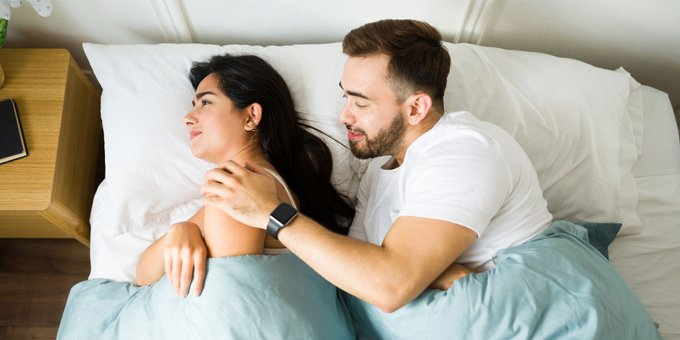
New study challenges the idea that sexual consent is widely misinterpreted in romantic relationships | Mane Kara-Yakoubian, PsyPost
Romantic partners are generally accurate in perceiving each other’s sexual consent, challenging the assumption that sexual consent is frequently misunderstood. This research was published in Sex Roles.
Sexual consent encompasses a person’s internal willingness to engage in sexual activity, the ways that willingness is expressed through verbal and nonverbal cues, and how those signals are interpreted by others. Internal consent reflects feelings such as comfort, readiness, and desire, whereas external consent involves the communication of willingness or boundaries through words and behavior.
Accurately interpreting these signals is central to healthy sexual decision-making and relationship satisfaction, but how well do people actually understand a partner’s consent?
Xin Shi and Emily A. Impett investigated this question by examining the “sexual miscommunication theory,” which suggests that sexual consent is often ambiguous and therefore prone to misinterpretation, especially by men.
According to this perspective, traditional gender roles portray men as sexual initiators and women as gatekeepers, potentially leading men to overestimate women’s interest. Yet emerging research suggests that romantic partners may be more accurate at interpreting each other’s sexual signals than this theory predicts.
The researchers conducted two studies with mixed-gender romantic couples in China. In the first study, 235 couples (470 individuals) were recruited through online advertisements and social media platforms. Participants were required to be at least 18 years old, in an exclusive relationship, and to have had sexual activity with their partner within the previous three months. Each partner independently completed surveys recalling their most recent sexual encounter.
Participants completed several measures. Internal feelings of sexual consent were assessed using a short form of the Internal Consent Scale, which measured feelings such as comfort and willingness during the encounter. They also rated how strongly they believed their partner experienced these same feelings.
External consent communication was measured using items assessing how participants expressed willingness through verbal or nonverbal cues. Sexual satisfaction with the encounter was measured using the New Sexual Satisfaction Scale, and relationship satisfaction was assessed using items from the Perceived Relationship Quality Components scale.
The researchers used the Truth and Bias model to compare partners’ perceptions with each other’s self-reported experiences in order to determine accuracy and systematic biases in consent perception.
A second study extended these findings using a more ecologically valid design. In this study, 103 couples (206 participants) completed a 21-day daily diary study. Participants received nightly survey links through WeChat and reported on sexual activity and consent experiences each day.
On days when couples reported having sex, participants rated their own internal consent, their perceptions of their partner’s consent, how consent was communicated externally, and their sexual and relationship satisfaction. Across the diary period, over 4,200 daily surveys were completed, with analyses focusing on the approximately 1,650 days when sexual activity occurred.
Across studies, romantic partners were generally quite accurate in perceiving each other’s sexual consent. Men and women were both able to closely track their partner’s internal consent feelings; that is, when one partner reported stronger feelings of willingness or comfort during sex, the other partner’s perception of that willingness tended to increase as well. Participants also tended to project their own feelings of consent onto their partner, meaning that individuals who felt more willing themselves were more likely to assume that their partner felt similarly.
While overall perceptions were accurate, some gender differences appeared: women slightly overestimated their partner’s internal consent, whereas men showed no consistent bias in this regard.
The daily diary study largely replicated these findings in a more naturalistic context. Over the course of the 21-day period, both men and women continued to show strong accuracy in perceiving their partner’s consent from one sexual encounter to the next. However, the direction of some biases differed from the first study.
Men tended to slightly underestimate their partner’s internal consent on a given day, whereas women tended to overestimate it. Participants also showed similar patterns when judging how their partner communicated consent externally. Both men and women were able to track day-to-day changes in how their partner expressed consent through words or behaviors, but women again tended to slightly overestimate the extent to which their partners expressed willingness.
Across both studies, when partners accurately perceived higher levels of their partner’s consent, both individuals tended to report greater sexual satisfaction. Interestingly, some forms of misperception were also associated with relationship outcomes. Overestimating a partner’s willingness was linked to greater sexual satisfaction for the perceiver, while underestimating it was sometimes linked to greater satisfaction reported by the partner.
This research focused on mixed-gender romantic couples in China, which may limit how well the findings generalize to other cultural contexts or to different relationship structures.
Overall, the findings suggest that sexual consent communication in established relationships may be more accurate and mutually understood than traditional miscommunication theories assume.
Read more:
psypost.org/new-study-chal…
English
So many variables. It's not just one thing, but a big one is that humans weren't designed to eat 3 big meals a day plus constant snacks. We probably weren't even designed to eat one big meal every day. That's why intermittent fasting is a very effective weight loss/management technique.
Food type matters too. Anything that spikes blood glucose levels will trigger insulin. One of the main functions of insulin is to store excess glucose in the blood as fat in case you ever have trouble finding food (which we never do). The modern diet is full of foods that spike blood sugar.
Then there's sedentary lifestyle. Even if we "eat right" we don't get enough physical activity. We never have to exert much energy to get food and food is readily available at all times so the body never goes into ketosis (fat burning) mode and always stays in store-up mode.
English

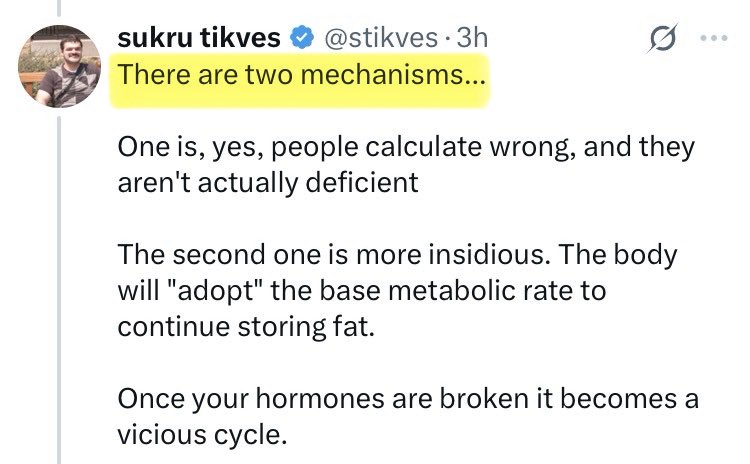
Enough with the metal gymnastics. If your body is in a caloric deficit, will you lose weight or not?
sukru tikves@stikves
@Hitchslap1 There are two mechanisms... One is, yes, people calculate wrong, and they aren't actually deficient The second one is more insidious. The body will "adopt" the base metabolic rate to continue storing fat. Once your hormones are broken it becomes a vicious cycle.
English

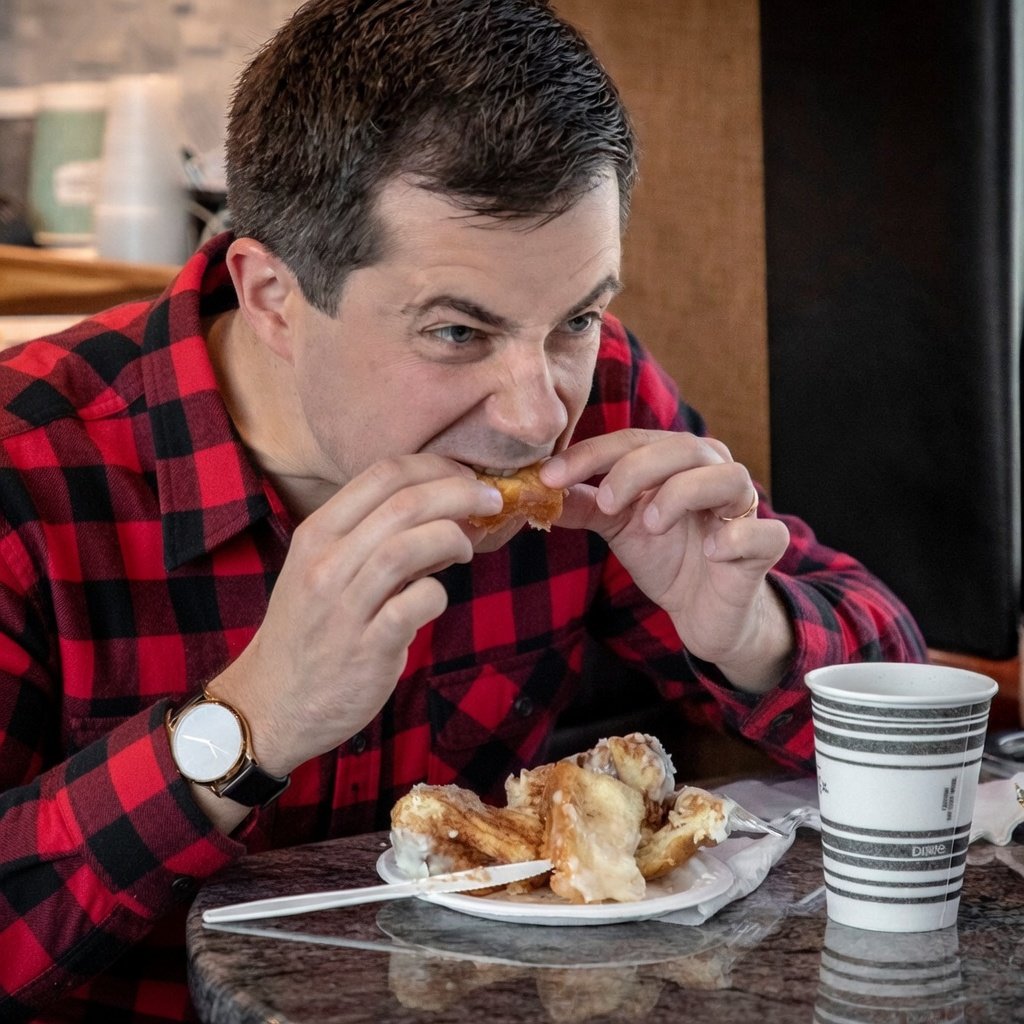
Everyone assumes this picture of Buttigieg is him eating a chicken wing, and that's because he's biting in a way to engage his "rip-the-flesh-from-the-bone" front teeth, so we fill in "chicken wing" to make it make sense. But what he is actually eating is a small piece of a cinnamon roll, and our brains just can't comprehend biting into a small piece of dough that way. It's like an alien took over a human body and is unfamiliar with the subtleties of how it works.

English
Every Dad ری ٹویٹ کیا



At first I thought this was excessive force, but then I noticed the guy biting the cops ankle.
Do you think the cop went too far?
English
Every Dad ری ٹویٹ کیا

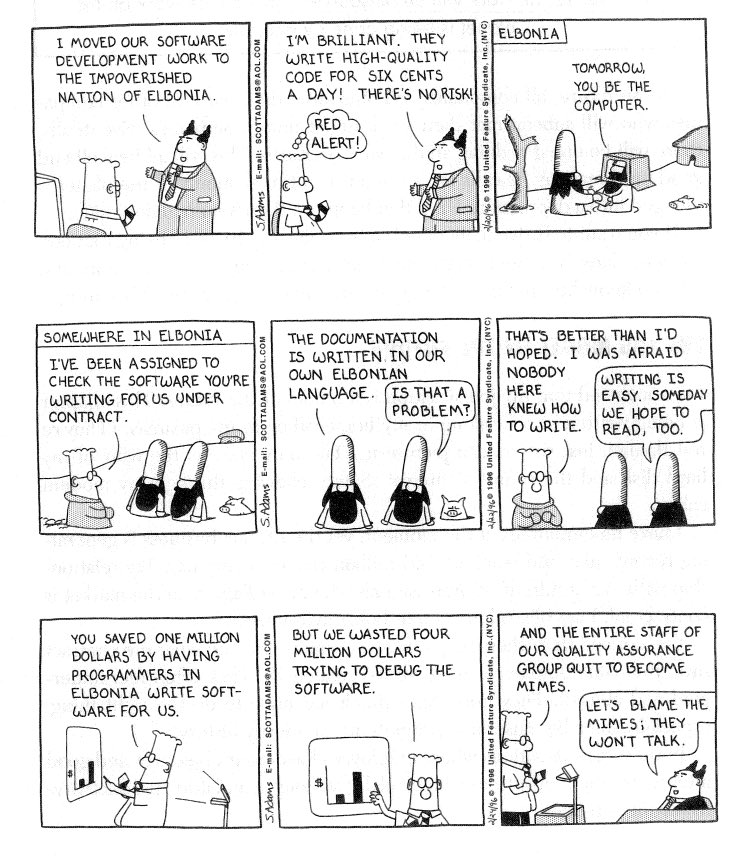
Scott Adams was so ahead of his time. Impossible not to miss him dearly right now:
English
Every Dad ری ٹویٹ کیا

Every Dad ری ٹویٹ کیا

@DefiantLs How hard would it be to drop an unarmed bomb through the roof of the studio next time this guy goes on the air?
No need for unnecessary violence.
Just to say hello.
English
Iran spokesperson: "Considering that all American bases in the region have been destroyed, American commanders and soldiers have fled and taken refuge in hideouts outside the bases, and we are searching for them."
English

When does a dad become dad enough to earn the right to wear these shoes?

English